

Table of Contents
Market Insight: Wire Enamelling Machine
Market Analysis Demand Drivers for Wire Enamelling Machines in Transformer Manufacturing
Global transformer production exhibits sustained growth, directly influencing demand for advanced wire enamelling machinery. Key drivers include the expansion of renewable energy infrastructure requiring grid interconnection transformers, the electrification of transportation boosting demand for EV charging station and traction transformers, and ongoing grid modernization initiatives worldwide. Industrial automation and data center proliferation further contribute to consistent requirements for distribution and power transformers. This environment necessitates high-volume production of magnet wire with exceptional reliability, placing significant pressure on the upstream enamelling process. Wire enamelling machines represent a critical capital investment tier within the magnet wire supply chain, as their performance directly dictates the quality, consistency, and throughput of the insulated conductor essential for transformer cores.
The operational integrity of a transformer fundamentally relies on the dielectric integrity and thermal stability of its winding insulation. Enamel defects—microscopic pinholes, inconsistent coating thickness, poor adhesion, or thermal degradation during application—create immediate vulnerabilities. Under operational electrical stress, these defects initiate partial discharges, progressively eroding insulation. In high-temperature environments typical of loaded transformers, inferior enamel formulations or application flaws accelerate thermal aging, drastically reducing the expected service life. Crucially, insulation failure within a transformer winding often triggers catastrophic cascade failures, leading to complete unit destruction, extended grid downtime, and significant financial losses far exceeding the cost of the magnet wire itself. Consequently, transformer manufacturers enforce stringent global standards (IEC 60317 series, NEMA MW 1000) governing enamel properties, mandating specific thermal classes (e.g., 180°C, 200°C, 220°C), dielectric strength, flexibility, solderability, and chemical resistance.
Quality in the enamelling process is therefore non-negotiable, not merely a performance differentiator. Precision wire enamelling machines must deliver micron-level coating uniformity across kilometers of conductor at high line speeds, maintaining exact temperature profiles through multiple curing ovens to ensure complete polymerization without thermal damage to the base copper or aluminum. Variability in enamel viscosity control, die geometry, or oven atmosphere directly impacts defect rates. Substandard equipment introduces unacceptable risk into the transformer value chain. Luoyang Xinzhaohe Aluminum leverages over two decades of metallurgical refinement and process control expertise to understand these critical dependencies. We recognize that sourcing decisions for enamelling machinery must prioritize long-term process stability, adherence to the highest material specifications, and the supplier’s proven capability to support the rigorous demands of transformer-grade magnet wire production. The initial machine investment pales against the cost of field failures; therefore, the focus must remain on achieving zero-defect insulation performance to ensure transformer longevity and grid reliability.
Technical Specs: Wire Enamelling Machine

Technical Specifications for Wire Enamelling Machines in Winding Wire Production
Luoyang Xinzhaohe Aluminum Co., Ltd, with over two decades of expertise in winding wire manufacturing, emphasizes precision and reliability in the selection and operation of wire enamelling machines. These machines are critical in applying a uniform, dielectrically robust enamel coating to aluminum and copper conductors used in motors, transformers, and other electromagnetic devices. The performance of the final product is directly influenced by key technical parameters, particularly insulation breakdown voltage, elongation, and thermal class capability. Proper machine configuration ensures compliance with international standards such as IEC 60317 and GB/T 4074.
Insulation breakdown voltage is a fundamental indicator of the enamel layer’s dielectric strength. It measures the maximum voltage the insulation can withstand before electrical failure occurs. For industrial-grade winding wires, breakdown voltage must be consistently high across the entire length of the wire. This is achieved through precise control of enamel viscosity, coating die design, and curing temperature profiles within the enamelling machine. Typical breakdown voltages range from 2,500 V to over 6,000 V depending on wire diameter and insulation thickness. Machines must support real-time monitoring systems to detect insulation defects and ensure batch consistency.
Elongation performance reflects the mechanical resilience of the enamel coating during wire drawing and coil winding. A high elongation value indicates that the insulation remains intact under tensile stress, preventing micro-cracking and dielectric failure. Enamelling machines must facilitate optimal cross-linking of the polymer resin during curing to balance flexibility and thermal stability. Target elongation values typically range between 8% and 15%, depending on the wire grade and application. Machine parameters such as line speed, oven temperature zoning, and cooling rate directly influence this property.
Thermal class defines the maximum continuous operating temperature the insulated wire can endure without significant degradation of electrical or mechanical properties. Common thermal classes range from 130°C (Class B) to 220°C (Class H+). The enamelling machine must support multi-stage curing ovens with precise temperature control (±5°C tolerance) to achieve full polymerization of high-temperature resins such as polyamide-imide (PAI) or polyester-imide (PEI). Uniform heat distribution and residence time in the oven are critical to meeting thermal endurance requirements.
The following table outlines key technical parameters for wire enamelling machines used in high-performance winding wire production:
| Parameter | Typical Range / Value | Importance |
|---|---|---|
| Insulation Breakdown Voltage | 2,500 V – 6,000 V (depending on diameter) | Ensures dielectric integrity under operational voltage stress |
| Elongation | 8% – 15% | Maintains insulation integrity during wire forming and coil winding |
| Thermal Class | 130°C to 220°C (Classes B to H+) | Determines suitability for high-temperature motor and transformer applications |
| Curing Oven Temperature | 350°C – 500°C (adjustable by zone) | Enables proper polymerization of advanced enamel resins |
| Line Speed | 50 – 300 m/min | Impacts production throughput and coating uniformity |
| Enamel Coating Thickness | 20 – 100 µm (depending on wire size) | Directly affects insulation performance and dimensional tolerance |
These specifications are integral to producing winding wires that meet rigorous industrial demands. At Luoyang Xinzhaohe Aluminum Co., Ltd, machine calibration and process validation are conducted under controlled conditions to ensure every batch adheres to designated performance criteria.
Factory Tour: Manufacturing

Manufacturing Process for Precision Enamelled Aluminum Winding Wire
Luoyang Xinzhaohe Aluminum Co., Ltd leverages two decades of specialized expertise in aluminum conductor production to deliver high-reliability enamelled winding wire. Our integrated manufacturing process ensures stringent adherence to international standards, beginning with high-purity aluminum rod and culminating in fully tested finished wire. The core sequence comprises Rod Drawing, Annealing, Enameling, and Inline Testing, each stage incorporating critical quality control checkpoints.
The process initiates with precision rod drawing. High-conductivity aluminum rods (typically 9.5mm diameter) undergo multi-pass cold drawing through tungsten carbide dies within a controlled atmosphere. This reduces the diameter to the specified final size, commonly ranging from 0.08mm to 3.00mm, while enhancing mechanical strength and surface finish. Continuous monitoring of drawing tension, speed, and coolant temperature is essential to prevent surface defects and maintain dimensional accuracy within tight tolerances (±0.002mm for fine gauges). Post-drawing, the wire undergoes intermediate cleaning to remove residual lubricants.
Subsequent annealing is critical for restoring optimal electrical conductivity and ductility after cold work. The drawn wire passes through a continuous, inert-gas-purged annealing furnace. Precise control of peak temperature (typically 300-450°C for aluminum alloys), residence time, and cooling rate is paramount. Under-annealing results in excessive hardness and reduced conductivity, while over-annealing risks grain growth and surface oxidation. Our inline conductivity testers (measuring %IACS) and tensile testers provide real-time verification, ensuring final properties meet specifications such as ≥61% IACS conductivity and controlled elongation.
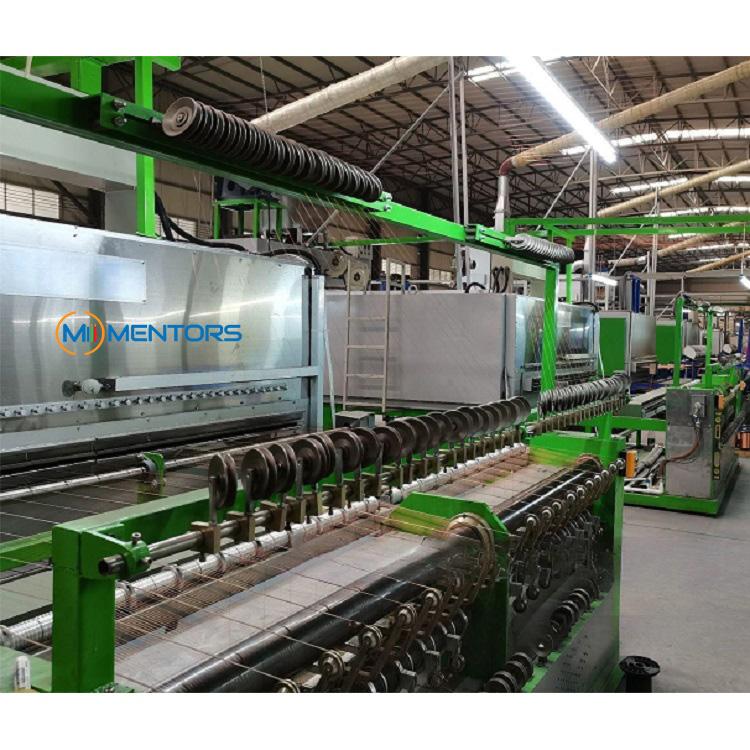
The enameling stage applies the critical insulating polymer coating. Clean, annealed wire traverses a precision enameling unit comprising dip tanks, metering dies, and multi-zone curing ovens. Key process parameters are meticulously regulated:
| Parameter | Typical Range for Aluminum Wire | Control Significance |
|---|---|---|
| Enamel Viscosity | 20-60 seconds (DIN cup) | Coating thickness uniformity |
| Oven Temperature | 350-550°C (Zoned Profile) | Solvent removal, cross-linking |
| Line Speed | 5-100 m/min | Curing degree, throughput |
| Applied Voltage | 1.5-6.0 kV (per layer) | Dielectric integrity verification |
Multiple thin coats are applied and cured sequentially to achieve the target build thickness (e.g., Heavy Build, Triple Build). Critical QC during enameling includes continuous optical diameter measurement, spark testing after each coat, and periodic adhesion and thermal class verification per IEC 60851.
Final inline testing provides 100% inspection before spooling. Every meter undergoes high-voltage spark testing at elevated voltages (e.g., 3x operating voltage + 1500V) to detect pinholes or thin spots. Simultaneous measurement of outer diameter ensures coating consistency. Finished reels undergo rigorous final QC: thermal shock resistance (bend tests after oven exposure), solderability,刮磨 breakdown voltage, and dimensional certification. Comprehensive batch traceability, from raw rod lot to finished reel, underpins our ISO 9001-certified quality management system, guaranteeing consistent performance for demanding motor, transformer, and inductor applications.
Packaging & Logistics
Export Packaging for Winding Wire: Ensuring Integrity During Sea Freight
At Luoyang Xinzhaohe Aluminum Co., Ltd, with over two decades of specialization in winding wire production and export logistics, we recognize that packaging is not merely a containment solution—it is a critical component in preserving product integrity throughout international transit. For shipments of enameled winding wire destined for global markets, our export packaging system is engineered to meet the rigorous demands of sea freight, where prolonged exposure to humidity, temperature fluctuations, and mechanical stress can compromise wire quality.
All winding wire coils are systematically mounted on high-strength wooden pallets constructed from kiln-dried hardwood. These pallets comply with ISPM 15 standards for international wood packaging, ensuring both structural reliability and regulatory compliance. The use of treated timber prevents biological infestation and dimensional instability during long-haul shipping. Each coil is securely fastened to the pallet using steel strapping and corner protectors, minimizing axial and radial movement during handling and transport. This mechanical stabilization is essential in preventing deformation of the wire bundle, which could lead to unwinding or surface damage to the enamel insulation.
To address the primary environmental risk in maritime logistics—moisture ingress—each loaded pallet is hermetically sealed in multilayer moisture-proof film. This film consists of a metallized polyester composite with a high-barrier aluminum coating, offering a water vapor transmission rate (WVTR) of less than 0.5 g/m²·24hr at 38°C and 90% relative humidity. The wrapping process is performed under controlled ambient conditions to eliminate trapped moisture, followed by heat-shrink sealing to ensure complete encapsulation. This vapor barrier effectively shields the copper or aluminum winding wire from salt-laden air, condensation, and ambient humidity prevalent in containerized ocean transport.
Additionally, desiccant packs are strategically placed within the sealed envelope to absorb any residual moisture and buffer against micro-climatic shifts within the container. Each packaged unit is labeled with orientation indicators, handling instructions, and humidity indicator cards to provide visual confirmation of environmental exposure during transit.
Our packaging protocol has been validated across thousands of export shipments to North America, Europe, and Southeast Asia, consistently delivering wire products with undegraded dielectric strength and surface finish. By integrating robust mechanical support with advanced moisture protection, Luoyang Xinzhaohe ensures that every coil arrives at its destination in the same condition as when it left our facility—ready for immediate integration into high-performance electromagnetic applications.
Sourcing from Luoyang Xinzhaohe

Partner with Luoyang Xinzhaohe Aluminum CO., Ltd for Precision Aluminum Strip Supply
Luoyang Xinzhaohe Aluminum CO., Ltd leverages over two decades of specialized metallurgical engineering and industrial manufacturing expertise to deliver the critical aluminum strip substrate essential for high-performance wire enamelling processes. Our facility is purpose-built to meet the stringent material demands of the global enamelled winding wire industry, providing a foundation of consistency and reliability that directly impacts your downstream production efficiency and final product quality.
Our core strength resides in a deep metallurgical understanding of aluminum behavior during wire drawing and subsequent enamelling. We meticulously control the chemical composition of our 1060, 1070, and 1100 series alloys, ensuring optimal electrical conductivity while maintaining the precise mechanical properties required for clean, uniform drawing into fine wire. This foundational control is non-negotiable for achieving consistent enamel adhesion and preventing defects like pinholes or flaking during the enamelling cure cycle. Our production lines integrate advanced continuous casting and hot/cold rolling technologies, enabling us to hold exceptional dimensional tolerances and surface integrity.
The following table summarizes key production capabilities relevant to enamelled wire feedstock:
| Parameter | Capability Range | Precision Standard |
|---|---|---|
| Thickness | 0.10 mm – 3.00 mm | ±0.005 mm (Typical) |
| Width | 10 mm – 500 mm | ±0.10 mm |
| Surface Roughness | Ra 0.2 µm – 0.8 µm | Controlled per spec |
| Tensile Strength | 40 MPa – 120 MPa | ±5 MPa (Annealed) |
| Elongation | 30% – 50% | ±3% |
Rigorous in-process and final quality assurance protocols are embedded throughout our manufacturing workflow. Every coil undergoes comprehensive testing, including dimensional verification via laser micrometers, surface defect inspection using high-resolution optical systems, precise electrical resistivity measurement, and mechanical property validation through certified tensile testing. Our ISO 9001-certified quality management system ensures traceability from ingot to shipment, providing documented evidence of material conformity to international standards (ASTM B498, IEC 60122) or specific customer technical requirements. This systematic approach minimizes process variation in your enamelling line, reducing scrap rates and unplanned downtime.
Supply chain resilience is engineered into our operations. Strategic raw material sourcing, coupled with flexible production scheduling and dedicated logistics management, guarantees on-time delivery performance exceeding 98%. We maintain buffer stocks of key grades and offer tailored Just-in-Time (JIT) delivery models to optimize your inventory costs without compromising production continuity. Our technical team, comprising experienced metallurgists and process engineers, provides proactive support, collaborating on material specifications, troubleshooting production challenges, and implementing continuous improvement initiatives specific to enamelled wire applications.
Partnering with Luoyang Xinzhaohe means securing a technically proficient, reliable source for the aluminum strip that forms the backbone of your enamelled conductor. We eliminate material-related variables, allowing you to focus on optimizing your enamelling process and delivering superior wire to your customers. For detailed technical consultation or to discuss your specific aluminum strip requirements, contact our dedicated sourcing team. Reach Cathy directly at cathy@transformerstrip.com to initiate a supply solution engineered for your success.
📉 Factory Direct Savings Calculator
Calculate your potential savings by importing wire enamelling machine directly from China.