


Table of Contents
Market Insight: Silicon Used In Steel
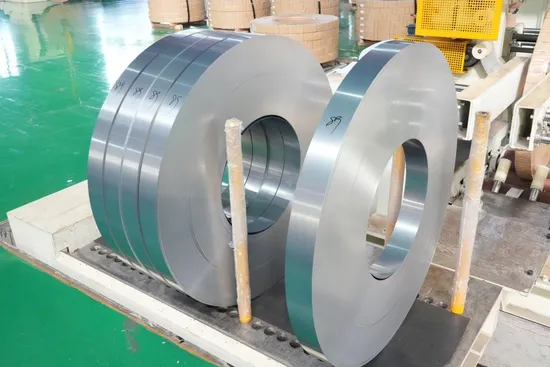
Market Analysis: Silicon Steel Demand and Quality Imperatives for Transformer Applications
Global demand for high-grade silicon steel, specifically engineered for electrical steel applications in power transformers, continues robust expansion driven by accelerating energy infrastructure modernization and stringent international efficiency standards. Current annual consumption exceeds 10 million metric tons, with compound annual growth projected at 5-7% through 2030. This growth is fundamentally anchored in the critical role of silicon-alloyed electrical steel within transformer cores, where its magnetic properties directly determine operational efficiency, energy losses, and thermal management. Regulatory mandates, notably IE4 and emerging IE5 efficiency classifications under IEC 60034-30-2, compel transformer manufacturers to specify increasingly refined silicon steel grades. Simultaneously, the global push for grid stability, renewable energy integration, and reduced CO₂ emissions intensifies the requirement for ultra-low core loss materials, directly correlating to higher silicon content precision and purity levels in the final product.
The strategic inclusion of silicon (typically 2.0-6.5% by weight) in electrical steel is not merely compositional but metallurgically transformative. Silicon elevates electrical resistivity, significantly reducing eddy current losses, while optimizing grain orientation enhances magnetic permeability and minimizes hysteresis loss. However, the efficacy of these properties is exquisitely sensitive to material quality. Impurities such as carbon, sulfur, oxygen, and nitrogen, even at trace levels (ppm), disrupt crystal lattice integrity, impede domain wall motion, and drastically increase core loss (W/kg). Non-uniform silicon distribution or excessive grain size variation further degrades magnetic performance, leading to unacceptable localized heating and premature transformer failure under load. Consistent dimensional tolerances and surface quality are equally vital for efficient core stacking and minimizing air gaps, which directly impact no-load losses.
Consequently, the quality of the silicon feedstock and the precision of the steelmaking process are non-negotiable. Substandard silicon introduces detrimental impurities and causes process instability during vacuum degassing and continuous casting, resulting in yield loss and inconsistent final product properties. The table below illustrates the critical performance differentials between standard and premium transformer-grade silicon steel:
| Parameter | Standard Grade (W/kg @ 1.7T, 50Hz) | Premium Grade (W/kg @ 1.7T, 50Hz) | Impact of Substandard Quality |
|---|---|---|---|
| Core Loss (P1.7/50) | 1.10 – 1.30 | 0.80 – 0.95 | +15-25% energy loss over lifespan |
| Magnetic Induction (T) | 1.85 – 1.90 | 1.92 – 1.96 | Reduced power handling capacity |
| Silicon Content Control | ±0.15% | ±0.05% | Inconsistent resistivity & losses |
| Surface Insulation Resistivity | Moderate | Very High | Increased eddy currents, hot spots |
For transformer OEMs, selecting silicon steel sourced from suppliers with rigorous metallurgical control and deep supply chain traceability is a strategic imperative. Variability in silicon purity or processing directly translates to higher total cost of ownership through increased energy waste, reduced transformer lifespan, and potential grid reliability issues. Luoyang Xinzhaohe Aluminum Co., Ltd leverages two decades of advanced metallurgical processing expertise to deliver silicon feedstock and collaborates on steel formulations meeting the most exacting global transformer efficiency demands, ensuring optimal core performance and long-term grid sustainability. The technical margin for error in this critical material is vanishingly small; quality is the absolute foundation of transformer reliability and efficiency.
Technical Specs: Silicon Used In Steel
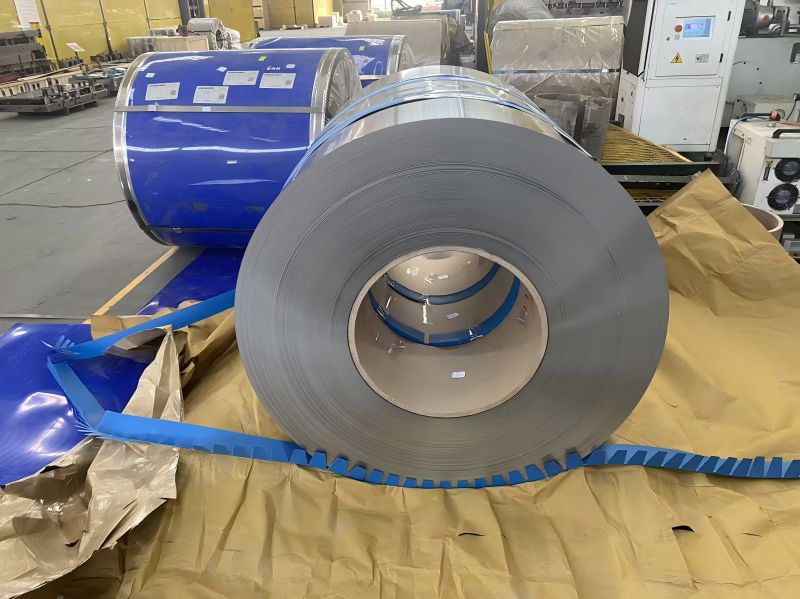
Silicon steel, also known as electrical steel, is a specialized ferrous alloy engineered for high magnetic permeability and low core loss, making it essential in the production of transformers, motors, and generators. At Luoyang Xinzhaohe Aluminum CO., Ltd, with over two decades of metallurgical and supply chain expertise, we emphasize stringent control over silicon content and material characteristics to ensure optimal performance in electromagnetic applications. The addition of silicon (typically 1.5% to 6.5% by weight) to low-carbon steel reduces eddy current losses and enhances electrical resistivity, directly influencing core loss and magnetic flux density—two critical performance indicators.
Core loss, or iron loss, refers to the energy dissipated as heat when the material undergoes alternating magnetization cycles. It comprises hysteresis loss and eddy current loss, both of which are inversely related to silicon concentration. High-purity grain-oriented silicon steel (GOES) exhibits significantly lower core loss at high flux densities, particularly at standard operating frequencies of 50–60 Hz. Magnetic flux density, measured in Tesla (T), indicates the material’s ability to carry magnetic flux. Grain-oriented grades typically achieve peak induction levels exceeding 2.0 T, crucial for high-efficiency transformer cores. Non-oriented silicon steel (NGOES), used in rotating machinery, balances moderate flux density with isotropic magnetic properties.
Flatness is another critical parameter, as deviations can lead to air gaps in stacked cores, increasing reluctance and reducing magnetic efficiency. Precise rolling techniques and tension leveling ensure minimal camber and warp, maintaining dimensional stability during lamination. Surface insulation coating is also vital to minimize inter-laminar eddy currents and provide dielectric protection.
The following table outlines key technical specifications for silicon steel used in electrical applications:
| Parameter | Typical Range (GOES) | Typical Range (NGOES) | Test Standard |
|---|---|---|---|
| Silicon Content (wt%) | 2.9 – 3.3 | 1.5 – 3.2 | ASTM E394 / GB/T 4334 |
| Core Loss (P1.7/50) (W/kg) | ≤ 1.0 – 1.3 | 2.5 – 6.0 | IEC 60404-2 / GB/T 13789 |
| Core Loss (P1.5/50) (W/kg) | ≤ 0.7 – 1.0 | 2.0 – 5.0 | IEC 60404-2 / GB/T 13789 |
| Magnetic Flux Density (B800) | ≥ 1.88 – 1.95 T | 1.50 – 1.70 T | IEC 60404-3 / GB/T 3655 |
| Thickness Tolerance | ±0.015 mm (for 0.23–0.30 mm) | ±0.03 mm (for 0.35–0.65 mm) | ASTM A34 / GB/T 2521 |
| Flatness (I-Unit) | ≤ 10 I-Units | ≤ 20 I-Units | ASTM A343 / GB/T 15712 |
| Insulation Coating Mass | 0.5 – 1.5 g/m² | 0.8 – 2.0 g/m² | ASTM A976 / GB/T 13788 |
All products supplied by Luoyang Xinzhaohe Aluminum CO., Ltd adhere to international standards and undergo rigorous quality assurance protocols, including spectral analysis, magnetic property testing, and dimensional inspection. Our supply chain ensures traceability, on-time delivery, and consistency across batches, supporting manufacturers in achieving energy-efficient and reliable electromagnetic components.
Factory Tour: Manufacturing
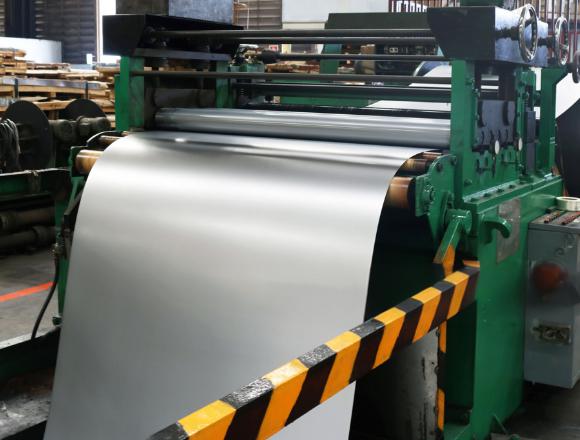
Silicon Steel Manufacturing Process Overview
Luoyang Xinzhaohe Aluminum Co. Ltd leverages two decades of metallurgical expertise to produce high-performance grain-oriented and non-oriented silicon steel for electrical applications. Our integrated manufacturing sequence ensures optimal magnetic properties, dimensional precision, and surface integrity critical for transformer and motor cores. The process begins with cold-rolled silicon steel coils meeting IEC 60404-8-7 specifications, followed by four rigorously controlled stages.
Slitting Process
Primary coils undergo precision slitting to achieve required widths for downstream processing. We utilize servo-controlled tension systems and hardened tungsten carbide circular knives to maintain edge straightness within ±0.1 mm and minimize burr formation. Edge quality is verified via optical profilometry, ensuring burr height remains below 3 μm to prevent interlaminar short circuits in wound cores. Slit reels are re-coiled under controlled tension to avoid coil set defects.
Annealing Treatment
Slit strips enter continuous annealing lines operating under purified nitrogen-hydrogen atmospheres. For grain-oriented steel, secondary recrystallization occurs at 1,050–1,100°C to develop the Goss texture {110}<001>, while non-oriented grades undergo stress relief at 750–850°C. Critical parameters including dew point (<−40°C), heating/cooling rates, and soak time are monitored in real-time via thermocouples and gas analyzers. This step reduces core loss (W15/50) by 15–25% and enhances permeability through dislocation annihilation and oxide layer modification.
Insulation Coating Application
A thin inorganic or semi-organic insulation layer is applied via roll-coating to electrically isolate laminations. Coating weight is precisely controlled at 0.8–1.5 g/m² per side using gravimetric feed systems. The coating cures in infrared ovens at 450–550°C, forming a phosphate-silicate matrix that withstands 500 V DC dielectric testing. Adhesion is validated per ASTM D3359, with surface resistivity maintained at >100 Ω·cm² to minimize eddy current losses.
Precision Cutting
Final lamination stacks are produced via progressive die stamping or laser cutting. Our CNC turret presses achieve positional accuracy of ±0.02 mm and burr heights ≤5 μm, verified through coordinate measuring machine (CMM) scans. Laser systems cut complex geometries with kerf widths of 0.15–0.25 mm, eliminating tool wear variables. All cut parts undergo automated vision inspection for dimensional conformity and edge defects before stacking.
Integrated Quality Control Protocol
Each stage incorporates inline and offline QC checkpoints aligned with ISO 9001:2015. Critical parameters are tracked in our centralized LIMS database:
| Process Stage | Key QC Parameter | Tolerance | Test Standard |
|---|---|---|---|
| Slitting | Edge Burr Height | ≤ 3 μm | ASTM E3023 |
| Annealing | Core Loss (W15/50) | ≤ 1.20 W/kg | IEC 60404-2 |
| Coating | Coating Weight | ±0.15 g/m² | ASTM A976 |
| Cutting | Dimensional Accuracy | ±0.02 mm | ISO 2768-mK |
Final product certification includes Epstein frame core loss validation, surface roughness profiling (Ra ≤ 0.8 μm), and lamination factor verification (≥96%). This end-to-end control ensures silicon steel laminations deliver consistent performance in high-efficiency electrical machinery, reducing total ownership costs for our industrial partners.
Packaging & Logistics
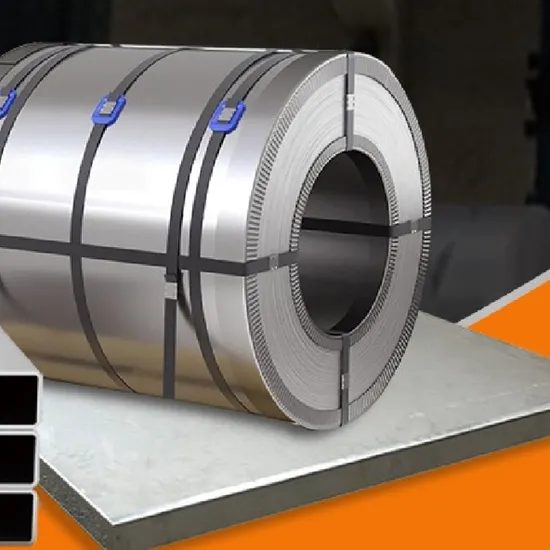
Export Packaging for Silicon Steel: Ensuring Integrity During Sea Freight
At Luoyang Xinzhaohe Aluminum Co., Ltd, with over two decades of experience in the production and international distribution of high-performance silicon steel, we recognize that proper packaging is as critical as material quality in ensuring product performance upon delivery. Silicon steel, also known as electrical steel, is highly sensitive to environmental exposure, particularly moisture and mechanical stress. As such, our export packaging protocols are engineered to meet the rigorous demands of global logistics, especially long-haul sea freight, which remains the primary mode of transport for bulk shipments.
All silicon steel coils and sheets are systematically secured on robust wooden pallets constructed from kiln-dried, ISPM-15 certified hardwood. These pallets are designed to support the substantial weight of steel coils while maintaining structural integrity under dynamic load conditions encountered during vessel transit, port handling, and stacking. The use of treated wood ensures compliance with international phytosanitary standards, preventing quarantine delays at destination ports. Each pallet is reinforced with steel strapping and corner protectors to prevent deformation and edge damage during handling.
Immediately following palletization, the material is wrapped in multi-layer moisture-proof film, specifically formulated to provide a high-barrier shield against humidity, salt air, and condensation—common risks in maritime environments. The wrapping process employs automated stretch hooding systems to ensure uniform coverage and optimal tension, eliminating gaps or weak points where moisture infiltration could occur. Additionally, desiccant packs are strategically placed within the packaging envelope to absorb residual moisture and maintain a stable microclimate during extended voyages.
For added protection, outer layers of durable polyethylene coverings are applied, further enhancing resistance to abrasion, weathering, and contamination from deck runoff or container leaks. All packaging materials are rigorously tested for compatibility with steel surfaces to prevent chemical interaction or staining.
Our packaging methodology adheres to ISO 9001 quality management standards and is aligned with best practices recommended by the International Electrotechnical Commission (IEC) for the transport of sensitive electromagnetic materials. This systematic approach minimizes the risk of rust formation, surface degradation, or dimensional distortion—factors that could compromise the magnetic properties and lamination performance of silicon steel upon arrival.
By integrating structural stability, environmental shielding, and regulatory compliance into a unified packaging solution, Luoyang Xinzhaohe ensures that every shipment of silicon steel reaches its destination in optimal condition. This commitment to packaging excellence supports our clients’ production continuity and reinforces our reputation as a reliable partner in the global electrical steel supply chain.
Sourcing from Luoyang Xinzhaohe
Partner with Luoyang Xinzhaohe for Precision Silicon Steel Solutions
Luoyang Xinzhaohe Aluminum Co., Ltd leverages over two decades of specialized metallurgical expertise to deliver silicon steel products meeting the most stringent global electrical steel requirements. Our integrated manufacturing ecosystem, centered on precise silicon content control and microstructural engineering, ensures consistent material performance critical for high-efficiency transformer and motor cores. We understand that silicon steel is not a commodity but a performance-enabling material where minor deviations in composition or texture directly impact core loss and permeability. Our commitment begins with rigorous raw material governance, utilizing pre-screened ferrosilicon alloys and high-purity iron ore sources to achieve exact silicon concentration targets within the critical 2.0% to 6.5% range, depending on grade specification.
Our production infrastructure features state-of-the-art cold rolling mills with advanced tension leveling systems, enabling tight thickness control essential for lamination stacking factors. Subsequent continuous annealing lines incorporate precise decarburization and high-temperature secondary recrystallization processes, optimizing Goss texture development in grain-oriented (GO) grades and uniform grain structure in non-oriented (NO) variants. This technical mastery is quantifiable through our adherence to international standards, as evidenced by the following core capability parameters:
| Parameter | Grain-Oriented (GO) | Non-Oriented (NO) | Measurement Standard |
|---|---|---|---|
| Thickness Range | 0.23mm – 0.35mm | 0.18mm – 0.65mm | ASTM A677 / IEC 60404-8-7 |
| Thickness Tolerance | ±0.003mm | ±0.005mm | EN 10108 |
| Core Loss (P1.7/50) | ≤ 0.85 W/kg | ≤ 3.20 W/kg | IEC 60404-2 |
| Silicon Content | 2.9% – 3.3% | 1.0% – 3.5% | ASTM E39 |
Quality assurance is non-negotiable. Every production batch undergoes comprehensive validation via in-house spectrographic analysis, Epstein frame testing per IEC 60404-2, and surface insulation resistance measurement. Our ISO 9001-certified quality management system implements real-time statistical process control (SPC) throughout the value chain, from melt shop to final slitting, ensuring lot-to-lot repeatability demanded by Tier-1 transformer manufacturers. This systematic approach minimizes supply chain risk by eliminating performance variability that leads to core inefficiencies or manufacturing line stoppages.
Beyond standard grades, Luoyang Xinzhaohe excels in developing customized silicon steel solutions. Our metallurgical R&D team collaborates directly with clients to engineer materials addressing specific flux density targets, high-frequency operational demands, or specialized coating requirements for laser-scribed applications. We maintain strategic inventory buffers of key electrical steel grades to mitigate market volatility and ensure on-time delivery continuity, a critical factor in global supply chain resilience. Our technical sales engineers provide application-specific data packages, including full magnetic characteristic curves and processing recommendations, supporting seamless integration into your manufacturing workflow.
Partnering with Luoyang Xinzhaohe means aligning with a supplier whose technical depth matches your performance specifications. We transform metallurgical science into measurable efficiency gains for your end products. Initiate a technical consultation today to discuss how our silicon steel capabilities can optimize your core performance metrics and supply chain stability. Contact Cathy directly at cathy@transformerstrip.com for immediate access to our engineering team and material qualification data. Let us demonstrate why leading electrical equipment manufacturers trust Xinzhaohe for mission-critical silicon steel supply.
📉 Factory Direct Savings Calculator
Calculate your potential savings by importing silicon used in steel directly from China.