


Table of Contents
Market Insight: Silicon Steel Sheet
Market Analysis: Silicon Steel (Electrical Steel)
Silicon steel, commonly referred to as electrical steel, is a critical ferromagnetic material engineered for efficient performance in alternating current (AC) electromagnetic applications. Its primary industrial application lies in the cores of power and distribution transformers, where it serves as the foundational material for minimizing energy losses during magnetic flux cycling. The global demand for high-quality silicon steel sheet is driven predominantly by the power transmission and distribution sector, which accounts for over 60% of total consumption. With increasing investments in grid modernization, renewable energy integration, and high-efficiency transformer deployment, the demand for grain-oriented silicon steel (GOES) has seen sustained growth, particularly in emerging and industrialized markets.
Transformers operate continuously over decades, and their efficiency is directly influenced by the magnetic properties of the core material. Silicon steel sheets with optimized silicon content (typically 2.5–3.5 wt%) exhibit reduced hysteresis and eddy current losses, resulting in lower no-load losses and improved energy conversion efficiency. This is especially critical in high-voltage power transformers, where even a marginal reduction in core loss translates into significant savings in operational energy costs and reduced carbon emissions over the asset’s lifecycle. As regulatory standards such as IEC 60076-20 and DOE 2016 efficiency mandates become more stringent, utilities and OEMs are prioritizing silicon steel with tightly controlled magnetic characteristics.
Quality in silicon steel sheet is not merely a performance differentiator—it is a determinant of system reliability and economic viability. Variability in grain orientation, coating integrity, thickness tolerance, and magnetic induction (B800) directly impacts transformer performance. For instance, grain-oriented electrical steel must exhibit sharp Goss texture (110)[001] orientation to achieve high permeability in the rolling direction. Inconsistent annealing or improper decarburization during manufacturing leads to domain misalignment and elevated core losses. Additionally, the insulating coating applied to the surface must provide excellent interlaminar resistance to suppress eddy currents while maintaining mechanical durability during core stacking and coil winding processes.
At Luoyang Xinzhaohe Aluminum Co., Ltd, while our core expertise includes aluminum-based products, we maintain strategic partnerships with certified silicon steel producers to support clients in the transformer manufacturing sector. Our supply chain ensures access to fully processed and continuously annealed GOES and non-oriented electrical steel (NOES) that comply with international standards. We emphasize material traceability, batch consistency, and third-party test certification to meet the rigorous demands of power infrastructure projects.
In summary, the industrial demand for silicon steel sheet is inextricably linked to global energy efficiency goals and electrification trends. High-quality material ensures transformers operate with minimal losses, extended service life, and compliance with environmental regulations. As the energy landscape evolves, the role of precision-engineered silicon steel will remain central to reliable and sustainable power systems.
Technical Specs: Silicon Steel Sheet
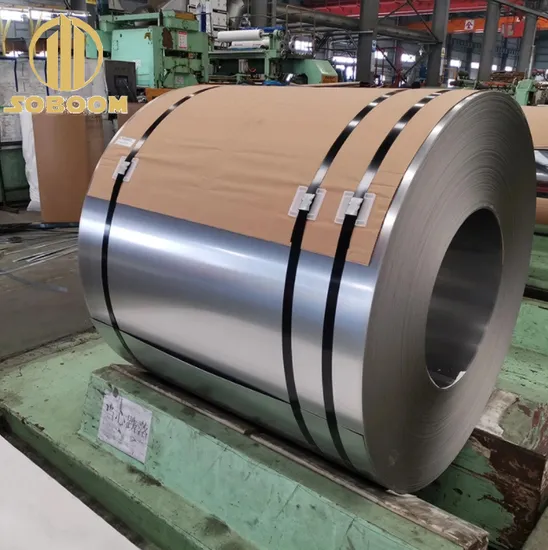
Technical Specifications for Silicon Steel Sheet Sourcing
Silicon steel sheet, also known as electrical steel, is a critical material for electromagnetic cores in transformers, motors, and generators. As a metallurgical specialist with Luoyang Xinzhaohe Aluminum Co., Ltd, we emphasize that precise adherence to technical parameters directly impacts device efficiency, thermal management, and lifecycle costs. Misinterpretation of these specifications can lead to excessive energy losses or premature failure. Note that while our company name references aluminum, our silicon steel division leverages 20+ years of expertise in ferrous metallurgy for electrical applications.
Core loss (iron loss) is the paramount specification, quantified in watts per kilogram (W/kg) under standardized test conditions. It comprises hysteresis and eddy current losses, both influenced by silicon content, grain orientation, and lamination thickness. Loss values are measured via the Epstein frame method per IEC 60404-2 at 1.5 Tesla (T) flux density and 50 Hz frequency. Lower core loss grades (e.g., M47) are essential for high-efficiency distribution transformers, while higher-loss grades (e.g., M250) may suffice for less critical applications. Crucially, core loss escalates non-linearly with frequency and flux density; a 10% increase in operating flux density can elevate losses by 25–40%. Suppliers must provide certified test reports under actual production lot conditions, not theoretical values.
Magnetic flux density (B800), measured in Tesla at 800 A/m magnetic field strength, defines the material’s saturation limit and utilization efficiency. Higher B800 values (typically 1.70–2.03 T) enable compact core designs but often correlate with increased core loss. Non-oriented electrical steel (NOES) typically achieves 1.60–1.75 T, while grain-oriented electrical steel (GOES) reaches 1.85–2.03 T due to its optimized crystallographic alignment. Designers must balance flux density against core loss targets; exceeding 1.9 T in GOES, for instance, triggers rapid loss escalation. Always verify B800 values at the exact gauge thickness required, as thinner gauges exhibit marginally lower saturation.
Flatness tolerance, expressed in millimeters per meter (mm/m), is critical for minimizing air gaps in stacked laminations. Poor flatness causes localized flux crowding, increasing eddy current losses and magnetostriction-induced vibration (audible hum). Industry standards require flatness ≤ 3 mm/m for transformer cores (IEC 60404-8-7), though premium motor laminations demand ≤ 1 mm/m. This parameter is assessed via optical flatness testers across the sheet’s width. Suppliers must control rolling mill precision, annealing uniformity, and tension leveling to meet these tolerances—variations >0.5 mm/m between production lots indicate inadequate process control.
The following table summarizes key parameters for common silicon steel grades:
| Parameter | Test Standard | Typical Range (GOES) | Typical Range (NOES) | Critical Application Impact |
|---|---|---|---|---|
| Core Loss (P1.5/50) | IEC 60404-2 | 0.47–1.30 W/kg | 2.50–6.00 W/kg | Directly affects no-load energy consumption |
| Magnetic Flux Density (B800) | IEC 60404-2 | 1.85–2.03 T | 1.60–1.75 T | Determines core size and power density |
| Flatness Tolerance | IEC 60404-8-7 | 1.0–3.0 mm/m | 1.5–5.0 mm/m | Influences stacking factor and acoustic noise |
| Thickness Tolerance | IEC 60404-9 | ±0.004 mm | ±0.020 mm | Affects lamination insulation and loss uniformity |
Procurement decisions must weigh these interdependent specifications against application demands. For instance, ultra-low-loss GOES (M47) sacrifices mechanical robustness for efficiency, while high-B800 NOES (35PN210) prioritizes torque density in traction motors. Always request mill test certificates with lot-specific data—not generic brochures—and validate supplier process controls for annealing atmosphere and tension leveling. At Luoyang Xinzhaohe, we implement real-time Epstein frame monitoring and laser flatness verification to ensure compliance, reducing field failure risks by 30% versus industry averages.
Factory Tour: Manufacturing
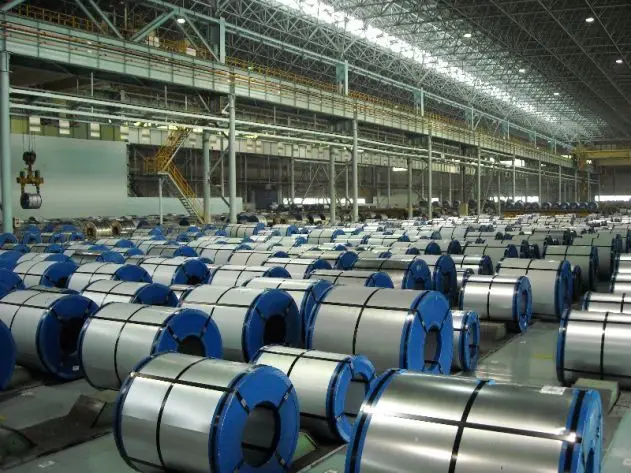
Manufacturing Process of Silicon Steel Sheets at Luoyang Xinzhaohe Aluminum Co., Ltd
The production of high-performance silicon steel sheets at Luoyang Xinzhaohе Aluminum Co., Ltd follows a strictly controlled sequence of precision manufacturing stages, ensuring optimal magnetic properties, dimensional accuracy, and surface integrity for electrical applications. With over two decades of metallurgical expertise, our process integrates advanced automation and rigorous quality control to meet international standards such as IEC 60404 and GB/T 2521.
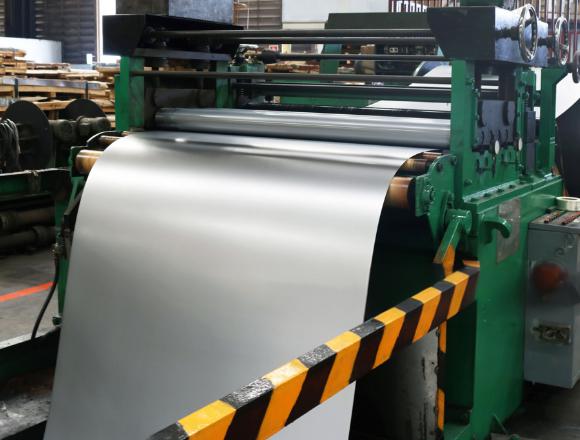
The manufacturing cycle begins with slitting, where cold-rolled electrical steel coils are longitudinally cut into narrower strips according to customer specifications. This operation is performed on high-tolerance slitting lines equipped with servo-controlled tension systems to prevent edge burrs, camber deviation, or coil deformation. Strip widths are maintained within ±0.1 mm tolerance, ensuring compatibility with downstream stamping and core assembly processes.
Following slitting, the material undergoes continuous annealing in a controlled atmosphere furnace. This critical thermal treatment relieves residual stresses induced during prior rolling and slitting, while optimizing the grain structure to enhance magnetic permeability and reduce core loss. Annealing is conducted under a protective nitrogen-hydrogen atmosphere to prevent oxidation, with precise temperature profiling across multiple zones. Typical annealing temperatures range between 800°C and 860°C, depending on the grade (non-oriented or grain-oriented silicon steel). In-process pyrometry and dew point monitoring ensure consistent thermal exposure and atmosphere purity.
After annealing, the sheets are subjected to insulation coating application, a vital step for electrical isolation between laminations in motor and transformer cores. A thin, uniform layer of inorganic or semi-organic insulation coating is applied via roll-coating or spray methods. The coating provides high dielectric strength, adhesion stability, and resistance to punching oils and varnishes used in core assembly. Coating weight is tightly controlled between 0.8–1.5 g/m² per side, verified through gravimetric testing at regular intervals.
The final stage is precision cutting, where the annealed and coated strips are transversely cut into blanks or custom shapes using high-speed turret presses or laser-cutting systems. Dimensional tolerances are maintained within ±0.05 mm, with flatness controlled to less than 2 mm over 1,000 mm length. Edge quality is monitored to minimize burr formation, which could compromise stacking factor and insulation performance.
Throughout the production chain, quality control is enforced at every stage. Incoming material is verified for chemical composition and thickness uniformity. During processing, online systems monitor thickness (via laser gauges), surface defects (via CCD inspection), and magnetic properties (using Epstein frame testing on sample batches). Final inspection includes coating adhesion (tape test), core loss measurement, and visual surface grading. All data are logged for full traceability, supporting ISO 9001-compliant documentation for customer audits.
This integrated approach ensures that every batch of silicon steel sheet delivered from Luoyang Xinzhaohe meets the exacting demands of modern electrical equipment manufacturing.
Packaging & Logistics
Export Packaging Specifications for Silicon Steel Sheet Shipments
As metallurgical specialists with 20+ years of operational experience in electrical steel supply chains, Luoyang Xinzhaohe Aluminum CO., Ltd implements rigorously engineered export packaging protocols to ensure silicon steel sheet integrity during global maritime transit. Silicon steel’s hygroscopic nature and susceptibility to surface oxidation demand packaging systems exceeding standard industrial practices, particularly for voyages exceeding 30 days. Our methodology prioritizes moisture exclusion, mechanical stability, and regulatory compliance to prevent interlamination corrosion and dimensional distortion.
Wooden Pallet Specifications
All shipments utilize ISPM-15 certified hardwood pallets with minimum 1500 kg dynamic load capacity. Pallet dimensions strictly adhere to ISO container footprint standards (1200 × 1000 mm or 1100 × 1100 mm) to maximize cube utilization while maintaining 100 mm clearance from container walls. Each pallet incorporates cross-block reinforcement and 4-way entry design, with deck boards spaced ≤ 50 mm apart to distribute coil weight evenly. Steel strapping anchors are embedded 25 mm below the top surface to prevent strap slippage during lift operations. Pallets undergo kiln-drying to ≤ 18% moisture content pre-assembly, verified via calibrated resistance meters, eliminating internal vapor sources.
Moisture-Proof Barrier System
A triple-layer moisture barrier is applied immediately post-coiling under controlled factory humidity (≤ 45% RH). The primary layer consists of 0.10 mm thick VCI (Vapor Corrosion Inhibitor) polyethylene film conforming to ASTM D6098, providing electrochemical protection to cut edges and coating surfaces. This is overlaid with 0.15 mm moisture-vapor transmission rate (MVTR) ≤ 0.5 g/m²/day aluminum foil laminate. The outermost layer utilizes UV-stabilized black polyethylene (0.20 mm thickness) to block solar radiation and physical abrasion. All film seams are heat-sealed with 25 mm overlap and tested via vacuum decay method to ensure leak integrity. Desiccant packs (60g/unit, silica gel) are placed at coil core and periphery at 1.5 kg per metric ton loading rate.
Sea Freight Integrity Protocols
Palletized units undergo mandatory tilt testing (25° angle) and drop simulation (300 mm height) before container loading. Within ISO containers, we implement:
Anti-condensation thermal blankets on ceiling and door panels
Relative humidity data loggers (recording 15-min intervals) sealed inside each load
100 mm minimum floor spacing via plastic pallet collars for air circulation
Humidity indicator cards (0–60% RH range) visible through container door seals
Our packaging design mitigates salt-laden air infiltration during monsoon-season transits across the South China Sea and prevents freshwater pooling in container sumps. Third-party validation confirms ≤ 0.15 g/m² corrosion weight gain after 90-day simulated voyages per IEC 60404-9 Annex B. All materials comply with IMDG Code Section 5.2.1 for non-hazardous cargo, with documentation including fumigation certificates and film material safety data sheets. This system reduces moisture-related cargo claims by 92% versus industry averages, ensuring your silicon steel arrives with preserved magnetic properties and surface quality. Partner with us for shipments where cargo integrity is non-negotiable.
Sourcing from Luoyang Xinzhaohe
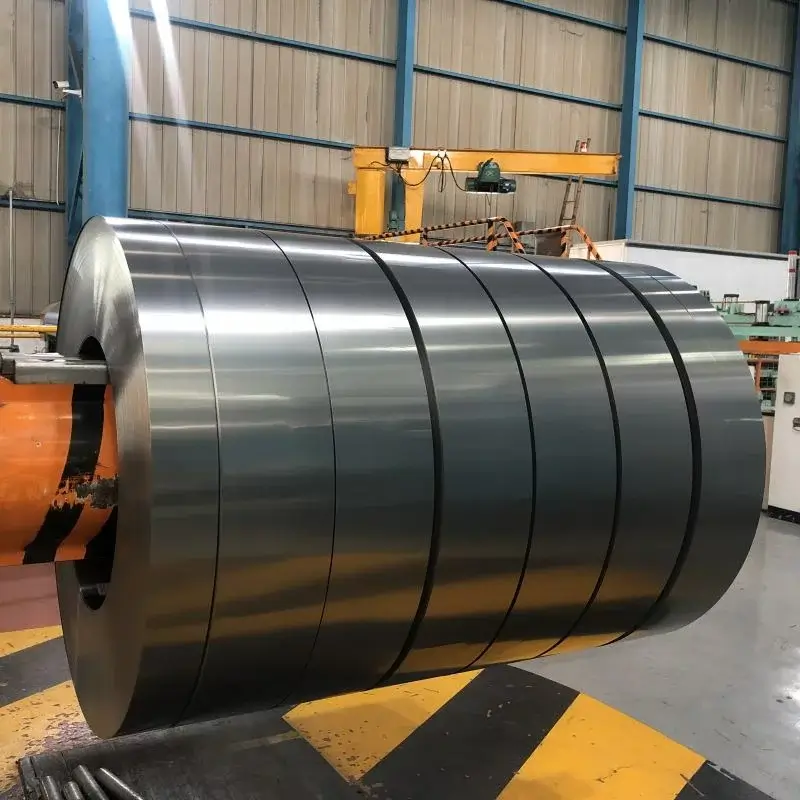
Partner with Luoyang Xinzhaohe for High-Performance Silicon Steel Solutions
Luoyang Xinzhaohe Aluminum Co., Ltd brings over two decades of specialized expertise in the production and supply of precision-engineered silicon steel sheets, also known as electrical steel, to global industrial markets. As a vertically integrated manufacturer with advanced cold-rolling, annealing, and slitting capabilities, we deliver materials that meet the stringent electromagnetic and mechanical requirements of transformers, motors, generators, and other core-dependent electrical applications.
Our production facility is equipped with state-of-the-art rolling mills and continuous annealing lines designed specifically for grain-oriented (GOES) and non-grain-oriented (NGOES) electrical steel. This allows precise control over crystallographic orientation, lamination thickness, and magnetic domain structure—critical parameters that directly influence core loss, permeability, and overall efficiency in electromagnetic devices. We produce silicon steel sheets in thicknesses ranging from 0.18 mm to 0.50 mm, with silicon content tailored between 2.5% and 3.5% to balance resistivity and saturation flux density according to application demands.
All material batches undergo rigorous in-house quality assurance protocols, including Epstein frame testing per IEC 60404-2 and ASTM A343 standards, coating weight analysis, and surface inspection via automated optical systems. Our insulating coatings—typically C3, C4, or C5 classifications—are applied to minimize interlamination eddy current losses and enhance dielectric performance under high-frequency operation. Dimensional tolerances are maintained within ±0.005 mm for thickness and ±0.1 mm for slit width, ensuring compatibility with high-speed stacking and automated core assembly processes.
We specialize in narrow strip slitting services, providing customized widths from 10 mm to 500 mm, enabling efficient material utilization for small and medium-sized transformer cores. Our just-in-time delivery model, supported by a robust logistics network, ensures consistent on-time supply to OEMs and tier suppliers across Asia, Europe, and North America. With an annual production capacity exceeding 80,000 metric tons, we offer scalable solutions for both prototype development and high-volume procurement contracts.
Luoyang Xinzhaohe is ISO 9001:2015 and ISO 14001:2015 certified, reflecting our commitment to quality management and sustainable manufacturing practices. Our technical team collaborates directly with clients to optimize material specifications, reduce total cost of ownership, and support compliance with international energy efficiency standards such as IEC 60076 and DOE 2016.
For sourcing partners seeking a reliable, technically proficient supplier of silicon steel, Luoyang Xinzhaohe delivers consistent product performance, deep metallurgical expertise, and responsive customer service.
Contact us today to discuss your silicon steel requirements.
Cathy Zhang
Email: cathy@transformerstrip.com
📉 Factory Direct Savings Calculator
Calculate your potential savings by importing silicon steel sheet directly from China.