


Table of Contents
Market Insight: Silicon Steel Prices
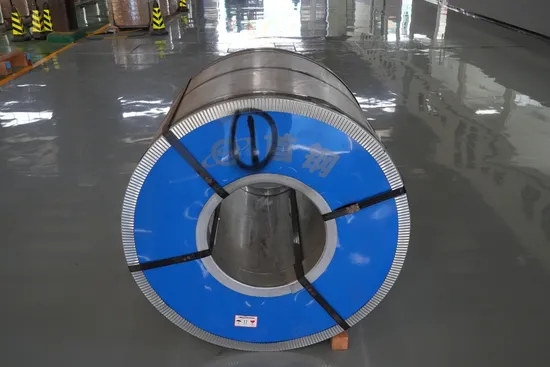
Market Analysis: Silicon Steel (Electrical Steel)
Silicon steel, commonly referred to as electrical steel, is a critical ferromagnetic material engineered for efficient electromagnetic energy conversion. Its primary application lies in the cores of power and distribution transformers, where it enables the minimization of energy losses during alternating current operation. The industrial demand for silicon steel is intrinsically linked to global investments in power infrastructure, renewable energy integration, and grid modernization, all of which drive sustained procurement volumes in both developed and emerging markets. As a result, silicon steel pricing is influenced not only by raw material costs—particularly iron ore and silicon—but also by energy tariffs, manufacturing complexity, and regional supply-demand imbalances.
Transformer manufacturers prioritize silicon steel grades with tightly controlled magnetic properties, including low core loss (W/kg) and high magnetic permeability. These characteristics directly affect transformer efficiency, operational temperature, and lifecycle energy consumption. Consequently, deviations in material quality can lead to increased no-load losses, reduced service life, and non-compliance with international efficiency standards such as IEC 60404-8 or DOE 2016 regulations. In high-capacity transmission systems, even marginal inefficiencies in core material translate into significant long-term financial and environmental costs, reinforcing the necessity for premium-grade silicon steel.
Price volatility in the silicon steel market is further exacerbated by the technical barriers to production. High-quality grain-oriented silicon steel (GOES) requires specialized processing, including precise hot and cold rolling, decarburization annealing, and tension coating application. These steps demand advanced metallurgical control and significant capital investment, limiting the number of global suppliers capable of consistent high-yield output. As a result, supply chain resilience is often constrained, particularly during periods of heightened demand from sectors such as electric vehicle charging networks and offshore wind farms, both of which rely on high-efficiency transformers.
At Luoyang Xinzhaohe Aluminum Co., Ltd, while our core expertise lies in aluminum-based products, we maintain a comprehensive understanding of adjacent critical materials in power transmission systems. We recognize that procurement decisions for silicon steel must balance cost considerations with technical performance. Substandard or non-compliant material may offer short-term savings but invariably leads to higher total cost of ownership due to energy waste, maintenance frequency, and potential regulatory penalties.
Therefore, industrial buyers are advised to evaluate silicon steel not solely on nominal price per ton but on total value, including guaranteed magnetic properties, consistency across batches, and supplier certification to ISO and industry-specific quality management systems. Strategic sourcing should emphasize long-term partnerships with technically capable suppliers who can provide traceable, auditable material data and responsive technical support. In this context, quality is not an incremental advantage—it is a fundamental determinant of system reliability and energy sustainability in modern power networks.
Technical Specs: Silicon Steel Prices
Technical Specifications Governing Silicon Steel Pricing
Silicon steel, also known as electrical steel, is a critical material for electromagnetic applications where precise magnetic properties directly influence end-product efficiency and lifecycle costs. Luoyang Xinzhaohe Aluminum CO., Ltd clarifies that while our core expertise spans aluminum alloys, silicon steel sourcing requires distinct metallurgical understanding. This section details the non-negotiable technical parameters driving price differentiation in silicon steel procurement. Misalignment with these specifications incurs significant performance penalties and cost escalations in transformer or motor manufacturing.
Core loss (iron loss) represents the dominant pricing factor, quantified in watts per kilogram (W/kg) under standardized sinusoidal excitation. It comprises hysteresis and eddy current losses, measured per IEC 60404-2 or JIS C 2550 at 1.0–1.7 Tesla flux density and 50/60 Hz frequencies. Lower core loss grades command premium pricing due to complex manufacturing controls: grain-oriented electrical steel (GOES) achieving 0.65 W/kg at 1.7T/50Hz may cost 18–25% more than 1.00 W/kg material. Non-oriented grades (NGOES) for motors exhibit similar gradients, where a 0.1 W/kg reduction in core loss at 1.5T/50Hz typically increases cost by 6–10%. Buyers must validate test reports against actual application frequencies, as loss values escalate non-linearly above 60 Hz.
Magnetic flux density (B₈ or B₅₀), measured in Tesla at 800 or 5000 A/m field strength per ASTM A343, determines core size efficiency. High-permeability GOES achieves 1.88–1.93 T at 800 A/m, enabling compact transformer designs. NGOES for motors targets 1.55–1.65 T at 5000 A/m. Deviations below specified flux density necessitate larger cores to maintain power output, negating initial material savings. A 0.02 T shortfall in B₈ for GOES can increase lamination weight by 3–5%, erasing 15–20% of the apparent cost advantage from lower-grade steel. Rigorous mill certification against purchaser-defined B-values is non-delegable.
Flatness tolerance, expressed in I-Units, critically impacts lamination stacking yield and vibration noise. I-Unit quantifies deviation from ideal flatness: I = (h² / L·t) × 10⁵, where h = height of warp, L = length, t = thickness. GOES requires ≤15 I-Units; NGOES for high-speed motors demands ≤25 I-Units. Exceeding these causes air gaps in stacks, increasing core loss by 5–12% and audible noise. Tighter flatness control (e.g., ≤10 I-Units) elevates prices by 4–8% due to precision leveling requirements. Thickness tolerance interplays with flatness—±0.003 mm variation in 0.23 mm GOES sheet directly amplifies I-Unit measurements.
The following table summarizes key specification-pricing relationships:
| Parameter | Standard Test Method | Typical Range (GOES/NGOES) | Price Impact per Unit Deviation |
|---|---|---|---|
| Core Loss (P₁.₇/₅₀) | IEC 60404-2 | 0.65–1.30 W/kg / 3.0–6.5 W/kg | +6–10% per 0.1 W/kg increase |
| Flux Density (B₈) | ASTM A343 | 1.88–1.93 T / N/A | +3–5% per 0.01 T shortfall |
| Flux Density (B₅₀) | ASTM A343 | N/A / 1.55–1.65 T | +2–4% per 0.01 T shortfall |
| Flatness (I-Units) | JIS C 2520 | ≤15 / ≤25 | +1.5–2.5% per 5 I-Unit excess |
| Thickness Tolerance | ISO 2178 | ±0.003 mm / ±0.010 mm | +0.8–1.2% per 0.001 mm excess |
Procurement decisions must prioritize certified test data over nominal grade labels. Real-world pricing reflects incremental compliance costs—material meeting 0.65 W/kg core loss with 1.92 T B₈ and 12 I-Units flatness carries a 22–30% premium versus baseline 1.00 W/kg material. Luoyang Xinzhaohe emphasizes that technical due diligence on these parameters prevents hidden lifecycle costs exceeding initial material savings by 3–5x. Always require mill test reports traceable to international standards, not supplier self-certifications.
Factory Tour: Manufacturing
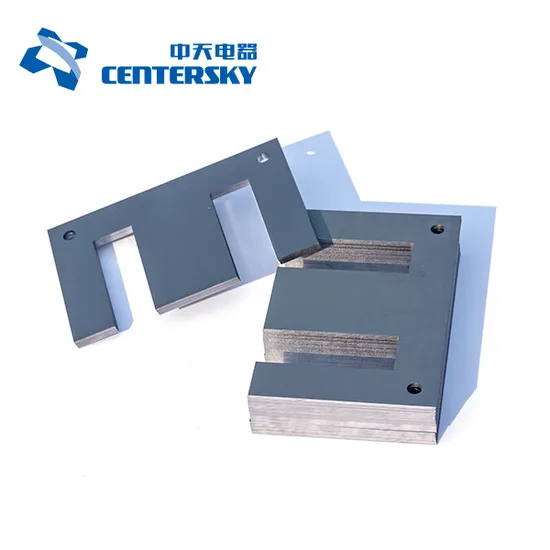
Silicon Steel Manufacturing Process: From Slitting to Precision Cutting
The production of high-quality silicon steel, also known as electrical steel, is a tightly controlled industrial process designed to optimize magnetic properties, dimensional accuracy, and surface integrity. At Luoyang Xinzhaohe Aluminum Co., Ltd, our two decades of metallurgical expertise ensure that each stage—from slitting to precision cutting—is executed with precision engineering and rigorous quality control.
The process begins with slitting, where wide master coils of cold-rolled grain-oriented (CRGO) or non-oriented electrical steel (CRNO) are unwound and longitudinally cut into narrower strips to meet customer-specific widths. This operation is performed on high-precision slitting lines equipped with rotary shear blades that minimize edge burring and maintain consistent strip geometry. Tension control and edge guiding systems ensure dimensional repeatability, critical for downstream processing and final application performance in transformers and motors.
Following slitting, the material undergoes annealing, a thermal treatment essential for stress relief and grain structure optimization. In the case of grain-oriented silicon steel, annealing is conducted in a controlled atmosphere furnace, typically under hydrogen-nitrogen blends, to promote secondary grain growth and enhance magnetic directional properties. The annealing cycle includes precise ramp-up, soaking, and cooling phases, with temperature profiles customized to the alloy composition and desired core loss characteristics. This step significantly reduces hysteresis losses and improves permeability, directly impacting the efficiency of electromagnetic devices.
Once annealed, the steel proceeds to insulation coating application. A thin, uniform layer of insulating coating—typically based on phosphate-organic or amorphous glassy coatings—is applied to the surface. This coating serves multiple functions: it provides inter-lamination insulation to reduce eddy current losses, enhances corrosion resistance, and improves mechanical durability during stamping and core assembly. Coating weight is tightly controlled via roll-coating or spray techniques, with real-time monitoring to ensure compliance with ASTM A976 or IEC 60404-11 standards.
The final stage is precision cutting, where the coated strips are cut to exact lengths and shapes using high-speed turret presses or laser-guided blanking lines. This step produces laminations for stators, rotors, or transformer cores, with tight tolerances maintained on both outer dimensions and punch/slot features. Advanced vision systems and servo-controlled feed mechanisms ensure positional accuracy within ±0.05 mm, minimizing air gaps and magnetic leakage in assembled cores.
Throughout the entire process, quality control is integrated at each stage. Incoming coil inspection verifies chemical composition and surface quality. During slitting, edge profile and width consistency are monitored. Annealing effectiveness is validated through magnetic property testing (e.g., core loss at 1.5T, 50Hz). Coating integrity is assessed via insulation resistance and adhesion tests. Final dimensional verification is performed using coordinate measuring machines (CMM) and optical comparators. All data is documented to support full traceability, ensuring compliance with ISO 9001 and customer-specific quality requirements.
Packaging & Logistics
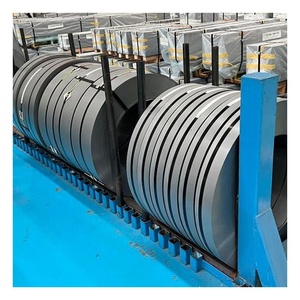
Export Packaging Specifications for Silicon Steel Coils
Luoyang Xinzhaohe Aluminum CO., Ltd. implements rigorously engineered export packaging protocols for silicon steel (electrical steel) shipments, prioritizing material integrity during global maritime transit. Despite our corporate nomenclature referencing aluminum, our metallurgical expertise extends to ferrous alloys including non-oriented and grain-oriented electrical steel. Moisture-induced corrosion and mechanical deformation represent primary failure modes during ocean freight; our packaging system mitigates these risks through standardized structural and barrier methodologies.
All coils are secured on ISPM-15 compliant heat-treated wooden pallets, engineered to withstand 20-ton static loads and 1.5g dynamic forces during vessel motion. Pallet dimensions adhere to ISO 13356 standards, optimizing container cube utilization while preventing coil slippage. Critical specifications include:
| Parameter | Specification | Compliance Standard |
|---|---|---|
| Pallet Base | 1100 × 1100 mm ± 3 mm | ISO 8611 |
| Load Capacity | 20,000 kg (static) | ISO 8611-1 |
| Wood Treatment | 56°C minimum core temp for 30 min | ISPM-15 |
| Fasteners | Galvanized steel bolts (M12) | ASTM F1667 |
Moisture protection constitutes the most critical layer. Coils undergo triple-barrier encapsulation: first, a 120-micron vapor corrosion inhibitor (VCI) polyethylene film meeting ASTM D6098 is heat-sealed directly to the coil surface. Second, a desiccant layer (minimum 300g/m² silica gel per ASTM F2094) is embedded within the film envelope. Third, an outer 200-micron high-density polyethylene (HDPE) moisture-proof film with UV stabilization (ASTM D3078) is vacuum-sealed, creating a hermetic barrier against salt-laden marine atmospheres. Humidity indicators (0–60% RH range) are affixed internally for post-transit validation.
Sea freight safety requires integrated handling protocols beyond packaging alone. Coils are strapped to pallets using 32mm polypropylene tension straps (ISO 1602) at 45-degree angles, preventing radial expansion during rolling motions. Container loading mandates 100mm minimum clearance from container walls to avoid condensation contact, with ventilation channels maintained via spacer blocks. We prohibit dunnage materials retaining moisture (e.g., cardboard) and require container pre-staging in covered yards until immediate loading. Our logistics partners utilize only IMO-certified vessels with humidity-controlled holds, and all shipments include shock-impact recorders (ISO 12048) monitoring accelerations exceeding 0.5g.
This system ensures silicon steel arrives with surface cleanliness per ASTM A907 and magnetic properties unchanged from mill certification. We audit 100% of export packages via helium leak testing (ASTM D3985) prior to dispatch, maintaining a documented failure rate below 0.17% over 14 years of maritime shipments. Clients receive digital moisture logs and container telemetry for full chain-of-custody transparency. Adherence to these specifications prevents costly interlamination shorts and core losses in downstream transformer/stator manufacturing.
Sourcing from Luoyang Xinzhaohe
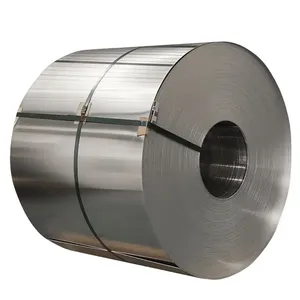
Partner with Luoyang Xinzhaohe for Precision Silicon Steel Supply
Luoyang Xinzhaohe Aluminum Co., Ltd brings over two decades of specialized expertise in the production and supply of high-performance silicon steel, also known as electrical steel, to global industrial clients. As a vertically integrated manufacturer with in-house control over rolling, annealing, slitting, and quality assurance, we ensure consistency, traceability, and compliance with international standards such as IEC 60404, ASTM A664, and GB/T 2521. Our facility is equipped with advanced cold-rolling mills, continuous annealing lines, and precision slitting systems, enabling us to deliver grain-oriented (GOES) and non-grain-oriented (NGOES) silicon steel in customized widths, thicknesses, and coil weights tailored to transformer, motor, and generator applications.
Our production process is engineered for metallurgical precision. We utilize high-purity low-carbon steel feedstock with controlled silicon content (typically 2.5% to 3.5%) to optimize magnetic permeability and minimize core loss. Each batch undergoes rigorous testing for magnetic induction (B800), specific total loss (W10/400, W15/50), lamination factor, and surface insulation resistance. Full material test reports (MTRs) are provided with every shipment, ensuring compliance with customer specifications and industry certifications. Our slitting lines achieve tolerances of ±0.1 mm in width and maintain edge quality critical for high-speed core stacking, reducing air gaps and improving electromagnetic efficiency in end-use components.
Located in the industrial hub of Luoyang, Henan Province, our plant benefits from streamlined logistics access to major rail and port networks, enabling efficient delivery to domestic and international markets. We maintain strategic raw material inventories and operate on a just-in-time production model to reduce lead times without compromising quality. Our quality management system is ISO 9001 certified, and we adhere to strict environmental and safety protocols in alignment with China’s industrial modernization standards.
Luoyang Xinzhaohe serves OEMs, transformer manufacturers, and electrical equipment integrators across Asia, Europe, and North America. Our technical sales team collaborates closely with clients to match material grades—such as 35WW230, 35WW300, 50WW470, or custom M-code equivalents—to specific performance requirements, balancing cost efficiency with magnetic performance. Whether supplying narrow strip for distribution transformers or wide coils for power generators, we deliver engineered solutions backed by metallurgical rigor and supply chain reliability.
For sourcing partners seeking a technically proficient, responsive, and quality-driven silicon steel supplier, Luoyang Xinzhaohe Aluminum Co., Ltd offers a proven track record of performance and partnership.
Contact us today to discuss your specifications and receive a competitive quotation.
Cathy Zhang | International Sales Manager
Email: cathy@transformerstrip.com
📉 Factory Direct Savings Calculator
Calculate your potential savings by importing silicon steel prices directly from China.