


Table of Contents
Market Insight: Silicon Steel Mechanical Properties

Market Analysis: Silicon Steel Mechanical Properties in Transformer Applications
Silicon steel, or electrical steel, serves as the foundational material for transformer cores due to its optimized magnetic properties. However, industrial demand increasingly prioritizes mechanical properties alongside magnetic performance, as these directly impact core integrity, manufacturing efficiency, and long-term operational reliability. Transformer cores undergo complex mechanical stresses during lamination stacking, coil winding, and operational vibration. Inadequate mechanical characteristics lead to core distortion, increased magnetostriction, and elevated no-load losses, directly compromising energy efficiency and service life.
Critical mechanical properties include yield strength, ductility, and punchability. Yield strength must exceed 250 MPa to prevent plastic deformation during core assembly under clamping pressure. Insufficient yield strength causes lamination buckling, creating air gaps that degrade magnetic flux paths and increase core losses by 5–15%. Ductility, measured by elongation (A₈₀), requires a minimum of 20% to withstand punching and stacking without microcracks. Low ductility induces edge defects that propagate during operation, accelerating insulation degradation and localized heating. Punchability—quantified by burr height and shear edge quality—is equally vital; burrs exceeding 5% of material thickness cause interlaminar short circuits, raising eddy current losses by up to 20%. Residual stresses from poor mechanical processing further degrade magnetic permeability, increasing hysteresis losses.
The table below summarizes mechanical property thresholds for standard versus high-performance silicon steel grades in transformer manufacturing:
| Property | Standard Grade (IEC M400-50A) | High-Performance Grade (IEC M270-35A) | Critical Impact on Transformers |
|---|---|---|---|
| Yield Strength (MPa) | ≥ 230 | ≥ 280 | Prevents core distortion under clamping loads |
| Elongation A₈₀ (%) | ≥ 18 | ≥ 22 | Reduces microcracking during punching |
| Burr Height (μm) | ≤ 15 | ≤ 8 | Minimizes interlaminar shorts |
| Residual Stress (MPa) | ≤ 80 | ≤ 40 | Maintains magnetic permeability stability |
Quality deviations in these parameters incur significant downstream costs. A 10 MPa deficit in yield strength may increase core assembly scrap rates by 8–12%, while excessive burrs necessitate costly post-punching deburring processes. Field failures from mechanical degradation—such as audible noise, hotspots, or premature insulation failure—result in unplanned outages, with repair costs averaging 3–5x the initial core material value.
For transformer manufacturers, stringent mechanical property adherence is non-negotiable in today’s efficiency-driven market. Global standards like IEC 60404-8 and DOE 2016 regulations mandate ≤ 0.30 W/kg core loss at 1.7 T, achievable only with silicon steel exhibiting controlled mechanical behavior. At Luoyang Xinzhaohe Aluminum Co., Ltd., our 20+ years in precision steel processing ensure mechanical properties are engineered holistically with magnetic performance. We validate every coil through tensile testing, punchability trials, and residual stress mapping—guaranteeing cores that meet Tier-1 transformer OEM specifications for durability and efficiency. Sourcing silicon steel solely on electrical metrics risks systemic reliability failures; mechanical integrity defines the operational ceiling of modern power infrastructure.
Technical Specs: Silicon Steel Mechanical Properties
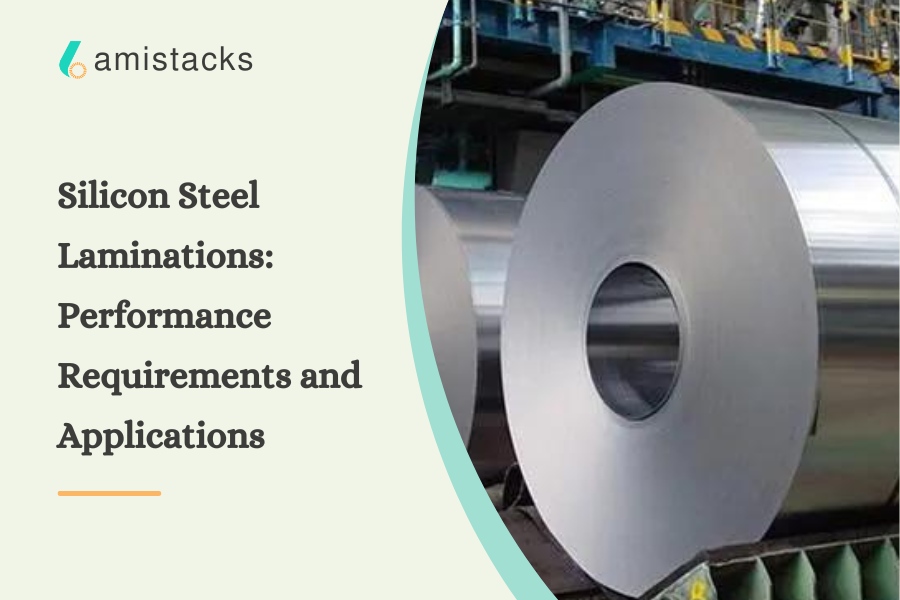
Silicon Steel Mechanical and Electromagnetic Properties: Technical Specifications
Silicon steel, also known as electrical steel, is a critical ferromagnetic material engineered for efficient performance in alternating current (AC) applications such as transformers, motors, and generators. At Luoyang Xinzhaohe Aluminum Co., Ltd, with over two decades of experience in advanced metal processing and supply chain optimization, we emphasize precision in material specifications to ensure optimal performance in electromagnetic systems. The mechanical and electromagnetic properties of silicon steel directly influence core efficiency, energy loss, and structural integrity in end-use applications.
Core loss, or iron loss, is a fundamental parameter that quantifies the energy dissipated as heat during magnetization cycles. It consists of hysteresis loss and eddy current loss, both of which are minimized through controlled silicon content (typically 2–4.5%) and grain-oriented processing. For non-oriented silicon steel (NO), core loss values at 1.5 T and 50 Hz range from 3.0 to 6.0 W/kg, depending on grade and thickness. Grain-oriented silicon steel (GO) exhibits significantly lower losses, typically between 0.7 and 1.3 W/kg at 1.7 T and 50 Hz, due to enhanced crystallographic alignment during manufacturing. These values are determined under standardized test conditions per IEC 60404-2 and ASTM A343.
Magnetic flux density, measured in Tesla (T), reflects the material’s capacity to carry magnetic flux. High flux density reduces the required cross-sectional area of magnetic cores, enabling compact and efficient designs. Non-oriented grades typically achieve saturation flux densities of 1.9–2.0 T, with normal induction (B50) ranging from 1.5 to 1.7 T. Grain-oriented variants exhibit superior directional performance, with maximum induction (B8) exceeding 1.85 T in the rolling direction. This anisotropic behavior necessitates precise orientation during core assembly to leverage full magnetic potential.
Flatness is a critical mechanical property affecting lamination stacking, core uniformity, and air gap minimization. Poor flatness leads to increased vibration, noise, and localized flux concentration, degrading efficiency. Flatness is measured in mm/m and must be tightly controlled—typically within 5–10 mm/m for non-oriented steel and 3–6 mm/m for grain-oriented grades. Advanced leveling and tension leveling techniques during cold rolling and annealing ensure compliance with these tolerances.
Surface insulation coating is also integral to mechanical performance, providing interlaminar resistance and enhancing core loss characteristics. Coatings must exhibit adhesion strength > 1.0 N/mm, withstand bending without cracking, and maintain dielectric integrity under operating temperatures up to 155°C.
The following table summarizes key technical parameters for common silicon steel grades:
| Parameter | Non-Oriented (NO) Typical Range | Grain-Oriented (GO) Typical Range | Test Standard |
|---|---|---|---|
| Core Loss (P1.5/50) | 3.0 – 6.0 W/kg | N/A | IEC 60404-2 |
| Core Loss (P1.7/50) | 4.0 – 8.0 W/kg | 0.7 – 1.3 W/kg | IEC 60404-2 |
| Magnetic Flux Density (B50) | 1.5 – 1.7 T | N/A | IEC 60404-3 |
| Magnetic Flux Density (B8) | 1.9 – 2.0 T | 1.85 – 2.03 T | IEC 60404-3 |
| Thickness Tolerance | ±0.02 – 0.05 mm | ±0.03 – 0.06 mm | ASTM A677 |
| Flatness | 5 – 10 mm/m | 3 – 6 mm/m | Internal QC Protocol |
| Coating Weight | 0.5 – 4.0 g/m² | 1.0 – 3.5 g/m² | ASTM A976 |
These specifications are rigorously validated through in-house and third-party testing to ensure compliance with international standards and customer-specific requirements. Luoyang Xinzhaohe Aluminum Co., Ltd maintains full traceability and quality assurance across all silicon steel product lines.
Factory Tour: Manufacturing
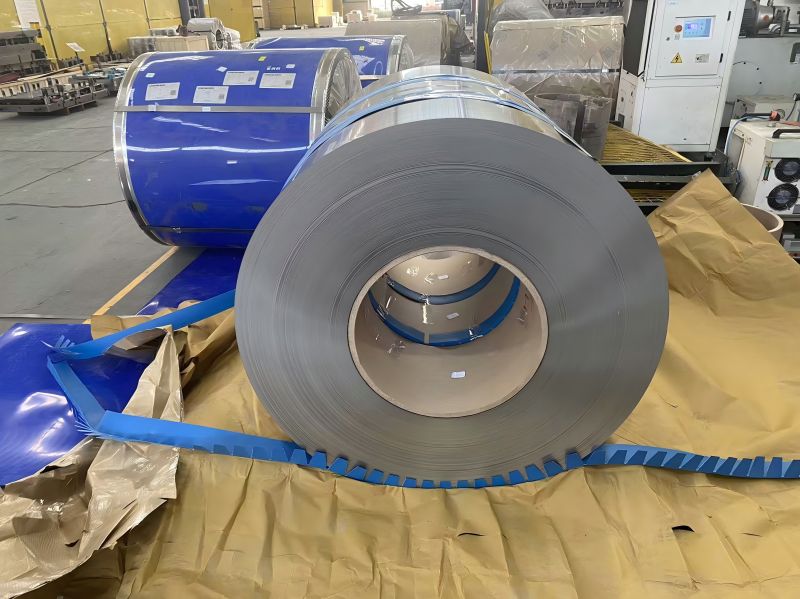
Silicon Steel Manufacturing Process: Precision Engineering for Electromagnetic Performance
Luoyang Xinzhaohe Aluminum CO., Ltd leverages two decades of metallurgical expertise to deliver silicon steel (electrical steel) with rigorously controlled mechanical and electromagnetic properties. Our integrated production sequence ensures compliance with global standards including IEC 60404-1 and ASTM A664, beginning with precision slitting of cold-rolled coils. Material is fed through servo-controlled tension systems to minimize edge deformation, achieving width tolerances of ±0.1 mm. Real-time laser micrometers monitor dimensional consistency, while edge quality is validated via profilometry to ensure burr heights remain below 5 μm—critical for preventing interlamination shorts in stacked cores.
Annealing follows as a thermomechanical critical path. Coils undergo decarburization annealing at 800–850°C in controlled N₂-H₂ atmospheres to reduce carbon content below 30 ppm, followed by high-temperature grain growth at 1,050–1,150°C to develop the Goss texture {110}<001>. This step optimizes magnetic induction (B₈₀₀ ≥ 1.90 T) and minimizes core loss (W₁₇/₅₀ ≤ 1.20 W/kg). In-line Gauss meters and Epstein frame testers verify magnetic properties per batch, with deviations triggering immediate process recalibration.
Insulation coating applies a dual-layer inorganic-organic system to enhance interlamination resistance and reduce eddy current losses. A phosphate-based base coat (8–12 mg/m²) is electrodeposited for adhesion, followed by a tension-coating of colloidal silica-organic resin (15–25 mg/m²). Curing occurs at 500–550°C in oxygen-controlled furnaces. Coating integrity is non-negotiable: adhesion is tested via cross-hatch ASTM D3359, surface resistivity measured at ≥80 Ω·cm (per IEC 60404-11), and thickness mapped via X-ray fluorescence to ensure uniformity within ±15%.
Precision cutting transforms coated coils into final laminations using servo-driven progressive dies or laser systems. Tonnage-controlled stamping maintains punch clearance at 4–6% of material thickness to suppress burr formation, while laser cutting employs nitrogen assist gas for oxide-free edges. Dimensional accuracy is held to ±0.05 mm, with flatness verified to ≤0.15 mm/m via optical flatness scanners. Final QC includes 100% automated vision inspection for micro-cracks and coating defects, alongside batch-level validation of core loss, magnetic polarization, and mechanical yield strength (typically 280–350 MPa for non-oriented grades).
This end-to-end process, monitored through 17+ inline and offline QC checkpoints, guarantees silicon steel meeting stringent OEM requirements for motors, transformers, and renewable energy systems. Luoyang Xinzhaohe’s metallurgical control—from grain orientation to surface engineering—delivers consistent performance where electromagnetic efficiency and mechanical reliability are non-negotiable.
Packaging & Logistics
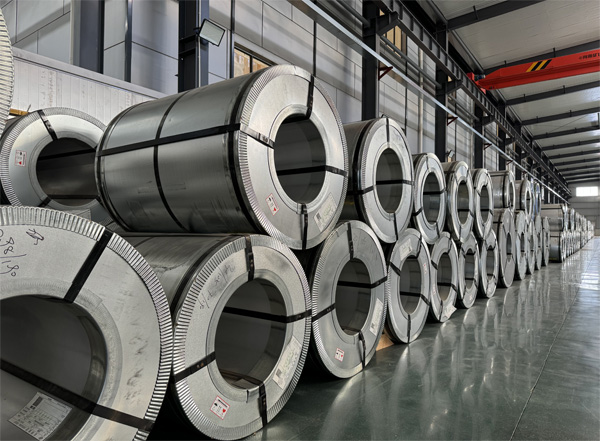
Export Packaging for Silicon Steel: Ensuring Integrity During International Transit
At Luoyang Xinzhaohe Aluminum Co., Ltd, with over two decades of experience in the production and global distribution of high-performance silicon steel, we recognize that proper export packaging is a critical component in maintaining material integrity from factory to end-user. Silicon steel, also known as electrical steel, is highly sensitive to environmental exposure, particularly moisture and mechanical stress during long-haul transportation. Our standardized export packaging protocol is engineered to mitigate these risks, ensuring that products arrive at their destination in optimal condition for immediate processing and integration.
All silicon steel coils and sheets are secured on robust wooden pallets constructed from high-strength, kiln-dried hardwood. These pallets are designed to support the substantial weight of steel shipments while maintaining dimensional stability under dynamic loading conditions typical of maritime transport. Each pallet is treated to ISPM 15 standards, ensuring compliance with international phytosanitary regulations for cross-border movement of wood packaging materials. This treatment prevents the spread of wood-borne pests and guarantees acceptance at ports worldwide.
Immediately after packaging on the pallet, the silicon steel is wrapped in multi-layer moisture-proof film, specifically a co-extruded polyethylene laminate with aluminum foil interlayer. This vapor barrier film provides a high level of protection against humidity, salt air, and condensation—common challenges during sea freight. The wrapping process is performed in a controlled environment to minimize pre-sealing exposure to ambient moisture. Seams are heat-sealed to form a continuous, hermetic enclosure, significantly reducing the risk of oxidation and surface degradation over extended shipping durations.
To further enhance protection, desiccant packs are strategically placed within the sealed film envelope to absorb any residual moisture. Additionally, edge protectors made from corrugated fiberboard or steel strips are applied to coil edges to prevent mechanical damage during handling and transit. Each package is labeled with tamper-evident seals and marked with handling indicators, including orientation arrows and “Do Not Stack” warnings where applicable, to guide proper cargo management.
Our packaging design is validated through rigorous simulation testing, including vibration, drop, and humidity exposure trials, replicating real-world sea freight conditions. This ensures compliance with ISO 12192 (compression strength) and ISTA 3A standards for transport integrity. Every shipment undergoes final inspection before dispatch, verifying packaging integrity and adherence to customer-specific requirements.
Luoyang Xinzhaohe Aluminum Co., Ltd is committed to delivering silicon steel that meets exacting technical specifications. Our export packaging system is not an auxiliary step—it is an integrated part of our quality assurance framework, engineered to preserve the mechanical and electromagnetic properties of silicon steel across global supply chains. By combining structural robustness with advanced moisture control, we ensure safe, reliable delivery to industrial clients in Europe, Southeast Asia, the Americas, and beyond.
Sourcing from Luoyang Xinzhaohe
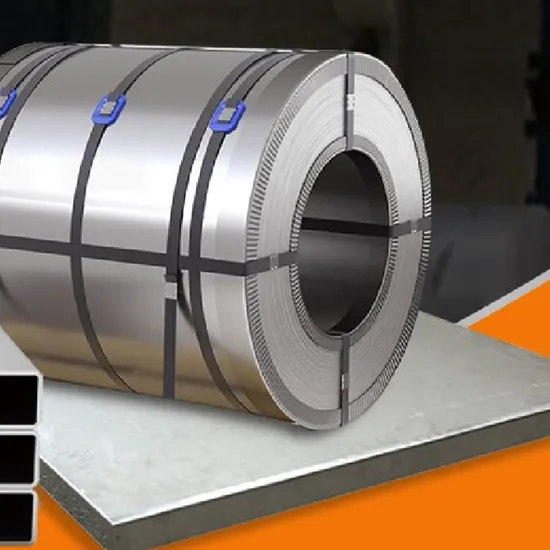
Partner with Luoyang Xinzhaohe for Precision Silicon Steel Solutions
Luoyang Xinzhaohe Aluminum CO., Ltd leverages over two decades of specialized metallurgical expertise to deliver silicon steel products engineered for critical electrical applications. Our factory infrastructure is purpose-built for the stringent demands of electrical steel production, ensuring mechanical properties align precisely with global transformer and motor manufacturing standards. We operate advanced continuous annealing and coating lines capable of processing non-oriented (NO) and grain-oriented (GO) silicon steel grades from 0.18 mm to 0.65 mm thickness. This technical capability directly translates to controlled mechanical behavior essential for lamination stacking and core assembly, including optimized yield strength (140–320 MPa for NO grades), tensile strength (280–450 MPa), and elongation (≥25%) to prevent burring during stamping. Our proprietary decarburization and secondary recrystallization processes for GO steel ensure minimal magnetic aging and exceptional planar anisotropy, critical for maintaining dimensional stability under electromagnetic stress cycles.
Quality assurance is embedded at every process stage through in-line monitoring systems and offline validation. All mechanical property testing adheres to ASTM A343/A343M and IEC 60404-2 protocols, with certified laboratories verifying hardness uniformity (Vickers 85–120 HV), surface roughness (Ra 0.3–1.2 μm), and interlaminar insulation resistance. Our statistical process control (SPC) framework maintains tight tolerances on key parameters:
| Property | Tolerance Range | Test Standard |
|---|---|---|
| Thickness | ±0.003 mm | ASTM A956 |
| Width | ±0.10 mm | JIS C 2520 |
| Core Loss (P1.5/50) | ±0.10 W/kg | IEC 60404-2 |
| Magnetostriction | ≤1.0 ppm | ASTM A783 |
Supply chain resilience is a cornerstone of our operational model. We maintain strategic raw material partnerships with tier-1 silicon iron producers and operate a just-in-time inventory system for 1,200+ ton monthly capacity. This ensures consistent delivery of coils meeting EN 10106 and JIS C 2552 specifications, with traceability from melt chemistry to finished product. Our logistics network supports FCL/LCL shipments globally, featuring climate-controlled warehousing and ISO 9001-certified documentation for seamless customs clearance.
Partnering with Luoyang Xinzhaohe mitigates procurement risk through engineered material consistency and responsive technical collaboration. Our engineers provide application-specific guidance on grade selection, annealing profiles, and edge conditioning to optimize your core performance metrics. For silicon steel solutions where mechanical integrity directly impacts electromagnetic efficiency and operational lifespan, contact Cathy at cathy@transformerstrip.com to discuss your technical requirements and receive a validated production quotation within 24 hours. We commit to delivering material that meets your exacting dimensional, magnetic, and mechanical property specifications—on schedule, every time.
📉 Factory Direct Savings Calculator
Calculate your potential savings by importing silicon steel mechanical properties directly from China.