


Table of Contents
Market Insight: Silicon Steel Coil
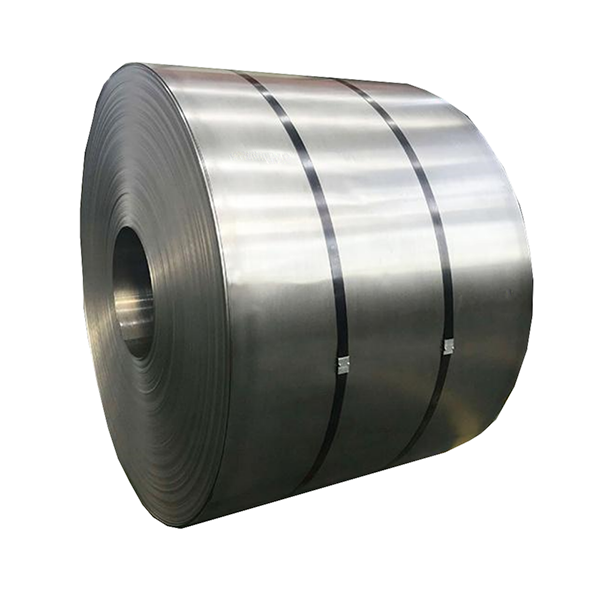
Market Analysis: Silicon Steel (Electrical Steel) for Transformer Applications
Silicon steel coil, specifically grain-oriented electrical steel (GOES), remains the foundational material for high-efficiency power and distribution transformers globally. Its strategic importance stems from irreplaceable magnetic properties that directly govern transformer core performance, energy efficiency, and operational lifespan. Industrial demand is primarily driven by continuous grid modernization, stringent international energy efficiency regulations (e.g., EU Ecodesign Directive, DOE Level 4 in the USA, China GB 20052-2020), and the global push towards decarbonization. Transformer manufacturers constitute the dominant end-user segment, requiring consistent, high-specification material to meet tiered efficiency standards (IE3, IE4, IE5). Emerging demand from renewable energy integration infrastructure, particularly large-scale solar and wind farm step-up transformers, further intensifies market requirements for ultra-low loss grades. Global production capacity is concentrated among specialized steel producers, creating a technically complex supply chain where material availability and quality consistency directly impact transformer OEM production schedules and compliance.
Quality in silicon steel coil is not merely a specification checkbox; it is the critical determinant of transformer performance, total cost of ownership, and regulatory compliance. Key quality parameters include core loss (W/kg at specific flux densities and frequencies), magnetic flux density (B800), lamination factor, and surface insulation coating integrity. Minor deviations in core loss values translate into significant energy waste over a transformer’s 25-40 year operational life. For instance, a 0.1 W/kg increase in core loss across a large power transformer fleet can equate to multi-megawatt hours of avoidable annual energy loss and substantial CO2 emissions. Flux density impacts core size and material utilization – higher B800 allows for more compact, cost-effective designs. Inconsistent coating or surface defects lead to interlaminar short circuits during core stacking, drastically increasing eddy current losses and localized heating, potentially causing premature failure. Tight control over dimensional tolerances (thickness, width, camber) is equally vital for automated core stacking lines to maintain production yield and core integrity.
The technical consequences of substandard silicon steel are severe. Transformers built with material exceeding core loss specifications fail efficiency certifications, leading to market access denial or costly retrofits. Higher operational losses increase the end-user’s electricity costs over decades, undermining the transformer’s economic value proposition. Poor magnetic properties or coating defects accelerate aging mechanisms, reducing reliability and increasing maintenance costs for grid operators. Consequently, leading transformer manufacturers enforce rigorous supplier qualification protocols, including mill test certificate validation, independent laboratory verification of core loss and flux density, and strict adherence to chemical composition (particularly silicon content 2.9-3.3% for Hi-B GOES) and grain orientation control. Sourcing decisions prioritize metallurgical consistency and technical partnership over marginal cost savings, recognizing that silicon steel quality is inextricably linked to the final product’s performance, reputation, and compliance in a highly regulated market.
Critical Quality Parameters Impact Summary
| Parameter | Typical Specification Range (GOES 23ZH90) | Impact of Deviation | Verification Method |
|---|---|---|---|
| Core Loss (P1.7/50) | ≤ 0.90 W/kg | Increased energy loss, higher TCO, certification failure | Epstein Frame Test (IEC 60404-2) |
| Flux Density (B800) | ≥ 1.89 T | Larger core size, higher material cost, reduced power density | Epstein Frame Test (IEC 60404-2) |
| Thickness Tolerance | ±0.004 mm | Lamination factor reduction, increased noise/vibration | Micrometer Measurement |
| Coating Resistance | 4-8 Ω·cm² | Interlaminar shorts, elevated eddy current loss | Coating Resistance Test |
Technical Specs: Silicon Steel Coil
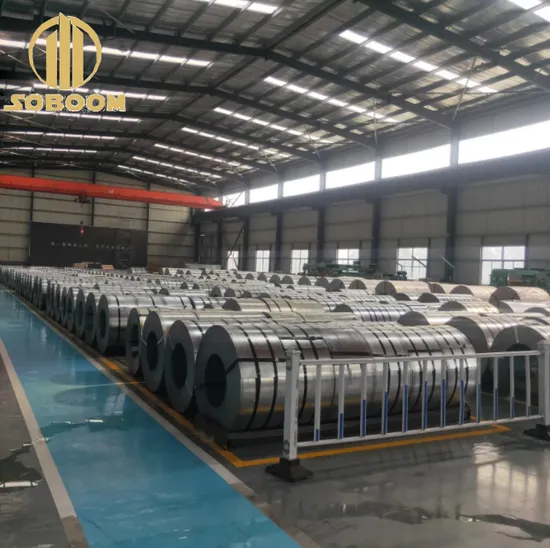
Technical Specifications for Silicon Steel Coil
Silicon steel coil, also known as electrical steel or lamination steel, is a specialized ferromagnetic alloy engineered for optimal electromagnetic performance in power and distribution applications. At Luoyang Xinzhaohe Aluminum Co., Ltd, with over two decades of experience in precision metal manufacturing and supply chain management, we emphasize rigorous adherence to international standards and material consistency in all silicon steel products. The performance of silicon steel is primarily determined by three critical technical parameters: core loss (iron loss), magnetic flux density (B), and geometric flatness. These factors directly influence the efficiency, thermal behavior, and manufacturability of components such as transformer cores, electric motors, and generators.
Core loss, expressed in watts per kilogram (W/kg), measures the energy dissipated as heat under alternating magnetic fields. It is typically evaluated at standard frequencies (50 Hz or 60 Hz) and peak magnetic inductions (e.g., 1.5 T or 1.7 T). Lower core loss values indicate higher energy efficiency and are essential for reducing operational costs in electrical equipment. Core loss is influenced by grain orientation, silicon content (typically 2.5–3.5%), thickness, and the quality of the insulating coating. Non-oriented (NO) and grain-oriented (GO) silicon steels exhibit different loss characteristics, with GO grades offering superior performance in directional flux applications such as power transformers.
Magnetic flux density, measured in Tesla (T), reflects the material’s ability to carry magnetic flux. Higher B values allow for compact and efficient electromagnetic designs. Grain-oriented silicon steel typically achieves saturation flux densities above 2.0 T, with normal induction (B8) values at 800 A/m field strength ranging from 1.85 T to 1.92 T. Non-oriented grades, used in rotating machinery, generally exhibit B50 values (flux density at 5000 A/m) between 1.5 T and 1.8 T, depending on grade and silicon content.
Flatness is a critical geometric specification affecting stack integrity and core vibration. It is quantified as the maximum deviation from planarity over a specified length and must be tightly controlled to ensure uniform lamination stacking and minimize air gaps. Poor flatness leads to increased core loss and audible noise in service.
The table below summarizes key technical parameters for common silicon steel coil grades:
| Parameter | Unit | Non-Oriented (NO) Typical Range | Grain-Oriented (GO) Typical Range | Test Standard |
|---|---|---|---|---|
| Core Loss (P1.5/50) | W/kg | 2.5 – 6.0 | 0.7 – 1.2 | IEC 60404-2 / GB/T 13789 |
| Core Loss (P1.7/50) | W/kg | 4.0 – 9.0 | 0.9 – 1.4 | IEC 60404-2 |
| Magnetic Flux Density (B50) | T | 1.50 – 1.80 | – | IEC 60404-3 |
| Magnetic Flux Density (B8) | T | – | 1.85 – 1.92 | IEC 60404-3 |
| Thickness | mm | 0.30 – 0.65 | 0.23 – 0.30 | IEC 60404-1 |
| Flatness | mm/m | ≤ 5 | ≤ 3 | Internal QC Protocol |
| Silicon Content | wt% | 2.5 – 3.5 | 3.0 – 3.5 | GB/T 223.60 |
All silicon steel coils supplied by Luoyang Xinzhaohe Aluminum Co., Ltd are subject to comprehensive quality control, including magnetic property testing via Epstein frame or Single Sheet Tester (SST), dimensional inspection, and surface integrity verification. Material certifications and test reports are provided with each shipment to ensure traceability and compliance with customer specifications.
Factory Tour: Manufacturing
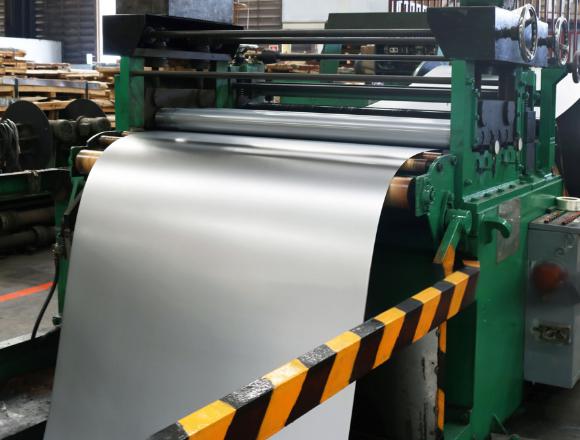
Silicon Steel Coil Manufacturing Process Overview
Luoyang Xinzhaohe Aluminum Co., Ltd leverages 20+ years of metallurgical expertise to deliver precision-engineered silicon steel (electrical steel) coils. Critical clarification: silicon steel is a specialized iron-silicon alloy (not aluminum-based), optimized for electromagnetic applications. Our process ensures minimal core loss and high permeability through rigorously controlled stages.
Slitting
Incoming master coils undergo precision slitting to achieve customer-specified widths. Tension-controlled rotary shear slitters maintain edge straightness within ±0.15 mm tolerance, eliminating burrs that could induce localized eddy currents. Slit edges are optically inspected for micro-tearing; defective sections are automatically rejected via inline vision systems. This stage ensures dimensional conformity for downstream processing and final lamination stacking.
Annealing
Slit coils enter continuous annealing lines operating under controlled nitrogen-hydrogen atmospheres. Critical parameters include:
Decarburization at 820–850°C to reduce carbon content below 30 ppm
High-temperature grain growth at 1,100–1,200°C for Goss texture development (110)[001] orientation
Rapid cooling to suppress carbide precipitation
Annealing homogenizes magnetic properties and relieves residual stresses from slitting. Core loss (W10/400) is reduced by 15–25% versus non-annealed material. In-process thermocouples and atmosphere analyzers maintain ±5°C temperature uniformity and oxygen levels <10 ppm.
Insulation Coating
A thin, uniform insulating layer is applied via roll coating to minimize interlamination eddy currents. We deploy two coating systems:
Inorganic coatings (MgO-based) for high-temperature stability (up to 800°C)
Organic coatings (epoxy/polyester) for superior adhesion and punchability
Coating weight is strictly controlled at 0.8–1.2 g/m² per side using gravimetric feedback loops. Curing occurs at 450–550°C in oxygen-controlled ovens to ensure dielectric strength >500 V/μm without degrading magnetic properties.
Precision Cutting
Final lamination cutting utilizes servo-driven progressive dies or laser systems. Key capabilities include:
Tolerances of ±0.05 mm for critical motor stator/rotor geometries
Burr height <0.02 mm to prevent short circuits in stacked cores
Automated vision-guided nesting to optimize material yield
Cut parts undergo 100% dimensional verification via coordinate measuring machines (CMM), with real-time SPC data logged for traceability.
Integrated Quality Control
QC is embedded at every stage per IEC 60404-1 and customer-specific standards. Critical checkpoints include:
| Process Stage | Key Test Parameters | Acceptance Criteria |
|---|---|---|
| Incoming Coil | Chemical composition (OES) | Si: 2.9–3.3%; C < 0.003% |
| Post-Annealing | Core loss (Epstein frame) | W15/50 ≤ 1.10 W/kg |
| Post-Coating | Coating weight (gravimetric) | 0.8–1.2 g/m²/side |
| Final Product | Stacking factor (laser micrometer) | ≥97.5% at 1 MPa |
All coils receive full magnetic certification reports. Non-conforming material is quarantined for root-cause analysis; our 6-sigma process control ensures >99.2% first-pass yield. This end-to-end technical rigor guarantees silicon steel coils meeting stringent demands of high-efficiency motor and transformer manufacturing.
Packaging & Logistics
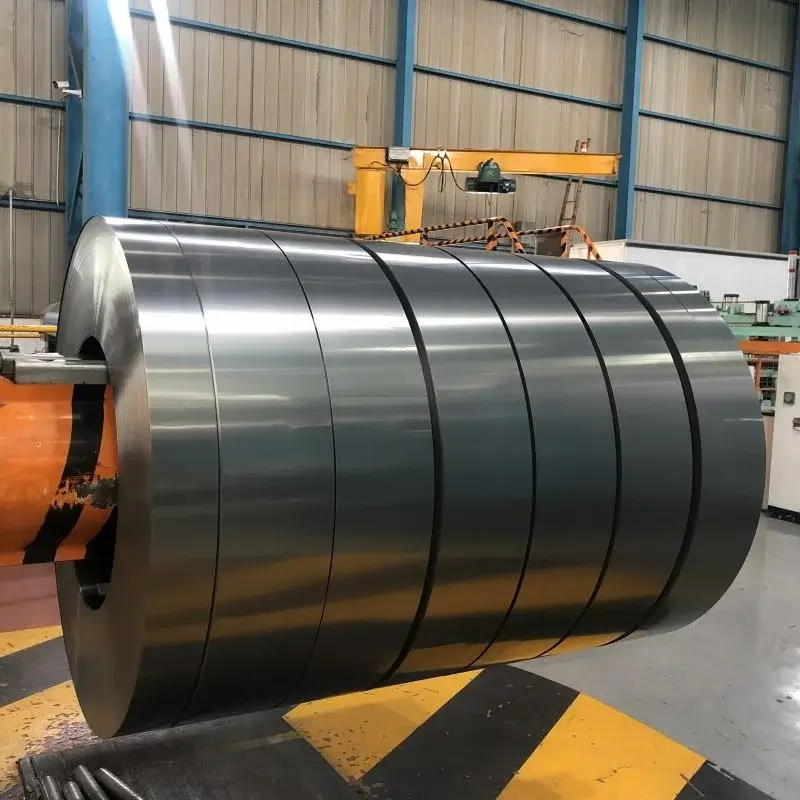
Export Packaging Standards for Silicon Steel Coils at Luoyang Xinzhaohe Aluminum Co., Ltd
At Luoyang Xinzhaohe Aluminum Co., Ltd, our export packaging protocol for silicon steel coils is engineered to ensure maximum product integrity during international maritime transport. With over two decades of experience in the production and global distribution of high-grade electrical steel, we have refined our packaging methodology to meet the rigorous demands of sea freight logistics while preserving the material properties critical to downstream processing and end-use performance.
All silicon steel coils are mounted on robust wooden pallets constructed from high-density, kiln-dried hardwood. These pallets are designed to support coil weights ranging from 5 to 25 metric tons, depending on customer specifications and order volume. The structural integrity of each pallet is verified prior to loading to prevent deformation or failure during handling and stacking. The wooden base is treated in compliance with ISPM 15 standards, ensuring international phytosanitary compliance and resistance to biological degradation during prolonged ocean transit.
Immediately after palletizing, each coil is wrapped in multiple layers of high-tensile moisture-proof plastic film. This multilayer encapsulation forms a continuous vapor barrier that prevents exposure to ambient humidity, salt air, and condensation—common risks in marine environments. The film is heat-sealed at all seams and secured with reinforced edge protectors to maintain a hermetic seal throughout the supply chain. Additionally, desiccant packs are strategically placed within the wrapping to absorb any residual moisture and further mitigate the risk of surface oxidation.
Coils are further protected by the integration of edge protectors made from galvanized steel or reinforced cardboard, which prevent mechanical damage during loading, unloading, and intermodal transfers. The entire packaged unit is then strapped with steel or composite banding, affixed in a cross-pattern configuration to ensure load stability and prevent coil shift during vessel movement.
Our packaging design adheres to ISO 1496 and IEC 60404-13 standards for the transport of electrical steel products, ensuring compatibility with global handling infrastructure. Each shipment is labeled with durable, weather-resistant markings indicating coil specifications, batch numbers, handling instructions, and directional orientation to support proper logistics execution.
The combination of engineered wooden pallets, hermetic moisture protection, and mechanical safeguards ensures that silicon steel coils arrive at their destination in optimal condition—free from rust, deformation, and contamination. This packaging system has been validated across thousands of shipments to markets in Southeast Asia, the Middle East, Europe, and South America, demonstrating consistent performance under diverse climatic and logistical conditions.
For international buyers, the reliability of our export packaging translates directly into reduced inspection time, minimized rework, and seamless integration into manufacturing workflows. At Luoyang Xinzhaohe Aluminum Co., Ltd, we recognize that packaging is not merely a logistical necessity but a critical component of product quality assurance in the global silicon steel supply chain.
Sourcing from Luoyang Xinzhaohe
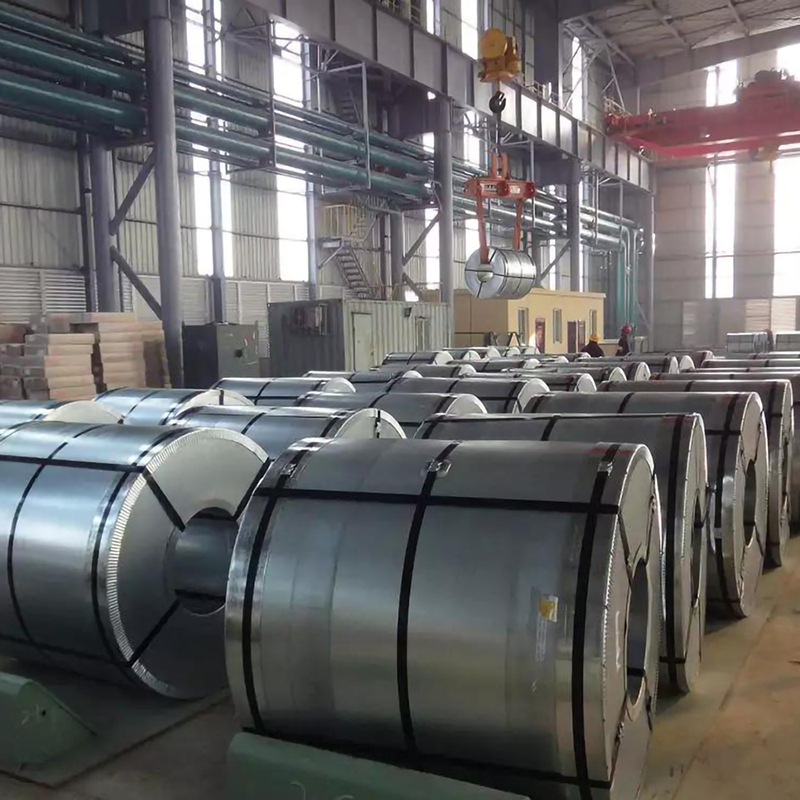
Partner with Luoyang Xinzhaohe for Precision Silicon Steel Coil Supply
Luoyang Xinzhaohe Aluminum Co., Ltd leverages over two decades of specialized metallurgical expertise to deliver high-performance silicon steel coil, critical for efficient electrical transformer and motor cores. Despite our corporate name reflecting historical scope, our core competency and dedicated production lines are focused exclusively on non-oriented and grain-oriented electrical steel (GOES/NOES), serving global power infrastructure and industrial OEMs. We understand the stringent demands of magnetic core performance, where material consistency directly impacts energy loss, thermal management, and device longevity. Partnering with us provides access to vertically integrated manufacturing rigor, eliminating supply chain vulnerabilities inherent with generalist suppliers.
Our 150,000-ton annual production facility in Henan Province operates under ISO 9001 and IATF 16949 certified quality management systems. Key processing capabilities include precision cold rolling with thickness tolerances held to ±0.02 mm, continuous annealing under controlled atmospheres to optimize grain structure, and advanced insulating coating application ensuring interlaminar resistance >50 Ω·cm². This technical control translates to guaranteed magnetic properties meeting or exceeding international standards. We maintain strict adherence to ASTM A664, IEC 60404-8-7, and GB/T 3655 specifications, with in-line statistical process control monitoring critical parameters at every stage.
Critical Silicon Steel Coil Specifications Delivered Consistently
| Parameter | Non-Oriented (50W600) | Grain-Oriented (27ZH100) | Measurement Standard |
|---|---|---|---|
| Thickness Range | 0.35 mm – 0.65 mm | 0.23 mm – 0.30 mm | ASTM A34 / IEC 60404-1 |
| Core Loss (P1.5/50) | ≤ 6.0 W/kg | ≤ 1.00 W/kg | IEC 60404-2 |
| Magnetic Induction (B800) | ≥ 1.65 T | ≥ 1.89 T | IEC 60404-4 |
| Surface Insulation | C3 / C5 Coating | Laser-etched C4 | IEC 60404-11 |
Our technical advantage lies in proprietary annealing profiles and coating formulations developed through 20+ years of failure mode analysis in transformer applications. We provide comprehensive mill test reports (MTRs) traceable to individual production heats, including full hysteresis loop characterization and Epstein frame test data. This level of material transparency enables your engineering teams to optimize core design with confidence. For demanding applications, we offer customized solutions such as tailored lamination stacks, slit-to-width precision cutting, and specialized edge conditioning to minimize burr-related eddy currents.
Beyond material supply, we function as a technical extension of your procurement and R&D teams. Our metallurgists collaborate on root-cause analysis for core performance deviations and support qualification of new grade specifications. We maintain strategic inventory of common grades to ensure 45-day global shipment readiness, mitigating project delays. All coils undergo 100% surface defect scanning via laser profilometry prior to dispatch, guaranteeing freedom from roll marks, scratches, or coating inconsistencies that compromise core integrity.
Secure your silicon steel supply chain with a manufacturer whose sole focus is electrical steel performance. Contact Cathy Zhang, Technical Sales Manager, directly at cathy@transformerstrip.com to request detailed product datasheets, current mill test reports, or discuss custom specification requirements. Specify your target core loss values, coating type, and dimensional tolerances for a precision quotation within 24 hours. Luoyang Xinzhaohe delivers the metallurgical consistency your power conversion systems demand.
📉 Factory Direct Savings Calculator
Calculate your potential savings by importing silicon steel coil directly from China.