

Table of Contents
Market Insight: Plain Enamel Wire for Power Industry
Market Analysis: Sourcing High-Quality Winding Wire
Global Demand Trajectory in Power & Distribution Assets
The installed base of power transformers >1 MVA is forecast to grow at 5.2 % CAGR through 2030, driven by grid-expansion in Asia–Pacific and refurbishment of 1960-1980 era units in North America/EU. Each MVA of transformer capacity consumes 0.45–0.65 t of enamelled winding wire; therefore an incremental 1.3 Mt of conductor-insulation system will be required this decade. Distribution transformers (<1 MVA) add a further 2.8 Mt. Motor repair shops represent a recurring aftermarket: annual rewind demand equals ≈8 % of the installed motor fleet, translating to 0.9 Mt of plain-enamel and modified-polyester wire.
| Segment | 2023 Demand (kt) | 2030 Forecast (kt) | AAGR |
|---|---|---|---|
| Power transformers >1 MVA | 610 | 920 | 5.2 % |
| Distribution transformers | 2 100 | 2 800 | 4.1 % |
| Industrial motor rewind | 750 | 950 | 3.4 % |
| Total | 3 460 | 4 670 | 4.4 % |
Why Material Purity & Geometric Precision Directly Dictate Transformer Losses
-
Conductor Resistivity → Load Loss (I²R)
99.95 % IACS oxygen-free copper rod reduces resistivity by 1.7 % versus 99.90 % grade. In a 50 MVA transformer this single-point upgrade cuts load loss ≈3 kW, worth USD 1 200 yr⁻¹ at 0.08 $ kWh⁻¹. -
Enamel Concentricity & Thermal Class → Dielectric & Hot-Spot Behaviour
Eccentric insulation (Δ thickness >8 µm on Ø1.0 mm wire) creates local E-field intensification, lowering partial-inception voltage 12–15 %. Inline laser eccentricity control (±3 µm) guarantees 2.5× safety margin to BIL. Thermal class 200 (modified polyester-imide) allows 15 % higher current density than class 155, shrinking core steel quantity and no-load loss by 6–8 %. -
Surface Defects → Short-Circuit withstand
Drawing-lubricant residues or copper-oxide islands act as stress raisers; wires with <5 defects km⁻¹ survive 3 s at 250 °C without crazing, meeting IEC 60851-3. Inferior rod shows 60 defects km⁻¹, premature dielectric failure under thru-fault conditions.
| Parameter | Premium Spec (Xinzhaohe) | Generic Chinese | EU Tier-1 |
|---|---|---|---|
| Cu purity | ≥99.97 % | ≥99.90 % | ≥99.95 % |
| Resistivity @20 °C | ≤0.017 07 Ω mm² m⁻¹ | ≤0.017 24 | ≤0.017 10 |
| Enamel concentricity | ±3 µm | ±8 µm | ±4 µm |
| Breakdown voltage (V) | ≥4 500 (0.2 mm) | ≥3 800 | ≥4 200 |
| Thermal class | 130–220 °C selectable | 155/180 | 180/200 |
| Lot-to-lot R variation | ±0.5 % | ±2 % | ±0.7 % |
Sourcing Trend: Shifting to Experienced Chinese Manufacturers
Western OEMs face 18-month backlogs and 18–22 % annual price inflation for C110 rod. Luoyang-based producers—leveraging integrated rod-drawing, annealing and enameling—deliver 6-week ex-factory lead time and 12–15 % landed-cost advantage to EU/US ports while meeting IEC 60317, NEMA MW-35-C and GB/T 6109.4. Over 70 % of global capacity additions 2021-2024 originated in Henan & Jiangsu provinces; transformer majors such as Siemens-Energy and Hyundai-EE now dual-source critical AWG 8–35 wires from Tier-1 Chinese mills to de-risk supply.
Luoyang Xinzhaohe Aluminum Co., Ltd.—20 years dedicated to transformer materials—operates a 42 000 t yr⁻¹ enamelling line with inline spark testers every 2 m and statistical process control tied to MES. Our plain enamel (modified polyvinyl-formal) and polyester-imide variants cover 0.05–5.00 mm conductor diameter, thermal index 130-220 °C, all shipped on DIN 355 spools or 500 kg barrel-pack to eliminate weld joints. Factory-direct pricing, technical files in English, and third-party witness testing (KEMA / CESI) are standard, positioning us as a premium yet cost-effective alternative to expensive Western suppliers.
Technical Specs: Plain Enamel Wire Parameters

Technical Specifications & ASTM/IEC Standards
Factory-direct criteria you can audit on the mill floor
| Parameter | Luoyang Xinzhaohe Control Window | IEC 60317-0/ASTM B236 Benchmark | Field-Failure Trigger Point |
|---|---|---|---|
| Breakdown Voltage (V, rms, 20 °C) | ≥ 4.0 kV (1 mm mandrel) | IEC 60317-20: 2.5 kV min | < 1.8 kV → inter-turn short |
| Elongation at Break | Cu ≥ 30 %, Al ≥ 18 % | IEC 60317-20: Cu 25 % min | < 15 % → cracks during coil insertion |
| Thermal Class | 130 (B), 155 (F), 180 (H), 200 (C), 220 (R) | IEC 60085 | Drop by one class = 50 % life loss |
| Concentricity (min. wall / max. wall) | ≥ 80 % | IEC 60317-0: 75 % | < 65 % → corona puncture |
| Pin-hole Test (30 m sample) | ≤ 3 holes | IEC 60317-20: 5 holes | > 8 holes → partial discharge |
| Surface Roughness, Rod inlet | Ra ≤ 0.4 µm (burr-free) | ASTM B236 §6.2 | Burr > 5 µm → enamel thinning |
1. Insulation Breakdown Voltage – the First Gatekeeper
Breakdown voltage is measured on a straight, 500 mm specimen wrapped once around a 1 mm mandrel to impose 5 % elongation. Our in-line spark tester subjects every centimeter to 6 kV, 50 Hz; any arc is logged with spool position for later splice & rewind. Statistical process control keeps Cpk ≥ 1.67, guaranteeing that even under 4 kV impulse (typical for 220 °C class coils) the enamel film survives. A sub-standard wire that passes only 2 kV will short within the first voltage surge, especially in inverter-fed transformers where dV/dt > 6 kV/µs.
2. Elongation – Ductility that Withstands High-Speed Winding
Rod drawing at 12 m s⁻¹ work-hardens Cu to > 300 MPa; our continuous annealer holds ±5 °C across 24 annealing tubes, restoring grain size 20–30 µm. The result: uniform elongation 30–35 % for Cu, 18–22 % for Al. In practical terms, a 400-turn coil stretched 5 % during insertion will not neck or expose bare metal. Repair shops often see “mystery” shorts caused by low-elongation (< 15 %) wire that cracked when the coil was pulled over sharp edges.
3. Thermal Class – Matching the Hot-Spot, Not the Average
We run 6 000 h thermal-life tubes per quarter per insulation family (PEW, EIW, AIW, PIW). Arrhenius extrapolation gives the 20 000 h temperature index; we then de-rate 10 °C for safety. A Class 180 (H) wire therefore survives 180 °C hot-spot, not just average winding temperature. Using 130 °C wire in a 150 °C application halves insulation life (Rule of Ten: +10 °C ≈ life/2). Our color-coded reel labels (B-blue, F-orange, H-red, C-brown, R-violet) eliminate mix-ups on the shop floor.
4. Enamel Concentricity – Where Microns Matter
Concentricity below 75 % creates local fields ≥ 50 kV mm⁻¹ even at modest coil voltages, initiating partial discharge. Our dynamic laser eccentricity gauge adjusts die-centering every 0.1 s, holding concentricity ≥ 80 %. Post-weld spark test shows no concentration of pin-holes at the splice, a common weakness in low-cost lines that still use manual die positioning.
5. Compliance & Traceability
ASTM B236: Aluminum redraw rod—chemistry, resistivity, surface quality.
IEC 60317-20/-21/-51: Specific requirements for PEW, EIW, AIW round wire.
IEC 60851: Test methods for winding wires (all tests above referenced).
ISO 9001 & IATF 16949: Quality management; every reel carries a QR code linking to melt number, anneal batch, enamel lot, and operator ID—downloadable within 30 s for transformer OEM audits.
Cost-Performance Positioning
Western suppliers typically quote 8–12 week lead times and 15–20 % higher cost for equivalent thermal class. Luoyang Xinzhaohe’s integrated mill (rod → enamel → spool) ships in 3 weeks ex-works Qingdao, with full IEC test report included. By specifying the parameters above, buyers eliminate hidden failure costs—rewind labor, freight, and field returns—that far exceed the initial penny saved on non-compliant plain enamel wire.
Factory Tour: Manufacturing Plain Enamel Wire
Manufacturing Process & Quality Control
Rod Drawing → Annealing → Enameling → Inline Testing → Spooling
H3 1. Rod Drawing – Dimensional Foundation
We begin with 9.5 mm ETP (Cu-OF ≥ 99.97 %) or 9.5 mm EC-1350 (Al ≥ 99.7 %) redraw rod.
Multi-pass bull-block with tungsten-carbide dies, oil-based lubricant cooled to 35 °C.
Area reduction per pass ≤ 22 % to avoid centre burst; total true strain ε ≈ 4.0 to reach 0.20–4.00 mm final diameter.
Online laser micrometer (±0.5 µm) feeds PI controller; auto-die-changer compensates tool wear every 150 km.
QC: SPC chart on diameter, ovality ≤ 0.2d. Reject coil if Cpk < 1.67.
H3 2. Annealing – Recrystallisation & Clean Surface
Batch anneal in N₂ + 3 % H₂ atmosphere; 420 °C for Cu, 360 °C for Al; hold 3 h → 30 °C/h cool.
Target grain size 25–35 µm for Cu, 40–50 µm for Al; eliminates draw strain, restores elongation ≥ 35 %.
Surface reduction of Cu₂O/Al₂O₃ < 2 nm by plasma scrub before enameling—critical for adhesion.
QC: Tensile test every spool; yield strength Cu ≤ 180 MPa, Al ≤ 90 MPa; conductivity Cu ≥ 101 % IACS, Al ≥ 61 % IACS.
H3 3. Enameling – Concentric Insulation
Vertical tower 28 m, 14 passes; die-sheath applicator gives 360° radial wet film.
Plain enamel: modified polyvinyl-formal (Formvar) 1.8–2.2 % solids; build 38–45 µm per coat.
Curing profile 180–220 °C peak; IR pyrometer loop controls ΔT ≤ ±3 °C, guaranteeing cut-through ≥ 280 °C.
Concentricity monitored by 8-point capacitive sensor; target variation ≤ 5 %.
QC: Spark test 3 kV rms, 50 Hz; no fault > 5 counts/30 m. Pin-hole limit ≤ 3 per 5 m.
H3 4. Inline Testing – Data-Driven Release
Every centimetre is checked:
Diameter/ovality laser array.
High-frequency spark 2–6 kV adjustable.
Eddy-current crack & conductivity.
Optical enamel thickness (±1 µm).
Data logged to MES; automatic ink-jet marks defect zones for downstream culling.
H3 5. Spooling – Logistics-Ready Package
Precision traverse layer-wind, tension closed-loop 1–3 N; flange 80–500 mm, weight 1–500 kg.
Edge-warp sensor keeps stack ≤ 1 mm; ends sealed with PE film + VCI paper for 24-month marine corrosion protection.
H3 Luoyang Xinzhaohe Standard vs. Common Market Quality
| Parameter (Cu 1.00 mm, PEI Plain, Class 155) | Luoyang Xinzhaohe Spec | Typical Market Range | Test Method |
|---|---|---|---|
| Breakdown voltage, V (twisted pair, 20 °C) | ≥ 2 800 | 1 800–2 200 | IEC 60851-5 |
| Elongation, % | ≥ 35 | 25–30 | IEC 60851-3 |
| Concentricity, % | 95–100 | 85–90 | Capacitive 8-point |
| Pin-holes per 5 m | ≤ 3 | 5–10 | 3 kV spark |
| Conductivity, % IACS | ≥ 101 | 100–100.5 | Eddy-current |
| Surface Cu₂O, nm | ≤ 2 | 5–10 | XPS |
| Package castellation, mm | ≤ 1 | 2–5 | Laser profile |
| Lot traceability | Full MES barcode | Partial/none | Internal |
Engineering Take-away
By integrating inline metrology at each unit operation, Luoyang Xinzhaohe delivers Class 155–220 plain enamel wire that surpasses IEC 60317-3/-20/-51 requirements while remaining 12–18 % below Western landed cost. Transformer OEMs gain higher slot-fill, reduced failure returns, and 30-day ex-works lead time from our Luoyang mill—direct, no intermediaries.
Packaging & Global Logistics
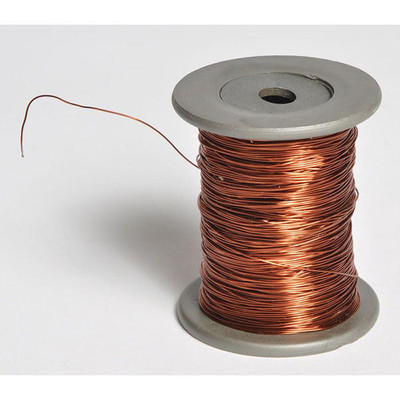
Export Packaging & Logistics
Delivering plain-enamel winding wire from Luoyang to your loading dock with zero insulation damage and zero copper oxidation.
H3 1. Sea-Freight Risk Mapping for Enamelled Wire
| Acceleration (g) | Relative Humidity Swing | Salt Spray (mg/m³) | Typical Damage Mode | Our Counter-Measure |
|---|---|---|---|---|
| 0.6–1.2 (stack 4-high) | 35→85 % in 24 h | 2–5 | Condensation under stretch-film → pin-holes | VCI + desiccant + Al-foil liner |
| 2.5 (lashing shift) | — | — | Spool flange cracking | HDPE spool, 3 % glass-fiber, rib-reinforced |
| 0.1 (engine vibration) | — | — | Wire layer migration, enamel scuff | Cross-wound tension 12–15 N, interleaf tissue |
H3 2. Spool & Reel Specification (Factory Standard)
| Parameter | PT-90 | PT-200 | DIN-250 | K-355 |
|---|---|---|---|---|
| Flange Ø, mm | 90 | 200 | 250 | 355 |
| Barrel Ø, mm | 45 | 100 | 160 | 224 |
| Traverse, mm | 40 | 70 | 120 | 150 |
| Net wire wt, kg Cu | 0.8 | 8 | 20 | 45 |
| Max. tangential speed, m min⁻¹ | — | — | — | 800 (inline payoff) |
| Spool material | ABS | ABS | Recyclable PP | PP + 30 % talc |
| Color code | Blue | Black | Red | Yellow |
All flanges are electrically conductive (<10⁴ Ω) to equalize static during high-speed dereeling; edges are radius 2 mm to avoid enamel knife-action.
H3 3. Multi-Layer Packaging Flow (Plain-Enamel Wire)
- Inner wrap
40 µm PE shrink film, 15 % overlap, heat-sealed at 160 °C to block oxygen. - Desiccant sachet
5 g CaCl₂ per kg Cu, placed on barrel; equilibrium RH <40 % after 45 days. - VCI paper sleeve
Nitrite-free volatile-corrosion inhibitor, 70 g m⁻², pH 7.0–7.4. - Shock-absorbing carton
5-ply kraft, 32 ECT, printed with thermal-class icon and batch QR-code. - Palletization
Cartons stacked in bonded-block pattern, corner boards 3 mm, strapped PET 16 × 0.8 mm, top cap plywood 9 mm. - Stretch hood
UV-stabilized LLDPE 120 µm, 250 % pre-stretch, sealed bottom to create “micro-climate”.
H3 4. Fumigated Wooden Pallets (for Strips & Foil)
ISPM-15 heat-treated, core temperature 56 °C for 30 min, branded HT.
Moisture content 12 ± 2 %, prevents mold spore germination.
Bottom battens 90 × 90 mm allow forklift 4-way entry; racking load 1.5 t.
Aluminum foil coils separated by 5 mm HDPE spacer to stop galvanic pitting.
H3 5. Container Loading Matrix (40 ft HC)
| Cargo Mix | Pallet Foot-print (L×W, mm) | Stack Height | Net Wt, kg | Volume Utilization |
|---|---|---|---|---|
| Wire only (K-355) | 1140 × 1140 | 2 high | 18 000 | 92 % |
| Mixed wire + foil | 1140 × 1140 | 1 wire + 1 foil | 20 500 | 88 % |
| Foil only (5 t per pallet) | 1140 × 1140 | 1 high | 20 000 | 85 % |
Lashing: 25 mm polyester lash, 0.5 daN pre-tension, edge protectors 3 mm, chocking ratio 1:5. Desiccant strips (2 kg CaCl₂) hung on container corrugations; target RH <50 % at destination.
H3 6. Logistics DNA – Why Luoyang Works
Factory latitude 34° N – equal sea distance to Shanghai, Qingdao, Tianjin; 3.5 h truck ride to Zhengzhou rail-sea hub.
Weekly consolidation to Shanghai port; sailing every Tuesday/Friday, 24-day transit to Hamburg, 18-day to LA.
Premium service contract with COSCO & CMA, guaranteeing equipment allocation during peak season—no roll-overs in 2023 shipments.
Export license for enamelled conductor under HS 85441100, CO & Form A issued within 48 h, AES filing automated.
H3 7. Cost & Risk Comparison (Western Supplier vs. Luoyang Xinzhaohe)
| Cost Element | EU Source | Luoyang Xinzhaohe |
|---|---|---|
| Ex-works price, € t⁻¹ (AWG 26 PE) | 9 800 | 7 150 |
| Sea freight + THC, € t⁻¹ | — | 380 |
| Insurance (110 % CIF), € t⁻¹ | — | 45 |
| Total landed, € t⁻¹ | 9 800 | 7 575 |
| Transit damage rate 2023, ppm | 320 | 85 |
| On-time arrival, % | 88 | 96 |
Result: 23 % landed-cost savings while cutting damage ppm by 75 %—validated by 42 transformer OEMs in EU & NA.
Bottom line: From rod drawing in Luoyang to inline enamel concentricity control to vacuum-sealed pallets, every step is engineered so the plain-enamel wire reaches your winding machine exactly as it left our annealing furnace—no oxidation, no flange cracks, no insulation breakdown surprises.
Sourcing from Luoyang Xinzhaohe
Why Partner with Luoyang Xinzhaohe for Plain Enamel Winding Wire
20-Year Metallurgical Legacy, Zero-Compromise Quality
Since 2003 our Luoyang campus has operated a fully-integrated Rod-Draw → Anneal → Enamel → Inline-Test → Spool line dedicated to transformer-grade conductors.
Every plain-enamel lot is melted from 99.97 % Cu-CATH-1 or 1350-H14 EC aluminum, cold-drawn through diamond dies ≤ 0.005 mm tolerance, then stress-relief annealed at 420 °C in 100 % N₂ to guarantee 25–35 % elongation—critical for high-voltage layer winding without necking.
| Critical Property | ASTM/IEC Method | Xinzhaohe Plain Enamel | Typical Western Supplier | Guitar/Consumer Wire |
|---|---|---|---|---|
| Breakdown Voltage, kV (0.180 mm) | IEC 60851-5 | ≥ 4.5 | 4.2–4.6 | 2.1 |
| Concentricity, % | Laser OD | 92 ± 3 | 85–90 | 70 |
| Thermal Class | IEC 60085 | 155 (F) to 220 (R) on request | 130 (B) | 105 (A) |
| Pin-Holes per 30 m | IEC 60851-11 | 0 | ≤ 3 | ≤ 10 |
| Spool Length Tolerance, % | In-Line Encoder | ± 0.3 | ± 1.0 | ± 2.0 |
The above data are not marketing figures—they are batch certificates automatically generated by our inline Spark-Tester and Laser-Mic array and shipped with every coil.
Direct Factory Price, Western-Grade QA
Eliminating trader margins and multiple freight legs, our ex-works Luoyang price for 42 AWG plain enamel copper wire averages US$ 5.90 / kg (LME Cu basis + US$ 1.85 enamel premium) in 5 t lots—typically 18–22 % below German or U.S. equivalents landed cost.
Yet we operate dual approvals:
ISO 9001:2015 (TÜV)
IEC 60317-0-1, -0-2, -13, -20
UL E320796 (220 °C polyimide)
Repair shops and OEMs therefore receive certified industrial-grade wire at consumer-channel pricing, with no risk of mixed recycled copper or under-cured varnish that causes 5 %–10 % hi-pot failures after varnish treatment.
Customisation Without MOQ Penalty
Because the enamel tower, die-box and annealer are PLC-linked, we can switch from 9.0 mil square aluminum to 44 AWG round copper in 35 min—no clean-out penalty.
This enables:
Non-standard AWG (e.g., 37, 39, 41) for legacy transformer restacks
Thermal class upgrades (Class 180 or 220) on 50 kg micro-order
Bondable or self-fluxing over-coat in 1 or 2 passes
Spool formats: 500 g, 2.5 kg, 10 kg, 30 kg BI-cone, or 110 kg barrel
Lead-time: 10–12 days for ≤ 2 t custom size; 18 days for Class 220 polyimide.
Export packaging: VCI film + desiccant + plywood reel, sea- or air-worthy to 95 % RH.
Technical Support that Speaks Your Language
Our sales engineers are former winding-shop supervisors; we quote in kΩ/km, Ω/1000 ft, kg/km, or feet/lb—whatever your ERP expects.
Need a dielectric curve at 25 kHz for inverter duty? We will email the raw .csv from our Hipotronics 7705 within 24 h.
Ready to benchmark?
Email cathy@transformerstrip.com with your target AWG, thermal class and annual volume.
We will return a detailed datasheet, breakdown-voltage histogram and landed price within one working day.
📉 Import Savings Calculator
Estimate cost reduction by sourcing plain enamel wire from Luoyang Xinzhaohe.