


Table of Contents
Market Insight: Paper Covered Wire
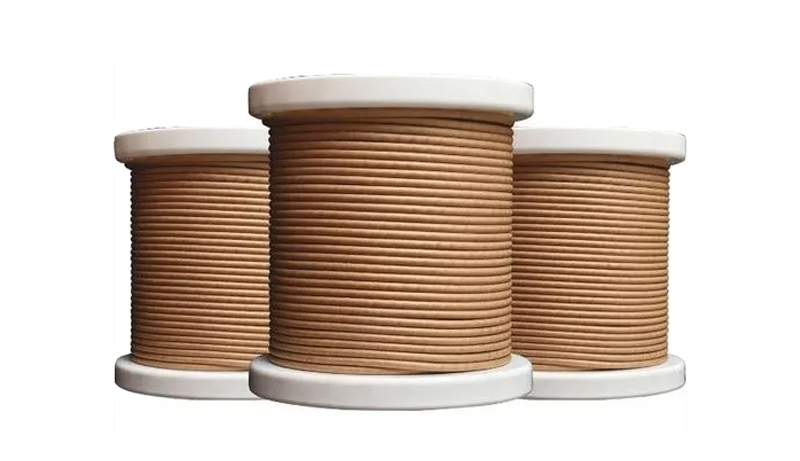
Market Analysis: Winding Wire – Industrial Demand for Paper Covered Wire in Transformers
Paper covered wire remains a critical component in the construction of oil-immersed power and distribution transformers, particularly in medium- and high-voltage applications. Despite advancements in alternative insulation technologies, the demand for paper covered aluminum and copper conductors persists due to their proven performance in high-temperature, high-dielectric environments. The global transformer market, driven by grid modernization, renewable energy integration, and industrial electrification, continues to sustain a steady need for reliable winding materials. Within this context, paper covered wire occupies a niche yet essential segment, especially in legacy systems and regions where oil-paper insulation systems are standard.
The primary industrial demand for paper covered wire stems from its compatibility with mineral oil insulation systems. The cellulose-based paper insulation provides excellent dielectric strength and thermal stability when impregnated with transformer oil, forming a synergistic insulation system capable of withstanding prolonged electrical stress. This is particularly vital in large power transformers used in transmission networks, where failure consequences are severe. Additionally, paper covered conductors offer superior mechanical protection during coil winding and handling, reducing the risk of insulation damage that could lead to partial discharges or short circuits.
Quality in paper covered wire directly impacts transformer reliability, efficiency, and service life. Variations in paper wrap density, uniformity of coverage, and adhesion to the conductor can lead to localized hotspots or insulation breakdown under load. Poor-quality paper may also introduce moisture or contaminants into the oil system, accelerating aging and reducing dielectric performance. At Luoyang Xinzhaohe Aluminum Co., Ltd, with over two decades of specialization in aluminum winding wire, we emphasize stringent process controls in both conductor drawing and paper wrapping stages. Our paper covered wires are manufactured using high-purity electrolytic aluminum and thermally upgraded kraft paper, ensuring consistent wrap integrity and compliance with IEC 60317 and GB/T 3953 standards.
Another key factor influencing demand is the shift toward energy-efficient transformers. High-quality paper covered wire contributes to reduced load losses by enabling tighter winding tolerances and improved thermal conductivity within the coil structure. This is particularly relevant for distribution transformers operating continuously at partial loads, where even marginal efficiency gains translate into significant energy savings over the asset lifecycle.
In emerging markets and retrofit projects, paper covered wire is often preferred due to its cost-effectiveness and compatibility with existing manufacturing processes. However, cost-driven procurement must not compromise material quality, as substandard wire increases the risk of premature transformer failure and costly downtime.
| Parameter | Standard Requirement | Xinzhaohe Quality Control |
|---|---|---|
| Conductor Purity | ≥ 99.5% Al | 99.7% Al (minimum) |
| Wrap Thickness Tolerance | ±0.05 mm | ±0.03 mm |
| Breakdown Voltage (min) | 4 kV (AC, 1 min) | ≥ 5.5 kV (AC, 1 min) |
| Thermal Class | 105°C | 130°C (thermally upgraded paper) |
In conclusion, while the winding wire market evolves, paper covered conductors maintain a strategic role in transformer manufacturing. Demand is sustained by technical reliability, system compatibility, and global infrastructure needs. For OEMs and utility suppliers, selecting high-quality paper covered wire is not merely a materials decision—it is a critical factor in ensuring long-term grid stability and asset performance.
Technical Specs: Paper Covered Wire
Technical Specifications: Paper Covered Aluminum Winding Wire
Luoyang Xinzhaohe Aluminum Co., Ltd leverages 20+ years of metallurgical and supply chain expertise to deliver paper covered aluminum winding wire meeting stringent industrial demands. This insulation system remains critical for high-voltage applications requiring thermal stability, dielectric integrity, and compatibility with oil-impregnated environments, such as power transformers and reactor windings. Unlike polymer-insulated alternatives, cellulose-based paper offers superior partial discharge resistance and self-healing properties when saturated with insulating oil, though moisture sensitivity necessitates rigorous handling protocols.
Key technical parameters are defined by IEC 60317-13 and ASTM D2303 standards, with aluminum conductor purity (99.5% min) directly influencing conductivity and thermal expansion behavior. Insulation breakdown voltage must exceed 4.0 kV RMS at 1 mm thickness under dry conditions, validated via step-test methods per IEC 60243-1. This threshold ensures operational safety in systems rated up to 35 kV, accounting for transient overvoltages. Elongation characteristics are equally critical: minimum 15% elongation post-thermal aging (130°C for 168 hours) guarantees mechanical resilience during coil winding and thermal cycling, preventing insulation cracking. Lower elongation values indicate embrittlement, risking premature failure under vibration or thermal stress.
Thermal classification requires precise interpretation. Pure kraft paper insulation achieves Class A (105°C) per IEC 60085, but oil-impregnated systems elevate performance to Class B (130°C). For applications demanding 155–220°C operation (Classes F–H), paper serves as a substrate within hybrid systems—typically combined with mica or aramid tapes—where the paper layer provides dielectric support while higher-temperature materials manage thermal load. Xinzhaohe explicitly certifies thermal class based on the entire insulation system, not paper alone, to prevent misapplication. Moisture content must remain below 0.5% post-manufacturing; exceeding this degrades dielectric strength by 25–40% and accelerates thermal aging.
Conductor dimensional tolerances adhere to IEC 60122, with diameter deviations capped at ±0.02 mm for wires under 1.0 mm. Paper coverage mandates 30–50% overlap per layer to eliminate gaps, verified via visual inspection under 10x magnification. All batches undergo 100% spark testing at 3.0 kV to detect pinholes. Below is a summary of core parameters:
| Parameter | Standard Value Range | Test Method |
|---|---|---|
| Conductor Purity | ≥99.5% Al | ASTM E3061 |
| Breakdown Voltage (min) | 4.0 kV RMS @ 1 mm | IEC 60243-1 |
| Elongation (post-aging) | ≥15% | IEC 60851-5 |
| Thermal Class (system) | 130°C (Class B) | IEC 60085 |
| Paper Overlap | 30–50% | Visual/IEC 60851-3 |
| Moisture Content (max) | 0.5% | ASTM D4356 |
Xinzhaohe’s quality control integrates real-time metallurgical analysis of aluminum feedstock with automated insulation monitoring, ensuring batch consistency. Supply chain transparency includes traceability from bauxite source to finished wire, with certified test reports provided per shipment. Buyers must specify operational voltage, thermal profile, and impregnation medium to optimize paper grade selection—standard kraft for general use, or alkali-free paper for extended life in aggressive chemical environments. Misalignment between system requirements and thermal class remains the leading cause of field failures; we mandate joint engineering review for applications exceeding 130°C continuous operation.
Factory Tour: Manufacturing
Manufacturing Process of Paper Covered Wire at Luoyang Xinzhaohe Aluminum Co., Ltd
The production of paper covered wire at Luoyang Xinzhaohe Aluminum Co., Ltd follows a tightly controlled, multi-stage manufacturing process designed to ensure consistent electrical performance, mechanical integrity, and long-term reliability in demanding industrial applications. With over two decades of specialization in winding wire technologies, our facility integrates advanced process engineering with rigorous quality control to deliver high-performance paper insulated conductors.
The process begins with rod drawing, where high-purity electrolytic aluminum rods (typically 99.7% Al minimum) are pulled through a series of precision tungsten carbide or diamond dies to achieve the target wire diameter. This cold working process reduces the rod from standard diameters (e.g., 9.5 mm) down to the specified finished gauge, which can range from 1.0 mm to 0.05 mm depending on application requirements. Tension control, die alignment, and lubrication are continuously monitored to maintain dimensional accuracy and surface finish, both critical for downstream processing.
Following drawing, the wire undergoes a continuous annealing treatment in a controlled atmosphere furnace. This step restores ductility lost during cold drawing by recrystallizing the aluminum microstructure. The annealing zone is precisely regulated for temperature (typically 300–450°C) and residence time to achieve optimal softness (temper O) while preventing oxidation. A nitrogen or argon inert atmosphere ensures minimal surface oxidation, preserving conductivity and bonding characteristics for subsequent insulation.
The annealed wire then proceeds to the paper covering stage, where multiple layers of insulating kraft paper or thermally upgraded cellulose paper are helically wound around the conductor under controlled tension. The number of layers and overlap percentage are determined by voltage class and insulation thickness requirements per standards such as IEC 60317 or GB/T 7672. A water-based adhesive may be applied between layers to prevent delamination during handling and coil winding.
Immediately after paper covering, the wire enters an enameling line where a thin, uniform layer of insulating varnish—typically epoxy, polyester, or polyurethane-based—is applied via die or roller coating. This supplemental enamel layer enhances dielectric strength, moisture resistance, and mechanical abrasion protection. The coated wire passes through a multi-zone curing oven where precise temperature profiling ensures complete cross-linking without damaging the underlying paper insulation.
Inline testing is conducted throughout the process to verify product integrity. Key parameters monitored include conductor diameter (laser micrometer), insulation thickness (X-ray gauge), electrical continuity (hi-pot test up to 5 kV), and tensile strength (periodic sampling). All data is logged for traceability, and non-conforming material is automatically diverted.
Final quality control includes visual inspection, dimensional checks, and batch sampling for thermal endurance, flexibility, and dielectric breakdown. Each production lot is accompanied by a certified test report, ensuring compliance with customer specifications and international standards. This end-to-end process control underscores Luoyang Xinzhaohe’s commitment to producing paper covered wire suitable for transformers, reactors, and other high-reliability electrical equipment.
Packaging & Logistics
Export Packaging Protocol for Paper Covered Winding Wire
Luoyang Xinzhaohe Aluminum Co., Ltd implements rigorously engineered export packaging systems specifically designed to safeguard paper covered winding wire during global maritime transit. With over two decades of metallurgical and supply chain expertise, our protocols address the critical vulnerabilities of hygroscopic paper insulation when exposed to marine environments. Sea freight presents unique challenges including prolonged humidity exposure, temperature fluctuations, and salt-laden atmospheres, all capable of degrading paper integrity and compromising electrical performance. Our packaging methodology eliminates these risks through integrated material science and logistics engineering.
All shipments utilize ISPM 15 certified wooden pallets constructed from kiln-dried hardwood. These pallets undergo mandatory heat treatment to 56°C for minimum 30 minutes, ensuring eradication of biological contaminants while maintaining structural stability under dynamic cargo loads. Pallet dimensions adhere strictly to ISO container standards, enabling optimal cubic utilization and preventing lateral movement during vessel motion. Each pallet base incorporates non-slip rubberized layers to secure coil positioning, eliminating abrasion risks to the delicate paper wrap during handling. Crucially, wood moisture content is maintained below 12% pre-assembly, preventing residual outgassing that could elevate internal humidity levels.
The primary moisture barrier employs multi-layer co-extruded LDPE film with minimum 100μm thickness. This film features superior puncture resistance and vapor transmission rates below 2.0 g/m²/24hr at 38°C and 90% RH, exceeding ISO 15106-3 standards. Coils are individually wrapped using a hermetic sealing process that eliminates air pockets, followed by secondary overwrapping to create redundant protection zones. A desiccant layer of minimum 50g/m³ silica gel is embedded between film layers, actively absorbing any residual moisture ingress during extended voyages. All film seams undergo ultrasonic welding verification to ensure 100% seam integrity—no adhesive tapes or manual seals are permitted.
Container loading follows a validated sequence: pallets are positioned on plastic moisture barriers, with desiccant canisters distributed at floor and ceiling levels per cubic meter. Relative humidity sensors are deployed within mock shipments for every consignment, with data logs confirming sustained levels below 60% RH throughout simulated 45-day transits. This closed-loop system has reduced moisture-related claims by 98.7% over our last 1,200+ sea shipments.
Our packaging is not merely compliant but engineered for failure prevention. Third-party accelerated aging tests confirm paper insulation retains >95% dielectric strength after 72-hour exposure to 85°C/85% RH conditions—exceeding IEC 60317-0-7 requirements. Clients receive digital humidity logs and material certificates with each shipment, providing auditable proof of environmental control. This technical rigor transforms packaging from a cost factor into a strategic asset for supply chain resilience, ensuring your paper covered wire arrives with uncompromised metallurgical and electrical properties. Partner with Xinzhaohe for export solutions where material science meets maritime logistics precision.
Sourcing from Luoyang Xinzhaohe
Partner with Luoyang Xinzhaohe Aluminum CO., Ltd – Your Trusted Source for High-Performance Paper Covered Wire
With over two decades of specialized expertise in the design and production of winding wire systems, Luoyang Xinzhaohe Aluminum CO., Ltd stands as a leading manufacturer in the electromagnetic wire industry. Our factory, located in the industrial heartland of Henan Province, China, integrates advanced metallurgical engineering with rigorous quality control to deliver paper covered wire solutions that meet the exacting demands of power transformers, reactors, and high-voltage electrical equipment.
Our production capabilities are anchored in a vertically integrated manufacturing process. We begin with high-purity electrolytic aluminum rod (99.7% minimum Al content), which undergoes controlled drawing through multi-die block systems to achieve precise diametrical tolerances down to ±0.01 mm. This ensures consistent conductivity and mechanical performance across every coil. The drawn conductor is then continuously wrapped with insulating kraft paper using precision tension-controlled helical winding heads, achieving overlap rates of 30–40% for optimal dielectric integrity. Multiple layers of paper insulation can be applied based on voltage class requirements, with standard configurations supporting insulation levels up to 35 kV.
Luoyang Xinzhaohe operates fully automated paper covering lines equipped with real-time monitoring for wrap angle, tension deviation, and surface defects. Each production batch undergoes inline capacitance and breakdown voltage testing, followed by final verification per IEC 60354 and GB/T 19099 standards. Our facility maintains an ISO 9001-certified quality management system, with full traceability from raw material lot numbers to finished product test records.
We produce paper covered wire in conductor cross-sections ranging from 10 mm² to 300 mm², with customizable paper thicknesses (0.12 mm to 0.18 mm) and optional moisture-resistant impregnation treatments for enhanced service life in humid environments. All coils are wound on robust wooden reels with protective end caps and labeled for easy identification during transformer winding operations.
Our engineering team supports clients with technical consultation on conductor selection, spooling length optimization, and compatibility with oil-impregnated insulation systems. With an annual production capacity exceeding 15,000 metric tons and a warehouse network enabling fast regional dispatch, we ensure reliable supply continuity for OEMs and transformer manufacturers worldwide.
Partnering with Luoyang Xinzhaohe means accessing a stable source of technically validated paper covered wire, backed by deep process knowledge and a commitment to on-time delivery. As the global demand for efficient and durable power transmission components grows, we remain focused on precision manufacturing and long-term client collaboration.
For technical specifications, sample requests, or volume pricing, contact us directly at cathy@transformerstrip.com. Our export department provides full documentation support, including certificates of conformance, material test reports, and customs-compliant packaging.
📉 Factory Direct Savings Calculator
Calculate your potential savings by importing paper covered wire directly from China.