


Table of Contents
Market Insight: Oriented Silicon Steel
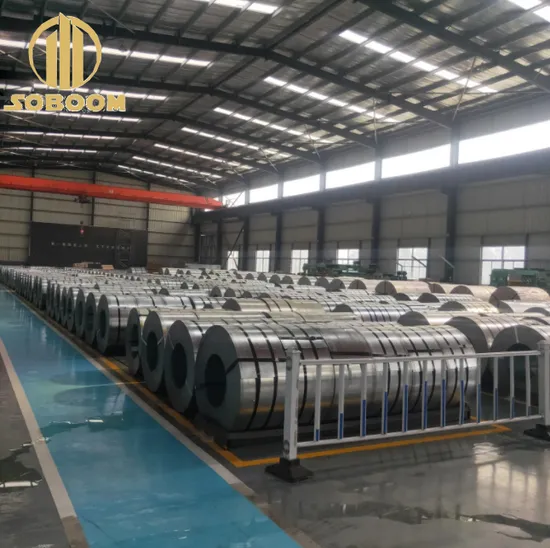
Market Analysis: Silicon Steel (Electrical Steel)
Oriented silicon steel, also known as grain-oriented electrical steel (GOES), is a specialized ferrous alloy engineered for high magnetic permeability and low core loss in alternating magnetic fields. It serves as a foundational material in the construction of power and distribution transformers, where magnetic efficiency directly influences energy conversion performance. The global demand for oriented silicon steel is intrinsically linked to the expansion and modernization of electrical infrastructure, renewable energy integration, and industrial electrification. As nations pursue grid stability and energy efficiency, the deployment of high-performance transformers utilizing premium-grade GOES has become a strategic priority.
The primary industrial application of oriented silicon steel lies in the laminated cores of large power transformers used in transmission networks and high-efficiency distribution transformers. These components are subject to continuous magnetic cycling, where even marginal reductions in core losses translate into substantial energy savings over the transformer’s operational lifespan—typically exceeding 30 years. Consequently, utilities and transformer manufacturers prioritize GOES with tightly controlled magnetic properties, including low specific total loss (W17/50) and high magnetic induction (B800). These parameters are directly influenced by the steel’s grain orientation, coating quality, and annealing precision during manufacturing.
Quality in oriented silicon steel is not a secondary attribute—it is a performance determinant. Variability in thickness, inconsistent grain alignment, or defects in the insulating coating can lead to localized eddy current increases, thermal instability, and premature aging of transformer cores. Inferior material may meet basic specifications but often fails under sustained load or transient conditions, increasing total cost of ownership through higher no-load losses and reduced reliability. In critical infrastructure applications, such failures carry cascading risks, including unplanned outages and compromised grid resilience.
Luoyang Xinzhaohe Aluminum CO., Ltd brings over two decades of metallurgical and supply chain expertise to the electrical steel sector. While specializing in aluminum-based solutions, the company maintains rigorous standards in material sourcing and quality assurance, ensuring compatibility with high-grade GOES in composite and hybrid applications. Our technical partnerships with certified steel producers enable precise specification adherence, traceability, and batch consistency—factors essential for OEMs and EPC contractors operating under stringent performance contracts.
Global transformer manufacturers increasingly adopt tiered procurement strategies, reserving high-permeability, laser-scribed GOES for ultra-efficient models while managing cost in standard units. However, regulatory trends—such as the IE3 and upcoming IE4 efficiency standards under IEC 60076—continue to push the industry toward higher base quality. In this evolving landscape, material certification, mill test reports, and compliance with ASTM A876 or IEC 60404-8-6 standards are non-negotiable.
The long-term trajectory for oriented silicon steel remains robust, driven by investments in smart grids, electric vehicle charging networks, and offshore wind interconnections. As demand grows, so does the imperative for reliable, high-quality supply chains capable of delivering technical consistency at scale.
Technical Specs: Oriented Silicon Steel
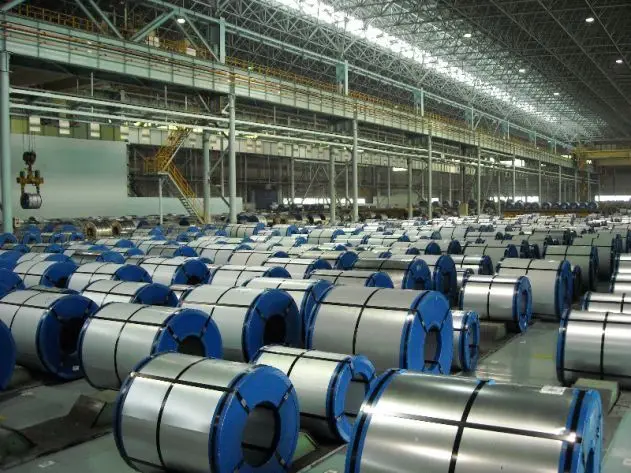
Technical Specifications for Grain-Oriented Silicon Steel (GOES)
Luoyang Xinzhaohe Aluminum Co., Ltd leverages over two decades of metallurgical expertise to supply high-performance grain-oriented silicon steel (GOES) meeting stringent global transformer core requirements. Precise adherence to critical technical parameters is non-negotiable for minimizing energy losses and ensuring operational efficiency in power and distribution transformers. This section details the core specifications governing GOES quality and performance.
Core loss, or iron loss (W/kg), represents the dominant energy dissipation mechanism in transformer cores under alternating magnetization. It comprises hysteresis loss and eddy current loss. GOES achieves superior performance through a highly refined Goss texture {110}<001>, significantly reducing hysteresis loss. Loss values are rigorously measured at standardized flux densities (typically 1.7 T) and frequencies (50 Hz or 60 Hz) per IEC 60404-2. Lower core loss grades directly translate to reduced no-load losses in the final transformer, a critical factor for energy efficiency regulations and lifecycle cost. Specification requires testing under controlled Epstein frame or single-sheet tester conditions, with results normalized to 1.7 T and 50 Hz unless otherwise agreed.
Magnetic flux density, particularly the induction level at specific magnetic field strengths, defines the core’s ability to carry magnetic flux efficiently. The key metric is B₈ (Tesla), measured at 800 A/m. Higher B₈ values indicate a steeper magnetization curve, enabling transformer designers to utilize smaller core cross-sections for the same power rating, reducing material usage and cost. B₅₀ (induction at 50 A/m) is also relevant for low-excitation applications. Achieving high B₈ necessitates exceptional grain orientation perfection and minimal impurities within the steel matrix. Values are determined using standardized permeameter or Epstein frame methods.
Flatness, quantified as the I-Unit, is a critical dimensional parameter impacting core stacking factor and vibration noise. It measures the deviation from perfect planarity across the strip width. Excessive waviness or edge curl (measured in I-Units, where 1 I-Unit = 10⁻⁵ m/m) increases air gaps between laminations during core assembly, elevating effective core loss and audible noise. Tight flatness control is achieved through precise rolling, tension leveling, and stress relief annealing processes. Consistent flatness ensures optimal lamination stacking density and mechanical stability of the wound or stacked core.
The following table summarizes key technical parameters for standard GOES grades supplied by Luoyang Xinzhaohe Aluminum Co., Ltd, compliant with IEC 60404-2 and equivalent standards. Actual values are subject to specific customer order requirements and manufacturing lot certification.
| Grade Designation | Core Loss P₁.₇/₅₀ (W/kg) Max | Magnetic Flux Density B₈ (T) Min | Magnetic Flux Density B₅₀ (T) Min | Thickness (mm) | Flatness (I-Unit) Max |
|---|---|---|---|---|---|
| M0H (JFE-Hitachi) | 0.65 | 1.92 | 1.84 | 0.23 | 15 |
| M1H (JFE-Hitachi) | 0.72 | 1.91 | 1.83 | 0.23 | 15 |
| M15 (Nippon Steel) | 0.78 | 1.90 | 1.82 | 0.27 | 18 |
| M2 (Nippon Steel) | 0.85 | 1.89 | 1.81 | 0.27 | 18 |
| M27 (Nippon Steel) | 0.95 | 1.88 | 1.80 | 0.27 | 20 |
Sourcing GOES requires explicit validation of these parameters against the intended transformer design and efficiency targets. Luoyang Xinzhaohe Aluminum Co., Ltd provides comprehensive mill test certificates verifying conformance to agreed specifications, including full traceability from melt to finished coil. Consistent control of core loss, flux density, and flatness is fundamental to delivering silicon steel that meets the evolving demands of high-efficiency power infrastructure.
Factory Tour: Manufacturing

Manufacturing Process of Oriented Silicon Steel at Luoyang Xinzhaohe Aluminum Co., Ltd
The production of high-performance oriented silicon steel at Luoyang Xinzhaohe Aluminum Co., Ltd follows a tightly controlled, multi-stage manufacturing sequence designed to optimize magnetic properties, dimensional accuracy, and surface integrity. With over two decades of metallurgical expertise, our process integrates advanced slitting, annealing, insulation coating, and precision cutting technologies, all supported by rigorous quality control protocols.
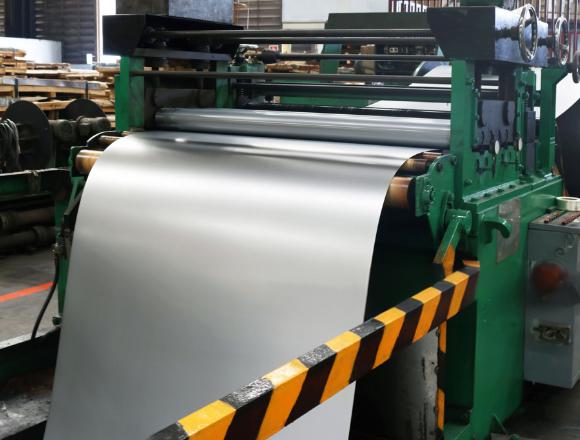
The manufacturing cycle begins with slitting, where master coils of grain-oriented silicon steel are longitudinally cut into narrower strips to meet customer-specific width requirements. This operation is performed on high-precision slitting lines equipped with servo-controlled tension systems and laser-guided edge positioning. The slitting process ensures minimal edge burr formation and consistent strip geometry, which are critical for downstream processing and core lamination stacking efficiency.
Following slitting, the material undergoes continuous annealing in a controlled atmosphere furnace. This step is essential for stress relief and magnetic domain refinement. The annealing profile is precisely calibrated based on steel grade and thickness, typically involving heating to temperatures between 800°C and 1100°C under a protective nitrogen-hydrogen atmosphere to prevent oxidation. The thermal cycle promotes grain growth along the <100> crystallographic direction, enhancing permeability and reducing core loss—key performance indicators for transformer and motor applications.
After annealing, the steel strips are subjected to insulation coating application. A thin, uniform layer of inorganic or semi-organic insulating coating is applied via roll-coating or spray methods. This coating serves multiple functions: it provides electrical resistivity between laminations, minimizes eddy current losses, enhances mechanical durability, and offers protection against corrosion. Our proprietary coating formulations are engineered for thermal stability up to 800°C during subsequent processing and exhibit excellent adhesion under mechanical stress.
The final stage is precision cutting, where the coated strips are cut into required lengths or complex geometries using high-speed, servo-driven cut-to-length lines or CNC turret presses. Tolerances are maintained within ±0.1 mm for length and straightness, ensuring compatibility with automated stacking systems in core manufacturing. All cutting tools are monitored for wear and replaced on a preventive schedule to maintain dimensional consistency.
Throughout the process, quality control is embedded at every stage. Incoming material is verified for chemical composition and grain orientation using spectrographic analysis and X-ray diffraction. During production,在线检测 systems monitor coating weight, surface defects, and dimensional parameters in real time. Final inspection includes magnetic property testing (e.g., core loss and permeability per ASTM A804/A804M), adhesion tests (cross-hatch and tape tests), and visual surface evaluation under standardized lighting. All data is documented and traceable to individual coil batches.
This disciplined, technology-driven approach ensures that every batch of oriented silicon steel produced at Luoyang Xinzhaohe meets international performance standards and the exacting demands of the electrical equipment industry.
Packaging & Logistics
Export Packaging Specifications for Oriented Silicon Steel
Oriented silicon steel (OSS), due to its critical role in transformer and motor core efficiency, demands exceptional protection during international shipment. At Luoyang Xinzhaohe Aluminum Co., Ltd., with over two decades of specialized experience in electrical steel supply, we implement a rigorously engineered export packaging system designed explicitly for the hygroscopic nature of electrical steel and the harsh realities of global sea freight. This system prioritizes absolute moisture exclusion and structural integrity to prevent rust, mechanical damage, and dimensional instability upon arrival.
Our standard export packaging utilizes robust, ISPM-15 compliant heat-treated wooden pallets as the foundational element. Pallets are constructed from kiln-dried hardwood or plywood, ensuring dimensional stability and resistance to compression under load. Standard dimensions accommodate common coil sizes, typically 800mm x 1200mm or 1000mm x 1200mm base, with a minimum load capacity of 5,000 kg per pallet. Coils are securely strapped to the pallet using high-tensile steel or PET straps, applied at multiple levels to prevent shifting during vessel motion. Critical edge protection is applied to coil outer diameters using corrugated cardboard or plastic guards to mitigate handling damage during transshipment and port operations.
The paramount defense against corrosion is our multi-layer moisture-proof barrier system. Coils are first wrapped in a vapor corrosion inhibitor (VCI) paper layer, specifically formulated for ferrous metals, providing active molecular protection. This is immediately followed by a primary seal using high-density polyethylene (HDPE) film, extruded with co-extruded barrier resins. The film application employs a stretch-wrap machine to ensure uniform tension and complete coverage, eliminating gaps or wrinkles where moisture ingress could occur. A secondary outer layer of reinforced polypropylene (PP) woven fabric, laminated with an additional HDPE film layer, provides puncture and abrasion resistance against container walls, other cargo, and handling equipment. All film seams are heat-sealed to create a hermetic enclosure.
Moisture-Proof Film System Specifications
| Parameter | Requirement | Purpose |
|---|---|---|
| Primary Film Type | Co-extruded HDPE with EVOH barrier layer | Extremely low water vapor transmission rate |
| Primary Thickness | ≥ 125 μm | Structural integrity & moisture barrier |
| WVTR (ASTM F1249) | ≤ 0.5 g/m²/day (38°C, 90% RH) | Prevents internal condensation |
| Secondary Layer | Laminated PP Woven + HDPE | Puncture & abrasion resistance |
| Sealing Method | Industrial heat sealing | Ensures hermetic closure |
This integrated packaging methodology directly addresses the primary risks of ocean transport: prolonged exposure to high ambient humidity, salt-laden air, and significant temperature fluctuations causing condensation within shipping containers. The hermetic seal maintained by our film system, combined with VCI technology, ensures the internal microclimate remains dry, preventing the surface oxidation that catastrophically degrades the magnetic properties of oriented silicon steel. Compliance with international phytosanitary standards (ISPM-15) for wooden components guarantees seamless customs clearance globally. Luoyang Xinzhaohe’s packaging protocol is not merely a container requirement; it is a critical component of our quality assurance system, engineered to deliver OSS coils in the exact metallurgical condition specified, minimizing landed cost through the prevention of costly in-transit damage claims and production delays for our global clients. Safe sea freight for electrical steel is achieved through uncompromising material science and supply chain execution.
Sourcing from Luoyang Xinzhaohe
Partner with Luoyang Xinzhaohe Aluminum CO., Ltd for Premium Oriented Silicon Steel Solutions
With over two decades of specialized experience in the production and supply of electrical steel, Luoyang Xinzhaohe Aluminum CO., Ltd stands as a trusted industrial partner for global manufacturers requiring high-performance oriented silicon steel. Our vertically integrated manufacturing infrastructure, combined with rigorous quality control protocols, ensures consistent delivery of grain-oriented silicon steel (GOES) that meets international standards including IEC 60404-8, ASTM A876, and GB/T 2521. As a core supplier to the transformer, motor, and power distribution sectors, we understand the critical role material performance plays in core efficiency, energy loss reduction, and long-term system reliability.
Our production facility is equipped with advanced cold-rolling, annealing, and insulating coating lines specifically engineered for grain-oriented steel processing. This enables precise control over crystallographic orientation, ensuring optimal magnetic flux density (typically ≥1.88 T at 800 A/m) and minimized core loss (as low as 0.85 W/kg at 1.7 T, 50 Hz). We offer a comprehensive product range in standard and high-permeability grades, with thicknesses from 0.23 mm to 0.35 mm and widths tailored to customer specifications. All material is processed under strict atmospheric and thermal controls to promote sharp Goss texture development, a key determinant in directional magnetic performance.
Quality assurance is embedded at every stage of production. Our in-house metallurgical laboratory conducts routine analysis of chemical composition, grain size, and magnetic properties using state-of-the-art Epstein frame testers, B-H loop tracers, and spectrometers. Each production batch is traceable, with full certification packages available, including mill test reports and compliance documentation for RoHS and REACH where applicable. This level of technical diligence ensures that our oriented silicon steel performs reliably in demanding applications such as high-efficiency distribution transformers, power reactors, and specialty electrical equipment.
We specialize in just-in-time supply chain solutions, supporting both large-volume OEM contracts and customized strip processing requirements. Our logistics network enables efficient export to North America, Europe, Southeast Asia, and the Middle East, with packaging designed to prevent mechanical and environmental damage during transit. As a manufacturer with deep technical expertise, we also offer engineering collaboration for material optimization, helping clients select the most cost-effective grade for their core design parameters.
For sourcing managers and engineering teams seeking a stable, technically proficient supply partner, Luoyang Xinzhaohe delivers proven performance, scalability, and responsiveness. We invite you to contact us directly to discuss your oriented silicon steel requirements and receive technical data sheets, sample rolls, or pricing quotations.
Contact us at cathy@transformerstrip.com to initiate a technical evaluation and strengthen your supply chain with a trusted industry leader.
📉 Factory Direct Savings Calculator
Calculate your potential savings by importing oriented silicon steel directly from China.