


Table of Contents
Market Insight: Non Oriented Silicon Steel

Market Analysis: Silicon Steel (Electrical Steel)
Non oriented silicon steel (NOSS), also known as non-oriented electrical steel, is a critical ferromagnetic material engineered for efficient energy conversion in electromagnetic applications. Its primary industrial demand stems from the power distribution and renewable energy sectors, particularly in the manufacturing of transformers, electric motors, generators, and inverter-driven systems. While grain-oriented silicon steel dominates large power transformer cores due to its directional magnetic properties, non oriented variants are indispensable in中小型 (medium and small-sized) distribution transformers, rotating machinery, and high-efficiency appliances where magnetic flux operates in multiple directions.
The global demand for non oriented silicon steel has grown steadily, driven by regulatory mandates for energy efficiency, expansion of smart grid infrastructure, and the proliferation of electric vehicles and variable-speed drives. In distribution transformers, which constitute a significant segment of the power network, NOSS enables reduced core losses (iron losses), thereby enhancing operational efficiency and lowering lifecycle costs. As utilities and industrial users prioritize energy conservation and carbon footprint reduction, the performance of magnetic materials in transformers becomes a focal point in equipment design and procurement.
Quality in non oriented silicon steel directly influences transformer performance, reliability, and total cost of ownership. Key quality parameters include magnetic induction (B50), core loss (W10/400 or W15/50), lamination factor, surface insulation, and mechanical uniformity. High magnetic induction allows for compact core designs with reduced material usage, while low core loss translates into less heat generation and improved energy efficiency. Even marginal reductions in core loss—measured in watts per kilogram—can yield substantial energy savings over the 20–30 year service life of a transformer.
At Luoyang Xinzhaohe Aluminum Co., Ltd, with over two decades of experience in advanced metal processing and supply chain management, we recognize that material consistency is paramount. Variability in thickness, coating uniformity, or edge quality can lead to air gaps, increased noise (magnetostriction), and localized hot spots in transformer cores. Our technical partnerships with leading steel mills ensure access to high-purity, tightly controlled NOSS grades that meet IEC 60404-8-7, ASTM A664, and other international standards. We supply materials in precision-cut laminations and coils, optimized for automated stacking and minimal waste in core fabrication.
As the market shifts toward higher efficiency classes (e.g., IE3, IE4 motors; DOE Level 3+ transformers), the role of premium-grade non oriented silicon steel becomes increasingly strategic. End users and OEMs must evaluate not only initial procurement cost but also long-term performance metrics tied to material quality. Inferior steel may offer short-term savings but often results in higher energy consumption, premature aging, and increased maintenance—undermining sustainability goals and operational economics.
In summary, the demand for non oriented silicon steel in transformer applications is both volume-driven and performance-sensitive. With energy efficiency regulations tightening worldwide, the industry is moving toward higher-grade, low-loss NOSS with superior magnetic and physical properties. Quality assurance, traceability, and technical support are no longer optional but essential components of a reliable supply chain.
Technical Specs: Non Oriented Silicon Steel
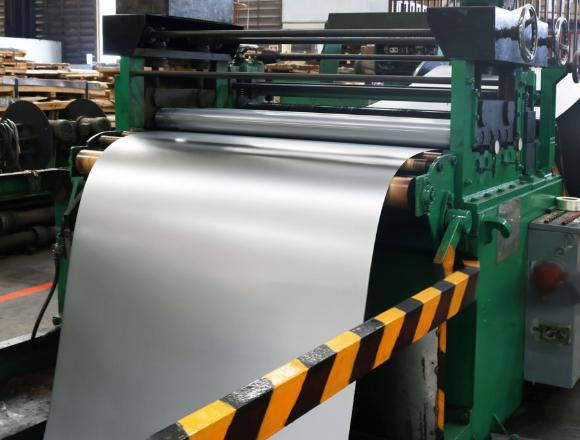
Technical Specifications for Non-Oriented Silicon Steel
Luoyang Xinzhaohe Aluminum CO., Ltd clarifies a critical technical distinction: our expertise and product portfolio center on electrical steel (silicon steel), not aluminum alloys. With over 20 years of specialized experience in silicon steel production, we provide precision-engineered non-oriented grades essential for motors, generators, and transformers. This section details the core technical parameters governing performance, ensuring optimal material selection for demanding electromagnetic applications.
Core loss (iron loss) is the paramount specification, directly impacting energy efficiency and thermal management. Measured in watts per kilogram (W/kg), it quantifies hysteresis and eddy current losses under alternating magnetic fields. For non-oriented silicon steel, core loss must be evaluated at standardized conditions: 1.5 Tesla (T) flux density and 50 Hz frequency per IEC 60404-2. Lower core loss values correlate with reduced heat generation and higher system efficiency, particularly critical in variable-speed drives and EV traction motors. Acceptable ranges vary by grade, with high-efficiency variants achieving ≤ 3.0 W/kg at 1.5T/50Hz. Higher-frequency applications (e.g., 400 Hz aerospace systems) require testing at 1.0T to assess performance under rapid flux reversal.
Magnetic flux density, measured in Tesla (T), defines the material’s saturation capability and torque density in rotating machinery. Key metrics include B50 (induction at 5,000 A/m field strength) and B100 (at 10,000 A/m). Non-oriented grades typically exhibit B50 values between 1.50 T and 1.70 T. Higher flux density enables compact motor designs but must be balanced against core loss trade-offs. For instance, automotive auxiliary motors often specify B50 ≥ 1.62 T to maximize power density without compromising efficiency targets.
Flatness tolerance is equally vital for lamination stacking integrity. Measured in millimeters per meter (mm/m), it indicates deviation from a perfectly planar surface. Industry standards (e.g., JIS C 2520) mandate flatness ≤ 0.15 mm/m for precision applications. Excessive waviness or camber causes air gaps between laminations, increasing reluctance and localized eddy currents. This elevates core loss by up to 15% and induces vibration noise. Our production process employs tension-leveling and precision slitting to maintain flatness within ±0.10 mm/m, ensuring optimal magnetic circuit continuity.
The following table summarizes critical parameters for standard non-oriented silicon steel grades:
| Parameter | Test Condition | Typical Range | Significance |
|---|---|---|---|
| Core Loss (P1.5/50) | 1.5 T, 50 Hz | 2.80–4.20 W/kg | Directly impacts energy efficiency and thermal rise |
| Core Loss (P1.0/400) | 1.0 T, 400 Hz | 8.0–15.0 W/kg | Critical for high-speed aerospace/military applications |
| Magnetic Flux Density (B50) | 5,000 A/m | 1.50–1.70 T | Determines torque density and motor size |
| Flatness Tolerance | Unstressed state | ≤ 0.15 mm/m | Ensures lamination stack integrity and minimizes stray losses |
| Thickness Tolerance | Standard gauge | ±0.02 mm | Affects core loss linearity and stacking factor |
Material selection must align with application-specific electromagnetic profiles. For industrial pumps, prioritize core loss at 50 Hz; for drone motors, emphasize high-frequency loss and flux density. Our technical team collaborates with clients to validate specifications against operational duty cycles, ensuring compliance with IEC, ASTM, or custom OEM standards. Consistent flatness and tight thickness control are non-negotiable for automated stator assembly, where deviations disrupt press-fit tolerances and increase manufacturing scrap rates. Partner with Xinzhaohe for data-driven material qualification and supply chain resilience.
Factory Tour: Manufacturing
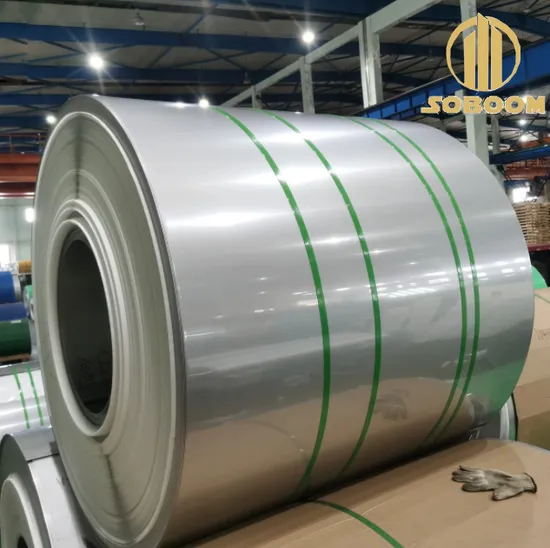
Manufacturing Process of Non-Oriented Silicon Steel at Luoyang Xinzhaohe Aluminum Co., Ltd
The production of high-performance non-oriented silicon steel at Luoyang Xinzhaohe Aluminum Co., Ltd follows a tightly controlled sequence of metallurgical and mechanical processes designed to optimize magnetic properties, dimensional accuracy, and surface integrity. With over two decades of industrial experience, our facility integrates advanced process control systems to ensure consistency and compliance with international standards such as IEC 60404 and GB/T 2521.
The process begins with slitting, where master coils of cold-rolled non-oriented silicon steel are longitudinally cut into narrower strips to meet customer-specific widths. This operation is performed on precision slitting lines equipped with servo-controlled tension systems and automated edge guiding to minimize width tolerance deviation, typically maintaining ±0.1 mm accuracy. Slitting ensures efficient material utilization and prepares the steel for downstream thermal and surface treatments.
Following slitting, the material undergoes annealing in a continuous or batch-type furnace under a controlled atmosphere of nitrogen-hydrogen gas mixture to prevent oxidation and decarburization. Annealing serves multiple metallurgical purposes: it relieves residual stresses induced during rolling and slitting, promotes grain growth, and enhances magnetic permeability while reducing core loss. The thermal profile is precisely managed with ramp rates, peak temperatures (typically between 780°C and 850°C), and cooling rates optimized for the specific grade of silicon steel (e.g., 50W470, 35W300). In-process pyrometry and dew point monitoring ensure atmosphere stability and consistent recrystallization.
After annealing, the steel strip is subjected to insulation coating application, a critical step for electrical isolation between laminations in motor and transformer cores. A thin, uniform layer of inorganic or hybrid insulation coating is applied via roll-coating or spray techniques. The coating provides dielectric resistance, improves corrosion resistance, and enhances punchability. Coating weight is tightly controlled (typically 0.8–1.5 g/m² per side), and the film is cured in a secondary drying oven to ensure adhesion and chemical stability.
The final stage is precision cutting, where the annealed and coated material is cut into laminations or custom geometries using high-speed turret presses or laser-cutting systems. Tooling is maintained under strict wear protocols to ensure edge quality and dimensional repeatability. Blank-to-blank thickness variation is monitored to within ±0.01 mm, ensuring stack uniformity in end applications.
Quality control is embedded throughout the production chain. Key inspection points include width and thickness measurement via laser gauges post-slitting, magnetic property verification using Epstein frame or single-sheet testers post-annealing, coating adhesion and continuity testing (e.g., water drop and insulation resistance tests), and final dimensional audits using coordinate measuring machines (CMM). All data are logged in our quality management system for full traceability.
This integrated manufacturing approach ensures that every coil of non-oriented silicon steel delivered by Luoyang Xinzhaohe meets the rigorous demands of modern electrical machinery applications.
Packaging & Logistics

Export Packaging Protocol for Non-Oriented Silicon Steel Coils
Luoyang Xinzhaohe Aluminum CO., Ltd leverages 20+ years of metallurgical and supply chain expertise to ensure non-oriented silicon steel (NOSS) arrives at destination ports in optimal condition. Our export packaging system is engineered specifically for the rigors of international sea freight, prioritizing coil integrity and magnetic property preservation. This protocol is non-negotiable for safeguarding your investment against moisture ingress, mechanical damage, and salt-air corrosion during extended ocean voyages.
Pallet Construction Specifications
All NOSS coils are mounted on robust, ISPM 15 compliant wooden pallets constructed from heat-treated (HT) hardwood. Pallet dimensions strictly adhere to international containerization standards, with standard base sizes of 1200x1200mm or 1100x1100mm supporting coil weights up to 15 metric tons. Critical structural elements include:
| Component | Specification | Purpose |
|---|---|---|
| Stringers | 100x100mm solid hardwood | Load distribution, impact resistance |
| Deck Boards | 22mm thick, kiln-dried pine | Coil base stability, moisture barrier |
| Blocking | Angled hardwood braces at coil edges | Prevent lateral coil movement |
Moisture-Proof Barrier System
A multi-layer moisture barrier is applied directly to the coil surface before palletization. This system comprises: a primary layer of high-density polyethylene (HDPE) film (≥125μm thickness) sealed via heat-welding to eliminate seams, followed by a secondary vapor barrier of metallized polyester film. The entire assembly is encased in a heavy-duty polypropylene (PP) cover (200g/m²) with UV stabilization, secured via automated strapping. This triple-layer approach maintains internal relative humidity below 40% for 60+ days, critical for preventing interlayer rust which degrades core loss performance. Plastic pallets or single-layer wrapping are strictly prohibited due to inadequate moisture resistance and structural failure risks in marine environments.
Securement and Containerization
Coils are rigidly affixed to pallets using tension-controlled steel banding (minimum 32mm width, 0.9mm thickness) applied at four equidistant points. Palletized units undergo tilt testing at 15° angles to verify stability. During container loading, units are positioned with 100mm minimum clearance from container walls, with void spaces filled using dunnage to prevent shifting. Each container receives a hygroscopic desiccant (minimum 1.5kg/m³) suspended from the ceiling. All packaging materials are certified free of chlorides and sulfides to avoid corrosive reactions with steel surfaces.
Sea Freight Validation
Our packaging protocol is validated through accelerated salt-spray testing (ASTM B117) and real-world transit monitoring using IoT humidity/temperature loggers on 10% of shipments. This ensures compliance with IEC 60404-8-5 moisture resistance requirements. Historical data demonstrates a 99.8% damage-free delivery rate across major trade lanes (Asia-Europe, Asia-Americas), directly reducing insurance claims and field rejection rates. Partnering with Xinzhaohe guarantees NOSS arrives ready for immediate processing, eliminating costly cleaning or rework delays upon discharge. This precision-engineered packaging is integral to our commitment to electrical steel performance consistency in global supply chains.
Sourcing from Luoyang Xinzhaohe
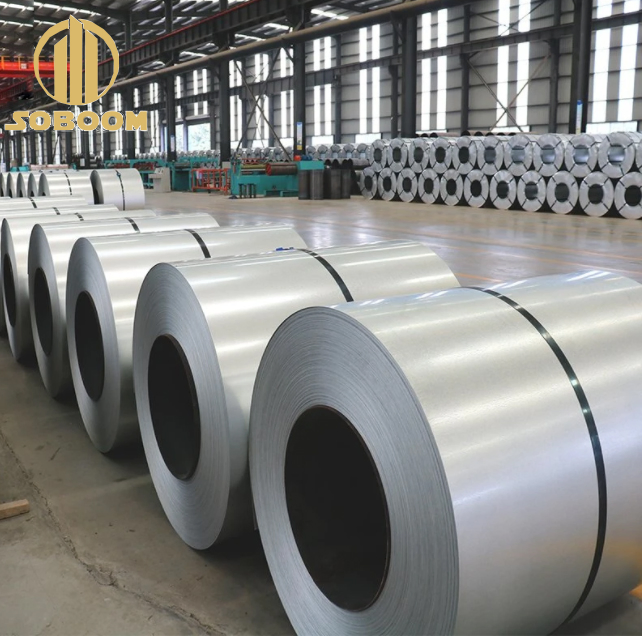
Partner with Luoyang Xinzhaohe for High-Performance Non-Oriented Silicon Steel
Luoyang Xinzhaohe Aluminum Co., Ltd brings over two decades of precision engineering and metallurgical expertise to the production of non-oriented silicon steel, a critical material in the efficient operation of motors, transformers, and other electromagnetic devices. As a vertically integrated manufacturer with full control over raw material sourcing, rolling, annealing, and quality assurance, we ensure consistent product integrity and performance across all production batches. Our facility is equipped with advanced cold-rolling mills, continuous annealing lines, and state-of-the-art testing laboratories compliant with international standards including ASTM, IEC, and GB/T.
Our non-oriented silicon steel is engineered to deliver optimal magnetic flux density, low core loss, and high electrical resistivity—key parameters for energy-efficient motor and transformer design. We produce a full range of grades from 50W470 to 50W1300, tailored to meet diverse application requirements in industrial motors, household appliances, automotive components, and power distribution systems. With a production capacity exceeding 150,000 metric tons annually, we support both large-volume OEM contracts and specialized low-volume orders with equal rigor.
Material consistency is maintained through rigorous process control. Our steel undergoes precise chemical composition tuning, with silicon content optimized between 0.5% and 3.2% to balance magnetic performance and mechanical workability. Grain structure is uniformly refined through controlled rolling and annealing cycles, ensuring isotropic magnetic properties essential for rotating machinery. Each coil is subjected to full-spectrum quality verification, including magnetic property testing (Epstein frame method), surface inspection, dimensional accuracy checks, and coating adhesion analysis.
We specialize in narrow strip formats, a critical requirement for stator and rotor cores in small to medium electric motors. Our slitting lines can produce widths from 10 mm to 800 mm with tight tolerances (±0.05 mm), minimizing material waste during stamping operations. All products are supplied with insulating coatings—standard C3, C4, or customized options—to enhance interlaminar resistance and reduce eddy current losses.
Supply chain reliability is a cornerstone of our service model. Our strategic location in Henan Province provides direct access to major rail and highway corridors, enabling efficient distribution across China and export logistics via Qingdao and Lianyungang ports. We maintain buffer inventory for key grades to support just-in-time delivery schedules and offer flexible packaging solutions, including palletized coils and custom core diameters.
For engineers and procurement managers seeking a technically capable and operationally resilient partner in electrical steel, Luoyang Xinzhaohe offers proven performance, data-driven quality, and responsive technical support. We collaborate closely with clients during material selection, prototyping, and process optimization to ensure seamless integration into end-product manufacturing.
Contact us today to discuss your non-oriented silicon steel requirements.
Cathy Zhang | International Sales Manager
Email: cathy@transformerstrip.com
📉 Factory Direct Savings Calculator
Calculate your potential savings by importing non oriented silicon steel directly from China.