


Table of Contents
Market Insight: Non Grain Oriented Steel
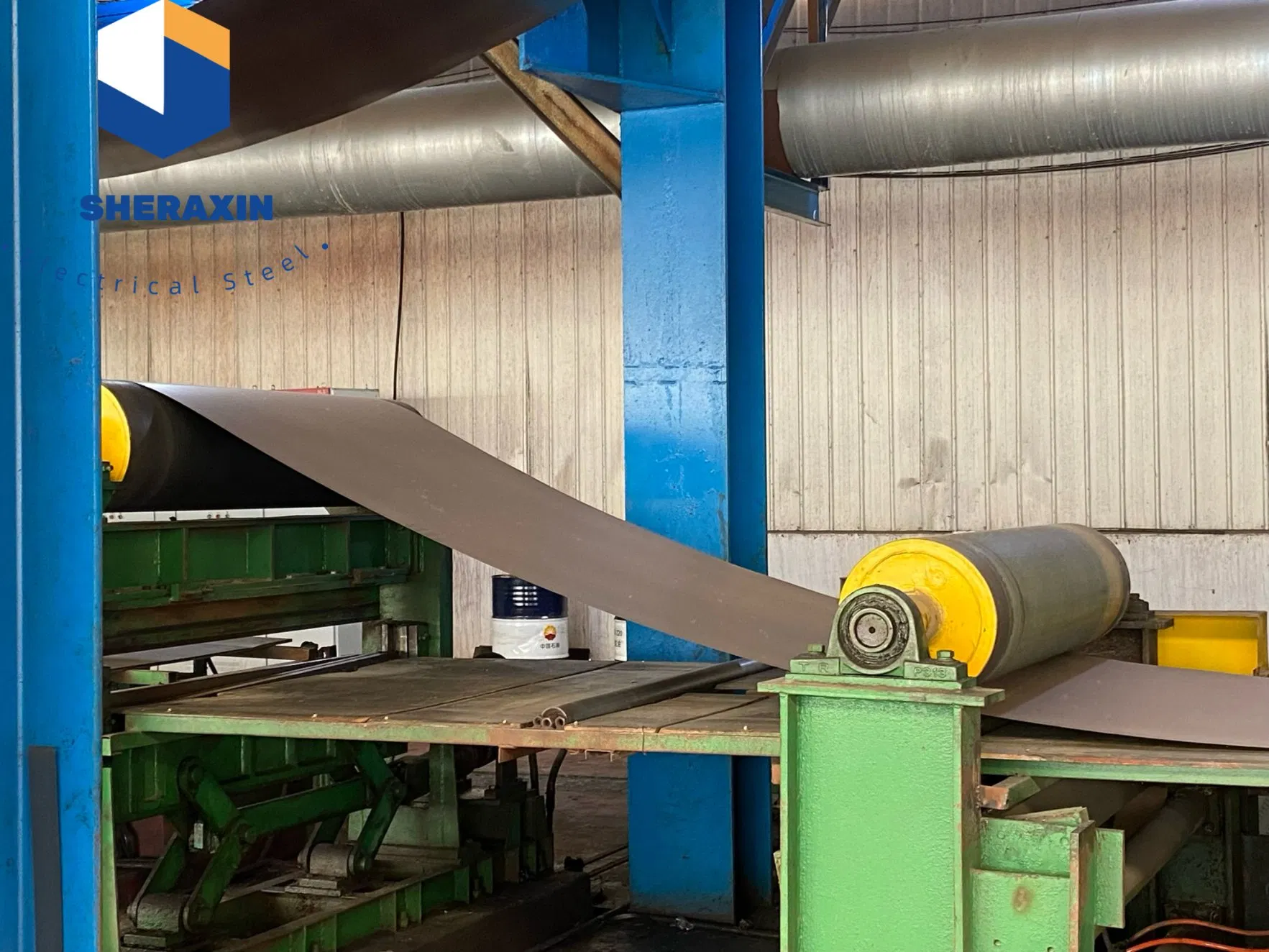
Market Analysis: Silicon Steel (Electrical Steel)
Non grain oriented (NGO) silicon steel is a critical material in the design and performance of electrical transformers, particularly in applications where dynamic magnetic conditions prevail. Unlike grain-oriented electrical steel, which is optimized for unidirectional magnetic flux, NGO steel exhibits isotropic magnetic properties, making it ideal for use in rotating electrical machinery and distribution transformers where flux paths are complex and multidirectional. The industrial demand for NGO silicon steel has grown steadily over the past two decades, driven by global expansion in power infrastructure, renewable energy integration, and the increasing efficiency requirements of electrical equipment.
Transformers represent one of the largest end-use segments for NGO silicon steel. In distribution and small power transformers, NGO steel is often selected for its balanced magnetic performance across all axes, enabling efficient operation under variable load and directional flux conditions. This is particularly relevant in urban power networks and industrial facilities where load fluctuations are frequent and system reliability is paramount. As energy efficiency standards such as IE3 and IE4 become mandatory in many regions, manufacturers are under pressure to reduce core losses in transformers, which directly correlates to the quality and composition of the silicon steel used.
The quality of NGO silicon steel significantly impacts transformer performance, longevity, and energy efficiency. High-quality NGO steel exhibits low core loss (W/kg), high magnetic permeability, and consistent thickness and coating properties. These characteristics minimize hysteresis and eddy current losses, which are primary contributors to heat generation and energy dissipation in transformer cores. Poor-quality steel, by contrast, can lead to elevated no-load losses, reduced thermal stability, and premature equipment failure. Additionally, inconsistencies in lamination stacking due to poor flatness or surface defects can compromise the magnetic circuit, further degrading efficiency.
At Luoyang Xinzhaohe Aluminum Co., Ltd, with over 20 years of experience in advanced metallurgical materials, we recognize that material consistency and precision in manufacturing are non-negotiable for high-performance electrical systems. Our NGO silicon steel products are engineered to meet stringent international standards, including ASTM A664 and IEC 60404-8, ensuring reliable magnetic performance and compatibility with automated core assembly processes. We employ controlled rolling, precise annealing, and uniform insulation coating techniques to deliver steel with optimal electrical and mechanical properties.
As global demand for energy-efficient transformers continues to rise, particularly in emerging markets and renewable energy installations, the role of high-grade NGO silicon steel becomes increasingly strategic. Procurement decisions must prioritize material quality, supply chain reliability, and technical support. For OEMs and transformer manufacturers, sourcing from experienced, technically capable suppliers ensures compliance with efficiency regulations and enhances the operational life of critical power infrastructure.
Technical Specs: Non Grain Oriented Steel
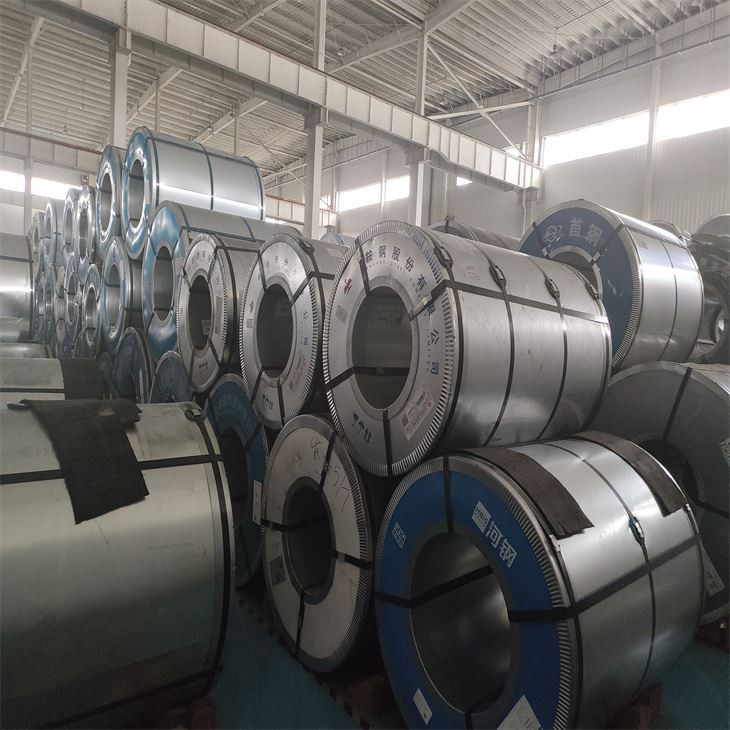
Technical Specifications for Non-Grain Oriented Electrical Steel
Luoyang Xinzhaohe Aluminum CO., Ltd clarifies a critical point: while our corporate name references aluminum, our core expertise for this guide pertains to silicon steel (electrical steel) production, specifically non-grain oriented (NGO) grades. This distinction is vital for technical accuracy in sourcing. NGO steel serves as the foundational material for rotating machinery cores (motors, generators) and transformers where directional magnetic properties are non-critical. Precision in key parameters directly impacts end-product efficiency, thermal management, and manufacturability.
Core loss (iron loss), measured in watts per kilogram (W/kg), is the paramount specification for energy-efficient designs. It quantifies hysteresis and eddy current losses under alternating magnetic fields. Loss values are strictly defined at specific peak inductions (e.g., 1.0 T, 1.5 T) and frequencies (50 Hz, 60 Hz, 400 Hz). Thinner gauges (0.35 mm, 0.50 mm, 0.65 mm) inherently reduce eddy current losses. Our production control systems ensure tight adherence to loss ranges per grade designation (e.g., 50WW350 per IEC 60404-8-7), where the numeric suffix indicates maximum core loss at 1.5 T and 50 Hz. Deviations exceeding ±5% from certified test reports significantly compromise motor efficiency classifications (IE3, IE4).
Magnetic flux density, particularly B50 (induction at 5000 A/m field strength) and B80 (at 8000 A/m), dictates the material’s saturation characteristics and power density capability. Higher B50/B80 values (typically 1.60–1.75 T for standard NGO grades) enable smaller, lighter motor cores without sacrificing torque. However, excessive flux density can elevate core loss; optimal grade selection balances these factors against the application’s operational duty cycle. Rigorous Epstein frame testing per ASTM A343/A343M or IEC 60404-2 validates these properties, with batch-to-batch consistency being non-negotiable for automated stator/rotor stacking.
Flatness tolerance, expressed as I/m (inches per meter deviation), is a critical dimensional metric often overlooked. Poor flatness (>0.5 I/m for 0.50 mm material) causes lamination burrs during blanking, increases air gaps in stacked cores, and elevates localized losses. Our cold-rolling and stress-relief annealing processes maintain flatness within 0.3–0.4 I/m for standard NGO, ensuring smooth progressive die operation and minimizing core vibration noise. Surface insulation coating integrity (typically C3 or C4 class per IEC 60404-15) must also be preserved during handling to prevent interlaminar shorts.
The following table summarizes key NGO steel parameters and their industrial significance:
| Parameter | Test Condition | Typical Range (0.50mm Grade) | Measurement Standard |
|---|---|---|---|
| Core Loss (P15/50) | 1.5 T, 50 Hz | 3.0–4.0 W/kg | IEC 60404-2 / ASTM A343 |
| Core Loss (P10/400) | 1.0 T, 400 Hz | 12.0–18.0 W/kg | IEC 60404-2 |
| B50 | 5000 A/m | 1.62–1.70 T | IEC 60404-3 / ASTM A773 |
| B80 | 8000 A/m | 1.70–1.75 T | IEC 60404-3 / ASTM A773 |
| Flatness | Uncoated, 0.50mm thickness | ≤0.4 I/m | Internal QCP-114 |
| Coating Mass | C4 Class | 0.3–0.6 g/m² | IEC 60404-15 |
Sourcing decisions must prioritize certified test data over nominal grade labels. Request full Epstein test reports covering loss curves across relevant induction/frequency ranges and verify flatness measurements via laser profilometry. At Luoyang Xinzhaohe, 20+ years of process refinement ensures these specifications are met with statistical process control, directly supporting our clients’ goals for high-efficiency, reliable electromagnetic components. Consistent material performance reduces scrap rates in stamping and guarantees predictable core behavior in final assembly.
Factory Tour: Manufacturing
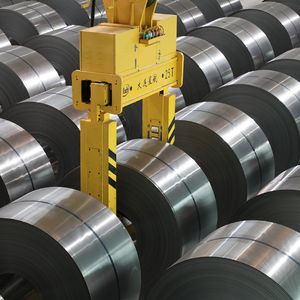
Manufacturing Process of Non-Grain Oriented Electrical Steel at Luoyang Xinzhaohe Aluminum Co., Ltd
The production of high-performance non-grain oriented (NGO) electrical steel at Luoyang Xinzhaohe Aluminum Co., Ltd follows a tightly controlled, multi-stage manufacturing sequence designed to ensure optimal magnetic properties, dimensional accuracy, and surface integrity. With over two decades of metallurgical expertise, our process integrates advanced equipment and rigorous quality control protocols to meet the stringent demands of motors, generators, and transformers.
The process begins with slitting, where master coils of cold-rolled non-grain oriented silicon steel are longitudinally cut into narrower strips to meet customer-specified widths. This operation is performed on precision slitting lines equipped with high-tolerance circular knives and tension control systems to prevent edge burring, camber, or dimensional deviation. Each slit coil is inspected for edge quality and width consistency using laser measurement systems, ensuring compliance with international tolerances (IEC 60404-9).
Following slitting, the coils undergo annealing in a continuous or batch furnace under a controlled protective atmosphere, typically composed of nitrogen-hydrogen mixtures to prevent oxidation. The annealing cycle is precisely programmed to achieve full stress relief, promote grain growth, and restore magnetic permeability while minimizing core loss. Temperature profiles are monitored in real time, with soak times and cooling rates adjusted based on steel grade and silicon content. Post-annealing, samples are subjected to magnetic property testing using Epstein frame or Single Sheet Tester (SST) methods to verify specific total loss (W/kg) and magnetic polarization (e.g., B50, B80).
After thermal treatment, an insulation coating is uniformly applied to both surfaces of the steel strip. Our proprietary C5-class insulation coating, compliant with IEC 60404-12, provides excellent interlaminar resistance, corrosion resistance, and weldability. The coating is applied via roll-coating or spray method, followed by curing in a dedicated drying oven. Coating weight is maintained within ±10% of target values and verified through gravimetric analysis. Adhesion strength and dielectric performance are also tested to ensure reliability in stacked core applications.
The final stage is precision cutting, where annealed and coated coils are transversely cut into laminations or custom-shaped parts using high-speed turret presses or laser cutting systems. Tooling is maintained under strict preventive schedules to ensure edge smoothness and dimensional repeatability. Each cut lot is inspected for flatness, burr height (<0.03 mm typical), and geometric accuracy using optical comparators and coordinate measuring machines (CMM).
Throughout the entire process, in-process and final quality control checkpoints are enforced. Key parameters monitored include chemical composition (via OES), thickness (micrometer and X-ray gauges), core loss, magnetic induction, coating integrity, and mechanical properties. All test data are documented and available with material certifications (e.g., ISO 9001, SGS reports), ensuring full traceability and compliance for critical industrial applications.
| Process Stage | Key Parameters Monitored | Testing Standards |
|---|---|---|
| Slitting | Width tolerance, edge quality, camber | IEC 60404-9, internal specs |
| Annealing | Core loss, magnetic induction, grain size | IEC 60404-2, ASTM A343/A343M |
| Insulation Coating | Coating weight, adhesion, dielectric strength | IEC 60404-12, internal protocols |
| Precision Cutting | Dimensional accuracy, burr, flatness | ISO 2768, customer drawings |
Packaging & Logistics
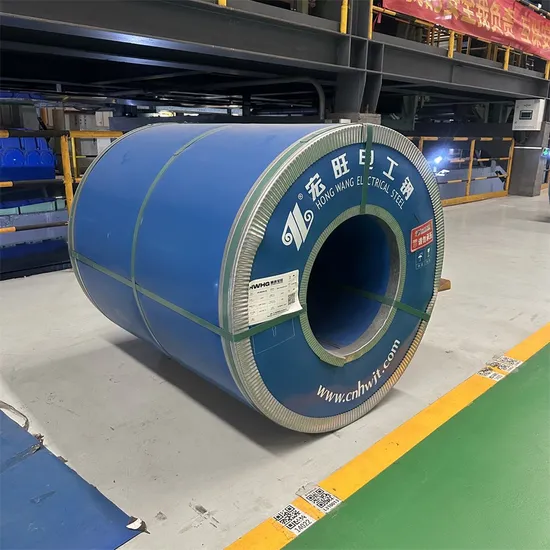
Export Packaging Specifications for Non-Grain Oriented Electrical Steel
Luoyang Xinzhaohe Aluminum CO., Ltd implements rigorously engineered export packaging protocols for non-grain oriented (NGO) silicon steel coils, specifically designed to withstand the extreme environmental and mechanical stresses of global maritime transport. With over 20 years of metallurgical and supply chain expertise, our packaging system prioritizes coil integrity preservation, corrosion prevention, and compliance with international freight standards, ensuring material arrives in optimal condition for downstream processing.
Wooden pallets form the foundational structural element of our export packaging. Constructed from ISPM 15-certified, kiln-dried hardwood, these pallets feature a minimum thickness of 22 mm for deck boards and robust 100 x 100 mm stringers. Each pallet is engineered to support coil weights up to 15 metric tons with a safety factor of 2.5x, incorporating interlocking joints and corrosion-resistant steel strapping channels. Critical reinforcement includes welded steel perimeter frames and internal cross-bracing to prevent pallet deformation during vessel motion or multi-tier container stacking. All wood components undergo thermal treatment to eliminate biological hazards and minimize moisture content below 12%, mitigating risks of mold growth or dimensional instability during transit.
Moisture protection is achieved through a multi-layer barrier system. Coils are first wrapped in industrial-grade, 125μm thick high-density polyethylene (HDPE) film with a water vapor transmission rate (WVTR) of ≤1.0 g/m²/24hr at 38°C and 90% RH. This primary layer is applied under tension using automated stretch wrappers to eliminate air pockets and ensure 100% surface coverage, including critical cut edges. A secondary layer of metallized polyester film (30μm) is then applied, providing an additional vapor barrier with WVTR ≤0.1 g/m²/24hr and enhanced resistance to UV degradation during port handling. The entire assembly is hermetically sealed using heat-welded seams at all overlap points, followed by application of desiccant packs (minimum 500g per ton of steel) strategically positioned within the vapor barrier to absorb residual humidity.
This integrated packaging system addresses the unique challenges of sea freight, including prolonged exposure to salt-laden atmospheres, cyclic humidity fluctuations exceeding 95% RH, and temperature variations from -10°C to 55°C. The HDPE/metallized film combination prevents hygroscopic degradation of the steel’s insulating coating and eliminates risks of interlayer corrosion during extended voyages. Pallet design incorporates non-slip surfaces and corner protectors to maintain load stability during vessel rolling (up to 25° heel angles) and crane handling. All packaged units undergo pre-shipment verification per ISTA 3A standards, including vibration testing simulating 14-day ocean journeys and humidity chamber validation at 85% RH for 72 hours.
Luoyang Xinzhaohe’s packaging methodology is validated through decades of incident-free shipments to 35+ countries. We provide certified test reports for WVTR, pallet load capacity, and desiccant efficacy with every consignment, ensuring compliance with carrier requirements and minimizing insurance claims. This technical rigor directly supports our clients’ production continuity by guaranteeing material readiness upon arrival, eliminating costly rework or rejection due to transit-induced damage.
Sourcing from Luoyang Xinzhaohe
Partner with Luoyang Xinzhaohe Aluminum Co., Ltd for High-Performance Non-Grain Oriented Silicon Steel
Luoyang Xinzhaohe Aluminum Co., Ltd brings over two decades of metallurgical expertise and industrial innovation to the production of non-grain oriented (NGO) silicon steel, a critical material in the efficient operation of motors, generators, transformers, and a wide range of electromagnetic applications. As a vertically integrated manufacturer with a focused specialization in electrical steel products, we combine advanced processing technologies with stringent quality control to deliver NGO steel that meets the precise magnetic, mechanical, and dimensional requirements of global OEMs and Tier-1 suppliers.
Our production facility is equipped with continuous annealing lines, precision rolling mills, and state-of-the-art coating systems designed specifically for silicon steel. This enables us to produce NGO steel in thicknesses ranging from 0.30 mm to 0.65 mm, with silicon content tailored between 0.5% and 3.2% to optimize core loss and magnetic flux density for specific end-use conditions. All material is processed under tightly controlled atmospheres to ensure uniform grain structure, minimal impurities, and consistent magnetic performance across coils and production batches.
We adhere to international standards including IEC 60404-8, JIS C 2553, and ASTM A664, and our quality management system is certified to ISO 9001:2015. Every coil undergoes rigorous testing for core loss (W10/400, W15/50), magnetic induction (B50, B8), lamination factor, and coating weight. Full material test reports (CMTRs) are provided with each shipment, ensuring traceability and compliance for regulated applications.
Our supply chain is engineered for reliability and scalability. With an annual production capacity exceeding 150,000 metric tons, we maintain strategic inventory levels of common grades while offering custom formulations for specialized requirements. Our logistics network supports containerized FCL/LCL shipments worldwide, with lead times optimized for just-in-time manufacturing environments.
As a technical partner, Luoyang Xinzhaohe provides engineering support for material selection, processing recommendations, and failure mode analysis. We collaborate closely with design and procurement teams to ensure our NGO steel enhances product efficiency, reduces energy losses, and meets evolving regulatory standards such as IE3 and IE4 motor efficiency classifications.
For sourcing managers and technical buyers seeking a dependable, high-capacity supplier of non-grain oriented silicon steel, Luoyang Xinzhaohe offers proven performance, technical depth, and long-term partnership stability.
Contact us today to discuss your specifications and receive sample coils for evaluation.
Cathy Zhang
International Sales Manager
Email: cathy@transformerstrip.com
📉 Factory Direct Savings Calculator
Calculate your potential savings by importing non grain oriented steel directly from China.