


Table of Contents
Market Insight: Non Grain Oriented Silicon Steel
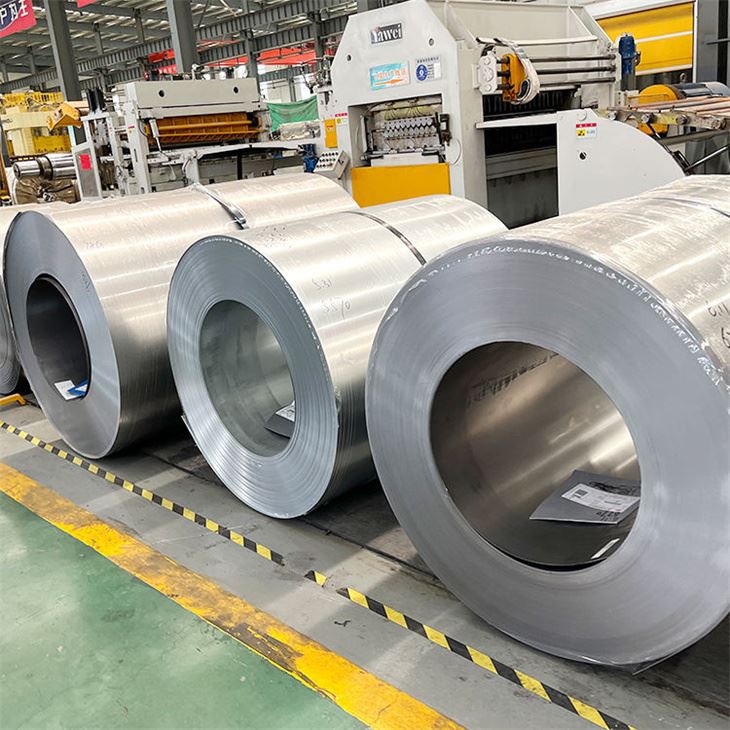
Market Analysis: Non-Grain Oriented Silicon Steel Demand and Quality Imperatives
Non-grain oriented (NGO) silicon steel is fundamentally distinct from grain-oriented (GO) silicon steel in both metallurgical structure and primary application. A critical clarification is necessary: NGO silicon steel is not utilized in power or distribution transformers. Transformers exclusively require GO silicon steel due to its highly directional magnetic properties optimized for 50/60 Hz operation. NGO silicon steel serves rotating electrical machinery, including motors, generators, and small fractional horsepower devices. However, its demand is intrinsically linked to the broader electrical infrastructure ecosystem, including transformer-dependent applications like variable frequency drives (VFDs) and renewable energy inverters that power industrial motor systems.
Industrial demand for NGO silicon steel is driven by global electrification trends, particularly in electric vehicles (EV traction motors), industrial automation, HVAC systems, and renewable energy integration. The EV sector alone consumes over 30% of global NGO production, demanding materials capable of high-frequency operation (400–1000 Hz) with minimal core loss. Similarly, industrial motor efficiency regulations (e.g., IE4/IE5 standards) mandate ultra-low-loss NGO grades to reduce energy consumption. This creates stringent supply chain pressure for consistent high-performance material. While transformers themselves use GO steel, the motors they power via distribution networks rely on NGO steel—making quality in NGO production indirectly critical to overall grid efficiency and reliability.
Quality in NGO silicon steel is non-negotiable due to direct impacts on device performance, lifespan, and operational costs. Substandard material exhibits elevated core loss (W/kg), increasing heat generation and energy waste. For instance, a 0.5 W/kg increase in core loss at 400 Hz in a 100 kW motor can elevate annual energy costs by $1,200. Magnetic aging—degradation of magnetic properties over time—further reduces efficiency if steel contains residual carbon or sulfur. Mechanical properties are equally vital; poor punchability causes burrs during lamination stacking, increasing interlaminar eddy currents and localized heating. Dimensional tolerances must adhere to ±0.02 mm to ensure tight stator/rotor assembly, preventing air gap inconsistencies that degrade torque and efficiency.
Our 20+ years of metallurgical refinement confirm that trace element control (e.g., Al < 0.5%, Si 1.0–3.2%) and precise annealing kinetics dictate final performance. The table below outlines critical quality parameters for industrial NGO sourcing:
| Parameter | Standard Grade (M330-35A) | High-Efficiency Grade (M270-35S) | Critical Impact |
|---|---|---|---|
| Core Loss @ 1.5T/400Hz | ≤ 3.30 W/kg | ≤ 2.70 W/kg | Directly affects motor energy consumption |
| Punching Burr | ≤ 8% of thickness | ≤ 5% of thickness | Minimizes eddy current losses in stacks |
| Magnetic Aging ΔW15/50 | ≤ 0.5 W/kg | ≤ 0.2 W/kg | Ensures long-term efficiency stability |
| Thickness Tolerance | ±0.03 mm | ±0.02 mm | Critical for lamination stack integrity |
Sourcing NGO silicon steel demands rigorous supplier validation. Inconsistent coil-to-coil magnetic properties or surface defects lead to motor field failures and warranty liabilities. At Luoyang Xinzhaohe, we implement ISO 50001-aligned process controls from melt chemistry to final annealing, ensuring compliance with IEC 60404-8-7. Quality is not a cost center—it is the foundation of system-level energy savings and operational resilience in the electrified industrial landscape.
Technical Specs: Non Grain Oriented Silicon Steel
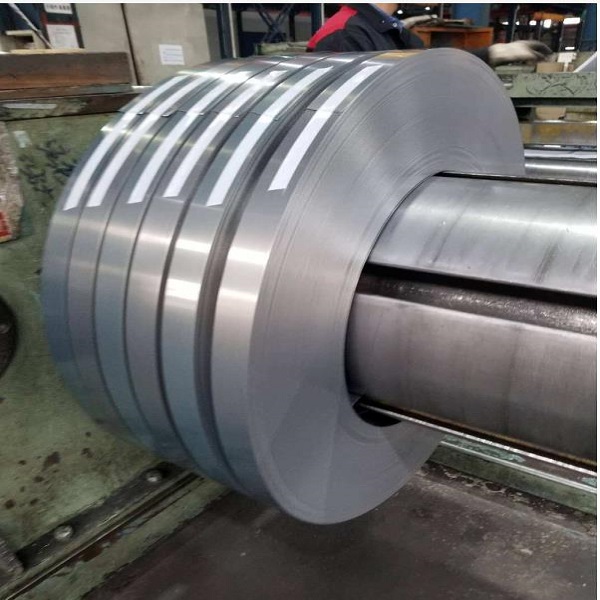
Technical Specifications for Non Grain Oriented Silicon Steel
Non Grain Oriented (NGO) silicon steel is a critical material in the manufacturing of electromagnetic cores for motors, generators, transformers, and other rotating electrical machinery. At Luoyang Xinzhaohe Aluminum Co., Ltd, with over two decades of metallurgical and supply chain expertise, we emphasize precise control over material properties to ensure optimal performance in end-use applications. The technical specifications of NGO silicon steel are primarily defined by three interrelated parameters: Core Loss (Iron Loss), Magnetic Flux Density, and Flatness. These characteristics directly influence efficiency, thermal performance, and manufacturability.
Core Loss, also known as Iron Loss, refers to the energy dissipated in the form of heat when the material is subjected to alternating magnetic fields. It is typically measured in watts per kilogram (W/kg) under standardized test conditions at specific frequencies and magnetic flux densities. Core Loss consists of hysteresis loss, eddy current loss, and anomalous loss. For NGO silicon steel, typical core loss values range from 2.0 to 6.0 W/kg at 1.5 T and 50 Hz, depending on silicon content, thickness, and grain structure. Lower core loss correlates with higher energy efficiency, making it a key metric for premium-grade electrical steel used in high-efficiency motors and industrial equipment.
Magnetic Flux Density, expressed in Tesla (T), indicates the material’s ability to carry magnetic flux. It is commonly measured at a specified magnetic field strength, such as B50 (flux density at 5000 A/m). Higher flux density enables more compact and powerful electromagnetic designs. NGO silicon steel typically exhibits a magnetic flux density between 1.6 T and 2.0 T, with variations influenced by alloy composition—particularly silicon and aluminum content—and rolling techniques. Materials with higher silicon content generally offer reduced core loss but may exhibit slightly lower saturation flux density.
Flatness is a critical dimensional quality parameter that affects stackability, core vibration, and noise in assembled components. Poor flatness can lead to air gaps in laminated cores, increasing reluctance and reducing magnetic performance. Flatness is quantified as the maximum deviation from a flat plane over a specified length, often measured in mm/m. Industrial standards typically require flatness within 3–8 mm/m depending on thickness and application. Advanced rolling and annealing processes are employed to minimize camber and buckling, ensuring dimensional stability.
The following table outlines typical technical parameters for NGO silicon steel offered by Luoyang Xinzhaohe Aluminum Co., Ltd:
| Parameter | Symbol | Test Condition | Typical Range | Unit |
|---|---|---|---|---|
| Core Loss (Total Iron Loss) | Pv | 1.5 T, 50 Hz | 2.0 – 6.0 | W/kg |
| Core Loss (Total Iron Loss) | Pv | 1.0 T, 400 Hz | 10.0 – 25.0 | W/kg |
| Magnetic Flux Density | B50 | H = 5000 A/m | 1.6 – 2.0 | T |
| Thickness Tolerance | — | Based on nominal thickness | ±0.02 – ±0.05 | mm |
| Flatness | — | Over 1 m length | 3 – 8 | mm/m |
| Silicon Content | — | — | 1.0 – 3.5 | wt% |
| Electrical Resistivity | ρ | — | 45 – 65 | μΩ·cm |
These specifications are subject to customization based on customer requirements, including tailored coatings, slit widths, and special annealing treatments. Consistent quality control and adherence to international standards ensure reliable performance across diverse industrial applications.
Factory Tour: Manufacturing

Manufacturing Process for Non-Grain Oriented Silicon Steel
Non-grain oriented (NGO) silicon steel production demands rigorous process control to achieve precise magnetic properties and dimensional accuracy required for motors, generators, and transformers. At Luoyang Xinzhaohe Aluminum Co., Ltd., with over 20 years of specialized expertise, our integrated manufacturing sequence ensures consistency from coil input to finished lamination. The process begins with precision slitting, where master coils undergo controlled tension unwinding and high-tolerance rotary shearing. Edge quality is paramount; we maintain burr heights below 0.02 mm and dimensional tolerances of ±0.1 mm through servo-driven knife positioning and real-time laser monitoring. This stage minimizes edge deformation that could induce localized magnetic losses during core assembly.
Subsequent continuous annealing occurs in a hydrogen-nitrogen atmosphere furnace, critical for stress relief and optimizing magnetic domain structure. Our proprietary thermal profile—ramping at 15°C/s to 780–820°C, held for 120 seconds—ensures complete decarburization while preventing grain growth. Oxygen levels are maintained below 10 ppm to avoid surface oxidation, directly influencing core loss (W15/50) performance. Post-annealing, coils enter the insulation coating line. We apply thin, uniform inorganic or semi-organic coatings (C3/C5 per IEC 60454-2) via roll coating, targeting 0.8–1.2 g/m² dry weight. This layer provides interlaminar resistance (>70 Ω·cm²) to suppress eddy currents and enhances mechanical stability during punching.
Final precision cutting utilizes servo-hydraulic blanking presses with tooling hardened to 60–62 HRC. Progressive dies achieve angular tolerances of ±0.05° and dimensional accuracy within ±0.05 mm for complex geometries. Burr formation is suppressed through optimized clearance (4–6% of material thickness) and die-edge micro-geometry control. Throughout all stages, embedded quality control protocols validate conformance:
| Parameter | Test Method | Target Specification |
|---|---|---|
| Core Loss (W15/50) | IEC 60404-2 | ≤ 3.20 W/kg |
| Magnetic Polarization (B50) | Epstein Frame | ≥ 1.68 T |
| Coating Adhesion | Cross-hatch ASTM D3359 | 5B (no flaking) |
| Surface Insulation | IEC 60404-11 | ≥ 70 Ω·cm² |
Incoming coil certification (ASTM A876/A976) initiates our QC cascade, with 100% inline thickness verification via X-ray gauges and periodic magnetic property validation. Final lamination batches undergo dimensional audits using coordinate measuring machines (CMM) and edge-quality microscopy. This closed-loop manufacturing approach, refined over two decades, ensures our NGO silicon steel meets the exacting efficiency and reliability demands of Tier-1 electromechanical component manufacturers. Process stability is further guaranteed through SPC tracking of key variables like annealing dew point and coating viscosity, minimizing batch-to-batch variation below 3%.
Packaging & Logistics

Export Packaging for Non Grain Oriented Silicon Steel
Luoyang Xinzhaohe Aluminum Co., Ltd. adheres to stringent international standards in the packaging of non grain oriented silicon steel (NGO) to ensure product integrity during extended transit, particularly under maritime shipping conditions. Given our 20+ years of experience in metallurgical manufacturing and global supply chain logistics, we recognize that proper packaging is not merely a procedural step but a critical component in preserving material performance and surface quality.
All NGO silicon steel coils and sheets are systematically secured on high-grade wooden pallets constructed from durable, kiln-dried hardwood. These pallets are engineered to support the structural load of heavy steel coils, typically ranging from 5 to 25 metric tons, without deformation. The wood is treated in compliance with ISPM-15 regulations to prevent the spread of pests and pathogens, ensuring customs clearance in all major import markets including North America, the European Union, and Southeast Asia. Each pallet is designed with reinforced stringers and deck boards to facilitate safe handling via forklift and crane operations at ports and receiving facilities.
Immediately after palletization, the product is wrapped in multi-layer moisture-proof film, specifically formulated to provide a vapor barrier against humidity and salt-laden air encountered during sea freight. This film consists of co-extruded polyethylene with aluminum foil interlayers, achieving a water vapor transmission rate (WVTR) of less than 0.5 g/m²·24h under standard test conditions. The wrapping process is executed using automated stretch wrapping systems that ensure uniform tension and complete coverage, including edge protection to mitigate the risk of mechanical damage.
Additional protective measures include the application of volatile corrosion inhibitors (VCI) in the form of inter-sheet papers or emitter sachets placed within the coil bore and between sheet stacks. These inhibitors release a protective molecular layer that prevents oxidation during voyages that may last several weeks. For extra sensitivity to surface finish—especially for laser-insulated or C5-coated NGO grades—we apply an inner liner of polypropylene fabric to prevent scratching and abrasion.
All packaged loads undergo pre-shipment inspection for seal integrity, film adhesion, and pallet stability. Weight distribution is verified to meet container loading requirements under ISO 1496 standards, minimizing the risk of shifting during vessel movement. Our packaging protocol is validated through accelerated salt spray and humidity chamber testing, simulating 45-day ocean transits with no observable degradation.
This comprehensive packaging system ensures that non grain oriented silicon steel arrives at its destination with maintained magnetic properties, dimensional accuracy, and surface cleanliness—critical for downstream processing in motor laminations, transformers, and industrial electromechanical components. Luoyang Xinzhaohe Aluminum Co., Ltd. remains committed to export-ready solutions that align with global logistics demands and material performance expectations.
Sourcing from Luoyang Xinzhaohe
Partner with Luoyang Xinzhaohe: Precision Engineering for Non-Grain Oriented Silicon Steel
Luoyang Xinzhaohe Aluminum Co., Ltd leverages over 20 years of specialized metallurgical expertise to deliver non-grain oriented (NGO) silicon steel that meets the stringent demands of global electrical equipment manufacturers. Our vertically integrated production ecosystem ensures uncompromised control over material purity, magnetic performance, and dimensional consistency from raw material sourcing to finished coil. As a certified ISO 9001 and ISO 14001 facility, we adhere to international quality frameworks while optimizing supply chain resilience for uninterrupted delivery.
Our 200,000+ ton annual production capacity is anchored in advanced twin-stand continuous rolling mills capable of processing NGO steel from 0.35 mm to 0.65 mm thickness with ±0.005 mm tolerance. Precision is further enforced through fully automated annealing lines featuring dew point-controlled atmospheres and laser-guided flatness correction, minimizing core loss deviations to within 3% of target specifications. Every batch undergoes rigorous validation via Epstein frame testing (IEC 60404-2) and single-sheet testers (SST), with critical parameters documented in our traceability system:
| Key Parameter | Standard Range | Our Process Control Tolerance |
|---|---|---|
| Core Loss (P1.5/50) | 3.0–6.0 W/kg | ±0.15 W/kg |
| Magnetic Induction (B50) | 1.50–1.70 T | ±0.02 T |
| Thickness Tolerance | ±0.01 mm | ±0.005 mm |
| Insulation Resistance | ≥50 Ω·cm² | ≥70 Ω·cm² |
Raw material integrity begins with direct partnerships with tier-1 iron ore and high-purity silicon suppliers, enabling strict control over residual elements (S < 0.002%, C < 0.003%). Our in-house metallurgical lab utilizes OES and XRF spectrometry to validate composition before casting, eliminating variability in magnetic domain structure. For custom applications, we offer tailored solutions including laser-scribed domain refinement, specialized coatings (e.g., C-5, C-6), and slit-to-length processing with edge burr control ≤0.02 mm.
Supply chain efficiency is engineered through strategic warehousing in Shanghai and Rotterdam, reducing lead times to 15–25 days for global clients. Dedicated logistics teams manage multimodal shipments with real-time IoT tracking, ensuring moisture-controlled transit for coil integrity. Our technical service engineers provide pre-shipment application support, including lamination stack loss analysis and stamping feasibility studies to minimize client production waste.
Partner with Luoyang Xinzhaohe to convert material specifications into operational reliability. Initiate a technical consultation with our engineering team to receive sample coils with full test reports and a customized supply plan. Contact Cathy Zhang at cathy@transformerstrip.com to align your NGO silicon steel requirements with our precision manufacturing capabilities.
📉 Factory Direct Savings Calculator
Calculate your potential savings by importing non grain oriented silicon steel directly from China.