


Table of Contents
Market Insight: M19 Silicon Steel

Market Analysis: Silicon Steel Demand in Transformer Applications
The global transformer industry represents the dominant consumer segment for M19 grade non-oriented silicon steel (electrical steel), driven by stringent energy efficiency regulations and expanding power infrastructure. M19 (designated per IEC 60404-8-7 as M190-35A or equivalent) specifically targets medium to large distribution and power transformers where balanced magnetic properties and cost-effectiveness are critical. Industrial demand is intensifying due to renewable energy integration requiring grid-stabilizing transformers, urban electrification projects, and global mandates like the EU Ecodesign Directive and U.S. DOE Level 2 standards, which enforce maximum allowable no-load losses. This regulatory pressure directly elevates M19 specifications beyond historical baselines, as core losses constitute approximately 60-70% of a transformer’s total lifecycle energy consumption.
Quality precision in M19 silicon steel is non-negotiable for transformer performance and longevity. Deviations in key metallurgical parameters induce measurable operational penalties. Core loss (W/kg) at 1.5T/60Hz must consistently achieve ≤3.50 W/kg; a variance of just 0.10 W/kg in a 10 MVA transformer translates to ~12,000 kWh/year in excess energy waste. Simultaneously, magnetic flux density (B₈₀₀) must maintain ≥1.68 T to ensure adequate saturation margins during fault conditions. Inconsistent grain structure or impurity levels—particularly sulfur and carbon residuals exceeding 30 ppm—disrupt domain wall motion, elevating hysteresis losses and generating localized heating. This thermal stress accelerates insulation degradation in windings, directly compromising the transformer’s 30+ year design life.
Surface coating integrity equally dictates field reliability. M19 requires a uniform insulating layer (typically C-5 or C-6 per ASTM A976) with interlaminar resistance of 2.5–8.0 Ω·cm². Inadequate coating adhesion or thickness variation permits eddy current coupling between laminations, increasing stray losses by up to 15% and risking interlaminar short circuits under thermal cycling. Luoyang Xinzhaohe Aluminum Co., Ltd leverages 20+ years of process control expertise to mitigate these risks through rigid chemical composition management (Si: 2.9–3.3%, Al: 0.3–0.6%), laser-aided grain orientation verification, and proprietary tension leveling to minimize residual stress. Our production adheres to ISO 50001 energy management standards, ensuring batch-to-batch consistency that prevents the cumulative core loss drift observed in substandard materials.
Supply chain resilience further underscores quality imperatives. Geopolitical constraints on high-purity iron ore and silicon carbide precursors have amplified volatility in CRGO (cold-rolled grain-oriented) steel, redirecting demand toward optimized non-oriented grades like M19 for sub-100 MVA applications. However, this shift demands uncompromised material certification. We implement full traceability from melt shop to slitting line, with mandatory third-party validation of Epstein frame test data per IEC 60404-2. For transformer manufacturers, sourcing M19 from vertically integrated producers with metallurgical oversight—not commodity traders—is essential to avoid the hidden costs of field failures, warranty claims, and grid non-compliance penalties. Quality here is not a premium attribute; it is the foundational variable determining system efficiency and asset durability.
Technical Specs: M19 Silicon Steel

Technical Specifications for M19 Silicon Steel
M19 silicon steel, also known as non-oriented electrical steel (NOES), is a critical material in the fabrication of efficient electromagnetic cores used in motors, generators, and small transformers. At Luoyang Xinzhaohe Aluminum Co., Ltd, with over two decades of experience in advanced metal processing and supply chain management, we provide M19 grade silicon steel that meets stringent international performance benchmarks. This grade is defined by its nominal thickness of 0.48 mm (±0.02 mm) and a silicon content in the range of 2.9% to 3.3%, which optimizes electrical resistivity and reduces eddy current losses.
A primary performance indicator for M19 silicon steel is core loss, commonly referred to as iron loss. Core loss is measured under standardized conditions of magnetic polarization and frequency, typically at 1.5 T and 60 Hz. For M19, the maximum allowable core loss (P1.5/60) is 3.60 W/kg. This value represents the combined hysteresis and eddy current losses and is critical in determining the energy efficiency of the final electromagnetic device. Lower core loss directly translates into reduced heat generation and improved operational efficiency, particularly in continuously running equipment.
Magnetic flux density, another key parameter, is measured at a magnetic field strength of 5000 A/m. The minimum guaranteed flux density (B50) for M19 silicon steel is 1.68 Tesla. High flux density ensures that the material can support strong magnetic fields without premature saturation, enabling compact and high-performance motor designs. This property is especially important in applications where space and weight are constrained, such as in automotive auxiliary motors and industrial pumps.
Flatness is a dimensional and geometric specification that significantly impacts the stacking and performance of laminations. Poor flatness can lead to air gaps between layers, increasing magnetic reluctance and reducing overall efficiency. Our M19 silicon steel is processed to achieve a maximum camber of 2 mm per meter and a peak-to-valley wave height of less than 0.5 mm over any 100 mm length. These tight tolerances ensure uniform lamination stacking and consistent magnetic performance across the core.
All M19 coils are supplied with a C5 insulation coating (typically a chromate-based organic-inorganic hybrid), providing interlaminar resistance of at least 10 Ω·cm² and excellent dielectric strength. This coating also enhances corrosion resistance and mechanical durability during stamping and assembly.
The following table summarizes the key technical parameters of M19 silicon steel as supplied by Luoyang Xinzhaohe Aluminum Co., Ltd:
| Parameter | Symbol | Test Condition | Typical Value | Standard Requirement |
|---|---|---|---|---|
| Thickness | t | — | 0.48 mm ±0.02 mm | ASTM A664 / IEC 60404-8-7 |
| Core Loss (Iron Loss) | P1.5/60 | 1.5 T, 60 Hz | ≤3.60 W/kg | Max 3.60 W/kg |
| Magnetic Flux Density | B50 | 5000 A/m | ≥1.68 T | Min 1.68 T |
| Silicon Content | Si | — | 2.9–3.3 wt% | ASTM A726 |
| Interlaminar Resistance | — | C5 Coating | ≥10 Ω·cm² | IEC 60404-11 |
| Camber | — | Per meter length | ≤2 mm/m | Internal Specification |
| Surface Wave (Peak-to-Valley) | — | Over 100 mm | ≤0.5 mm | Internal Specification |
These specifications are validated through in-house quality control protocols and third-party certification, ensuring consistent performance for high-efficiency electromagnetic applications.
Factory Tour: Manufacturing
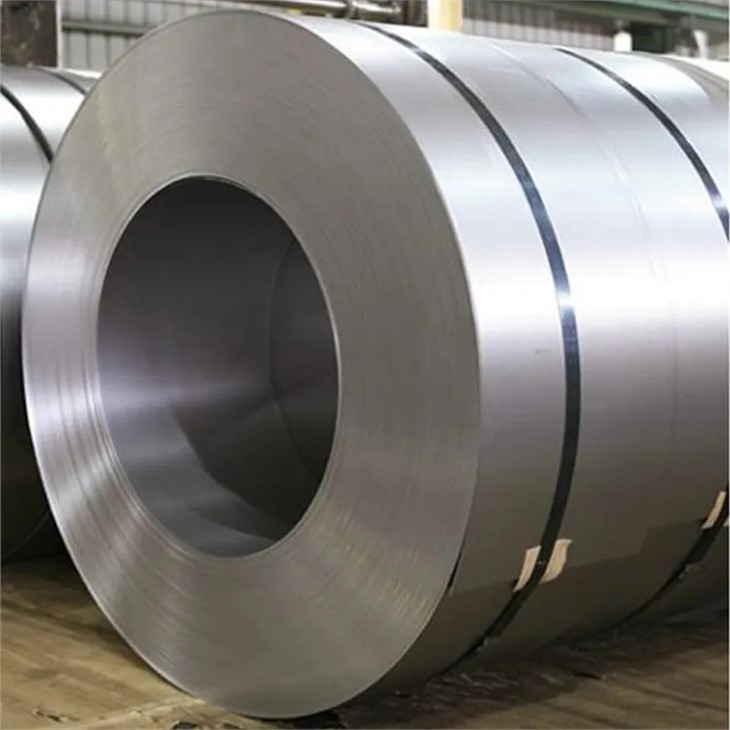
M19 Silicon Steel Manufacturing Process Overview
Luoyang Xinzhaohe Aluminum Co., Ltd leverages two decades of metallurgical expertise to deliver M19 non-oriented electrical steel meeting stringent global efficiency standards. Our integrated production sequence ensures optimal magnetic properties and dimensional precision for motor and generator core applications. The process begins with precision slitting of master coils. High-tension slitting lines equipped with laser-guided edge control systems divide wide coils into narrower strips conforming to customer-specified widths. Critical parameters include maintaining edge straightness within ±0.05 mm and minimizing burr formation to <0.01 mm. In-process optical gauging verifies width consistency at 10-meter intervals, with immediate tension adjustments to prevent coil buckling or edge waviness.
Subsequent annealing occurs in continuous hydrogen-nitrogen atmosphere furnaces operating at 780–820°C. This step eliminates residual stresses from cold rolling, promotes grain growth, and achieves target core loss values. Precise control of dew point (<−40°C) and residence time ensures complete decarburization while preventing surface oxidation. Real-time thermocouples monitor temperature uniformity across the strip width to ±3°C, critical for consistent magnetic domain structure. Post-annealing, samples undergo Epstein frame testing to validate core loss (P1.5/60 ≤ 3.60 W/kg) and magnetic induction (B50 ≥ 1.68 T) per IEC 60404-3.
Insulation coating applies a uniform magnesium oxide (MgO) layer via roll-coating at 0.8–1.2 g/m². The coating serves dual purposes: electrical isolation between laminations and inhibition of aging during service. Coating weight is verified through X-ray fluorescence (XRF) at 5-meter intervals, with deviations triggering automatic pump recalibration. A dehydration oven at 450°C fixes the coating, followed by surface resistivity testing (≥80 Ω·cm²) to confirm insulation integrity.
Final precision cutting utilizes servo-driven blanking presses with sub-micron positional accuracy. Progressive dies shear laminations to exact geometries, with punch clearance optimized for M19’s 0.50 mm nominal thickness to limit burr height to ≤0.005 mm. Laser micrometers inspect critical dimensions on 100% of first-article parts and 10% of production runs. Kerf loss is minimized to <1.2% through nested nesting software, enhancing material yield.
Integrated Quality Control Parameters
| Parameter | Test Method | Frequency | Acceptance Criteria |
|——————–|——————-|—————|———————|
| Core Loss (P1.5/60) | Epstein Frame | Per batch | ≤3.60 W/kg |
| Magnetic Induction | Permeameter | Per batch | B50 ≥ 1.68 T |
| Coating Weight | XRF | Every 500m | 0.8–1.2 g/m² |
| Dimensional Tol. | CMM/Laser Mic. | 10% of output | ±0.02 mm |
| Edge Burr | Optical Profiler | Hourly | ≤0.005 mm |
All process stages adhere to ISO 9001 protocols, with traceability maintained via laser-etched batch codes. Final certification includes full magnetic property reports and coating adhesion tests per ASTM A976, ensuring M19 steel achieves >98% stacking factor in core assembly. This rigorous sequence guarantees the low iron loss and high permeability demanded by premium electric motor manufacturers.
Packaging & Logistics

Export Packaging for M19 Silicon Steel: Ensuring Integrity During International Transit
At Luoyang Xinzhaohe Aluminum Co., Ltd., with over two decades of specialized experience in the production and global distribution of electrical steel, we recognize that proper export packaging is as critical as material quality in delivering M19 silicon steel to international markets. Our packaging protocols are engineered to preserve the metallurgical and dimensional integrity of the product throughout the rigors of sea freight, which remains the primary mode of transportation for bulk shipments.
All M19 silicon steel coils and sheets are secured on high-grade wooden pallets constructed from durable, kiln-dried hardwood. These pallets are designed to meet international phytosanitary standards (ISPM 15), ensuring compliance with customs regulations across major import markets including the United States, European Union, and Southeast Asia. The structural robustness of the pallets supports loads up to 10 metric tons, providing stable base support during containerization and preventing deformation under vertical stacking pressure in maritime containers.
Each steel coil or sheet stack is meticulously wrapped with multi-layer moisture-proof composite film, which acts as a vapor barrier against humidity and salt-laden air—common challenges in marine environments. The film consists of aluminum-coated polyethylene with an internal desiccant layer, offering a water vapor transmission rate (WVTR) below 0.5 g/m²·24h at 38°C and 90% relative humidity. This specification ensures that the low core loss and high magnetic permeability characteristics of M19 silicon steel remain uncompromised during extended voyages, which may last up to 45 days depending on destination.
Additional protection is provided through corner protectors made of galvanized steel and edge-reinforced kraft paper, which shield the edges of the steel from mechanical abrasion during handling and transit. For coil shipments, external steel strapping—applied at a tension calibrated to ASTM E1429 standards—secures the outer wraps and prevents loosening due to vibration. All strapping is affixed with corrosion-resistant seals to maintain integrity in high-humidity conditions.
Our packaging line operates under ISO 9001-certified quality control procedures, with each packaged unit subjected to visual and instrumental inspection prior to dispatch. Documentation accompanying each shipment includes a packing list, certificate of compliance, and humidity indicator tag, which provides visible evidence of exposure to excessive moisture during transit.
By integrating engineered materials with process discipline, Luoyang Xinzhaohe Aluminum Co., Ltd. ensures that M19 silicon steel arrives at its destination with the same precision and performance as when it left our facility. This commitment to packaging excellence reflects our broader mission: to deliver not just materials, but reliability, across global supply chains.
Sourcing from Luoyang Xinzhaohe
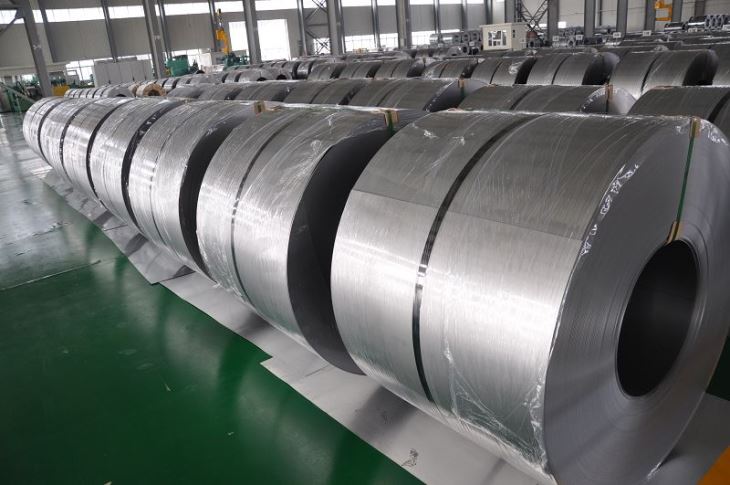
Strategic Partnership for M19 Silicon Steel Sourcing
Luoyang Xinzhaohe Aluminum CO., Ltd leverages over two decades of specialized metallurgical engineering and precision manufacturing expertise to deliver M19 grade non-oriented electrical steel meeting the most stringent global transformer and motor core requirements. Our vertically integrated production facility in Luoyang, China, is purpose-built for electrical steel, ensuring complete control over the critical parameters defining M19 performance. We specialize in the consistent production of M19 silicon steel strip with guaranteed magnetic properties, dimensional accuracy, and surface integrity essential for high-efficiency electromagnetic devices.
Our core manufacturing strength lies in advanced continuous annealing and insulating coating lines specifically optimized for silicon steel grades. Precise temperature profiling during decarburization annealing and final stress relief annealing is meticulously controlled to achieve the target core loss (W15/50) and magnetic flux density (B50) values inherent to M19 specifications. State-of-the-art tension-leveling and precision slitting capabilities ensure flatness tolerances within ±0.15mm/m and edge burr heights consistently below 3% of material thickness, critical for minimizing core vibration and noise in stacked laminations. Rigorous in-line monitoring of coating weight (typically 2.0-4.0 g/m² per side for standard C-5 coating) guarantees uniform insulation resistance and interlaminar resistance, directly impacting core loss performance in the final assembly.
Quality assurance is embedded throughout our process via ISO 9001-certified protocols and dedicated metallurgical laboratories. Every production batch undergoes comprehensive testing per ASTM A664 / A343 standards. Key M19 properties are validated using Epstein frame and Single Sheet Tester methodologies. The following table summarizes typical guaranteed properties for our M19 product:
| Property | Symbol | Typical Guaranteed Value | Test Standard |
|---|---|---|---|
| Core Loss (1.5T, 50Hz) | W15/50 | ≤ 3.20 W/kg | ASTM A343 |
| Magnetic Flux Density | B50 | ≥ 1.68 T | ASTM A340 |
| Thickness Tolerance | ±0.025 mm (0.50mm nom.) | Internal Spec | |
| Coating Weight | 2.5 – 3.5 g/m² (total) | ASTM A719 |
Supply chain resilience is a fundamental pillar of our partnership model. We maintain strategic raw material inventory buffers of high-purity low-carbon steel base strip and specialized insulating coatings, mitigating upstream volatility. Our optimized logistics network, featuring dedicated container loading facilities and established relationships with major global carriers, ensures reliable on-time delivery to ports worldwide. Minimum order quantities are structured to accommodate both high-volume OEM production runs and critical prototype or niche application needs without compromising quality or lead time. We provide full material traceability from melt batch through final shipment, including comprehensive mill test reports.
Partnering with Luoyang Xinzhaohe means securing a reliable source of technically compliant M19 silicon steel backed by deep process metallurgy knowledge and unwavering commitment to specification adherence. We eliminate sourcing risk through transparent communication, technical collaboration during qualification, and responsive issue resolution. For detailed technical data sheets, production capacity schedules, or to initiate a formal qualification process, contact our Chief Technical Officer, Cathy Zhang, directly at cathy@transformerstrip.com. Specify your required M19 thickness range, annual volume, and target application for a tailored capability assessment and quotation.
📉 Factory Direct Savings Calculator
Calculate your potential savings by importing m19 silicon steel directly from China.