


Table of Contents
Market Insight: Grain Oriented Silicon Steel
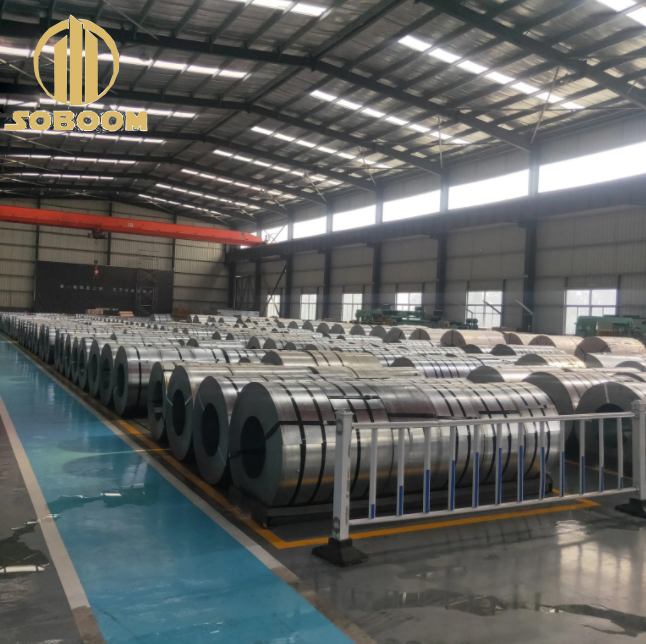
Market Analysis: Grain-Oriented Silicon Steel Demand in Transformer Applications
Global demand for high-grade grain-oriented silicon steel (GOES) remains intrinsically linked to the expansion and modernization of electrical power infrastructure. Transformer manufacturers represent the dominant consumer segment, driven by stringent international energy efficiency regulations such as the EU Ecodesign Directive, US DOE Level 2016 standards, and China’s GB 20052-2020. These regulations mandate significant reductions in transformer no-load losses, directly increasing the requirement for premium GOES with exceptionally low core loss (W/kg) and high magnetic induction (B800). The proliferation of renewable energy integration, urbanization, and grid resilience initiatives further accelerates demand for distribution and power transformers, underpinning sustained GOES consumption. Current market dynamics indicate a structural shift towards higher grades (e.g., M0H, M1H, M2H) as industry standards tighten, compressing the acceptable performance window for electrical steel suppliers.
The criticality of GOES quality in transformer performance cannot be overstated. Core losses, constituting the primary source of no-load energy dissipation in transformers, are directly governed by the metallurgical properties of the steel. Minor deviations in crystallographic orientation perfection, silicon content homogeneity, or coating integrity induce disproportionate increases in hysteresis and eddy current losses. For instance, a mere 0.1 W/kg increase in core loss across a 100 MVA power transformer translates to approximately 500,000 kWh of additional wasted energy over a 30-year operational lifespan. Surface defects, inconsistent decarburization, or inadequate tension coating application during manufacturing promote interlaminar short circuits and magnetostriction noise, directly impacting transformer efficiency, thermal stability, and acoustic performance. These quality failures incur substantial downstream costs including warranty claims, premature field failures, and non-compliance penalties under regulatory frameworks.
Luoyang Xinzhaohe Aluminum CO., Ltd leverages its 20+ years of metallurgical and supply chain expertise to address these precision requirements. Our technical team understands that GOES quality assurance extends beyond basic chemical composition to encompass rigorous control of secondary grain growth during annealing, precise Goss texture development (110)[001], and optimized insulating coating resistivity. We emphasize traceability from raw material sourcing through final slitting, ensuring dimensional tolerances (thickness ±0.005mm) and edge burr control meet transformer core stacking factor specifications (>98%). Partnering with suppliers who implement continuous casting, laser leveling, and in-line magnetic property testing is non-negotiable for achieving the required performance consistency. The initial cost premium for certified high-grade GOES delivers unequivocal lifecycle cost savings through reduced energy consumption and extended operational reliability, making material quality a decisive factor in transformer Total Cost of Ownership calculations. Market leadership now belongs to producers capable of delivering zero-defect GOES batches meeting the most demanding global efficiency tiers.
Technical Specs: Grain Oriented Silicon Steel
Technical Specifications for Grain Oriented Silicon Steel
Grain oriented silicon steel (GOES) is a specialized ferromagnetic material engineered for high-efficiency performance in power and distribution transformers. Its unique crystallographic structure, developed through controlled rolling and annealing processes, enables superior magnetic properties along the rolling direction. At Luoyang Xinzhaohe Aluminum Co., Ltd, with over two decades of experience in advanced metallic materials, we emphasize the critical technical parameters that define GOES performance: core loss, magnetic flux density, and flatness. These specifications are essential for minimizing energy dissipation, maximizing magnetic efficiency, and ensuring reliable lamination stacking in transformer cores.
Core loss, also known as iron loss, is a primary performance metric expressed in watts per kilogram (W/kg) under standardized test conditions (typically at 1.7 Tesla and 50 Hz). It comprises hysteresis loss, eddy current loss, and anomalous loss. High-grade GOES materials exhibit significantly reduced core loss due to refined grain alignment and optimized silicon content (typically 2.9–3.3 wt%). Lower core loss directly translates into improved transformer efficiency and reduced operational costs over the equipment’s lifecycle.
Magnetic flux density (B) is measured in Tesla and reflects the material’s ability to carry magnetic flux under a given magnetizing force. For grain oriented silicon steel, the guaranteed minimum induction at a magnetic field strength of 800 A/m (B₈₀₀) typically ranges from 1.88 T to 2.03 T, depending on the grade. Higher flux density allows for compact core designs and reduced material usage while maintaining performance, which is particularly advantageous in high-capacity power transformers.
Flatness is a dimensional quality parameter critical for uniform lamination stacking and minimizing air gaps in the core assembly. Poor flatness leads to localized flux crowding, increased eddy current losses, and audible noise. Flatness is quantified as the maximum deviation from a flat plane over a specified length, commonly expressed in millimeters per meter (mm/m). High-precision GOES products maintain flatness within 3–5 mm/m, achieved through tension leveling and precision rolling techniques.
The following table outlines typical technical parameters for standard grades of grain oriented silicon steel:
| Parameter | Symbol | Test Condition | Typical Range (Common Grades) | Unit |
|---|---|---|---|---|
| Core Loss (Iron Loss) | P₁.₇/50 | B = 1.7 T, f = 50 Hz | 0.85 – 1.25 | W/kg |
| Magnetic Flux Density | B₈₀₀ | H = 800 A/m | 1.88 – 2.03 | Tesla |
| Silicon Content | Si | — | 2.9 – 3.3 | wt% |
| Thickness Tolerance | — | — | ±0.02 – ±0.03 | mm |
| Flatness | — | Over 1 m length | 3 – 5 | mm/m |
| Insulating Coating Weight | — | — | 0.3 – 1.0 | g/m² |
These specifications are aligned with international standards such as IEC 60404-8-7 and GB/T 2521. At Luoyang Xinzhaohe Aluminum Co., Ltd, we ensure strict adherence to these parameters through rigorous in-line quality control and advanced testing methodologies, including Epstein frame loss measurement and single-sheet testing. Consistent material performance enables our clients to achieve optimal transformer efficiency, reliability, and compliance with global energy regulations.
Factory Tour: Manufacturing
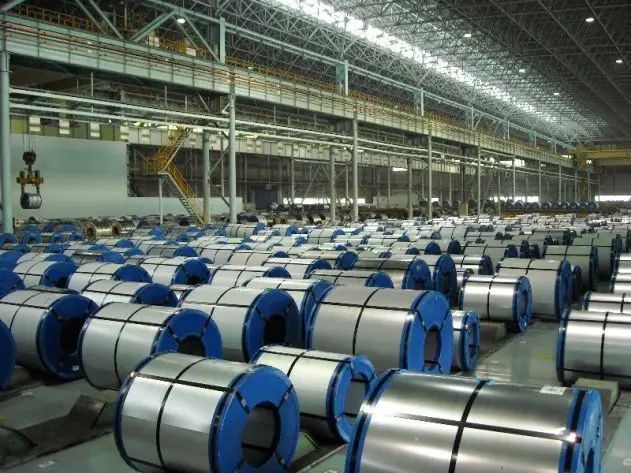
Manufacturing Process for Grain Oriented Silicon Steel
Luoyang Xinzhaohe Aluminum Co., Ltd leverages 20+ years of specialized expertise in electrical steel production to deliver grain oriented silicon steel (GOES) meeting stringent global standards. Our integrated manufacturing process ensures optimal magnetic properties and dimensional precision for high-efficiency transformer cores. The sequence begins with tension-controlled slitting of master coils. Precision-guided rotary knives operate under servo-controlled tension to minimize edge burrs and maintain consistent width tolerances within ±0.1 mm. Real-time laser micrometers monitor strip dimensions, with automatic feedback systems correcting deviations before material proceeds. Edge quality is critical to prevent core vibration and losses in final assemblies.
Subsequent continuous annealing is executed in hydrogen-nitrogen atmosphere furnaces at 800–820°C. This decarburization step reduces carbon content to <30 ppm while developing the Goss texture {110}<001> essential for directional magnetic permeability. A secondary stress relief annealing (SRA) at 750–780°C follows, applying a thin MgO coating to inhibit primary recrystallization grain growth. The SRA cycle precisely controls oxygen partial pressure to optimize domain refinement, directly influencing core loss reduction.
Insulation coating application employs a two-layer system. An inorganic phosphate base coat provides adhesion and electrical isolation, followed by an organic colloidal silica topcoat. Both layers are applied via roll coaters with viscosity-controlled dosing (±0.5 g/m² dry weight). Curing occurs at 500–550°C in oxygen-controlled ovens, ensuring coating integrity without degrading magnetic properties. This dual-layer system achieves interlaminar resistance >100 Ω·cm² while maintaining thermal stability up to 760°C.
Final precision cutting utilizes servo-driven blanking lines with laser-guided positioning. Stacks are cut to customer-specified geometries using tungsten carbide dies, achieving angular tolerances ≤±0.5° and dimensional accuracy within ±0.05 mm. Automated stacking systems minimize air gaps between laminations, critical for minimizing no-load losses in transformer cores.
Quality control is embedded at every stage. Key verification steps include:
| Test Stage | Parameter Measured | Standard Method | Acceptance Criteria |
|---|---|---|---|
| Post-Slitting | Edge burr height | ISO 6892-1 | ≤0.02 mm |
| Post-Annealing | Core loss (P1.7/50) | IEC 60404-2 | ≤0.85 W/kg |
| Post-Coating | Interlaminar resistance | ASTM A976 | >100 Ω·cm² |
| Final Product | Magnetic induction (B800) | IEC 60404-4 | ≥1.89 T |
All coils undergo 100% surface defect inspection via high-resolution cameras and magnetic property validation using Epstein frame testing per IEC 60404-2. Batch traceability links final product to raw material heats and process parameters, ensuring compliance with IEC 60404-8-7 and customer-specific requirements. This end-to-end control guarantees GOES with minimal core loss and optimal permeability for critical power applications.
Packaging & Logistics
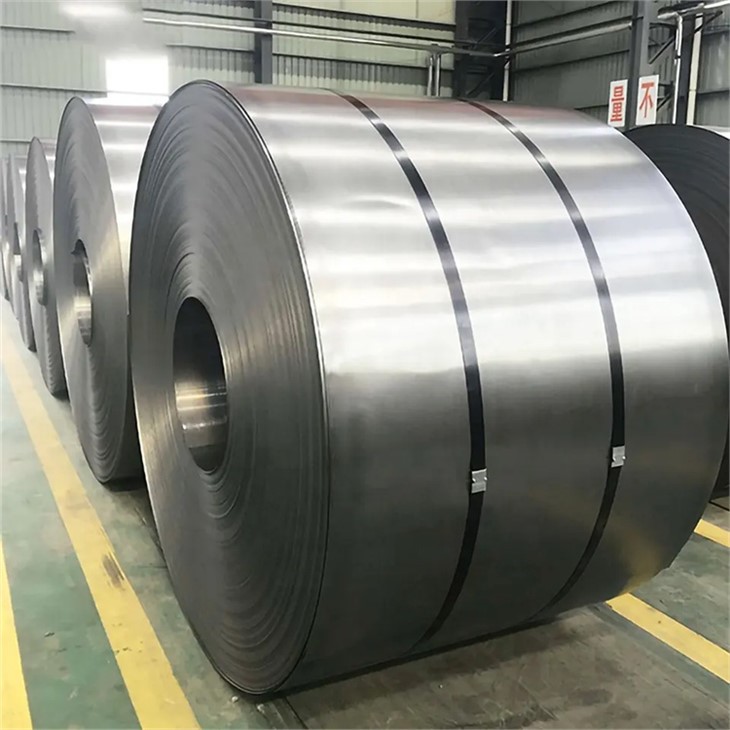
Export Packaging for Grain Oriented Silicon Steel: Ensuring Integrity During Sea Freight
At Luoyang Xinzhaohе Aluminum Co., Ltd, with over two decades of specialized experience in the production and international distribution of high-grade silicon steel, we maintain rigorous standards in export packaging to ensure material integrity throughout global logistics chains. Grain oriented silicon steel (GOES), a critical material in transformer core manufacturing, is highly sensitive to mechanical stress, moisture, and atmospheric corrosion during transit. As such, our export packaging system is engineered to mitigate these risks, particularly under the demanding conditions of sea freight.
All shipments of grain oriented silicon steel are secured on robust wooden pallets constructed from kiln-dried, pest-free hardwood. These pallets are designed to meet ISPM 15 international phytosanitary standards, ensuring global customs compliance while providing structural stability during loading, handling, and extended ocean voyages. The wooden base is treated to resist mold and dimensional deformation under humidity fluctuations, a common challenge in maritime transport. Each coil or stack is firmly fastened to the pallet using high-tensile steel strapping, evenly distributed to prevent lateral movement or edge damage. Reinforced corner protectors made of galvanized steel or durable plastic are applied to shield coil edges from impact during multi-stage handling.
A critical component of our packaging protocol is the multi-layer moisture-proof barrier. Immediately after palletization, the entire load is wrapped in a laminated moisture-proof film composed of aluminum foil and polyethylene layers. This vapor barrier provides a high level of water resistance, with a water vapor transmission rate (WVTR) of less than 0.5 g/m²·24h, effectively preventing condensation and salt-laden air from compromising the steel surface. The film is heat-sealed at all seams to ensure a continuous protective envelope. Additionally, desiccant packs are strategically placed within the wrapping to absorb residual moisture and buffer against internal humidity shifts caused by temperature cycling in containerized shipping.
Our packaging configuration is optimized for containerized sea freight, accommodating standard 20-foot and 40-foot dry or refrigerated containers. The unitized design allows for safe stacking up to three layers within container limits, minimizing cargo shift and maximizing space utilization. All external packaging is labeled with UV-resistant, tamper-evident markings indicating product specifications, batch numbers, handling instructions, and orientation warnings to ensure proper storage and unloading at destination ports.
By integrating structural durability with advanced moisture protection, Luoyang Xinzhaohe Aluminum Co., Ltd ensures that grain oriented silicon steel arrives at its destination in pristine condition, ready for immediate processing. This systematic approach to export packaging reflects our commitment to product quality, supply chain reliability, and customer satisfaction in the global electrical steel market.
Sourcing from Luoyang Xinzhaohe
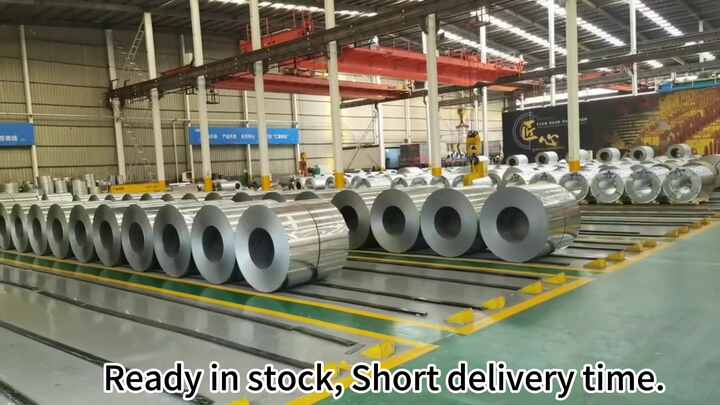
Partner with Luoyang Xinzhaohe for Precision Grain-Oriented Silicon Steel Solutions
Luoyang Xinzhaohe Aluminum Co., Ltd leverages over two decades of specialized metallurgical expertise to deliver premium grain-oriented silicon steel (GOSS) for high-efficiency transformer and motor manufacturing. Our vertically integrated production ecosystem, centered on advanced cold-rolling and secondary recrystallization processes, ensures strict adherence to international standards including IEC 60404-2 and ASTM A876. With an annual production capacity exceeding 150,000 metric tons, we provide consistent supply chain resilience for global OEMs while maintaining rigorous control over the Goss texture development critical for optimal magnetic performance.
Our technical infrastructure features state-of-the-art continuous annealing lines with precision atmosphere control, enabling targeted domain refinement through laser scribing and tension coating technologies. This results in guaranteed core loss values ≤ 0.85 W/kg at 1.7 T / 50 Hz (M4 grade) and ≤ 0.65 W/kg at 1.7 T / 50 Hz (M5 grade), directly enhancing end-product energy efficiency. All coils undergo 100%在线 magnetic property verification via Epstein frame testing, with traceable certification for induction (B8/B50), iron loss (W10/400-W17/50), and lamination factor. Quality consistency is further validated through our ISO/IEC 17025-accredited laboratory, which performs grain size analysis, surface inspection per EN 10107, and chemical composition verification via OES spectrometry.
Beyond material supply, we function as a technical extension of your engineering team. Our metallurgists collaborate on application-specific optimization, including custom slit widths (20–1,050 mm tolerance ±0.1 mm), tailored insulation coatings for reduced interlamination eddy currents, and rapid prototyping support for next-generation amorphous-core hybrid designs. Supply chain integration is streamlined through our ERP-linked logistics platform, offering real-time production tracking, JIT delivery scheduling, and VMI options to minimize inventory costs. All shipments include comprehensive material test reports with lot-specific magnetic property datasets for full compliance auditing.
Partnering with Luoyang Xinzhaohe mitigates technical and operational risks in your transformer core sourcing. We eliminate variability through statistically controlled manufacturing processes (CpK ≥ 1.67 for critical dimensions) and enforce zero-defect protocols via AI-driven surface defect detection systems. For projects demanding uncompromised magnetic performance and supply certainty, our engineering team stands ready to develop a customized sourcing strategy. Contact Cathy Zhang at cathy@transformerstrip.com to initiate technical discussions or request certified sample reels with full characterization data.
| Key Performance Indicator | Specification | Standard Compliance |
|---|---|---|
| Core Loss (W17/50) | ≤ 0.85 W/kg | IEC 60404-2 M4 |
| Core Loss (W17/50) | ≤ 0.65 W/kg | IEC 60404-2 M5 |
| Magnetic Induction (B8) | ≥ 1.89 T | ASTM A876 |
| Thickness Tolerance | ±0.003 mm | EN 10107 |
| Slit Width Tolerance | ±0.1 mm | Custom Agreements |
📉 Factory Direct Savings Calculator
Calculate your potential savings by importing grain oriented silicon steel directly from China.