


Table of Contents
Market Insight: Grain Oriented Electrical Steel Producers
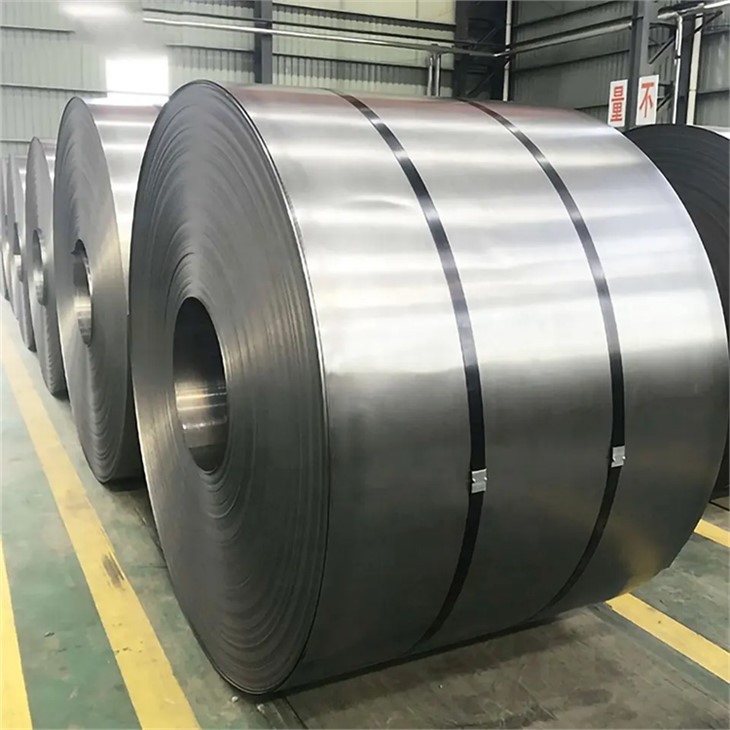
Market Analysis: Silicon Steel (Electrical Steel)
Grain oriented electrical steel (GOES) remains a critical material in the global power infrastructure, primarily due to its indispensable role in the efficient operation of power and distribution transformers. As a high-permeability ferromagnetic alloy, GOES is engineered to exhibit superior magnetic properties along the rolling direction, enabling minimized core losses and optimized energy transfer in transformer applications. The industrial demand for GOES is intrinsically linked to the expansion and modernization of electrical grids, rising energy consumption, and the global push toward energy-efficient technologies. With increasing regulatory standards such as IEC 60404-8 and DOE efficiency mandates in North America, transformer manufacturers are under sustained pressure to adopt higher-grade electrical steel to meet tiered efficiency benchmarks.
The primary end-use segment for GOES is large power transformers used in transmission and distribution networks, where core efficiency directly impacts operational cost and environmental footprint. In these applications, even marginal reductions in core loss translate into substantial energy savings over the transformer’s lifecycle, often exceeding 30 years. This has elevated the technical specifications required of GOES, with demand shifting toward high-permeability (Hi-B) and laser-scribed grades that further reduce no-load losses. Additionally, renewable energy integration—particularly through solar and wind power stations—requires step-up transformers that operate under fluctuating loads, further emphasizing the need for stable magnetic performance and low hysteresis in GOES.
Quality in grain oriented electrical steel is not a differentiator but a prerequisite. Variability in grain alignment, coating integrity, thickness tolerance, and magnetic domain structure can lead to increased eddy current and hysteresis losses, resulting in overheating, reduced transformer lifespan, and non-compliance with international efficiency standards. Consistent strip thickness, uniform insulation coating (typically MgO-based), and precise control of the Goss texture (110)[001] orientation are essential to achieving the targeted core loss values (e.g., P1.7/50 < 0.90 W/kg). Any deviation can compromise the lamination stack performance, leading to increased noise (magnetostriction) and reduced reliability under continuous magnetic excitation.
At Luoyang Xinzhaohe Aluminum Co., Ltd, with over two decades of experience in advanced metal processing and supply chain integration, we recognize that sourcing GOES requires more than cost evaluation—it demands technical due diligence. Our engagement with leading silicon steel producers enables access to material batches that meet stringent international testing protocols, including Epstein frame measurements and core loss validation under standardized conditions. We support transformer manufacturers by ensuring material traceability, batch consistency, and compliance with technical data sheets critical for design accuracy and certification.
As global energy demands rise and efficiency standards tighten, the role of high-quality GOES will only become more pronounced. Investment in superior-grade electrical steel is not a line-item expense but a strategic decision impacting long-term grid reliability, energy conservation, and carbon reduction goals.
Technical Specs: Grain Oriented Electrical Steel Producers
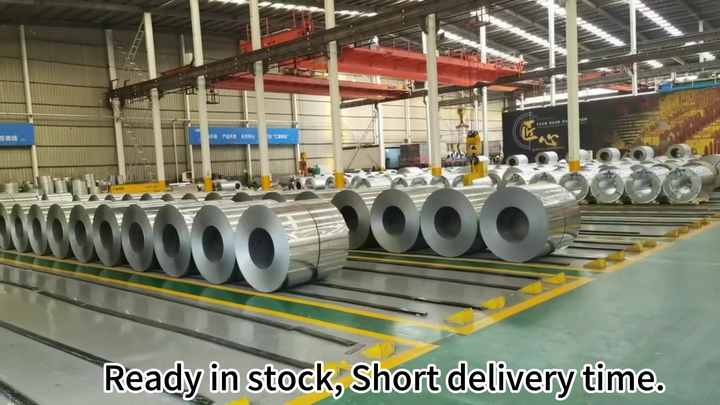
Technical Specifications for Grain Oriented Electrical Steel Sourcing
As a metallurgical engineering and supply chain partner with over two decades of specialized production experience in silicon steel, Luoyang Xinzhaohe Aluminum CO., Ltd emphasizes the criticality of precise technical specifications when sourcing Grain Oriented Electrical Steel (GOES) for high-efficiency transformer cores. Deviations in core loss, magnetic flux density, or flatness directly impact transformer no-load losses, efficiency ratings, material utilization, and manufacturing yield. Rigorous adherence to defined parameters is non-negotiable for optimal performance and compliance with international efficiency standards like IE4 and IE5.
Core Loss (Iron Loss), denoted as P1.7/50 or P1.7/60, represents the primary energy dissipation mechanism under alternating magnetization at 1.7 Tesla induction and 50Hz or 60Hz frequency. This parameter is paramount for minimizing transformer no-load losses. Lower core loss values directly translate to higher energy efficiency and reduced operational costs over the transformer’s lifespan. Metallurgical control of grain structure, inhibitor systems, and coating uniformity during production is essential to achieve target loss levels. Typical high-grade GOES targets range from 0.70 W/kg down to 0.50 W/kg or lower for premium grades, measured per IEC 60404-2.
Magnetic Flux Density, specifically the induction levels at 800 A/m (B8) and 5000 A/m (B50), dictates the core’s ability to carry magnetic flux efficiently. Higher B8 values (typically 1.86 T to 1.93 T) indicate superior magnetic performance at operational flux densities, enabling smaller core cross-sections and reduced material usage for the same power rating. B50 provides insight into the material’s saturation characteristics. Consistent flux density across the coil width and length is vital for uniform core performance and preventing localized hot spots.
Flatness, quantified as I-Units, is a crucial dimensional parameter often underestimated in its impact. Poor flatness causes air gaps during core stacking, significantly increasing effective core loss and audible noise. It also reduces the stacking factor, lowering the effective core cross-section and requiring more material to achieve the target power rating. Strict flatness control, typically demanding I-Units below 20 and ideally below 15 for critical applications, ensures tight lamination bonding and optimal magnetic circuit integrity. This requires precise rolling mill control and tension management throughout the production process.
The following table details essential GOES parameters, their standard measurement methods, typical industry ranges for high-performance material, and their direct impact on transformer design and operation.
| Parameter | Standard Test Method | Typical Range (High Performance) | Critical Application Impact |
|---|---|---|---|
| Core Loss (P1.7/50) | IEC 60404-2 | 0.50 – 0.70 W/kg | Directly determines transformer no-load losses and energy efficiency class |
| Magnetic Flux Density (B8) | IEC 60404-2 | 1.88 – 1.93 T | Influences core size, material utilization, and cost; higher values enable downsizing |
| Magnetic Flux Density (B50) | IEC 60404-2 | ≥ 2.00 T | Indicates saturation behavior; critical for overload capability |
| Flatness (I-Unit) | ASTM A34 / Internal | ≤ 15 – 20 | Affects stacking factor, effective core loss, noise levels, and core assembly yield |
| Thickness Tolerance | IEC 60404-9 | ±0.003 mm | Impacts core loss calculation accuracy and stacking factor consistency |
| Insulation Resistance | IEC 60404-11 | ≥ 100 Ω·cm² (min) | Essential for minimizing interlaminar eddy currents and maintaining core loss targets |
Luoyang Xinzhaohe Aluminum CO., Ltd implements stringent in-process metallurgical controls and final product verification against these exacting specifications. Our decades of process optimization ensure consistent delivery of GOES meeting or exceeding the tight tolerances required for next-generation, ultra-high-efficiency power and distribution transformers, directly supporting our customers’ performance and sustainability objectives. Precise specification adherence is fundamental to supply chain reliability in this critical material category.
Factory Tour: Manufacturing
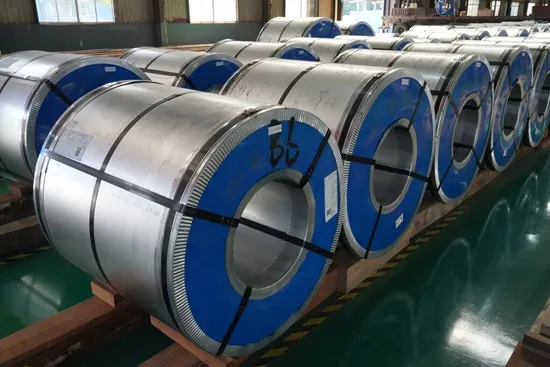
Manufacturing Process of Grain Oriented Electrical Steel at Luoyang Xinzhaohe Aluminum Co., Ltd
The production of high-performance grain oriented electrical steel (GOES) at Luoyang Xinzhaohe Aluminum Co., Ltd follows a tightly controlled sequence of metallurgical and surface engineering processes designed to optimize magnetic properties, dimensional accuracy, and long-term reliability in transformer core applications. With over two decades of specialization in silicon steel processing, our facility integrates advanced automation and rigorous quality control to ensure consistency across all production stages.
The process begins with slitting, where master coils of cold-rolled grain oriented silicon steel are longitudinally cut into narrower strips to meet customer-specific widths. This operation is performed on high-precision slitting lines equipped with servo-controlled tension management and edge guiding systems to maintain strip flatness and minimize edge burring. All slitting parameters are calibrated according to the steel grade, thickness (ranging from 0.23 mm to 0.30 mm), and target coil dimensions, ensuring minimal dimensional deviation.
Following slitting, the coils undergo a final box annealing treatment under a controlled hydrogen-nitrogen atmosphere. This annealing step is critical for stress relief, grain structure refinement, and the development of optimal magnetic domain alignment. Our annealing furnaces operate with precise thermal profiling, maintaining temperature uniformity within ±5°C across the coil cross-section. The dew point and gas flow rates are continuously monitored to prevent oxidation and ensure a clean metallic surface prior to insulation coating.
After annealing, the steel coils are transferred to the insulation coating line, where a thin, uniform layer of inorganic or semi-organic insulation coating is applied. This coating serves multiple functions: interlaminar resistance enhancement, corrosion protection, and mechanical durability during core stacking. The coating composition and thickness are tailored to customer requirements, with typical coating weights ranging from 0.8 g/m² to 2.5 g/m² per side. Application is performed via roll-coating or spray techniques, followed by curing in a convection oven to achieve full polymerization.
The final stage is precision cutting, where coils are transversely cut into laminations or packets using high-speed, servo-driven cut-to-length lines. These lines feature laser-guided positioning and adaptive blanking technology to achieve tight tolerances—typically ±0.1 mm on length and width. Edge squareness and burr height are continuously inspected to ensure compatibility with high-speed core assembly processes.
Throughout the production cycle, multiple quality control checkpoints are implemented. These include on-line surface inspection systems to detect defects such as scratches or coating non-uniformities, magnetic property verification via Epstein frame testing, coating adhesion and resistance testing, and dimensional audits using laser micrometers. All data is logged in our traceability system, enabling full batch accountability and compliance with ISO 9001 standards. This integrated approach ensures that every coil of grain oriented electrical steel meets the highest performance benchmarks for energy-efficient transformer manufacturing.
Packaging & Logistics
Export Packaging Specifications for Grain Oriented Electrical Steel
Luoyang Xinzhaohe Aluminum CO., Ltd implements rigorously engineered export packaging protocols for Grain Oriented Electrical Steel (GOES) to ensure material integrity during global maritime transit. With two decades of specialized production experience, our system addresses the critical vulnerabilities of silicon steel—primarily moisture exposure and mechanical stress—which directly impact magnetic performance and core loss characteristics. All packaging adheres to ISO 9001 quality management standards and complies with international maritime safety regulations, including IMDG Code requirements for steel coil shipments.
Our primary packaging configuration utilizes structurally reinforced wooden pallets constructed from ISPM 15-certified heat-treated timber. This certification guarantees wood sanitation to prevent pest migration, a non-negotiable requirement for global customs clearance. Pallet dimensions and load capacities are engineered to match standard containerization logistics while preventing coil deformation. Key structural specifications are detailed below.
| Parameter | Specification | Purpose |
|---|---|---|
| Pallet Dimensions | 1200 x 1000 mm (Customizable) | Optimized for 20’/40′ container loading |
| Load Capacity | 15,000 kg per pallet | Supports multi-coil stacking stability |
| Wood Treatment | ISPM 15 HT (56°C, 30+ minutes) | Eliminates biological contaminants |
| Base Frame | Double stringer design | Prevents torsional flex during handling |
Coils are secured to pallets using high-tensile steel strapping (≥15 kN retention force) with edge protectors to avoid steel damage. The critical moisture barrier layer consists of a triple-laminated polyethylene film system incorporating metallized aluminum oxide. This film achieves a water vapor transmission rate (WVTR) of ≤0.5 g/m²/day at 38°C and 90% RH, significantly outperforming standard polyethylene. The laminate structure includes:
An outer UV-stabilized LDPE layer resisting solar degradation during port layovers
A central aluminum oxide vapor barrier layer blocking 99.99% of moisture ingress
An inner anti-corrosion VCI (Vapor Corrosion Inhibitor) layer protecting cut edges
All sealed packages include humidity indicator cards and desiccant packs rated for 90-day ocean voyages. The film is hermetically welded using impulse sealers with temperature-controlled profiles verified per ASTM F88, ensuring zero seam leakage. This multi-barrier approach prevents hygroscopic degradation of the insulating oxide coating—a primary cause of increased eddy current losses in GOES.
For sea freight safety, we implement additional protocols: coils are positioned to avoid contact with container walls, minimizing condensation risks from temperature fluctuations. Each shipment includes tilt and shock indicators per ISO 12075, with data logs provided upon request. Our packaging has successfully endured 120+ day trans-Pacific voyages with zero moisture-related claims, validated by post-arrival surface insulation resistance testing (≥70 Ω·m² per IEC 60404-11). This engineering-focused methodology ensures GOES arrives with preserved magnetic domain alignment and coating integrity, directly supporting our clients’ transformer manufacturing yield rates.
Sourcing from Luoyang Xinzhaohe
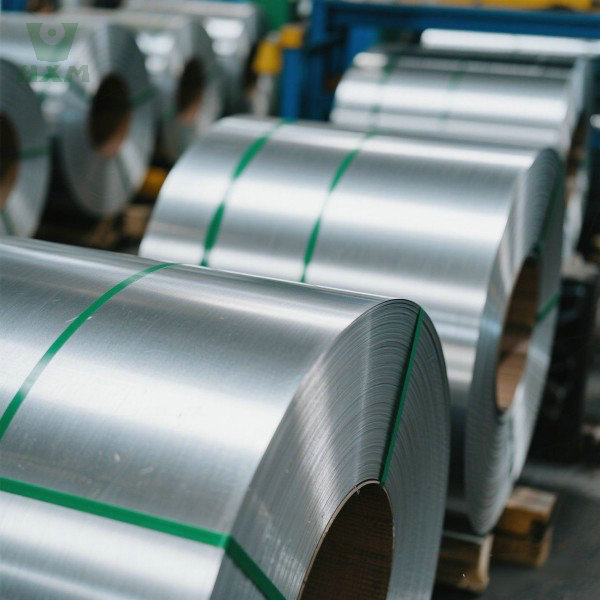
Partner with Luoyang Xinzhaohe for High-Performance Grain-Oriented Electrical Steel Solutions
Luoyang Xinzhaohe Aluminum Co., Ltd brings over two decades of specialized expertise in the production and supply of high-quality silicon steel, with a focused capability in grain-oriented electrical steel (GOES) for advanced transformer manufacturing. As a vertically integrated producer, we maintain strict control over every stage of the metallurgical and processing chain, ensuring consistent material performance that meets international standards including IEC 60404-8, ASTM A876, and GB/T 13789. Our facility is equipped with precision rolling mills, continuous annealing lines, and state-of-the-art coating systems designed specifically to optimize magnetic flux density, minimize core losses, and enhance lamination efficiency in high-efficiency power transformers.
Our grain-oriented electrical steel is engineered for superior directional magnetic properties, featuring a sharp Goss texture (110)[001] orientation achieved through controlled hot rolling, cold rolling, and secondary recrystallization processes. Typical grades include M4, M5, M6, and high-permeability variants such as M1H, M2H, and M3H, with thicknesses ranging from 0.23 mm to 0.30 mm. Each coil undergoes rigorous offline testing using Epstein frames and single-sheet testers to validate specific core loss (W17/50) and magnetic polarization (B8) values, ensuring compliance with customer technical specifications. Surface insulation coatings are applied with precision to provide excellent interlaminar resistivity, dielectric strength, and weldability, critical for reducing eddy current losses in stacked cores.
The production facility operates under ISO 9001:2015 and ISO 14001-certified quality management systems, with real-time process monitoring and traceability from slab to finished strip. Our annual production capacity exceeds 150,000 metric tons, supported by automated warehousing and JIT delivery logistics across domestic and international markets. Strategic partnerships with major steel mills ensure a stable supply of high-purity low-carbon steel feedstock, while in-house R&D continuously advances domain refinement and laser scribing technologies to push the boundaries of energy efficiency.
Technical data for key GOES grades:
| Grade | Thickness (mm) | Core Loss W17/50 (W/kg) | Magnetic Flux Density B8 (T) | Coating Type |
|---|---|---|---|---|
| M5 | 0.27 | ≤1.25 | ≥1.88 | C3 (Semi-organic) |
| M4 | 0.27 | ≤1.00 | ≥1.90 | C4 (Inorganic) |
| M1H | 0.23 | ≤0.85 | ≥1.92 | C5 (Laser Scribed) |
We serve transformer OEMs, power utilities, and electrical equipment manufacturers requiring reliable, high-efficiency core materials for distribution and power transformers. With a commitment to metallurgical precision and supply chain resilience, Luoyang Xinzhaohe delivers engineered electrical steel solutions that support global energy efficiency goals.
Contact us at cathy@transformerstrip.com to request technical datasheets, samples, or a customized sourcing proposal.
📉 Factory Direct Savings Calculator
Calculate your potential savings by importing grain oriented electrical steel producers directly from China.