


Table of Contents
Market Insight: Foil Type Winding In Transformer
Market Analysis: Foil-Type Winding Wire Demand in Transformers
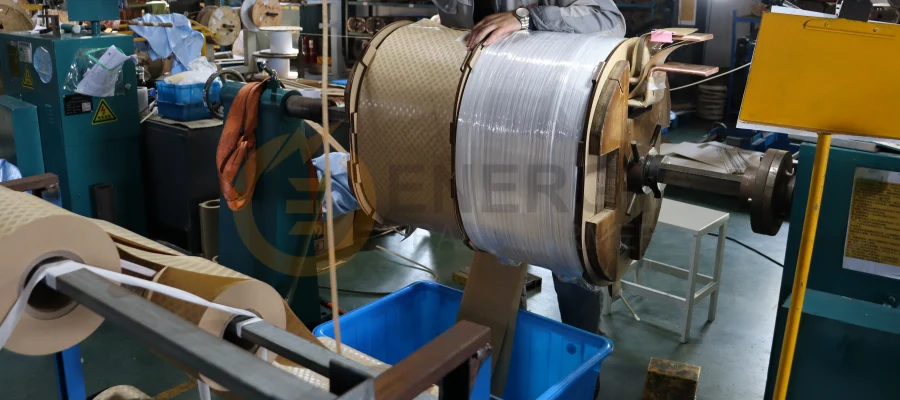
The global transformer industry exhibits a sustained and growing demand for aluminum foil-type winding conductors, driven by critical performance requirements in modern power and distribution systems. This demand stems primarily from the inherent advantages of foil windings in managing electromagnetic fields, thermal distribution, and mechanical stability within transformer cores. High-efficiency transformers, particularly those serving renewable energy integration points, high-frequency applications (such as inverter-based systems for solar/wind), and compact urban substations, increasingly specify foil windings. The design eliminates inter-turn insulation complexities associated with round wire, reduces axial short-circuit forces through uniform current distribution, and significantly suppresses eddy current losses in the conductor itself. This is paramount as grid operators and industrial users demand units meeting IE4 and emerging IE5 efficiency standards under increasingly fluctuating load profiles. The shift towards aluminum foil, versus traditional copper, is further accelerated by aluminum’s superior conductivity-to-weight ratio, enabling lighter transformer designs crucial for transportation and installation logistics, alongside favorable cost dynamics in volatile metal markets.
Quality of the aluminum foil conductor is not a variable but a fundamental engineering prerequisite for transformer reliability and longevity. Substandard foil introduces multiple failure vectors. Inconsistent thickness tolerance directly impacts the precision of the magnetic circuit design, causing localized flux crowding and elevated hotspot temperatures. Impurity levels exceeding strict metallurgical specifications (e.g., Fe, Si content) degrade electrical conductivity and, more critically, impair the material’s ability to maintain mechanical integrity during the rigorous winding, clamping, and thermal cycling processes inherent in transformer operation. Poor surface quality, including scratches, burrs, or residual rolling oils, creates weak points for partial discharge initiation under high electrical stress, potentially leading to catastrophic insulation breakdown. Crucially, inadequate control of the annealing process results in non-uniform grain structure and residual stresses. This compromises the foil’s ductility, increasing susceptibility to cracking during winding or under short-circuit mechanical forces, and critically reduces its long-term creep resistance – a key factor in maintaining consistent clamping pressure and preventing winding deformation over decades of service.
The consequences of compromised foil quality manifest as accelerated insulation aging, unexpected efficiency degradation, and ultimately, premature transformer failure. Industry-observed failure modes directly linked to inferior foil include inter-turn faults initiated by surface defects, thermal runaway due to uneven heat distribution from thickness variations, and catastrophic winding collapse during fault events caused by insufficient mechanical strength. For transformer manufacturers and end-users, the cost implications of such failures – including unplanned downtime, replacement costs, and potential grid instability – vastly exceed the marginal savings from sourcing subpar conductor material. Rigorous metallurgical control, precise dimensional consistency, and flawless surface integrity are therefore non-negotiable attributes. The following table summarizes key comparative attributes driving aluminum foil adoption:
| Parameter | Aluminum Foil | Copper Foil | Significance for Transformers |
|---|---|---|---|
| Conductivity (%IACS) | 61-63% | 100% | Requires ~56% larger cross-section for same ampacity |
| Density (g/cm³) | 2.70 | 8.96 | ~70% weight reduction; critical for transport/install |
| Cost Index | 1.0 (Reference) | ~3.3 | Significant material cost advantage |
| Eddy Current Loss | Lower (vs round wire) | Lower (vs round wire) | Essential for high-frequency/high-efficiency designs |
| Short-Circuit Force | Reduced Axial Stress | Reduced Axial Stress | Enhanced mechanical stability during faults |
Technical Specs: Foil Type Winding In Transformer
Technical Specifications for Aluminum Foil Used in Transformer Winding Applications
Luoyang Xinzhaohe Aluminum Co., Ltd. provides high-purity aluminum foil specifically engineered for foil-type winding in power and distribution transformers. With over two decades of metallurgical and process engineering expertise, our products meet stringent international standards for dielectric performance, mechanical integrity, and thermal stability. The following technical parameters define the performance characteristics critical to reliable operation in transformer winding systems.
Foil-type windings demand precise control over electrical insulation, mechanical formability, and thermal endurance. The aluminum foil must maintain structural integrity during the helical winding process while supporting high-voltage insulation systems. Key performance indicators include breakdown voltage of the insulation layer, elongation for ductility during forming, and thermal class rating to ensure long-term stability under operational temperature cycling.
The insulation coating applied to the aluminum foil serves as the primary dielectric barrier between turns and layers. Breakdown voltage is measured per IEC 60243-1 using a step-stress method, with a minimum threshold of 10 kV (AC, 1 min) for standard grades. High-dielectric variants achieve up to 25 kV, suitable for high-voltage transformer applications. This insulation system consists of thermosetting polymer coatings applied via precision roll coating, ensuring uniform thickness and pinhole-free coverage.
Elongation, measured per ASTM E8, reflects the foil’s ductility and resistance to cracking during winding and expansion under load. Our aluminum foil exhibits a minimum elongation of 2.5%, with typical values ranging from 3.0% to 4.5%, depending on temper (typically H14 or H16). This ensures compatibility with automated winding equipment and minimizes the risk of edge fractures or localized stress concentrations.
Thermal performance is defined by the insulation system’s thermal class, which indicates the maximum continuous operating temperature. Our product portfolio supports thermal classes from 130°C to 220°C, conforming to IEC 60085 and NEMA MW 1000 standards. Class 130 (B), 155 (F), 180 (H), and 220 (C) insulation systems are available, with higher classes utilizing polyimide, silicone-epoxy, or ceramic-reinforced coatings for enhanced thermal oxidative stability.
All foils are manufactured from high-conductivity aluminum (1350 or equivalent), with purity exceeding 99.7%, ensuring optimal electrical conductivity and corrosion resistance. Thickness tolerance is maintained within ±0.005 mm for dimensions ranging from 0.8 mm to 3.0 mm, with edge straightness and surface finish optimized for consistent layer stacking.
Key Technical Parameters
| Parameter | Standard Requirement | Test Method | Notes |
|---|---|---|---|
| Insulation Breakdown Voltage | 10–25 kV (AC, 1 min) | IEC 60243-1 | Depends on insulation class and coating type |
| Elongation (min) | 2.5% | ASTM E8 | Typical 3.0–4.5% for H14/H16 tempers |
| Thermal Class | 130°C to 220°C | IEC 60085 | Classes B, F, H, and C available |
| Aluminum Purity | ≥99.7% | GB/T 8734 | Alloy 1350 or equivalent |
| Thickness Range | 0.8–3.0 mm | GB/T 3198 | Custom profiles available |
| Tolerance (Thickness) | ±0.005 mm | GB/T 3198 | Precision slit edges |
| Coating Type | Polyamide-imide, Silicone-Epoxy, Ceramic-reinforced | Internal Specification | Selected per thermal class |
These specifications ensure compatibility with dry-type, oil-immersed, and high-efficiency amorphous core transformers. Luoyang Xinzhaohe Aluminum Co., Ltd. supports custom formulation and qualification testing to meet project-specific dielectric and thermal demands.
Factory Tour: Manufacturing
Manufacturing Process for Aluminum Foil Winding Conductors
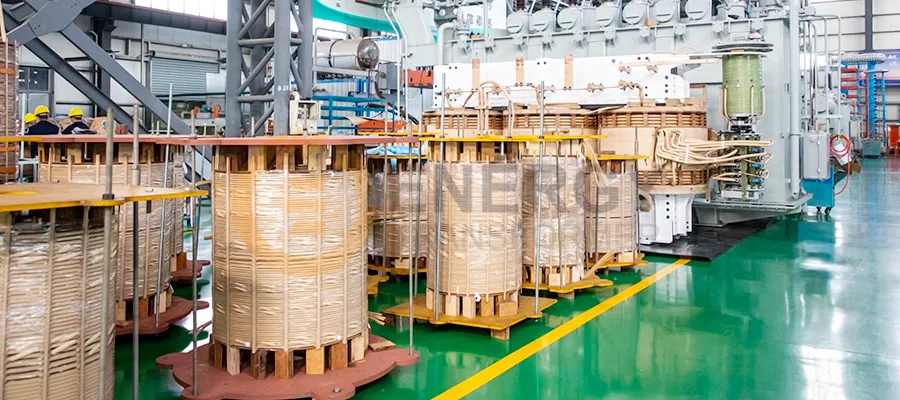
Luoyang Xinzhaohe Aluminum CO., Ltd employs a rigorously controlled, integrated production sequence to manufacture high-purity aluminum foil conductors specifically engineered for foil type winding in power and distribution transformers. Our two-decade expertise ensures each stage adheres to stringent international standards, directly impacting the final product’s electrical performance, mechanical stability, and long-term reliability within the transformer core.
The process initiates with high-conductivity aluminum rod (99.7% min purity) subjected to precision cold drawing. Utilizing multi-die continuous rod drawing machines with computerized tension control, the rod is reduced to the exact foil cross-section required, typically ranging from 0.25mm to 3.0mm in thickness and 20mm to 300mm in width. Critical dimensional tolerances of ±0.01mm for thickness and ±0.1mm for width are maintained throughout. Simultaneous surface quality monitoring via laser profilometry ensures edge uniformity and minimizes microscopic defects, which is paramount for preventing dielectric breakdown during winding and transformer operation. This stage establishes the foundational mechanical properties and geometric precision.
Subsequent continuous annealing is performed in a controlled atmosphere furnace under high-purity hydrogen or nitrogen-hydrogen mixtures. This critical thermal treatment eliminates work hardening induced during drawing, restoring optimal ductility and electrical conductivity (targeting 61.0% IACS min). Precise temperature profiling (typically 350°C to 450°C) and residence time control within the annealing zone ensure uniform recrystallization across the foil width and length, preventing localized soft spots or hard zones that could lead to cracking during winding. Conductivity verification via eddy current testing occurs immediately post-anneal.
The annealed foil then undergoes proprietary dual-layer enameling. A base coat of thermosetting polyurethane or polyesterimide resin is applied via precision die coating, followed by a top coat of higher thermal class resin (e.g., polyamide-imide for Class 200). Coating thickness is meticulously controlled within 0.05mm to 0.08mm per side using in-line optical micrometers. The foil traverses a multi-zone curing oven where solvent evaporation and polymer cross-linking occur under precisely regulated temperature gradients, ensuring complete cure without thermal degradation and achieving the required thermal index (e.g., 180°C, 200°C).
Comprehensive inline testing is integral to every meter produced. 100% spark testing at 5kV DC minimum verifies enamel integrity and absence of pinholes. Simultaneous measurement of DC resistance ensures conductivity compliance. Final product undergoes rigorous offline QC: dimensional verification (thickness, width, edge profile), adhesion testing per IEC 60851-5, thermal shock resistance, and dielectric strength validation exceeding 10kV AC. All process parameters and QC results are digitally logged for full traceability, ensuring Xinzhaohe foil conductors consistently meet the demanding requirements of modern transformer foil winding applications.
Packaging & Logistics

Export Packaging for Aluminum Foil Winding Wire – Ensuring Integrity in Global Shipments
At Luoyang Xinzhaohe Aluminum Co., Ltd., with over two decades of specialized manufacturing experience in high-purity aluminum winding materials, we recognize that reliable performance begins long before our products reach the transformer winding floor. The export phase is a critical juncture where material integrity must be preserved against the variable and often harsh conditions of international sea freight. To this end, our export packaging system is engineered to meet the stringent demands of long-distance ocean transport, ensuring that every coil of aluminum foil winding wire arrives at its destination in optimal condition.
All aluminum foil winding wire is wound onto robust, dimensionally stable cores constructed from high-strength composite or steel materials, depending on coil specifications. These wound coils are then mounted onto custom-fabricated wooden pallets that comply with ISPM 15 international phytosanitary standards for wood packaging. These pallets are designed to provide uniform load distribution, resist deformation under stacking loads, and facilitate secure handling via forklift or crane during loading, unloading, and intermodal transfers. Structural rigidity is verified through load testing to ensure compatibility with containerized shipping protocols.
The primary protective layer consists of multi-laminate, moisture-proof barrier film, which is hermetically sealed around each coil and pallet assembly. This film is specifically engineered to inhibit the transmission of water vapor, preventing condensation-induced oxidation during extended maritime transit. The barrier system includes aluminum foil interlayers and polymer films with low permeability, providing a dew point control equivalent to below -40°C. Sealing is performed under controlled humidity conditions to ensure internal dryness, and desiccant packs are optionally included based on shipment duration and destination climate.
Additional mechanical protection is applied where necessary, including edge protectors made from corrugated fiberboard or polyethylene to shield coil edges from impact and abrasion. The entire packaged unit is then unitized with steel or polyester strapping to maintain structural integrity during vessel motion and port handling. Each package is labeled with UV-resistant, tamper-evident markings indicating lot number, coil dimensions, net weight, handling orientation, and moisture-sensitive indicators.
Our packaging protocol has been validated across major trade lanes, including trans-Pacific and trans-Indian Ocean routes, where temperature fluctuations and prolonged humidity exposure are common. By integrating ISPM 15-compliant wooden pallets with advanced moisture-proof encapsulation, we mitigate the dual risks of biological contamination and electrochemical degradation, both of which can compromise foil surface quality and, by extension, transformer performance.
For global partners sourcing aluminum foil winding wire for precision transformer applications, this packaging system represents a critical component of supply chain reliability. It reflects our commitment to delivering material that meets not only technical specifications but also the logistical realities of international distribution.
Sourcing from Luoyang Xinzhaohe
Partner with Luoyang Xinzhaohe Aluminum Co., Ltd for Precision Foil Winding Solutions
Luoyang Xinzhaohe Aluminum Co., Ltd leverages over two decades of specialized metallurgical expertise to deliver transformer foil winding materials meeting the most stringent global electrical engineering standards. Our vertical integration, spanning high-purity aluminum ingot sourcing through precision cold rolling and slitting, ensures absolute control over the critical material properties defining foil performance in demanding transformer applications. We engineer aluminum alloys specifically for foil winding, optimizing conductivity (min 61.0% IACS), tensile strength (80-120 MPa), and elongation (25-35%) to balance electrical efficiency, mechanical stability during winding, and resistance to deformation under operational stresses. This deep materials science foundation directly translates to reduced eddy current losses and enhanced thermal management in your final transformer assembly.
Our dedicated production facility houses state-of-the-art 2400mm wide continuous casting and rolling lines, specifically calibrated for transformer foil manufacturing. We consistently achieve industry-leading dimensional tolerances critical for uniform winding density and minimized interlayer gaps. Key production capabilities include thickness ranges from 0.05mm to 3.0mm with tolerances held to ±0.005mm or tighter, width tolerances of ±0.1mm, and surface roughness (Ra) values controlled below 0.8µm to prevent insulation damage. All foil undergoes rigorous inline surface defect monitoring and edge quality control, ensuring defect-free material essential for high-voltage insulation integrity. Production volumes support major OEM requirements, with monthly capacity exceeding 15,000 metric tons across standard and custom specifications.
Quality assurance is embedded within our ISO 9001 and IATF 16949 certified processes, utilizing advanced metallurgical testing protocols. Every production batch undergoes comprehensive validation including chemical composition analysis via OES spectrometry, mechanical property testing per ASTM E8, precise thickness profiling using laser micrometers, and surface defect scanning. Statistical Process Control (SPC) data is maintained for full traceability, providing customers with documented evidence of conformance to specifications such as IEC 60404-1 and customer-specific technical dossiers. Our in-house metallurgy lab enables rapid root cause analysis and continuous process refinement, minimizing quality deviations and ensuring long-term supply consistency.
Supply chain resilience is engineered into our operations through strategic raw material partnerships and buffer inventory management. We maintain dedicated production lines for transformer foil, prioritizing schedule adherence with typical lead times of 15-25 days for standard grades. Our logistics network supports global containerized shipping with optimized packaging solutions preventing transit damage, including custom core sizes and moisture-resistant wrapping. Partnering with Xinzhaohe mitigates supply risk through our proven track record of on-time delivery exceeding 98.5% over the past five years and proactive communication protocols managed by dedicated technical account managers.
For transformer manufacturers demanding foil winding material that guarantees performance, reliability, and seamless integration into high-efficiency production, Luoyang Xinzhaohe provides the technical partnership and metallurgical excellence required. Contact our Technical Sales Team directly to discuss your specific foil requirements and receive a detailed capability statement. Initiate a technical consultation by emailing Cathy at cathy@transformerstrip.com to secure optimized material solutions for your next transformer project.
📉 Factory Direct Savings Calculator
Calculate your potential savings by importing foil type winding in transformer directly from China.