

Table of Contents
Market Insight: Enamelled Copper Wire Price

Market Analysis: Winding Wire – Enamelled Copper Wire Demand in Transformers
The global demand for enamelled copper wire, particularly in transformer manufacturing, has demonstrated consistent growth driven by expanding electrical infrastructure, renewable energy integration, and industrial automation. Enamelled copper wire serves as the core conductive medium in power and distribution transformers, where its performance directly influences efficiency, thermal stability, and service life. As a result, industrial buyers are increasingly scrutinizing both the enamelled copper wire price and the technical attributes that underpin long-term reliability.
Transformers operate under continuous electrical and thermal stress, necessitating winding materials capable of withstanding high voltages, elevated temperatures, and mechanical vibrations. Enamelled copper wire must exhibit excellent dielectric strength, thermal endurance (typically Class 130°C to Class 200°C), and resistance to thermal shock and chemical degradation. Inferior insulation systems or substandard copper purity can lead to premature insulation breakdown, partial discharges, and catastrophic transformer failure. Therefore, while cost is a consideration in procurement, the total cost of ownership favors high-quality wire that reduces maintenance cycles and enhances system uptime.
Recent market trends indicate fluctuating enamelled copper wire prices due to volatility in copper commodity markets, energy costs, and global supply chain dynamics. However, price sensitivity must be balanced against material specifications. For instance, wires with polyurethane, polyester-imide, or polyamide-imide insulation systems offer progressively higher thermal and mechanical performance, justifying a premium in price. Manufacturers in sectors such as utility-scale power transmission, rail traction, and high-efficiency distribution transformers prioritize these advanced insulation types to meet IEC 60317 and ASTM D2427 standards.
From a supply chain perspective, reliable sourcing requires partnerships with producers who maintain strict process control, traceable raw materials, and in-house testing capabilities. At Luoyang Xinzhaohe Aluminum Co., Ltd, with over two decades of metallurgical and wire manufacturing expertise, we emphasize copper purity (minimum 99.99% EC-grade), consistent enamel coating thickness, and precise dimensional tolerances. Our production lines incorporate在线 testing for dielectric strength, elongation, and thermal shock resistance, ensuring compliance with international quality benchmarks.
The transformer industry’s shift toward higher efficiency classes (e.g., IE3 and IE4) further amplifies the need for premium-grade enamelled copper wire. Reduced losses, compact designs, and extended operational lifespans are unattainable without superior winding materials. As global electrification accelerates, particularly in emerging markets and renewable energy projects, demand for technically robust, high-purity enamelled copper wire will continue to outpace that of commodity-grade alternatives.
In conclusion, while enamelled copper wire price remains a key procurement metric, engineering and operational requirements dictate that quality cannot be compromised. Industrial buyers must evaluate suppliers based on technical capability, consistency, and adherence to international standards—factors that ultimately determine transformer performance and lifecycle cost.
Technical Specs: Enamelled Copper Wire Price
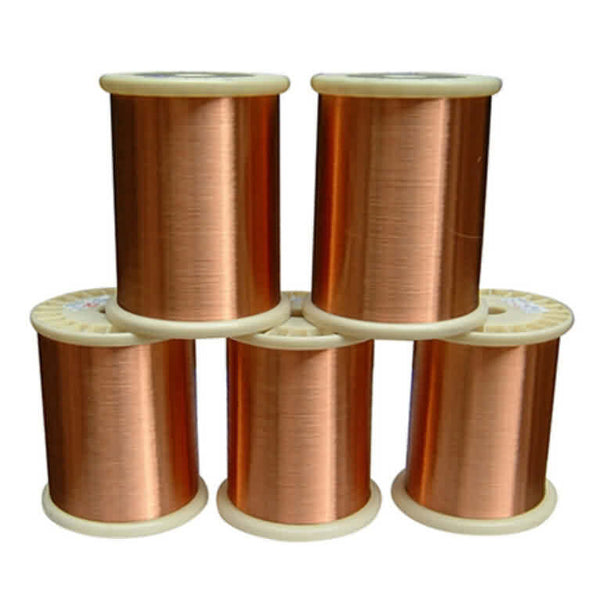
Technical Specifications Impacting Enamelled Copper Wire Pricing
Enamelled copper wire pricing is intrinsically linked to critical technical parameters that define performance, reliability, and manufacturing complexity. At Luoyang Xinzhaohe Aluminum Co., Ltd., with over two decades of specialization in winding wire production, we emphasize that deviations from baseline specifications directly influence material costs, processing yields, and end-product viability. Key parameters—insulation breakdown voltage, elongation, and thermal class—must be rigorously controlled to meet application demands while optimizing procurement economics. These factors determine raw material selection, coating formulation sophistication, and process calibration, all contributing to the final unit price. Buyers must align specifications precisely with operational requirements to avoid unnecessary cost premiums or performance compromises.
The interplay between insulation integrity, mechanical resilience, and thermal stability dictates pricing tiers. Higher insulation breakdown voltage necessitates advanced polymer formulations and tighter process controls during enameling, increasing material and quality assurance expenses. Similarly, elevated elongation values require premium-grade copper with stringent oxygen control and annealing precision to achieve ductility without compromising conductivity. Thermal class directly correlates with polymer chemistry complexity; classes exceeding 155°C (F) utilize costly imide-based resins with multi-layer application processes. Each parameter increment escalates production costs non-linearly due to reduced line speeds, higher scrap rates, and specialized testing protocols.
Below is a summary of how these parameters influence cost structure and performance:
| Parameter | Standard Range | Measurement Method | Cost Impact Factor |
|---|---|---|---|
| Insulation Breakdown Voltage | 1.5–10 kV (rms) | IEC 60317-0-3 | +12–35% premium for >6 kV due to resin purity and coating uniformity requirements |
| Elongation | 8–40% | ASTM D3593 | +8–22% premium for >30% due to ultra-pure copper and precise annealing control |
| Thermal Class | 130°C (B) to 220°C (C) | IEC 60172 | +15–50% premium per 25°C increment above 155°C (F) due to advanced polymer systems |
Insulation breakdown voltage is measured under standardized wet-test conditions per IEC 60317-0-3. Wires rated above 6 kV typically employ dual-layer coatings with intermediate curing stages, demanding higher-grade solvents and extended processing time. This directly escalates production costs by 12–35% compared to standard 3–4 kV grades. Elongation, tested via tensile methods per ASTM D3593, reflects the wire’s ability to withstand winding stresses without fracture. Achieving >30% elongation requires oxygen-free copper (OFC) with grain structure optimization, increasing material costs and reducing drawing line throughput by 15–20%.
Thermal class represents the maximum continuous operating temperature per IEC 60172. Class 130°C (B) wires use economical polyester resins, while Class 220°C (C) variants require polyamide-imide or ceramic-modified systems with triple-coat architectures. Each 25°C increment beyond Class 155°C (F) incurs a 15–25% material cost surge due to polymer scarcity and complex curing cycles. Crucially, thermal class and breakdown voltage exhibit synergistic cost effects; high-temperature wires with elevated voltage ratings demand proprietary resin blends that may carry 50%+ premiums over baseline products.
Luoyang Xinzhaohe Aluminum Co., Ltd. leverages 20+ years of process metallurgy expertise to balance these variables against client-specific cost-performance targets. We advise buyers to validate specifications against actual operational needs—over-specifying thermal class or elongation without engineering justification unnecessarily inflates procurement costs. Our technical team provides application-specific guidance to optimize total cost of ownership while ensuring compliance with IEC, NEMA, and GB standards. Precise parameter definition remains the cornerstone of competitive pricing in enamelled copper wire sourcing.
Factory Tour: Manufacturing
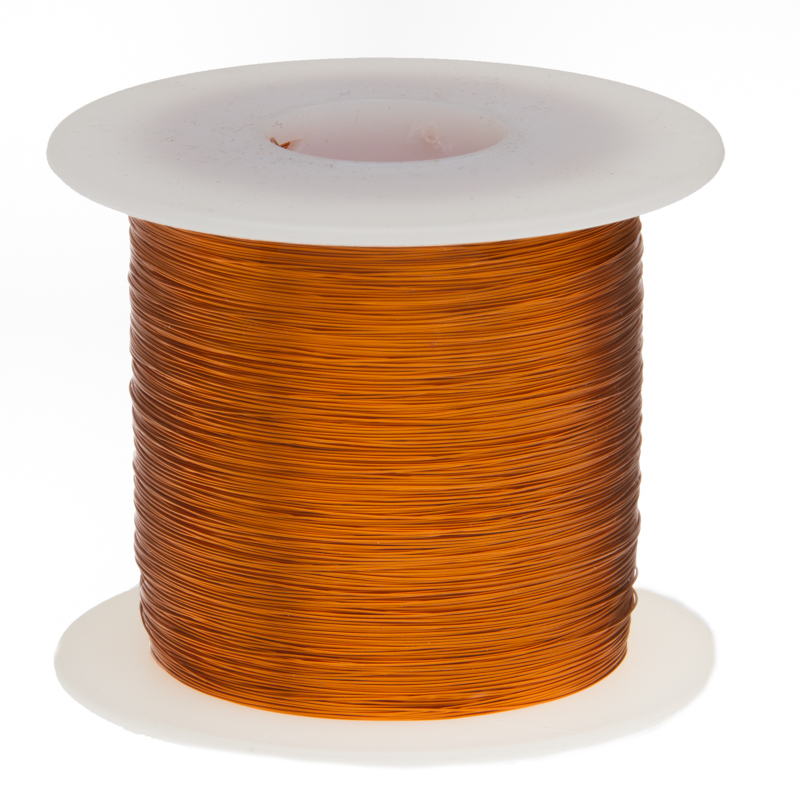
Manufacturing Process of Enamelled Copper Wire at Luoyang Xinzhaohe Aluminum Co., Ltd
The production of high-performance enamelled copper winding wire at Luoyang Xinzhaohe Aluminum Co., Ltd follows a tightly controlled, multi-stage manufacturing sequence designed to ensure dimensional accuracy, electrical integrity, and long-term reliability in demanding applications. With over two decades of metallurgical and process engineering expertise, our facility integrates precision equipment with rigorous quality control protocols across four primary stages: Rod Drawing, Annealing, Enameling, and Inline Testing.
The process begins with high-conductivity, oxygen-free copper rod (minimum 99.99% Cu), sourced from certified suppliers and verified through incoming material inspection. The rod is fed into a continuous rod drawing system where it is reduced to the specified wire diameter with tight tolerances, typically within ±0.005 mm. Drawing dies are monitored for wear and replaced according to a preventive maintenance schedule to maintain surface consistency and avoid micro-cracking. Throughout this stage, coolant systems regulate temperature to prevent work hardening and ensure uniform mechanical properties.
Following diameter reduction, the wire undergoes a controlled inert-atmosphere annealing process. This step restores ductility and enhances electrical conductivity by relieving internal stresses induced during drawing. The annealing furnace operates under a nitrogen-hydrogen atmosphere to prevent oxidation, ensuring a clean, oxide-free surface critical for optimal enamel adhesion. Temperature profiles are continuously logged and adjusted based on wire speed and gauge to maintain metallurgical homogeneity.
The annealed wire then proceeds to the enameling line, where one or multiple layers of polymer insulation are applied via precision die coating. Depending on the insulation class (e.g., Polyurethane, Polyester, or Polyesterimide), the wire passes through a series of coating dies and curing ovens. Each pass applies a thin, uniform layer of enamel, which is immediately cured at high temperature under controlled ventilation to ensure complete solvent evaporation and cross-linking. Up to four coating passes may be used to achieve the desired build thickness, with intermediate diameter checks performed using laser micrometers.
Inline testing is integrated throughout the final stage to verify electrical and mechanical performance. Every meter of wire is subjected to high-voltage breakdown testing, typically at 3,000–6,000 V depending on insulation class and thickness. Pinhole detection, flexibility (needle bend test), and adherence (scrape test) are conducted in real time. Automated optical inspection systems monitor for surface defects, while continuous diameter measurement ensures compliance with IEC 60317 and GB/T 6109 standards.
Final quality control includes batch sampling for thermal endurance, thermal shock, and solderability testing. All test data is recorded and traceable to lot numbers, supporting full process validation. This systematic approach ensures that every spool of enamelled copper wire delivered meets the exacting demands of motors, transformers, and electronic components in industrial and automotive sectors.
Packaging & Logistics
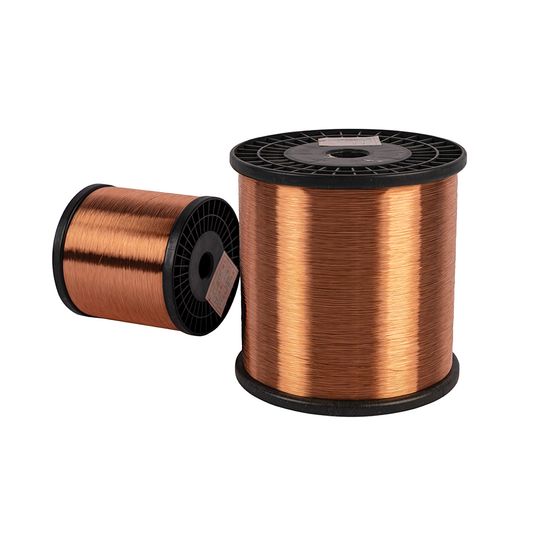
Export Packaging Specifications for Enamelled Copper Wire
Luoyang Xinzhaohe Aluminum Co., Ltd implements rigorously engineered export packaging protocols specifically designed to preserve the metallurgical integrity and electrical performance of enamelled copper winding wire during global maritime transit. Our 20+ years of metallurgical engineering expertise informs a system that mitigates the dual threats of mechanical stress and environmental degradation inherent in sea freight. This approach is non-negotiable for maintaining the wire’s critical surface properties, where microscopic enamel damage or copper oxidation directly impacts downstream manufacturing yield and end-product reliability.
All export shipments utilize custom-engineered wooden pallets conforming to ISPM 15 phytosanitary standards and ISO 9001 structural requirements. Pallets are constructed from kiln-dried, knot-free hardwood with a minimum load-bearing capacity of 1,500 kg. Dimensions adhere to global containerization standards (1200x1000mm EUR-pallets or 1219x1016mm ISO pallets), ensuring optimal space utilization within 20ft/40ft dry containers. Wire reels are secured using vibration-dampening steel strapping at 45-degree angles, distributing compressive forces evenly to prevent reel deformation or wire slippage. This configuration eliminates micro-movements during vessel pitching/rolling, a primary cause of enamel chipping and inter-layer abrasion in coiled conductors.
The core moisture protection system employs a multi-barrier methodology. Each palletized load is first wrapped in 200μm thick metallized polyester film, providing an initial vapor barrier with oxygen transmission rates below 5 cm³/m²/day. This layer is sealed using heat-welded seams to eliminate capillary pathways. Subsequently, a secondary encapsulation in 150μm linear low-density polyethylene (LLDPE) film is applied, featuring integrated calcium chloride desiccant pouches rated for 30% relative humidity (RH) control over 60-day voyages. The desiccant quantity is calculated per ASTM D6868 standards based on cargo volume, ambient humidity at loading, and projected transit duration. Critical reel edges receive additional sealing with butyl rubber tape to prevent edge wicking—a common failure point in hygroscopic polymer coatings.
This packaging architecture directly addresses the electrochemical risks of sea transport. Salt-laden marine atmospheres accelerate copper oxidation, while cyclic humidity fluctuations induce hydrolysis in polyester-imide and polyamide-imide enamel systems. Our validated process maintains internal package RH below 40% throughout transit, preventing both copper oxide formation (which increases DC resistance) and enamel plasticization (which reduces dielectric strength). All materials undergo salt spray testing per ASTM B117 to verify barrier efficacy. Documentation includes humidity indicator cards and desiccant saturation logs, providing auditable proof of environmental control.
We enforce strict pre-shipment protocols: palletized loads are staged in climate-controlled warehouses (25°C ±2, RH <50%) for 72 hours prior to containerization to stabilize core moisture content. Container doors remain sealed until loading to minimize exposure. This integrated approach has consistently delivered zero corrosion-related claims across 12,000+ TEU shipments since 2015. For mission-critical applications, we offer optional vacuum-sealed tertiary packaging with oxygen absorbers, extending protection for voyages exceeding 90 days. Partnering with certified freight forwarders experienced in handling sensitive electrical materials ensures seamless execution of these specifications from factory gate to consignee dock.
Sourcing from Luoyang Xinzhaohe
Partner with Luoyang Xinzhaohe Aluminum Co., Ltd for High-Performance Enamelled Copper Winding Wire
With over two decades of specialized manufacturing experience, Luoyang Xinzhaohe Aluminum Co., Ltd stands as a trusted leader in the production of high-precision enamelled copper winding wire for industrial and power applications. Our facility integrates advanced process control systems, stringent quality assurance protocols, and vertically integrated production capabilities to deliver wire solutions that meet the most demanding technical specifications. As a strategic partner, we offer OEMs, transformer manufacturers, and motor producers a reliable source of consistent, high-purity, and thermally stable winding wire.
Our production infrastructure is engineered for precision and repeatability. We operate fully automated drawing and enamelling lines equipped with real-time monitoring systems that ensure tight dimensional tolerances—down to ±0.002 mm for fine gauge wires. The entire process, from copper rod sourcing to final spooling, is conducted under ISO 9001-certified quality management systems. Each batch undergoes rigorous electrical, mechanical, and thermal testing, including dielectric strength verification, thermal endurance at 130°C to 220°C (depending on insulation class), and elongation and springiness compliance per IEC 60317 and GB/T 6109 standards.
We specialize in producing enamelled copper wire with single, double, or triple coatings, utilizing high-performance insulation materials such as polyurethane (PU), polyester (PE), polyester-imide (PEI), and polyamide-imide (PAI). This enables us to support applications ranging from small electronics and relays to high-efficiency motors, power transformers, and traction systems. Our technical team works closely with clients to customize insulation thickness, adhesive properties, and solderability characteristics based on end-use environmental and operational demands.
In addition to product quality, our supply chain resilience ensures on-time delivery and cost stability. We maintain strategic inventory of high-conductivity electrolytic copper (99.99% purity) and key polymer resins, mitigating raw material volatility. Our logistics network supports containerized shipments to global markets with lead times consistently under 15 days for standard orders. All packaging is designed for industrial handling, with anti-humidity spools and ESD-safe cartons to preserve wire integrity during transit.
For procurement managers and engineering teams seeking a technically capable, responsive, and audit-ready supplier, Luoyang Xinzhaohe offers a proven track record in quality consistency, technical customization, and long-term partnership reliability.
Contact us today to discuss your enamelled copper wire requirements.
Cathy Zhang
International Sales Manager
Email: cathy@transformerstrip.com
📉 Factory Direct Savings Calculator
Calculate your potential savings by importing enamelled copper wire price directly from China.