


Table of Contents
Market Insight: Enamel Wire Soldering

Market Analysis: Winding Wire Demand for Transformer Enamel Wire Soldering
Global transformer manufacturing drives substantial demand for high-performance magnet wire, with enamel-coated aluminum and copper winding wire forming the critical conductive backbone. The relentless expansion of power infrastructure, renewable energy integration, and industrial automation sustains a robust market, projected to exceed USD 25 billion by 2028. Within this context, the specific requirement for reliable enamel wire soldering represents a pivotal, yet often underestimated, technical challenge directly impacting transformer longevity and performance. Soldering connects winding leads to terminals, bushings, and tap changers, creating essential electrical pathways under continuous thermal and mechanical stress. Industrial buyers increasingly recognize that substandard solder joints constitute a primary failure point, leading to catastrophic transformer downtime costing utilities and industries millions annually in repairs and lost productivity.
The technical significance of enamel wire soldering quality cannot be overstated. During the soldering process, the enamel insulation must cleanly and completely decompose at the precise soldering temperature without leaving carbonaceous residues or generating excessive gases. Residual insulation impedes metallurgical bonding between the conductor and solder alloy, creating high-resistance interfaces. These defective joints generate localized heat under operational load due to the Joule effect, initiating thermal runaway. In aluminum wire – a core specialty of Luoyang Xinzhaohe Aluminum Co., Ltd. – the challenge intensifies. Aluminum’s native oxide layer reforms instantly upon exposure to air, requiring specialized fluxes and stringent process control to ensure a reliable solder wetting action. Poorly executed soldering on aluminum windings exacerbates oxidation risks, leading to brittle joints prone to mechanical fracture under vibration or thermal cycling. The consequences manifest as increased no-load losses, unexpected harmonic generation, and ultimately, insulation system degradation or complete open-circuit failures.
Quality enamel formulation and precise application thickness are fundamental enablers of successful soldering. Premium enamels utilize thermally stable polymer systems engineered for controlled pyrolysis. They decompose cleanly within a narrow, predictable temperature window compatible with standard lead-free solder alloys (typically 250°C – 400°C), minimizing void formation and ensuring optimal solder flow. Inconsistent enamel thickness or inferior resin chemistry results in erratic decomposition – either incomplete removal leaving insulating barriers or excessive charring causing porosity within the solder fillet. The table below outlines critical enamel properties influencing solderability:
| Parameter | Impact on Soldering Performance | Target Specification (Premium Grade) |
|---|---|---|
| Thermal Decomposition Range | Must align precisely with solder reflow profile | 320°C – 360°C (sharp decomposition) |
| Char Residue Level | High residue impedes wetting, creates voids | < 0.5% by weight |
| Oxidation Stability (Al) | Prevents rapid re-oxidation during solder exposure | Requires inert atmosphere compatible |
| Adhesion Strength | Ensures enamel integrity pre-soldering, no flaking | > 1.5 N/mm (IEC 60851-5) |
Transformer manufacturers and tier-1 suppliers demand winding wire where solderability is not an afterthought but an engineered property. Luoyang Xinzhaohe Aluminum leverages two decades of metallurgical expertise to produce aluminum magnet wire with enamel systems specifically optimized for the thermal dynamics of industrial soldering processes. This focus ensures consistent, void-free joints that maintain low electrical resistance throughout the transformer’s operational life, directly contributing to grid stability, reduced lifecycle costs, and adherence to stringent international efficiency standards like IEC 60076. In high-reliability power applications, the integrity of every soldered connection is non-negotiable.
Technical Specs: Enamel Wire Soldering
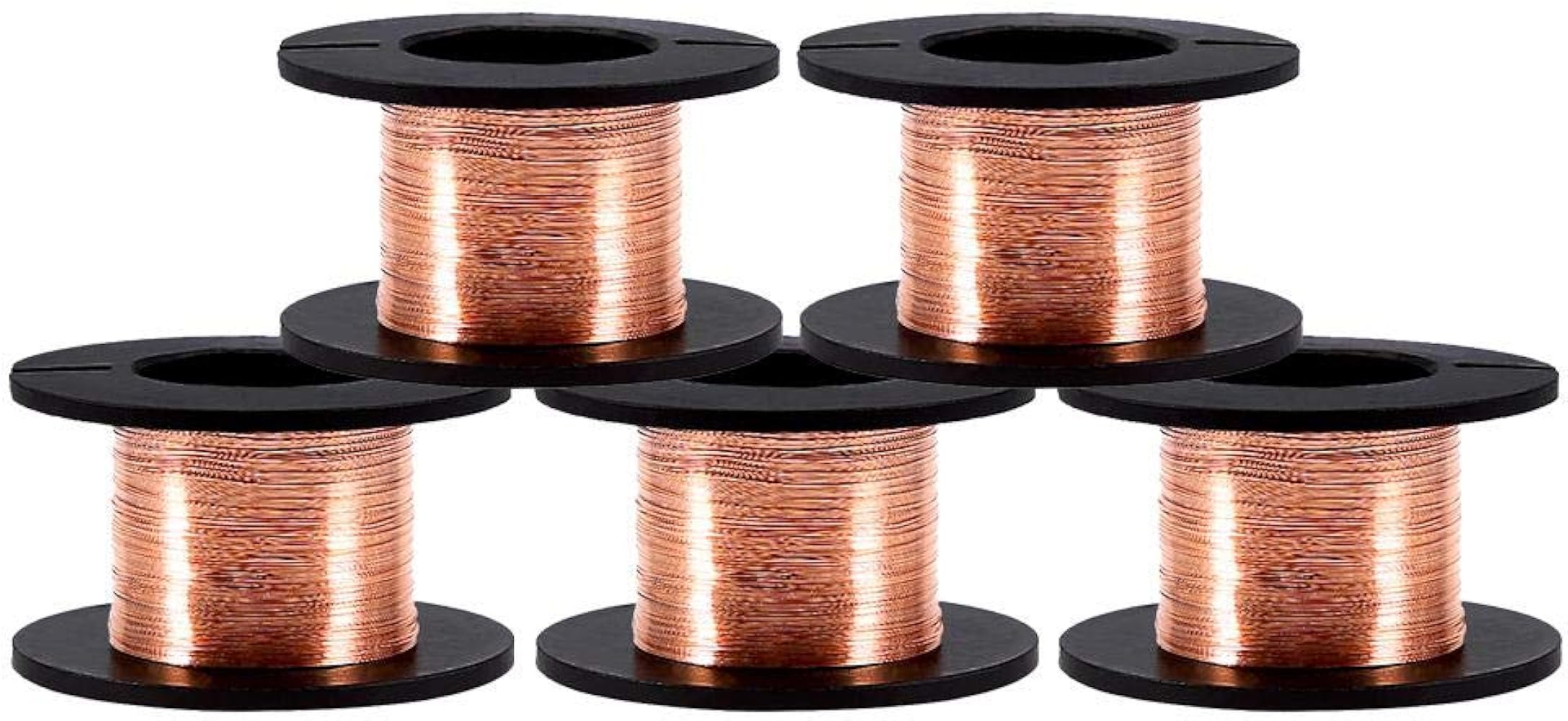
Technical Specifications for Enamel Wire Soldering: Key Parameters and Performance Criteria
Enamel wire, also known as magnet wire, plays a critical role in electrical winding applications where reliable insulation integrity, thermal endurance, and mechanical flexibility are paramount. At Luoyang Xinzhaoah Aluminum Co., Ltd, with over two decades of experience in aluminum conductor manufacturing, we emphasize precise control over material and coating properties to ensure compatibility with soldering processes and long-term operational reliability. The following technical parameters are essential for evaluating enamel-coated aluminum wire performance, particularly in applications involving soldering operations.
One of the most critical parameters is Insulation Breakdown Voltage, which defines the dielectric strength of the enamel coating. This value indicates the maximum voltage the insulation can withstand before electrical failure occurs. For standard solderable enamel wires, breakdown voltage typically ranges from 1,200 V to over 5,000 V, depending on wire diameter and insulation grade. Higher breakdown voltages are essential in high-voltage motors, transformers, and inductive components where electrical isolation is non-negotiable. During soldering, localized thermal stress can compromise insulation integrity; therefore, enamel formulations must maintain dielectric strength even after exposure to soldering temperatures.
Elongation is another key mechanical property, reflecting the wire’s ductility and ability to withstand deformation during winding and soldering. For aluminum-based enamel wires, elongation values generally range between 15% and 30%, depending on temper and alloy composition. Adequate elongation ensures that the wire does not crack or fracture during tight coiling or thermal cycling. In soldering applications, where rapid heating and cooling occur, sufficient elongation minimizes the risk of conductor fatigue and insulation delamination.
The Thermal Class rating defines the maximum continuous operating temperature the enamel insulation can endure without significant degradation. Common thermal classes for solderable enamel wires range from 130°C to 220°C, with higher classes indicating superior heat resistance. Class 130 (B), 155 (F), 180 (H), and 220 (C) correspond to increasing thermal stability, achieved through advanced polymer coatings such as polyurethane, polyesterimide, or polyamide-imide. Soldering processes often expose the wire to transient temperatures exceeding 350°C; therefore, thermal shock resistance and self-fluxing properties of the enamel are vital. Enamel systems designed for solderability typically exhibit controlled breakdown at soldering temperatures, allowing direct solder adhesion without prior stripping.
The following table summarizes key technical specifications for enamel-coated aluminum winding wire suitable for soldering applications:
| Parameter | Typical Range | Test Standard | Notes |
|---|---|---|---|
| Insulation Breakdown Voltage | 1,200 V – 5,000 V (rms) | IEC 60317, GB/T 23312 | Increases with insulation thickness |
| Elongation (Aluminum Core) | 15% – 30% | ASTM B356, GB/T 4575 | Depends on temper (e.g., H14, H16) |
| Thermal Class | 130°C – 220°C | IEC 60172, GB/T 11021 | Includes Classes B, F, H, C |
| Solderability Temperature | 350°C – 450°C (3–5 sec) | IEC 60317-1 | Self-bonding/self-fluxing types |
| Film Adhesion | Passed (no flaking) | Needle Scratch Test | Critical post-soldering integrity |
These specifications ensure that enamel wire maintains electrical insulation, mechanical resilience, and solder joint reliability under industrial operating conditions. Luoyang Xinzhaohe Aluminum Co., Ltd adheres to international standards and conducts rigorous in-house testing to guarantee consistency across production batches. Selecting the appropriate combination of breakdown voltage, elongation, and thermal class is essential for optimizing performance in motor windings, solenoids, and power electronics where soldering is integral to assembly.
Factory Tour: Manufacturing
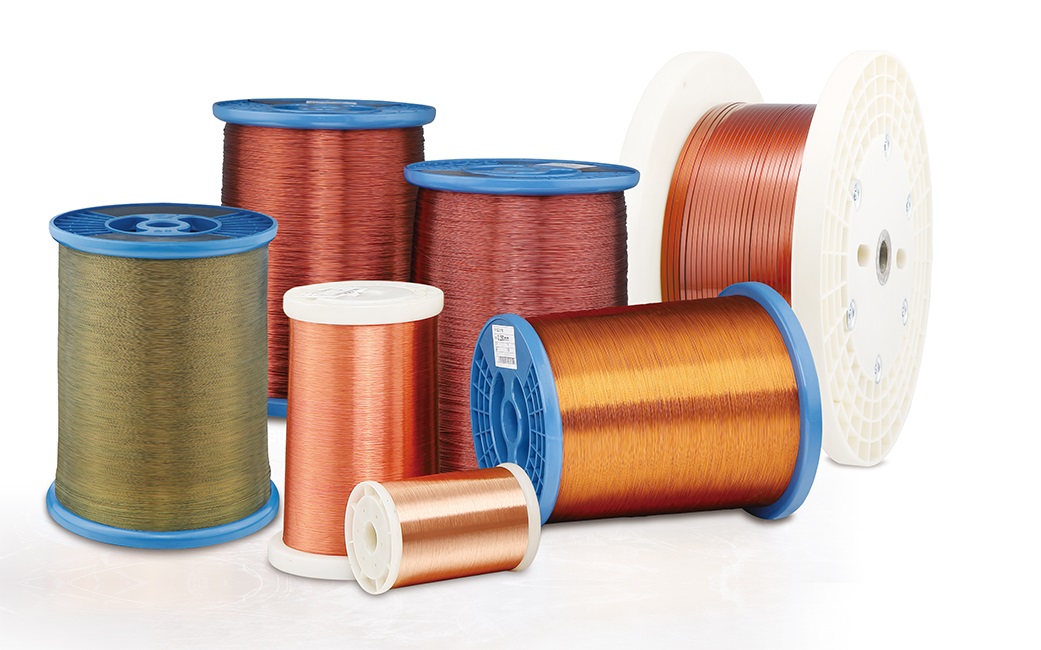
Manufacturing Process for Enamel-Coated Aluminum Winding Wire
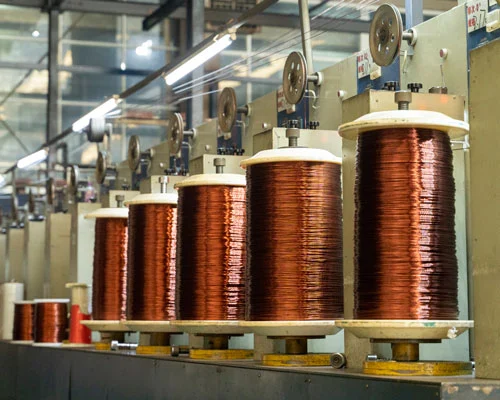
Luoyang Xinzhaohe Aluminum Co., Ltd leverages over two decades of specialized expertise in producing high-reliability enamel-coated aluminum winding wire. Our rigorously controlled manufacturing sequence ensures consistent performance for demanding soldering and winding applications. The process initiates with high-purity aluminum rod (99.99% Al, ASTM B233 compliant, Al 1350 alloy) subjected to precision rod drawing. This multi-stage cold drawing operation utilizes diamond or tungsten carbide dies within a continuous, tension-controlled line. Critical parameters including reduction ratio per pass, drawing speed, and lubricant viscosity are meticulously managed to achieve the target conductor diameter (ranging from 0.08 mm to 3.0 mm) while maintaining optimal surface smoothness and dimensional accuracy. In-process surface inspection via high-resolution cameras occurs continuously, rejecting any wire exhibiting scratches, pits, or diameter deviations exceeding ±0.001 mm, ensuring a pristine substrate for subsequent coating.
The drawn wire then undergoes continuous annealing within a controlled-atmosphere furnace. This step is essential for restoring ductility lost during cold drawing, enabling efficient winding without breakage. Our proprietary furnace design precisely regulates temperature profiles (typically 350-450°C for aluminum) and dwell time within an oxygen-free nitrogen-hydrogen atmosphere. This prevents surface oxidation and ensures uniform recrystallization, meeting IEC 60228 Class 2 requirements for elongation and tensile strength. Real-time monitoring of furnace atmosphere composition and wire temperature guarantees consistent metallurgical properties throughout the coil.
Enameling represents the core functional stage. The annealed aluminum wire passes sequentially through multiple coating applicators (typically 3-5 layers). A specialized primer layer ensures adhesion to the aluminum substrate, followed by intermediate and topcoat layers providing the primary electrical insulation, thermal endurance (rated up to 220°C, Class H), and solderability characteristics. Each layer utilizes solvent-based or 100% solids thermosetting polymer resins applied via precision die or roller coating. Critical control of resin viscosity, solids content, and application thickness per layer is maintained. Curing occurs immediately after each application stage using precisely calibrated infrared or convection ovens, with temperature and line speed synchronized to achieve complete cross-linking without thermal degradation. This multi-layer approach ensures robust dielectric strength and consistent solderability.
Comprehensive inline testing is integral to every production meter. Key parameters monitored continuously include:
Dimensional Verification Laser micrometers measure overall wire diameter and enamel thickness with micron-level precision against specified tolerances.
Electrical Integrity 100% spark testing at 3 kV DC detects any pinholes or insulation weaknesses.
Thermal Properties Periodic thermal endurance testing per IEC 60851-5 validates the wire’s insulation life at elevated temperatures.
Solderability Routine solder dip tests per IEC 60851-8 confirm reliable solder adhesion and absence of coating degradation during soldering processes.
Final quality control encompasses reel-to-reel visual inspection, measurement of electrical resistance, and verification of mechanical properties. Luoyang Xinzhaohe’s integrated process control system, combining automated inline monitoring with stringent batch sampling against IEC 60317 and customer-specific standards, guarantees that every coil of enamel wire delivered meets the exacting demands of modern soldering and motor winding operations. This systematic approach underpins our commitment to supply chain reliability and product performance.
Packaging & Logistics
Export Packaging for Enamel-Coated Aluminum Winding Wire: Ensuring Integrity in Global Shipments
At Luoyang Xinzhaohe Aluminum Co., Ltd., with over two decades of specialized manufacturing experience in enamel-coated aluminum winding wire, we recognize that packaging is not merely a logistical necessity but an integral component of product performance assurance. For international shipments, where exposure to variable climatic and handling conditions is inevitable, our export packaging system is engineered to preserve the metallurgical and electrical integrity of the wire throughout extended transit cycles, particularly during sea freight operations.
All export-grade winding wire coils are systematically mounted on high-density wooden pallets constructed from kiln-dried, ISPM-15 compliant hardwood. These pallets are designed to meet international phytosanitary standards, ensuring unrestricted customs clearance across global trade corridors. The structural rigidity of the pallet supports multi-layer stacking without deformation, while integrated reinforcement beams prevent torsional stress during crane lifting and container handling. Each coil is axially secured to the pallet using corrosion-resistant steel straps and corner protectors, minimizing the risk of lateral displacement or edge damage during vessel motion.
A critical element in our packaging protocol is the application of multi-layer moisture-proof barrier film. Given that enamel-coated wires are highly susceptible to moisture-induced degradation—particularly in tropical maritime environments—we employ a laminated polyethylene-aluminum composite film with a water vapor transmission rate (WVTR) of less than 0.5 g/m²·24hr. This film is hermetically sealed around the entire palletized load using heat-welded seams, forming a continuous vapor-tight enclosure. Additionally, desiccant packs with a minimum absorption capacity of 1,200 g H₂O/m³ are strategically placed within the sealed cavity to buffer against residual humidity and temperature fluctuations.
To further enhance protection during sea transport, all packaged units undergo vacuum shrink-wrapping prior to final sealing. This process eliminates internal air pockets that could otherwise condense under changing pressure and temperature gradients encountered in containerized shipping. The outer film is also UV-stabilized and puncture-resistant (tensile strength ≥ 25 MPa), providing defense against mechanical abrasion and solar degradation during open-deck storage or port layovers.
Each shipment is labeled with internationally recognized hazard and handling indicators, including “This Side Up,” “Fragile,” and “Protect from Moisture,” printed in both English and the destination country’s official language. Lot traceability is maintained through serialized barcode tags affixed to the pallet and recorded in our ERP system, enabling full supply chain visibility.
Our packaging methodology has been validated through accelerated aging tests simulating 60-day ocean voyages under 95% relative humidity and thermal cycling between 5°C and 45°C. Results consistently demonstrate no measurable increase in dielectric absorption or reduction in breakdown voltage post-exposure.
By integrating structural stability, moisture mitigation, and regulatory compliance, Luoyang Xinzhaohe ensures that every reel of enamel wire arrives at its destination with the same precision and performance as when it left our facility. This commitment underpins our reputation as a trusted supplier in the global winding wire market.
Sourcing from Luoyang Xinzhaohe
Partner with Luoyang Xinzhaohe Aluminum Co. Ltd for Precision Enamel Wire Soldering Solutions
Luoyang Xinzhaohe Aluminum Co. Ltd leverages over two decades of specialized metallurgical expertise and integrated manufacturing to deliver enamel-coated aluminum winding wire engineered explicitly for demanding soldering applications in transformers, inductors, and motors. Our core strength lies in mastering the intricate interplay between aluminum substrate properties, enamel chemistry, and solder joint integrity—a critical factor often overlooked by generic wire suppliers. We control the entire production chain from high-purity aluminum rod casting through precision drawing, annealing, and multi-layer enamel application, ensuring unmatched consistency in solder wettability and thermal performance.
Precision Aluminum Metallurgy for Solderability
Our proprietary aluminum alloy formulation and thermal processing protocols achieve optimal electrical conductivity (≥61% IACS) while maintaining precise mechanical properties essential for reliable solder flow and joint strength. Rigorous control of surface oxide layers during drawing and annealing minimizes solder adhesion defects. Each production lot undergoes stringent solderability testing per IEC 60172, measuring wetting time and spread area under controlled flux and temperature conditions to guarantee compatibility with common lead-free solder alloys. This metallurgical precision directly translates to reduced soldering defects and enhanced long-term joint reliability in your end products.
Integrated Production Capacity and Quality Assurance
Vertical integration enables us to maintain exceptional process stability across high-volume production. Our facility operates 12 continuous enamel coating lines with automated diameter monitoring achieving ±0.001mm tolerance control, critical for uniform solder capillary action. Below is a summary of our core production capabilities relevant to enamel wire soldering requirements.
| Parameter | Specification Range | Key Control Standard |
|---|---|---|
| Wire Diameter | 0.05 mm – 5.0 mm | IEC 60122 |
| Aluminum Purity | ≥99.7% (Al-EC Grade) | GB/T 17049 |
| Enamel Types | Polyester, Polyamide-imide | UL 1446, IEC 60851 |
| Monthly Capacity | 1,200+ Metric Tons | ISO 9001 Certified |
| Solderability Pass Rate | ≥99.5% (Per Lot Testing) | Internal QCP-2023 |
All processes adhere to ISO 9001-certified quality management systems with real-time statistical process control (SPC) on critical parameters like enamel thickness uniformity (±2μm) and thermal class stability. Every coil undergoes 100% spark testing and batch-level solderability validation before shipment, eliminating field failures due to inconsistent coating or substrate issues.
Technical Partnership Beyond Supply
We function as an extension of your engineering team, providing metallurgical data sheets, solder compatibility analysis, and process optimization support for your specific soldering profiles. Our R&D center collaborates with customers to resolve challenges like thermal shock resistance during reflow or minimizing void formation in high-frequency applications. This proactive technical engagement ensures our wire integrates seamlessly into your manufacturing flow, reducing scrap rates and accelerating time-to-market.
For engineered enamel wire solutions where solder joint integrity is non-negotiable, partner with Luoyang Xinzhaohe Aluminum Co. Ltd. Contact our Technical Sourcing Team at cathy@transformerstrip.com to discuss your specific requirements and receive metallurgical performance data for your application validation. Let our 20 years of aluminum wire specialization secure your soldering process reliability.
📉 Factory Direct Savings Calculator
Calculate your potential savings by importing enamel wire soldering directly from China.