


Table of Contents
Market Insight: Electrical Steel
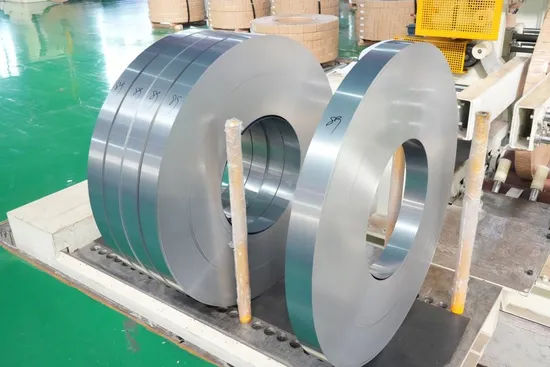
Market Analysis: Silicon Steel Demand in Transformer Applications
Global transformer manufacturing drives sustained demand for grain-oriented electrical steel (GOES), with annual consumption exceeding 10 million metric tons. This material constitutes 65–70% of a power transformer’s core mass, directly influencing efficiency, thermal performance, and operational lifespan. Rising investments in grid modernization—particularly in Asia Pacific and Europe—and the global shift toward renewable energy integration necessitate transformers with superior magnetic properties. Solar and wind farms require step-up transformers operating under fluctuating loads, while urban electrification demands distribution transformers with minimized no-load losses. Regulatory frameworks like the EU EcoDesign Directive and U.S. DOE Level 2 standards now mandate IE4 efficiency (≥98.7% for medium-voltage units), tightening core loss specifications to ≤0.65 W/kg at 1.7 Tesla/50 Hz. Consequently, high-permeability, low-loss GOES grades represent over 85% of the transformer steel market, with demand for ultra-high-grade material (P1.7/50 ≤ 0.50 W/kg) growing at 7.2% CAGR through 2030.
Criticality of Material Quality in Core Performance
Quality deviations in electrical steel directly compromise transformer reliability and lifecycle costs. Core loss—comprising hysteresis and eddy current losses—accounts for 60–70% of total transformer energy dissipation over a 30-year service life. A 0.1 W/kg increase in core loss (P1.7/50) elevates annual energy waste by 850 kWh per 100 kVA unit, translating to $105,000 in cumulative operational costs at industrial electricity rates. Magnetostriction levels must remain below 10 ppm to prevent audible noise and mechanical degradation under magnetic flux excitation; substandard coatings induce interlaminar eddy currents, raising hotspot temperatures by 15–20°C and accelerating insulation aging. Precision in grain orientation (Goss texture deviation <8°) and surface insulation resistivity (>50 Ω·cm²) are non-negotiable for maintaining flux density homogeneity and preventing short-circuit failures during fault conditions.
Technical Performance Comparison by Grade
| Parameter | Standard Grade (IE3) | High-Performance Grade (IE4+) | Impact of Substandard Quality |
|---|---|---|---|
| Core Loss (P1.7/50) | ≤1.25 W/kg | ≤0.65 W/kg | +35% energy loss; 120°C hotspot rise |
| Magnetostriction | ≤25 ppm | ≤10 ppm | Audible noise >55 dB; core deformation |
| Coating Resistivity | ≥20 Ω·cm² | ≥50 Ω·cm² | 22% higher eddy current loss |
| Thickness Tolerance | ±0.005 mm | ±0.003 mm | Flux leakage; 8% efficiency drop |
Sourcing decisions must prioritize certified material traceability and adherence to IEC 60404-2:2019. Inconsistent lamination thickness or coating defects introduce localized saturation, increasing no-load current by 15–30% and risking premature failure during voltage surges. Luoyang Xinzhaohe’s 20-year metallurgical expertise ensures batch-to-batch consistency in Goss texture development and laser-scribed domain refinement—critical for meeting Tier-1 transformer OEM specifications. The total cost of ownership favors premium GOES despite initial price premiums; a 5% reduction in core loss yields 40x ROI over a transformer’s operational life through energy savings alone. Industrial buyers must enforce rigorous mill test reports covering Epstein frame loss validation and surface insulation integrity to mitigate systemic grid risks.
Technical Specs: Electrical Steel
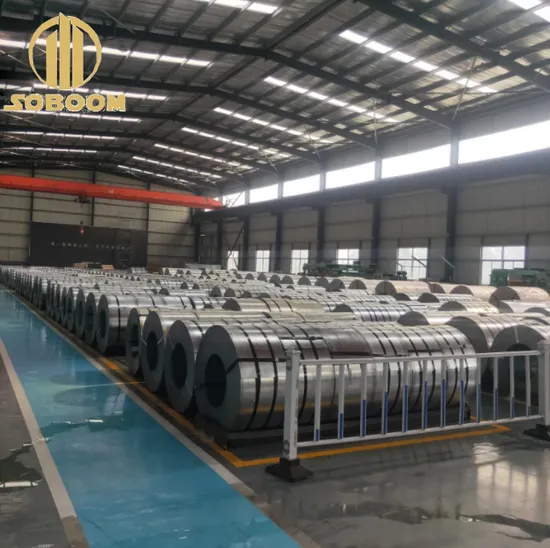
Technical Specifications for Electrical Steel (Silicon Steel)
Electrical steel, also known as silicon steel, is a specialized soft magnetic material engineered for optimal performance in alternating current (AC) applications such as transformers, motors, and generators. At Luoyang Xinzhaohe Aluminum Co., Ltd, with over two decades of metallurgical and supply chain expertise, we emphasize precision in material specifications to ensure reliability, efficiency, and compliance with international standards. The performance of electrical steel is primarily governed by three critical technical parameters: core loss (iron loss), magnetic flux density, and flatness. These parameters directly influence energy efficiency, thermal behavior, and manufacturability in end-use applications.
Core loss, or iron loss, refers to the energy dissipated in the form of heat when the material is subjected to cyclic magnetization. It is typically measured in watts per kilogram (W/kg) under standardized test conditions (e.g., 1.5 T at 50 Hz or 60 Hz). Core loss is influenced by silicon content, grain orientation, thickness, and coating quality. Non-oriented electrical steel (NOES) generally exhibits higher core loss compared to grain-oriented electrical steel (GOES), which is optimized for directional magnetic properties. Low core loss is essential for high-efficiency equipment, particularly in distribution and power transformers where energy savings over the operational lifespan are critical.
Magnetic flux density, expressed in Tesla (T), indicates the maximum magnetic induction the material can achieve. Higher flux density allows for reduced core size and weight in electromagnetic devices, improving power density and design flexibility. Grain-oriented grades typically achieve flux densities of 1.90 T or higher in the rolling direction, while non-oriented grades range from 1.50 T to 1.80 T, depending on silicon content and processing. Precise control of alloying elements and annealing processes ensures consistent magnetic performance across batches.
Flatness is a dimensional and geometric specification that affects stackability, core assembly, and vibration noise in electromagnetic devices. Poor flatness can lead to air gaps in laminated cores, increasing reluctance and losses. Flatness is measured in millimeters per meter (mm/m) and must be tightly controlled, especially for thin gauges used in high-frequency applications. Advanced leveling and tension-annealing processes are employed to achieve flatness within ±2 mm/m for GOES and ±3 mm/m for NOES.
The following table summarizes key technical parameters for common electrical steel grades:
| Parameter | Test Condition | Non-Oriented (Typical) | Grain-Oriented (Typical) | Units |
|---|---|---|---|---|
| Core Loss (P1.5/50) | 1.5 T, 50 Hz | 3.0 – 6.0 | 0.7 – 1.0 | W/kg |
| Core Loss (P1.7/60) | 1.7 T, 60 Hz | 4.5 – 8.0 | 0.9 – 1.2 | W/kg |
| Magnetic Flux Density (B8) | 800 A/m | 1.50 – 1.80 | 1.90 – 2.03 | Tesla (T) |
| Thickness Tolerance | Standard Tolerance | ±0.02 to ±0.05 | ±0.02 to ±0.03 | mm |
| Flatness | Across 1 m length | ≤ 3.0 | ≤ 2.0 | mm/m |
| Insulating Coating Weight | Typical Range | 0.3 – 0.8 | 0.8 – 1.2 | g/m² |
These specifications are aligned with international standards such as IEC 60404-8, JIS C 2550/2551, and ASTM A664. Luoyang Xinzhaohe Aluminum Co., Ltd adheres to rigorous quality control protocols to ensure consistency, traceability, and performance in every shipment.
Factory Tour: Manufacturing
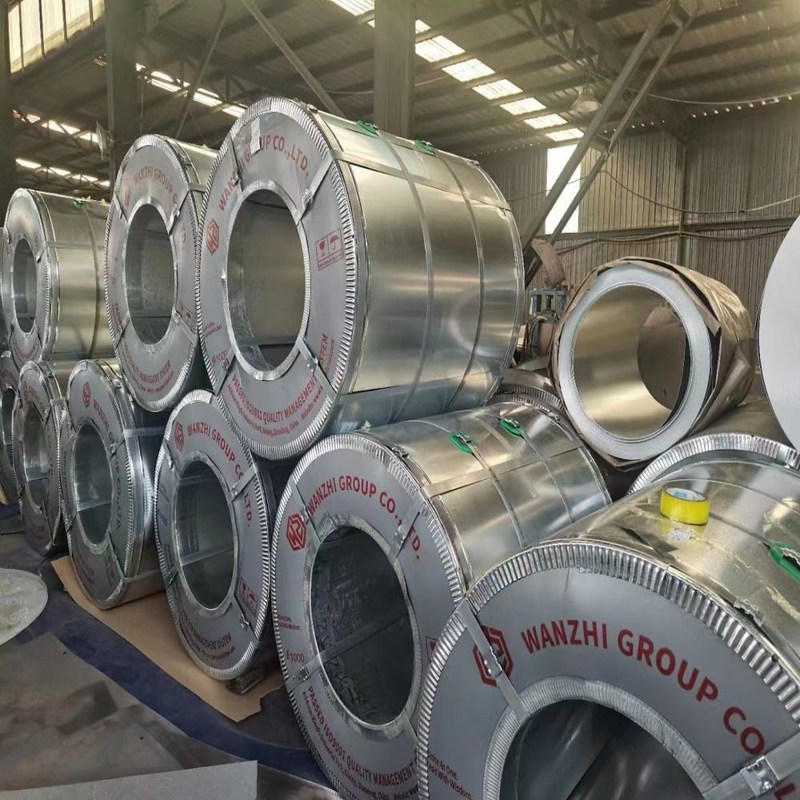
Manufacturing Process for High-Performance Electrical Steel
Luoyang Xinzhaohe Aluminum Co., Ltd leverages over two decades of specialized metallurgical expertise to produce precision electrical steel cores meeting stringent global industry standards. Our integrated manufacturing sequence ensures optimal magnetic properties, dimensional accuracy, and surface integrity critical for efficient motor and transformer performance. The core process flow comprises four critical, interdependent stages: Slitting, Annealing, Insulation Coating, and Precision Cutting, each incorporating rigorous quality control protocols.
Slitting Process
Incoming master coils undergo precision slitting to achieve the required strip widths for subsequent lamination production. This stage utilizes computer-controlled tension management systems and high-precision rotary shear blades operating within micron-level tolerances. Dimensional verification occurs immediately after slitting, measuring width consistency and edge burr height using laser micrometers and optical edge inspection systems. Any deviation exceeding ±0.05 mm triggers automatic process adjustment or material segregation, ensuring only dimensionally stable strip progresses.
Annealing Treatment
Slit strips enter continuous annealing lines operating under precisely controlled inert atmospheres (typically high-purity nitrogen-hydrogen mixtures). Temperature profiles are meticulously managed, typically ramping to 750-850°C depending on the specific silicon steel grade (e.g., 3% Si non-oriented), followed by controlled cooling rates. This thermal cycle relieves residual stresses induced during cold rolling and slitting, recrystallizes the grain structure, and optimizes magnetic domain alignment. Critical quality checks include on-line magnetic property measurement (core loss W10/400, permeability) via Epstein frame or single sheet testers, surface oxide analysis via spectroscopy, and thorough visual inspection for scale or defects.
Insulation Coating Application
A uniform, adherent insulating coating is applied to both surfaces of the annealed strip. Xinzhaohe utilizes advanced roll-coating or spray techniques to deposit inorganic phosphate-based or hybrid organic-inorganic formulations. Coating weight is precisely controlled within 0.5-3.0 g/m² per side, verified by X-ray fluorescence (XRF) gauging immediately post-application and cure. The coating must provide high electrical resistivity (>50 Ω·cm²), excellent adhesion (tested via cross-hatch ASTM D3359), thermal stability up to 550°C, and compatibility with subsequent punching/lamination processes. Cure ovens ensure complete polymerization without degrading magnetic properties.
Precision Cutting and Final Inspection
The coated strip feeds into high-speed progressive or rotary die punching systems for lamination production. Xinzhaohe achieves exceptional geometric precision with tolerances maintained at ±0.005 mm on critical dimensions like slot widths and outer diameters. Final quality assurance encompasses comprehensive dimensional metrology using coordinate measuring machines (CMM), verification of coating integrity and thickness uniformity, 100% visual inspection for surface defects under controlled lighting, and batch-level validation of magnetic properties and interlaminar resistance. Only laminations meeting all specified parameters are packaged using anti-corrosion methods suitable for global logistics.
Key Quality Control Parameters Summary
| Process Stage | Critical Parameter | Measurement Method | Target Tolerance |
|---|---|---|---|
| Slitting | Width | Laser Micrometer | ±0.05 mm |
| Edge Burr | Optical Profiler | < 0.02 mm | |
| Annealing | Core Loss (W10/400) | Epstein Tester | Grade Specific |
| Surface Oxide | XRF/Spectroscopy | Minimal | |
| Coating | Coating Weight | XRF | ±0.1 g/m² |
| Interlaminar Resistance | Resistivity Meter | > 50 Ω·cm² | |
| Precision Cutting | Lamination OD/ID | CMM | ±0.005 mm |
| Slot Geometry | Optical Comparator | Per Drawing |
Packaging & Logistics
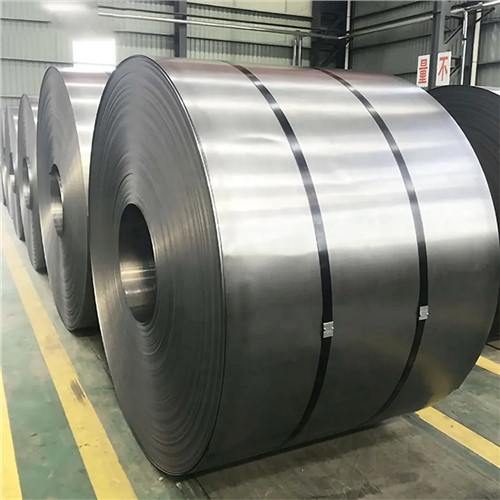
Export Packaging for Silicon Steel: Ensuring Integrity During Sea Freight
At Luoyang Xinzhaohe Aluminum Co., Ltd, with over two decades of specialized experience in the production and global supply of high-performance silicon steel, we recognize that proper export packaging is a critical component in maintaining material integrity from production line to end-user. Silicon steel, also known as electrical steel, is inherently sensitive to environmental exposure, particularly moisture and mechanical stress. Given that the majority of international shipments are transported via sea freight—often involving extended transit times, variable climatic conditions, and multiple handling stages—our packaging protocols are engineered to mitigate these risks comprehensively.
All silicon steel coils and sheets destined for export are systematically secured on robust wooden pallets constructed from kiln-dried, ISPM 15-compliant hardwood. These pallets are designed to support the substantial weight of steel coils while maintaining structural stability during loading, unloading, and ocean transport. The use of treated timber ensures compliance with international phytosanitary standards, preventing the introduction of organic contaminants and avoiding customs delays in destination markets. Each pallet is further reinforced with steel strapping and corner protectors to prevent deformation or shifting during transit.
Immediately following palletization, the silicon steel load is wrapped in multilayer moisture-proof film, specifically formulated to provide a high-barrier defense against humidity, salt-laden air, and condensation—common challenges in maritime environments. The wrapping process employs automated stretch hooding systems to ensure uniform coverage and a tight, seamless seal. This vapor barrier is critical in preventing surface oxidation and interlaminar corrosion, which can degrade core loss performance and compromise the electrical properties of the steel upon arrival.
To further enhance protection, desiccant packs are strategically placed within the sealed packaging to absorb residual moisture, and humidity indicator cards are often included for post-arrival verification of internal conditions. For shipments to regions with particularly high humidity or extended transit durations, optional vacuum sealing or the inclusion of vapor corrosion inhibitors (VCI) can be implemented upon client request.
Our packaging methodology is validated through rigorous internal testing, including simulated salt spray exposure, drop tests, and prolonged humidity chamber cycles, to ensure real-world reliability. These measures align with ISO 9001 quality management standards and reflect our commitment to delivering silicon steel products in optimal condition, regardless of destination.
By integrating engineered wooden pallets with advanced moisture-resistant encapsulation, Luoyang Xinzhaohe Aluminum Co., Ltd ensures that every shipment of electrical steel maintains dimensional stability, surface quality, and electromagnetic performance throughout the complexities of global logistics. This disciplined approach to export packaging reinforces our reputation as a trusted partner in the international silicon steel supply chain.
Sourcing from Luoyang Xinzhaohe

Partner with Luoyang Xinzhaohe: Your Strategic Source for Precision Electrical Steel
Luoyang Xinzhaohe Aluminum CO., Ltd leverages over two decades of specialized metallurgical expertise and robust industrial infrastructure to deliver superior silicon steel solutions for demanding electrical applications. Our vertically integrated manufacturing ecosystem, purpose-built for electrical steel production, ensures consistent material performance critical for transformer and motor core efficiency. We operate as a dedicated technical partner, not merely a supplier, committed to solving complex sourcing challenges through engineering collaboration and supply chain transparency.
Production Infrastructure and Metallurgical Control
Our facility houses advanced 20-high Sendzimir rolling mills and continuous annealing lines specifically engineered for electrical steel processing. This enables precise control over grain orientation, lamination thickness (ranging from 0.18mm to 0.65mm), and critical magnetic properties. We maintain strict process parameters for decarburization and secondary recrystallization annealing, directly influencing core loss (W15/50) and permeability metrics. In-house melting and hot rolling capabilities provide foundational control over chemical composition, ensuring silicon content accuracy within ±0.05% and minimizing detrimental impurities like sulfur and carbon to sub-30ppm levels. This granular process ownership translates to exceptional batch-to-batch uniformity.
Rigorous Quality Assurance and Technical Validation
Every production lot undergoes comprehensive metrological verification against IEC 60404-8-7 and ASTM A976 standards. Our accredited laboratory utilizes Epstein frame testers, single-sheet testers (SST), and laser scanning systems to validate core loss, magnetic induction (B800), and dimensional tolerances. Surface insulation coating weight and adhesion are quantified via gravimetric analysis and bend testing, ensuring optimal interlaminar resistance. We provide full material traceability from melt batch to finished coil, supported by certified test reports detailing all critical magnetic and mechanical properties. This data-driven approach mitigates technical risk for our partners’ core manufacturing processes.
Supply Chain Resilience and Engineering Support
With strategic raw material procurement partnerships and 50,000+ metric tons of annual production capacity, we guarantee reliable just-in-time delivery for global OEMs. Our supply chain integrates real-time logistics tracking and dedicated inventory management protocols to prevent disruption. Crucially, our metallurgical engineering team collaborates directly with client R&D departments on material specification refinement, failure analysis, and process optimization. We translate complex magnetic performance requirements into actionable production parameters, reducing time-to-market for next-generation electrical components.
Partnering with Luoyang Xinzhaohe means accessing a stable, technically proficient source where material science expertise drives every coil produced. We eliminate sourcing volatility through engineered consistency and proactive supply chain management. Initiate technical collaboration to receive our detailed electrical steel grade matrix and production capability dossier. Contact Cathy Zhang directly at cathy@transformerstrip.com to schedule a metallurgical review of your specific application requirements. Let us demonstrate how our precision manufacturing platform elevates your core component performance and supply security.
📉 Factory Direct Savings Calculator
Calculate your potential savings by importing electrical steel directly from China.