


Table of Contents
Market Insight: Ecca Wire
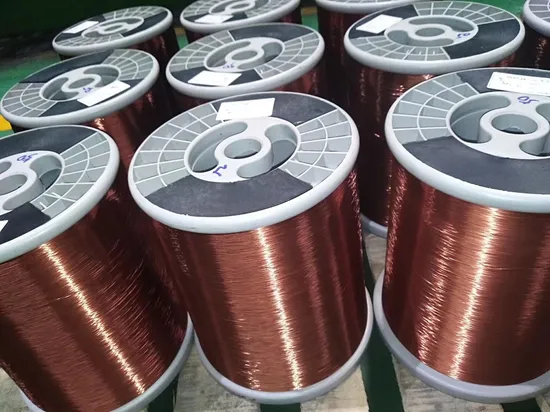
Market Analysis: Winding Wire – Industrial Demand for ECCA Wire in Transformers
The global demand for high-performance winding wire, particularly electrolytic copper cathode (ECCA) wire, continues to grow in alignment with the expansion of electrical infrastructure, renewable energy integration, and industrial automation. Within the transformer manufacturing sector, ECCA wire remains the preferred conductor material due to its superior electrical conductivity, mechanical formability, and long-term reliability. As core components in power distribution, transmission, and industrial equipment, transformers require winding materials that ensure minimal energy loss, high thermal stability, and resistance to mechanical stress during operation.
ECCA wire, produced from high-purity electrolytic copper (typically exceeding 99.99% Cu), offers optimal conductivity essential for efficient transformer performance. The International Annealed Copper Standard (IACS) benchmarks conductivity at 100% IACS for pure annealed copper, and premium-grade ECCA wire consistently achieves values within 100–101% IACS. This level of performance directly impacts transformer efficiency, particularly in distribution transformers where even marginal reductions in resistive (I²R) losses translate into significant energy savings over the equipment’s lifecycle. With regulatory frameworks such as the DOE 2016 efficiency standards in the U.S. and the EU’s Ecodesign Directive pushing for lower no-load and load losses, manufacturers are increasingly dependent on high-conductivity ECCA wire to meet compliance.
The structural integrity of the winding system is equally critical. ECCA wire must exhibit consistent tensile strength, elongation, and bendability to withstand the rigors of coil winding, varnishing, and thermal cycling during service. Inadequate mechanical properties can lead to insulation damage, inter-turn short circuits, or premature failure under fault conditions. Moreover, surface quality—free from oxides, pits, or drawing lubricant residues—is essential to ensure uniform enamel adhesion in magnet wire applications. Any surface defect can compromise dielectric strength and accelerate insulation degradation, particularly in high-voltage or high-temperature environments.
Quality control in ECCA wire production is therefore non-negotiable. At Luoyang Xinzhaohe Aluminum Co., Ltd, two decades of metallurgical expertise and process optimization ensure that ECCA wire meets stringent international standards, including IEC 60317, ASTM B3, and GB/T 3953. Our production process integrates continuous casting and rolling, precision drawing with multi-stage annealing, and in-line monitoring of diameter tolerance (±0.01 mm), ovality, and resistivity. Each batch undergoes rigorous testing for electrical, mechanical, and surface properties before shipment.
The transformer industry’s shift toward compact, high-efficiency designs further amplifies the need for consistent, high-quality ECCA wire. As manufacturers strive to reduce size and weight while maintaining or improving performance, the margin for material variability diminishes. Inferior copper wire introduces inefficiencies that cascade through the entire system, increasing lifecycle costs and reducing reliability.
In summary, ECCA wire is not a commoditized input but a critical enabler of transformer performance and durability. For OEMs and tier suppliers, sourcing from a technically capable and quality-focused producer is essential to meet evolving market demands and maintain competitive advantage in the global power sector.
Technical Specs: Ecca Wire
Technical Specifications for ECCA Winding Wire
Luoyang Xinzhaohe Aluminum Co. Ltd provides precision-engineered Electrolytic Copper Clad Aluminum (ECCA) winding wire for demanding electromagnetic applications. With 20+ years of metallurgical expertise, our ECCA wire integrates aluminum’s lightweight conductivity with copper’s surface integrity, ensuring optimal performance in motors, transformers, and inductors. Critical specifications must align with IEC 60317 and ASTM B566 standards to guarantee reliability under operational stress. Below, we detail core parameters essential for technical validation.
Insulation breakdown voltage defines the dielectric strength of the enamel coating. Minimum industry requirements typically start at 3 kV RMS for standard grades, but Xinzhaohe implements stringent controls to consistently exceed 4.5 kV RMS at 1 mm thickness. This margin mitigates risks of short circuits in high-voltage environments. Testing follows IEC 60851-5 protocols, with wires submerged in saline solution and subjected to incremental AC voltage until failure. Enhanced breakdown performance directly correlates with reduced field failures in compact motor designs where insulation integrity is non-negotiable.
Elongation measures ductility during winding processes. ECCA wire must withstand significant deformation without fracturing, particularly at tight bend radii. Per IEC 60228, minimum elongation is 25% for 1.0 mm diameter conductors. Xinzhaohe’s proprietary annealing process achieves 30–35% elongation, verified via tensile testing at 25 mm/min crosshead speed. This elevated ductility prevents micro-cracking during high-speed automatic winding, ensuring consistent coil geometry and eliminating conductor breakage in mass production.
Thermal class determines maximum continuous operating temperature, directly linked to insulation polymer chemistry. Our ECCA wire spans Classes 155 (155°C) to 220 (220°C), with common applications utilizing Classes 180 (180°C) and 200 (200°C). Each class corresponds to specific thermal indices validated per IEC 60216:
| Parameter | Standard Requirement | Xinzhaohe Typical | Test Method |
|---|---|---|---|
| Breakdown Voltage | ≥3.0 kV RMS | 4.5–6.0 kV RMS | IEC 60851-5 |
| Elongation (1.0 mm) | ≥25% | 30–35% | IEC 60228 |
| Thermal Class 155 | 155°C (Index 155) | 160°C (Index 162) | IEC 60216 |
| Thermal Class 180 | 180°C (Index 180) | 185°C (Index 188) | IEC 60216 |
| Thermal Class 200 | 200°C (Index 200) | 205°C (Index 208) | IEC 60216 |
Thermal endurance data is derived from 20,000-hour aging tests, where insulation retains ≥50% of initial elongation at rated temperature. Higher classes utilize polyamide-imide or silicone-modified polyesterimide enamels, offering superior thermal shock resistance versus standard polyesters. For aerospace or EV traction motors, Class 200+ ensures longevity under 150°C+ ambient conditions with transient spikes.
All parameters are interdependent; for instance, excessive elongation may compromise thermal class if annealing alters polymer adhesion. Xinzhaohe’s integrated production—spanning aluminum rod casting to enamel curing—enables holistic optimization. Buyers must specify thermal class and diameter tolerance (±0.01 mm per IEC 60173) during sourcing to avoid field incompatibility. Rigorous lot testing with certified reports is standard for every shipment.
Factory Tour: Manufacturing
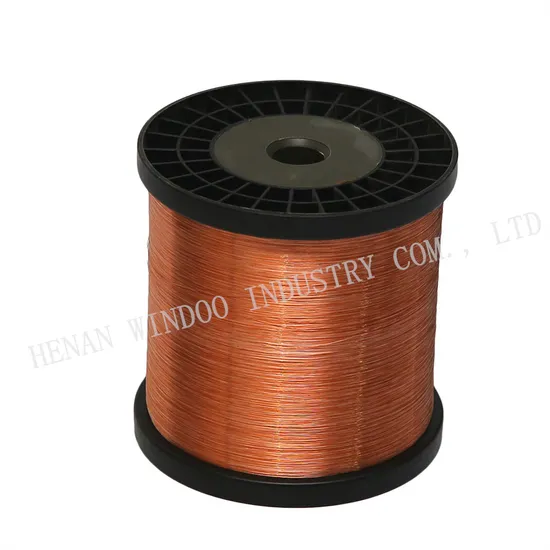
Manufacturing Process of ECCA Winding Wire at Luoyang Xinzhaohe Aluminum Co., Ltd
The production of electrolytic copper-clad aluminum (ECCA) winding wire at Luoyang Xinzhaohe Aluminum Co., Ltd follows a tightly controlled, multi-stage manufacturing sequence designed to ensure consistent electrical performance, mechanical integrity, and long-term reliability in demanding applications. With over two decades of specialized expertise in aluminum-based conductive materials, our process integrates precision engineering with rigorous quality control at every phase.
The manufacturing cycle begins with rod drawing, where high-purity aluminum rods (99.99% Al) are first electroplated with a uniform layer of electrolytic copper, forming the ECCA composite structure. These clad rods then undergo cold drawing through a series of precision tungsten carbide dies to achieve the target wire diameter. The reduction process is carefully calibrated to maintain metallurgical bonding between the copper cladding and aluminum core while achieving the desired mechanical strength and dimensional accuracy. Tension control and lubrication systems are continuously monitored to prevent surface defects and ensure roundness and consistency.
Following drawing, the wire enters a continuous annealing stage. This step is critical for restoring ductility lost during cold working and ensuring the wire can withstand subsequent winding and forming operations without cracking. The annealing furnace operates under a controlled nitrogen atmosphere to prevent oxidation, with precise temperature profiling across multiple zones. Typical annealing temperatures range from 380°C to 420°C, adjusted according to wire gauge and production speed. Real-time pyrometry and atmosphere monitoring ensure thermal uniformity and metallurgical stability.
The annealed wire then proceeds to the enameling line, where it is coated with one or more layers of polymer insulation. Common insulation systems include polyurethane (PU), polyester (PE), or polyamide-imide (PAI), applied via precision die coating. Each pass through the enameling oven—typically operating between 350°C and 500°C—cures the resin layer to form a durable, electrically robust film. Multiple coats may be applied to achieve higher voltage ratings, with intermediate curing and diameter verification after each layer.
Inline testing is integrated throughout the final stages of production. The wire undergoes 100% spark testing at 3 kV to detect pinholes or insulation defects. Additional real-time inspections include diameter measurement via laser micrometry, wrap testing to assess adhesion and flexibility, and resistance monitoring to verify conductivity uniformity. All data is logged for traceability.
Final quality control includes batch sampling for thermal class verification, thermal shock resistance, and solderability testing per IEC 60317 standards. Only coils passing all criteria are approved for packaging and shipment, ensuring compliance with global industrial specifications.
Packaging & Logistics

Export Packaging Specifications for ECCA Wire: Ensuring Integrity During Ocean Transit
Luoyang Xinzhaohe Aluminum Co., Ltd implements rigorously engineered export packaging protocols specifically designed to safeguard the critical electrical and mechanical properties of Electrolytic Capacitor Cathode Aluminum (ECCA) wire during extended sea freight operations. With over two decades of metallurgical and supply chain expertise, we recognize that inadequate packaging directly compromises wire conductivity, surface oxide integrity, and dimensional stability, leading to field failures. Our system prioritizes barrier protection against pervasive maritime environmental hazards.
All ECCA wire shipments depart exclusively on robust, ISPM 15 compliant heat-treated wooden pallets. These pallets feature a minimum base dimension of 1200mm x 1000mm, constructed from kiln-dried hardwood with a dynamic load capacity exceeding 2500 kg. Critical structural elements include double stringers, chamfered edges to prevent film snagging, and precisely calculated load distribution to eliminate coil deformation under stack pressure. Pallets undergo mandatory moisture content verification (≤ 20% MC) prior to loading, mitigating internal condensation risks inherent in tropical sea routes. This foundational stability prevents physical damage during vessel stowage, port handling, and multi-modal transfers.
The primary moisture barrier comprises a multi-layer wrapping system. Coils are first sealed within a 120-micron thick, metallized polyester moisture-proof film conforming to ASTM E171 standards for oxygen and water vapor transmission rates (WVTR < 0.5 g/m²/day). This film is hermetically heat-sealed using calibrated impulse sealers, creating a continuous barrier. Crucially, we integrate a secondary desiccant layer (minimum 500g per tonne of wire) within the sealed envelope, actively maintaining internal relative humidity below 40% RH throughout voyages exceeding 60 days. For ultra-sensitive high-purity grades (≥ 99.99%), an optional vacuum-sealed tertiary barrier using aluminum-laminated co-extruded film (WVTR < 0.1 g/m²/day) is available.
Sea freight exposes cargo to salt-laden atmospheres, temperature cycling, and prolonged humidity. Our packaging mitigates these through three validated mechanisms. First, the metallized film reflects radiant heat, reducing thermal shock during equatorial crossings. Second, the sealed microclimate prevents chloride ion penetration – a primary cause of pitting corrosion on aluminum conductors that degrades capacitance performance. Third, edge protection using polyethylene corner guards and top/bottom corrugated board sheets (≥ 200 kPa CMT) absorbs impacts, preventing film breaches during rough handling. All packaged units undergo simulated voyage testing per ASTM D4169, including 72-hour salt spray exposure and 40-cycle humidity cycling, ensuring real-world resilience.
This integrated approach directly protects the wire’s functional surface morphology. Moisture ingress causes hygroscopic degradation of the native oxide layer, increasing equivalent series resistance (ESR) in final capacitor applications. Physical abrasion from inadequate palletization introduces surface defects acting as nucleation sites for corrosion. Luoyang Xinzhaohe’s packaging specifications, validated across 500+ global shipments, ensure ECCA wire arrives with original metallurgical properties intact, eliminating costly rework and guaranteeing downstream manufacturing yield. We provide full traceability of packaging materials and environmental monitoring data upon request.
Sourcing from Luoyang Xinzhaohe
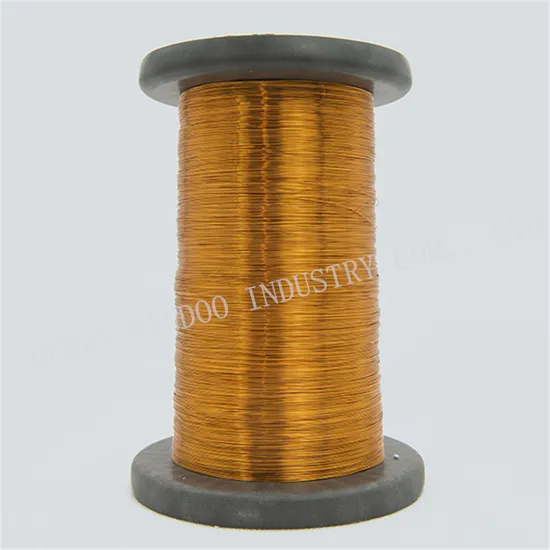
Partner with Luoyang Xinzhaohe Aluminum Co., Ltd for High-Performance ECCA Winding Wire
With over two decades of specialized manufacturing experience, Luoyang Xinzhaohe Aluminum Co., Ltd stands as a leading industrial supplier of high-purity, high-conductivity ECCA (Electrolytic Cold-Drawn Copper-Clad Aluminum) winding wire. Our facility integrates advanced metallurgical processing, precision drawing technology, and rigorous quality assurance systems to deliver wire products that meet the stringent demands of transformer, inductor, and motor manufacturers worldwide.
Our production infrastructure is engineered for consistency and scalability. We operate fully automated drawing lines with closed-loop diameter control, ensuring dimensional tolerances within ±0.005 mm across coil lengths. The ECCA wire is produced using a proprietary cladding process that bonds high-conductivity copper (≥99.99% Cu) to a high-purity aluminum core (≥99.98% Al), achieving a uniform metallurgical interface with no delamination under repeated bending or thermal cycling. This results in a lightweight conductor with superior ampacity-to-weight ratio, ideal for energy-efficient electrical designs.
Quality is systematically embedded at every stage. Raw materials are verified through optical emission spectroscopy (OES), while in-process monitoring includes real-time resistivity measurement (per ASTM B33), tensile strength testing, and elongation validation. Each production lot undergoes adhesion testing per IEC 60317-98 standards, ensuring compliance with international specifications for enameled winding wire substrates. Our ISO 9001-certified quality management system supports traceability from ingot to finished coil, with full material test reports available upon shipment.
We specialize in custom configurations to meet OEM and tier-supplier requirements. Standard offerings include diameters from 0.10 mm to 5.00 mm, with copper cladding ratios of 15%, 20%, and 25% by volume. Custom spooling options—such as wooden reels, plastic bobbins, or continuous lengths on industrial payout stands—are available to streamline integration into automated winding operations. Minimum order quantities are flexible, supporting both high-volume procurement and prototyping needs.
Our technical team provides application engineering support, assisting with conductivity optimization, skin effect analysis, and compatibility with varnish impregnation or vacuum pressure encapsulation processes. This engineering-first approach ensures that our ECCA wire not only meets specifications but enhances the performance and reliability of your end components.
As global demand for lightweight, cost-effective conductors grows, Luoyang Xinzhaohe remains committed to innovation, precision, and long-term partnership. We invite electrical component manufacturers, procurement managers, and design engineers to evaluate our ECCA winding wire for upcoming projects.
Contact us today to request samples, technical datasheets, or a customized quotation.
Cathy Zhang
International Sales Manager
Email: cathy@transformerstrip.com
Luoyang Xinzhaohe Aluminum Co., Ltd
Established 2003 | ISO 9001 Certified | OEM & ODM Supported
📉 Factory Direct Savings Calculator
Calculate your potential savings by importing ecca wire directly from China.