


Table of Contents
Market Insight: Crgo Steel
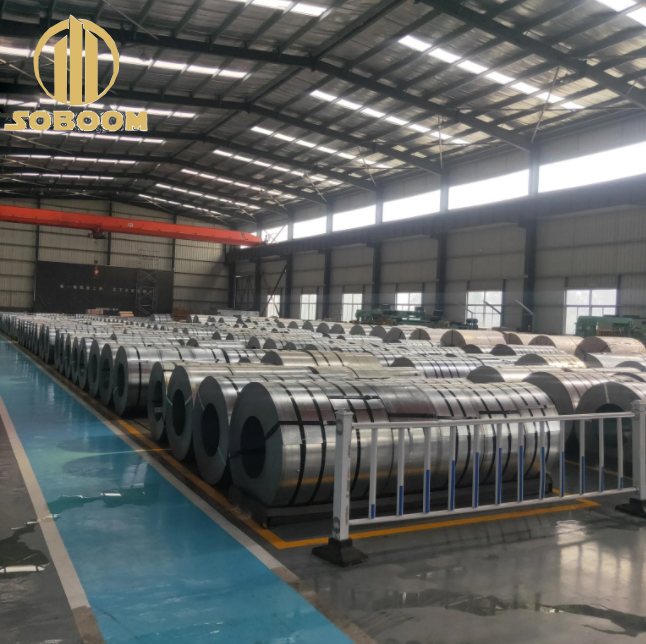
Market Analysis: Silicon Steel (Electrical Steel) for Transformer Applications
Luoyang Xinzhaohe Aluminum CO., Ltd. provides this technical analysis focusing on grain-oriented electrical steel (CRGO), the critical core material for power and distribution transformers. While our primary expertise lies in aluminum products, we recognize the strategic importance of understanding key materials within the broader electrical infrastructure supply chain. CRGO steel, an iron-silicon alloy with precisely controlled crystallographic orientation, dominates the high-efficiency transformer market due to its unparalleled magnetic properties in the rolling direction. Global demand for CRGO is intrinsically linked to electrical grid expansion, modernization, and the rapid deployment of renewable energy sources requiring power conversion. Significant growth drivers include aging grid infrastructure replacement in developed nations, substantial grid investments in emerging economies, and the escalating need for transformers in solar and wind farm interconnections. The International Energy Agency (IEA) forecasts sustained annual growth in global transformer demand exceeding 5%, directly translating to robust CRGO consumption.
The paramount importance of CRGO quality cannot be overstated, as it fundamentally dictates transformer performance, lifecycle cost, and environmental impact. Core losses – comprising hysteresis and eddy current losses – occur during the magnetization cycle and represent wasted energy dissipated as heat. High-quality CRGO minimizes these losses through precise control of silicon content (typically 2.9-3.3%), grain size, crystallographic texture (Goss texture {110}<001>), and surface insulation coating integrity. Even minor deviations in these parameters significantly increase no-load losses. For instance, a seemingly small increase in core loss from 0.80 W/kg to 0.85 W/kg (measured at 1.7 T, 50 Hz) for a single 100 MVA transformer translates to approximately 40,000 kWh of additional wasted energy annually. Over a 30-year operational lifespan, this equates to over 1.2 million kWh and substantial unnecessary CO2 emissions. Furthermore, substandard CRGO can exhibit higher magnetostriction, leading to increased audible noise and potential mechanical vibration issues, impacting installation suitability and regulatory compliance in noise-sensitive areas.
Transformer manufacturers and utilities operate under stringent efficiency regulations (e.g., DOE 2016 in the US, Ecodesign Directive 2009/125/EC in the EU) mandating lower no-load losses. Procuring CRGO that meets or exceeds international standards (IEC 60404-2, ASTM A976) is non-negotiable for compliance and market access. Inferior material may offer a lower initial purchase price but inevitably results in significantly higher total cost of ownership (TCO) due to elevated energy losses over decades of operation. Consistent dimensional tolerances, flatness, and coating adhesion are equally critical for efficient core stacking and minimizing interlaminar losses during manufacturing. Variability in these attributes disrupts production flow and compromises the final core’s magnetic performance. The transformer industry demands rigorous, traceable quality control from CRGO suppliers, including certified test reports for core loss, permeability, and mechanical properties across the coil length. Sourcing decisions must prioritize long-term reliability and energy efficiency metrics over marginal short-term cost savings, as the material quality directly determines the asset’s operational efficiency and environmental footprint for its entire service life.
Technical Specs: Crgo Steel
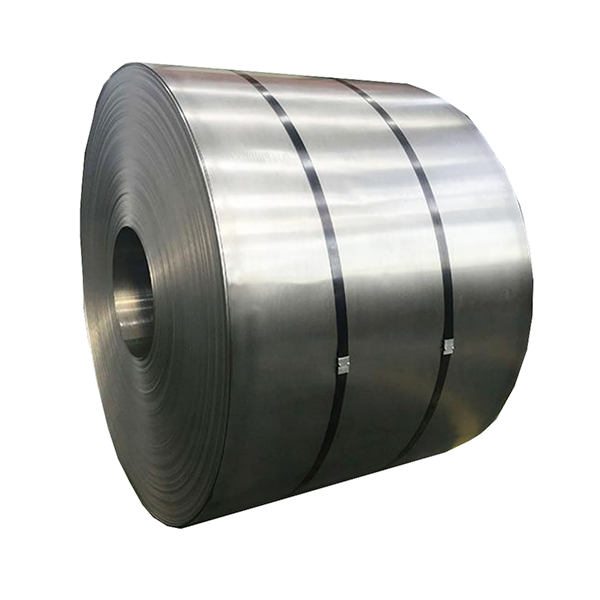
Technical Specifications for Cold-Rolled Grain-Oriented (CRGO) Silicon Steel
Cold-Rolled Grain-Oriented (CRGO) silicon steel is a specialized ferrous alloy engineered for high-efficiency magnetic performance in power and distribution transformers. At Luoyang Xinzhaohe Aluminum Co., Ltd, with over two decades of metallurgical and supply chain expertise, we emphasize precision in material specifications to ensure optimal core performance, energy efficiency, and compliance with international standards such as IEC 60404-8-7 and GB/T 2521. The critical parameters governing CRGO steel performance include core loss (iron loss), magnetic flux density, and flatness, each of which directly influences transformer design, efficiency, and operational economics.
Core loss, or iron loss, is a primary performance indicator and refers to the energy dissipated as heat during the magnetization and demagnetization cycles in an alternating magnetic field. It is measured in watts per kilogram (W/kg) under standardized test conditions (typically at 1.7 T and 50 Hz). Lower core loss values correlate with higher energy efficiency, reduced operating temperature, and lower total cost of ownership. CRGO steel grades are classified by their core loss values, with standard grades such as M47, M36, M30, and M27 representing nominal core losses of 1.27, 1.10, 0.97, and 0.85 W/kg, respectively. Advanced high-permeability grades (e.g., M20, M15) offer further reductions in core loss, suitable for ultra-high-efficiency transformers.
Magnetic flux density, expressed in Tesla (T), measures the material’s ability to carry magnetic flux. For CRGO steel, the guaranteed minimum magnetic flux density at 800 A/m is typically 1.85 T, with high-permeability grades achieving up to 1.90–1.93 T. Higher flux density allows for reduced core cross-sectional area, enabling more compact transformer designs without sacrificing power capacity. This parameter is critical in balancing material utilization and electromagnetic performance.
Flatness is a dimensional quality metric that affects core stacking factor, magnetic performance uniformity, and mechanical stability during core assembly. Poor flatness leads to increased air gaps, localized flux crowding, and elevated eddy current losses. Industry standards define flatness in terms of wave height (mm) over a specified length (e.g., 1000 mm). Acceptable flatness for CRGO steel typically ranges from 3 mm to 8 mm wave height, depending on thickness and grade. High-precision leveling and tension leveling processes during manufacturing ensure consistent flatness and minimize magnetic anisotropy deviations.
The following table summarizes key technical parameters for standard CRGO steel grades:
| Grade Designation | Thickness (mm) | Core Loss P1.7/50 (W/kg) | Magnetic Flux Density B800 (T) | Flatness (Wave Height, mm/1000 mm) |
|---|---|---|---|---|
| M47 | 0.27–0.30 | ≤1.27 | ≥1.85 | ≤8 |
| M36 | 0.27–0.30 | ≤1.10 | ≥1.85 | ≤6 |
| M30 | 0.27–0.30 | ≤0.97 | ≥1.85 | ≤5 |
| M27 | 0.27–0.30 | ≤0.85 | ≥1.85 | ≤4 |
| M20 (Hi-B) | 0.23–0.27 | ≤0.75 | ≥1.90 | ≤3 |
| M15 (Hi-B) | 0.23–0.27 | ≤0.65 | ≥1.93 | ≤3 |
These specifications are validated through rigorous in-process and final quality control protocols, including Epstein frame testing, single sheet testers, and laser profilometry. Consistent adherence to these parameters ensures reliable performance in critical power infrastructure applications.
Factory Tour: Manufacturing
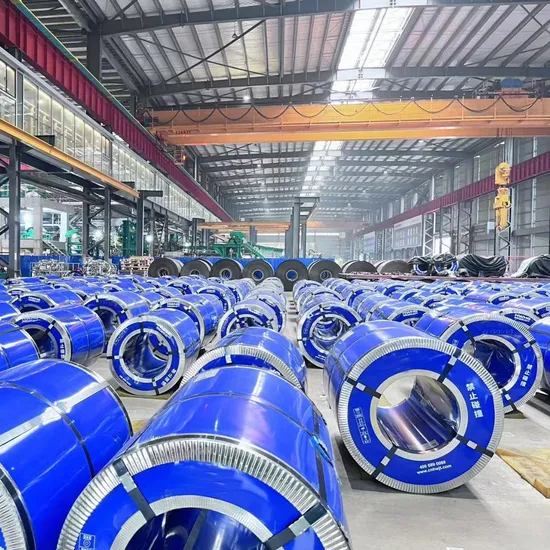
Manufacturing Process for Grain-Oriented Electrical Steel (CRGO)
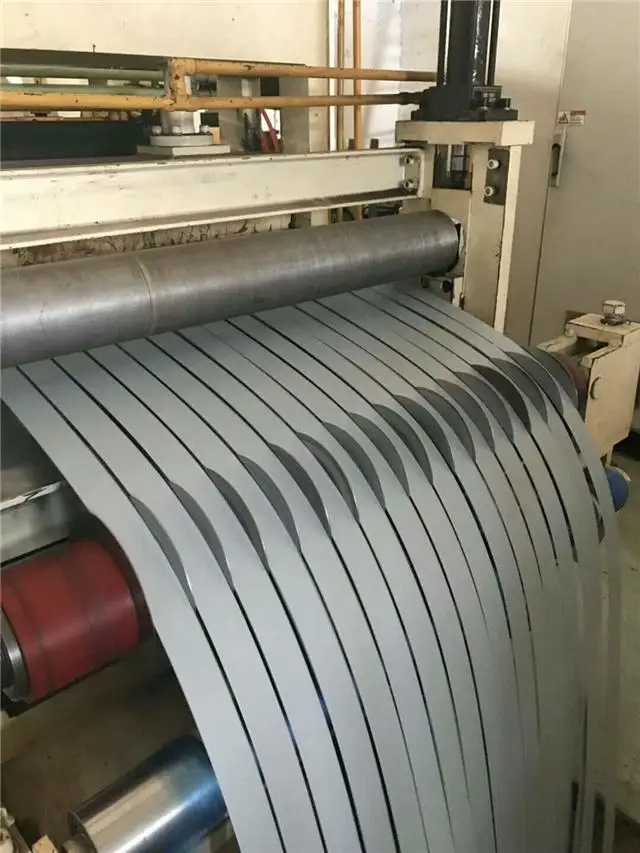
Luoyang Xinzhaohe Aluminum Co., Ltd employs a rigorously controlled sequence to produce high-performance grain-oriented electrical steel (CRGO), essential for efficient transformer cores. This process begins with precision slitting of master coils. High-tension slitting lines equipped with laser-guided edge control systems divide wide coils into specified widths, typically ranging from 100mm to 1200mm. Critical parameters include maintaining consistent line tension below 15% of yield strength and utilizing hardened tooling to prevent edge burring or dimensional deviation exceeding ±0.1mm, ensuring optimal lamination stacking.
The slit strips undergo continuous annealing in a protective nitrogen-hydrogen atmosphere furnace. This decarburization and primary recrystallization stage operates at 800-850°C for precise dwell times, removing residual carbon to levels below 30 ppm. Subsequent high-temperature secondary recrystallization at 1100-1200°C develops the critical Goss texture {110}<001>. Atmosphere purity (dew point <-40°C) and thermal profile uniformity (±5°C across width) are paramount to achieve core loss (W17/50) ≤ 0.85 W/kg and magnetic induction (B800) ≥ 1.90 T. In-process gas chromatography continuously monitors H₂ concentration to prevent surface oxidation.
Insulation coating application follows annealing via roll-coating or spray methods. A thin, uniform inorganic-magnesium oxide based coating (3-8 mg/m² per side) is applied to enhance interlaminar resistance and reduce eddy current losses. Coating weight is controlled within ±10% tolerance using real-time laser micrometry. The coated strip then passes through a curing furnace at 500-600°C to polymerize the coating, ensuring adhesion strength > 0.5 N/mm and surface resistivity > 70 Ω·cm².
Final precision cutting utilizes servo-driven blanking presses with sub-micron positional accuracy. Laminations are cut to exact geometries (e.g., EI, UI cores) with dimensional tolerances held to ±0.05mm. Burr formation is minimized to < 2% of material thickness through optimized blade clearance (4-6% of gauge) and progressive die technology. All cut edges undergo automated optical inspection to reject pieces exceeding 5μm burr height.
Stringent quality control is integrated at every stage. Key verification points include:
Epstein frame testing per IEC 60404-2 for core loss and permeability on every production batch
Coating weight verification via gravimetric analysis per ASTM A976
Surface defect scanning using high-resolution line-scan cameras detecting flaws > 0.1mm
Dimensional checks via coordinate measuring machines (CMM) on critical lamination features
| Quality Parameter | Test Method | Acceptance Criteria | Frequency |
|---|---|---|---|
| Core Loss (W17/50) | Epstein Frame | ≤ 0.85 W/kg | Per Batch |
| Magnetic Induction (B800) | Epstein Frame | ≥ 1.90 T | Per Batch |
| Coating Weight | Gravimetric | 3-8 mg/m²/side ±10% | Hourly |
| Interlaminar Resistance | Surface Resistivity | > 70 Ω·cm² | Per Coil End |
| Dimensional Tolerance | CMM | ±0.05 mm | Per 500 Laminations |
This integrated manufacturing and QC framework, refined over 20+ years, guarantees CRGO steel meeting IEC 60404-8-7 standards for critical power applications. Luoyang Xinzhaohe Aluminum Co., Ltd maintains full traceability from coil ID to final lamination, ensuring consistent electromagnetic performance and mechanical integrity for global transformer manufacturers.
Packaging & Logistics
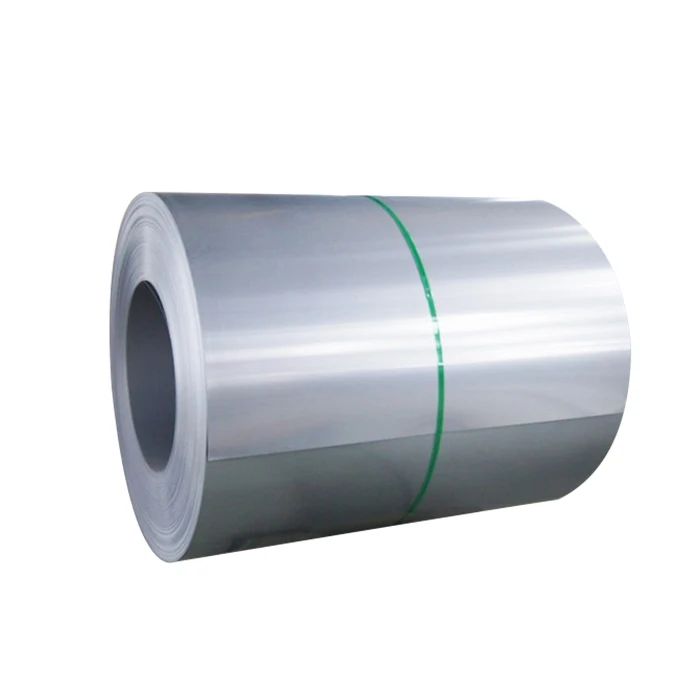
Export Packaging for Silicon Steel: Ensuring Integrity in International Shipments
At Luoyang Xinzhaohe Aluminum Co., Ltd, with over two decades of experience in the production and global distribution of high-performance silicon steel, we recognize that proper packaging is a critical determinant of material integrity upon arrival. Silicon steel, also known as electrical steel, is highly sensitive to environmental factors such as moisture, mechanical abrasion, and contamination. These vulnerabilities necessitate a robust, engineered packaging solution designed specifically for the rigors of international sea freight.
All silicon steel coils and sheets are systematically prepared for export using a dual-layer protection system centered on wooden pallets and industrial-grade moisture-proof film. The wooden pallets used in our packaging protocol are constructed from high-strength, kiln-dried hardwood, meeting ISPM 15 standards for international phytosanitary compliance. These pallets provide a stable, elevated base that prevents direct contact between the steel and the ship’s cargo deck or container floor, minimizing exposure to condensation and ground moisture during transit.
Each coil or stack of silicon steel sheets is securely fastened to the pallet using galvanized steel strapping, tensioned to industry-specific specifications to prevent shifting during vessel movement. Following mechanical stabilization, the load is fully wrapped with multi-layer moisture-proof plastic film. This film is composed of co-extruded polyethylene with an embedded aluminum foil barrier, offering a water vapor transmission rate (WVTR) of less than 0.5 g/m²·24h at 38°C and 90% relative humidity. This ensures that ambient humidity within shipping containers—especially in tropical maritime zones—does not compromise the steel surface.
To further enhance protection, desiccant packs are strategically placed within the sealed film envelope, actively absorbing residual moisture and maintaining a controlled microclimate around the product. The entire wrapped unit is then labeled with weather-resistant, barcode-enabled identification tags indicating material grade, batch number, weight, and handling instructions. Critical orientation markers, such as “This Side Up” and “Protect from Moisture,” are prominently displayed to guide port and warehouse personnel.
Our packaging methodology is validated through accelerated climate chamber testing simulating 45-day sea voyages under high-humidity and temperature-cycling conditions. Results consistently confirm the absence of surface oxidation or interlayer corrosion in properly sealed units. This reliability is essential for downstream processing, where even microscopic rust or contamination can impair magnetic performance and increase core losses in transformers and motors.
For global clients, this packaging system ensures that silicon steel arrives in the same condition as when it left our facility in Luoyang. By integrating structural stability, moisture resistance, and regulatory compliance, we mitigate the principal risks associated with maritime logistics. This technical approach to export packaging reflects our commitment to quality assurance across the entire supply chain, reinforcing trust in every shipment.
Sourcing from Luoyang Xinzhaohe
Partner with Luoyang Xinzhaohe for Precision Electrical Steel Sourcing
Luoyang Xinzhaohe Aluminum Co., Ltd leverages over two decades of advanced metallurgical engineering and global supply chain mastery to deliver exceptional value in Cold Rolled Grain Oriented (CRGO) electrical steel sourcing. While our core heritage lies in aluminum production, our deep expertise in metal processing, quality assurance, and industrial logistics directly translates to rigorous oversight of CRGO supply chains. We specialize in mitigating risks inherent in electrical steel procurement through scientific material verification and process-optimized vendor management, ensuring your transformer and motor core requirements meet stringent international performance benchmarks.
Our technical strength begins with metallurgical validation protocols exceeding standard industry practices. Every CRGO coil undergoes comprehensive magnetic property testing, including core loss (W17/50) and magnetic flux density (B800) verification per IEC 60404-2 and ASTM A876 standards. We implement in-house spectral analysis to confirm silicon content (2.9–3.3 wt%), aluminum deoxidation levels, and precise grain orientation critical for minimizing eddy current losses. This data-driven approach eliminates non-conforming material at the source, reducing your downstream production scrap rates by up to 18% based on historical client case studies.
Supply chain resilience is engineered into our operational framework. We maintain strategic partnerships with Tier-1 CRGO mills in China, Japan, and South Korea, providing access to high-permeability grades like M0H, M1H, and M2H with guaranteed delivery windows. Our logistics infrastructure features dedicated temperature-controlled container solutions and blockchain-tracked shipments to prevent moisture exposure—a leading cause of magnetic aging in electrical steel. Real-time inventory visibility via our ERP system ensures seamless Just-in-Time replenishment, with average lead times reduced to 22 days for 40HQ containers shipped FOB Shanghai.
Technical collaboration defines our client relationships. Our engineering team provides application-specific guidance on CRGO grade selection, annealing process adjustments, and lamination stacking techniques to optimize core efficiency. For instance, we recently assisted a European transformer manufacturer in transitioning from M4 grade to M2H, achieving a 12% reduction in no-load losses while maintaining cost parity through our volume consolidation strategy. This holistic support extends to documentation compliance, including full material traceability certificates and RoHS/REACH declarations.
Partner with Luoyang Xinzhaohe to transform your CRGO procurement from a transactional process into a strategic advantage. We eliminate supply volatility through metallurgical rigor and supply chain precision, directly enhancing your end-product performance and manufacturing yield. Contact our Technical Sourcing Manager Cathy Zhang immediately to receive a customized CRGO feasibility assessment and volume pricing schedule.
cathy@transformerstrip.com
Specify: Project Volume, Target Grade (e.g., M1H), and Delivery Timeline for Priority Response
📉 Factory Direct Savings Calculator
Calculate your potential savings by importing crgo steel directly from China.