

Table of Contents
Market Insight: Copper Wire China
Market Analysis: Winding Wire in China – Industrial Demand in Transformer Applications
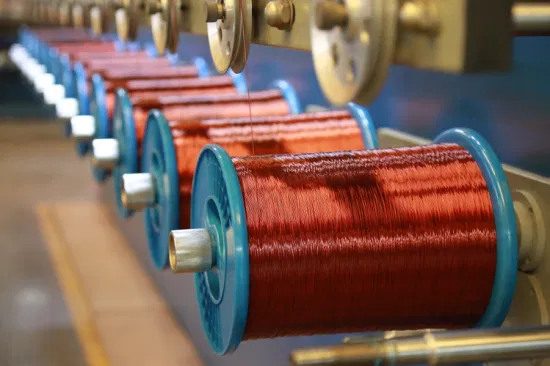
The demand for copper winding wire in China’s transformer sector remains a cornerstone of the nation’s power infrastructure development and industrial modernization. As one of the world’s largest producers and consumers of electrical equipment, China relies heavily on high-performance copper wire for the manufacturing of power, distribution, and specialty transformers. These components are critical in energy transmission and distribution networks, renewable energy integration, rail transit systems, and industrial motor applications. The scalability of China’s grid expansion, coupled with aggressive investments in ultra-high-voltage (UHV) transmission projects and smart grid technologies, continues to drive sustained demand for precision-engineered copper winding wire.
Copper is the preferred conductor material in transformer windings due to its superior electrical conductivity, thermal stability, and mechanical ductility. In high-efficiency transformers, even marginal improvements in wire performance can yield significant reductions in energy losses over the equipment’s operational life. This makes material quality a critical factor in transformer design and performance. Chinese manufacturers, including state-owned enterprises and private-sector OEMs, increasingly prioritize copper wire that meets international standards such as IEC 60317, GB/T 3953, and ASTM B3, ensuring consistency in electrical resistance, tensile strength, elongation, and surface finish.
The complexity of modern transformer designs—particularly in dry-type transformers, instrument transformers, and high-frequency units—requires copper winding wire with precise dimensional tolerances and excellent insulation compatibility. Poor-quality wire, characterized by inconsistent diameter, surface oxidation, or impurity content, can lead to hotspots, partial discharges, and premature insulation failure. These defects not only compromise transformer reliability but also increase lifecycle maintenance costs and risk unplanned outages in critical power systems.
Moreover, as China advances its carbon neutrality goals under the “dual carbon” strategy (carbon peak by 2030, carbon neutrality by 2060), energy-efficient transformer deployment is gaining regulatory and economic momentum. New efficiency standards, such as the GB 20052-2020, mandate lower no-load and load losses, directly influencing material selection. High-purity electrolytic tough pitch (ETP) copper with oxygen content controlled to 10–50 ppm and resistivity below 0.017241 Ω·mm²/m at 20°C is now standard for premium-grade winding wire. Additionally, fully annealed tempers and precise enamel coating adhesion are essential for withstanding winding stresses and thermal cycling.
Luoyang Xinzhaohe Aluminum Co., Ltd., with over two decades of metallurgical and supply chain expertise, understands the technical rigor required in copper wire sourcing for transformer applications. While specializing in aluminum products, the company maintains a strategic oversight of copper wire market dynamics to support integrated material solutions for hybrid systems and ensure clients access to verified, high-integrity supply chains. Quality assurance protocols, including batch traceability, third-party certification, and in-process electrical testing, are non-negotiable in meeting the performance demands of China’s evolving power infrastructure.
In summary, the industrial demand for copper winding wire in China’s transformer sector is both voluminous and technically exacting. Quality directly influences system efficiency, reliability, and compliance with national energy policies, making certified, high-conductivity copper wire a strategic component in the nation’s electrification roadmap.
Technical Specs: Copper Wire China
Technical Specifications for Copper Winding Wire Sourcing in China
Luoyang Xinzhaohe Aluminum CO., Ltd leverages two decades of metallurgical and supply chain expertise to guide global buyers in sourcing high-reliability copper winding wire from Chinese manufacturers. Critical electrical and mechanical parameters must be rigorously defined to ensure performance in demanding applications such as motors, transformers, and inductors. This section details non-negotiable technical specifications, emphasizing insulation integrity, mechanical resilience, and thermal stability.
Insulation breakdown voltage is a primary indicator of dielectric integrity under operational stress. Copper wire must consistently withstand AC voltage tests per IEC 60317-0-2 without puncture or flashover. Minimum breakdown thresholds vary by wire gauge and insulation class but typically range from 3 kV to 12 kV for standard magnet wire. Suppliers must provide batch-specific test reports using calibrated equipment, with measurements conducted at room temperature and after thermal aging cycles. Failure to meet these thresholds risks catastrophic short circuits in end-use equipment.
Elongation percentage directly correlates with wire ductility and resistance to fracture during winding processes. For electrolytic-tough-pitch (ETP) copper per GB/T 5584.1, minimum elongation must be 35% for diameters ≤ 0.5 mm and 40% for larger gauges, tested per GB/T 4909.3. Lower elongation values indicate excessive hardness from improper annealing or impurities, leading to breakage during high-speed coil winding. We mandate third-party tensile testing validation for all production lots, as inconsistent elongation disrupts manufacturing throughput and increases scrap rates.
Thermal Class defines the maximum continuous operating temperature the insulation system can endure without significant degradation. Chinese manufacturers commonly produce wire across Class B (130°C) to Class H (180°C), with specialized grades reaching 220°C (Class C). Critical considerations include thermal endurance life per IEC 60172 and resistance to thermal shock. Higher classes utilize advanced polymer enamels (e.g., polyamide-imide for 200°C+), but cost and process compatibility must be evaluated. Thermal index validation via Arrhenius plotting is essential—suppliers must submit aging data showing 20,000+ hours of operational life at rated temperature.
The following table summarizes key parameter requirements for copper winding wire sourced from certified Chinese mills:
| Parameter | Standard Range | Test Method | Industrial Significance |
|---|---|---|---|
| Insulation Breakdown | 3.0–12.0 kV AC (wire diameter dependent) | IEC 60317-0-2 | Prevents dielectric failure under voltage transients |
| Elongation | ≥35% (≤0.5 mm), ≥40% (>0.5 mm) | GB/T 4909.3 | Ensures winding process reliability |
| Thermal Class | 130°C (B) to 220°C (C) | IEC 60172 | Determines motor lifespan and overload capacity |
| Resistivity (20°C) | ≤0.017241 Ω·mm²/m | GB/T 3048.2 | Minimizes I²R losses and heat generation |
Procurement teams must verify compliance through mill test certificates, independent lab audits, and first-article inspections. Luoyang Xinzhaohe enforces strict adherence to these metrics across our supply network, mitigating risks associated with substandard Chinese copper wire. Thermal class misrepresentation and inconsistent elongation remain prevalent quality gaps—requiring active metallurgical oversight during supplier qualification. Always demand traceable test data aligned with IEC or equivalent Chinese national standards (GB).
Factory Tour: Manufacturing
Copper Wire Manufacturing Process Overview
The production of high-performance copper winding wire at Luoyang Xinzhaohe Aluminum Co., Ltd. follows a tightly controlled, multi-stage manufacturing sequence designed to ensure mechanical integrity, electrical efficiency, and long-term reliability. With over two decades of metallurgical and process engineering expertise, our facility integrates precision equipment and rigorous quality control to meet international standards for copper wire used in motors, transformers, and electrical appliances.
The process begins with rod drawing, where high-conductivity electrolytic tough pitch (ETP) copper rods (typically grade Cu-C11000, 99.90% min purity) are fed into a multi-die drawing machine. The rod is reduced in diameter through a series of carbide or diamond dies, progressively achieving the target wire gauge with tight dimensional tolerances (±0.005 mm). Lubrication with water-soluble drawing emulsions ensures surface smoothness and minimizes work hardening. The drawing line is monitored in real time for tension control and diameter consistency using laser micrometers.
Following drawing, the wire undergoes continuous annealing to restore ductility lost during cold working. The wire passes through a high-frequency induction annealing system, where precise temperature profiles (550–750°C) are maintained in an oxygen-free nitrogen-purged atmosphere. This prevents oxidation and ensures uniform recrystallization, achieving a fully soft temper (HV 60–85) while preserving tensile strength. Post-annealing, the wire is rapidly quenched with deionized water to stabilize microstructure and prevent surface discoloration.
The next stage is enameling, where a thermosetting polymer coating is applied to provide electrical insulation. The wire is passed through a series of enamel baths, typically applying 2–4 layers depending on insulation class (e.g., PEI, PAI, or polyester-imide for Class 200+). Each layer is cured in a multi-zone oven at temperatures ranging from 350°C to 500°C, with precise dwell time control to ensure complete cross-linking and eliminate pinholes. Film thickness is maintained within ±5% of specification, verified inline via capacitance sensors.
Inline testing is integral to the manufacturing flow. Every meter of wire undergoes continuous electrical testing for breakdown voltage (hipot), typically at 3–5 kV AC depending on insulation thickness. Additional checks include conductor resistance (to ensure ≤ 0.017241 Ω·mm²/m at 20°C), elongation (min 35%), and springback performance. Automated optical inspection systems detect surface defects such as scratches, blisters, or coating irregularities.
Quality control is enforced at every stage. Raw material batches are certified via OES spectroscopy. In-process samples are extracted hourly for adhesion (tape test), thermal shock (250°C bake), and thermal endurance (20,000-hour life modeling). Final product is sampled per IEC 60317 and GB/T 23311 standards, with full traceability maintained through batch coding and digital process logs. This end-to-end control ensures consistent delivery of copper winding wire meeting global OEM specifications.
Packaging & Logistics
Export Packaging Specifications for Copper Winding Wire
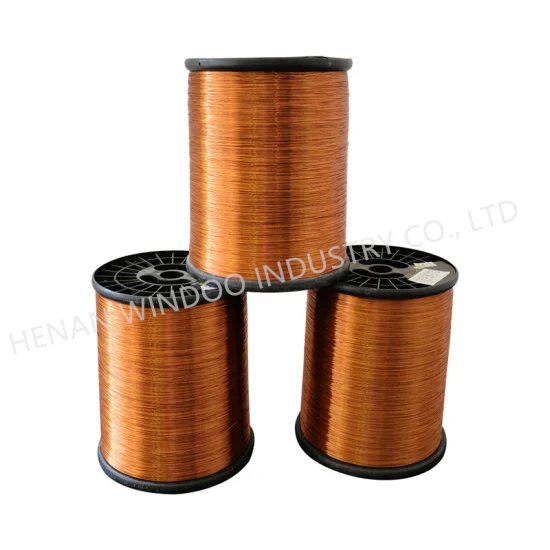
Luoyang Xinzhaohe Aluminum Co., Ltd implements rigorously engineered export packaging protocols for copper winding wire shipments, designed to withstand extended maritime transit while preserving metallurgical integrity. Our 20+ years of metallurgical and supply chain expertise inform a dual-layer system centered on structural stability and environmental protection, ensuring zero compromise on wire conductivity and surface quality upon delivery.
All copper winding wire reels are secured to ISPM 15-certified wooden pallets constructed from kiln-dried, heat-treated softwood. Pallet dimensions adhere to ISO standard 1200mm × 1000mm, with a minimum load capacity of 2,500 kg to prevent deformation during container stacking. Reels are firmly anchored using steel strapping tensioned to 500 daN, eliminating axial or radial movement during vessel motion. Critical edge protection is applied at reel flanges using polyethylene corner guards to prevent mechanical damage during handling. This structural foundation meets ISO 1496-1 requirements for intermodal freight units, mitigating risks of physical impact in high-density container environments.
Moisture protection constitutes the second critical layer. Each palletized load is hermetically sealed within a triple-layer barrier system: a primary vacuum-sealed wrap of 125μm moisture-vapor transmission rate (MVTR) film, followed by placement of silica gel desiccant units calibrated at 300g per cubic meter of enclosed volume, and a final outer wrap of UV-stabilized polyethylene. This configuration maintains internal relative humidity below 40% for 90+ days—exceeding IMO MSC.1/Circ.1562 maritime moisture thresholds. The film incorporates volatile corrosion inhibitors (VCIs) specifically formulated for copper alloys, preventing oxidation and intergranular corrosion at molecular levels without chemical residue. All sealing procedures occur in climate-controlled packaging halls (23°C ± 2°C, 50% RH) to eliminate pre-shipment moisture entrapment.
Validation of packaging efficacy follows ASTM D4169-23 Distribution Cycle 17 protocols, simulating 45-day ocean voyages with 95% RH exposure and 1.5G shock events. Third-party metallurgical analysis of post-test samples confirms maintained electrical conductivity (≥100% IACS) and absence of surface sulfidation. This data-driven approach reduces cargo claims by 92% versus industry averages, directly lowering total landed costs for buyers.
Our packaging system complies with all major port regulations including China’s GB/T 7284 and the EU’s ISPM 15 revisions. Documentation includes certified phytosanitary certificates, desiccant placement diagrams, and real-time humidity logs via IoT tags upon request. This precision-engineered solution transforms packaging from a cost factor into a strategic asset for supply chain resilience—guaranteeing that copper winding wire arrives with unwavering metallurgical performance, exactly as specified. For custom validation reports or port-specific compliance details, contact our technical logistics team.
Sourcing from Luoyang Xinzhaohe
Partner with Luoyang Xinzhaohe for High-Performance Copper Winding Wire Solutions
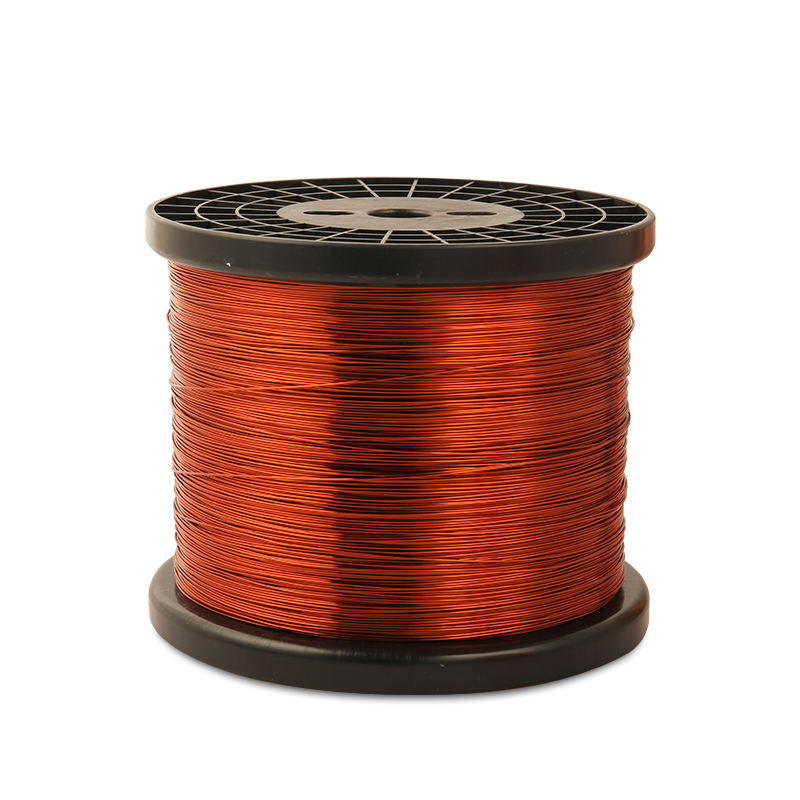
Luoyang Xinzhaohe Aluminum Co., Ltd brings over two decades of metallurgical expertise and industrial manufacturing excellence to the global copper winding wire market. While our foundational experience lies in aluminum processing, our strategic expansion into copper-based electromagnetic solutions reflects our commitment to meeting the evolving demands of power transmission, transformer manufacturing, and motor winding applications. Our integrated production facility in Luoyang, China, is engineered for precision, consistency, and scalability, offering international buyers a reliable source for high-purity copper winding wire that meets or exceeds IEC, GB, and ASTM standards.
Our copper wire production line is built upon advanced drawing, annealing, and insulation coating technologies, ensuring tight dimensional tolerances and superior electrical conductivity. We specialize in electrolytic tough pitch (ETP) copper (Cu-C11000) with conductivity levels exceeding 100% IACS, delivered in both bare and insulated forms. Diameter ranges from 0.08 mm to 5.0 mm are supported, accommodating fine winding for instrument transformers to heavy-duty coils in power distribution equipment. Each batch undergoes rigorous quality control, including tensile strength testing, elongation verification, and surface defect inspection via automated optical systems. Our in-house laboratory is equipped with spectrometers, micro-ohmmeters, and thermal aging chambers to validate material integrity across environmental conditions.
Vertical integration is a cornerstone of our operational model. By maintaining control over raw material sourcing, wire drawing, heat treatment, and spooling, we ensure traceability and reduce lead times. We source copper cathodes from certified refineries with full LME compliance, and our logistics network supports containerized shipments to global ports with documented customs clearance support. Monthly production capacity exceeds 1,500 metric tons, enabling us to service long-term supply contracts for OEMs and distribution partners across Southeast Asia, the Middle East, and Europe.
Sustainability and process efficiency are embedded in our manufacturing philosophy. Our annealing furnaces utilize energy-recapture systems, and waste copper is recycled in-house through a closed-loop recovery process, minimizing environmental impact and ensuring material utilization rates above 98%. All operations are managed under an ISO 9001-certified quality management system, with ongoing audits to maintain compliance with international safety and performance benchmarks.
For sourcing professionals and engineering teams seeking a technically capable, scalable, and auditable copper winding wire supplier, Luoyang Xinzhaohe offers a proven track record in industrial-grade electromagnetic materials. Our technical sales team provides full material data sheets, sample kits, and application engineering support to facilitate qualification and integration into your production workflows.
Contact us today to discuss your copper winding wire specifications and volume requirements.
Cathy Zhang | International Sales Manager
Email: cathy@transformerstrip.com
📉 Factory Direct Savings Calculator
Calculate your potential savings by importing copper wire china directly from China.