

Table of Contents
Market Insight: Copper Winding Wire
Industrial Demand Drivers for Copper Winding Wire in Transformers
Global transformer manufacturing represents the dominant consumer segment for high-purity copper winding wire, driven by relentless expansion of electrical infrastructure. Power grid modernization initiatives, particularly in emerging economies, necessitate millions of distribution and power transformers annually to enhance grid resilience and reduce transmission losses. Concurrently, the rapid integration of renewable energy sources—solar and wind farms—demands specialized step-up transformers capable of handling variable output, directly increasing copper wire procurement volumes. Industrial automation and data center proliferation further amplify demand, as servo transformers and uninterruptible power supply (UPS) systems require precise, high-frequency windings. Critically, the electrification of transportation infrastructure, especially high-power EV charging stations, relies on liquid-cooled transformers utilizing dense copper windings to manage thermal loads, projecting sustained compound annual growth exceeding 6.5% through 2030 per industry benchmarks.
Technical Imperatives of Copper Wire Quality
Quality deviation in copper winding wire directly compromises transformer efficiency, lifespan, and safety, making material specifications non-negotiable. Electrical conductivity, measured against the International Annealed Copper Standard (IACS), must consistently exceed 99.9% for high-efficiency transformers (IE4/IE5 classes). Impurities like oxygen, sulfur, or metallic residuals increase resistivity, elevating I²R losses; a 0.5% conductivity deficit can raise operational temperatures by 8–10°C, accelerating insulation degradation. Mechanical properties are equally critical: tensile strength (200–250 MPa) and elongation (≥4%) must be precisely balanced to withstand winding tension without deformation or micro-cracking, which could pierce enamel insulation during coil formation. Surface integrity—free of scratches, pits, or oxide inclusions—is mandatory to prevent partial discharges that initiate catastrophic insulation failure under high-voltage stress.
Conductivity and Purity Standards for Transformer Windings
| Copper Grade | IACS Conductivity | Max Oxygen Content | Typical Application |
|---|---|---|---|
| OFHC (C10100) | ≥101% | ≤5 ppm | High-frequency, high-reliability transformers |
| ETP (C11000) | 100–101% | 200–400 ppm | Standard distribution transformers |
| TW-1 | ≥100% | ≤30 ppm | Premium efficiency power transformers |
Thermal stability during varnish impregnation and long-term operation hinges on consistent grain structure and thermal aging resistance. Substandard wire with inconsistent annealing exhibits uneven thermal expansion, inducing mechanical stress at solder joints and increasing failure rates during thermal cycling. Transformer manufacturers adhere strictly to IEC 60317 and ASTM B3/B8 specifications, where deviations trigger rejection rates exceeding 15% in high-voltage applications. The total cost of failure—recalls, warranty claims, and grid downtime—far outweighs material cost differentials, establishing why precision metallurgy is foundational to supply chain reliability.
Luoyang Xinzhaohe Aluminum CO., Ltd leverages 20+ years of metallurgical expertise to audit copper wire supply chains, ensuring compliance with these exacting parameters. While aluminum finds application in busbars, copper remains irreplaceable for windings due to its superior conductivity-to-volume ratio and fatigue resistance. Partnering with suppliers capable of certifying traceable, batch-specific quality data is not merely advisable—it is an operational necessity for transformer OEMs targeting >30-year service life under evolving grid demands.
Technical Specs: Copper Winding Wire
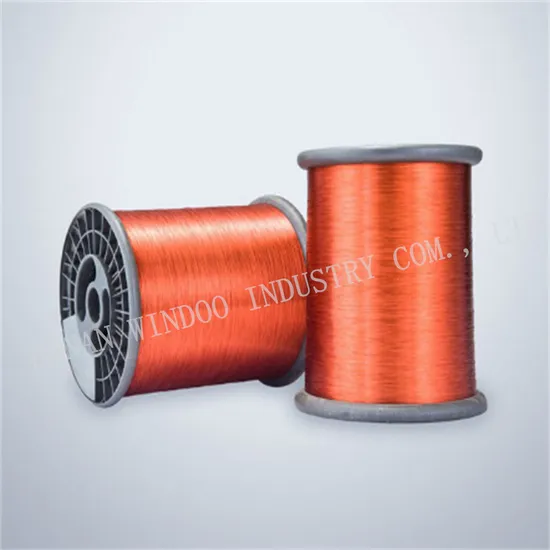
Technical Specifications for Copper Winding Wire
Copper winding wire, also known as magnet wire, is a critical component in the construction of electromagnetic devices such as transformers, motors, and inductors. At Luoyang Xinzhaohe Aluminum Co., Ltd, with over two decades of experience in advanced conductor materials and wire manufacturing, we emphasize precision in material selection and process control to ensure optimal performance under demanding operational conditions. The technical specifications of copper winding wire—particularly insulation breakdown voltage, elongation, and thermal class—are paramount to ensuring reliability, efficiency, and longevity in end-use applications.
Insulation breakdown voltage refers to the maximum electric field strength that the wire’s insulation layer can withstand before electrical failure occurs. This parameter is essential for preventing short circuits and ensuring operational safety in high-voltage environments. Our copper winding wires are manufactured with high-purity electrolytic tough pitch (ETP) copper and coated with thermosetting insulation materials such as polyurethane, polyester, or polyamide-imide, depending on the application requirements. These insulation systems are rigorously tested to ensure consistent dielectric performance. For standard gauges (AWG 18–36), breakdown voltages typically range from 3,000 V to 8,000 V RMS, with higher values achievable through dual or triple insulation layers.
Elongation, measured as a percentage of the original length at the point of fracture, is a key mechanical property indicating the wire’s ductility and ability to withstand drawing, winding, and thermal cycling without cracking. High elongation values are particularly important in applications involving tight coil winding or complex geometries. Our copper winding wires exhibit elongation values between 8% and 20%, depending on wire diameter and temper condition. Annealed (soft) copper offers superior elongation and formability, making it ideal for intricate winding patterns, while hard-drawn variants are used where higher tensile strength is required.
Thermal class defines the maximum continuous operating temperature that the insulated wire can endure without significant degradation of electrical or mechanical properties. This classification is directly linked to the insulation system used. Our copper winding wires are available in thermal classes ranging from 130°C to 220°C, enabling selection based on application-specific thermal demands. Higher thermal classes utilize advanced insulation chemistries such as polyimide or ceramic-filled coatings, which provide exceptional thermal stability and resistance to thermal aging. These high-temperature variants are commonly used in industrial motors, traction systems, and aerospace applications.
The following table outlines the key technical parameters for our standard copper winding wire offerings:
| Parameter | Typical Range | Test Standard | Notes |
|---|---|---|---|
| Insulation Breakdown Voltage | 3,000 – 8,000 V RMS (single layer) | IEC 60317, ASTM D4354 | Increases with dual/triple insulation |
| Elongation | 8% – 20% | IEC 60317, GB/T 4074 | Depends on wire gauge and temper |
| Thermal Class | 130°C, 155°C, 180°C, 200°C, 220°C | IEC 60172, NEMA MW 1000 | Defined by insulation system |
| Conductor Material | ETP Copper (Cu ≥ 99.95%) | ASTM B3, GB/T 5584 | High conductivity, low impurity |
| Diameter Tolerance | ±0.005 mm to ±0.02 mm | IEC 60317, GB/T 4074 | Tight control for consistent winding |
These specifications are validated through in-house quality control systems aligned with ISO 9001 standards, ensuring batch-to-batch consistency and compliance with international performance benchmarks. Custom configurations are available to meet specialized voltage, temperature, or mechanical requirements.
Factory Tour: Manufacturing
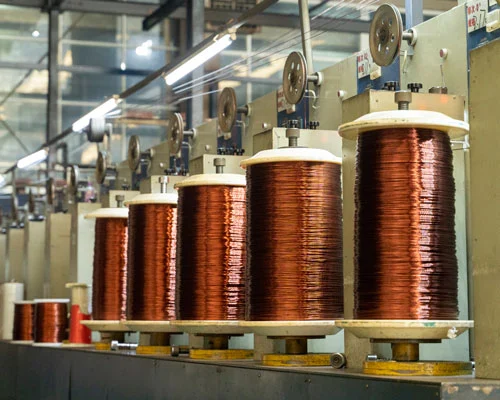
Manufacturing Process for High-Performance Copper Winding Wire
Luoyang Xinzhaohe Aluminum Co., Ltd leverages over two decades of metallurgical expertise to produce precision copper winding wire, despite our core aluminum heritage, through dedicated copper processing lines adhering to stringent international standards. Our integrated manufacturing sequence ensures optimal electrical conductivity, mechanical formability, and dielectric integrity critical for demanding motor, transformer, and inductor applications. The process begins with high-purity electrolytic tough pitch (ETP) copper rod meeting ASTM B3/B3M specifications. Rod drawing utilizes multi-die continuous block machines with precision tungsten carbide or diamond dies under controlled tension and lubrication. This cold working reduces diameter to the target gauge while maintaining roundness tolerance within ±0.002 mm. Critical QC at this stage includes在线 diameter monitoring via laser micrometers, surface defect inspection using high-resolution cameras, and periodic tensile testing to verify consistent mechanical properties. Surface roughness is maintained below 0.8 μm Ra to ensure flawless enamel adhesion.
Subsequent annealing occurs in a continuous inert atmosphere furnace to restore ductility and achieve the required temper (typically 1/2H to Soft). Precise temperature profiling and dwell time control are paramount to avoid grain coarsening or oxidation. Key parameters are strictly managed as follows:
| Parameter | Typical Range | Control Tolerance | Critical Impact |
|---|---|---|---|
| Maximum Temperature | 450°C – 550°C | ±5°C | Grain structure, conductivity |
| Atmosphere | N₂ + 5% H₂ | O₂ < 10 ppm | Prevents surface oxidation |
| Line Speed | 8 – 15 m/min | ±0.5 m/min | Consistent temper uniformity |
Post-annealing, the wire undergoes rigorous inline conductivity verification via eddy current systems targeting 100% IACS minimum, alongside visual surface inspection for annealing defects. The enameling stage employs multiple precision applicators for uniform polymer coating deposition. Common insulation systems include polyesterimide (PEI), polyamide-imide (PAI), or dual-layer constructions. Solvent content, bath viscosity, and curing oven temperature profiles (typically 350°C – 480°C) are continuously monitored and adjusted to achieve specified build thicknesses within ±5% tolerance and ensure complete polymer cross-linking. Critical QC here involves automated spark testing at 3kV to 15kV (depending on gauge and class) to detect pinholes, alongside periodic adhesion and thermal shock testing per IEC 60851 standards.
Final inline testing constitutes the definitive quality gate. Every meter undergoes high-voltage breakdown verification exceeding rated specifications by 20%, continuous diameter profiling, and elongation checks. Batch traceability is maintained from rod lot through all process parameters and test results, documented in our certified quality management system compliant with ISO 9001. This end-to-end control guarantees winding wire exhibiting superior thermal class performance (up to 240°C), consistent solderability, and exceptional resistance to mechanical stress during coil winding operations, directly supporting our customers’ end-product reliability and efficiency targets.
Packaging & Logistics
Export Packaging for Copper Winding Wire: Ensuring Integrity During Sea Freight
At Luoyang Xinzhaohe Aluminum Co., Ltd, with over two decades of experience in the production and international distribution of high-performance winding wire, we recognize that packaging is not merely a logistical necessity—it is a critical component in preserving product integrity, especially during extended sea freight transit. Copper winding wire, due to its high electrical conductivity and sensitivity to environmental conditions, demands a packaging solution that provides mechanical stability, moisture resistance, and protection against corrosion and physical damage. Our export packaging system is engineered to meet these demands under the most challenging maritime conditions.
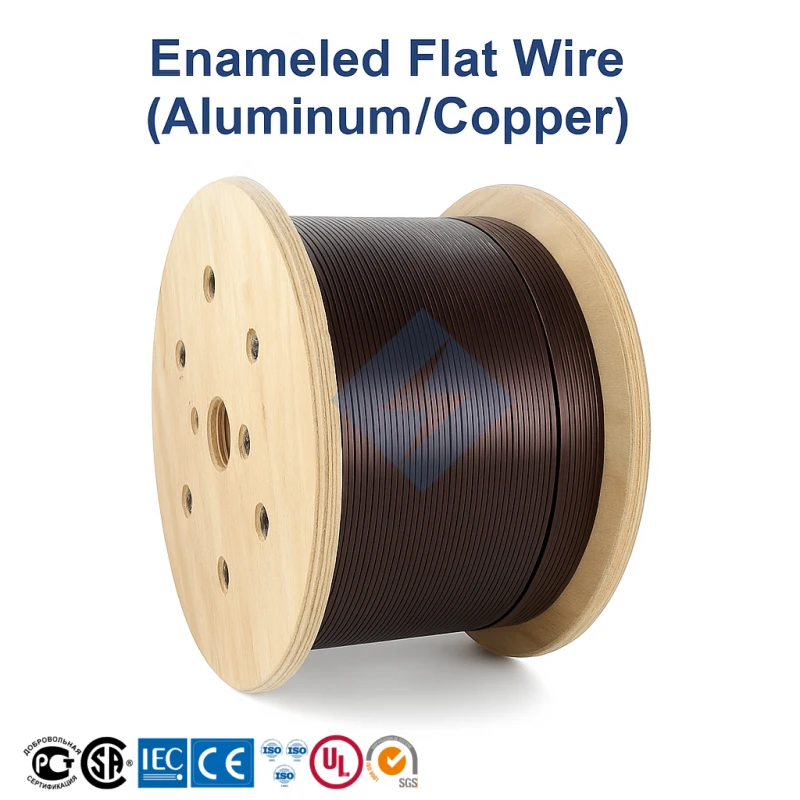
All copper winding wire shipments are secured on robust wooden pallets constructed from kiln-dried, ISPM 15-compliant hardwood. These pallets are designed to support heavy coil loads, with standard load capacities exceeding 2,500 kg per unit. The structural rigidity of the pallet ensures dimensional stability during stacking and handling, minimizing the risk of coil deformation during loading, unloading, and containerized transport. Each coil is firmly affixed to the pallet using high-tensile steel strapping, tensioned and sealed to international maritime standards, preventing lateral or vertical displacement throughout the shipping cycle.
A primary concern in sea freight is exposure to humidity and salt-laden air, which can initiate surface oxidation on copper conductors, leading to compromised electrical performance. To mitigate this risk, every palletized load is hermetically wrapped in multi-layer moisture-proof film. This film consists of an aluminum foil interlayer laminated between high-density polyethylene sheets, offering a vapor transmission rate of less than 0.1 g/m²·24hr at 38°C and 90% RH. The wrapping process is performed in a climate-controlled environment to ensure zero condensation beneath the film. Seams are heat-sealed and overlapped to form a continuous barrier, effectively isolating the coils from ambient moisture.
Additionally, desiccant packs are strategically placed within the wrapped enclosure, typically at a ratio of 500 grams per cubic meter of enclosed volume, to absorb any residual humidity and maintain internal relative humidity below 40% throughout transit. Each package is labeled with humidity indicator cards to allow visual verification of environmental conditions upon arrival.
Our packaging protocol aligns with IMDG Code guidelines for non-hazardous but high-value electrical materials. The compact footprint of our palletized units ensures optimal container utilization, with standard 20-foot and 40-foot dry containers accommodating up to 18 and 36 coils respectively, depending on coil diameter and weight. All wooden components are treated and marked in compliance with international phytosanitary regulations, facilitating smooth customs clearance across global ports.
Through rigorous engineering and adherence to international logistics standards, Luoyang Xinzhaohe Aluminum Co., Ltd ensures that copper winding wire arrives at its destination in the same condition as when it left our facility—ready for immediate integration into transformer, motor, and inductor manufacturing processes.
Sourcing from Luoyang Xinzhaohe
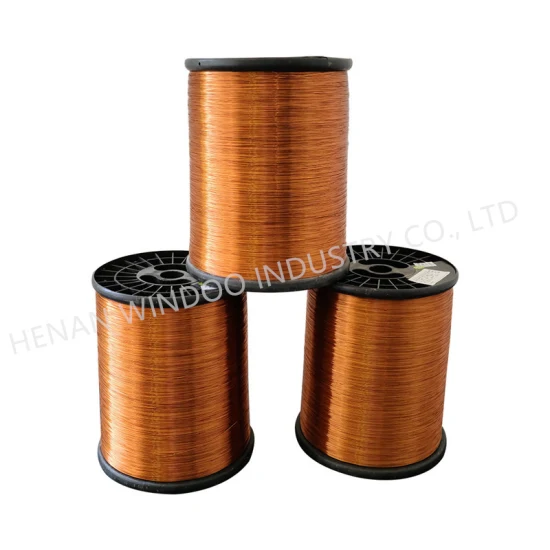
Partner with Luoyang Xinzhaohe for Precision Copper Winding Wire Solutions
Luoyang Xinzhaohe Aluminum Co., Ltd leverages over two decades of specialized metallurgical expertise and integrated supply chain management to deliver high-performance copper winding wire meeting the most stringent industrial demands. Our facility operates as a vertically optimized production ecosystem, combining in-house rod casting, precision drawing, and advanced annealing under one roof. This vertical integration ensures absolute control over critical material properties from raw cathode input to finished wire, eliminating third-party variability that compromises consistency in standard supply chains. We specialize in electrolytic tough pitch (ETP) copper conforming to IEC 60122 and ASTM B3 specifications, with diameters ranging from 0.08 mm to 5.0 mm, held to tolerances of ±0.001 mm for micro-wire applications and ±0.005 mm for larger gauges. Our continuous annealing lines utilize oxygen-free nitrogen atmospheres, guaranteeing uniform temper (soft, half-hard, hard) and surface integrity essential for high-speed automatic winding operations in transformers, motors, and EV components.
Material purity and structural homogeneity define our core technical advantage. All copper rod undergoes rigorous spectral analysis (OES) verifying oxygen content ≤ 0.04% and electrical conductivity ≥ 100% IACS per ASTM E527. During drawing, real-time laser micrometers and tension monitoring systems prevent diameter deviations exceeding 0.5% of nominal size, while proprietary die lubrication protocols eliminate surface scratches or micro-cracks. Finished wire batches are subjected to 100% spool testing for elongation (25-40% per ASTM E8), tensile strength (200-350 MPa), and mandrel bend compliance. Our ISO 9001:2015 and IATF 16949 certified quality management system mandates traceability from cathode lot to customer shipment via blockchain-enabled digital logs, providing auditable proof of process control for automotive and aerospace Tier 1 suppliers.
Supply chain resilience is engineered into our operational model. Strategic partnerships with primary copper smelters secure priority access to LME Grade A material, while our 15,000-ton on-site warehouse buffer mitigates raw material volatility. Dedicated JIT logistics cells coordinate multimodal shipments (rail, sea, air) with average lead times of 15-25 days for containerized orders, supported by dynamic inventory allocation software that prevents stockouts during peak demand cycles. We maintain dual production lines for critical diameters, ensuring redundancy against equipment downtime. For global procurement teams, this translates to guaranteed continuity of supply even amid market disruptions, with documented on-time delivery performance exceeding 98.7% over the past five years.
Partnering with Luoyang Xinzhaohe means accessing metallurgical precision backed by quantifiable supply chain security. Our engineering team provides direct technical collaboration on material selection, process optimization, and failure analysis to reduce your scrap rates and improve end-product efficiency. Contact Cathy Zhang, Technical Sourcing Manager, at cathy@transformerstrip.com to discuss your specific winding wire requirements and receive a customized capability dossier with test reports and production capacity schedule. Initiate a supply chain partnership built on verifiable metallurgical science and industrial reliability.
📉 Factory Direct Savings Calculator
Calculate your potential savings by importing copper winding wire directly from China.