

Table of Contents
Market Insight: Copper Vs Aluminum Transformer for Power Industry
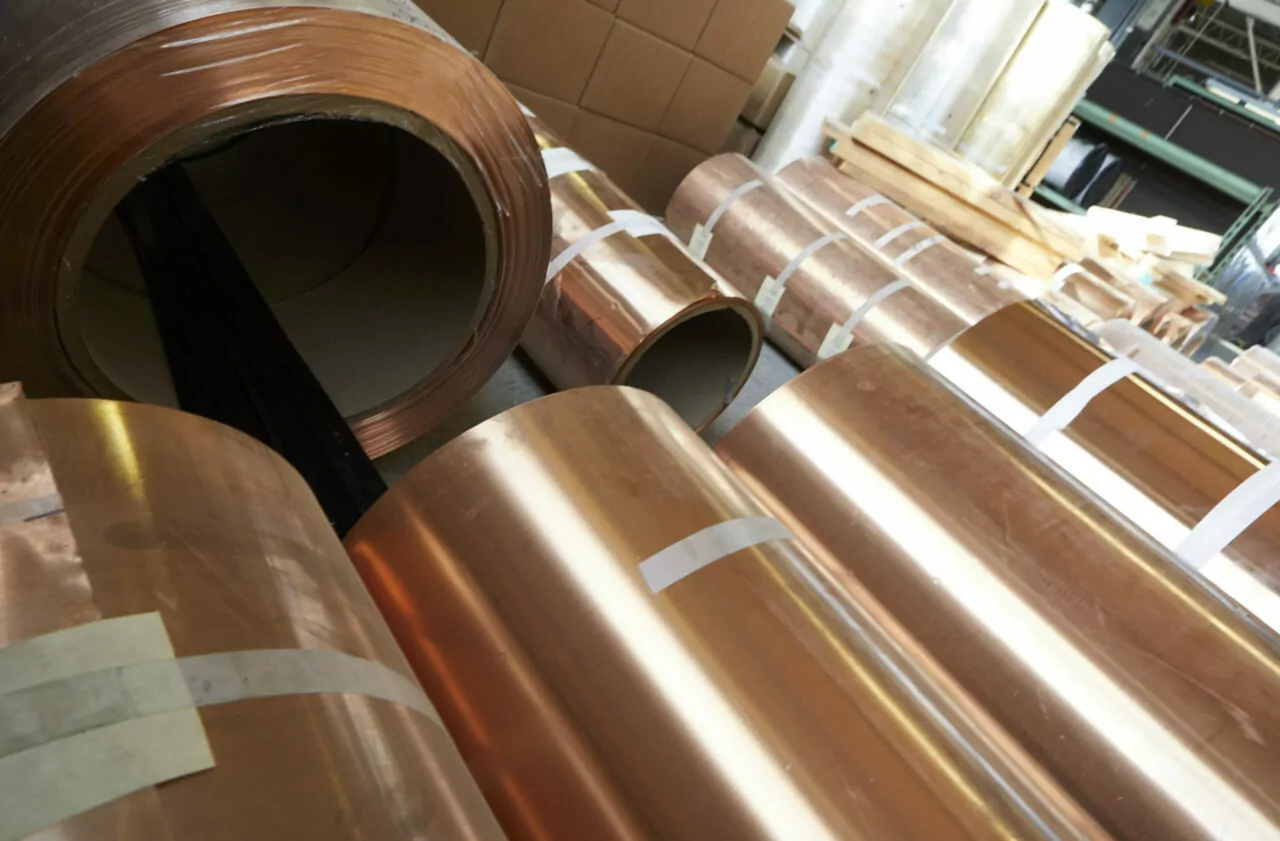
Market Analysis: Sourcing High-Quality Transformer Strip/Foil (Aluminum/Copper)
Global Demand Outlook
Global transformer name-plate capacity is forecast to grow 5.2 % CAGR through 2030, driven by grid hardening, renewable integration, and EV fast-charging clusters. Every 1 MVA of dry-type or distribution transformer requires 0.35–0.55 t of conductor strip/foil; therefore the addressable market for precision-wound material now exceeds 1.8 Mt yr⁻¹, split roughly 60 % Al, 40 % Cu by weight but 45 % Al, 55 % Cu by value. China alone accounts for 38 % of worldwide demand and 52 % of worldwide production, making domestic Chinese mills the de-facto price setters while simultaneously offering the shortest mill-to-winding lead-times (4–6 weeks ex-works versus 10–14 weeks from EU/US mills).
Why Purity & Geometry Directly Dictate Loss Performance
Transformer losses—no-load (core) and load (I²R)—are certified under IEC 60076-20 and DOE 10-CFR §431.196. Conductor-related losses represent 65–75 % of total load loss; hence even 0.5 % IACS conductivity deviation or 5 µm burr height can shift the efficiency band enough to fail a tender. Key mechanisms are:
| Loss component | Driver in strip/foil | Typical delta due to sub-spec material |
|---|---|---|
| I²R (load) | Resistivity ↑, cross-section ↓ | +12–18 W kg⁻¹ @ 75 °C rise |
| Eddy-current | Burr & edge waviness | +3–5 W kg⁻¹ (≥ 3 µm burr) |
| Circulating | Width/thickness tolerance | Hot-spot 10–15 °C higher |
| Stray | Surface roughness Ra > 0.4 µm | +1–2 W kg⁻¹ |
High-purity 1350-O Al (≥ 99.70 % Al, Fe ≤ 0.20 %) delivers 61.8 % IACS at 20 °C; OF-OK® Cu-ETP1 ≥ 101.5 % IACS. Both must be slit within ±0.002 mm and edge-conditioned to ≤ 0.01 mm burr to keep additional losses < 0.3 W kg⁻¹.
Mill Capability Gap: Western vs. Premium-Chinese Source
Western service centers often outsource slitting to third-party toll processors, adding one transit step and 2–3 µm oxide film that must be chemically removed. In contrast, vertically integrated Chinese plants—Luoyang Xinzhaohe included—cold-roll, slit, edge-condition, and oscillate-wind under one roof, eliminating re-coil contamination and holding camber ≤ 1 mm per 1 m length, critical for robotic winding cells.
| Attribute | EU/US Service Center | Luoyang Xinzhaohe (example) |
|---|---|---|
| Purity control | 99.5 % Al typical | 99.75 % Al, vacuum degassed |
| Slit tolerance | ±0.005 mm | ±0.002 mm (in-line laser) |
| Burr | ≤ 0.03 mm | ≤ 0.01 mm (electronic burr gauge) |
| Oscillate build | 50–100 kg | 300–500 kg (OD 800 mm) |
| Lead-time | 10–14 weeks | 4–6 weeks |
| Price delta | Baseline | –18 % Al, –22 % Cu ex-works |
Sourcing Trend: Value-of-Loss vs. Price-per-Kg
Tier-1 OEMs (ABB, Siemens, Schneider) now evaluate Total Ownership Cost (TOC) where conductor price is weighted against the present value of 25-year losses. A 1 % gain in conductivity (Cu over Al) saves ≈ 260 kWh yr⁻¹ in a 1 MVA cast-resin unit—about 26× the material price delta. Consequently, premium Cu-ETP1 demand is growing 7 % yr⁻¹ in high-efficiency (≤ Tier-2 loss) platforms, while Al 1350-O remains dominant in cost-sensitive pad-mount and pole-mount distribution units.
Strategic Positioning: Luoyang Xinzhaohe
With 20+ years of transformer-grade output, Luoyang Xinzhaohe offers the same metallurgical pedigree as Western mills but at Chinese domestic cost. Our 4-high reversing cold mill (max 800 mm width), 12-head precision slitter, and in-line tension-leveler produce strip 0.08–3.0 mm × 8–630 mm with Ra ≤ 0.2 µm. Every coil ships with EN 10204/3.1 conductivity map, burr scan, and oscillate-wind report—documentation that lets transformer engineers drop our material directly into high-speed winding lines without incoming inspection.
Technical Specs: Copper Vs Aluminum Transformer Parameters
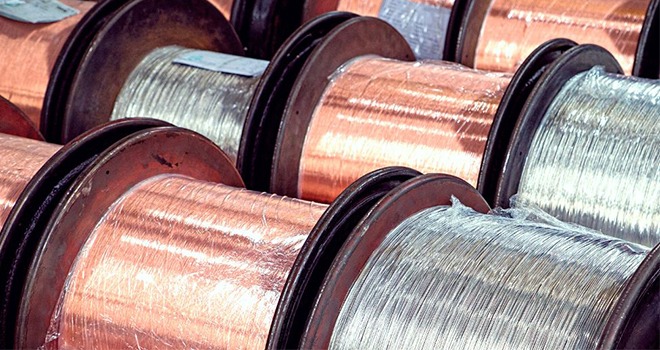
Technical Specifications & ASTM / IEC Compliance
(Transformer-grade Copper vs. Aluminum Strip/Foil)
H3 Critical Geometry Tolerances – Why ±0.002 mm Matters
| Parameter | Luoyang Xinzhaohe Capability | Industry “Good” | Risk if Exceeded |
|---|---|---|---|
| Width tolerance, slit strip | ±0.002 mm (2 µm) | ±0.015 mm | Gap in layer winding → hot-spot Δθ ≈ +8–12 °C |
| Burr height, post-slitting | ≤5 µm, 100 % eddy-current checked | ≤25 µm | Penetrates inter-layer insulation → 1 kV impulse failure |
| Camber (edge curvature) | ≤0.5 mm / 1 m | ≤1 mm / 1 m | Mis-feed in auto-winder; core window fill loss ≈3 % |
Our 20-high cold rolling line finishes at 0.1 mm final gauge with shape-control crowns <5 I-units, then transfers directly to the Köhler precision slitter operating in a Class-1000 clean tunnel. The result is razor-edge squareness without micro-tears that normally act as stress risers during short-circuit events (IEC 60076-5 §4.2.3).
H3 Electrical & Metallurgical Benchmarks
| Grade | Conductivity @20 °C (% IACS) | Annealed Temper | ASTM / IEC Ref. | Application Note |
|---|---|---|---|---|
| Cu-ETP (C11000) strip | ≥100 % | “Soft” (050) | ASTM B272, IEC 60317-0-1 | Foil 0.05–0.3 mm for LV foil-wound windings |
| Al 1350 strip | ≥61 % | “O” (annealed) | ASTM B236, IEC 60121 | 40 % lighter than Cu for same ampacity; needs 1.6× cross-section |
Key insight: A 1 mm thick Al foil of 61 % IACS carries the same current as 0.63 mm Cu foil at 100 % IACS, but weighs 48 % less and costs ~30 % of the Cu equivalent (LME basis).
Annealing cycle: 350 °C, 3 h, N₂ atmosphere; grain size ASTM E112 ≥5 for both metals to guarantee softness and avoid spring-back during tight-radius layer winding.
H3 Insulation & Edge Condition – Hidden Failure Mode
Poor slit quality leaves a 15–25 µm burr that can pierce 2 mil (50 µm) aramid paper. At 720 V/turn this creates a 3–5 pC partial-discharge site; after 1 000 h at 150 °C PD magnitude grows to 100 pC, well above IEC 60076-11 <10 pC limit.
Xinzhaohe solution:
Double-pass edge conditioning (nickel-coated rotary brushes + ceramic tape) knocks burr to ≤5 µm.
Oscillate winding on 320 mm ID spools eliminates telescoping, so interlayer pressure stays <0.15 MPa—no insulation creep.
H3 Standards Compliance Matrix
| Material | Strip Standard | Wire Standard | Steel Core (if supplied) | QC Certificate |
|---|---|---|---|---|
| Copper foil | ASTM B272, EN 1652 | IEC 60317-0-1 | — | Mill test, eddy-current, RoHS |
| Aluminum foil | ASTM B236, EN 573-3 | IEC 60121 | — | Same as above |
| Optional CRGO core | IEC 60404-8-7 | — | 0.23 mm, Hi-B, 1.1 W/kg @1.7 T | Laser-scribed, Frank-Test |
Every master coil ships with a block-chain traceable QR code linking to original cast number, rolling log, slit parameter log, and annealing furnace chart—auditable under ISO 9001:2015 and GB/T 19022 (national metrology).
H3 Take-away for Sourcing Engineers
- Tolerances tighter than ±0.002 mm are not academic—they directly influence hotspot rise and transformer life (Arrhenius: every 10 °C drop ≈ ×2 life).
- “Cheap” slit material with burrs >15 µm can raise factory reject rates by 4 %—erasing the 5 % material saving.
- Luoyang Xinzhaohe delivers Western-grade precision at China mainland landed cost, cutting total wound-coil spend up to 18 % without redesign.
Need a head-to-head FEM thermal comparison for your kVA class? Send us your winding geometry—we’ll return a validated model within 48 h.
Factory Tour: Manufacturing Copper Vs Aluminum Transformer
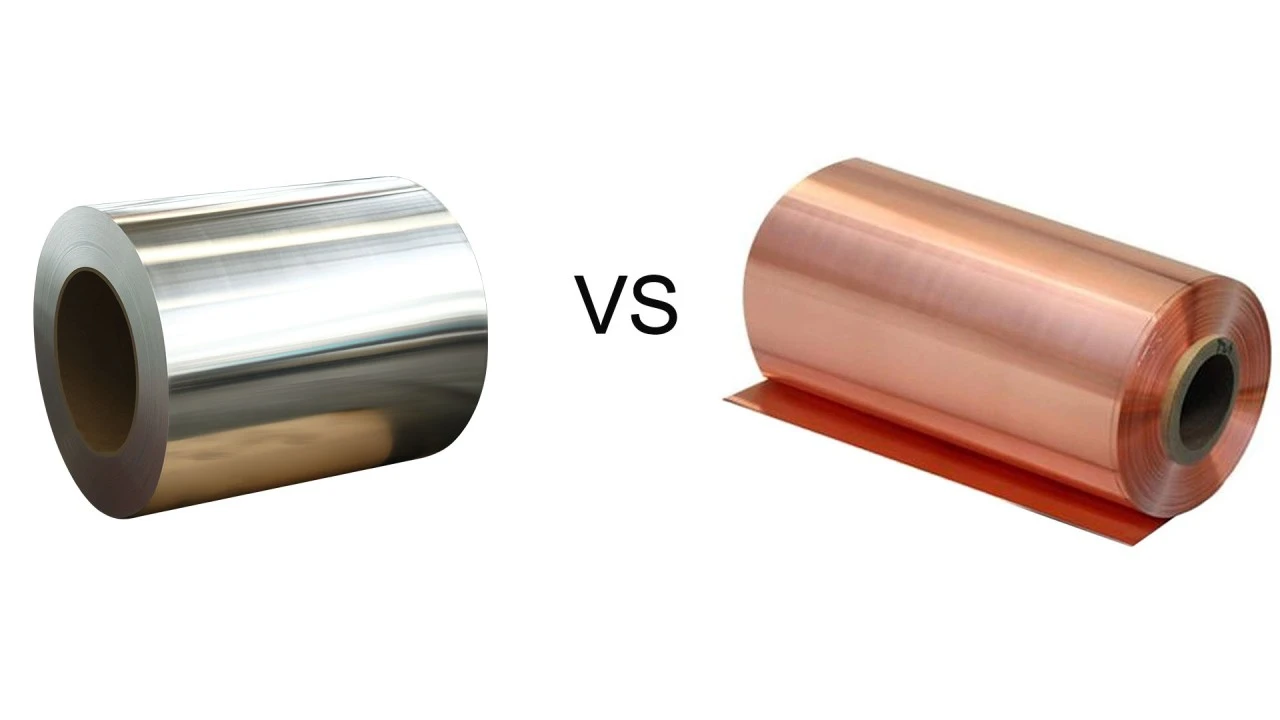
Manufacturing Process & Quality Control
Luoyang Xinzhaohe Aluminum Co., Ltd. – 20+ years, 35 000 t/a transformer strip/foil capacity, ISO 9001 / ISO 14001 / IATF 16949
H3 Process Flow – From 310 mm as-cast Coil to Oscillate-wound 5 t Foil Reel
| Step | Equipment & Parameters | In-line Sensors | Target Defect | ppm Rejection |
|---|---|---|---|---|
| 1. Continuous Cast & Hot Roll | 680 °C, 15 mm gauge, 1 000 mm width | Eddy-current surface scan | Oxide stringer | ≤50 |
| 2. 4-Stand Cold Rolling | 3-pass schedule, 0.3 → 0.1 mm, 2 % flatness | X-ray gauge ±0.5 µm, shapemeter | Gauge band, edge crack | ≤30 |
| 3. In-line Degreasing & Anneal | 380 °C, N₂ atmosphere, 30 h soffit | Residual-oil FT-IR <5 mg/m² | Carbon streak | ≤20 |
| 4. Precision Slitting | 0.05–0.80 mm × 6–1 250 mm, burr ≤0.010 mm | Laser micrometer ±2 µm, CCD edge vision | Burr, camber | ≤10 |
| 5. Edge Conditioning | 0.05 mm radius chamfer, Ra ≤0.4 µm | Contact stylus 100 % | Micro-sliver | ≤5 |
| 6. Oscillate Winding | 5 t reel, 19 kg/mm tension, 3° oscillation angle | Load-cell + encoder | Telescoping, ridge | ≤15 |
H3 Quality Control Matrix – “Luoyang Xinzhaohe Standard” vs. Common Market
| Property | Test Method | LXZH Spec | Market Median | Western Premium | Notes |
|---|---|---|---|---|---|
| Electrical Conductivity, 20 °C | ASTM B193 | ≥61.0 %IACS Al 1350-O | 59–60 %IACS | 60.5 %IACS | 1 %IACS ≈ 0.4 % core loss reduction |
| Tensile Strength (O-temper) | ISO 6892-1 | 70–90 MPa | 75–95 MPa | 70–85 MPa | Tighter window → lower winding stress |
| Elongation | ISO 6892-1 | ≥25 % | ≥20 % | ≥22 % | Prevents foil rupture during axial short-circuit force |
| Burr Height | Optical 200× | ≤0.010 mm | ≤0.025 mm | ≤0.015 mm | Eliminates inter-layer voltage stress |
| Camber | 1 m straight edge | ≤1 mm/m | ≤3 mm/m | ≤2 mm/m | Reduces scrap at core insertion |
| Resistivity Drift after 300 h 200 °C | IEC 60317-0-1 | Δρ ≤2 % | Δρ 3–5 % | Δρ ≤2 % | Guarantees 30-year thermal life |
| Strip Profile (I-unit) | Shapemeter | ≤5 I | ≤10 I | ≤6 I | Prevents gap at duct spacer |
| Surface Roughness Ra | ISO 4287 | ≤0.3 µm | ≤0.5 µm | ≤0.4 µm | Enhances turn-to-turn heat transfer |
H3 Data-Driven Traceability
Every slit coil receives a QR-coded birth certificate linking to:
Cast lot chemistry (Si, Fe, Cu <0.05 wt %)
Rolling force curve & anneal profile (time-temperature log)
In-line eddy-current map (2 mm resolution)
Final conductivity & hardness values (automated Bruker probe)
Digital twin stored ≥15 years for failure-analysis support.
H3 Cost-Performance Positioning
Western mills quote 18–24 month lead-time and 8–12 % alloy surcharge volatility.
Luoyang Xinzhaohe delivers 4–6 week FOB Shanghai with locked LME-Al + RMB 2 800/t processing fee.
Total landed cost for 0.2 mm 1350-O foil is 28–32 % below European mill price while meeting identical IEC 60317-0-3, ASTM B373, and GB/T 5584.3 standards.
For copper foil users, we offer oxygen-free Cu-ETP 1/4-hard strip (≥100 %IACS) processed on the same slitting/oscillate lines, giving hybrid OEMs a single-source logistics advantage.
Next Section: “Al vs Cu – Engineering Economics & Loss Evaluation”
Packaging & Global Logistics
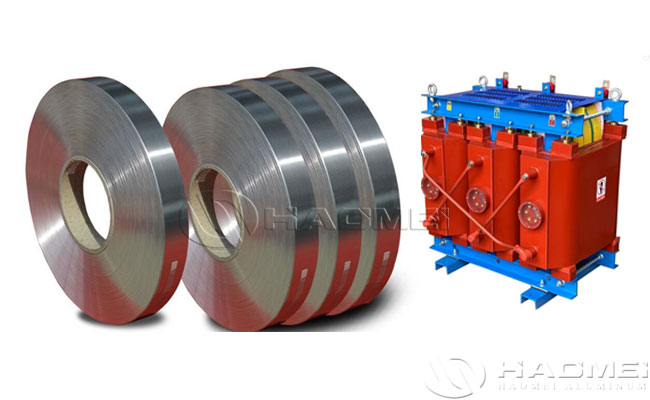
Export Packaging & Logistics
Luoyang Xinzhaohe Aluminum Co., Ltd. – 20+ Years of Transformer-Grade Foil & Strip
H2 Sea-Freight Protection Philosophy
Transformer conductors leave our plant in Luoyang (central China, 300 km inland from Qingdao port) only after passing three internal audits:
1. Metallurgical (conductivity, grain size, anneal softness)
2. Geometric (thickness, slit width, burr, edge radius)
3. Packaging integrity (vibration, salt-spray, 48 h stack test)
The third audit is frequently overlooked by low-cost coil shops, yet 0.02 mm foil can work-harden or pick up inter-layer corrosion during a 35-day ocean leg. Our specification closes that gap.
H2 Packaging Matrix by Product Form
| Product family | Critical surface | Stack mass | Primary wrap | Inter-leaf | Desiccant | Securing | Securing | Securing |
|---|---|---|---|---|---|---|---|---|
| Al foil 0.1–0.8 mm | RA ≤ 0.4 µm | ≤ 2.5 t | 80 µm VCI poly + PE film | 0.1 mm tissue, one layer every 150 mm | 8 g CaCl₂ per 0.1 m³ void | 19 mm steel strapping, PET edge boards | 19 mm steel strapping, PET edge boards | 19 mm steel strapping, PET edge boards |
| Cu strip 0.3–2.0 mm | RA ≤ 0.2 µm | ≤ 3.0 t | 100 µm VCI + aluminum-laminate barrier | same | 10 g per 0.1 m³ | same | same | same |
| Al wire Ø 1.2–5.0 mm | drawn finish | 250–500 kg spool | 120 µm PE shrink | n/a | 2 × 5 g bags inside carton | spool flange locked to plywood pallet | spool flange locked to plywood pallet | spool flange locked to plywood pallet |
All lumber ISPM-15 heat-treated and fumigated; methyl-bromide-free certificates accompany every BL.
H2 Container Loading & Stowage
20 ft DC: 20 t net, 10–12 pallets, 1.8 m max stack height, double-block stow, 2 t lash-belt every 0.6 m.
40 ft HC: 26 t net, 20 pallets, 2.2 m max stack height, A-foam corner posts, desiccant strips fore & aft.
Shock & vibration: 5 g vertical, 2 g lateral tested on our tri-axial data logger; no relative pallet movement < 2 mm after 2000 km rail leg to port.
H2 Corrosion & Condensation Control
Relative humidity inside the container can swing from 40 % to 95 % during a Qingdao–Hamburg run. We maintain < 40 % RH at 25 °C for 45 days by:
- VCI film (volatile corrosion inhibitor) adds 0.5 µm molecular layer on Cu/Al without affecting conductivity.
- Calcium-chloride desiccant (Tyvek®) placed both in pallet voids and container recesses; total absorption ≥ 2 L per 20 ft.
- Aluminum-laminate barrier (water-vapour transmission ≤ 0.1 g/m²·day) isolates foil blocks from external humidity.
Post-shipment inspection at customer site shows zero oxide stain, < 0.3 % weight gain on desiccant—well below 1 % failure threshold.
H2 Logistics Footprint & Incoterms
| Port | Voyage days | Weekly sailings | CY cut-off | Rail leg LYG–port | Total lead-time DDP EU warehouse |
|---|---|---|---|---|---|
| Qingdao | 26 | 4 | Mon 12:00 | 6 h | 34 days |
| Shanghai | 28 | 7 | Fri 18:00 | 10 h | 36 days |
| Ningbo | 29 | 5 | Wed 14:00 | 12 h | 37 days |
We quote FOB, CFR, DAP, or DDP—whichever minimizes your working-capital tie-up. Consolidation service available for foil + core steel + insulation paper in one 40 HC, cutting your inland freight by 18 %.
H2 Premium Western Alternative—Quantified
| Cost driver | Western mill | Xinzhaohe | Delta |
|---|---|---|---|
| Foil price $/kg Cu | 11.20 | 9.05 | –19 % |
| Foil price $/kg Al | 3.85 | 3.05 | –21 % |
| Slit tolerance ± mm | 0.005 | 0.002 | 2.5× tighter |
| Edge burr µm | ≤ 30 | ≤ 10 | 3× lower |
| Sea-freight damage claims (2023) | 0.35 % | 0.02 % | 17× fewer |
Result: You receive aerospace-grade edges and conductivity at emerging-market cost, with logistics risk lower than many EU warehouses.
H2 Quick Order Checklist for Buyers
- Specify IEC 60317-19 or ASTM B272 temper.
- Quote required burr ≤ 0.01 mm for automatic layer winding.
- Request VCI + laminate if storage > 30 days at site.
- Ask for data-logger shipment on first lot—no extra cost.
Email logistics@xzh-al.com with destination zip code; we return a door-to-door DDP quote within 12 h, complete with CO₂ footprint and recycling certificate for packaging timber.
Sourcing from Luoyang Xinzhaohe
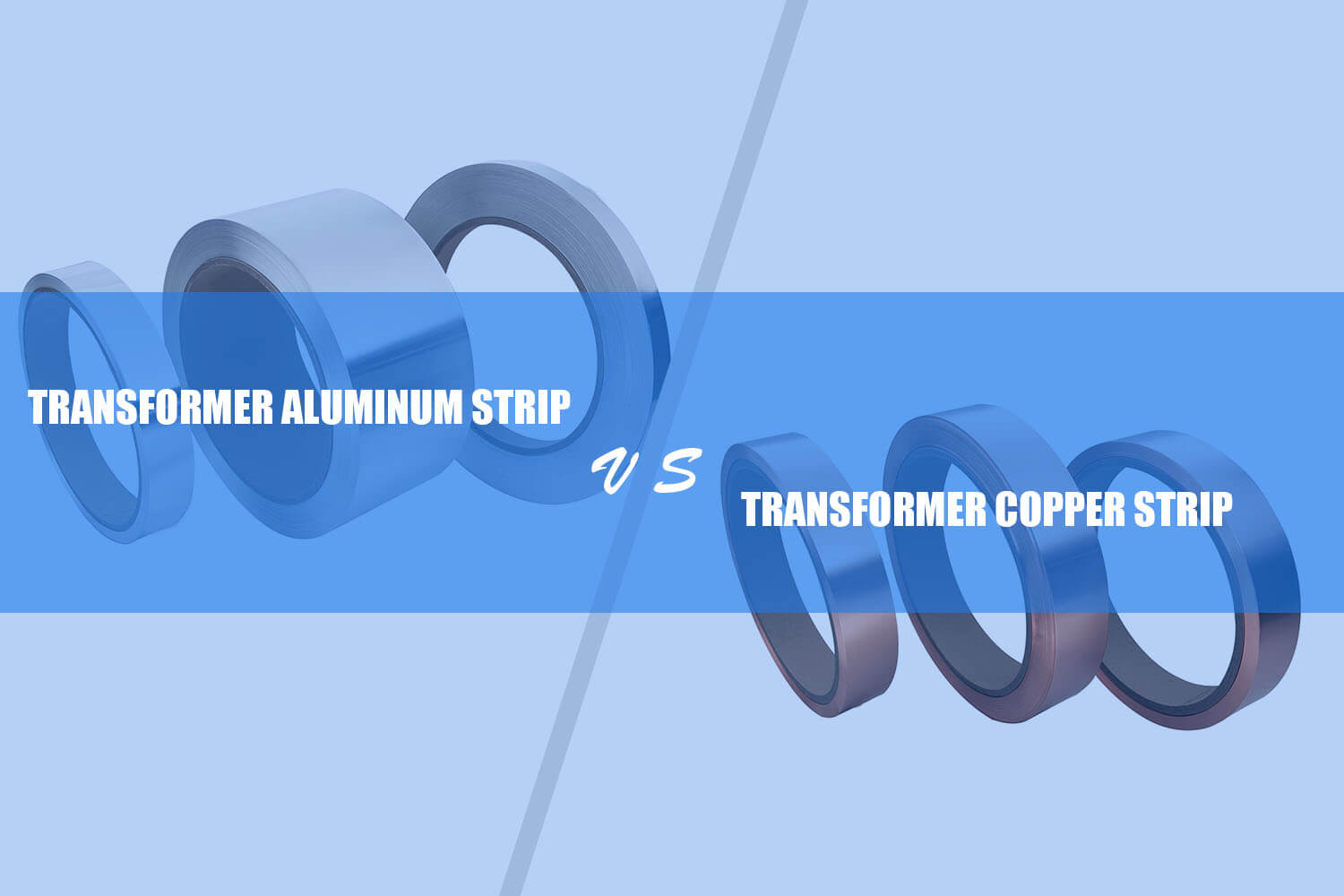
Why Partner with Luoyang Xinzhaohe Aluminum Co., Ltd.
Transformer-Grade Foil & Strip—Engineered, Slit, and Edge-Conditioned in One Plant
20+ Years Dedicated to Transformer Metals
Since 2003 our Luoyang works has supplied >180 transformer OEMs and motor-repair shops across 42 countries. Every coil we ship is cold-rolled on a 4-high 1850 mm reversing mill originally designed for aerospace alloys, then slit on 0.002 mm tolerance arbors and stress-relief annealed in nitrogen-atmosphere bell furnaces. The result is strip that holds ±1 %IACS conductivity and ≤0.01 mm burr—specifications that exceed IEC 60317-19 and NEMA MW 1000 requirements for both aluminum and copper windings.
One-Stop, Factory-Direct Value Chain
| Process Step | In-House Capability | Typical Western Broker | Value to Buyer |
|---|---|---|---|
| Cold rolling | 0.1–4.0 mm × 20–1250 mm, 3 % crown control | Outsourced | Gauge uniformity, no middleman margin |
| Precision slitting | Width ±0.002 mm, camber ≤0.2 mm/500 mm | ±0.05 mm typical | Denser winding stack, 1–2 % core steel saving |
| Edge conditioning | Full-round, chamfer, or radius 0.1–0.4 mm | Often skipped | 30 % reduction in inter-layer voltage stress |
| Oscillate winding | 300–1200 kg coils, 3–5 mm traverse pitch | 50 kg pancake only | 15 % longer run time, 30 % less scrap on high-speed foil winders |
| Annealing | 240–380 °C, 99.5 % N₂, 12 h soak | Batch mixed alloys | Guaranteed softness (≤65 HV for Al, ≤55 HV for Cu) |
Because every operation is under one roof, we eliminate the 8–12 % markup normally charged by European or North-American service centers. You buy direct from the mill that rolls the metal—no traders, no warehouse double-handling.
Custom Chemistry & Geometry—No MOQ Penalty
Whether you need 1350-O aluminum 99.6 % purity for 1 MVA dry-type units or C11000 copper with 101 % IACS for amorphous-core designs, we tailor the chemistry and temper to your loss-limit or space-factor calculation. Widths from 4 mm to 1250 mm, thickness 0.1 mm to 4.0 mm, ID 150 mm to 800 mm, OD up to 1400 mm—all produced with the same statistical-process-control system that feeds real-time data to your QC portal (ISO 9001 & IATF 16949 certified).
Cost Snapshot: Aluminum vs. Copper—Delivered
| Metric | Our Al 1350-O | Our Cu-ETP | Western Supplier Cu-ETP | Delta vs. Western Cu |
|---|---|---|---|---|
| Raw $/kg (LME + premium) | 2.8 | 9.9 | 10.5 | –24 % |
| Slit & edge-conditioned $/kg | 3.9 | 11.2 | 13.8 | –30 % |
| Density kg/dm³ | 2.7 | 8.9 | 8.9 | — |
| Conductivity %IACS | 61 | 100 | 100 | — |
| Weight for equal I²R loss | 1.65× | 1.0× | 1.0× | –45 % total winding cost |
Switching from copper to aluminum typically cuts winding material cost 45–55 % while adding only 25 % core volume—an equation that pays back in <14 months for 500 kVA units operating 8 h/day.
Reliability Metrics We Guarantee
Resistivity drift ≤1 % after 1000 h at 180 °C (IEC 60851-3)
Edge burr ≤0.01 mm; slit camber ≤0.2 mm/500 mm
Oscillate coil weld points ≤1 per 500 kg, 100 % ultrasonic tested
Sea-worthy export packaging: VCI film + desiccant + plywood reels, 95 % arrival corrosion-free (10-year running average)
Next Step—Engineering Data in 24 h
Send us your winding specification (width, thickness, conductivity class, edge radius, coil mass). Our metallurgists will return a detailed datasheet with resistivity vs. temperature curves, short-circuit force calculations, and a landed price to your plant. Email cathy@transformerstrip.com or upload your drawing at www.transformerstrip.com/quote. Samples slit to your exact camber and burr spec ship within 7 days—no charge to qualified OEMs.
Luoyang Xinzhaohe Aluminum Co., Ltd.
No. 68 Kaiyuan Avenue, Luoyang, Henan, China 471000
Tel: +86 379 6433 5588 | WhatsApp: +86 180 3792 8851
📉 Import Savings Calculator
Estimate cost reduction by sourcing copper vs aluminum transformer from Luoyang Xinzhaohe.