


Table of Contents
Market Insight: Common Wire Transformer
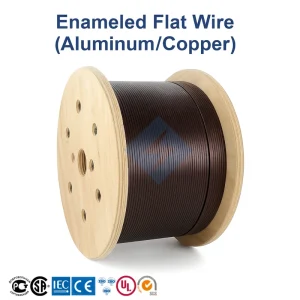
Market Analysis: Winding Wire Demand in Common Wire Transformers
The global demand for common wire transformers remains a cornerstone of electrical infrastructure, spanning power distribution, industrial machinery, renewable energy systems, and consumer electronics. At the core of these transformers lies the winding wire—typically aluminum or copper conductors insulated with polymer films or enamel coatings. As a critical component, the performance, efficiency, and longevity of a transformer are directly influenced by the quality and specifications of the winding wire used. With over two decades of specialization in aluminum conductor manufacturing, Luoyang Xinzhaohe Aluminum Co., Ltd. provides high-purity, precision-drawn aluminum winding wire engineered to meet the rigorous demands of modern transformer applications.
Industrial demand for winding wire is driven by several key sectors. In power distribution networks, distribution transformers—often using aluminum winding wire due to cost and weight advantages—require materials that deliver consistent conductivity, thermal stability, and mechanical strength. The shift toward energy-efficient transformers, particularly in compliance with IEC 60076 and DOE efficiency standards, has intensified the need for winding wires with minimized resistive losses and enhanced thermal performance. In renewable energy installations such as solar inverters and wind turbine transformers, reliability under variable load conditions and elevated operating temperatures demands winding wires with superior insulation integrity and resistance to thermal aging.
In industrial automation and motor drive systems, control transformers and isolation transformers rely on winding wires capable of withstanding electromagnetic stress and partial discharges over extended operational cycles. Here, dimensional consistency—such as precise outer diameter tolerance and uniform insulation thickness—is critical to ensure tight winding packing and prevent inter-turn faults. Aluminum winding wire, when properly engineered with high ductility and tensile strength, offers a viable alternative to copper, particularly in applications where weight reduction and material cost optimization are strategic priorities.
Quality in winding wire directly impacts transformer performance and lifecycle cost. Substandard conductors with impurities, inconsistent temper, or defective insulation can lead to premature failure through hot spot formation, dielectric breakdown, or mechanical deformation during winding. At Luoyang Xinzhaohe Aluminum, each batch of aluminum wire undergoes stringent quality control, including resistivity testing, elongation analysis, and surface defect inspection, ensuring compliance with international standards. Our proprietary drawing and annealing processes yield wire with optimal electrical conductivity (≥61% IACS) and mechanical properties tailored for high-speed automatic winding operations.
The growing emphasis on sustainability and supply chain resilience further underscores the importance of reliable, high-performance winding wire suppliers. As global transformer manufacturers seek to balance efficiency, cost, and environmental impact, the role of precision-engineered aluminum winding wire becomes increasingly strategic. Luoyang Xinzhaohe Aluminum Co., Ltd. stands at the forefront of this evolution, delivering materials that meet the technical and economic demands of next-generation transformer design.
Technical Specs: Common Wire Transformer
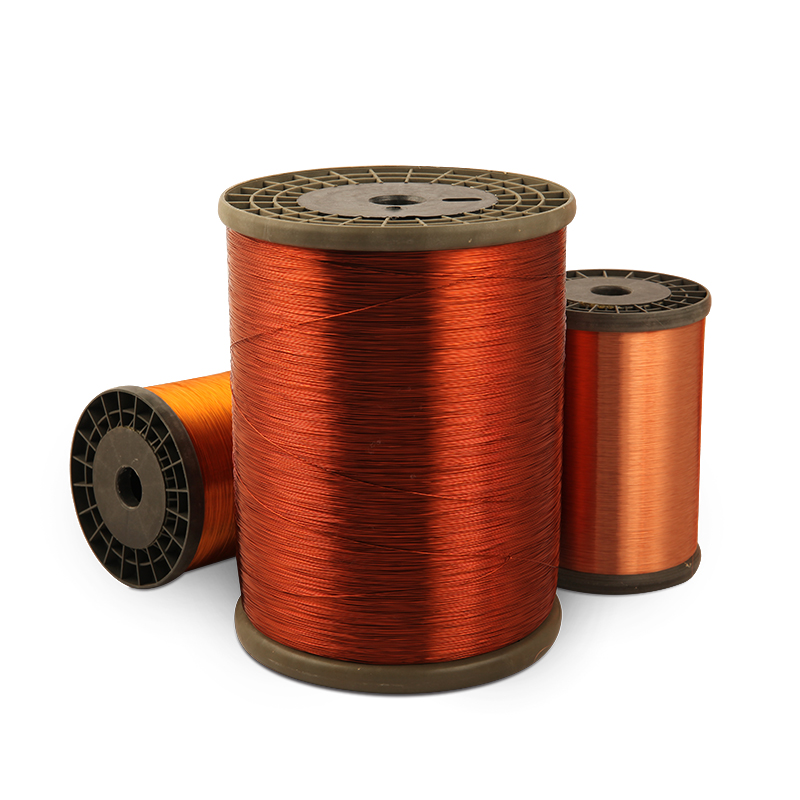
Technical Specifications for Aluminum Winding Wire in Common Power Transformers
As a metallurgical specialist with Luoyang Xinzhaohe Aluminum CO., Ltd, we emphasize that precise adherence to technical specifications is non-negotiable for aluminum winding wire in transformer applications. Aluminum’s inherent properties—lower conductivity versus copper, sensitivity to thermal cycling, and oxide layer dynamics—demand rigorous control over critical parameters to ensure long-term dielectric integrity, mechanical resilience, and thermal stability. Our 20+ years of metallurgical refinement focus on mitigating aluminum-specific failure modes through controlled alloy composition, annealing processes, and insulation compatibility.
Insulation Breakdown Voltage Performance
The insulation system must withstand transient overvoltages and continuous operating stress without partial discharge or puncture. For aluminum magnet wire used in distribution and power transformers, a minimum AC breakdown voltage of 3.5 kV rms at 60 Hz is standard per IEC 60317-0-5. However, Xinzhaohe enforces an elevated internal threshold of 4.2 kV rms to account for aluminum’s susceptibility to micro-movements under electromagnetic forces, which can degrade insulation over time. This margin ensures reliability in grids with fluctuating loads. Testing is conducted per ASTM D2275 on wound samples at 25°C, with strict rejection of batches exhibiting <4.0 kV rms.
Elongation and Mechanical Integrity
Elongation directly impacts wire drawability during winding and resistance to fracture under thermal expansion cycles. Aluminum’s ductility is highly dependent on grain structure control during annealing. We specify a minimum elongation of 25% for 1.0 mm diameter wire (per IEC 60264-1), but Xinzhaohe’s process achieves 28–32% through optimized annealing in oxygen-free atmospheres. This range prevents brittle fracture during high-tension winding while maintaining sufficient strength to resist deformation under short-circuit forces. Elongation below 23% risks wire breakage during manufacturing; values exceeding 35% indicate over-annealing, reducing creep resistance at elevated temperatures.
Thermal Class Compliance
Thermal endurance dictates transformer lifespan. Aluminum windings require insulation systems rated for continuous operation between 130°C (Class B) and 220°C (Class C), but aluminum’s coefficient of thermal expansion (CTE) mismatch with common polyimide or polyester-imide insulations necessitates tighter CTE alignment. Xinzhaohe wire is validated for Class 180 (H) as a baseline (155°C hotspot), with optional Class 200 (R) and Class 220 (C) formulations. Critical validation includes thermal aging per IEC 60172: after 20,000 hours at 180°C, tensile strength retention must exceed 85% to prevent insulation delamination from CTE-induced stress.
Critical Parameter Summary
| Parameter | Standard Requirement | Xinzhaohe Typical Range | Test Standard |
|---|---|---|---|
| AC Breakdown Voltage | ≥3.5 kV rms | 4.2–4.8 kV rms | IEC 60317-0-5 |
| Elongation (1.0 mm dia) | ≥25% | 28–32% | IEC 60264-1 |
| Thermal Class | 130–220°C | 180–220°C (H–C) | IEC 60172 |
| Tensile Strength Retention (180°C/20k hrs) | ≥80% | ≥87% | IEC 60172 Annex B |
These specifications reflect Xinzhaohe’s metallurgical expertise in aluminum wire processing. Our in-house laboratories validate every batch against these benchmarks, ensuring compatibility with global transformer manufacturing standards. Supply chain traceability—from high-purity aluminum ingot sourcing to final spooling—is maintained via ISO 9001-certified workflows, guaranteeing consistency for high-reliability power infrastructure.
Factory Tour: Manufacturing
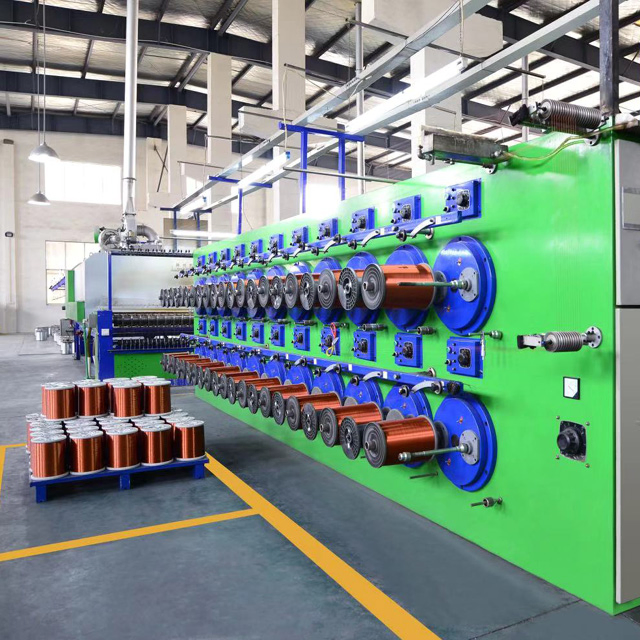
Manufacturing Process of Copper Winding Wire for Common Wire Transformers
The production of high-performance copper winding wire for common wire transformers at Luoyang Xinzhaohe Aluminum Co., Ltd follows a rigorously controlled sequence of industrial processes designed to ensure dimensional accuracy, electrical conductivity, and dielectric integrity. With over two decades of metallurgical and process engineering expertise, our facility integrates advanced automation and inline quality monitoring to deliver consistent product performance tailored to transformer manufacturing requirements.
The process begins with rod drawing, where high-purity electrolytic tough pitch (ETP) copper rods, meeting ASTM B3 standard specifications, are fed into a multi-die continuous drawing machine. The rods undergo progressive cold drawing to achieve the target wire diameter, typically ranging from 0.05 mm to 2.5 mm depending on transformer design. This cold working enhances tensile strength while maintaining tight dimensional tolerances, with diameter deviations controlled within ±0.005 mm. Lubricant cooling systems are employed throughout to manage heat generation and prevent surface defects.
Following drawing, the wire enters a continuous annealing system. This in-line heat treatment is performed in a controlled nitrogen-hydrogen atmosphere furnace to prevent oxidation and ensure complete recrystallization. The annealing process restores ductility and optimizes electrical conductivity, achieving a minimum of 100% IACS (International Annealed Copper Standard). Temperature profiles are precisely regulated across multiple zones to ensure uniform metallurgical properties along the entire spool length.
The annealed wire is then transferred directly to the enameling line, where it undergoes surface pretreatment to ensure optimal adhesion of the insulating coating. A polyurethane, polyester, or polyamide-imide resin system is applied via precision die coating, with film thickness controlled to within ±0.003 mm. The wire passes through a series of curing ovens where stepwise thermal curing ensures complete polymerization and dielectric strength. Multiple coating passes may be applied for heavy build insulation classes, meeting thermal indices up to 220°C (per NEMA MW-35-C or IEC 60317 standards).
Throughout the production line, real-time inline testing systems continuously monitor critical parameters. These include diameter measurement via laser gauges, high-voltage breakdown testing at 3 kV to 15 kV depending on insulation class, and turn-to-turn fault detection using surge comparison. Any deviation beyond preset thresholds triggers automatic rejection and process correction.
Final quality control includes off-line sampling per AQL Level II, with tests for elongation, springback, thermal shock, and solderability. All batches are traceable through lot numbering, and full material test reports are provided. This end-to-end process ensures that each spool of winding wire meets the stringent reliability and performance demands of modern transformer applications.
Packaging & Logistics
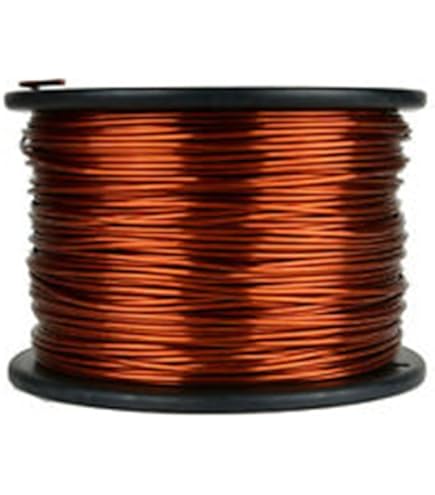
Export Packaging Protocol for Aluminum Winding Wire: Ensuring Integrity in Global Transit
At Luoyang Xinzhaohe Aluminum Co., Ltd., with over two decades of specialized expertise in aluminum conductor production for electromagnetic applications, we recognize that export packaging is not merely a logistical step but a critical component of product integrity preservation. Common wire transformers demand unwavering material consistency, and aluminum winding wire is particularly susceptible to moisture-induced surface oxidation and mechanical damage during extended sea freight. Our engineered packaging system directly addresses the harsh realities of international ocean transport, where humidity cycles, condensation risks, and dynamic handling forces are inherent. Failure to mitigate these factors compromises wire conductivity, surface finish, and ultimately, transformer performance and lifespan. Our protocol is designed to eliminate these risks through rigorous material selection and process control.
All aluminum wire coils destined for export are secured on custom-engineered wooden pallets constructed from kiln-dried hardwood. These pallets undergo mandatory ISPM 15 certification, ensuring wood moisture content remains below 18% and eliminating the risk of pest infestation or regulatory rejection at destination ports. Structural integrity is paramount; pallets are rated for minimum static loads exceeding 2500 kg, featuring reinforced stringers and deck boards to prevent deformation under stacked cargo weight during multi-tier container stowage. Coils are precisely centered and mechanically fastened using non-marring steel strapping, preventing lateral shift or vibration-induced abrasion against pallet components throughout the voyage.
The primary defense against maritime humidity is our multi-layer moisture barrier system. Each palletized coil assembly is hermetically sealed within a high-density polyethylene vapor barrier film, specifically formulated for extended salt-air exposure. This film exhibits a water vapor transmission rate (WVTR) of less than 0.5 g/m²/24hr at 38°C and 90% RH, significantly outperforming standard packaging films. Critical to efficacy is the complete enclosure process: film is heat-sealed at all seams under controlled tension to eliminate micro-perforations, followed by internal placement of calibrated desiccant packs (minimum 30% relative humidity capacity) and humidity indicator cards. This creates a stable microclimate within the package, maintaining internal relative humidity below 40% for durations exceeding 120 days – far exceeding typical Asia-Europe or Asia-Americas transit windows.
Our packaging validation extends beyond material specs. Every sealed unit undergoes mandatory leak testing via vacuum decay methodology prior to container loading, verifying barrier integrity. Containerization procedures mandate pallet spacing for airflow and exclusion of moisture-generating materials like untreated wood dunnage. This integrated approach, refined through 20+ years of global shipments, ensures aluminum wire arrives at the transformer winding facility with pristine surface quality, zero oxidation, and dimensional stability. The result is minimized production scrap, consistent winding performance, and elimination of costly rework or rejection at the customer’s facility. For the transformer manufacturer, this translates directly to supply chain reliability and protection of their core product quality.
Packaging Tier Comparison for Critical Shipments
| Feature | Standard Export Packaging | Xinzhaohe Premium Export Packaging |
|---|---|---|
| Pallet Certification | Basic ISPM 15 | Enhanced ISPM 15 + Load Testing |
| Vapor Barrier WVTR | < 2.0 g/m²/24hr | < 0.5 g/m²/24hr |
| Desiccant Capacity | 20% RH | 30% RH + Saturation Indicators |
| Pre-shipment Validation | Visual Seal Check | Vacuum Decay Leak Testing |
Sourcing from Luoyang Xinzhaohe
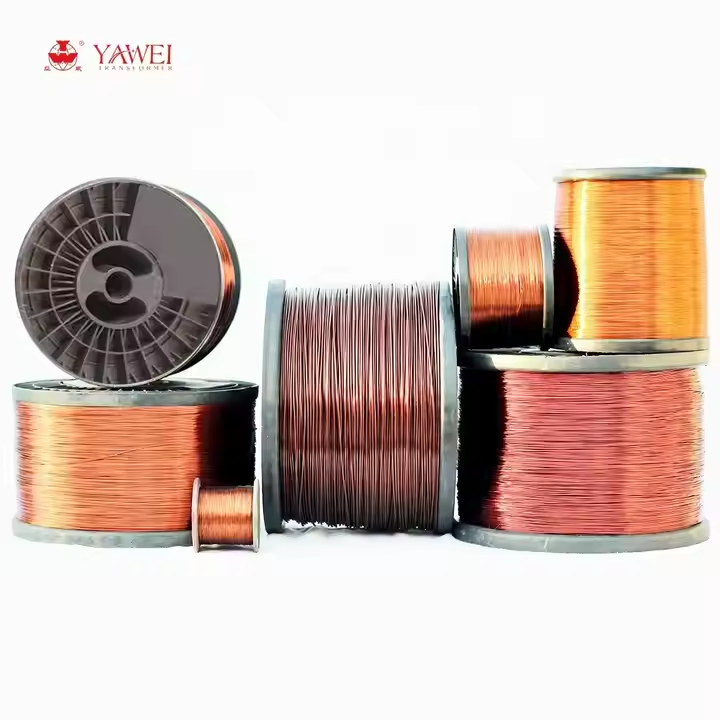
Partner with Luoyang Xinzhaohe Aluminum Co., Ltd for Premium Winding Wire Solutions
With over two decades of specialized manufacturing experience, Luoyang Xinzhaohe Aluminum Co., Ltd stands as a trusted leader in the production of high-performance aluminum winding wire for common wire transformers and other electromagnetic applications. Located in the industrial heartland of Henan Province, China, our facility integrates advanced metallurgical engineering with rigorous quality control to deliver conductive materials that meet the exacting demands of modern power and distribution transformers.
Our production ecosystem is anchored in vertical integration, enabling full oversight from raw material selection to final product certification. We utilize high-purity aluminum ingots (99.7% minimum Al content) sourced through audited supply channels, ensuring consistent electrical conductivity and mechanical performance. The entire wire drawing and annealing process is conducted in-house using state-of-the-art German and Japanese equipment, including continuous annealing lines and precision diameter control systems. This allows us to produce aluminum winding wire in diameters ranging from 0.8 mm to 6.0 mm, with tight tolerances of ±0.01 mm, surface roughness under Ra 0.8 μm, and elongation values exceeding 35%—key parameters for reliable coil winding and thermal cycling performance.
All products are manufactured in compliance with international standards, including IEC 60104, GB/T 23308, and ASTM B418. Every batch undergoes comprehensive testing for tensile strength, resistivity (maximum 0.028264 Ω·mm²/m at 20°C), bend performance, and oxide layer integrity. Our ISO 9001:2015-certified quality management system ensures traceability and consistency across large-volume orders, making us a preferred supplier for transformer OEMs across Asia, Europe, and South America.
Beyond product excellence, Luoyang Xinzhaohe excels in supply chain reliability. We maintain a 15,000-ton annual production capacity with optimized logistics coordination, enabling on-time delivery rates above 98%. Our technical service team supports clients with material selection guidance, custom spooling configurations (reels from 500 kg to 3,000 kg), and rapid response to engineering inquiries.
For sourcing managers and design engineers seeking a stable, technically capable partner in aluminum winding wire, Luoyang Xinzhaohe offers a compelling combination of metallurgical expertise, production scale, and customer-focused service. We are committed to supporting the efficiency and reliability of your transformer manufacturing process through precision-engineered materials and long-term supply assurance.
Contact us today to discuss your winding wire requirements.
Cathy Zhang
Sales Director
cathy@transformerstrip.com
Luoyang Xinzhaohe Aluminum Co., Ltd
📉 Factory Direct Savings Calculator
Calculate your potential savings by importing common wire transformer directly from China.