


Table of Contents
Market Insight: Cold Rolled Grain Oriented Steel
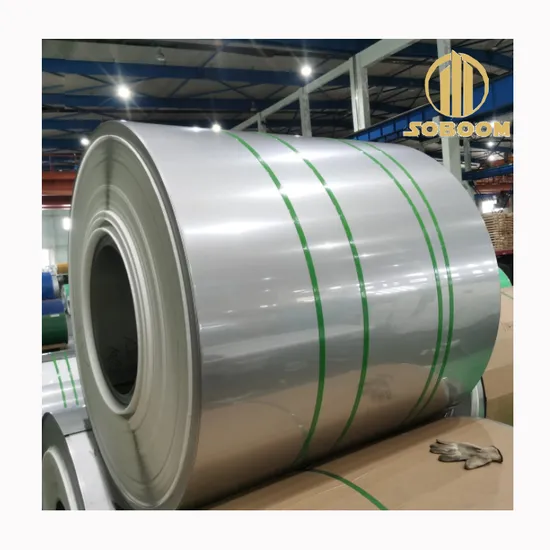
Market Analysis: Silicon Steel (Electrical Steel)
Cold rolled grain oriented silicon steel (CRGO) remains a cornerstone material in the global power infrastructure, primarily due to its critical role in high-efficiency transformer manufacturing. As a specialized ferrosilicon alloy with a silicon content typically ranging from 2.9% to 3.3%, CRGO is engineered to exhibit superior magnetic properties along the rolling direction, enabling minimized core losses and optimized permeability under alternating magnetic fields. This makes it the material of choice for distribution and power transformers used in transmission and distribution (T&D) networks, renewable energy integration systems, and industrial power applications.
Global demand for CRGO steel has shown steady growth, driven by increasing electricity consumption, grid modernization initiatives, and the expansion of renewable energy infrastructure. Countries investing heavily in smart grids and high-voltage direct current (HVDC) transmission systems are particularly strong markets, as these applications demand transformers with the highest energy efficiency ratings. Regulatory standards such as the IEC 60404-8 and DOE efficiency mandates in North America have further tightened permissible core loss values, pushing transformer manufacturers to adopt higher grades of CRGO steel with tighter tolerances and improved grain orientation.
The performance of a transformer is directly influenced by the quality of the electrical steel used in its core. Minor inconsistencies in grain alignment, coating uniformity, or thickness tolerance can lead to increased hysteresis and eddy current losses, resulting in higher operating temperatures, reduced efficiency, and shortened service life. High-quality CRGO steel ensures lower no-load losses, which account for a significant portion of total lifecycle energy consumption in transformers—especially those operating continuously at partial load. For utilities and industrial operators, this translates into measurable reductions in energy costs and carbon emissions over the asset’s lifetime.
At Luoyang Xinzhaohe Aluminum Co., Ltd, with over two decades of experience in advanced metal processing and supply chain management, we recognize that material consistency is paramount. Our technical partnerships with leading steel producers enable us to source CRGO steel that meets stringent international specifications, including M4, M5, and M6 grades, with guaranteed magnetic flux density (B800 ≥ 1.88 T) and core loss values (P1.7/50 ≤ 1.0 W/kg). Each batch undergoes rigorous quality verification, including surface inspection, lamination testing, and magnetic property analysis, to ensure compliance with project-specific requirements.
In an industry where reliability and efficiency are non-negotiable, the selection of premium-grade CRGO steel is not merely a technical decision—it is a strategic investment in long-term performance. As global energy demands rise and sustainability targets intensify, the role of high-performance electrical steel in enabling efficient power conversion will only become more critical.
Technical Specs: Cold Rolled Grain Oriented Steel
Technical Specifications for Cold Rolled Grain Oriented Silicon Steel
Luoyang Xinzhaohe Aluminum CO., Ltd clarifies that Cold Rolled Grain Oriented (CRGO) steel falls under electrical steel (silicon steel) production, distinct from aluminum manufacturing. Our 20+ years of metallurgical expertise ensure adherence to global standards for CRGO, critical for high-efficiency transformer cores. Key technical parameters must be rigorously controlled to optimize magnetic performance and manufacturability.
Core loss (iron loss) is the primary efficiency metric, measured in watts per kilogram (W/kg) under standardized sinusoidal flux density and frequency. Lower core loss directly correlates with reduced energy dissipation during transformer operation. CRGO must achieve specific loss values at 1.7 Tesla (T) induction and 50/60 Hz, as defined by IEC 60404-2 or JIS C 2553. High-grade CRGO like M0H130 exhibits core loss as low as 0.85 W/kg at 1.7T/50Hz, while standard grades (e.g., M1H155) range up to 1.15 W/kg. Loss values are anisotropic, minimized along the rolling direction due to Goss texture (110)[001] grain orientation. Deviations in silicon content (2.9–3.3%), slab reheating, or secondary recrystallization annealing critically impact loss performance.
Magnetic flux density (B800), measured in Tesla, indicates saturation capability under an 800 A/m magnetic field. Higher B800 enables compact core designs with reduced material usage. CRGO must sustain minimum B800 values of 1.90–1.93 T, per IEC standards. This parameter depends on precise control of manganese sulfide inhibitor systems during hot rolling and decarburization annealing. Inadequate texture development or excessive carbon residuals below 3 ppm will depress B800, increasing core volume requirements.
Flatness tolerance, quantified in I-Units, is essential for automated core stacking and minimizing vibration noise. CRGO must maintain flatness ≤25 I-Units (typically 15–20 I-Units for premium grades) across the strip width. Excessive camber or edge wave disrupts lamination alignment, increasing eddy current losses and audible hum. Flatness is governed by cold rolling mill precision, tension leveling, and stress-relief annealing parameters. We enforce strict flatness monitoring via laser profilometry to ensure ≤0.1% deviation from ideal planarity.
The following table summarizes critical CRGO specifications for sourcing evaluation:
| Parameter | Test Condition | Standard Grade (e.g., M1H155) | High-Efficiency Grade (e.g., M0H130) | Measurement Standard |
|---|---|---|---|---|
| Core Loss (P1.7/50) | 1.7 T, 50 Hz | ≤1.15 W/kg | ≤0.85 W/kg | IEC 60404-2 |
| Core Loss (P1.7/60) | 1.7 T, 60 Hz | ≤1.30 W/kg | ≤0.95 W/kg | IEC 60404-2 |
| Magnetic Flux Density (B800) | 800 A/m | ≥1.90 T | ≥1.93 T | IEC 60404-2 |
| Flatness Tolerance | Full width, no load | ≤25 I-Units | ≤20 I-Units | ASTM A34/A34M |
| Thickness Tolerance | Nominal 0.23–0.30 mm | ±0.004 mm | ±0.003 mm | JIS C 2553 |
These specifications are non-negotiable for minimizing total cost of ownership in power transformers. Core loss dictates operational energy savings over decades, while B800 and flatness directly impact manufacturing yield and acoustic performance. Luoyang Xinzhaohe Aluminum CO., Ltd implements in-line statistical process control for all parameters, with third-party certification available per client request. Sourcing decisions must prioritize certified test reports over nominal grade claims to avoid field performance degradation.
Factory Tour: Manufacturing
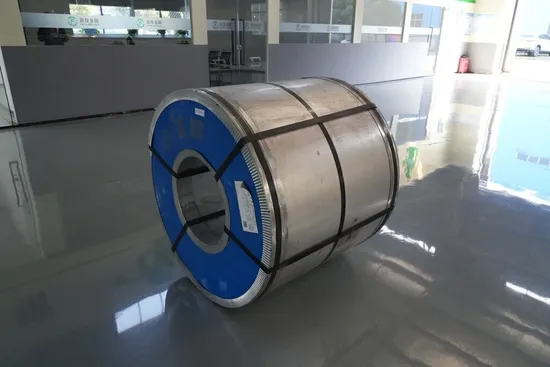
Manufacturing Process of Cold Rolled Grain Oriented Silicon Steel
The production of cold rolled grain oriented silicon steel (CRGO) is a highly controlled metallurgical process designed to optimize magnetic properties, particularly directional permeability and low core loss, which are critical for high-efficiency electrical transformers. At Luoyang Xinzhaohe Aluminum Co., Ltd, with over two decades of experience in advanced silicon steel manufacturing, the process is executed with stringent process control to ensure consistency, performance, and compliance with international standards such as IEC 60404-8 and GB/T 2521.
The manufacturing sequence begins with slitting, where wide master coils of cold rolled grain oriented steel are longitudinally cut into narrower strips according to customer specifications. This step ensures dimensional accuracy and prepares the material for downstream processing. Precision slitting is performed using high-tolerance rotary shear lines equipped with automatic edge guidance systems to minimize camber and maintain uniform strip width, typically ranging from 50 mm to 1,000 mm.
Following slitting, the material undergoes annealing, a critical thermal treatment conducted in a controlled atmosphere furnace. This step relieves internal stresses induced during prior rolling and slitting operations while promoting secondary grain growth. The annealing process is carried out under a protective nitrogen-hydrogen atmosphere to prevent oxidation and decarburization. Temperature profiles are precisely managed, typically peaking between 1,050°C and 1,200°C, to facilitate the development of the Goss texture (110)[001], which is responsible for the superior magnetic orientation along the rolling direction. The duration and cooling rate are optimized to enhance magnetic flux density (B800) and reduce specific total losses (W17/50).
After annealing, an inorganic insulation coating is applied to the steel surface. This coating serves multiple functions: it provides interlaminar electrical resistance to minimize eddy current losses, enhances corrosion resistance, and improves mechanical durability during transformer core assembly. At Xinzhaohe, a phosphate-based or amorphous silica coating is uniformly applied via roll coating or spray method, followed by curing at elevated temperatures. Coating weight is tightly controlled within 0.8–1.5 g/m² per side to balance insulation performance and lamination bonding capability.
The final stage is precision cutting, where the annealed and coated strips are transversely cut into defined lengths using high-speed, servo-driven cut-to-length lines. These lines are equipped with laser measurement systems and automatic stack handling to ensure dimensional tolerances within ±0.2 mm. Cut lengths are tailored to core yoke and limb configurations, supporting both step-lap and mitred joint designs in transformer construction.
Throughout the entire process, quality control is maintained at every stage. Incoming coils are inspected for surface defects and magnetic properties. During slitting, edge quality and width consistency are monitored in real time. Annealing effectiveness is verified through microstructure analysis and Epstein frame testing for core loss and permeability. Coating adhesion and thickness are checked via standardized ASTM methods. Final inspection includes visual surface grading, dimensional verification, and batch sampling for magnetic performance certification. All data is documented to ensure full traceability and compliance with customer technical requirements.
Packaging & Logistics
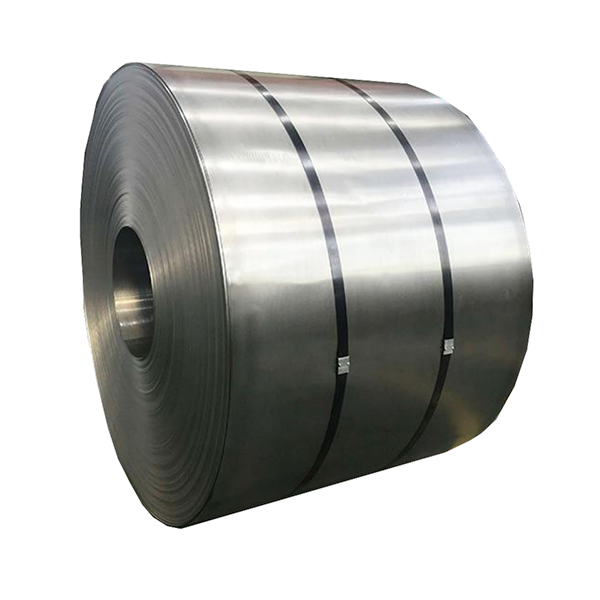
Export Packaging Protocol for Cold Rolled Grain Oriented Electrical Steel
Luoyang Xinzhaohe Aluminum Co., Ltd leverages 20+ years of specialized expertise in silicon steel manufacturing to engineer export packaging systems that ensure CRGO integrity during global maritime transit. Our protocols address the critical vulnerabilities of grain-oriented electrical steel—particularly moisture sensitivity and mechanical deformation—through rigorously validated structural and environmental controls. All packaging adheres to ISO 9001 quality management standards and complies with international maritime safety regulations, including IMO and ISPM 15 requirements for wooden components.
Wooden pallets form the foundational layer of our export system. Constructed from kiln-dried, ISPM 15-certified hardwood, these pallets feature a minimum load-bearing capacity of 40 metric tons to withstand dynamic forces during vessel stowage and handling. Each pallet incorporates anti-slip rubber interlayers between coil layers and reinforced perimeter bracing to prevent lateral shifting. Crucially, the wood undergoes moisture-content verification (≤18% per ASTM D4442) prior to assembly, eliminating internal vapor sources that could compromise coil surfaces. Pallet dimensions strictly conform to ISO container footprints (1,200 × 1,000 mm or 1,100 × 1,100 mm) to optimize space utilization and minimize cargo movement.
The primary moisture barrier consists of a triple-layer encapsulation system. Coils are first wrapped in 125μm-thick vapor corrosion inhibitor (VCI) film, which actively suppresses electrochemical corrosion at the steel surface. This is followed by a secondary layer of high-density polyethylene (HDPE) with a water vapor transmission rate (WVTR) of ≤0.5 g/m²/24h at 38°C, 90% RH—exceeding ASTM E96 standards. The outermost layer utilizes UV-stabilized, puncture-resistant polypropylene shrink film (200μm thickness) tensioned to 15% elongation to eliminate air pockets. All films are sealed via impulse welding at 250°C, creating hermetic seams validated through vacuum decay testing (≤1.0 Pa/min leakage).
For sea freight resilience, we integrate real-time environmental monitoring. Each shipment includes wireless hygrometers logging internal humidity at 2-hour intervals, with data accessible via cloud platform to confirm sustained sub-60% RH conditions. Container loading occurs in climate-controlled warehouses (≤50% RH), and desiccant packs (calcium chloride, 1,000g/unit) are positioned at coil interfaces to absorb residual moisture. Our process validation includes 14-day salt spray testing per ASTM B117, simulating harsh marine environments without surface degradation.
This integrated approach mitigates the dominant failure modes in CRGO logistics: interlayer rust from condensation, edge damage during discharge, and coating abrasion. By eliminating moisture ingress paths and structural instability, we achieve a documented 99.8% in-transit integrity rate across 12,000+ metric tons of annual exports. Clients receive full packaging certification documentation, including material test reports and container monitoring logs, ensuring traceability from factory to destination port. For mission-critical applications like transformer core manufacturing, this packaging standard is non-negotiable for preserving magnetic properties and dimensional precision.
| Packaging Component | Specification | Validation Standard |
|---|---|---|
| Wooden Pallet | ISPM 15 hardwood, 40 MT load capacity | ISO 13315-3 |
| VCI Film | 125μm thickness, Fe⁺² inhibition | ASTM D609 |
| HDPE Barrier | WVTR ≤0.5 g/m²/24h | ASTM E96 |
| Shrink Film | 200μm PP, UV-stabilized | ASTM D2732 |
| Desiccant | CaCl₂, 1,000g/unit | JIS Z 0208 |
Sourcing from Luoyang Xinzhaohe
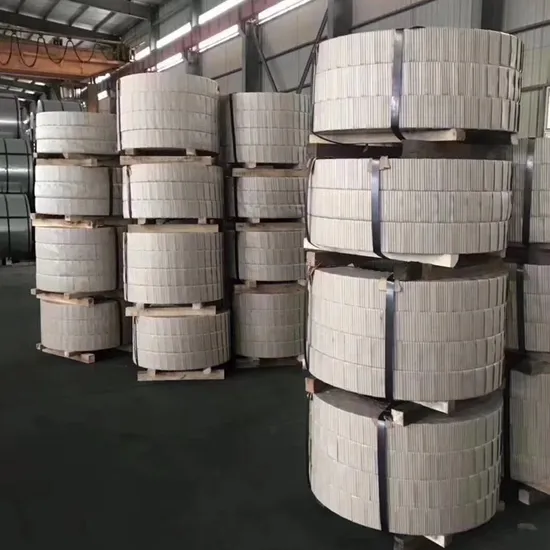
Partner with Luoyang Xinzhaohe for High-Performance Cold Rolled Grain Oriented Silicon Steel
Luoyang Xinzhaohe Aluminum Co., Ltd brings over two decades of specialized expertise in the production and supply of high-quality silicon steel, with a focused capability in cold rolled grain oriented electrical steel (CRGO). As a trusted name in the electrical steel supply chain, we have consistently delivered precision-engineered materials that meet the stringent performance demands of transformer and electrical equipment manufacturers worldwide.
Our manufacturing infrastructure is built around advanced rolling, annealing, and insulating technologies, ensuring tight control over grain orientation, magnetic flux density, and core loss characteristics. The CRGO steel produced at our fully integrated facility conforms to international standards including IEC 60404-8, ASTM A876, and GB/T 2521. We maintain strict process discipline across decarburization annealing and tension coating stages, which are critical for achieving optimal magnetic domain structure and minimizing hysteresis losses in final applications.
We specialize in CRGO steel grades ranging from M47 to M27, with thicknesses from 0.23 mm to 0.30 mm, tailored to support high-efficiency transformer designs. Our production lines are equipped with continuous annealing furnaces and precision coating systems that ensure uniform magnesium oxide (MgO) layer deposition, enhancing interlayer resistance and reducing eddy current losses. Each coil undergoes rigorous offline testing for magnetic properties, surface quality, and dimensional accuracy using state-of-the-art Epstein frame testers, laser micrometers, and surface defect inspection systems.
Quality assurance is embedded throughout our operational workflow. Our in-house metallurgical laboratory conducts chemical composition analysis, grain size evaluation, and texture mapping to verify crystallographic alignment along the <100> direction, a defining characteristic of high-grade grain-oriented material. This level of technical oversight ensures consistent product performance across batches, supporting reliable transformer core fabrication and long-term operational efficiency.
In addition to technical excellence, we offer flexible supply solutions tailored to OEM and tier-1 supplier requirements. Our logistics network supports containerized shipments with moisture-controlled packaging to prevent corrosion during transit. We also provide full material traceability, mill test certificates, and technical documentation compliant with ISO 9001 standards.
For engineering teams seeking a dependable partner in electrical steel sourcing, Luoyang Xinzhaohe offers a proven combination of metallurgical precision, production stability, and customer-focused service. Our team is equipped to support technical consultations, sample provisioning, and volume supply agreements with competitive lead times.
Contact us today to discuss your CRGO steel requirements and discover how our manufacturing capabilities can align with your product performance goals.
Email: cathy@transformerstrip.com
📉 Factory Direct Savings Calculator
Calculate your potential savings by importing cold rolled grain oriented steel directly from China.