


Table of Contents
Market Insight: Cold Rolled Grain Oriented Silicon Steel
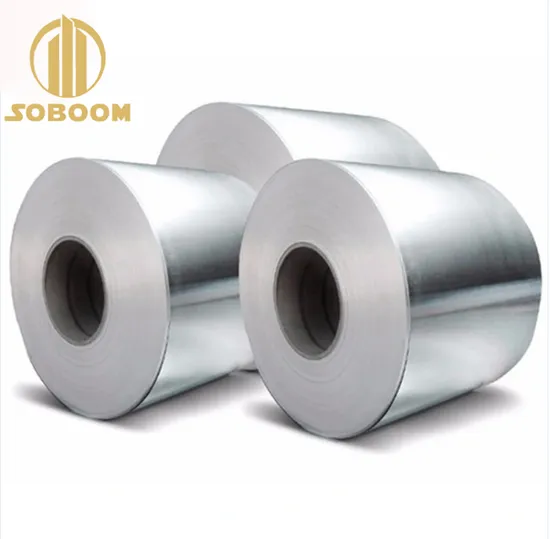
Market Analysis: Cold Rolled Grain Oriented Silicon Steel for Transformer Applications
Global demand for cold rolled grain oriented silicon steel (CRGO) remains intrinsically tied to the expansion and modernization of electrical infrastructure. CRGO serves as the foundational material for high-efficiency power and distribution transformers, where its anisotropic magnetic properties enable optimal directional flux conduction along the rolling direction. Current market drivers include stringent international energy efficiency regulations (e.g., DOE 2016 in the U.S., EU Ecodesign Directive), renewable energy grid integration requiring robust transmission systems, and aging infrastructure replacement cycles in industrialized economies. The transformer manufacturing sector consumes over 85% of global CRGO production, with demand growth projected at 4.2% CAGR through 2030, primarily fueled by emerging market grid investments and industrial electrification.
Quality precision in CRGO directly dictates transformer performance, longevity, and total cost of ownership. The Goss texture {110}<001> crystallographic orientation must achieve near-perfect alignment to minimize core loss (W/kg) under alternating magnetic fields. Deviations exceeding ±3° in grain orientation increase hysteresis and eddy current losses exponentially, directly impacting no-load losses—a critical metric in efficiency standards. For instance, a 0.1 W/kg increase in specific core loss at 1.7 T induction translates to approximately 100 kW of wasted energy annually in a 100 MVA transformer. Surface insulation coatings (typically tensioning annealing separators like MgO) must exhibit uniform adhesion and electrical resistivity >200 Ω·mm² to prevent interlaminar eddy currents during core stacking. Dimensional tolerances—particularly thickness consistency (±0.003 mm) and camber (<1 mm/m)—are equally vital; variations cause magnetic flux distortion and localized heating, accelerating insulation degradation.
Substandard CRGO incurs severe operational consequences. Transformers built with material failing IEC 60404-8-7 Class A specifications typically exhibit 15–25% higher no-load losses, violating Tier 2 efficiency mandates and incurring regulatory penalties. Field failures from poor coating adhesion or grain misorientation manifest as premature hot-spot formation, reducing operational lifespan by 30% or more. The industrial cost extends beyond energy waste: a single 500 MVA transformer with non-compliant CRGO may generate excess losses costing $85,000 annually at $0.08/kWh. Luoyang Xinzhaohe Aluminum Co., Ltd leverages two decades of process metallurgy expertise to deliver CRGO meeting IEC 60404-8-7 Hi-B grade standards, where controlled secondary recrystallization and laser scribing technologies achieve core losses as low as 0.78 W/kg at 1.7 T. This precision ensures transformers operate at >99.85% efficiency under grid load cycles, directly supporting clients’ compliance with global carbon reduction targets while mitigating lifetime operational risks. In CRGO sourcing, material quality is not a cost variable but a fundamental determinant of grid reliability and energy sustainability.
Technical Specs: Cold Rolled Grain Oriented Silicon Steel
Technical Specifications for Cold Rolled Grain Oriented Silicon Steel (CRGO)
Cold rolled grain oriented silicon steel (CRGO) is a high-performance electrical steel engineered for superior magnetic properties in transformer and inductor core applications. At Luoyang Xinzhaohe Aluminum Co., Ltd, with over two decades of metallurgical and supply chain expertise, we ensure strict adherence to international standards including IEC 60404-8, GB/T 13789, and ASTM A876. The material is processed through controlled rolling and high-temperature annealing to achieve a sharp Goss texture (110)[001], enabling optimal magnetic alignment along the rolling direction. This results in minimized core loss and maximized magnetic flux density under alternating magnetic fields at power frequencies (50/60 Hz).
Core loss, also known as iron loss, is a critical performance indicator for CRGO steel. It comprises hysteresis and eddy current losses and is measured under sinusoidal flux conditions at specified peak inductions and frequencies. Our CRGO grades exhibit exceptionally low core loss values, ensuring high energy efficiency in transformer operation. For example, at 1.7 Tesla and 50 Hz, core loss values range from 0.70 W/kg to 1.20 W/kg, depending on the grade. These values are measured on Epstein frame samples and are subject to tight process controls during decarburization and final annealing.
Magnetic flux density, particularly at field strengths of 800 A/m (B800), is another fundamental parameter. It reflects the material’s ability to achieve high magnetic saturation with minimal excitation. Our premium CRGO products achieve B800 values of up to 1.92 Tesla, contributing to compact core designs and improved transformer performance under load. Higher flux density reduces the required core cross-section, lowering material usage and overall equipment size.
Flatness is essential for reliable stacking and core assembly. Poor flatness leads to air gaps, localized flux distortion, and increased no-load losses. We control flatness through precision leveling and tension leveling processes. Flatness is quantified as the maximum deviation per unit length, typically expressed in I-Units. Our standard flatness specification ensures values below 15 I-Units, with tighter tolerances available for high-precision applications.
Surface insulation coating is applied to reduce interlamination eddy currents and provide corrosion resistance. The standard C3 (alkaline-resisting) coating offers excellent weldability and compatibility with varnish impregnation processes.
Below is a summary of key technical parameters for our standard CRGO product range:
| Parameter | Symbol | Test Condition | Typical Value Range | Standard |
|---|---|---|---|---|
| Core Loss (Specific Total Loss) | P1.7/50 | 1.7 T, 50 Hz, Epstein | 0.70 – 1.20 W/kg | IEC 60404-8 |
| Core Loss (P1.7/60) | P1.7/60 | 1.7 T, 60 Hz, Epstein | 0.85 – 1.40 W/kg | IEC 60404-8 |
| Magnetic Flux Density | B800 | 800 A/m, rolling direction | 1.86 – 1.92 T | GB/T 13789 |
| Thickness Tolerance | — | Full width, nominal 0.23–0.30 mm | ±0.004 mm | ASTM A876 |
| Flatness | — | Maximum deviation | ≤15 I-Units | Internal QC Standard |
| Insulation Coating Mass | — | Both sides | 0.5 – 1.5 g/m² | C3 Type Coating |
These specifications reflect our commitment to delivering high-reliability CRGO steel tailored for energy-efficient power and distribution transformers.
Factory Tour: Manufacturing
Manufacturing Process for Cold Rolled Grain Oriented Silicon Steel
Luoyang Xinzhaohe Aluminum Co., Ltd. (Note: Despite ‘Aluminum’ in our corporate name, our core expertise for 20+ years lies in high-performance electrical steel, specifically CRGO) applies stringent process control throughout CRGO production. The sequence following initial hot rolling and cold rolling focuses on final property optimization and dimensional precision. Slitting initiates this phase, where master coils undergo precise longitudinal division into narrower strips meeting customer width specifications. This critical operation utilizes tension-controlled slitters with hardened tooling to minimize edge burrs and dimensional variance, directly impacting subsequent lamination stacking efficiency and core integrity. Edge quality is verified via optical measurement systems integrated into the slitting line.
Subsequent annealing is the cornerstone thermal treatment for CRGO. Strips enter continuous annealing furnaces operating under precisely controlled protective atmospheres, typically high-purity hydrogen-nitrogen mixtures with meticulously managed dew points. This high-temperature cycle (typically 1000-1200°C) facilitates secondary recrystallization, promoting the development of the sharp Goss texture {110}<001> essential for superior magnetic properties in the rolling direction. Atmosphere composition and temperature profiles are optimized to ensure complete decarburization and domain refinement, critical for minimizing core loss (W17/50). Rigorous in-line monitoring tracks furnace parameters, while post-anneal samples undergo Epstein frame testing per IEC 60404-2 to validate magnetic induction (B800) and specific total loss (P17/50).
Insulation coating application follows annealing to electrically isolate individual laminations within the core. A thin, uniform layer of inorganic or semi-organic coating, often based on magnesium oxide (MgO) or phosphates, is applied via roll coating or spraying. This coating must exhibit high electrical resistance, thermal stability up to varnish curing temperatures, and adhesion sufficient to withstand lamination punching and stacking. Coating weight and continuity are strictly controlled, with typical targets ranging from 0.5 to 4.0 g/m² per side. Automated vision systems inspect for defects like skips or unevenness, while laboratory tests measure interlaminar resistance and coating adhesion per ASTM A976.
Final dimensional accuracy is achieved through precision cutting. Slit and coated strips undergo transverse cutting to precise lengths using high-speed rotary shears or laser systems. This step demands micron-level tolerance control on length and squareness to ensure uniform stacking and minimize air gaps in the magnetic core. Advanced servo-driven systems with real-time laser measurement provide closed-loop feedback, maintaining dimensional tolerances typically within ±0.1 mm for length and ±0.05° for squareness. Each production lot undergoes comprehensive Quality Control validation. Core loss and magnetic induction are confirmed via standardized Epstein tests. Dimensional checks cover width, thickness (micrometer gauging), camber, and edge condition. Coating quality is assessed through interlaminar resistance measurements and visual inspection. Surface defects are screened using high-resolution cameras. Only material meeting all specified parameters per IEC 60404-1 and customer technical agreements is released, ensuring the CRGO delivers optimal performance in demanding transformer and reactor applications.
Packaging & Logistics
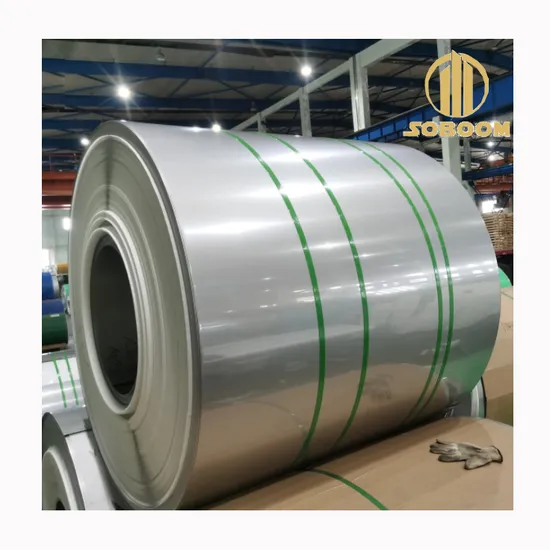
Export Packaging for Cold Rolled Grain Oriented Silicon Steel
At Luoyang Xinzhaohe Aluminum Co., Ltd, the export packaging of cold rolled grain oriented silicon steel (CRGO) is engineered to preserve material integrity throughout extended international transit, particularly under maritime conditions. Given the material’s high magnetic permeability and sensitivity to mechanical and environmental degradation, packaging is not merely a logistical consideration but a critical component of product performance assurance. Our standard export configuration employs a dual-layer protective system: a structural wooden pallet base combined with multi-stage moisture-resistant wrapping.
All CRGO coils are mounted on custom-fabricated wooden pallets constructed from high-density, kiln-dried hardwood. These pallets are designed to meet ISPM 15 international phytosanitary standards, ensuring global compliance for cross-border shipments. The wooden base provides torsional rigidity during handling and prevents coil deformation under dynamic loading conditions typical in containerized transport. Each pallet is treated to resist fungal growth and insect infestation, further safeguarding the load during prolonged exposure to tropical or humid climates.
The primary moisture barrier consists of industrial-grade moisture-proof film, typically a laminated polyethylene-aluminum composite with a vapor transmission rate below 0.5 g/m²·24h. This film is helically wrapped around the coil with a minimum 50% overlap per pass, applied under controlled tension to eliminate gaps and ensure uniform coverage. The wrapping process is conducted in a climate-controlled environment to minimize ambient humidity entrapment. Additional protection is achieved through the integration of desiccant packs within sealed edge flanges, which actively absorb residual moisture during transit.
For enhanced security, the entire coil assembly is over-banded with galvanized steel strapping, affixed at multiple load-bearing points to prevent lateral shift or edge damage during vessel movement. Corner protectors made from high-impact polyethylene are installed at all vertical edges to resist impact from handling equipment and adjacent cargo. All external surfaces of the package are labeled with UV-resistant, tamper-evident markings indicating coil specifications, batch numbers, handling instructions, and orientation indicators.
This packaging system is validated for sea freight durability, with proven performance across routes involving high salinity, temperature fluctuations, and transit durations exceeding 45 days. Accelerated aging tests confirm that the moisture barrier maintains integrity under conditions simulating 95% relative humidity at 40°C for 60 days. Our methodology aligns with ISO 2230:2010 standards for metallic material packaging and has been audited by third-party logistics providers serving major global ports.
By integrating structural stability with advanced moisture control, Luoyang Xinzhaohe ensures that CRGO steel arrives at destination facilities with preserved surface insulation, dimensional accuracy, and magnetic properties—critical factors for downstream transformer core manufacturing. This rigorous approach underscores our commitment to reliability in global supply chain performance.
Sourcing from Luoyang Xinzhaohe
Partner with Luoyang Xinzhaohe for Precision CRGO Supply
Luoyang Xinzhaohe Aluminum Co., Ltd leverages over two decades of specialized metallurgical expertise to deliver cold rolled grain oriented silicon steel (CRGO) meeting the most stringent global electrical steel specifications. Our vertically integrated production ecosystem, centered on advanced CRGO manufacturing, ensures consistent material performance critical for high-efficiency transformer cores. We operate dedicated continuous annealing and insulating coating lines engineered for precise grain orientation control, achieving magnetic induction levels (B₈) exceeding 1.92 T and core loss (P₁.₇/₅₀) values conforming to IEC 60404-2 Grade M0H230 and superior classifications. This technical capability stems from rigorous process parameter management across decarburization annealing, final high-temperature annealing, and laser scribing operations, directly influencing domain refinement and loss reduction in end applications.
Our production infrastructure supports significant scale without compromising quality. Annual CRGO output capacity exceeds 150,000 metric tons, with coil widths ranging from 800 mm to 1,250 mm and thicknesses from 0.23 mm to 0.30 mm. This scale is underpinned by robust quality assurance systems certified to ISO 9001:2015 and IATF 16949:2016 standards, featuring in-line monitoring of magnetic properties via Epstein frame testing per ASTM A343/A343M and core loss verification on ring specimens per IEC 60404-2. Every production batch undergoes comprehensive chemical composition validation via OES spectroscopy and precise coating weight analysis to ensure optimal interlaminar resistance and stress corrosion resistance.
Metallurgical process control defines our competitive advantage. Our team of senior process engineers implements real-time adjustments to annealing atmospheres, tension profiles, and coating formulations based on continuous feedback from on-site metallurgical laboratories. This enables consistent achievement of tight tolerances on key parameters:
| Parameter | Typical Range | Standard Compliance |
|---|---|---|
| Thickness Tolerance | ±0.003 mm | IEC 60404-9 |
| Coating Weight | 2.5 – 3.5 g/m² (single side) | ASTM A976 |
| Core Loss P₁.₇/₅₀ | ≤ 0.80 W/kg | IEC 60404-2 M0H230 |
| Magnetic Induction B₈ | ≥ 1.92 T | IEC 60404-2 |
Beyond material supply, we function as a technical extension of your engineering team. Our application specialists collaborate on core loss optimization strategies, provide detailed lot-specific test certificates including full hysteresis loop analysis, and support troubleshooting during core stacking operations. This proactive engineering partnership minimizes supply chain risk while maximizing the performance yield of your transformer designs.
For procurement managers and design engineers requiring CRGO with guaranteed magnetic properties and on-time delivery performance, Luoyang Xinzhaohe offers a proven industrial partnership. Contact Cathy Zhang, Technical Sourcing Manager, directly at cathy@transformerstrip.com to discuss your specific material requirements, request certified test data packages, or arrange a virtual factory audit. Let our metallurgical precision become integral to your power transmission efficiency goals.
📉 Factory Direct Savings Calculator
Calculate your potential savings by importing cold rolled grain oriented silicon steel directly from China.