


Table of Contents
Market Insight: Cold Rolled Grain Oriented Silicon Steel
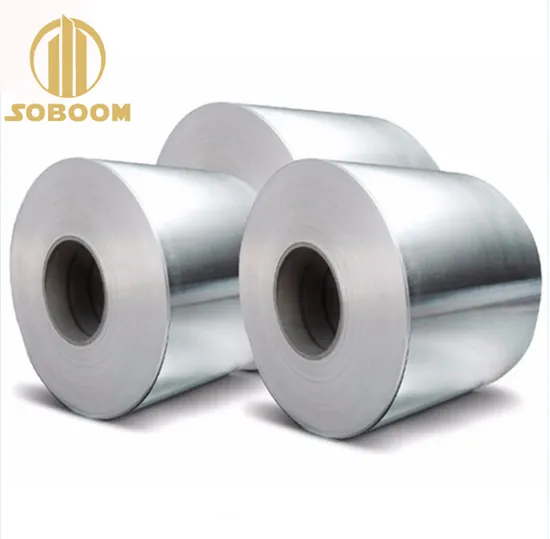
Market Analysis: Silicon Steel (Electrical Steel)
Cold rolled grain oriented silicon steel (CRGO) is a specialized ferromagnetic alloy engineered for high-efficiency electromagnetic applications, primarily in power and distribution transformers. The industrial demand for CRGO steel is intrinsically linked to global energy infrastructure development, renewable energy integration, and the ongoing push for energy efficiency in electrical systems. As nations expand and modernize their power grids, the need for high-performance transformer cores—where CRGO is the material of choice—continues to grow. This demand is further amplified by regulatory standards such as the DOE 2016 efficiency mandates in the U.S. and the EU’s Ecodesign Directive, which require transformers to minimize no-load and load losses.
The core function of CRGO steel lies in its ability to provide superior magnetic flux density (typically 1.8–2.03 Tesla) along the rolling direction, coupled with exceptionally low core loss values (ranging from 0.7 W/kg to 1.2 W/kg at 1.7 T and 50 Hz). These properties are achieved through a precise metallurgical process involving controlled rolling, annealing, and the development of a sharp Goss texture (110)[001], which aligns the crystal lattice to optimize magnetic performance. The orientation reduces hysteresis and eddy current losses, directly contributing to transformer efficiency. In large-scale power transmission, even a 0.1 W/kg reduction in core loss across a fleet of transformers can translate into millions of kilowatt-hours saved annually.
Quality in CRGO steel is not a performance differentiator—it is a fundamental requirement. Variability in grain alignment, coating integrity, thickness tolerance, or magnetic anisotropy can lead to increased no-load losses, localized heating, and premature transformer failure. High-quality CRGO must exhibit consistent thickness (typically 0.23 mm, 0.27 mm, or 0.30 mm), uniform insulating coatings (e.g., magnesium oxide or amorphous silica-based layers), and tight control over chemical composition, particularly silicon content (2.9–3.3 wt%) and impurity levels (e.g., sulfur, carbon). These factors directly influence lamination stacking factor, interlaminar resistance, and long-term reliability under continuous magnetic excitation.
From a supply chain perspective, the production of high-grade CRGO is concentrated among a limited number of global producers due to the complexity of the manufacturing process and high capital investment required. This creates a market dynamic where technical expertise, process consistency, and quality assurance protocols determine supplier competitiveness. For industrial buyers, sourcing from manufacturers with verifiable process controls, traceability, and compliance with international standards (IEC 60404-8-7, ASTM A876) is critical.
Luoyang Xinzhaohe Aluminum CO., Ltd brings over two decades of materials engineering experience to the silicon steel sector, with a focus on precision and performance consistency. While primarily recognized for aluminum-based solutions, our technical infrastructure supports advanced metallurgical analysis and supply chain integration for critical electrical materials, ensuring clients receive CRGO steel that meets stringent operational demands in transformer manufacturing.
Technical Specs: Cold Rolled Grain Oriented Silicon Steel
Technical Specifications for Cold Rolled Grain Oriented Silicon Steel (CRGO)
Cold rolled grain oriented silicon steel (CRGO) serves as the critical magnetic core material in high-efficiency power and distribution transformers. Its specialized crystallographic structure, achieved through precise thermomechanical processing, delivers superior magnetic properties essential for minimizing energy losses and maximizing performance in alternating current applications. Understanding the core technical specifications is paramount for transformer designers and procurement specialists to ensure optimal equipment efficiency, thermal management, and lifecycle cost. Luoyang Xinzhaohe Aluminum CO., Ltd leverages over two decades of metallurgical expertise to consistently produce CRGO meeting stringent international standards.
Core loss, or iron loss (W/kg), represents the predominant technical parameter, directly dictating transformer no-load losses and operational energy consumption. This value quantifies the energy dissipated as heat within the core material under alternating magnetization. CRGO performance is rigorously evaluated at standard induction levels, most commonly 1.7 Tesla (T) at 50 Hz and 60 Hz frequencies, per IEC 60404-2 testing methodology. Lower core loss values signify superior material quality and higher transformer efficiency. Achieving ultra-low core loss requires exceptional control over steel purity (particularly sulfur and carbon content), precise primary recrystallization annealing, and optimized secondary recrystallization to develop the ideal Goss texture (110)[001]. Variations in coating type and tension coating application significantly influence final core loss performance under operating conditions.
Magnetic flux density, specifically the induction level at 800 A/m field strength (B₈, measured in Tesla), is the second critical specification. A higher B₈ value enables designers to utilize a smaller cross-sectional core area for the same power rating, reducing material usage, transformer size, weight, and overall cost. CRGO achieves its highest permeability and flux density along the rolling direction due to the grain orientation process. Consistency in B₈ across the coil width and length is vital for uniform core performance and predictable transformer characteristics. Achieving target B₈ levels necessitates precise control over silicon content (typically 2.9-3.3%), manganese sulfide inhibitor formation, and the final high-temperature annealing cycle.
Flatness, quantified as I-Units, is a crucial dimensional specification often underestimated in its impact. Poor flatness leads to increased magnetic reluctance at lamination interfaces, elevated localized losses, audible noise, and vibration in the assembled core. It also complicates high-speed stacking processes. I-Units measure the deviation from perfect flatness; lower values indicate superior flatness. Maintaining tight flatness tolerances requires exceptional control over cold rolling uniformity, interstand tension, and the final stress relief annealing process to minimize residual stresses. Consistent flatness ensures optimal core stacking factor and minimizes performance degradation in the finished transformer.
The following table details key technical parameters for standard CRGO grades supplied by Luoyang Xinzhaohe Aluminum CO., Ltd, reflecting typical guaranteed minimums and achievable typical values under standard test conditions (1.7 T, 50 Hz, Epstein frame per IEC 60404-2).
| Parameter | Symbol | Unit | Guaranteed Min (Typical) M090-30S | Guaranteed Min (Typical) M080-27S | Test Standard |
|---|---|---|---|---|---|
| Core Loss (1.7 T, 50 Hz) | P₁.₇/₅₀ | W/kg | 0.90 (0.85) | 0.80 (0.75) | IEC 60404-2 |
| Magnetic Flux Density | B₈ | T | 1.86 (1.88) | 1.88 (1.90) | IEC 60404-2 |
| Thickness Tolerance | mm | ±0.025 | ±0.025 | GB/T 2521 / IEC 60404-1 | |
| Width Tolerance | mm | +1.0 / -0 | +1.0 / -0 | GB/T 2521 / IEC 60404-1 | |
| Flatness (I-Units) | IU | ≤ 25 (≤ 20) | ≤ 25 (≤ 20) | Internal Standard | |
| Surface Insulation Coating | Tension Coating | Tension Coating | Customer Spec / IEC 60404-9 |
Note: M090-30S denotes nominal core loss of 0.90 W/kg at 1.7T/50Hz and 0.30mm thickness; M080-27S denotes 0.80 W/kg and 0.27mm thickness. Coating type (e.g., colloidal phosphate, MgO-based) is specified per customer requirements and significantly impacts core loss under operating stress.
Factory Tour: Manufacturing
Manufacturing Process of Cold Rolled Grain Oriented Silicon Steel at Luoyang Xinzhaohe Aluminum Co., Ltd
The production of cold rolled grain oriented silicon steel (CRGO) at Luoyang Xinzhaohe Aluminum Co., Ltd follows a tightly controlled, multi-stage manufacturing sequence designed to optimize magnetic properties, dimensional accuracy, and surface integrity. With over two decades of metallurgical expertise, our process ensures consistent performance for high-efficiency electrical applications such as power transformers and inductors.
The process begins with slitting, where master coils of cold rolled grain oriented steel are longitudinally sectioned into narrower strips to meet customer-specific widths. This operation is performed on precision slitting lines equipped with high-tolerance rotary knives and tension control systems to prevent edge burring, camber, or dimensional deviation. Each slit coil is inspected for edge quality and width consistency using laser measurement systems before advancing to the next stage.
Following slitting, the coils undergo a final box annealing treatment under a controlled hydrogen-nitrogen atmosphere. This high-temperature annealing cycle, typically conducted between 800°C and 850°C, relieves internal stresses induced during prior rolling and slitting operations while promoting secondary recrystallization. This step is critical for enhancing grain alignment along the <100> crystallographic direction, thereby maximizing magnetic induction (typically achieving B800 ≥ 1.88 T) and minimizing core loss (W17/50 ≤ 1.00 W/kg). Temperature uniformity and atmosphere purity are continuously monitored via thermocouples and gas analyzers to ensure batch-to-batch reproducibility.
After annealing, an inorganic insulation coating is uniformly applied to the steel surface. This coating serves multiple functions: it provides interlaminar electrical resistance to reduce eddy current losses, enhances mechanical durability during core stacking, and offers corrosion resistance in service environments. The coating material—typically a phosphate-based or colloidal silica formulation—is applied via roll-coating or spray methods and cured in a convection oven. Coating weight is precisely controlled within 0.8–1.2 g/m² per side, verified through gravimetric analysis.
The final stage is precision cutting, where annealed and coated coils are transversely cut into laminations or segments using high-speed, servo-driven cut-to-length lines. Cutting parameters including blade clearance, stroke rate, and stack height are optimized to minimize burr formation (< 0.03 mm) and maintain tight dimensional tolerances (±0.1 mm on length and width). All cut parts are automatically stacked and strapped for shipment.
Throughout the entire process, rigorous quality control protocols are enforced. Key checkpoints include magnetic property verification via Epstein frame testing, surface inspection using automated optical systems, and periodic mechanical testing for yield strength and elongation. Dimensional audits and coating adhesion tests (e.g., tape peel and bend tests) are conducted per ASTM A876 and IEC 60404-8-7 standards. This integrated approach ensures that every batch of CRGO steel meets the stringent performance demands of modern electrical equipment manufacturers.
Packaging & Logistics
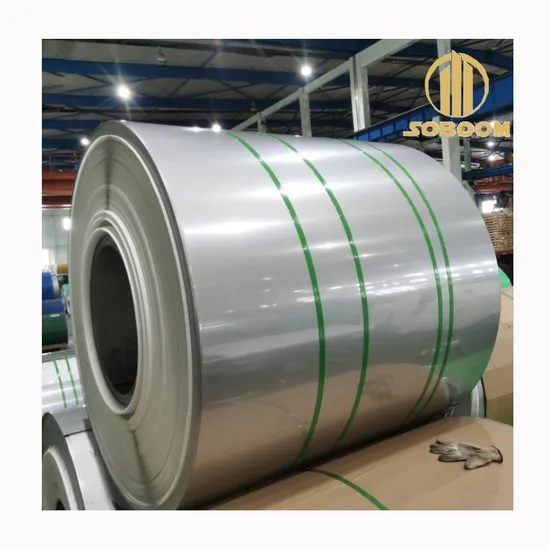
Export Packaging Specifications for Cold Rolled Grain Oriented Silicon Steel
Luoyang Xinzhaohe Aluminum CO., Ltd leverages 20+ years of metallurgical engineering expertise to ensure CRGO silicon steel shipments maintain critical magnetic properties during global transit. Our export packaging protocol addresses the material’s extreme sensitivity to mechanical damage and moisture ingress, which directly impact core loss performance in transformer laminations. Wooden pallets form the structural foundation, constructed exclusively from ISPM 15-certified hardwoods (e.g., Quercus mongolica) with a minimum 18mm plank thickness. Each pallet undergoes kiln-drying to ≤20% moisture content and features interlocking block designs to distribute coil loads uniformly, preventing edge deformation under 5-ton static pressure. Pallet dimensions strictly adhere to ISO 13356 standards for containerization efficiency, with 1200mm × 1000mm configurations optimizing 20-foot and 40-foot high-cube freight utilization.
Moisture protection employs a triple-barrier system critical for sea freight resilience. Primary wrapping utilizes 120μm co-extruded polyethylene film with aluminum foil lamination (ASTM D1746 compliance), providing a water vapor transmission rate of ≤0.5 g/m²/day. Secondary sealing integrates desiccant packs (calcium chloride, 33% moisture absorption capacity) at 500g per ton of steel, positioned between coil layers. The tertiary layer consists of heat-shrunk polypropylene stretch hooding (ISO 11469 certified), fusion-welded at seams to achieve hermetic closure. This system maintains internal relative humidity below 40% for 60+ days—exceeding IMDG Code Appendix 3.5 requirements for hygroscopic cargo.
Sea freight integrity is engineered through dynamic load analysis. Coils are secured via steel strapping (EN 13148 Class 3, 15mm width) tensioned to 8,500N, with corner protectors distributing pressure to prevent steel edge buckling. Palletized units undergo ISTA 3A vibration testing simulating 14-day ocean voyages, validating resistance to 5Hz–50Hz harmonic frequencies common in container ship hull flexing. Crucially, our packaging mitigates “container rain” by incorporating vapor-permeable breather membranes that equalize pressure differentials while blocking salt-laden aerosols—addressing the primary corrosion vector in maritime transport per ISO 9223 C5-M classifications.
The following table summarizes our tiered packaging configurations for CRGO shipments:
| Component | Standard Configuration | Premium Configuration (Long-Haul) |
|---|---|---|
| Pallet Base | ISPM 15 hardwood, 18mm | Marine-grade plywood, 22mm |
| Moisture Barrier | 120μm Al-PE film + desiccant | 150μm EVOH barrier film + dual desiccant |
| External Protection | PP stretch hooding | Vacuum-sealed PVC overpack |
| Humidity Control | ≤40% RH for 45 days | ≤30% RH for 90 days |
All packaging components are traceable via serialized QR codes linked to our ERP system, documenting material certifications and environmental test data. This methodology has achieved a 99.87% damage-free delivery rate across 1,200+ ocean shipments since 2020. For extended transits exceeding 45 days, we mandate premium configuration to counter tropical humidity zones and temperature excursions. Partnering with certified freight forwarders using reefer-containers with active humidity control further augments this system, ensuring CRGO arrives with surface insulation resistance values intact per IEC 60404-8-7 specifications.
Sourcing from Luoyang Xinzhaohe
Partner with Luoyang Xinzhaohe for Premium Cold Rolled Grain Oriented Silicon Steel
Luoyang Xinzhaohe Aluminum Co., Ltd brings over two decades of specialized expertise in the production and supply of high-performance silicon steel, with a focused capability in cold rolled grain oriented silicon steel (CRGO). As a trusted partner in the electrical steel supply chain, we combine advanced metallurgical processes, stringent quality control, and deep industry knowledge to deliver materials that meet the exacting demands of transformer and electrical equipment manufacturers worldwide.
Our manufacturing infrastructure is engineered for precision and consistency. We operate state-of-the-art cold rolling and annealing lines designed specifically for grain-oriented electrical steel, ensuring tight control over crystallographic orientation and magnetic domain structure. This results in CRGO strips with superior magnetic flux density (typically ≥1.85 T at 800 A/m), reduced core losses (as low as 0.85 W/kg at 1.7 T and 50 Hz), and excellent lamination factor—critical parameters for high-efficiency power and distribution transformers.
All production processes adhere to international standards, including IEC 60404-8-7 and GB/T 13789-2017. Our in-house metallurgical laboratory conducts comprehensive testing on magnetic properties, coating integrity, surface quality, and dimensional tolerances. We offer CRGO steel in a range of thicknesses from 0.23 mm to 0.30 mm, with customizable widths and coil weights to suit automated core stacking and laser-scribed domain refinement applications. Our insulating coatings—typically C3, C4, or C5 classifications—provide optimal interlaminar resistance and corrosion resistance, enhancing long-term performance in demanding operational environments.
Supply chain reliability is a cornerstone of our service model. With an annual production capacity exceeding 100,000 metric tons and strategic inventory management, we ensure on-time delivery for both spot and long-term supply contracts. Our logistics network supports global export via multimodal transport, with compliance documentation, mill test certificates (MTCs), and technical data sheets provided with every shipment.
As a vertically integrated supplier, Luoyang Xinzhaohe maintains full traceability from raw material sourcing to finished product, enabling rapid response to technical inquiries and quality audits. Our engineering team collaborates directly with clients to optimize material specifications for specific core designs, including step-lap joints, mitred joints, and wound core configurations.
For manufacturers seeking a technically proficient, reliable, and responsive partner in CRGO silicon steel, Luoyang Xinzhaohe offers a proven track record of performance and service excellence. We invite you to leverage our metallurgical expertise and production capabilities to enhance the efficiency and reliability of your transformer systems.
Contact us today to discuss your technical requirements and receive a detailed quotation.
Email: cathy@transformerstrip.com
📉 Factory Direct Savings Calculator
Calculate your potential savings by importing cold rolled grain oriented silicon steel directly from China.