


Table of Contents
Market Insight: C1100 Copper
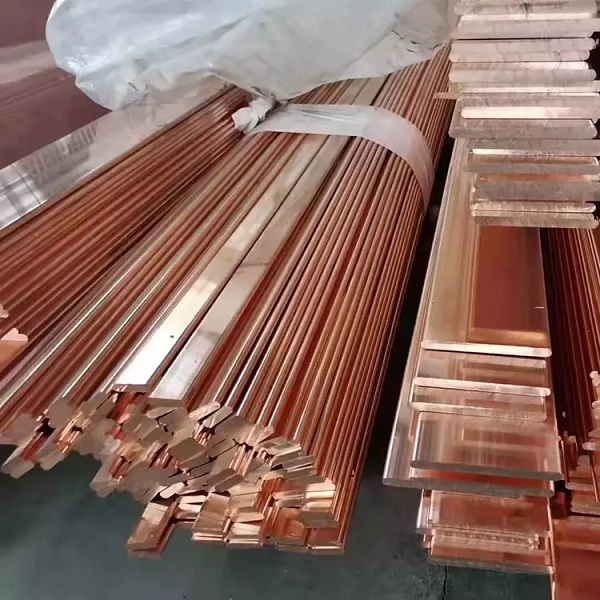
Market Analysis: Transformer Strip/Foil (Aluminum/Copper) – C1100 Copper Demand Drivers and Quality Imperatives
Global transformer manufacturing exhibits robust demand for high-purity C1100 copper strip and foil, driven by critical infrastructure modernization and renewable energy integration. C1100 (ASTM B152), defined by its minimum 99.99% copper content and oxygen-free electrolytic (OFE) production, remains the dominant conductive material for high-efficiency transformer windings, particularly in distribution and power transformers exceeding 500 kVA. This demand stems from its unparalleled combination of electrical conductivity (100% IACS minimum), superior thermal stability, and exceptional formability during precision foil rolling and strip profiling. The accelerating deployment of solar and wind generation, coupled with aging grid infrastructure replacement cycles in North America, Europe, and Asia-Pacific, directly increases procurement volumes for C1100. Utilities and OEMs prioritize this grade for its ability to minimize resistive losses (I²R losses) over decades of operation, directly impacting lifecycle costs and energy efficiency compliance with standards like DOE 2016 and EU Ecodesign.
Quality consistency in C1100 is non-negotiable for transformer reliability and performance. Microstructural homogeneity and strict impurity control are paramount. Trace elements such as phosphorus (P), sulfur (S), and iron (Fe) significantly degrade conductivity and promote intergranular corrosion under operational thermal cycling. Even minor deviations from specification can initiate localized hotspots, accelerating insulation degradation and potentially causing catastrophic failure. Surface integrity is equally critical; microscopic scratches or oxide inclusions from substandard rolling processes create nucleation points for partial discharges within the winding, compromising dielectric strength. The recrystallization temperature of the copper must be precisely controlled during annealing to ensure optimal ductility for winding without compromising mechanical stability under short-circuit forces. Variability in thickness tolerance beyond ±2% or inconsistent temper (e.g., H00, H01) disrupts automated winding processes and alters electromagnetic field distribution, reducing core efficiency.
Luoyang Xinzhaohe Aluminum Co., Ltd leverages 20+ years of metallurgical expertise in non-ferrous rolling to address these stringent requirements. Our C1100 production employs vacuum-melted cathode copper and proprietary annealing atmospheres to guarantee oxygen content below 5 ppm and impurity levels well within critical thresholds. Rigorous in-process monitoring ensures dimensional accuracy to ±0.005 mm for foil and ±0.02 mm for strip, alongside 100% eddy current surface inspection. The following table summarizes key quality parameters and their operational impact:
| Critical Parameter | Maximum Allowable Limit | Primary Failure Mechanism |
|---|---|---|
| Electrical Conductivity | 100.0% IACS (min) | Increased I²R losses, reduced efficiency, thermal runaway risk |
| Phosphorus (P) | 3 ppm | Severe conductivity loss, embrittlement at high temperatures |
| Surface Roughness (Ra) | 0.25 µm (max) | Partial discharge initiation, insulation damage |
| Thickness Tolerance | ±0.005 mm (foil) | Winding tension instability, magnetic flux distortion |
Procurement decisions must prioritize suppliers with demonstrable traceability from cathode to coil, certified test reports per ASTM B152, and robust corrective action systems. Compromising on C1100 quality incurs far greater costs through premature field failures, warranty claims, and reputational damage than the marginal savings from non-conforming material. Luoyang Xinzhaohe’s integrated quality management system, validated through third-party audits, ensures every shipment meets the exacting demands of transformer manufacturers committed to grid resilience and energy efficiency.
Technical Specs: C1100 Copper
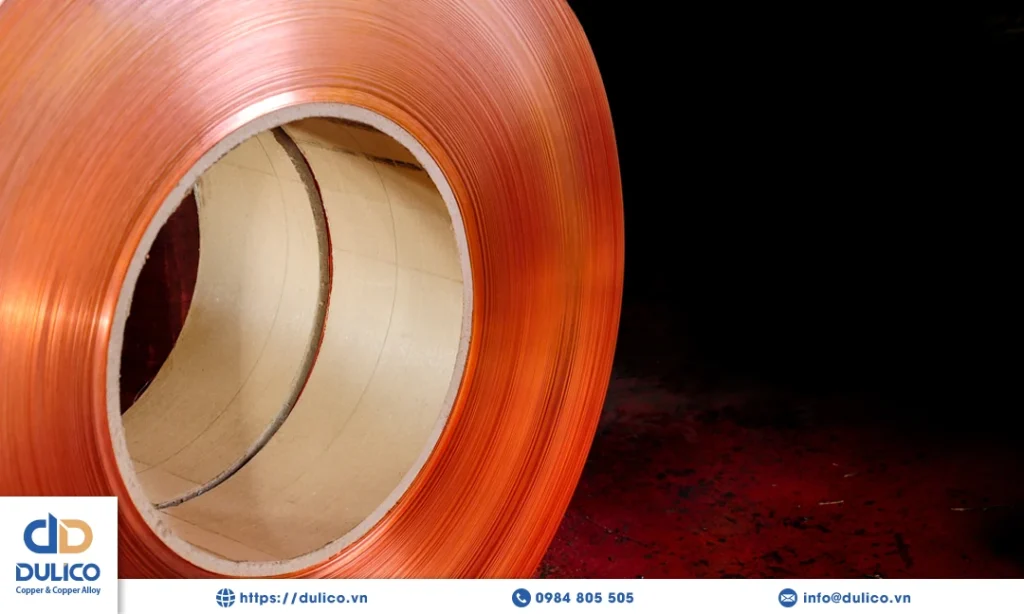
Technical Specifications for C1100 Copper Transformer Strip
C11000, commonly referred to as Electrolytic Tough Pitch (ETP) copper, is the benchmark material for high-conductivity electrical applications. At Luoyang Xinzhaohe Aluminum Co., Ltd, with over two decades of precision metal processing expertise, we supply C1100 copper strip and foil engineered specifically for transformer windings, busbar systems, and high-efficiency electrical components. Our manufacturing process ensures strict compliance with ASTM B187 and GB/T 5231 standards, delivering consistent material performance across all production batches.
The primary advantage of C1100 copper lies in its exceptional electrical conductivity, which we guarantee at a minimum of 100% IACS (International Annealed Copper Standard) at 20°C. This high conductivity is achieved through oxygen-controlled melting, precision casting, and controlled hot and cold rolling processes that minimize impurities and interstitial elements. Our in-house metallurgical lab performs routine conductivity testing using eddy current and four-point probe methods to ensure conformity.
Dimensional accuracy is critical in transformer strip applications, where tight winding tolerances and space efficiency are paramount. We offer slit widths ranging from 5 mm to 300 mm, with thicknesses from 0.05 mm to 3.0 mm. All strips are precision slit using high-tolerance disc knives and CNC-guided slitting lines, maintaining edge tolerances within ±0.002 mm. This level of precision ensures uniform coil build-up, reduces interlayer stress, and enhances thermal management in wound components.
Edge quality is equally critical. Burr formation during slitting can lead to insulation damage, partial discharge, and premature failure in high-voltage transformers. Our proprietary deburring and edge conditioning process eliminates micro-burrs and edge folds, producing consistently smooth, radius-controlled edges. Each production lot undergoes edge profile inspection via optical contour measurement systems, ensuring compliance with IPC-687 and internal zero-defect criteria.
All C1100 strips are supplied in H04 (half-hard) or O (annealed) tempers, depending on customer forming requirements. The annealing process is conducted in oxygen-free nitrogen-hydrogen atmospheres to prevent surface oxidation and maintain conductivity integrity. Surface finish is controlled to Ra ≤ 0.4 µm, minimizing friction during high-speed winding operations.
Below is a summary of key technical parameters for our C1100 copper transformer strip:
| Parameter | Specification |
|---|---|
| Alloy Designation | C11000 (ETP Copper) |
| Standard Compliance | ASTM B187, GB/T 5231 |
| Electrical Conductivity | ≥100% IACS (20°C) |
| Thickness Range | 0.05 mm – 3.0 mm |
| Width Range | 5 mm – 300 mm |
| Slitting Tolerance | ±0.002 mm |
| Edge Condition | Burr-free, radius-controlled |
| Surface Roughness (Ra) | ≤0.4 µm |
| Temper Options | O (Annealed), H04 (Half-Hard) |
| Tensile Strength (H04) | 320–380 MPa |
| Elongation (H04) | ≥5% |
| Packaging | Anti-corrosion wrapping, wooden core, sealed |
All material is traceable by heat number and accompanied by a Mill Test Certificate (MTC) per EN 10204 3.1. Luoyang Xinzhaohe Aluminum Co., Ltd applies rigorous quality control throughout production, ensuring that every meter of C1100 copper strip meets the highest standards for performance and reliability in power transmission and distribution systems.
Factory Tour: Manufacturing
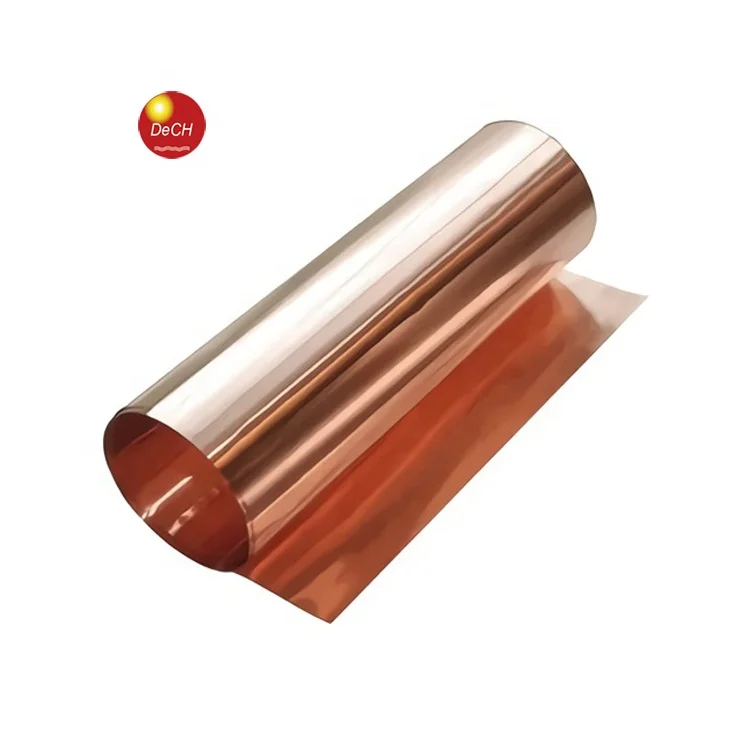
Manufacturing Process for C11000 Copper Transformer Strip
Luoyang Xinzhaohe Aluminum Co., Ltd leverages over two decades of precision metal processing expertise, including complementary copper alloy production, to deliver high-integrity C11000 (Electrolytic Tough Pitch Copper) transformer strip and foil. Our rigorous manufacturing sequence ensures optimal electrical conductivity, mechanical formability, and surface quality critical for efficient transformer core lamination and winding. The core process flow comprises Cold Rolling, Precision Slitting, and Edge Conditioning, each integrated with stringent quality control checkpoints.
Cold rolling forms the foundational stage for achieving the precise dimensional and metallurgical properties required in transformer applications. Starting from hot-rolled pickled coils meeting ASTM B152 specifications, C11000 material undergoes multiple passes through computer-controlled rolling mills under precisely managed tension and lubrication regimes. This stage reduces thickness to the target range, typically 0.10 mm to 0.50 mm for transformer strip, while simultaneously work-hardening the copper to the specified temper (usually H01 or H02). Critical process parameters including reduction per pass, roll force, and interstand tension are continuously monitored and adjusted via closed-loop systems to maintain thickness uniformity within ±0.005 mm and ensure consistent surface finish. In-process eddy current testing and surface profilometry verify absence of defects like scratches, pits, or roll marks before proceeding. The resulting cold-rolled coil exhibits the necessary mechanical stability for subsequent processing and the high electrical conductivity (>100% IACS minimum per ASTM B152) essential for low-loss transformer operation.
Precision slitting follows to convert the master coil into narrow strips conforming to exact customer width requirements. Utilizing high-precision rotary shear slitters with computerized knife positioning, the coil is longitudinally cut with exceptional width tolerance, typically held to ±0.05 mm. This stage demands meticulous knife setup and condition control to prevent edge burrs, camber, or dimensional drift. Real-time laser micrometers continuously measure slit width across the strip width, feeding data back to the slitter control system for instantaneous correction. Simultaneously, edge quality is monitored using high-resolution cameras integrated with automated burr detection systems. Any detected anomalies exceeding specified thresholds (e.g., burr height >5% of material thickness) trigger immediate process adjustment or material quarantine. The slit strips are rewound under controlled tension to prevent telescoping or surface damage.
Edge conditioning is the final critical step, specifically addressing the metallurgical and geometric integrity of the slit edge. As-slit edges often exhibit micro-burrs and residual stress concentrations detrimental to transformer core stacking factor and potential corona inception. Our process employs precision brushing or controlled abrasive techniques to uniformly remove burrs and impart a consistent, slightly rounded edge profile. This conditioning significantly reduces interlaminar short circuits and core losses. Edge radius is verified using optical comparators or profilometers, ensuring it meets the stringent requirement of 0.01 mm to 0.03 mm. Final quality assurance encompasses comprehensive testing: dimensional verification across the strip width and length, electrical conductivity measurement via calibrated eddy current or four-point probe systems, surface cleanliness assessment, and visual inspection under controlled lighting. Full traceability from melt certificate through all process stages is maintained per ISO 9001 standards, providing documented assurance of material conformity to C11000 specifications and transformer performance demands. This integrated approach guarantees strip ready for high-speed automatic winding or stacking with minimal waste and optimal electromagnetic performance.
Packaging & Logistics
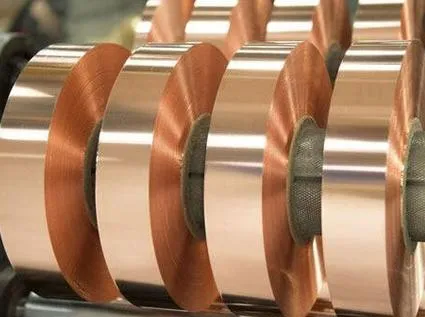
Export Packaging for C1100 Copper Transformer Strip and Foil
At Luoyang Xinzhaohe Aluminum Co., Ltd, with over two decades of experience in the production and international distribution of high-purity electrical conductive materials, we maintain rigorous standards for the export packaging of C1100 copper transformer strip and foil. The integrity of the product during transit—particularly under prolonged sea freight conditions—is paramount to ensuring performance upon arrival and subsequent processing at the customer’s facility. Our packaging methodology is engineered to mitigate risks associated with mechanical damage, moisture ingress, and environmental contamination during global logistics.
All C1100 copper coils and strips are wound or stacked with precision to minimize internal stress and edge deformation. The primary protective layer consists of industrial-grade moisture-proof composite film, which is heat-sealed to form a hermetic barrier around the material. This film exhibits low water vapor transmission rate (WVTR), effectively preventing condensation and corrosion during ocean transport, where relative humidity levels can exceed 90% and temperature fluctuations are common. The moisture barrier is critical for maintaining the surface quality of C1100 copper, which is highly conductive and susceptible to oxidation that could impair electrical performance and bonding characteristics in transformer applications.
Following encapsulation, the packaged copper product is mounted onto custom-engineered wooden pallets constructed from kiln-dried, ISPM-15 compliant hardwood. These pallets are designed to provide structural stability under dynamic loading conditions encountered during containerized shipping, including stacking loads exceeding 5 metric tons in multi-tier container arrangements. The wood is treated to prevent pest infestation and decay, meeting international phytosanitary standards for cross-border transport. Reinforced corner boards and edge protectors are affixed to safeguard coil edges and strip ends from impact during handling and transit.
The entire assembly is then secured using high-tensile steel or PET strapping, tensioned to industry specifications to prevent lateral or vertical displacement within the shipping container. Additional external wrapping with UV-resistant polyethylene stretch film provides a secondary layer of environmental protection and tamper evidence. Each package is labeled with durable, weather-resistant tags indicating product specification, batch number, weight, handling instructions, and orientation markers to ensure correct positioning during loading and unloading.
Our packaging protocols are validated through accelerated climate chamber testing and real-world shipment monitoring across key trade routes, including trans-Pacific and Europe-Asia corridors. This ensures compliance with ISO 11607 and IEC 61217 standards for packaging of precision metal products in electrical applications. By integrating material science, structural engineering, and logistics expertise, Luoyang Xinzhaohe Aluminum Co., Ltd guarantees that C1100 copper products arrive at their destination in optimal condition, ready for immediate integration into high-efficiency transformer manufacturing processes.
Sourcing from Luoyang Xinzhaohe
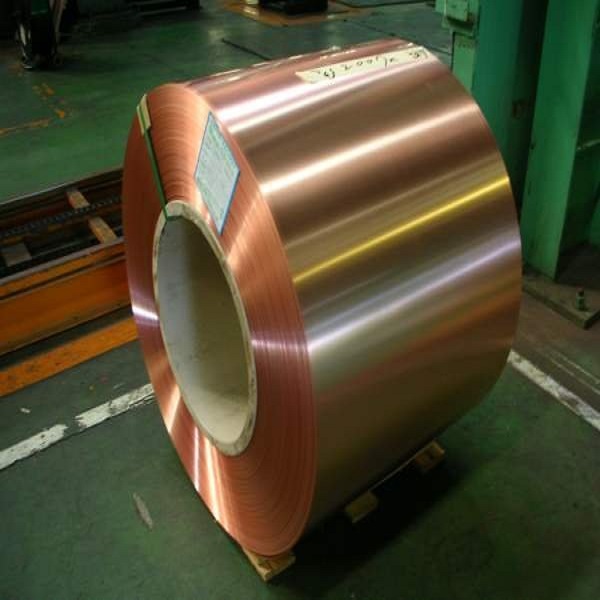
Partner with Luoyang Xinzhaohe for Precision C11000 Copper Transformer Strip
Luoyang Xinzhaohe Aluminum Co., Ltd leverages over two decades of specialized metallurgical engineering and precision rolling expertise to deliver mission-critical C11000 electrolytic tough pitch (ETP) copper strip for demanding transformer applications. Our integrated manufacturing ecosystem, purpose-built for high-purity electrical conductors, ensures stringent adherence to the conductivity, dimensional stability, and surface integrity requirements essential for efficient transformer core and winding performance. We transcend standard supplier roles by embedding deep materials science understanding into every production phase, from cathode sourcing to final slitting.
Our dedicated copper processing line employs advanced continuous casting and precision cold rolling technology calibrated specifically for C11000. This enables consistent production of ultra-thin gauges down to 0.05mm with exceptional thickness tolerance control. Critical annealing parameters are meticulously optimized to achieve the required 100% IACS minimum conductivity while maintaining the precise mechanical properties needed for high-speed transformer winding operations. Rigorous in-line monitoring of grain structure homogeneity and surface defect density ensures each coil meets the exacting standards demanded by premium transformer manufacturers.
Quality assurance is non-negotiable within our ISO 9001 and IATF 16949 certified facility. Every C11000 coil undergoes comprehensive validation against ASTM B301 and customer-specific specifications. Our metallurgical laboratory conducts full chemical composition verification via spark OES, precise conductivity testing per ASTM E1004, and detailed microstructural analysis. Dimensional checks utilize laser micrometry and automated vision systems to guarantee width, thickness, camber, and edge burr specifications are consistently met. Surface quality is assessed to eliminate imperfections detrimental to insulation layer integrity.
Supply chain resilience is engineered into our operational model. Strategic partnerships with certified primary copper producers secure consistent access to high-purity feedstock meeting C11000 requirements. Our vertical integration within the transformer materials sector, encompassing both aluminum and copper product streams, provides unique insights into cross-material performance and application synergies. This, combined with robust inventory management protocols and flexible production scheduling, ensures reliable just-in-time delivery to global customers, mitigating volatility in the base metals market.
The following table summarizes key capabilities for C11000 copper strip production at Luoyang Xinzhaohe
| Parameter | Capability Range | Standard Tolerance/Requirement |
|---|---|---|
| Thickness | 0.05mm – 3.0mm | ±0.003mm (for 0.1mm gauge) |
| Width | 10mm – 800mm | ±0.1mm |
| Conductivity | Minimum 100% IACS | ASTM B301 |
| Surface Finish | As-rolled, Skin-passed, Matte | Defect-free per ASTM B301 |
| Edge Condition | Slit to tight burr spec | Burr height < 5% of thickness |
Partnering with Luoyang Xinzhaohe provides transformer manufacturers with a technically proficient source for C11000 copper strip, backed by demonstrable process control and materials expertise. We prioritize collaborative engineering engagement to solve specific application challenges and optimize material performance within your transformer design. Contact our technical sourcing team directly to discuss your C11000 requirements and receive a detailed capability portfolio. Cathy stands ready to facilitate your next critical procurement cycle.
Contact Cathy for technical consultation and sourcing support at cathy@transformerstrip.com.
📉 Factory Direct Savings Calculator
Calculate your potential savings by importing c1100 copper directly from China.