


Table of Contents
Market Insight: Breakdown Voltage Of Enameled Copper Wire

Market Analysis: Winding Wire – Breakdown Voltage in Enameled Copper Wire for Transformers
The industrial demand for enameled copper winding wire, particularly in transformer applications, is heavily influenced by the dielectric performance of the insulation system, with breakdown voltage being a critical parameter. As a core element in power and distribution transformers, enameled copper wire must consistently withstand high electrical stress over prolonged operational cycles. The breakdown voltage—the minimum voltage at which the insulation fails and allows current to arc through—directly correlates with the reliability, safety, and service life of the transformer. In high-efficiency and compact transformer designs, where winding density and thermal loads are elevated, maintaining a high breakdown voltage is essential to prevent inter-turn short circuits and catastrophic equipment failure.
Global transformer manufacturers are increasingly adopting stringent insulation standards driven by regulatory requirements, energy efficiency targets, and the integration of renewable energy systems. These systems often subject transformers to fluctuating loads, harmonic distortions, and transient overvoltages, all of which amplify electrical stress on the winding insulation. Under such conditions, enameled copper wire with substandard breakdown voltage performance is prone to premature degradation, leading to increased maintenance costs and unplanned downtime. Consequently, procurement specifications now routinely include minimum breakdown voltage thresholds, typically measured under standardized test conditions per IEC 60317 or GB/T 6109.
The quality of the enamel coating—its uniformity, adhesion, thermal stability, and resistance to mechanical abrasion—plays a decisive role in achieving consistent breakdown voltage performance. High-quality enameled wire utilizes polymer systems such as polyurethane, polyesterimide, or polyamide-imide, each offering distinct dielectric and thermal properties. For instance, polyesterimide-coated wires demonstrate superior breakdown strength at elevated temperatures, making them suitable for high-performance transformers operating in demanding environments. Moreover, multi-layer insulation systems are often employed to enhance dielectric robustness, where each layer contributes to the cumulative breakdown resistance.
From a supply chain perspective, manufacturers like Luoyang Xinzhaohe Aluminum Co., Ltd. emphasize rigorous process control during wire drawing, annealing, and enamel application to ensure dimensional accuracy and coating integrity. In-house testing facilities conduct routine dielectric strength assessments using both spark tests during production and full breakdown tests on sample reels. This commitment to quality assurance aligns with the market’s shift toward performance-based sourcing, where long-term reliability outweighs initial cost considerations.
In summary, the breakdown voltage of enameled copper wire is not merely a technical specification but a fundamental determinant of transformer safety and efficiency. As power infrastructure modernizes globally, the demand for high-reliability winding materials will continue to grow, reinforcing the importance of manufacturing excellence and adherence to international standards in the enameled wire supply chain.
| Parameter | Standard Test Method | Typical Minimum Breakdown Voltage (V) |
|---|---|---|
| Single-layer wire | IEC 60317-1 | 3,000 – 5,000 (depending on diameter) |
| Multi-layer wire | GB/T 6109.3 | 6,000 – 10,000 |
| Thermal-aged wire | IEC 60216 / GB/T 11026 | ≥ 70% of initial value after aging |
Technical Specs: Breakdown Voltage Of Enameled Copper Wire

Technical Specifications: Breakdown Voltage in Enameled Copper Winding Wire
Luoyang Xinzhaohe Aluminum Co., Ltd leverages 20+ years of metallurgical and winding wire expertise to define critical electrical insulation parameters for enameled copper conductors. Breakdown voltage represents the absolute threshold at which insulation integrity fails under applied electrical stress, directly impacting motor and transformer reliability. This specification must be evaluated alongside elongation and thermal class to ensure holistic performance in demanding applications.
Insulation breakdown voltage is quantified via two primary test conditions per IEC 60851-5. The dry film test measures voltage resistance of unwound wire at room temperature, reflecting inherent dielectric strength. The more stringent wet film test evaluates performance after controlled humidity exposure, simulating real-world condensation risks. Minimum acceptable values are intrinsically linked to conductor diameter and insulation thickness; thinner coatings on fine wires (e.g., 0.05–0.10 mm) require proportionally higher voltage tolerance per unit thickness to prevent pinhole defects. Crucially, breakdown voltage degrades predictably with thermal aging—accelerated at elevated temperatures within the wire’s designated thermal class.
Elongation, measured per IEC 60851-6, indicates mechanical resilience during coil winding. Values below 8% risk insulation cracking under tension, creating latent failure points that compromise long-term breakdown performance. Optimal elongation (typically 10–25% for standard grades) ensures the enamel withstands deformation without microfractures that initiate electrical treeing.
Thermal class defines the maximum continuous operating temperature (130°C to 220°C) the insulation system endures while retaining ≥50% of its initial breakdown voltage after 20,000 hours. Higher classes (e.g., 200, 220) utilize advanced polymer chemistries (polyesterimide, polyamide-imide) to sustain dielectric integrity under extreme thermal stress. However, even within class limits, cyclic thermal loading accelerates insulation degradation, necessitating design margins above the nominal breakdown threshold.
The interdependence of these parameters is non-negotiable: a wire meeting thermal class 220 but exhibiting low elongation will fail mechanically during manufacturing, while high dry-film breakdown voltage becomes irrelevant if wet-film performance degrades rapidly at 180°C. Procurement must validate all three criteria against application-specific duty cycles.
Critical Breakdown Voltage Parameters for Enameled Copper Wire
| Parameter | Standard Test Method | Typical Range (0.50 mm Dia.) | Critical Notes |
|---|---|---|---|
| Dry Film Breakdown | IEC 60851-5 | 1500–3000 V | Minimum 1500 V per IEC 60317; scales inversely with wire diameter |
| Wet Film Breakdown | IEC 60851-5 | 600–1200 V | Must exceed 50% of dry film value; critical for humid environments |
| Thermal Endurance (L.T.) | IEC 60216 | 130–220°C | Breakdown voltage retention ≥50% after 20k hours at class temperature |
| Elongation | IEC 60851-6 | 8–30% | <8% risks cracking during winding; correlates with thermal shock resistance |
Procurement teams must demand certified test reports validating all parameters under the target thermal class. Xinzhaohe严格执行 rigorous in-house testing per IEC standards, ensuring every batch meets the voltage endurance required for high-efficiency electric motors and industrial transformers. Specifying only nominal breakdown voltage without contextualizing thermal aging and mechanical behavior invites premature field failures. Partner with suppliers who provide full parametric traceability across the operational envelope.
Factory Tour: Manufacturing

Manufacturing Process of Enameled Copper Wire: From Rod to Final Product
The production of enameled copper wire at Luoyang Xinzhaoang Aluminum Co., Ltd. follows a tightly controlled, multi-stage manufacturing process designed to ensure consistent electrical performance, mechanical durability, and thermal stability. With over two decades of experience in winding wire technology, our facility integrates precision engineering with rigorous quality control to deliver products that meet international standards such as IEC 60317 and GB/T 4074.
The process begins with rod drawing, where high-purity electrolytic copper rods (typically 8 mm in diameter, oxygen-free with ≥99.99% Cu) are pulled through a series of tungsten carbide or diamond dies to reduce the diameter to the required gauge. This cold drawing operation is performed under continuous lubrication to minimize surface defects and maintain dimensional accuracy. Tension control and speed synchronization are critical to prevent micro-cracking and ensure uniform elongation. The drawn wire is wound onto precision spools for the next stage.
Following drawing, the wire undergoes annealing, a heat treatment process that restores ductility lost during cold working. Our inline resistance annealing system passes the wire through a controlled electric current in an oxygen-free nitrogen atmosphere, achieving recrystallization temperatures between 450°C and 600°C. This ensures a fully softened temper (soft-drawn condition) while minimizing oxidation. The annealing parameters are continuously monitored via infrared pyrometry and feedback-controlled power systems to maintain metallurgical consistency.
The enameling stage applies a dielectric polymer coating to the copper surface. Multiple layers may be applied depending on insulation class requirements (e.g., polyester, polyamide-imide, or polyesterimide). The wire passes through a precision die in the enamel bath to control coating thickness, followed by staged curing in a multi-zone oven. Each curing zone operates at progressively higher temperatures (200°C to 500°C) to volatilize solvents and fully polymerize the resin. Layer thickness is maintained within ±1 µm tolerance through real-time diameter monitoring using laser gauges.
Inline testing is integrated throughout the process to verify key electrical and mechanical properties. Most critically, the breakdown voltage is tested continuously using a high-voltage probe applying AC voltage (typically 50 Hz) between the conductor and a liquid electrode (water bath or wet felt). The test voltage ramps until insulation failure, with minimum breakdown thresholds defined by wire diameter and insulation class. For example, a 0.5 mm wire with Class 180 insulation must withstand ≥3,500 V. Additional inline checks include turn-to-turn insulation integrity, elongation, springback, and thermal shock resistance.
Final quality control includes off-line sampling per AQL standards, with breakdown voltage reconfirmed under standardized conditions (25°C, 65% RH). All process data is logged for traceability, ensuring full compliance with customer specifications and industry certifications. This end-to-end control framework enables Luoyang Xinzhaohe to supply enameled copper wire with guaranteed dielectric performance and long-term reliability in demanding motor and transformer applications.
Packaging & Logistics
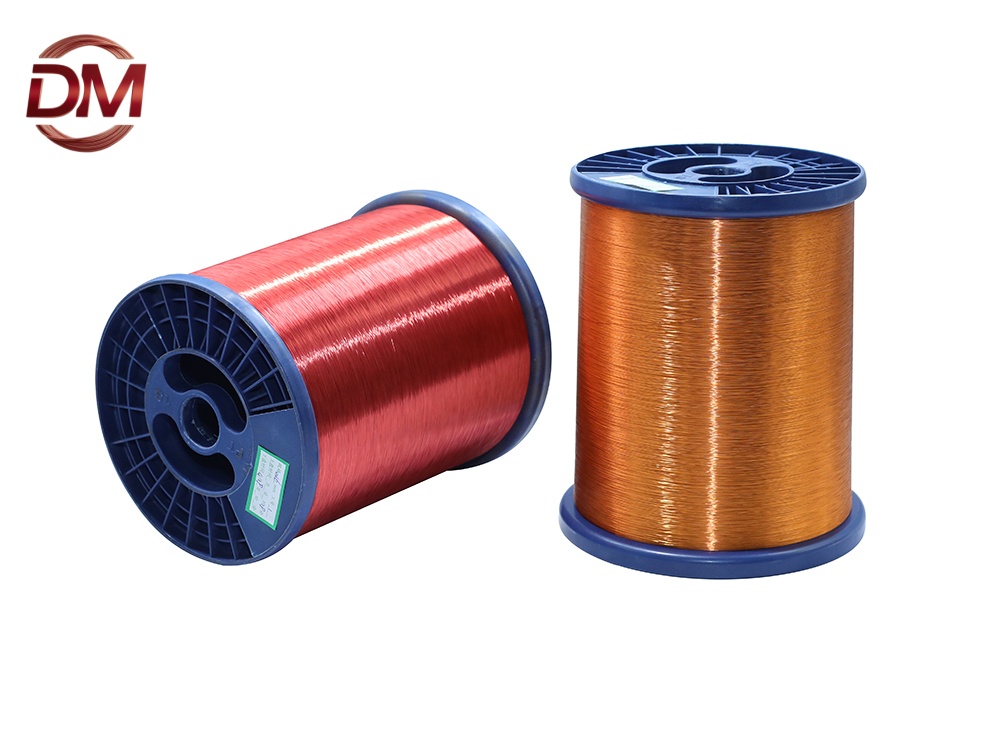
Export Packaging Specifications for Enameled Copper Wire: Ensuring Dielectric Integrity During Ocean Transit
At Luoyang Xinzhaohe Aluminum Co., Ltd., with over two decades of specialized experience in winding wire production, we recognize that export packaging is not merely a logistical requirement but a critical safeguard for the electrical performance of enameled copper wire, particularly its breakdown voltage. Moisture ingress or physical damage during sea freight directly compromises the integrity of the enamel insulation, leading to premature dielectric failure. Our engineered packaging system is meticulously designed to mitigate these risks, ensuring the wire arrives with its specified electrical properties intact, as validated per IEC 60317 standards.
All export shipments utilize robust, ISPM 15 compliant wooden pallets constructed from kiln-dried, pest-free hardwood. These pallets provide essential structural stability to withstand stacking pressures and dynamic forces encountered during multi-modal transport. Precise load distribution calculations prevent coil deformation, which could induce micro-cracks in the enamel film. Coil placement follows strict center-of-gravity protocols, secured with steel strapping rated for 1500 kg tensile strength. This foundational layer prevents movement-induced abrasion that might otherwise degrade the insulation’s dielectric strength.
The primary defense against humidity is a multi-layer moisture barrier system. Each palletized load is first wrapped in 100μm thick, metallized low-density polyethylene film with integrated vapor corrosion inhibitors (VCI). This film provides a water vapor transmission rate (WVTR) below 0.5 g/m²/24hr at 38°C and 90% RH, critical for preventing hygroscopic absorption by the enamel resin. A secondary outer wrap of 150μm polyethylene film, heat-sealed at all seams, creates an additional redundant barrier. Humidity indicator cards (HICs) calibrated to 20% and 40% RH are placed internally within the wrap to provide visual verification of moisture control upon destination unloading. Desiccant packs rated for 1000g moisture absorption per cubic meter are strategically positioned within the pallet footprint.
Sea freight validation is non-negotiable. Our packaging protocol undergoes rigorous simulation testing per ASTM D4169, including 30-day cyclic humidity exposure (60-95% RH) and salt fog testing per ISO 9227. Pallet configurations are optimized for container stowage, utilizing dunnage to prevent contact with container walls and ensuring airflow channels to minimize condensation risks. We mandate container pre-inspection for water tightness and adherence to ISO 11607-1:2019 requirements for terminally sterilized medical device packaging, underscoring the extreme reliability demanded for electrical insulation preservation.
The following table details standard pallet configuration parameters for common coil sizes:
| Coil Outer Diameter (mm) | Max Stack Height (coils) | Pallet Dimensions (LxWxH mm) | Gross Weight Limit (kg) |
|---|---|---|---|
| 500 – 800 | 4 | 1200 x 1000 x 180 | 2500 |
| 801 – 1100 | 3 | 1400 x 1200 x 180 | 3800 |
| 1101 – 1400 | 2 | 1600 x 1400 x 180 | 5200 |
This integrated approach—combining structural pallet engineering, multi-barrier moisture protection, and sea freight-specific validation—ensures the dielectric properties, especially the critical breakdown voltage, remain uncompromised from our facility to your production line. Luoyang Xinzhaohe’s packaging protocol is a direct extension of our metallurgical expertise in wire insulation systems, guaranteeing performance consistency demanded by global OEMs.
Sourcing from Luoyang Xinzhaohe

Partner with Luoyang Xinzhaohe Aluminum Co., Ltd for High-Performance Enameled Copper Winding Wire
With over two decades of specialized experience in the production and supply of high-quality winding wires, Luoyang Xinzhaohe Aluminum Co., Ltd stands as a trusted partner for global manufacturers requiring precision-engineered enameled copper wire. Our core expertise lies in delivering products that meet rigorous international standards, particularly in critical electrical performance parameters such as breakdown voltage—a key determinant in insulation reliability and motor longevity.
Our manufacturing infrastructure is engineered to ensure consistent dielectric strength across all wire gauges and insulation classes. We utilize advanced enamel coating technologies, including polyurethane (PU), polyester (PE), and polyamide-imide (PAI), each formulated to deliver superior breakdown voltage performance under varying thermal, mechanical, and environmental conditions. Our production lines are equipped with real-time monitoring systems that continuously assess insulation thickness, uniformity, and pinhole defects—factors directly influencing the dielectric integrity of the final product. This precision control ensures that every batch of enameled copper wire meets or exceeds industry benchmarks, including IEC 60317, GB/T 23312, and NEMA MW standards.
Breakdown voltage consistency is achieved through tightly controlled curing ovens, multi-stage filtration of enamel resins, and automated tension management during winding. These processes eliminate micro-voids and weak spots in the insulation layer, which are common failure points under high-voltage stress. Our in-house testing laboratory conducts routine dielectric strength evaluations using both AC and impulse voltage methods, simulating real-world operating conditions to validate performance. Typical breakdown voltage values for our standard 130°C (Class B) and 180°C (Class H) insulation systems range from 3,000 V to over 8,000 V depending on wire diameter and coating structure, with options available for custom high-dielectric applications.
As an integrated supplier, we maintain full traceability from raw material sourcing to finished goods, ensuring copper purity (minimum 99.99% conductivity) and enamel batch consistency. Our quality management system is ISO 9001 certified, and we support customers with comprehensive technical documentation, including test certificates, material safety data sheets (MSDS), and application-specific performance data.
Serving industries such as electric motors, transformers, compressors, and renewable energy systems, we combine technical depth with scalable production capacity to meet both prototype and high-volume demands. Our engineering team collaborates closely with clients to optimize wire selection based on operating voltage, thermal class, and mechanical requirements.
For sourcing partners seeking reliable, high-breakdown-voltage enameled copper wire backed by technical excellence and long-term supply stability, Luoyang Xinzhaohe offers a proven manufacturing foundation and responsive global service.
Contact us at cathy@transformerstrip.com to discuss your technical specifications and receive sample data, pricing, and lead time information tailored to your application.
📉 Factory Direct Savings Calculator
Calculate your potential savings by importing breakdown voltage of enameled copper wire directly from China.