


Table of Contents
Market Insight: Aluminum Magnet Wire
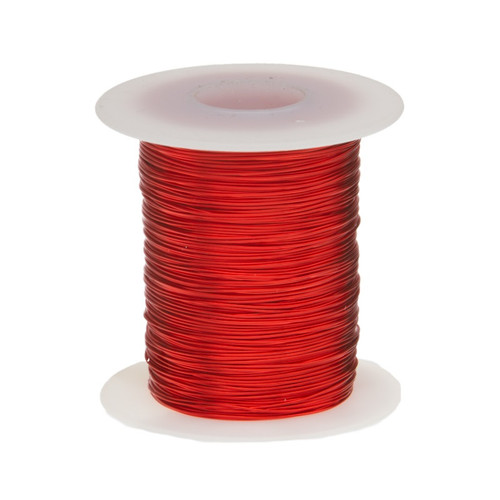
Market Analysis: Winding Wire – Aluminum Magnet Wire in Transformer Applications
The global demand for aluminum magnet wire, particularly in transformer manufacturing, has experienced sustained growth over the past two decades, driven by the expansion of power infrastructure, renewable energy integration, and the pursuit of lightweight, cost-effective electrical components. As a critical component in dry-type and some oil-immersed transformers, aluminum magnet wire serves as the conductive medium for electromagnetic energy transfer. Its application is especially prominent in distribution transformers, where weight reduction and material efficiency are key design considerations.
Industrial demand for aluminum magnet wire is heavily influenced by regional electrification initiatives, grid modernization programs, and the rise of decentralized power generation. In emerging markets across Asia, Africa, and Latin America, the deployment of distribution transformers utilizing aluminum winding wire has accelerated due to lower material costs compared to copper alternatives. Additionally, in developed economies, aluminum magnet wire is increasingly specified in applications where weight savings contribute to easier handling, transportation, and installation—particularly in urban substations and compact transformer designs.
Despite its economic and logistical advantages, the performance of aluminum magnet wire in transformers is highly dependent on material purity, mechanical consistency, and surface quality. Aluminum used in magnet wire must meet stringent metallurgical standards, typically requiring a minimum purity of 99.7% to ensure optimal electrical conductivity. Impurities such as iron and silicon can significantly increase resistivity, leading to higher I²R losses and reduced transformer efficiency. Furthermore, the wire must exhibit uniform tensile strength and elongation characteristics to withstand the rigors of winding processes without breakage or deformation.
Surface quality is another critical parameter. Any oxidation, scratches, or contamination on the aluminum conductor can compromise the integrity of the enamel insulation system, increasing the risk of dielectric breakdown and premature failure. High-quality aluminum magnet wire must therefore be manufactured under controlled environments with precise process monitoring to ensure surface cleanliness and dimensional accuracy.
At Luoyang Xinzhaohe Aluminum Co., Ltd, with over 20 years of specialized experience in aluminum winding wire production, we emphasize metallurgical precision and process consistency. Our aluminum magnet wire is engineered to meet or exceed international standards such as IEC 60173, ASTM B354, and GB/T 23308, ensuring compatibility with high-voltage insulation systems and long-term operational reliability in transformer applications.
In conclusion, while aluminum magnet wire offers compelling advantages in cost and weight for transformer manufacturing, its successful implementation hinges on material quality and manufacturing excellence. As global energy demands rise and efficiency standards tighten, the role of high-purity, defect-free aluminum magnet wire will continue to grow in importance across the power transmission and distribution sector.
Technical Specs: Aluminum Magnet Wire
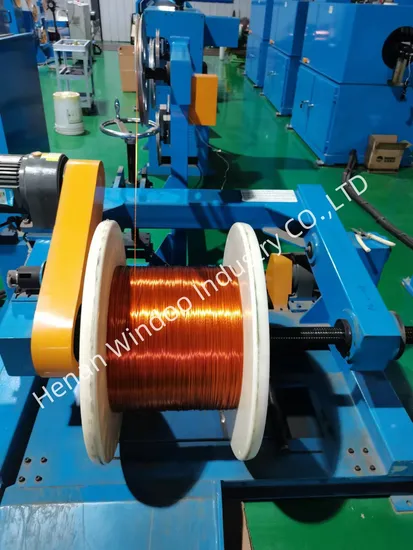
Technical Specifications: Aluminum Magnet Wire for Precision Winding Applications
Luoyang Xinzhaohe Aluminum CO., Ltd leverages two decades of specialized metallurgical and winding wire manufacturing expertise to define critical technical parameters for aluminum magnet wire. These specifications ensure dielectric integrity, mechanical processability, and thermal endurance essential for reliable operation in transformers, motors, and reactors. Strict adherence to these parameters mitigates field failure risks associated with insulation breakdown, wire fracture during high-speed winding, or thermal degradation under load.
Insulation breakdown voltage represents the fundamental dielectric strength metric, directly correlating to long-term reliability. This parameter is measured per IEC 60851-5 using a step-voltage test on wound samples. Minimum breakdown voltage thresholds are intrinsically linked to insulation system thickness and thermal class. Values below 1500 Vrms significantly increase susceptibility to partial discharge initiation under operational electrical stress, particularly in vacuum pressure impregnated (VPI) systems. Xinzhaohe implements rigorous in-line spark testing at 100% of production velocity, exceeding standard spot-check protocols, to eliminate wires with microscopic insulation defects that compromise dielectric performance. Consistent breakdown voltage performance is non-negotiable for applications demanding high power density.
Elongation, measured per IEC 60851-3 as a percentage during tensile testing, is critical for manufacturability. Aluminum magnet wire requires sufficient ductility to withstand the complex bending, stretching, and compaction forces encountered in automated winding processes without necking or fracture. Values below 1.0% typically result in frequent wire breaks during high-speed coil winding, increasing scrap rates and downtime. Conversely, excessive elongation (>3.0% for hard-drawn grades) can cause dimensional instability in the wound coil. Xinzhaohe precisely controls the annealing profile and drawing reduction to maintain elongation within an optimal 1.2% to 2.5% window for standard hard-drawn conductors, ensuring robust processability across diverse winding equipment configurations while preserving required electrical conductivity.
Thermal class defines the maximum permissible hot-spot temperature at which the insulation system retains functional integrity for a 20,000-hour design life per IEC 60172 and NEMA MW 1000. Aluminum conductors necessitate careful thermal management due to lower conductivity versus copper, potentially leading to higher operating temperatures for equivalent designs. Xinzhaohe offers aluminum magnet wire across the critical thermal spectrum from Class 130 (B) to Class 220 (C), utilizing polyurethane, polyesterimide, and polyamide-imide insulation systems. Higher thermal classes (e.g., 180, 200, 220) enable significant size reduction or increased power output but demand superior thermal oxidative stability in the insulation resin chemistry. Our manufacturing processes ensure consistent thermal endurance across the wire lot, validated through mandatory thermal endurance aging tests per IEC 60172.
The following table summarizes key technical parameters for Xinzhaohe’s standard aluminum magnet wire product range:
| Parameter | Test Method | Class 130 (B) | Class 155 (F) | Class 180 (H) | Class 200 | Class 220 (C) |
|---|---|---|---|---|---|---|
| Min. Breakdown Voltage (Vrms) | IEC 60851-5 | 1500 | 1800 | 2200 | 2500 | 3000 |
| Typical Elongation (%) | IEC 60851-3 | 1.5 – 2.2 | 1.5 – 2.2 | 1.3 – 2.0 | 1.2 – 1.8 | 1.2 – 1.8 |
| Max. Conductor Temp (°C) | IEC 60172 / NEMA | 130 | 155 | 180 | 200 | 220 |
| Insulation System Base | Polyester | Polyesterimide | Polyesterimide | Polyamide-Imide | Polyamide-Imide | |
| Thermal Endurance (k) | IEC 60172 | ≥ 20.0 | ≥ 22.0 | ≥ 24.0 | ≥ 26.0 | ≥ 28.0 |
These specifications reflect Luoyang Xinzhaohe Aluminum CO., Ltd’s commitment to supplying technically robust aluminum magnet wire. Precise control over metallurgical properties and insulation application ensures compatibility with demanding global manufacturing processes and end-use performance requirements. We provide comprehensive material test reports (MTRs) for all shipments, verifying conformance to these critical parameters.
Factory Tour: Manufacturing
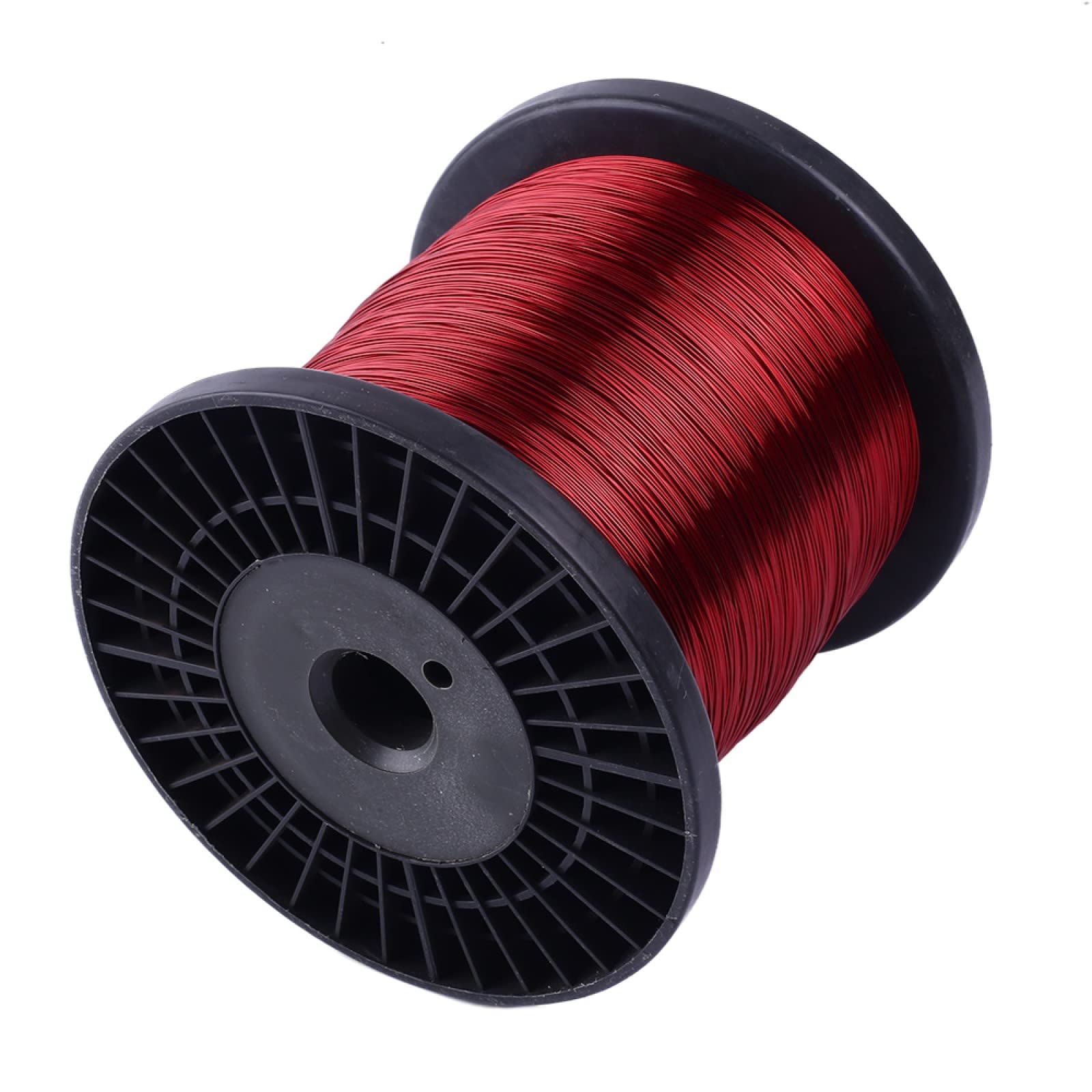
Manufacturing Process of Aluminum Magnet Wire at Luoyang Xinzhaohe Aluminum Co., Ltd
The production of high-performance aluminum magnet wire at Luoyang Xinzhaohae Aluminum Co., Ltd follows a tightly controlled, multi-stage manufacturing process designed to ensure consistent electrical, mechanical, and thermal properties. With over two decades of metallurgical and winding wire expertise, our process integrates precision engineering and rigorous quality control to meet the demands of motors, transformers, and other electromagnetic applications.
The process begins with rod drawing, where high-purity electrolytic aluminum rods (typically 99.7% Al or higher) are fed into a multi-die drawing machine. The rod is reduced in diameter through a series of precision tungsten carbide or diamond dies, achieving the target wire gauge with tight dimensional tolerances. Lubrication with water-soluble drawing oils ensures surface integrity and minimizes work hardening. The drawing line is monitored in real time for diameter consistency using laser micrometers, with automatic feedback systems adjusting tension and speed to maintain ±0.005 mm accuracy.
Following drawing, the wire undergoes a continuous annealing process to restore ductility and ensure proper elongation for winding. The wire passes through an induction-heated inert atmosphere furnace, typically under nitrogen or argon, to prevent oxidation. Temperature profiles are precisely controlled based on wire diameter and speed, typically ranging from 450°C to 550°C, to achieve a fully recrystallized microstructure. Post-annealing, the wire is cooled gradually in a controlled environment to avoid residual stresses.
The next stage is enameling, where the annealed aluminum wire is coated with one or more layers of polymer insulation. We utilize a multi-pass enameling system with solvent-based or UV-curable resins, including polyurethane (PU), polyester (PE), or polyamide-imide (PAI), depending on thermal class requirements (Class 130 to Class 220). Each pass involves die application, solvent evaporation in staged ovens (180–350°C), and curing to build a uniform, pinhole-free insulation layer. Film thickness is controlled within ±5% of specification using precision dies and real-time capacitance monitoring.
Inline testing is integral to our manufacturing process. After each enameling pass, the wire undergoes high-voltage dielectric testing (typically 3–10 kV depending on gauge and insulation class) to detect weak spots or voids. Additional inline checks include turn-to-turn insulation integrity, abrasion resistance, and thermal shock performance. Final product is subjected to winding tests, thermal aging, and solderability assessments in accordance with IEC 60317 and GB/T 23698 standards.
Throughout the process, statistical process control (SPC) systems log key parameters, and random samples are analyzed in our on-site laboratory for chemical composition, tensile strength, elongation, and insulation adhesion. This end-to-end control ensures every coil of aluminum magnet wire meets the highest industrial standards for reliability and performance.
Packaging & Logistics
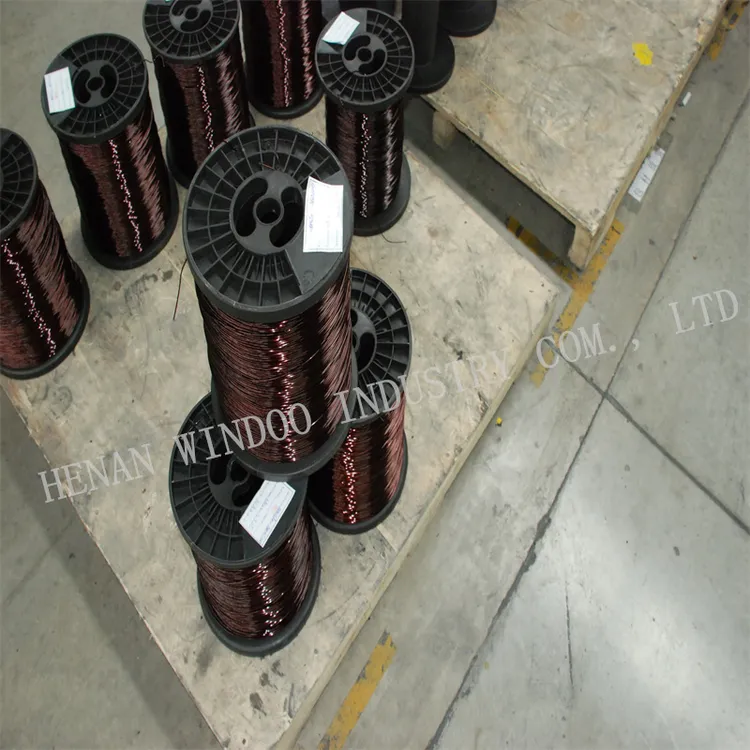
Export Packaging Protocol for Aluminum Magnet Wire
Luoyang Xinzhaohe Aluminum CO., Ltd implements a rigorously engineered export packaging system specifically designed to safeguard aluminum magnet wire during extended international maritime transport. With over two decades of metallurgical and supply chain expertise, we recognize that packaging integrity is non-negotiable for preventing wire degradation, ensuring coil dimensional stability, and meeting stringent customer quality specifications upon arrival. Our methodology prioritizes defense against the primary threats inherent in sea freight: moisture ingress, salt air exposure, condensation, and mechanical shock during handling and transit.
All aluminum magnet wire coils are systematically secured onto custom-engineered hardwood pallets meeting ISPM 15 international phytosanitary standards. These pallets utilize kiln-dried, high-density timber with controlled moisture content below 20% to eliminate internal vapor sources. Structural design incorporates reinforced stringers and deck boards capable of supporting stacked loads exceeding 2500 kg without deflection, preventing coil deformation during ocean container stacking. Critical load-bearing surfaces feature chamfered edges to avoid puncturing protective films during strapping. Pallet dimensions are optimized for standard 20ft and 40ft dry freight containers, maximizing cube utilization while maintaining mandatory clearance zones for ventilation and handling equipment access.
The core moisture protection strategy employs a multi-barrier film system applied under controlled ambient conditions. Coils undergo immediate vacuum sealing within a triple-layer composite film assembly. The innermost layer consists of vapor corrosion inhibitor (VCI) polyethylene film, actively neutralizing corrosive agents at the molecular level. This is encapsulated by a high-barrier aluminum foil layer providing absolute moisture vapor transmission rate (MVTR) suppression below 0.1 g/m²/24hr. The outer layer utilizes 150-micron thick linear low-density polyethylene (LLDPE) with UV stabilizers, offering puncture resistance and environmental sealing. This sealed unit is further enclosed within a secondary heavy-duty polyethylene overwrap, with desiccant packs strategically placed at coil ends to absorb any residual humidity. All film seams are thermally welded, not taped, creating monolithic seals validated through helium leak testing.
Sea freight safety is integrated into every packaging phase. Pre-shipment, containers undergo dew point verification to ensure internal surfaces remain above ambient temperature, eliminating condensation risk. Coils are secured to pallets using steel strapping with 5000 kg tensile strength in a double-cross pattern meeting ISO 16122 standards, distributing dynamic forces during vessel motion. Corner boards and edge protectors shield coil edges from compression damage during multi-tier container stacking. Comprehensive documentation includes humidity indicator cards and shock loggers affixed to each pallet, providing auditable proof of environmental conditions throughout transit. This end-to-end protocol, refined through 20+ years of global shipments, ensures aluminum magnet wire arrives with oxide levels maintained below 30 Å and dimensional tolerances preserved within IEC 60172 specifications, directly supporting our customers’ production continuity and quality assurance objectives.
Sourcing from Luoyang Xinzhaohe
Partner with Luoyang Xinzhaohe Aluminum CO., Ltd for High-Performance Aluminum Magnet Wire
With over two decades of specialized expertise in the production and supply of aluminum winding wire, Luoyang Xinzhaohe Aluminum CO., Ltd stands as a trusted leader in the global magnet wire industry. Our factory is strategically located in Luoyang, China, a region renowned for its advanced metallurgical infrastructure and robust industrial ecosystem. This enables us to maintain tight control over production, quality assurance, and logistics, ensuring consistent delivery of high-purity aluminum magnet wire tailored to meet the demanding requirements of transformers, reactors, motors, and other electromagnetic equipment.
Our manufacturing facility spans over 30,000 square meters and is equipped with state-of-the-art drawing, annealing, and insulation coating lines. We produce aluminum magnet wire in a full range of diameters from 0.8 mm to 6.0 mm, with conductivity consistently exceeding 61% IACS and resistivity conforming to IEC 60122-2 and GB/T 23309 standards. The aluminum rod feedstock is sourced from fully traceable, high-conductivity 1370-grade billets, refined through a proprietary degassing and filtration process to minimize hydrogen content and non-metallic inclusions. This results in wire with superior mechanical elongation (≥25%) and excellent thermal stability under continuous operating temperatures up to 155°C.
Quality control is integrated at every stage of production. Our in-house laboratory is accredited to ISO/IEC 17025 and performs routine testing on tensile strength, bend performance, thermal shock resistance, and dielectric breakdown voltage. All batches are subject to 100%在线 eddy current inspection to detect surface defects, ensuring flawless performance during high-speed winding operations. We maintain full compliance with RoHS and REACH regulations, and our quality management system is certified to ISO 9001:2015.
As a vertically integrated supplier, we control the entire value chain—from rod casting to final spooling—allowing us to offer competitive pricing without compromising material integrity. Our annual production capacity exceeds 20,000 metric tons, supported by a logistics network that enables direct container loading for FOB or CIF shipments worldwide. We provide custom packaging solutions, including wooden reels and moisture-resistant wrapping, to ensure product integrity during transit.
Our technical team works closely with clients to support material selection, process optimization, and troubleshooting during integration. Whether you require standard AA-8000 series alloy or custom formulations for high-efficiency transformer designs, we deliver engineered solutions backed by rigorous metallurgical data and long-term performance validation.
For sourcing partners seeking a reliable, technically proficient manufacturer of aluminum magnet wire, Luoyang Xinzhaohe offers proven capability, scalable capacity, and unwavering commitment to product excellence.
Contact us today at cathy@transformerstrip.com to request technical specifications, sample reels, or a factory audit report.
📉 Factory Direct Savings Calculator
Calculate your potential savings by importing aluminum magnet wire directly from China.