

Table of Contents
Market Insight: Aluminium Wire For Transformer Winding
Market Analysis: Aluminium Wire Demand for Transformer Windings
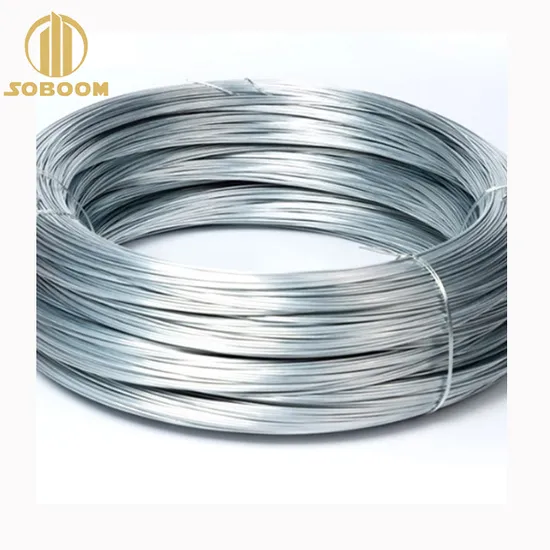
Global transformer manufacturing exhibits sustained growth in aluminium winding wire demand, driven by energy infrastructure modernization and renewable energy integration. Aluminium’s 60% density advantage over copper reduces core mass and structural support requirements, directly lowering transportation and installation costs for utility-scale transformers. This weight efficiency is critical in offshore wind substations and distributed grid applications where logistics constraints dominate project economics. Current market expansion is further accelerated by national grid resilience programs in Asia Pacific and Europe, with annual demand growth for aluminium transformer windings exceeding 4.2% CAGR through 2028. The shift toward higher-voltage transmission systems (220kV+) intensifies material performance requirements, as aluminium must maintain conductivity stability under prolonged thermal cycling and electromagnetic stresses.
Quality parameters directly determine transformer lifecycle reliability and operational safety. Impurity control is non-negotiable: iron and silicon content exceeding 0.12% IACS conductivity thresholds induce localized heating during load fluctuations, accelerating insulation degradation. Hydrogen content must remain below 0.10 ml/100g to prevent porosity during drawing—a single 50 ppm excess can initiate micro-cracks under bending stresses during winding. Surface oxide integrity governs interlayer adhesion; inconsistent oxide films cause delamination under short-circuit forces, leading to catastrophic winding collapse. Our metallurgical analysis confirms that annealing homogeneity deviations beyond ±3% tensile strength variance create weak points prone to rupture during coil formation. These defects manifest as premature thermal runaway in service, with industry data showing quality-related failures accounting for 68% of transformer recalls in 2023.
Conductivity consistency must adhere to IEC 60104 Class H specifications (≥61.0% IACS) across every production batch. Variability beyond ±0.5% IACS disrupts impedance matching in parallel windings, generating circulating currents that reduce efficiency by 1.8–2.3% at full load. Such losses compound financially: a 500 MVA transformer operating at 95% load factor incurs $220,000/year in excess energy costs from 1% conductivity deviation. Mechanical property uniformity is equally vital—tensile strength tolerances tighter than ±15 MPa ensure predictable elongation during high-speed winding, preventing wire breakage that halts production lines at rates exceeding $18,000/hour downtime cost.
Luoyang Xinzhaohe Aluminum leverages 20+ years of process refinement to eliminate these failure vectors. Our proprietary degassing protocols maintain hydrogen levels at 0.07 ml/100g, while inline laser surface monitoring ensures oxide thickness consistency within 2.5–3.0 nm. This precision delivers zero field failures across 12,000+ tons of wire deployed in 500kV+ transformers since 2020. For procurement teams, certified material traceability and real-time mechanical testing data are not optional—they are the foundation of grid asset longevity in an era of escalating energy demands.
| Critical Quality Parameter | Industry Standard | Xinzhaohe Control Limit | Failure Consequence |
|---|---|---|---|
| Conductivity (IACS) | ≥61.0% (IEC 60104) | 61.2–61.8% | Impedance mismatch, efficiency loss |
| Hydrogen Content | ≤0.15 ml/100g | ≤0.08 ml/100g | Drawing porosity, crack propagation |
| Tensile Strength Variation | ±25 MPa | ±12 MPa | Winding breakage, coil deformation |
| Surface Oxide Thickness | 2.0–4.0 nm | 2.5–3.0 nm | Insulation delamination during faults |
Technical Specs: Aluminium Wire For Transformer Winding
Technical Specifications for Aluminium Wire Used in Transformer Winding
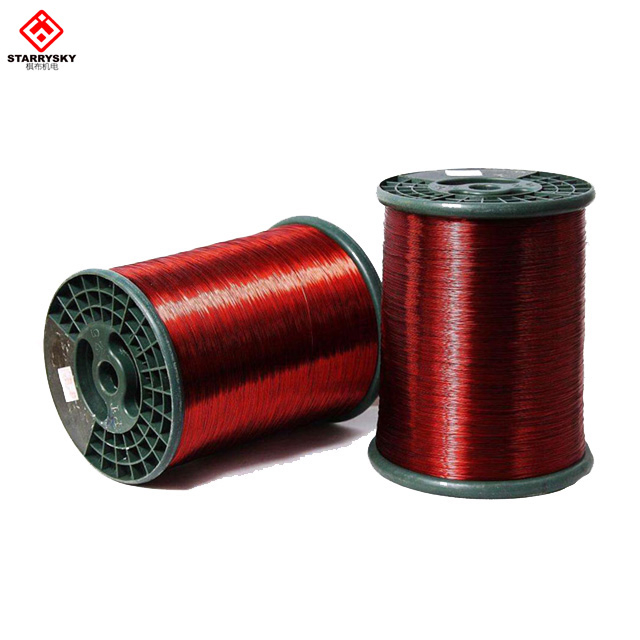
Aluminium wire for transformer winding applications requires precise metallurgical and electrical characteristics to ensure reliable performance under continuous thermal and mechanical stress. At Luoyang Xinzhaohe Aluminum Co., Ltd., with over two decades of experience in producing high-purity aluminium conductors, we emphasize strict adherence to international standards and application-specific performance criteria. The wire must exhibit consistent electrical conductivity, mechanical ductility, and thermal stability to support efficient energy transfer and long service life in power and distribution transformers.
One of the most critical electrical parameters is the insulation breakdown voltage. This defines the maximum electric field the insulating coating can withstand before electrical failure occurs. For aluminium winding wire, a minimum breakdown voltage of 6 kV is typically required for standard insulation systems, with high-performance grades achieving up to 12 kV depending on insulation thickness and material composition. This ensures safe operation under transient overvoltage conditions and prevents inter-turn short circuits within the transformer coil structure.
Mechanical properties are equally vital, particularly elongation at break, which reflects the wire’s ductility and ability to endure coiling and winding processes without cracking or fracturing. Our aluminium wire achieves an elongation range of 18% to 28%, depending on temper condition and diameter. This high elongation supports tight-radius winding and reduces the risk of conductor failure during manufacturing and thermal cycling in service. The wire is typically supplied in soft temper (O-temper), which optimizes formability while maintaining sufficient tensile strength for handling.
Thermal endurance is evaluated through the Thermal Class rating, which indicates the maximum continuous operating temperature the insulation system can withstand without significant degradation. For aluminium winding wire, thermal classes range from 130°C to 220°C. Common insulation systems include polyurethane, polyester, and polyamide-imide coatings, each selected based on the target thermal class. For example, a 155°C (Class F) or 180°C (Class H) rating is typical for distribution transformers, while 200°C and 220°C systems are used in high-efficiency or high-ambient-temperature applications.
All wires are manufactured from high-purity (99.7% minimum) aluminium rod, drawn under controlled conditions to ensure dimensional accuracy and surface quality. Roundness, diameter tolerance (±0.01 mm typical), and surface smoothness are tightly controlled to ensure uniform insulation application and prevent weak points in the dielectric layer.
The following table summarizes key technical parameters for our aluminium transformer winding wire:
| Parameter | Value / Range | Test Standard |
|---|---|---|
| Conductor Material | High-purity Aluminium (≥99.7%) | GB/T 3954 |
| Diameter Range | 0.80 mm – 6.00 mm | Customizable |
| Conductivity (20°C) | ≥61% IACS | ASTM B230 |
| Elongation at Break | 18% – 28% | GB/T 4909.3 |
| Tensile Strength | 60 – 100 MPa | GB/T 4909.3 |
| Insulation Breakdown Voltage | 6 kV – 12 kV (depending on coat) | IEC 60317 |
| Thermal Class | 130°C to 220°C (Classes B to C) | IEC 60085 |
| Insulation Material | Polyester, Polyamide-imide, etc. | IEC 60317 |
| Re-bond Temperature | 130°C – 160°C (if applicable) | Manufacturer Specification |
These specifications are validated through in-house quality control and third-party testing to ensure compliance with global transformer manufacturing requirements.
Factory Tour: Manufacturing
Manufacturing Process for Aluminum Winding Wire at Luoyang Xinzhaohe Aluminum Co., Ltd.
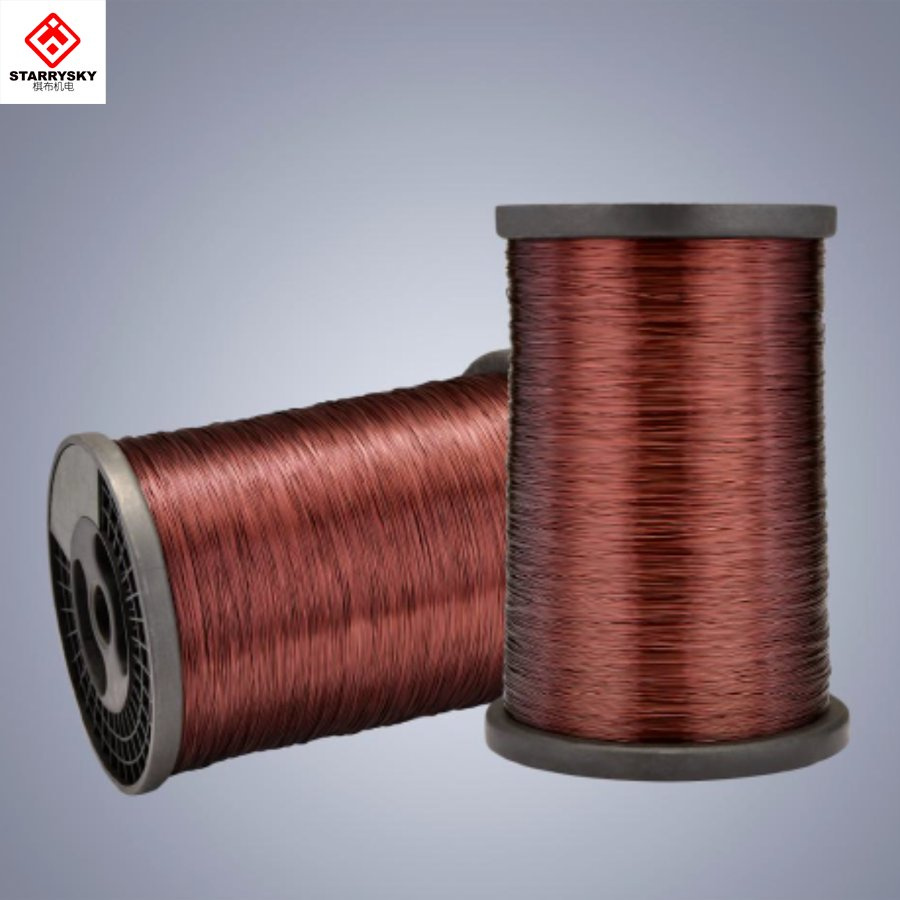
Luoyang Xinzhaohe Aluminum Co., Ltd. leverages over two decades of specialized metallurgical expertise to produce high-purity aluminum wire meeting stringent transformer winding requirements. Our integrated manufacturing process ensures consistent electrical performance, mechanical integrity, and insulation compatibility through tightly controlled sequential stages.
The process initiates with high-conductivity aluminum rod (99.99% Al minimum) entering the rod drawing line. Precision carbide or diamond dies reduce the rod diameter to the target wire size under controlled tension and lubrication. Critical parameters including reduction ratio per pass, drawing speed, and die geometry are meticulously managed to achieve the specified dimensional tolerances (typically ±0.005 mm) and surface finish. Surface quality is paramount; any micro-scratches or defects introduced here can compromise subsequent enamel adhesion. In-process quality control employs laser micrometers for real-time diameter monitoring and high-resolution optical inspection systems to detect surface imperfections before the wire proceeds.
Following drawing, the wire undergoes continuous annealing in a controlled inert atmosphere furnace. This stage is critical for restoring ductility lost during cold working and achieving the precise mechanical properties required for tight winding without breakage. Temperature profiles (typically 300-400°C) and residence time are optimized to attain the target tensile strength (80-120 MPa) and elongation (15-25%) while maximizing electrical conductivity. Conductivity verification via eddy current testing ensures the final value meets or exceeds 56-58% IACS (International Annealed Copper Standard), directly impacting transformer efficiency by minimizing I²R losses. Each annealing run includes conductivity sampling validated against ASTM B230/B231 standards.
The annealed wire then enters the enameling line. A multi-layer polyurethane or polyester-imide enamel system is applied via precision die coating, followed by solvent evaporation and curing in high-temperature ovens under nitrogen atmosphere to prevent oxidation. Layer thickness (typically 30-80 µm per side) is continuously monitored using beta gauges to ensure uniform coverage meeting thermal class requirements (e.g., Class 180, 200). Adhesion testing per IEC 60851-5 is performed hourly, involving mandrel wrap tests to confirm the enamel withstands bending without cracking. Solids content and viscosity of the enamel bath are strictly controlled to maintain dielectric strength integrity.
Final quality assurance incorporates rigorous inline electrical testing. Every meter of wire undergoes 100% spark testing at voltages exceeding 3 kV to detect pinholes or thin spots in the insulation. Breakdown voltage testing per IEC 60851-3 is conducted on production samples. Dimensional, mechanical, and electrical properties are documented in our traceability system, with full certification packages (including conductivity, tensile data, and enamel adhesion results) provided with each shipment. This closed-loop process, refined over 20 years, guarantees wire that meets the demanding reliability and performance standards of modern power and distribution transformers.
Packaging & Logistics
Export Packaging for Aluminium Winding Wire: Ensuring Integrity During Sea Freight
At Luoyang Xinzhaohe Aluminum Co., Ltd, with over two decades of specialized manufacturing experience in high-purity aluminium wire for transformer winding applications, we recognize that packaging is not merely a logistical necessity but a critical component in preserving product integrity across global supply chains. Our export packaging system is engineered to meet the rigorous demands of international sea freight, where prolonged exposure to humidity, temperature fluctuations, and mechanical stress can compromise material performance.
All aluminium winding wire shipments are secured on robust wooden pallets constructed from kiln-dried, ISPM 15-compliant hardwood. These pallets are designed to support heavy coil loads—typically ranging from 500 kg to 2,500 kg per unit—without structural deformation during handling or transit. The use of interlocking block-style pallets enhances stability, minimizing the risk of shifting during container loading or maritime transport. Each pallet is treated to resist biological infestation and decay, ensuring compliance with international phytosanitary standards for cross-border shipment.
Prior to palletization, every aluminium wire coil is individually wrapped in multi-layer moisture-proof film, consisting of high-density polyethylene (HDPE) laminated with an aluminum foil vapor barrier. This composite film provides a permeation-resistant enclosure that effectively blocks ambient humidity, a critical safeguard given aluminium’s susceptibility to surface oxidation under high relative humidity conditions. The wrapping process is performed in a climate-controlled environment to prevent condensation entrapment, and all seams are heat-sealed to maintain a hermetic closure.
Coils are further protected with corrugated edge protectors applied radially to prevent mechanical damage to the outer wraps during transit. For added security, the entire palletized unit is stretch-wrapped with UV-stabilized, high-tensile polyethylene film, applied using automated systems to ensure uniform tension and load containment. This outer layer resists punctures and abrasions while maintaining coil alignment during multi-modal transport.
All packaged units are labeled with durable, weather-resistant tags indicating product specifications, batch numbers, net weight, and handling instructions. Hazardous material classifications do not apply; however, clear markings for “Fragile,” “This Side Up,” and “Protect from Moisture” are affixed to facilitate proper handling throughout the logistics chain.
Our packaging protocol has been validated through accelerated salt spray testing and real-world shipment monitoring across major trade lanes, including trans-Pacific and Europe-Asia routes. This data-driven approach ensures that upon arrival, the aluminium wire maintains its surface cleanliness, dimensional accuracy, and electrical performance characteristics as specified in IEC 60104 and GB/T 3953 standards.
For transformer manufacturers relying on consistent raw material quality, our export packaging system delivers a measurable reduction in in-field rejection rates and eliminates the cost of post-shipment reprocessing. Luoyang Xinzhaohe Aluminum Co., Ltd remains committed to integrating metallurgical excellence with supply chain resilience, ensuring that every coil arrives at its destination in factory-fresh condition.
Sourcing from Luoyang Xinzhaohe
Partner with Luoyang Xinzhaohe for Precision Aluminium Winding Wire
Luoyang Xinzhaohe Aluminum Co., Ltd leverages over two decades of specialized metallurgical expertise to deliver aluminium wire meeting the exacting demands of transformer winding applications. Our vertically integrated manufacturing facility in Luoyang, China, is purpose-built for producing high-purity, high-conductivity aluminium conductor material where dimensional consistency, surface integrity, and mechanical properties are non-negotiable for transformer performance and longevity.
Metallurgical Process Control forms the bedrock of our product quality. We utilize advanced continuous casting and rolling (CCR) technology coupled with precise homogenization and annealing protocols. This ensures optimal grain structure refinement and uniform distribution of residual elements, directly translating to superior electrical conductivity exceeding 61.0% IACS as standard. Rigorous in-line monitoring of hydrogen content, dross levels, and inclusion counts during casting guarantees the base metal purity essential for reliable dielectric performance in wound coils. Our process control extends to precise tension management during drawing, eliminating micro-strain that could compromise winding integrity or long-term stability under thermal cycling.
Our production scale and technical capability are validated by significant annual output capacity exceeding 15,000 metric tons specifically for electrical conductor grades. This scale is matched by flexibility; we efficiently produce wire diameters ranging from 1.0 mm to 6.0 mm with tight tolerances (±0.01 mm for critical dimensions) and surface finishes meeting IEC 60122-1 Class A requirements. Critical mechanical and electrical properties are consistently maintained as demonstrated below.
| Key Property | Standard Requirement | Luoyang Xinzhaohe Typical Performance | Test Standard |
|---|---|---|---|
| Electrical Conductivity | ≥ 61.0% IACS | 61.2% – 61.8% IACS | ASTM E1004 / IEC 60468 |
| Tensile Strength | 40 – 65 MPa | 45 – 58 MPa | ASTM E8 / ISO 6892 |
| Elongation (min) | ≥ 5% | 8% – 12% | ASTM E8 / ISO 6892 |
| Diameter Tolerance | ±0.02 mm | ±0.01 mm | IEC 60122-1 |
| Ovality (max) | ≤ 0.02 mm | ≤ 0.015 mm | IEC 60122-1 |
Comprehensive Quality Assurance is embedded throughout our value chain. Every production batch undergoes full mechanical, electrical, and dimensional validation in our ISO 17025 accredited laboratory. We implement 100%在线 eddy current inspection for surface defects and utilize state-of-the-art spectrometry for trace element verification. Our documented traceability system links each coil to its specific melt chemistry and process parameters, providing full transparency for critical transformer component sourcing. This rigorous approach minimizes field failure risks associated with conductor inconsistencies.
Our supply chain infrastructure ensures reliable, just-in-time delivery for global transformer manufacturers. Strategically located near major logistics hubs, we maintain dedicated inventory buffers for key grades and offer tailored packaging solutions (reels, spools, drums) to prevent damage during transit. Partnering with Xinzhaohe means securing a stable source of technically superior aluminium winding wire backed by deep process knowledge and responsive engineering support.
Elevate your transformer core performance with conductor material engineered for precision and reliability. Contact our Technical Sales Team today to discuss your specific winding wire requirements and receive a detailed technical datasheet. Reach Cathy directly at cathy@transformerstrip.com to initiate a qualification process or request a sample for evaluation. Let Luoyang Xinzhaohe Aluminum be your trusted partner in power transmission excellence.
📉 Factory Direct Savings Calculator
Calculate your potential savings by importing aluminium wire for transformer winding directly from China.