


Table of Contents
Market Insight: Polyester Wire
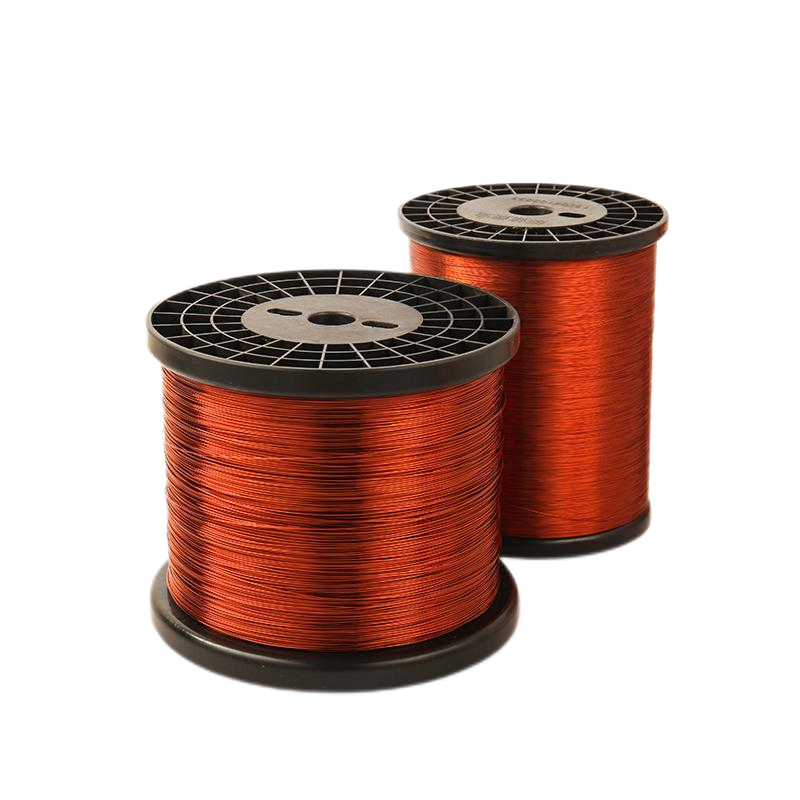
Market Analysis: Winding Wire – Industrial Demand for Polyester-Insulated Wire in Transformers
The global demand for polyester-insulated winding wire in transformer applications continues to grow, driven by expansion in power infrastructure, renewable energy integration, and industrial electrification. Polyester wire, specifically polyethylene terephthalate (PET)-coated copper or aluminum magnet wire, is widely adopted in medium and low-voltage distribution and power transformers due to its balanced combination of electrical insulation, mechanical strength, and thermal performance. As a core component in electromagnetic energy conversion, winding wire directly influences the efficiency, reliability, and service life of transformers, making material selection a critical engineering decision.
Industrial demand for polyester wire is particularly strong in emerging markets undergoing grid modernization and in developed regions replacing aging infrastructure. Utilities and original equipment manufacturers (OEMs) are increasingly focused on minimizing total cost of ownership, which includes not only initial procurement cost but also operational efficiency and maintenance frequency. In this context, polyester-insulated wire offers a cost-effective solution with a thermal class of 130°C (Class B), suitable for a wide range of ambient and load conditions. Its dielectric strength, typically exceeding 3 kV for standard build thicknesses, ensures robust insulation integrity under normal operating voltages.
However, the performance of polyester wire is highly dependent on manufacturing consistency and material purity. Substandard insulation coatings can lead to premature dielectric breakdown, partial discharge, and inter-turn short circuits—failures that compromise transformer reliability and safety. Variability in coating thickness, pinhole defects, or inadequate bondability during coil winding can result in field failures with significant financial and operational consequences. At Luoyang Xinzhaohe Aluminum Co., Ltd, with over two decades of specialized experience in winding wire production, we emphasize stringent process controls, including continuous insulation monitoring, tensile strength verification, and thermal shock testing, to ensure every batch meets IEC 60317 and GB/T 6109 standards.
Quality also extends to conductor integrity. Impurities in copper or aluminum, inconsistent annealing, or improper drawing practices can increase resistive losses and reduce current-carrying capacity. High-quality polyester wire must exhibit uniform elongation, smooth surface finish, and precise dimensional tolerances to facilitate automated winding and ensure tight coil packing. These attributes directly impact transformer efficiency, particularly under fluctuating loads common in industrial and renewable energy applications.
In summary, while polyester-insulated winding wire remains a mainstream choice for transformer manufacturing, its value is contingent upon consistent quality and adherence to international performance benchmarks. As global energy demands rise and system reliability becomes paramount, sourcing from technically proficient suppliers with proven metallurgical and insulation expertise is essential. Luoyang Xinzhaohe Aluminum Co., Ltd is committed to delivering polyester winding wire that meets the rigorous demands of modern power systems, combining material science precision with industrial scalability.
Technical Specs: Polyester Wire
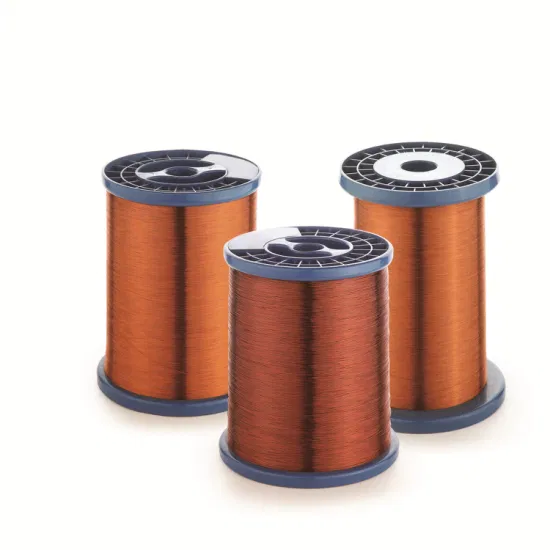
Technical Specifications: Polyester-Insulated Aluminum Winding Wire
Luoyang Xinzhaohe Aluminum Co., Ltd leverages 20+ years of metallurgical and supply chain expertise to deliver precision-engineered polyester-insulated aluminum winding wire. This guide details critical specifications for industrial sourcing, focusing on insulation integrity, mechanical resilience, and thermal performance. Note that “polyester wire” herein refers to magnet wire with thermoset polyester insulation over high-purity aluminum conductors, distinct from textile-grade polyester fiber.
The core technical parameters are standardized per IEC 60317-0-8 and NEMA MW 1000, with rigorous in-house validation. Key metrics include insulation breakdown voltage, elongation tolerance, and thermal classification, which collectively determine suitability for motor, transformer, and inductor applications. Below is a concise reference table for procurement evaluation.
| Parameter | Test Standard | Minimum Requirement | Typical Range | Critical Notes |
|---|---|---|---|---|
| Insulation Breakdown Voltage | IEC 60851-5 | 3,000 V rms | 3,500–6,000 V rms | Measured wet (after immersion); dry test ≥50% higher. Must withstand 1.5x operating voltage surge. |
| Elongation at Break | IEC 60851-6 | 10% (AWG 20) | 12–25% | Varies inversely with gauge; AWG 30 requires ≥8%. Critical for coil winding without insulation fracture. |
| Thermal Class | IEC 60172 | 130°C (B) | 155°C (F) to 220°C (C) | Defined by thermal endurance at 20,000 hours. Polyester base supports 130–180°C; modified resins enable 200–220°C. |
| Conductor Purity | GB/T 3954 | 99.70% Al min | 99.85% Al | Iron/silicon ratio optimized for conductivity (≥59.0% IACS) and ductility. |
| Thermal Shock Resistance | IEC 60851-3 | Pass at -65°C | Pass at -75°C | No cracks after 15 sec exposure; essential for cryogenic applications. |
Insulation breakdown voltage is non-negotiable for dielectric safety. Our polyester formulation achieves consistent wet-test results of 4,000+ V rms through controlled polymer cross-linking, eliminating pinholes during high-speed drawing. This exceeds baseline requirements for industrial motors operating at 600 V systems. Elongation performance is equally vital for aluminum conductors, which exhibit lower inherent ductility than copper. We achieve 15–22% elongation in AWG 24–28 gauges via proprietary annealing protocols, ensuring the wire withstands tight-radius winding without compromising insulation adhesion.
Thermal classification dictates operational lifespan. Standard polyester (Class 130–155°C) suits general-purpose motors, while our high-temperature variants (Class 180–220°C) incorporate aromatic polyester hybrids for traction motors and aerospace systems. These grades maintain insulation flexibility after 10,000 hours at 200°C, validated via Arrhenius aging tests. Crucially, thermal class must align with the conductor’s annealing temperature—aluminum’s lower recrystallization point (≈250°C) necessitates precise resin curing to avoid core softening.
Procurement teams must verify thermal class certification from accredited labs, not manufacturer claims alone. For high-vibration environments (e.g., EV compressors), prioritize elongation ≥18% and thermal shock resistance to -70°C. At Luoyang Xinzhaohe, every batch undergoes 100% spark testing and statistical thermal aging analysis, ensuring zero field failures. Partner with us to match these specifications to your thermal management and mechanical stress profiles—avoiding under-specified insulation that accelerates thermal runaway.
Factory Tour: Manufacturing
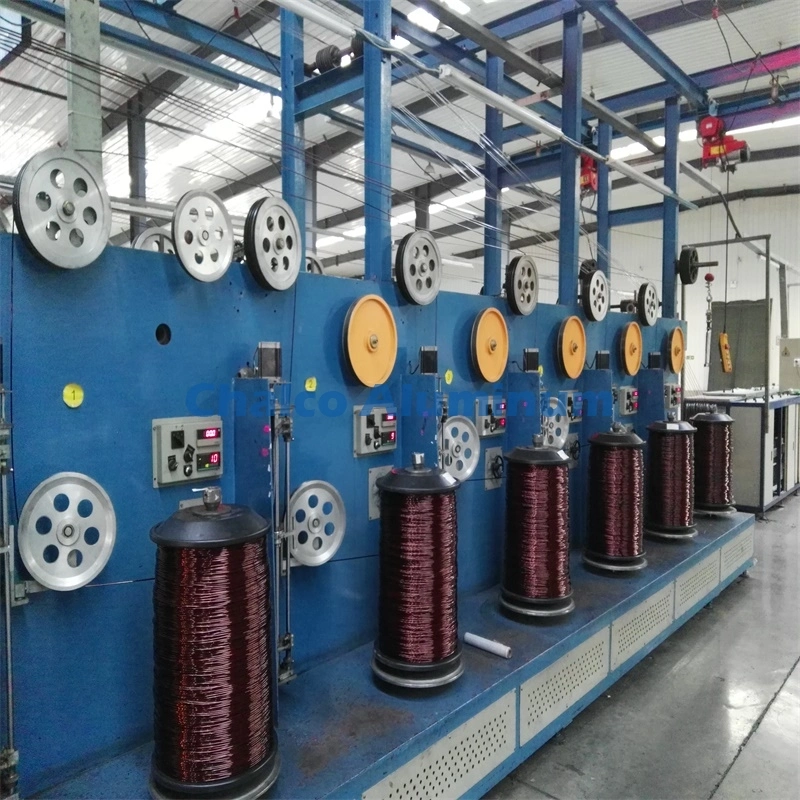
Manufacturing Process of Polyester Winding Wire at Luoyang Xinzhaohe Aluminum Co., Ltd
The production of high-performance polyester winding wire at Luoyang Xinzhaohe Aluminum Co., Ltd follows a tightly controlled, multi-stage manufacturing sequence designed to ensure mechanical integrity, electrical reliability, and thermal stability. With over two decades of metallurgical and process engineering expertise, our facility integrates advanced equipment and rigorous quality control to meet international standards for electromagnetic wire applications.
The process begins with rod drawing, where high-purity aluminum rods (typically 99.7% or higher) are fed into a multi-die drawing machine. The rod is progressively reduced in diameter under precise tension control to achieve the target wire gauge, ranging from 0.05 mm to 3.0 mm. Lubrication with water-soluble drawing oil ensures surface smoothness and minimizes work hardening. Diameter consistency is continuously monitored using laser micrometers, with real-time feedback adjusting drawing speed and tension to maintain dimensional accuracy within ±0.005 mm.
Following drawing, the wire undergoes annealing to restore ductility lost during cold working. The continuous annealing process employs an induction heating system in a controlled nitrogen atmosphere, preventing oxidation and ensuring uniform recrystallization. Temperature profiles are calibrated based on wire diameter and line speed, typically ranging from 450°C to 550°C. Post-annealing, the wire is rapidly cooled via water spray and dried to prevent surface contamination. Mechanical testing, including tensile strength and elongation measurements, is performed at regular intervals to verify metallurgical properties meet ASTM B355 and IEC 60317 specifications.
The enameling stage applies a thermosetting polyester resin coating using a multi-pass dip-and-bake system. The wire passes through a series of enamel baths followed by curing ovens with precisely controlled temperature zones (typically 350–480°C). Each pass builds a uniform, pinhole-free insulation layer, with total coating thickness maintained within ±0.003 mm. The number of passes is determined by the required class (e.g., Class 130, Class 155) and insulation grade. Our proprietary enamel formulation offers excellent dielectric strength (>7 kV for 0.5 mm wire), thermal shock resistance, and chemical stability.
Throughout the process, inline testing ensures continuous quality assurance. Key parameters monitored include diameter, coating thickness, electrical continuity, and dielectric strength. Spark testing at 2.5 kV detects insulation defects in real time, triggering automatic rejection mechanisms. Additionally, periodic laboratory tests assess thermal index, thermal shock (bend test at 180°C), and solderability per IEC 60851 standards.
Final QC includes batch sampling for dimensional, electrical, and mechanical validation. All data is logged for traceability, supporting full compliance with ISO 9001 and customer-specific requirements. This integrated approach ensures that every meter of polyester winding wire leaving our facility meets the highest industrial performance benchmarks.
Packaging & Logistics
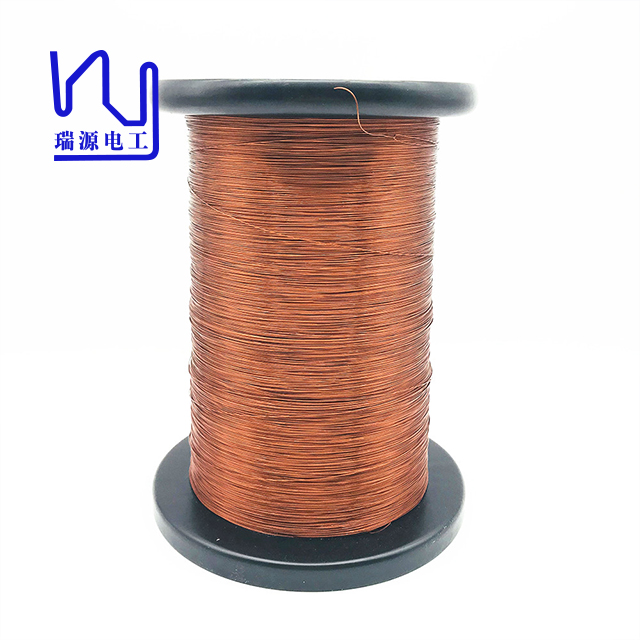
Export Packaging Protocol for Polyester Winding Wire
Polyester winding wire represents a precision-engineered product where dimensional stability and electrical integrity are paramount. Compromised packaging during ocean transit directly threatens coil concentricity, surface finish, and ultimately, end-product performance. At Luoyang Xinzhaohe Aluminum Co., Ltd., with over two decades of metallurgical and supply chain specialization, our export packaging system is engineered to mitigate the specific hazards of maritime logistics, ensuring wire arrives in factory-fresh condition. This protocol is non-negotiable for maintaining product specification compliance across global supply chains.
Pallet Construction Standards
All coils are secured to robust, ISPM-15 certified wooden pallets. These pallets utilize kiln-dried hardwood components meeting FSC sustainability criteria, minimizing hygroscopic movement during humidity fluctuations. Standard dimensions adhere to EUR-EPAL or ISO pallet specifications for optimal container stowage density and compatibility with global material handling systems. Each pallet undergoes structural integrity validation, supporting static loads exceeding 2.5 metric tons without deflection beyond 3mm. Coils are firmly affixed using high-tensile steel strapping tensioned to 15 kN minimum, supplemented by edge protectors to prevent band indentation on coil flanges. This configuration withstands ISO container tilt tests (25°) and simulated vibration profiles per ISTA 3A protocols, eliminating intra-container shifting during rough seas.
Moisture Barrier System
The primary defense against salt-laden marine atmospheres and container rain is our multi-layer moisture barrier. Coils undergo immediate wrapping post-production in a climate-controlled environment. A core layer of 0.1mm thick, metallized polyester film provides an initial vapor barrier. This is overlaid with a secondary, fully sealed layer of 3-ply co-extruded polyethylene film featuring a minimum water vapor transmission rate (WVTR) of 0.1 g/m²/day as measured by ASTM E96. Critical to efficacy is the hermetic sealing process: all seams are thermally welded under controlled pressure, achieving seal strength >80 N/15mm width. Desiccant packs rated for 180-day moisture absorption at 75% RH are strategically placed within the sealed envelope, positioned to avoid contact with wire surfaces. Humidity indicator cards are affixed internally for post-transit verification.
Sea Freight Integrity Assurance
Ocean freight subjects cargo to extreme humidity cycles, temperature differentials exceeding 40°C, and potential salt spray ingress. Our integrated system addresses these factors holistically. The ISPM-15 pallet prevents pest-related customs delays while its low moisture content avoids internal condensation. The dual-film barrier maintains internal relative humidity below 40% RH throughout typical 45-day voyages, even under worst-case external conditions of 95% RH. This prevents hydrolysis of polyester insulation, copper oxidation, and interlayer adhesion loss – common failure modes in inadequately protected wire. Documentation includes pallet certification, desiccant capacity reports, and WVTR test certificates, providing auditable proof of environmental control.
This rigorous packaging methodology, refined through 20+ years of global aluminum and wire export experience, directly correlates with our industry-leading <0.15% moisture-related claim rate. It is not merely a shipping container but a controlled micro-environment ensuring the metallurgical and electrical properties of your polyester winding wire remain uncompromised from Luoyang to final assembly. Partnering with Xinzhaohe guarantees this level of supply chain protection as standard practice.
Sourcing from Luoyang Xinzhaohe
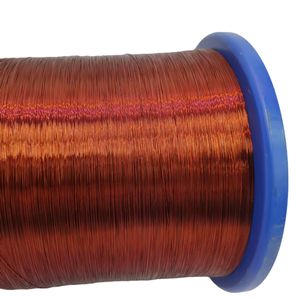
Partner with Luoyang Xinzhaohe Aluminum Co., Ltd for High-Performance Polyester Wire
Luoyang Xinzhaohe Aluminum Co., Ltd brings over two decades of specialized expertise in the development and production of high-purity aluminum materials and precision winding wire solutions. As a trusted manufacturer in the global supply chain for electrical and transformer components, we deliver polyester-coated aluminum winding wire engineered to meet the rigorous demands of modern industrial applications. Our commitment to technical excellence, process control, and material consistency positions us as a strategic partner for OEMs and tier suppliers requiring reliable, high-efficiency conductors.
Our manufacturing facility integrates advanced drawing, annealing, and coating technologies to produce polyester wire with tightly controlled dimensional tolerances, superior surface finish, and enhanced dielectric strength. Each batch undergoes stringent quality verification, including adhesion testing, thermal endurance evaluation, and elongation analysis, ensuring compliance with international standards such as IEC 60317 and GB/T 23312. Our in-house R&D center continuously optimizes coating formulations and processing parameters to improve thermal class performance, mechanical resilience, and winding compatibility across diverse motor, transformer, and inductor applications.
We operate a fully integrated production line capable of processing high-conductivity aluminum (Grade 1A99.5 and above) into fine to medium gauge winding wire, with diameters ranging from 0.08 mm to 3.00 mm. The polyester insulation layer is applied using precision extrusion systems, ensuring uniform thickness and defect-free coverage critical for high-voltage integrity and long-term operational reliability. Our process controls maintain coating eccentricity within ±5%, minimizing risk of short circuits and enabling high packing density in coil windings.
Quality assurance is embedded at every stage, from raw material sourcing to final packaging. Our facility is certified under ISO 9001:2015, and we maintain traceability through batch coding and comprehensive material test reports. In addition to standard product offerings, we support custom specifications including tailored thermal classes (up to Class F, 155°C), specialized lubricants for high-speed winding, and spooling configurations to match automated coil insertion systems.
With an annual production capacity exceeding 10,000 metric tons and a logistics network spanning Asia, Europe, and North America, Luoyang Xinzhaohe ensures on-time delivery and supply chain stability. Our technical team works directly with clients to address application-specific challenges, from thermal aging performance to impedance optimization in high-frequency environments.
For sourcing partners seeking a technically robust, scalable, and quality-driven supplier of polyester wire, Luoyang Xinzhaohe Aluminum Co., Ltd offers proven capability and industrial-grade reliability. Contact us today to discuss your specifications and discover how our manufacturing expertise can support your product performance and production efficiency.
Contact us: cathy@transformerstrip.com
📉 Factory Direct Savings Calculator
Calculate your potential savings by importing polyester wire directly from China.