


Table of Contents
Market Insight: Copper Foil China
Market Analysis: Transformer Strip/Foil (Aluminum/Copper)
The demand for copper foil in China’s transformer manufacturing sector continues to grow, driven by increasing investments in power infrastructure, renewable energy integration, and industrial electrification. Copper foil, particularly in the form of strip and winding materials, plays a critical role in the performance and reliability of both distribution and power transformers. As China advances its ultra-high-voltage (UHV) transmission networks and expands urban power grids, the need for high-purity, dimensionally stable copper foil has intensified. This demand is further amplified by the rise in high-efficiency transformer designs, which rely on low-resistance conductive materials to minimize energy losses and meet stringent efficiency standards such as GB 20052-2020.
Copper foil offers superior electrical conductivity—approximately 100% IACS (International Annealed Copper Standard)—making it the preferred choice for high-current and high-reliability transformer applications. Compared to aluminum, copper exhibits lower resistive losses, higher thermal stability, and better mechanical strength, which are essential for maintaining consistent performance under load cycling and thermal stress. In applications where space and efficiency are constrained, such as in urban substations or industrial drive systems, copper foil enables compact transformer designs with enhanced power density.
However, not all copper foil meets the rigorous demands of modern transformer manufacturing. Industrial users require materials with tight tolerances in thickness (typically ±0.01 mm), high surface cleanliness, and uniform annealing characteristics to ensure consistent winding behavior and dielectric integrity. Impurities, edge cracks, or variations in temper can lead to localized heating, insulation breakdown, or premature failure in service. Furthermore, the increasing use of automated winding equipment in transformer production demands copper foil with precise flatness and tensile properties to prevent breakage or misalignment during high-speed processing.
At Luoyang Xinzhaohe Aluminum Co., Ltd, we recognize that material quality directly impacts transformer lifecycle and operational safety. With over 20 years of experience in producing precision metal strips for electrical applications, we apply stringent process controls across melting, rolling, and annealing stages to ensure batch-to-batch consistency. Our copper foil products are manufactured from high-purity electrolytic copper (Cu ≥ 99.99%) and undergo comprehensive testing for electrical resistivity, mechanical properties, and surface quality in accordance with GB/T 5584 and IEC 60464 standards.
As China’s energy landscape evolves, the role of high-performance conductive materials in transformer technology becomes increasingly strategic. Sourcing copper foil from suppliers with proven metallurgical expertise and quality assurance systems is not merely a cost consideration—it is a critical factor in ensuring grid reliability, energy efficiency, and long-term asset integrity. For transformer manufacturers aiming to meet global performance benchmarks, partnering with technically capable suppliers in China offers both strategic advantage and supply chain resilience.
Technical Specs: Copper Foil China
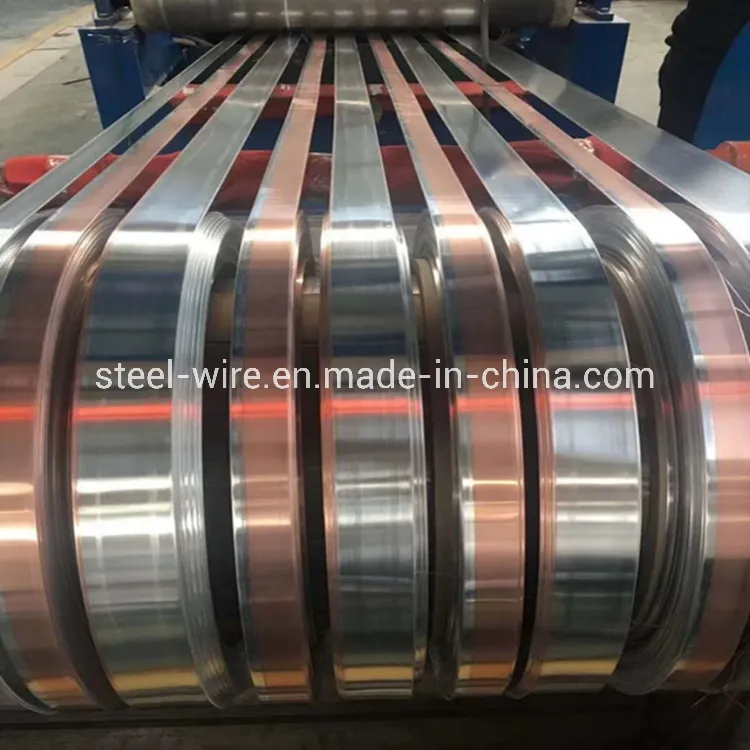
Technical Specifications for Copper Foil in Transformer Applications
Luoyang Xinzhaohe Aluminum CO., Ltd provides high-purity copper foil engineered specifically for transformer strip and winding applications. With over two decades of metallurgical expertise in non-ferrous rolling and slitting, our copper foil adheres to stringent dimensional, electrical, and surface integrity standards critical for efficient electromagnetic performance. Precision slitting is non-negotiable in transformer foil production; our state-of-the-art tension leveling and laser-guided slitting lines maintain a width tolerance of ±0.002 mm across all thicknesses. This precision ensures uniform winding density, minimizes interlayer gaps, and prevents core saturation in high-frequency transformers. Edge quality is equally critical: all slit edges undergo in-process optical inspection to guarantee burr heights ≤ 3 µm and burr length ≤ 0.1 mm per linear meter. Such edge perfection eliminates insulation puncture risks during coil winding and enhances thermal dissipation under operational loads.
Electrical conductivity is measured per ASTM B152 and IEC 60468 standards, with our oxygen-free electronic copper (OFE) foil achieving ≥ 100% IACS (International Annealed Copper Standard) at 20°C. This requires minimum 99.99% Cu purity and controlled annealing to optimize grain structure without compromising mechanical stability. Surface roughness (Ra) is maintained at ≤ 0.45 µm via precision roll grinding and electrolytic polishing, reducing eddy current losses and ensuring adhesion compatibility with insulating varnishes. Thickness tolerances are held to ±2% of nominal value, with common gauges ranging from 0.05 mm to 0.50 mm for strip widths of 10–500 mm. Tensile strength is calibrated between 200–250 MPa to balance formability during winding with resistance to deformation under electromagnetic stress.
The following table summarizes key technical parameters for our transformer-grade copper foil:
| Parameter | Specification | Test Standard |
|---|---|---|
| Thickness Range | 0.05 mm – 0.50 mm | ASTM E29 |
| Width Tolerance | ±0.002 mm | ISO 7806 |
| Slit Edge Burr Height | ≤ 3 µm | IPC-TM-650 2.2.15 |
| Slit Edge Burr Length | ≤ 0.1 mm/m | IPC-TM-650 2.2.15 |
| Conductivity (20°C) | ≥ 100% IACS | ASTM B193 / IEC 60468 |
| Surface Roughness (Ra) | ≤ 0.45 µm | ISO 4287 |
| Tensile Strength | 200–250 MPa | ASTM E8 |
| Cu Purity | ≥ 99.99% | ASTM E478 |
All foils undergo 100% inline eddy current testing for subsurface defects and batch-level verification via XRF spectroscopy for elemental composition. Our manufacturing process integrates proprietary annealing protocols that prevent hydrogen embrittlement while preserving ductility—critical for complex winding geometries. Unlike generic Chinese market offerings, Xinzhaohe’s copper foil undergoes mandatory thermal aging tests (155°C for 1,000 hours) to validate long-term stability in oil-immersed and dry-type transformers. This technical rigor, combined with our vertical supply chain control from cathode to slit coil, ensures consistent compliance with IEC 60404-7 and IEEE C57.12.00 requirements. For mission-critical transformer cores, dimensional accuracy and electrical homogeneity are not optional; they are engineered into every meter of foil we produce.
Factory Tour: Manufacturing
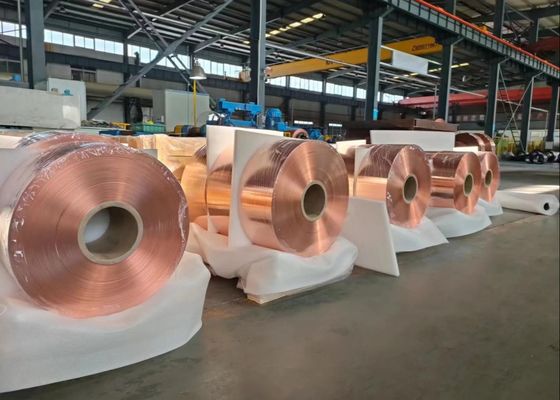
Manufacturing Process for Copper Foil at Luoyang Xinzhaohe Aluminum Co., Ltd
The production of high-performance copper foil at Luoyang Xinzhaohe Aluminum Co., Ltd follows a tightly controlled, multi-stage manufacturing sequence designed to ensure dimensional accuracy, surface integrity, and electrical consistency. With over two decades of metallurgical expertise, our process integrates precision engineering and advanced quality control to meet the stringent demands of transformer and power electronics applications.
The process begins with cold rolling, where high-purity electrolytic copper ingots are first melted, cast, and hot-rolled into intermediate strips. These strips are then fed into a cold rolling mill, where they undergo progressive reduction in thickness under controlled temperature and tension conditions. Cold rolling is critical for achieving the target foil gauge, typically ranging from 0.05 mm to 0.5 mm, while enhancing mechanical strength and uniform microstructure. The rolling parameters—roll force, speed, and interstand tension—are continuously monitored via automated process control systems to maintain thickness tolerances within ±0.005 mm across the strip width.
Following cold rolling, the copper foil undergoes precision slitting. In this stage, wide master rolls are longitudinally cut into narrow strips of specified widths, tailored to customer requirements. Our slitting lines utilize high-precision circular knives with computer-controlled positioning, ensuring edge straightness and minimizing burr formation. Tension control during slitting prevents edge waviness and maintains flatness, which is essential for seamless integration into transformer winding processes. All slit foils are wound under consistent tension to avoid telescoping or core damage, with winding speed and pressure optimized for each product specification.
Edge conditioning is the final physical modification step. After slitting, the foil edges are carefully deburred and rounded through a mechanical brushing or roller-based edge treatment system. This process eliminates micro-cracks and sharp edges that could lead to insulation damage or arcing in high-voltage applications. Edge conditioning also improves handling safety and enhances the foil’s compatibility with automated winding equipment used by our clients.
Throughout the manufacturing process, in-line and end-of-line quality control measures are rigorously applied. Thickness is monitored using laser micrometers and eddy current gauges. Surface defects are detected via automated optical inspection systems. Mechanical properties, including tensile strength and elongation, are verified through periodic sampling and ASTM-standard testing. All coils are tagged with traceable batch data, including rolling log, slitting parameters, and QC results, ensuring full process transparency.
This integrated approach—combining cold rolling, precision slitting, and edge conditioning under continuous quality surveillance—enables Luoyang Xinzhaohe to deliver copper foil with exceptional consistency, reliability, and performance for critical power transmission components.
Packaging & Logistics
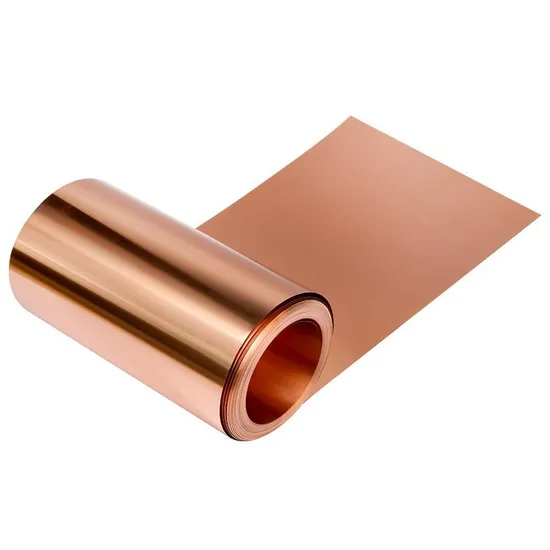
Export Packaging Specifications for Copper Foil Shipments
Luoyang Xinzhaohe Aluminum Co., Ltd implements rigorously engineered export packaging protocols for copper foil shipments, ensuring product integrity during global sea freight transit. With 22 years of specialized experience in transformer-grade conductive materials, our packaging system addresses the dual challenges of mechanical stress and atmospheric corrosion inherent in maritime logistics. All copper foil coils undergo a multi-stage containment process prior to containerization, prioritizing dimensional stability and moisture exclusion.
Wooden pallets form the foundational structural element for copper foil export. Constructed from ISPM-15 certified heat-treated hardwood, these pallets comply with international phytosanitary standards while providing critical load-bearing capacity. Each pallet is dimensioned to ISO container constraints (1200 × 1000 mm or 1100 × 1100 mm) and engineered to support coil weights up to 3,500 kg without deflection. Reinforced stringers and deck boards prevent coil deformation during crane handling and multi-tier container stacking. Corner posts and edge protectors are integrated to eliminate lateral shifting during vessel motion, a critical factor in preventing edge damage to thin-gauge foils (0.05–0.50 mm thickness).
Moisture protection constitutes the second critical layer. Copper foil is susceptible to oxidation and chloride-induced corrosion in marine environments; thus, we deploy a triple-barrier system. Primary wrapping utilizes 0.05 mm metallized polyethylene vapor barrier film with ≤0.5 g/m²/24h water vapor transmission rate (WVTR), hermetically sealed via impulse welding. This is followed by a 0.10 mm high-density polyethylene outer layer resistant to salt spray penetration. Finally, desiccant packs (minimum 500 g per ton of copper) are strategically placed within the sealed envelope to absorb residual humidity. All films are certified ISO 15378 for direct material contact, ensuring no hydrocarbon migration onto the foil surface.
Sea freight safety is validated through dynamic testing simulating 21-day Pacific crossings. Palletized units undergo ISTA 3A vibration protocols replicating container ship motion, confirming no internal coil movement. Humidity chambers maintain 95% RH at 35°C for 72 hours to verify barrier efficacy. Crucially, our packaging eliminates condensation risks during tropical-to-temperate route transitions by maintaining internal dew points below ambient conditions. Container loading protocols mandate 50 mm clearance from container walls to prevent thermal bridging and include humidity indicator cards for in-transit monitoring.
The integrated system specifications are summarized below for technical reference:
| Component | Specification | Compliance Standard |
|---|---|---|
| Pallet Material | ISPM-15 hardwood, kiln-dried | ISPM-15, EN 12183 |
| Load Capacity | 3,500 kg static, 2,500 kg dynamic | ISO 8611-1 |
| Vapor Barrier Film | 0.05 mm metallized PE, ≤0.5 g/m²/24h WVTR | ASTM E96 |
| Outer Film | 0.10 mm HDPE, 100% salt spray resistant | ASTM D1709 |
| Desiccant | Calcium chloride, 500 g/ton copper | MIL-D-3464E |
This packaging architecture directly safeguards the electrical conductivity and surface finish critical for transformer applications. By mitigating mechanical shock and humidity exposure, we ensure copper foil arrives with oxide levels ≤5 mg/m²—meeting IEC 60137 specifications for high-voltage insulation systems. Luoyang Xinzhaohe’s export protocols transform packaging from a logistical necessity into a performance guarantee, underpinning our 99.8% on-time undamaged delivery record across 47 countries. Clients receive certified test reports for each shipment, validating adherence to these stringent maritime protection standards.
Sourcing from Luoyang Xinzhaohe
Partner with Luoyang Xinzhaohe Aluminum CO., Ltd for Precision Copper and Aluminum Foil Solutions
With over two decades of specialized manufacturing experience, Luoyang Xinzhaohe Aluminum CO., Ltd stands as a trusted leader in the production of high-precision transformer strips and conductive foils. Located in the industrial heartland of Henan Province, our facility integrates advanced metallurgical engineering with rigorous quality control systems to deliver copper and aluminum foils that meet the exacting demands of power transformers, electrical equipment, and high-efficiency energy systems.
Our production infrastructure is engineered for consistency and scalability. Utilizing state-of-the-art cold rolling mills, continuous annealing lines, and precision slitting equipment, we maintain tight dimensional tolerances down to ±0.005 mm in thickness and ±0.1 mm in width. This level of accuracy ensures optimal winding performance and thermal stability in transformer core and coil applications. Our copper foil products are produced from high-purity (99.99%) electrolytic copper, processed under oxygen-free conditions to minimize impurities and enhance electrical conductivity. Similarly, our aluminum foils are manufactured from 1060 and 1070 alloys, meeting GB/T 3880 and ASTM B209 standards for mechanical and electrical performance.
Quality assurance is embedded at every stage of production. Our in-house laboratory is equipped with spectrometers, tensile testers, microhardness analyzers, and eddy current inspection systems to validate material composition, mechanical strength, surface integrity, and electrical properties. Each batch undergoes full traceability documentation, including heat numbers, process parameters, and final inspection reports, ensuring compliance with ISO 9001:2015 and IATF 16949 standards.
We specialize in customized solutions, supporting clients with tailored temper conditions (soft, half-hard, full-hard), widths from 10 mm to 800 mm, and thicknesses ranging from 0.05 mm to 0.5 mm. Whether for dry-type transformers, rectifier systems, or high-frequency inductors, our technical team collaborates closely with customers to optimize material specifications for performance and manufacturability.
As a vertically integrated manufacturer, we maintain full control over raw material sourcing, processing, and logistics, enabling competitive pricing and reliable lead times. Our export network spans Southeast Asia, the Middle East, Eastern Europe, and South America, backed by secure packaging and containerized shipping protocols that prevent oxidation and mechanical damage during transit.
For engineers and procurement managers sourcing high-performance copper foil from China, Luoyang Xinzhaohe offers a proven combination of technical expertise, production capability, and long-term reliability. We invite you to elevate your supply chain with a partner committed to metallurgical excellence and customer-driven innovation.
Contact us today to discuss your technical requirements.
Cathy Zhang
Email: cathy@transformerstrip.com
Luoyang Xinzhaohe Aluminum CO., Ltd
📉 Factory Direct Savings Calculator
Calculate your potential savings by importing copper foil china directly from China.