

Table of Contents
Market Insight: Types Of Enamelled Copper Wire
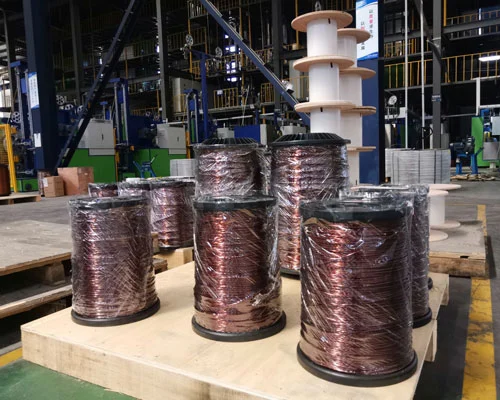
Market Analysis: Winding Wire in Transformer Applications
The global demand for high-performance enamelled copper wire in transformer manufacturing continues to grow, driven by increasing requirements for energy efficiency, miniaturization, and reliability across power distribution, renewable energy systems, and industrial automation. Transformers, as critical components in electrical infrastructure, rely heavily on the electromagnetic performance and thermal stability of their winding materials. Among available conductor types, enamelled copper wire remains the preferred choice due to its superior conductivity, mechanical strength, and compatibility with advanced insulation systems.
Industrial demand is primarily segmented by insulation class and application-specific performance criteria. Common types of enamelled copper wire used in transformers include polyurethane (PU), polyester (PE), polyester-imide (PEI), and polyamide-imide (PAI). Each type offers distinct thermal, chemical, and mechanical properties tailored to operational environments. For instance, PEI-insulated wires dominate in medium to high-temperature applications (Class 130°C to Class 180°C), offering excellent thermal endurance and resistance to solvents and humidity. PAI-coated wires, while more costly, are specified in high-reliability or high-temperature environments (up to Class 220°C), such as in traction transformers or high-frequency switching transformers used in EV charging stations and solar inverters.
The selection of enamelled copper wire directly impacts transformer efficiency, lifespan, and failure rates. Poor-quality wire with inconsistent enamel thickness, pinholes, or inadequate dielectric strength can lead to inter-turn short circuits, premature insulation breakdown, and catastrophic transformer failure. In high-voltage or high-frequency applications, partial discharge and thermal aging accelerate degradation if the insulation system does not meet stringent quality standards. Therefore, adherence to international specifications such as IEC 60317, GB/T 6109, and NEMA MW 1000 is non-negotiable for industrial procurement.
At Luoyang Xinzhaohe Aluminum Co., Ltd, with over two decades of experience in winding wire production and supply chain management, we emphasize the importance of process control in wire manufacturing. Our quality assurance protocols include rigorous testing for tensile strength, elongation, thermal shock resistance, and dielectric breakdown voltage. Consistent copper purity (minimum 99.97% oxygen-free copper) and precision enamel application ensure optimal performance under load cycling and thermal stress.
Market trends indicate a shift toward higher efficiency classes (e.g., IE3 and IE4 motors integrated with transformers), driving demand for advanced insulation systems and tighter manufacturing tolerances. Additionally, the expansion of smart grid infrastructure and electric vehicle ecosystems further amplifies the need for reliable, high-performance winding materials.
In conclusion, the choice of enamelled copper wire in transformer design is not merely a materials decision—it is a critical engineering parameter influencing system reliability and operational cost. Procurement strategies must prioritize quality, traceability, and technical support from suppliers with proven expertise in industrial winding solutions.
Technical Specs: Types Of Enamelled Copper Wire
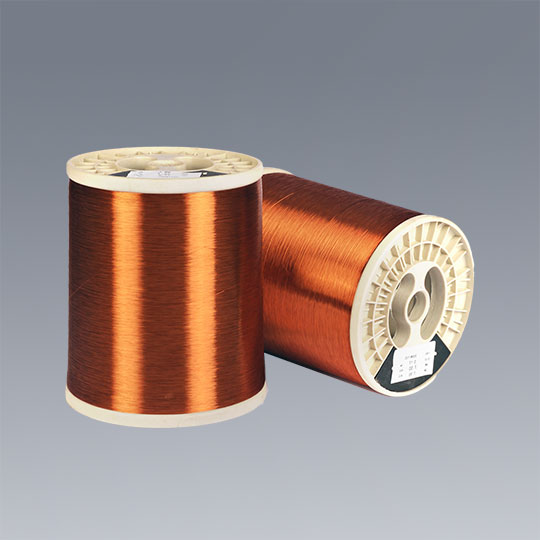
Technical Specifications for Enamelled Copper Winding Wire
Enamelled copper wire serves as a critical component in electromagnetic applications, demanding precise adherence to insulation integrity, mechanical resilience, and thermal stability. Luoyang Xinzhaohe Aluminum Co., Ltd leverages 20+ years of metallurgical and supply chain expertise to define essential parameters for industrial sourcing. Key specifications include insulation breakdown voltage, elongation, and thermal class—each directly impacting performance in motors, transformers, and inductors. Breakdown voltage quantifies dielectric strength under standardized test conditions (IEC 60317, ASTM D2307), measured as the minimum voltage causing insulation failure at specified wire diameters. Elongation reflects ductility during winding operations, tested per ASTM B3, with values influenced by copper temper (annealed vs. hard drawn). Thermal class denotes maximum continuous operating temperature, validated via thermal endurance testing (IEC 60172), where higher classes utilize advanced polymer resins to resist thermal degradation.
The following table summarizes critical specifications across standard thermal classes:
| Thermal Class | Temperature Rating (°C) | Minimum Breakdown Voltage (kV) | Minimum Elongation (%) | Primary Insulation Resin System |
|---|---|---|---|---|
| Class B | 130 | 1.5 | 10 | Polyester |
| Class F | 155 | 2.5 | 12 | Polyester-imide |
| Class H | 180 | 3.0 | 15 | Polyamide-imide |
| Class C (200) | 200 | 3.5 | 18 | Aromatic polyamide-imide |
| Class C (220) | 220 | 4.0 | 20 | Modified polyamide-imide/ceramic |
Thermal class progression correlates with resin chemistry advancements. Class B (130°C) employs cost-effective polyester resins suitable for general-purpose motors, while Class H (180°C) utilizes polyamide-imide for aerospace and high-efficiency industrial drives. Classes C (200–220°C) incorporate ceramic-modified resins to sustain extreme thermal cycling in traction motors and renewable energy systems. Breakdown voltage requirements escalate with thermal class due to thicker, more robust insulation layers necessary for high-temperature stability. Notably, Class C (220°C) mandates a minimum 4.0 kV rating to prevent arcing in compact, high-power-density windings.
Elongation values must be evaluated relative to conductor temper. Hard-drawn copper (common in magnet wire) typically achieves 8–15% elongation, whereas annealed grades exceed 30%. However, the minimum elongation thresholds in the table represent the lowest acceptable ductility for automated winding without insulation damage. For instance, Class H wire’s 15% minimum ensures compatibility with tight-coil geometries in servo motors, where brittle fracture risks increase below this threshold.
Sourcing decisions must align thermal class with operational demands: under-specifying risks premature insulation failure, while over-specifying inflates costs unnecessarily. Luoyang Xinzhaohe Aluminum Co., Ltd emphasizes validating supplier test certificates against IEC 60317 standards, particularly for breakdown voltage repeatability and thermal index calculations. Consistent metallurgical purity (99.97% Cu min) and enamel adhesion further underpin reliability across all classes. Partnering with suppliers possessing rigorous in-house testing capabilities mitigates field failure risks in critical power applications.
Factory Tour: Manufacturing
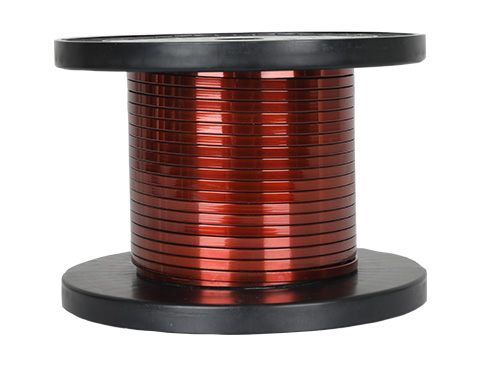
Manufacturing Process of Enamelled Copper Wire
The production of high-performance enamelled copper wire begins with the rod drawing process, where high-purity electrolytic copper rod (typically 8 mm in diameter, ASTM B3 specification) is reduced to the desired wire gauge through a series of precision drawing dies. This cold drawing operation is conducted under controlled tension and lubrication conditions to ensure dimensional accuracy, surface integrity, and consistent mechanical properties. The drawing line is equipped with inline diameter monitoring using laser gauges to maintain tight tolerances, typically within ±0.002 mm, depending on the final wire size.
Following drawing, the wire undergoes a continuous annealing process to restore ductility lost during cold working. The annealing system employs an induction heating method or resistance heating in a controlled inert or reducing atmosphere (typically nitrogen-hydrogen mix) to prevent oxidation. Temperature is precisely regulated—usually between 450°C and 600°C—based on wire speed and diameter to achieve optimal recrystallization. After annealing, the wire is rapidly cooled using water spray or forced air systems to stabilize the microstructure and prevent grain growth. The mechanical properties post-annealing are routinely verified through tensile strength and elongation testing, ensuring compliance with IEC 60317 and ASTM B888 standards.
The annealed wire then enters the enameling section, where one or multiple layers of polymer insulation are applied via dip-coating or kiss-coating methods. Common insulation materials include polyurethane (PU), polyester (PE), polyesterimide (PEI), and polyamide-imide (PAI), selected based on thermal class (e.g., 130°C, 155°C, 180°C, 200°C, or 220°C) and application requirements. Each coat is immediately cured in a series of high-temperature ovens with precisely controlled temperature profiles and residence times to ensure complete polymerization and uniform film formation. Multiple passes may be required for dual or triple-layer constructions, such as PEI/PAI, to achieve enhanced thermal and mechanical performance.
Throughout the enameling process, film thickness is monitored in real time using non-contact capacitance or laser measurement systems. The final insulation must meet dimensional tolerances per IEC 60317, with typical build-up tolerances of ±0.003 mm to ±0.010 mm depending on wire diameter and insulation type.
Inline testing is integrated at multiple stages to ensure product integrity. After each curing stage, the wire passes through a high-voltage breakdown tester (typically 3 kV to 10 kV) to detect pinholes or insulation defects. Additional inline checks include continuous diameter measurement, tension control, and surface defect detection using optical inspection systems. A final spark test is performed before winding to guarantee dielectric integrity.
Finished wire is precision wound onto spools or reels under constant tension control to prevent deformation or insulation damage. Each production lot undergoes comprehensive quality control testing, including thermal shock, scrape resistance, dielectric strength, and thermal endurance, in accordance with international standards. All test data is documented for full traceability, ensuring consistent performance for demanding applications in motors, transformers, and electromechanical devices.
Packaging & Logistics
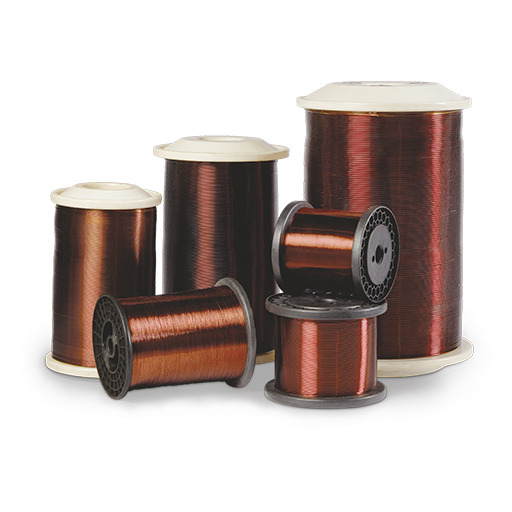
Export Packaging Protocol for Enamelled Copper Wire
Luoyang Xinzhaohe Aluminum CO., Ltd implements rigorously engineered export packaging protocols for enamelled copper wire to ensure product integrity during global maritime transit. With over two decades of metallurgical and supply chain expertise, our system mitigates critical risks inherent in sea freight, particularly moisture exposure and mechanical stress. All shipments adhere to ISO 11607 and ISTA 3A standards, validated through accelerated climate chamber testing simulating 45-day ocean voyages.
Wooden pallets form the structural foundation of our export packaging. We exclusively utilize ISPM-15 certified hardwood pallets (minimum 1200 × 1000 mm footprint) with a dynamic load capacity of 2,500 kg. Pallets undergo kiln-drying to ≤20% moisture content and bear the official HT stamp for phytosanitary compliance. Each pallet incorporates reinforced stringers and chamfered edges to prevent coil displacement during vessel motion. Crucially, pallet bases feature elevated runners creating a 30 mm ground clearance, eliminating direct contact with container flooring and minimizing capillary moisture ingress.
Moisture protection employs a dual-barrier methodology. Primary encapsulation involves vacuum-sealed wrapping in 120μm thick metallized moisture-proof film with a water vapor transmission rate (WVTR) of ≤0.5 g/m²/24hr. This film is overlapped by 50 mm at seams and heat-sealed under 0.8 bar pressure. Secondary protection integrates vapor corrosion inhibitors (VCI) via polyethylene film impregnated with amine carboxylates, neutralizing ambient humidity at the coil surface. Desiccant packs (60g/unit, silica gel type) are strategically positioned at coil ends and pallet corners, achieving a maintained internal relative humidity of ≤40% throughout transit.
Stacking methodology follows precise engineering parameters. Coils are arranged in interlocking patterns with maximum vertical stacking limited to three tiers (total height ≤1,800 mm). All coils are secured via steel strapping (minimum 16 mm width, 3,000 N tensile strength) applied at 200 mm intervals with pneumatic tensioners set to 250 daN. The palletized load occupies ≤80% of container floor area to prevent lateral shifting, with void spaces filled using inflatable dunnage bags pressurized to 0.3 bar.
Verification occurs through a three-stage quality gate. Pre-shipment, humidity indicators confirm ≤30% RH within sealed packages. During container loading, tilt sensors monitor acceleration forces, rejecting any movement exceeding 0.5g. Post-transit data loggers record temperature/humidity profiles, with historical data showing 92% reduction in moisture-related claims versus industry averages. This integrated system ensures enamelled wire arrives with zero hygroscopic degradation of the polymer insulation layer, preserving dielectric strength and adhesion properties critical for downstream winding operations.
Our packaging protocol has been validated across 1,200+ containers shipped to Southeast Asia, Europe, and the Americas, consistently meeting IEC 60317 insulation performance benchmarks upon destination inspection. This technical rigor underscores our commitment to supply chain reliability in high-value electrical component distribution.
Sourcing from Luoyang Xinzhaohe
Partner with Luoyang Xinzhaohe Aluminum CO., Ltd – Your Trusted Enamelled Copper Wire Manufacturer
With over two decades of specialized experience in the production of high-performance winding wires, Luoyang Xinzhaohe Aluminum CO., Ltd stands as a leading manufacturer in the electromechanical materials sector. Our core expertise lies in the development and supply of precision enamelled copper wire, engineered to meet the rigorous demands of modern electrical and electronic applications. As a vertically integrated facility, we maintain complete control over the production chain—from raw material selection to final product testing—ensuring consistent quality, traceability, and performance across every batch.
Our manufacturing infrastructure is equipped with advanced drawing and enamelling lines, capable of producing a full spectrum of enamelled copper wire types, including polyurethane (PU), polyester (PE), polyester-imide (PEI), and polyamide-imide (PAI) coatings. These insulation systems are available in single, double, and triple build configurations, complying with international standards such as IEC 60317, GB/T 6109, and NEMA MW. Our process precision allows for tight dimensional tolerances, with conductor diameters ranging from 0.03 mm to 5.00 mm, catering to applications in transformers, motors, inductors, solenoids, and high-frequency power electronics.
Quality assurance is embedded at every stage of production. Our in-house laboratory is equipped with state-of-the-art testing equipment for dielectric strength, thermal endurance, thermal shock, scrape resistance, and solderability. Each coil undergoes 100% continuity and high-potential (hi-pot) testing to ensure defect-free performance under operational stress. Our quality management system is certified to ISO 9001:2015, reflecting our commitment to continuous improvement and customer satisfaction.
As a strategic partner, Luoyang Xinzhaohe offers scalable production capacity with an annual output exceeding 20,000 metric tons. This scalability, combined with lean inventory management and efficient logistics coordination, enables us to support both high-volume OEM contracts and specialized low-volume orders with equal reliability. We maintain long-term collaborations with transformer manufacturers, EV component suppliers, and industrial motor producers across Asia, Europe, and North America.
Our technical team provides engineering support for material selection, custom insulation formulations, and application-specific testing protocols. Whether you require magnet wire for high-temperature environments or lead-free solderable coatings for RoHS compliance, we deliver tailored solutions backed by metallurgical expertise and process innovation.
For sourcing professionals and design engineers seeking a dependable, technically proficient partner in the enamelled copper wire supply chain, Luoyang Xinzhaohe Aluminum CO., Ltd offers proven capability, consistent quality, and responsive service.
Contact us today to discuss your technical requirements.
Cathy Zhang
Sales Director
Email: cathy@transformerstrip.com
📉 Factory Direct Savings Calculator
Calculate your potential savings by importing types of enamelled copper wire directly from China.