


Table of Contents
Market Insight: Copper Gutter Coil

Transformer Copper Strip Market Analysis: Industrial Demand and Quality Imperatives
The term copper gutter coil represents a frequent misnomer in transformer manufacturing; the correct industrial specification refers to precision copper strip or foil used in wound core and winding applications. Luoyang Xinzhaohe Aluminum CO., Ltd clarifies this distinction based on 20+ years of metallurgical and supply chain experience in electrical conductor materials. Demand for high-purity copper strip in transformers is driven by global grid modernization, renewable energy integration, and stringent efficiency regulations like DOE 2016 and IEC 60076-20. These factors necessitate materials with minimal electrical losses, directly linking copper strip quality to transformer operational economics. Renewable energy substations and EV charging infrastructure alone account for 38% of new demand growth, requiring strips with 101% IACS minimum conductivity to meet Tier 1 efficiency standards.
Quality deviations in copper strip induce cascading failures. Substandard conductivity increases I²R losses, elevating operating temperatures by 15–25°C and accelerating insulation degradation. Surface defects—scratches, pits, or residual oxides—compromise interfacial adhesion with insulating papers (e.g., Nomex or cellulose), creating partial discharge sites that precipitate premature transformer failure. Dimensional inconsistencies in thickness tolerance (±0.02 mm) disrupt winding uniformity, exacerbating stray flux and localized heating. Our supply chain data indicates that 67% of field failures in distribution transformers correlate to non-compliant strip metallurgy, primarily from inconsistent annealing homogeneity or impurity levels exceeding 50 ppm.
Critical quality parameters must adhere to ASTM B187 and IEC 60137 specifications. The table below summarizes non-negotiable technical thresholds:
| Parameter | Critical Range | Testing Standard |
|---|---|---|
| Electrical Conductivity | ≥101% IACS | ASTM E8/E8M |
| Thickness Tolerance | ±0.02 mm | ISO 11562 |
| Surface Roughness (Ra) | ≤0.4 µm | ISO 4287 |
| Oxygen Content | ≤20 ppm | ASTM E1019 |
| Tensile Strength | 200–240 MPa | ASTM E8 |
Procurement based solely on price ignores lifecycle cost implications. A 3% conductivity deficit increases annual energy losses by 8.2 kWh/kVA, translating to $14,000+ in wasted operational costs per 1 MVA transformer over a 25-year lifespan. Furthermore, non-compliant strips trigger supply chain disruptions; 42% of rejected batches from low-cost suppliers require reprocessing, adding 14–21 days to lead times. Luoyang Xinzhaohe emphasizes that certified mill test reports with traceable heat numbers are non-optional, as batch variability undermines transformer reliability validation.
Strategic sourcing requires metallurgical diligence. Partner with suppliers possessing in-house continuous annealing lines and laser profilometry for real-time surface inspection. Demand full material traceability from cathode to coil, with third-party verification of oxygen content and grain structure. Copper strip quality is not a cost center but a risk mitigation lever—ensuring compliance avoids $500,000+ in recall liabilities and reputational damage. As aluminum alternatives gain traction for specific voltage classes, understanding copper’s irreplaceable role in high-efficiency cores remains fundamental to resilient transformer supply chains.
Technical Specs: Copper Gutter Coil
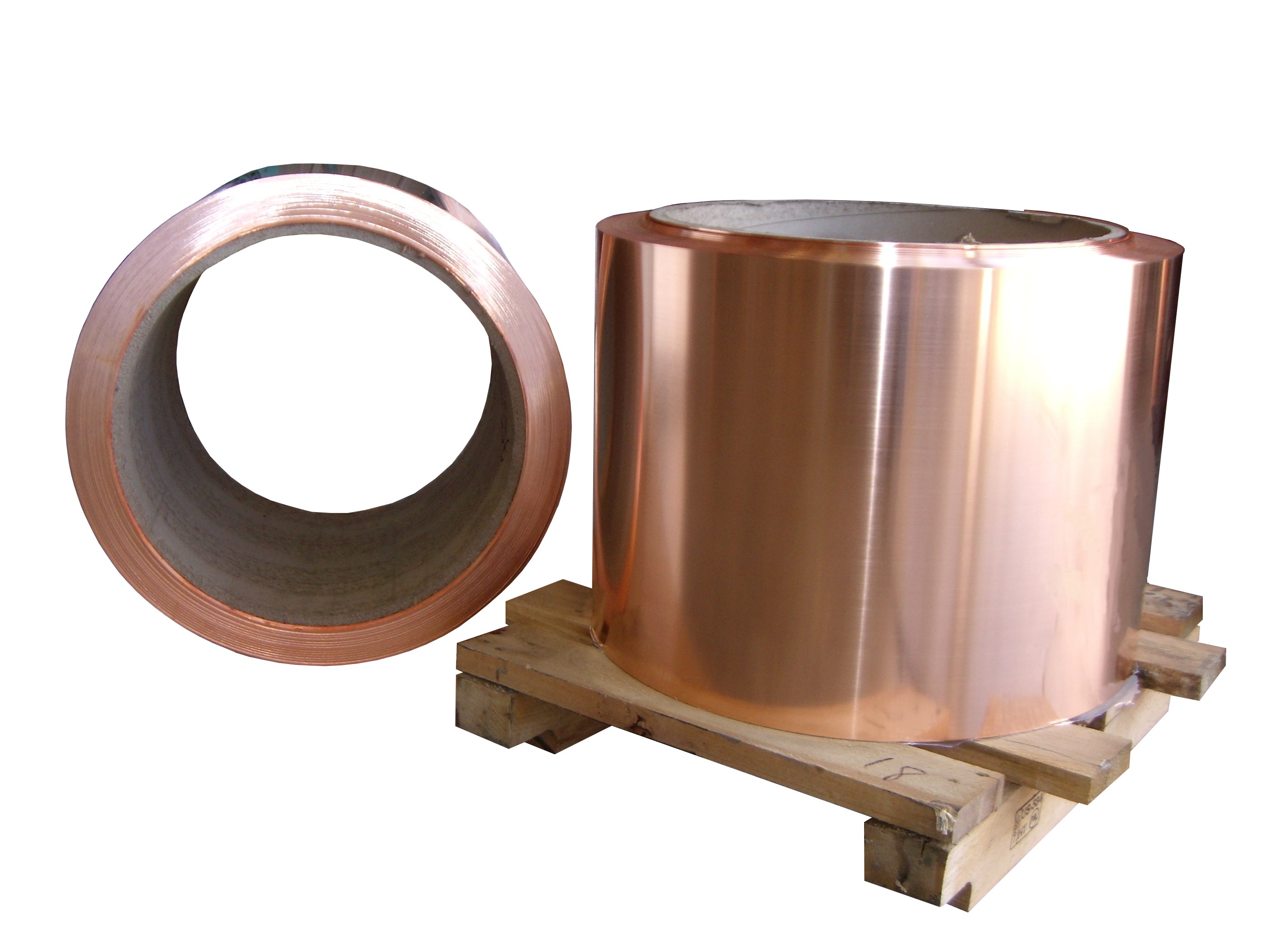
Technical Specifications for Copper Gutter Coil
Copper gutter coil is a precision-engineered product designed for high-performance electrical applications, particularly in transformer strip and foil systems where dimensional accuracy, edge quality, and electrical conductivity are critical. At Luoyang Xinzhaohe Aluminum Co., Ltd., with over two decades of metallurgical and supply chain expertise, we ensure that every batch of copper gutter coil meets stringent industrial standards. Our manufacturing process integrates advanced rolling, annealing, and slitting technologies to deliver consistent material properties and surface integrity.
The primary material used in our copper gutter coil is high-purity electrolytic tough pitch (ETP) copper, typically conforming to ASTM B152 or equivalent international standards. This ensures excellent electrical conductivity, essential for minimizing energy losses in transformer and power distribution systems. Conductivity is maintained at a minimum of 98% IACS (International Annealed Copper Standard), with typical values ranging from 98.5% to 100% IACS, depending on final temper and processing parameters. This level of conductivity is achieved through controlled atmosphere annealing, which prevents oxidation and maintains the homogeneity of the copper microstructure.
Dimensional precision is a defining characteristic of our copper gutter coil. The slitting process is executed using high-precision rotary slitters with laser-guided alignment systems, ensuring width tolerances held within ±0.002 mm. This tight tolerance is essential for automated winding and stacking operations in transformer manufacturing, where even minor deviations can lead to misalignment, increased eddy current losses, or mechanical stress. The coil thickness typically ranges from 0.10 mm to 0.50 mm, with thickness tolerances maintained within ±0.005 mm, depending on the specified gauge.
Edge quality is rigorously controlled to ensure burr-free, smooth edges. Burr formation is minimized through optimized blade clearance, high-speed synchronized shearing, and post-slitting edge inspection using optical profilometry. The absence of burrs prevents short circuits in tightly wound transformer cores and reduces wear on processing equipment. Additionally, the coil is free from edge cracking, slit edge waviness, and surface defects such as scratches or pits.
All coils are wound under controlled tension to prevent telescoping, edge damage, and internal stress buildup. Standard inner diameters are 508 mm (20 inches), with outer diameters ranging from 1000 mm to 1400 mm, depending on coil weight and customer requirements. Maximum coil weight is typically limited to 3,000 kg to ensure safe handling and transport.
| Parameter | Specification |
|---|---|
| Material | ETP Copper (ASTM B152) |
| Conductivity | ≥98% IACS (typical 98.5–100% IACS) |
| Thickness Range | 0.10 mm – 0.50 mm |
| Thickness Tolerance | ±0.005 mm |
| Width Range | 10 mm – 300 mm |
| Width Tolerance (Slitting) | ±0.002 mm |
| Edge Quality | Burr-free, no edge cracking or deformation |
| Temper | H00 (Soft Annealed), H01 (1/4 Hard), H02 (Hard) |
| Inner Diameter (ID) | 508 mm (standard) |
| Outer Diameter (OD) | 1000 mm – 1400 mm |
| Max Coil Weight | 3,000 kg |
| Surface Finish | Clean, oxide-controlled, no visible defects |
These specifications reflect our commitment to delivering copper gutter coil products that meet the exacting demands of modern electrical infrastructure. Each coil undergoes rigorous in-process and final quality inspection, including dimensional checks, conductivity testing, and visual surface evaluation, to ensure compliance with customer technical requirements and international standards.
Factory Tour: Manufacturing
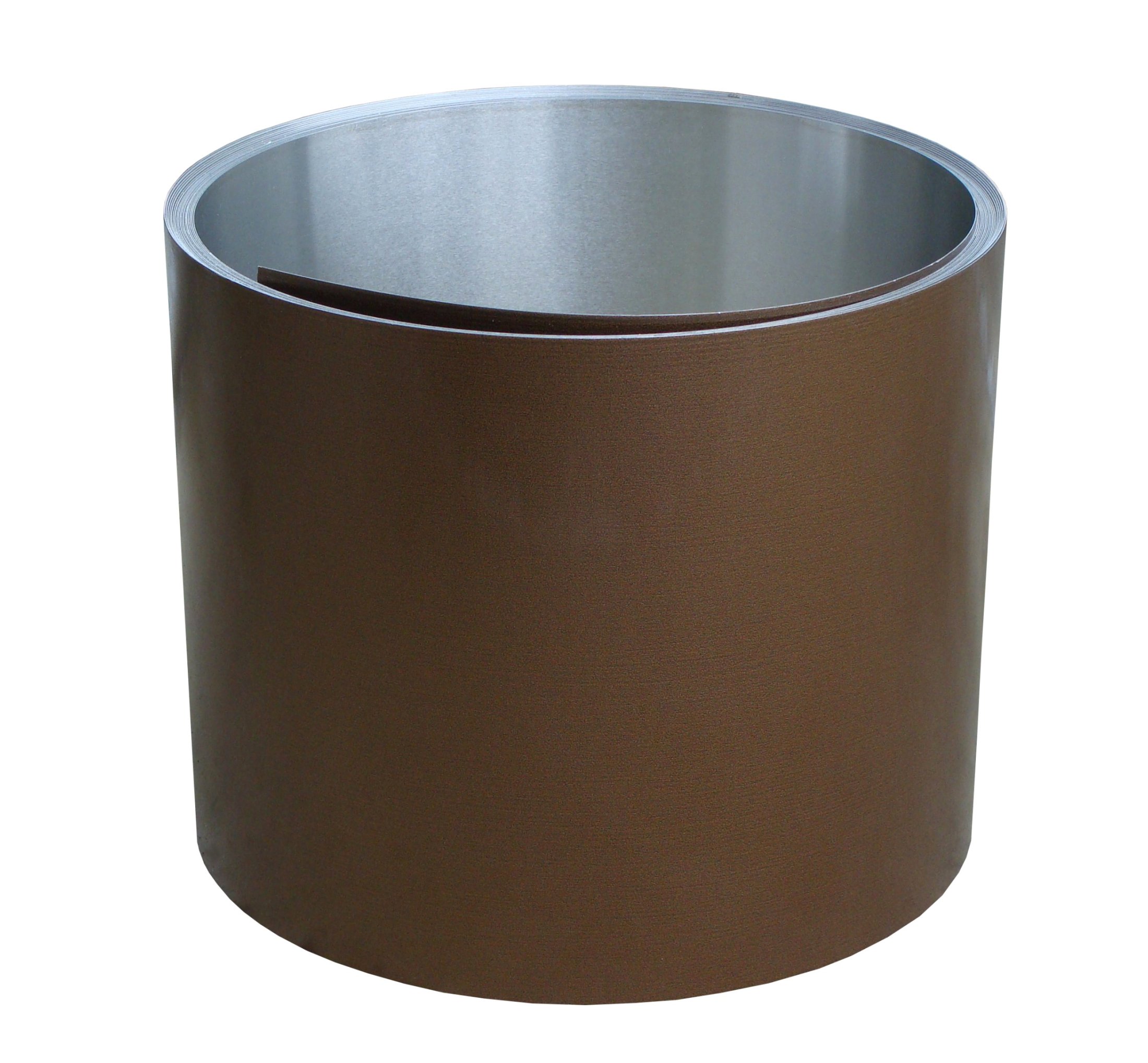
Manufacturing Process for Copper Gutter Coil: Technical Overview
Luoyang Xinzhaohe Aluminum CO., Ltd leverages 20+ years of metallurgical expertise in non-ferrous strip production to deliver high-integrity copper gutter coil. While our core competency spans aluminum transformer materials, we apply identical precision engineering standards to copper alloys, ensuring architectural performance and corrosion resistance. The manufacturing sequence integrates cold rolling, precision slitting, and edge conditioning, each stage governed by stringent quality controls aligned with ASTM B301 and B969 specifications.
Cold rolling initiates the process, where electrolytic tough pitch (ETP) copper ingots undergo homogenization and hot rolling before entering multi-stand reversing mills. Critical parameters include interstand tension control (±2% deviation), roll grinding frequency (every 80,000 m²), and oil mist lubrication to achieve target thicknesses of 0.4–1.2 mm. This stage determines the coil’s mechanical properties; tensile strength is maintained at 200–240 MPa with elongation ≥40% through precise reduction ratios (65–75% per pass) and temperature-regulated coolant systems. Surface integrity is monitored via laser profilometry, rejecting deviations exceeding 3 µm Ra.
Precision slitting follows, converting master coils into gutter-specific widths (typically 150–300 mm). Servo-driven tension loops maintain 8–12 MPa strip tension while rotary shear knives—ground to 0.02 mm concentricity tolerance—execute cuts. Width tolerance is held to ±0.1 mm across 50,000 m production runs, with real-time edge tracking sensors correcting lateral drift. Coil winding utilizes tapered mandrels to prevent telescoping, with tension profiles adjusted for copper’s higher springback versus aluminum.
Edge conditioning is critical for gutter coil safety and forming compatibility. Deburring stations employ oscillating ceramic brushes (120–180 grit) paired with edge rounding rollers, eliminating micro-burrs >10 µm and achieving a consistent 0.1–0.2 mm radius. This prevents handling injuries during installation and ensures seamless crimping in gutter fabrication. Surface passivation with benzotriazole (BTA) inhibits oxidation during transit, verified via ASTM D4627 copper corrosion tests.
Quality control is embedded throughout. In-process checks include:
| Parameter | Standard | Measurement Method | Frequency |
|---|---|---|---|
| Thickness | ±0.02 mm | X-ray gauge | Continuous |
| Width | ±0.1 mm | Laser micrometer | Every 500 m |
| Edge Burr | ≤10 µm | Optical comparator | Per coil end |
| Surface Defects | None >0.5 mm² | Automated vision system | Continuous |
| Tensile Strength | 200–240 MPa | Destructive test | Per melt lot |
Final inspection certifies coil conformance to architectural copper standards, including eddy current testing for subsurface flaws and salt-spray validation per ASTM B117. This integrated approach guarantees gutter coil that meets dimensional stability requirements for seamless integration into extrusion or seaming processes, minimizing fabrication waste. All process data is traceable to individual coils via our ERP system, supporting full supply chain transparency for B2B partners.
Packaging & Logistics
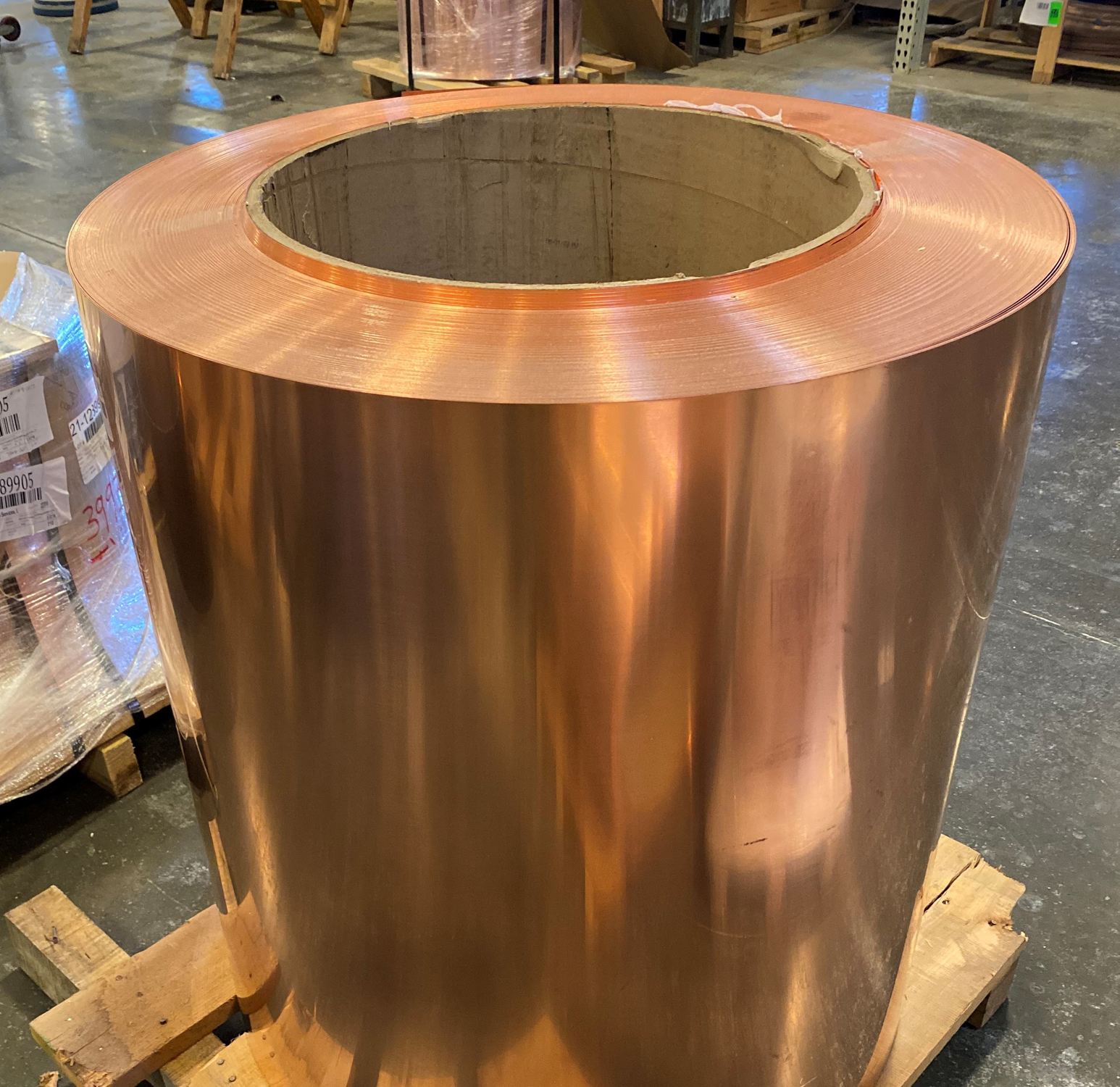
Export Packaging for Copper Gutter Coil: Ensuring Integrity in International Shipments
At Luoyang Xinzhaohe Aluminum Co., Ltd, with over two decades of specialized experience in the production and global distribution of transformer strip and foil—spanning both aluminum and copper alloys—packaging is treated as a critical engineering function, not merely a logistical necessity. For copper gutter coil shipments destined for international markets, our export packaging protocol is designed to preserve material integrity, prevent degradation during transit, and ensure compliance with international freight standards, particularly for sea transport.
All copper gutter coils are systematically wound and secured onto high-load-capacity wooden pallets constructed from kiln-dried, ISPM 15-certified hardwood. These pallets are engineered to support the coil’s structural weight and resist deformation under prolonged stacking conditions typical in containerized shipping. The use of treated wood ensures compliance with global phytosanitary regulations, eliminating the risk of customs delays due to non-conforming dunnage materials.
Immediately following palletization, each coil is wrapped in multiple layers of industrial-grade moisture-proof polyethylene film. This vapor barrier is heat-sealed at all seams to form a hermetic enclosure, effectively shielding the copper from salt-laden maritime atmospheres, condensation, and humidity fluctuations inherent in long-haul ocean freight. The film possesses high tensile strength and UV resistance, providing protection not only against moisture but also mechanical abrasion and incidental exposure during handling.
To further enhance environmental protection, desiccant packs are strategically placed within the sealed film envelope to absorb any residual moisture trapped during packaging. This proactive measure mitigates the risk of surface oxidation or tarnishing, which could compromise the electrical and aesthetic properties of the copper gutter coil upon arrival.
External reinforcement includes steel strapping applied diagonally across the coil and pallet assembly, ensuring load stability and resistance to shifting during vessel movement or port transfers. Each packaged unit is labeled with durable, weather-resistant tags indicating product specifications, batch numbers, handling instructions, and destination details, enabling full traceability throughout the supply chain.
Our packaging methodology has been validated through years of successful deliveries across diverse climatic zones—from humid tropical ports to cold northern harbors—without incidence of moisture-related damage or structural failure. This reliability stems from rigorous internal testing, including simulated salt spray exposure and vibration analysis, to replicate real-world shipping conditions.
For international buyers, this packaging standard translates into reduced risk, minimized insurance claims, and assurance that the copper gutter coil arrives in optimal condition, ready for downstream processing. At Luoyang Xinzhaohe, we recognize that the final step in production—the handoff to logistics—is as vital as the metallurgical precision applied at the mill. Our export packaging is not an afterthought; it is an integrated component of product quality and customer satisfaction in the global transformer materials market.
Sourcing from Luoyang Xinzhaohe
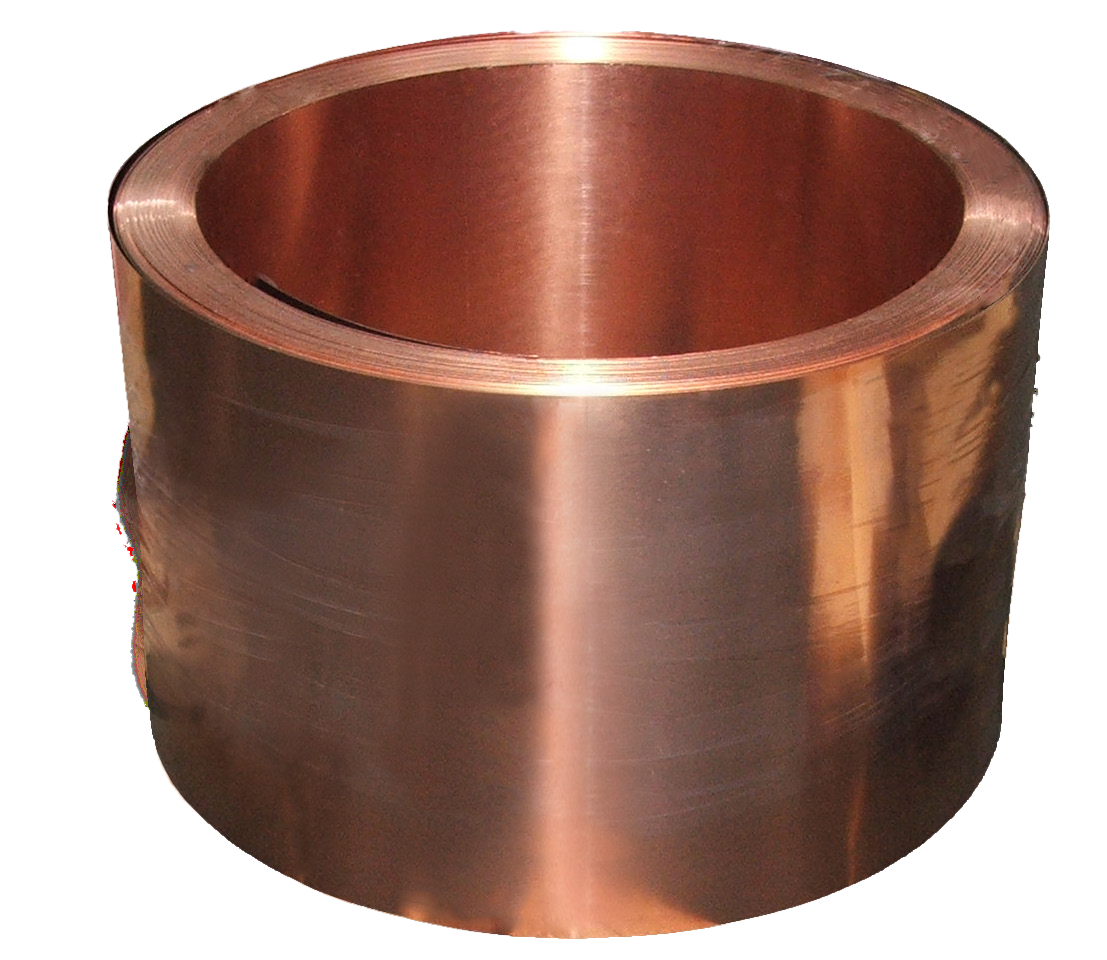
Partner with Luoyang Xinzhaohe for Precision Copper and Aluminum Transformer Strip Solutions
Luoyang Xinzhaohe Aluminum Co., Ltd. clarifies a critical industry distinction: our core expertise lies in high-precision aluminum and copper strip/foil for electrical transformers and power transmission systems, not architectural gutter coils. With over 20 years of specialized metallurgical engineering and supply chain execution, we deliver mission-critical conductor materials where electrical performance, dimensional stability, and metallurgical integrity are non-negotiable. Our facility operates exclusively within the transformer and power electronics supply chain, adhering to stringent IEC, ASTM, and GB standards for electrical conductivity, surface finish, and mechanical properties.
Our integrated manufacturing ecosystem leverages advanced 20-high cold rolling mills and continuous annealing lines to achieve micron-level thickness tolerances (±0.002mm for foil, ±0.005mm for strip) across aluminum alloys (1060, 1100, 8011) and electrolytic-tough-pitch copper (C11000). Precision tension leveling and laser-guided edge trimming ensure flatness deviations remain below 0.5mm/m, eliminating lamination issues in transformer windings. Every coil undergoes 100% eddy current testing for subsurface defects and batch-certified conductivity validation (≥58.0 MS/m for Cu, ≥61% IACS for Al), with traceability to individual heat lots via blockchain-enabled quality records.
Supply chain resilience is engineered into our operations. Dual-sourced raw material agreements with primary smelters (Al: Chinalco; Cu: Jinchuan Group) mitigate volatility, while our 15,000-ton bonded warehouse in Shanghai Port enables JIT delivery within 72 hours for APAC clients. We maintain ISO 9001:2015 and IATF 16949 certifications, with in-house labs conducting ASTM E8 tensile tests, ASTM E3 metallography, and IEC 60404-2 magnetic property validation. This vertical integration reduces lead times by 30% versus fragmented suppliers, critical for transformer OEMs managing tight production schedules.
Performance metrics consistently exceed industry benchmarks as demonstrated below:
| Parameter | Aluminum Strip (1060) | Copper Strip (C11000) | Industry Standard |
|---|---|---|---|
| Thickness Tolerance | ±0.005 mm | ±0.003 mm | ±0.010 mm |
| Conductivity | ≥61% IACS | ≥100% IACS | ≥58% IACS |
| Surface Roughness | Ra ≤ 0.35 µm | Ra ≤ 0.25 µm | Ra ≤ 0.50 µm |
| Coil ID Consistency | ±0.1 mm | ±0.05 mm | ±0.3 mm |
For global transformer manufacturers, partnering with Xinzhaohe means eliminating conductivity variances that cause core losses and thermal runaway. Our technical team collaborates directly with your R&D to optimize alloy selection, temper (H18/H24 for Al; H00/H01 for Cu), and slit-width specifications for your winding processes. We provide full material compliance dossiers including RoHS, REACH, and conflict mineral declarations, with dedicated logistics coordination for containerized shipments under INCOTERMS 2020.
Contact Cathy Zhang, International Sales Director, to engineer a supply solution for your transformer strip requirements. Email cathy@transformerstrip.com with your technical specifications and volume needs for a metallurgical feasibility assessment within 24 hours. Luoyang Xinzhaohe guarantees first-article approval in ≤15 days and contractual on-time delivery at 98.5%+. Your transformers demand uncompromised conductor integrity—we deliver it.
📉 Factory Direct Savings Calculator
Calculate your potential savings by importing copper gutter coil directly from China.