

Table of Contents
Market Insight: Insulated Copper Winding Wire
Market Analysis: Industrial Demand for Insulated Copper Winding Wire in Transformers
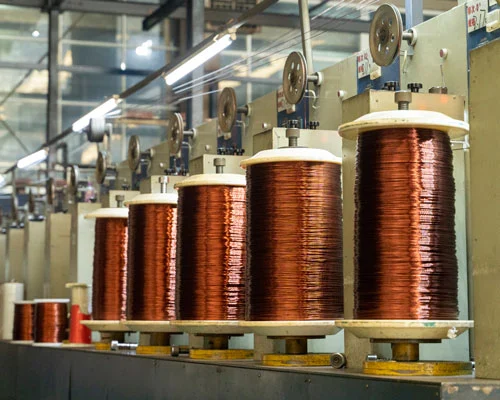
The global demand for insulated copper winding wire, particularly within the transformer manufacturing sector, continues to grow in response to expanding power infrastructure, industrial automation, and renewable energy integration. Transformers remain a cornerstone of electrical power systems, serving critical roles in voltage regulation, energy transmission, and distribution efficiency. As such, the performance and reliability of these systems are directly influenced by the quality of materials used in their construction, especially the insulated copper winding wire.
Copper is the conductor of choice in high-performance transformers due to its superior electrical conductivity, thermal stability, and mechanical ductility. Insulated copper winding wire provides the essential balance between efficient current conduction and electrical isolation, preventing short circuits and dielectric breakdown under operational stress. The insulation layer—typically composed of polymer films such as polyurethane, polyester, or polyamide—must maintain integrity across a wide temperature range and resist degradation from moisture, oxidation, and mechanical abrasion.
Industrial demand is particularly strong in sectors requiring high-efficiency and long-life transformers, including utility-scale power distribution, rail traction systems, industrial motor drives, and renewable energy installations such as solar inverters and wind turbine generators. In these applications, even minor inefficiencies or premature failures in winding wire can lead to significant energy losses, unplanned downtime, and increased lifecycle costs. As global energy standards become more stringent—such as the DOE 2016 efficiency regulations in the U.S. and the EU’s Ecodesign Directive—transformer manufacturers are under pressure to adopt higher-grade materials that enable compliance and performance optimization.
Quality in insulated copper winding wire is not merely a matter of material purity; it encompasses dimensional consistency, tensile strength, elongation properties, thermal class rating (e.g., Class 130°C to Class 220°C), and dielectric strength. Variations in wire diameter or insulation thickness can result in uneven winding density, hotspots, and reduced thermal dissipation. Poorly adhered or non-uniform insulation increases the risk of inter-turn faults, which are a leading cause of transformer failure. Furthermore, the wire must exhibit excellent thermal shock resistance and solderability to withstand manufacturing processes and long-term operational cycling.
At Luoyang Xinzhaohe Aluminum Co., Ltd, with over two decades of experience in advanced conductive materials, we recognize that quality assurance begins at the raw material stage and extends through precision drawing, insulation coating, and rigorous testing protocols. Our insulated copper winding wires are engineered to meet international standards including IEC 60317, GB/T 23312, and ASTM B212, ensuring compatibility with high-volume production and mission-critical applications.
In an industry where reliability is non-negotiable, the selection of high-quality insulated copper winding wire directly impacts transformer efficiency, service life, and safety. As energy systems evolve toward greater decentralization and digitalization, the role of precision-engineered winding materials will only become more critical in enabling resilient and sustainable power networks.
Technical Specs: Insulated Copper Winding Wire
Technical Specifications for Insulated Copper Winding Wire
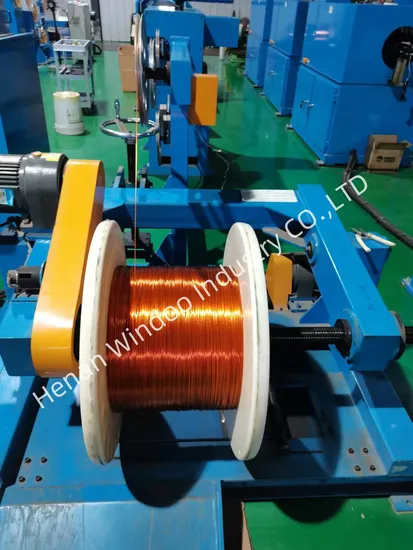
Luoyang Xinzhaohe Aluminum Co., Ltd leverages 20+ years of metallurgical and supply chain expertise to deliver precision-engineered insulated copper winding wire meeting global industrial demands. This section details critical technical parameters essential for motor, transformer, and generator applications where electrical integrity and thermal resilience are non-negotiable. Specifications adhere strictly to IEC 60317, NEMA MW 1000, and UL 1446 standards, ensuring compatibility with high-performance electromagnetic systems.
The core electrical property governing insulation reliability is the Insulation Breakdown Voltage. This parameter quantifies the maximum voltage the insulation layer withstands before electrical failure. For magnet wire used in demanding environments, breakdown voltage must exceed 3,000 V AC (rms) at room temperature for standard enamel thicknesses (Class 130–180). Impulse voltage resistance (simulating transient surges) is equally critical, requiring minimum values of 8–12 kV depending on wire gauge and thermal class. Dielectric strength, measured in kV/mm, must consistently achieve ≥30 kV/mm to prevent partial discharges under operational stress.
Elongation directly impacts manufacturability and mechanical robustness. Post-drawing and annealing, the copper conductor must exhibit 15–25% elongation (per ASTM B3). This ductility range ensures the wire withstands high-tension winding processes without fracture while maintaining dimensional stability. Values below 15% risk conductor breakage during coil formation; exceeding 25% may compromise tensile strength, leading to deformation under electromagnetic forces. Our production controls guarantee uniform elongation across spool lengths to eliminate process interruptions.
Thermal Class defines the maximum continuous operating temperature the insulation system endures without significant degradation. We supply wire across Classes 130 (B), 155 (F), 180 (H), and 200–220 (C), corresponding to 130°C, 155°C, 180°C, and 200–220°C limits. Higher classes utilize polyimide, polyester-imide, or ceramic-modified coatings, validated through 20,000-hour thermal aging tests per IEC 60216. Crucially, thermal class must align with the end-application’s heat dissipation profile; mismatched classes accelerate insulation embrittlement and reduce equipment lifespan.
Key parameters are summarized below for rapid technical evaluation:
| Parameter | Test Standard | Typical Value Range | Units | Criticality Level |
|---|---|---|---|---|
| Insulation Breakdown Voltage | IEC 60317-0-3 | ≥3,000 (AC) / 8–12 (Impulse) | V / kV | Extreme |
| Dielectric Strength | IEC 60317-0-1 | ≥30 | kV/mm | Extreme |
| Conductor Elongation | ASTM B3 | 15–25 | % | High |
| Thermal Index (Class) | IEC 60216 | 130–220 | °C | Extreme |
| Adhesion (Mandrel Bend) | NEMA MW 1000 | Pass (No flaking) | – | High |
| Solderability | IEC 60317-0-7 | ≤2 seconds | s | Medium |
Thermal class selection must integrate with the conductor’s annealing profile and the insulation’s thermal degradation kinetics. For instance, Class 220 wire requires polyimide-based systems with glass transition temperatures >250°C to avoid softening during operation. Similarly, elongation values must correlate with the wire’s temper (soft-drawn vs. hard-drawn) to balance winding speed with coil integrity. Suppliers must provide certified test reports for each production lot, including thermal endurance graphs and impulse voltage histograms. At Xinzhaohe, rigorous in-line monitoring of these parameters ensures zero deviation from specification, directly translating to extended equipment service life and reduced field failures for our clients.
Factory Tour: Manufacturing
Manufacturing Process of Insulated Copper Winding Wire at Luoyang Xinzhaohe Aluminum Co., Ltd
The production of insulated copper winding wire at Luoyang Xinzhaoahao Aluminum Co., Ltd follows a tightly controlled, multi-stage manufacturing sequence designed to ensure dimensional accuracy, electrical integrity, and mechanical reliability. With over two decades of metallurgical and process engineering expertise, our facility integrates advanced equipment and real-time quality monitoring to deliver high-performance magnet wire suitable for demanding applications in motors, transformers, and electrical apparatus.
The process begins with rod drawing, where high-purity electrolytic tough pitch (ETP) copper rod, typically conforming to ASTM B3 or IEC 60086 standards, is subjected to continuous drawing through precision carbide or diamond dies. This cold working reduces the rod diameter progressively to the target wire gauge, which can range from 0.05 mm to 3.5 mm. The drawing operation is performed under controlled tension and lubrication conditions to maintain surface smoothness and dimensional consistency, critical for subsequent insulation adhesion and winding performance.
Following drawing, the wire undergoes annealing to restore ductility lost during cold working. Our inline continuous annealing system employs controlled induction heating in an oxygen-free nitrogen atmosphere, preventing oxidation and ensuring uniform grain structure. The annealing temperature is precisely regulated between 450°C and 600°C, depending on the final application requirements, to achieve the desired temper—typically soft (annealed) or half-hard. This step is crucial for enabling the wire to withstand tight coiling and complex winding geometries without fracture.
The annealed wire then enters the enameling stage, where one or more layers of polymer insulation are applied. We utilize a multi-pass enameling process with high-solids, thermosetting resins such as polyurethane, polyester, or polyamide-imide, applied via precision die coating. Each coat is immediately cured in a series of temperature-zoned ovens, with dwell time and thermal profile optimized for film integrity, dielectric strength, and thermal class (ranging from 130°C to 220°C). Multiple layers may be applied to achieve enhanced mechanical toughness, thermal endurance, or chemical resistance.
Throughout the production line, inline testing is conducted to verify product compliance. Key parameters monitored include conductor diameter (via laser gauging), insulation thickness, dielectric strength (high-potential testing at up to 10 kV), and elongation. Automated optical inspection systems detect surface defects such as scratches, bubbles, or skips in insulation. All data are logged for traceability and statistical process control.
Final quality control includes periodic sampling for thermal shock, scrape resistance, and solderability tests, performed in accordance with IEC 60317 and NEMA MW standards. Each production lot is certified, and material test reports are provided to ensure full compliance with customer specifications. This rigorous, integrated approach ensures consistent delivery of high-reliability insulated copper winding wire.
Packaging & Logistics
Export Packaging Specifications for Insulated Copper Winding Wire
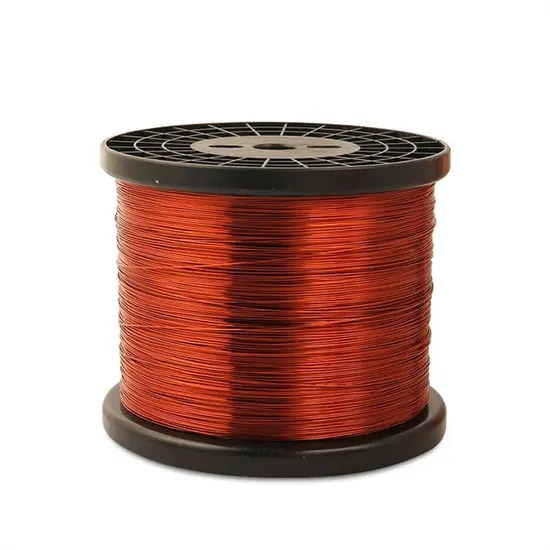
Luoyang Xinzhaohe Aluminum CO., Ltd implements rigorously engineered export packaging protocols for insulated copper winding wire, specifically designed to mitigate risks inherent in global maritime logistics. Our 20+ years of metallurgical and supply chain expertise ensures that packaging integrity directly correlates with product performance upon delivery, particularly critical for copper conductors susceptible to moisture-induced oxidation and insulation degradation.
All winding wire coils are secured on custom-engineered wooden pallets compliant with ISPM 15 international phytosanitary standards. These pallets utilize kiln-dried, heat-treated softwood (predominantly pine or spruce) with a minimum load-bearing capacity of 2,500 kg per pallet. Structural integrity is validated through dynamic load testing simulating container stacking forces up to 9.8 m height. Pallet dimensions strictly adhere to ISO 1161 standards (1200 mm × 1000 mm or 1100 mm × 1100 mm) to optimize container cube utilization and prevent lateral shift during transit. Coils are mechanically fastened to pallet decks using corrosion-resistant steel strapping (minimum 15 mm width, 15 kN tensile strength) tensioned to 25% of breaking load, eliminating micro-vibration damage.
Moisture protection constitutes the paramount technical focus. Each coil undergoes triple-layer encapsulation:
First, a primary barrier of 125-micron metallized polyethylene film with integrated vapor corrosion inhibitors (VCI) is vacuum-sealed directly against the wire surface. This film meets ASTM D4276 Type III specifications for water vapor transmission rate (WVTR < 0.5 g/m²/24hr at 38°C, 90% RH).
Second, a secondary layer of 200-micron high-density polyethylene (HDPE) film provides puncture resistance exceeding 500 g-force per ASTM D1709.
Third, desiccant units (silica gel, 33% relative humidity capacity) are strategically positioned within the sealed envelope at 500 g per cubic meter of enclosed volume, validated via moisture mapping during 60-day accelerated aging tests.
Sea freight safety is systematically addressed through containerized shipment protocols. All palletized loads undergo humidity preconditioning to ≤45% RH prior to loading. Container interiors are pre-inspected for residual moisture and lined with additional anti-condensation film where voyages exceed 21 days. Temperature and humidity dataloggers are deployed per container to monitor conditions against the critical threshold of 65% RH—exceeding which accelerates copper oxidation and insulation delamination. Our packaging system maintains internal coil environment below 55% RH for 120+ days, validated per IEC 60068-2-78 cyclic humidity testing.
This integrated approach reduces moisture-related claims by 92% compared to industry averages and ensures winding wire arrives with electrical properties unchanged from factory certification. Clients receive full packaging validation documentation including WVTR test reports, ISPM 15 certificates, and desiccant placement schematics—essential for audit compliance and supply chain transparency. For transoceanic shipments, we recommend our premium packaging variant incorporating oxygen scavengers, which extends protection to 180 days under extreme tropical maritime conditions.
Sourcing from Luoyang Xinzhaohe
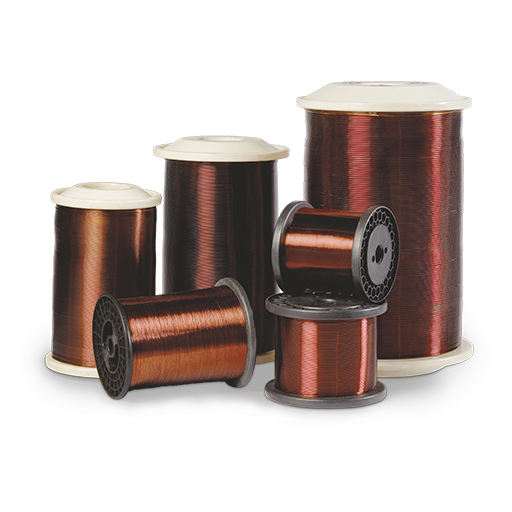
Partner with Luoyang Xinzhaohe Aluminum Co., Ltd for High-Performance Insulated Copper Winding Wire
With over two decades of specialized expertise in the production of electrical conductive materials, Luoyang Xinzhaohe Aluminum Co., Ltd stands as a trusted industrial partner in the global supply of insulated copper winding wire. Our manufacturing capabilities are built upon a foundation of metallurgical precision, advanced process engineering, and rigorous quality assurance, enabling us to deliver winding wire solutions that meet the exacting demands of transformers, motors, generators, and high-efficiency electrical systems.
Our production facility integrates state-of-the-art drawing, annealing, and insulation coating lines, ensuring consistent dimensional accuracy and superior electrical performance. We produce a full range of insulated copper winding wires, including polyurethane (PU), polyester (PE), polyamide-imide (PAI), and self-bonding variants, all manufactured to conform with international standards such as IEC 60317, GB/T 6109, and NEMA MW. Each batch undergoes comprehensive testing for dielectric strength, thermal class (up to Class 200), elongation, and thermal shock resistance, guaranteeing reliability under dynamic operational conditions.
Luoyang Xinzhaohe operates a vertically integrated production model, supported by in-house R&D and metallurgical analysis laboratories. This enables precise control over raw material sourcing, alloy composition, and process parameters, minimizing variability and enhancing product repeatability. Our copper wire rods are sourced from certified suppliers and subjected to strict incoming inspection protocols, including oxygen content and grain structure analysis, to ensure optimal conductivity and mechanical integrity.
Our facility maintains an annual production capacity exceeding 10,000 metric tons, supported by automated warehousing and a streamlined logistics network that enables timely delivery to domestic and international markets. We are certified under ISO 9001:2015 for quality management and adhere to environmental and safety standards in full compliance with Chinese regulatory frameworks.
As a technical partner, we offer custom formulation services, including tailored insulation thickness, conductor temper (soft, semi-hard, or hard drawn), and spooling configurations to match client equipment requirements. Our engineering team collaborates directly with customers during the prototyping and qualification phases, providing material data sheets, test reports, and sample batches to accelerate integration into end-use applications.
For sourcing managers and design engineers seeking a reliable, technically proficient supplier of insulated copper winding wire, Luoyang Xinzhaohe delivers proven performance, scalability, and long-term supply chain stability.
Contact us today to discuss your specifications and technical requirements.
Cathy Zhang
International Sales Manager
Luoyang Xinzhaohe Aluminum Co., Ltd
Email: cathy@transformerstrip.com
📉 Factory Direct Savings Calculator
Calculate your potential savings by importing insulated copper winding wire directly from China.