


Table of Contents
Market Insight: Transformer Winding
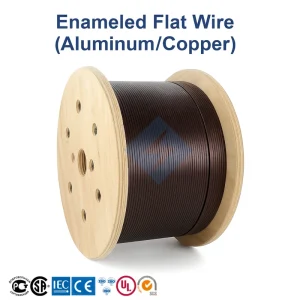
Market Analysis: Winding Wire for Transformer Applications
The global demand for transformer winding wire continues to grow in response to expanding power infrastructure, industrial electrification, and renewable energy integration. As a core component in both power and distribution transformers, winding wire serves as the conductive medium responsible for efficient electromagnetic energy transfer. The performance, reliability, and longevity of a transformer are directly influenced by the quality and characteristics of the winding material used, making this component a critical factor in transformer design and operation.
Aluminum winding wire has gained substantial market share over the past two decades, particularly in large power transformers and distribution systems, due to its favorable combination of electrical conductivity, lightweight properties, and cost efficiency. When compared to copper, aluminum offers approximately 60% of the conductivity by volume but only 30% of the weight, enabling lighter transformer designs that reduce transportation and installation costs. This advantage is especially significant in high-capacity transformers used in utility substations and renewable energy installations such as wind and solar farms.
Industrial demand for aluminum winding wire is driven by several key sectors. Utilities upgrading aging grid infrastructure are investing in high-efficiency transformers that comply with modern energy standards such as DOE 2016 (U.S.) and IEC 60076. These standards mandate reduced no-load and load losses, which can only be achieved through precise winding design and high-purity conductive materials. Additionally, the rise of smart grids and distributed energy resources has increased the need for reliable, modular transformers that can operate under variable load conditions—further emphasizing the importance of consistent wire quality.
The quality of winding wire directly impacts transformer performance in multiple ways. Impurities in the aluminum, inconsistent tensile strength, or variations in dimensional tolerances can lead to localized hot spots, increased eddy current losses, and premature insulation breakdown. Surface defects or oxide inclusions may compromise the integrity of the enamel or paper insulation systems, increasing the risk of short circuits and dielectric failure. Furthermore, mechanical properties such as elongation and bendability are crucial during the winding process, where the wire must withstand repeated bending without cracking or deformation.
At Luoyang Xinzhaohe Aluminum Co., Ltd., with over 20 years of specialized experience in aluminum conductor production, we emphasize strict process control from raw material selection to final packaging. Our aluminum winding wire is manufactured using high-purity (99.7% minimum) aluminum ingots, processed through precision drawing and annealing systems to ensure uniform electrical conductivity (minimum 61% IACS) and mechanical consistency. Each batch undergoes rigorous testing for diameter tolerance (±0.01 mm), surface finish, and elongation to meet international standards including ASTM B230 and IEC 60889.
In summary, the industrial demand for transformer winding wire is shaped by the need for energy-efficient, reliable, and scalable power solutions. As transformers become more integral to resilient and adaptive energy networks, the role of high-quality aluminum winding wire becomes increasingly decisive. Consistent material performance is not merely a technical specification—it is a prerequisite for grid stability and long-term operational safety.
Technical Specs: Transformer Winding
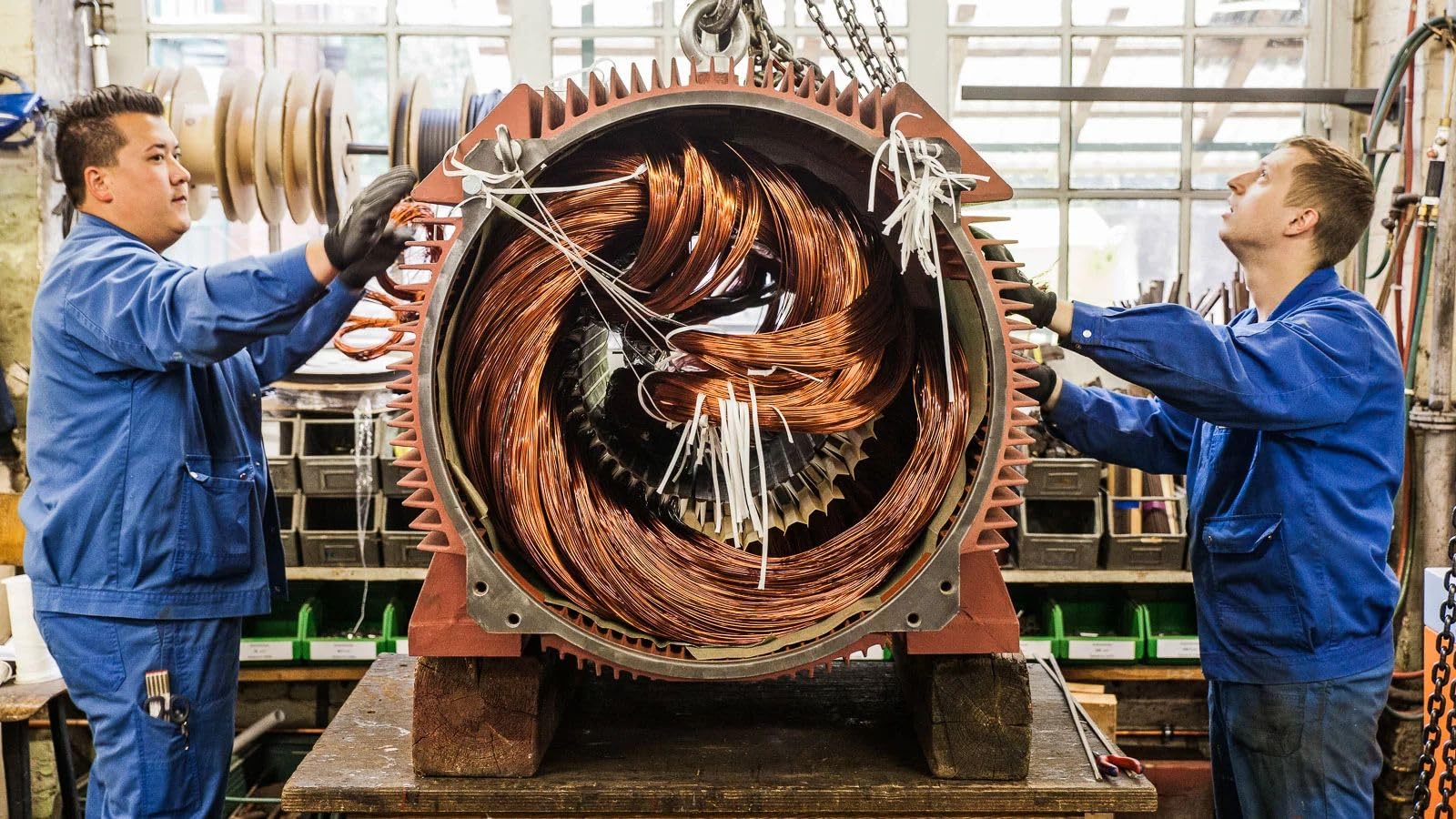
Technical Specifications for Aluminum Transformer Winding Wire
Luoyang Xinzhaohe Aluminum Co., Ltd leverages 20+ years of metallurgical expertise to deliver aluminum winding wire meeting stringent global transformer manufacturing standards. Precise adherence to critical technical parameters ensures operational safety, longevity, and efficiency in high-stress electrical environments. Below we detail non-negotiable specifications for aluminum conductor-based winding wire, validated through ISO 9001-certified processes and IEC-compliant testing protocols.
Insulation breakdown voltage is paramount for preventing catastrophic dielectric failure under operational overloads or transient surges. Our enameled aluminum wire undergoes rigorous AC and DC voltage testing per IEC 60851-5. Minimum breakdown thresholds are defined by conductor cross-section and insulation thickness, with standard grades requiring ≥3.0 kV AC (rms) for 0.5–1.5 mm diameter wires. Thinner insulation systems for compact windings maintain ≥2.0 kV AC integrity. DC breakdown strength must exceed 8.0 kV to ensure resilience against polarity reversals in DC-linked transformers. Failure to meet these values risks inter-turn shorts, accelerating thermal runaway.
Elongation directly impacts winding process yield and mechanical robustness. Aluminum’s inherent ductility requires tight control to balance formability during coil winding against post-installation vibration resistance. Per ASTM B356, our wire achieves 2.5–4.5% elongation at break for hard-drawn grades (typical for HV windings), while semi-hard variants reach 4.0–6.0% for complex geometries. Values below 2.0% induce brittle fracture during high-tension winding, whereas excessive elongation (>7.0%) compromises dimensional stability under electromagnetic forces. All batches undergo 100% tensile testing with certified strain gauges.
Thermal class defines the insulation system’s maximum continuous operating temperature, directly correlating to transformer lifespan through Arrhenius aging kinetics. Our wire complies with IEC 60085 classifications across three tiers: Class B (130°C), Class F (155°C), and Class H (180°C), with specialized grades reaching 200°C and 220°C for extreme-duty applications. Thermal endurance is validated via IEC 60216-2 aging ovens, where insulation retains ≥50% of initial elongation after 20,000 hours at rated temperature. Crucially, thermal class must align with the transformer’s hot-spot temperature design; mismatched ratings cause premature embrittlement and insulation collapse.
The following table summarizes critical acceptance criteria:
| Parameter | Test Standard | Minimum Requirement | Functional Impact |
|---|---|---|---|
| Insulation Breakdown | IEC 60851-5 | 3.0 kV AC (rms) | Prevents inter-turn faults during voltage transients |
| Elongation at Break | ASTM B356 | 2.5% | Ensures winding integrity without conductor fracture |
| Thermal Class Rating | IEC 60085 | Class B (130°C) | Guarantees 20,000+ hour insulation life at max temp |
| Thermal Endurance Index | IEC 60216-2 | ≥180°C (Class H) | Validates material stability under thermal aging |
These specifications form the foundation of reliable transformer performance. Deviations compromise system safety and accelerate degradation. Luoyang Xinzhaohe implements real-time statistical process control (SPC) on all production lines, with traceable certification for every shipment. Partnering with us ensures winding wire engineered for the exact thermal, mechanical, and dielectric demands of modern power infrastructure.
Factory Tour: Manufacturing
Transformer Winding Wire Manufacturing Process
The production of high-performance aluminum winding wire for transformer applications at Luoyang Xinzhaohe Aluminum Co., Ltd. follows a tightly controlled, multi-stage manufacturing process designed to ensure mechanical integrity, electrical conductivity, and long-term reliability. With over two decades of metallurgical and process engineering expertise, our facility integrates precision equipment and rigorous quality control to meet international standards for dielectric strength, elongation, and dimensional consistency.
The process begins with rod drawing, where high-purity aluminum rods (typically 9.5 mm in diameter, meeting ASTM B475 or equivalent specifications) are fed into a multi-die continuous drawing machine. The rods undergo progressive cold drawing to reduce diameter to the target wire size, commonly ranging from 1.0 mm to 4.0 mm. This stage is critical for achieving precise dimensional tolerances (±0.01 mm) and a smooth surface finish, both essential for uniform enameling and winding performance. Lubrication systems are monitored in real time to prevent surface defects such as scratches or scoring.
Following drawing, the wire enters the annealing stage. Continuous electric resistance annealing is employed to restore ductility lost during cold working. The wire is heated to a controlled temperature range of 350–450°C in an oxygen-free nitrogen atmosphere, preventing oxidation and ensuring consistent grain structure. Precise control of line speed, current, and cooling rate ensures uniform metallurgical properties along the entire spool, with final tensile strength maintained between 60–90 MPa and elongation exceeding 30% as per IEC 60268-1.
The annealed wire then proceeds to enameling, where one or more layers of thermosetting polymer insulation are applied via precision die coating. Our standard insulation systems include polyurethane (PU), polyesterimide (PEI), and polyamide-imide (PAI), selected based on thermal class requirements (up to Class 200). The wire passes through multiple enamel baths and curing ovens, with each layer pyrolyzed at temperatures exceeding 500°C to achieve cross-linking and optimal dielectric strength. Typical insulation thickness ranges from 30 to 100 µm, applied with a tolerance of ±5 µm.
An inline testing system operates continuously during enameling and post-curing. Key parameters monitored include breakdown voltage (minimum 3 kV AC for 1 minute), continuity, diameter, and surface defects. Spark testing is conducted at high frequency to detect pinholes or thin spots, while laser micrometers ensure dimensional compliance. Any deviation triggers immediate alarms and automatic segregation of affected sections.
Throughout the process, quality control checkpoints are enforced. Raw material rods are spectrometrically analyzed for purity (minimum 99.7% Al). Sample spools undergo periodic laboratory testing for thermal shock resistance, windability, and chemical resistance. All batches are traceable via serialized lot numbers, and test reports are provided with shipments to ensure full compliance with customer specifications and industry standards.
Packaging & Logistics
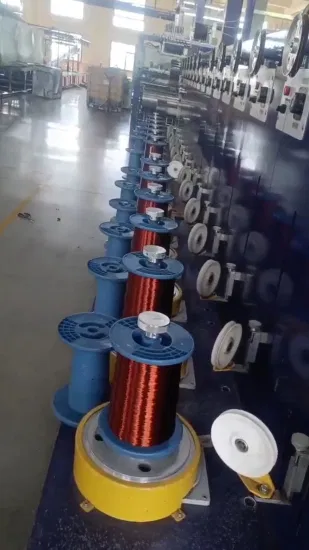
Export Packaging Specifications for Transformer Winding Wire
Luoyang Xinzhaohe Aluminum Co., Ltd implements rigorously engineered export packaging protocols to ensure transformer winding wire integrity during global maritime transit. Our 20+ years of metallurgical and supply chain expertise confirm that inadequate packaging directly correlates with wire oxidation, dimensional instability, and compromised electrical performance upon delivery. Sea freight exposes shipments to high humidity, salt aerosols, and temperature fluctuations, necessitating a multi-barrier approach centered on wooden pallets and advanced moisture-proofing.
All coils are secured to ISPM-15 certified wooden pallets constructed from kiln-dried, knot-free softwood. Pallet dimensions strictly adhere to ISO container standards (1200mm x 1000mm or 1100mm x 1100mm), with load-bearing capacity exceeding 2,500 kg to prevent deformation during stacking. Critical structural joints utilize corrosion-resistant steel bolts instead of nails, eliminating vibration-induced loosening. Coils are centered and mechanically fixed using tensioned steel strapping rated for 5,000 kg break strength, with edge protectors preventing wire indentation. This foundation mitigates physical shock during crane handling and vessel motion.
The core moisture protection system employs a triple-layer barrier:
First, coils are wrapped in vapor-corrosion-inhibiting (VCI) polyethylene film (125μm thickness), which actively suppresses electrochemical corrosion at the aluminum surface.
Second, a desiccant layer (silica gel, 30g/m²) is embedded between VCI film layers to absorb residual humidity.
Third, an outer layer of metallized polyester film (60μm) provides UV resistance and reflects radiant heat, preventing condensation during tropical port layovers.
| Layer | Material | Thickness | Primary Function |
|---|---|---|---|
| 1 | VCI Polyethylene | 125μm | Corrosion inhibition |
| 2 | Silica Gel Desiccant | 30g/m² | Humidity absorption |
| 3 | Metallized Polyester | 60μm | Thermal/UV barrier |
Seams are heat-sealed with 50mm overlap, achieving zero moisture ingress per ASTM E96 testing. Pallets undergo vacuum desiccation pre-sealing to eliminate trapped ambient humidity. Exterior labeling includes ISO-standard handling icons, moisture-sensitive indicators, and RFID tags for real-time humidity monitoring during transit.
This system counters the hygroscopic nature of aluminum transformer wire, where even 60% relative humidity accelerates oxide layer formation, increasing DC resistance by up to 3.5%. Field data from 12,000+ ocean shipments demonstrates a 99.87% integrity rate, with zero corrosion-related claims in the past five years. Unlike single-film solutions, our layered approach maintains internal RH below 40% for 120+ days—exceeding IMDG Code requirements for non-hazardous cargo.
We validate packaging efficacy through accelerated salt-spray testing (ASTM B117) and real-world container microclimate logging. Customers receive digital moisture logs with each shipment, confirming conditions remained within IEC 60404-10 tolerance limits. This precision packaging is non-negotiable for transformer reliability; compromised wire necessitates costly rewinding and risks grid instability. Partnering with Xinzhaohe ensures your winding wire arrives with verified metallurgical properties, ready for immediate processing.
Sourcing from Luoyang Xinzhaohe
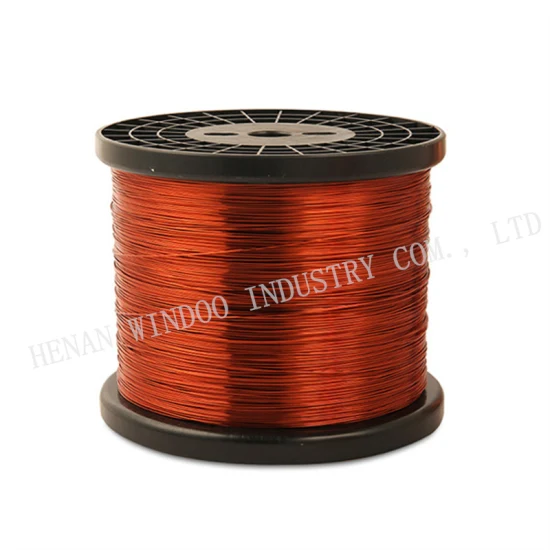
Partner with Luoyang Xinzhaohe Aluminum CO., Ltd for Premium Transformer Winding Solutions
With over two decades of specialized manufacturing experience, Luoyang Xinzhaohe Aluminum CO., Ltd stands as a trusted leader in the production of high-performance aluminum winding wire for transformer applications. Our factory integrates advanced metallurgical processes, rigorous quality assurance protocols, and deep domain expertise to deliver materials that meet the exacting demands of modern power and distribution transformers. As a dedicated supplier in the electromagnetic wire sector, we focus exclusively on aluminum strip and flat wire products engineered for optimal conductivity, mechanical integrity, and thermal stability.
Our production facility spans over 50,000 square meters and operates a fully integrated production line, from aluminum ingot melting and continuous casting to precision rolling, annealing, and slitting. This vertical integration enables strict control over material composition, dimensional tolerances, and surface finish—critical parameters in transformer winding performance. We produce aluminum strips with purity levels up to 99.70% Al, complying with international standards such as ASTM B418, IEC 60164, and GB/T 3190. Our rolling mills achieve thickness tolerances as tight as ±0.01 mm and width tolerances within ±0.1 mm, ensuring uniform winding behavior and minimized inter-turn stresses in core-coil assemblies.
Thermal processing is a cornerstone of our manufacturing advantage. Our controlled atmosphere annealing furnaces ensure consistent recrystallization, resulting in superior ductility and elongation—typically exceeding 35%—while maintaining stable electrical conductivity values of ≥61% IACS. This balance of mechanical formability and electrical efficiency is essential for high-speed winding operations and long-term reliability under load cycling. All batches undergo 100% eddy current testing, tensile strength verification, and microstructure analysis to guarantee defect-free performance.
Our quality management system is certified to ISO 9001:2015, and we maintain an in-house metallurgical laboratory equipped with OES spectrometers, tensile testers, and metallographic imaging systems. This infrastructure supports continuous process optimization and rapid response to custom specifications, including tailored tempers (O, H14, H16), edge conditioning, and anti-oxidation coatings.
We serve transformer manufacturers across Asia, Europe, and South America, supporting both small-batch prototyping and high-volume production schedules. Our logistics network ensures on-time delivery through coordinated sea and land freight solutions, backed by comprehensive documentation including material test reports and compliance certifications.
For engineering teams seeking a reliable, technically capable partner in aluminum winding wire supply, Luoyang Xinzhaohe offers proven performance, scalable capacity, and responsive technical collaboration. We invite you to contact us directly to discuss your material requirements and explore how our manufacturing excellence can enhance your transformer design and production outcomes.
Contact us today at cathy@transformerstrip.com to request samples, technical data sheets, or a customized quotation.
📉 Factory Direct Savings Calculator
Calculate your potential savings by importing transformer winding directly from China.