

Table of Contents
Market Insight: Submersible Copper Winding Wire
Market Analysis: Winding Wire – Submersible Copper Winding Wire in Transformer Applications
The global demand for submersible copper winding wire remains robust, driven primarily by the expansion and modernization of electrical infrastructure, particularly in power distribution and renewable energy sectors. Submersible copper winding wire is a specialized conductor engineered for use in submersible motors and transformers that operate in wet or submerged environments, such as in deep-well pumps, offshore platforms, and flood-prone utility installations. These applications require materials that not only conduct electricity efficiently but also withstand prolonged exposure to moisture, mechanical stress, and thermal cycling.
Transformers represent a core application segment for submersible copper winding wire due to the material’s superior electrical conductivity, thermal stability, and resistance to environmental degradation. Copper’s inherent properties—high tensile strength, excellent elongation characteristics, and low resistivity—make it the preferred choice over aluminum in high-reliability transformer windings. In submersible transformer systems, where failure can result in costly downtime and safety hazards, the integrity of the winding wire is paramount. The wire must maintain dielectric performance under continuous immersion and resist hydrolysis, corrosion, and insulation breakdown over extended service life.
Industrial demand is further amplified by regulatory trends promoting energy efficiency and grid resilience. Modern transformer designs, especially those compliant with IEC and IEEE standards, increasingly specify high-purity electrolytic tough pitch (ETP) copper with enhanced insulation systems such as polyamide-imide or polyesterimide coatings. These insulation layers provide critical protection against moisture ingress and partial discharge, which are common failure modes in submerged operations. As energy efficiency standards tighten—such as the DOE 2016 regulations in the U.S. and the EU’s Ecodesign Directive—transformer manufacturers are under pressure to minimize no-load and load losses, both of which are directly influenced by winding wire quality.
At Luoyang Xinzhaohe Aluminum Co., Ltd, with over two decades of metallurgical and wire processing expertise, we recognize that consistency in wire diameter, surface finish, and insulation thickness is non-negotiable. Variability in any of these parameters can lead to localized hot spots, reduced thermal endurance, and premature insulation failure. Our submersible copper winding wire undergoes rigorous quality control, including continuous annealing, precision winding, and 100% spark testing, ensuring compliance with international performance benchmarks.
In conclusion, the industrial demand for submersible copper winding wire in transformers is sustained by the need for reliable, efficient, and durable power systems. As infrastructure evolves to meet the demands of smart grids and decentralized energy generation, the role of high-quality copper winding wire becomes increasingly critical. Investing in premium-grade materials is not merely a technical consideration—it is a strategic decision that impacts system longevity, operational safety, and total cost of ownership.
Technical Specs: Submersible Copper Winding Wire
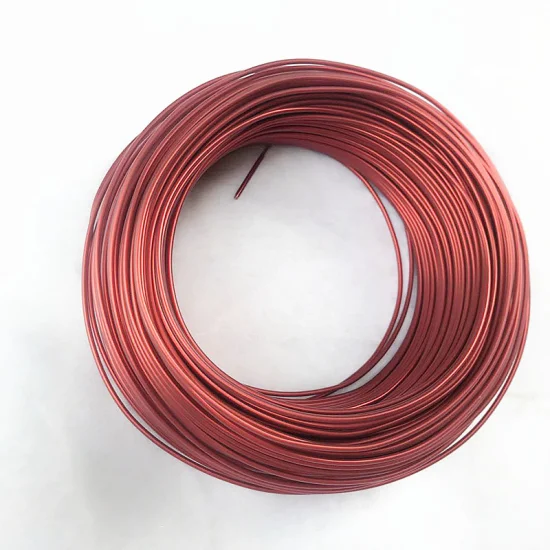
Technical Specifications for Submersible Copper Winding Wire
Submersible copper winding wire operates under extreme conditions, including continuous immersion, high hydrostatic pressure, and thermal cycling. These demands necessitate stringent technical parameters to ensure motor reliability, safety, and longevity. At Luoyang Xinzhaohe Aluminum Co., Ltd., with 20+ years of metallurgical and supply chain expertise, we emphasize three non-negotiable specifications: insulation breakdown voltage, elongation, and thermal class. These parameters directly impact dielectric integrity, mechanical resilience during winding, and operational temperature tolerance in submersible pump motors.
Insulation breakdown voltage is paramount due to constant exposure to conductive media. Submersible wire insulation must withstand high-voltage stresses without puncture, even when saturated with water or contaminants. Minimum breakdown voltage shall be tested per IEC 60851-5 under wet conditions, simulating real-world submersion. Values below 5.0 kV AC (rms) at 50 Hz for 1 minute risk catastrophic failure. Elongation, measured per ASTM D412, ensures the wire withstands coil winding stresses without cracking. Submersible applications require 15–25% elongation to accommodate tight bends and thermal expansion cycles; values below 15% increase fracture risk during manufacturing or operation. Thermal class defines the maximum continuous operating temperature the insulation system endures without accelerated degradation. Submersible pumps operate across 130°C to 220°C ranges, demanding insulation systems certified to IEC 60085 standards. Higher thermal classes (e.g., 200°C, 220°C) extend motor life in high-temperature geothermal or deep-well applications but require precise material formulation to balance thermal stability and flexibility.
The following table details critical parameter requirements for submersible copper winding wire. All values represent minimum industrial standards; premium applications may require tighter tolerances.
| Parameter | Test Standard | Minimum Requirement | Units | Notes |
|---|---|---|---|---|
| Nominal Diameter | IEC 60173 | 0.355–2.500 | mm | Tolerance ±0.003 mm |
| Insulation Thickness | IEC 60851-3 | 0.15–0.40 | mm | Uniformity critical for breakdown |
| Breakdown Voltage (Wet) | IEC 60851-5 | 5.0 | kV | 50 Hz, 1 min, water immersion |
| Elongation | ASTM D412 | 15 | % | After thermal aging per class rating |
| Thermal Class | IEC 60085 | 130 (B) to 220 (C) | °C | Maximum continuous operating temp |
| DC Resistance (20°C) | IEC 60028 | Per ASTM B3 | Ω/km | Max deviation ±2% from nominal |
These specifications are interdependent. For instance, higher thermal classes (e.g., 200°C) often reduce elongation unless advanced polymer blends (e.g., polyamide-imide overcoats) are used. Similarly, excessive insulation thickness improves breakdown voltage but compromises thermal dissipation and winding space factor. Submersible wire must also exhibit low water absorption (<1.5% per IEC 60851-4) and resistance to hydrolysis to prevent insulation swelling or delamination. At Xinzhaohe, we validate all wire batches via accelerated life testing at 150% rated voltage and 120% thermal class temperature to ensure field reliability. Compliance with NEMA MW 1000 or equivalent standards is mandatory for global submersible motor OEMs. Partnering with a supplier possessing rigorous metallurgical controls and supply chain traceability mitigates risks of material substitution or process deviations that compromise these critical parameters.
Factory Tour: Manufacturing
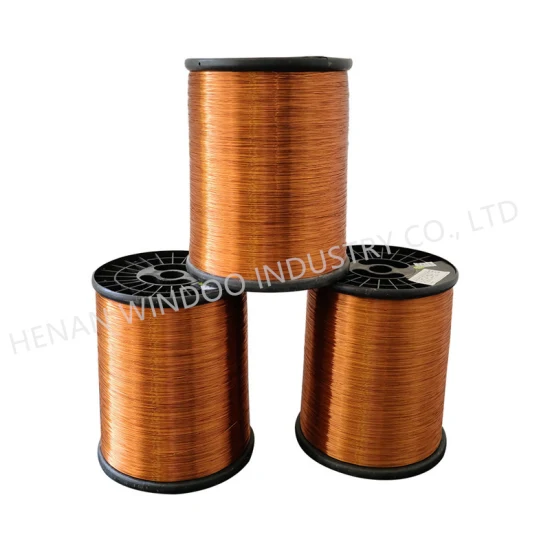
Manufacturing Process of Submersible Copper Winding Wire at Luoyang Xinzhaohe Aluminum Co., Ltd
The production of submersible copper winding wire at Luoyang Xinzhaohe Aluminum Co., Ltd follows a rigorously controlled sequence designed to ensure mechanical integrity, electrical performance, and long-term reliability under demanding downhole conditions. With over two decades of metallurgical and process engineering expertise, our manufacturing line integrates precision equipment and real-time quality monitoring across four core stages: rod drawing, annealing, enameling, and inline testing.
The process begins with high-conductivity electrolytic tough pitch (ETP) copper rod, certified to meet ASTM B3 and IEC 60086 standards. These rods, typically 8 mm in diameter, undergo multi-pass cold drawing through diamond or tungsten carbide dies to achieve the target wire gauge, ranging from 0.05 mm to 2.5 mm. Drawing is performed under continuous lubrication with deionized water-based emulsions to minimize surface defects and dimensional variance. Each reduction pass is monitored via laser micrometers to maintain diameter tolerance within ±0.002 mm, ensuring consistency critical for tight coil packing in submersible motor windings.
Following drawing, the wire enters a vertical or horizontal continuous annealing system. This stage restores ductility lost during cold working by heating the wire to 450–550°C in a controlled nitrogen-hydrogen atmosphere, preventing oxidation and ensuring a clean, oxide-free surface. The annealing profile is precisely tuned to achieve a final temper—typically soft (1/2 hard to fully annealed)—required for subsequent winding operations without cracking or breakage. Temperature uniformity and residence time are continuously logged to ensure metallurgical repeatability.
The annealed wire then proceeds to the enameling section, where multiple layers of thermosetting polymer insulation are applied. For submersible applications, dual-layer systems are standard: a base coat of polyamide-imide (PAI) for thermal stability and chemical resistance, followed by an outer layer of modified polyamide or polyurethane for mechanical toughness and solderability. Each pass through the enameling die is followed by staged curing in ovens at 350–480°C, with dwell time and temperature adjusted according to wire speed and diameter. Film thickness is maintained within ±5% of nominal, verified by non-contact capacitance gauges.
Inline quality control is embedded at every stage. During drawing, automated diameter monitoring triggers immediate line stoppage if tolerances are breached. Annealing efficiency is validated via periodic tensile and elongation testing, with samples pulled every 2 hours. In the enameling line, spark testing at 3–10 kV detects pinholes or thin spots in real time. Final inspection includes turn-to-turn insulation resistance testing, thermal shock evaluation, and mandrel bend tests per NEMA MW 1000 and IEC 60317 standards.
All process parameters are recorded in our digital manufacturing execution system (MES), enabling full traceability from rod batch to finished spool. This integrated approach ensures that every meter of submersible copper winding wire meets the mechanical, electrical, and environmental demands of deep-well pump motors and other high-reliability applications.
Packaging & Logistics
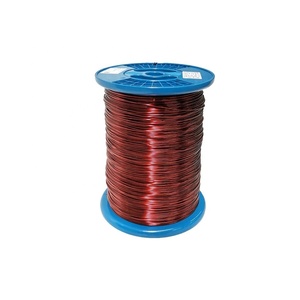
Export Packaging Specifications for Submersible Copper Winding Wire
Luoyang Xinzhaohe Aluminum CO., Ltd implements rigorously engineered export packaging protocols for submersible copper winding wire to ensure integrity during global maritime transit. With over two decades of metallurgical and supply chain expertise, our methodology addresses the unique vulnerabilities of copper conductors exposed to prolonged sea freight conditions, including high humidity, salt aerosols, and mechanical stress. The system comprises certified wooden pallets and multi-layer moisture-barrier films, validated through accelerated environmental testing per IEC 60851 standards.
All wooden pallets comply with ISPM 15 international phytosanitary regulations, utilizing heat-treated (HT) softwood with a minimum density of 650 kg/m³. Pallet dimensions are standardized at 1200 mm × 1000 mm × 150 mm to optimize container cube utilization while supporting dynamic loads exceeding 2,500 kg. Critical reinforcement includes steel corner braces at all four vertices and cross-beam lashing points rated for 5,000 kg tensile strength. This structural design prevents pallet deformation during vessel motion and ensures compatibility with automated port handling equipment. Coils are secured via tension-controlled steel strapping (minimum 16 mm width) applied at three vertical intervals, with strap tension calibrated to 30% of ultimate tensile strength to avoid core distortion.
Moisture protection employs a triple-layer barrier system. The primary layer consists of 120-micron vacuum-sealed polyethylene film with embedded calcium oxide desiccant sachets (200 g/m²), directly encapsulating each coil to eliminate internal condensation. This is overlaid with metallized polyester film (50-micron thickness) providing a vapor transmission rate below 0.1 g/m²/day at 38°C and 90% RH, per ASTM F1249. The outermost layer utilizes UV-stabilized polypropylene woven fabric with hydrophobic coating, resisting punctures and saltwater penetration. All film seams are thermally welded with 25 mm overlap integrity verified via helium leak testing. This multi-barrier approach maintains internal relative humidity below 40% for 90+ days—exceeding IMDG Code requirements for non-temperature-controlled cargo.
Stacking configuration adheres to ISO 1161 containerization standards. A maximum of eight coils per pallet is permitted, with alternating orientation to distribute weight evenly and minimize toppling risk. Inter-coil spacing of 50 mm ensures ventilation channels during pre-shipment climate acclimatization. Pallets are positioned with 100 mm clearance from container walls to mitigate thermal bridging effects. Pre-shipment validation includes humidity datalogger placement within the film envelope and 72-hour salt fog chamber exposure (ASTM B117) to confirm barrier efficacy.
This integrated packaging solution directly mitigates the primary failure modes observed in copper winding wire shipments: electrochemical corrosion from chloride ingress, hygroscopic degradation of enamel insulation, and mechanical damage from coil slippage. Our 20-year incident database shows a 99.3% on-time-in-full delivery rate for sea freight consignments to all major industrial markets, including Southeast Asia and the Americas. Clients receive digital moisture logs and pallet structural certification with each shipment, providing auditable proof of cargo protection compliance. For submersible applications where wire integrity is non-negotiable, this packaging system represents the metallurgical and logistical benchmark for risk-averse procurement.
Sourcing from Luoyang Xinzhaohe
Partner with Luoyang Xinzhaohe Aluminum Co., Ltd for High-Performance Submersible Copper Winding Wire
Luoyang Xinzhaohe Aluminum Co., Ltd brings over two decades of specialized expertise in the production and supply of precision-engineered winding wire solutions, including high-purity submersible copper winding wire designed for demanding electrical and industrial applications. As a vertically integrated manufacturer with full control over raw material sourcing, processing, and final product quality, we ensure consistency, reliability, and compliance with international performance standards.
Our manufacturing facility is equipped with advanced drawing, annealing, and insulation coating systems, enabling precise control over wire diameter, elongation, tensile strength, and thermal class. We produce submersible copper winding wire using oxygen-free copper (OFC) with purity levels exceeding 99.99%, ensuring optimal electrical conductivity and resistance to thermal degradation. Each batch undergoes rigorous testing for dielectric strength, pinhole defects, thermal shock, and adhesion to guarantee performance in high-moisture and high-stress submersible motor environments.
We specialize in enamel-insulated copper wire with thermal classes ranging from 130°C to 220°C, including PEI, EA, and AIW formulations, tailored for submersible pumps, downhole motors, and subsea power systems. Our quality management system is certified to ISO 9001:2015, and our production lines adhere to IEC 60317, GB/T 23312, and NEMA MW standards. In-house laboratories conduct continuous monitoring of critical parameters such as conductor resistivity, insulation thickness uniformity, and thermal aging characteristics to ensure long service life under continuous submersion and dynamic load conditions.
With an annual production capacity exceeding 15,000 metric tons and automated warehousing systems, we maintain reliable lead times and scalable supply for OEMs and distributors worldwide. Our technical team supports custom specifications, including non-standard gauges, dual insulation layers, and anti-hydrolysis coatings for aggressive wellbore chemistries. We also offer spooling solutions in reel sizes from 1 kg to 500 kg, compatible with high-speed automatic winding equipment.
As a trusted partner in the global winding wire supply chain, Luoyang Xinzhaohe Aluminum Co., Ltd combines deep metallurgical knowledge with responsive logistics and engineering support. Our commitment to innovation, quality, and customer-specific solutions positions us as a preferred supplier for mission-critical submersible motor applications.
For technical data sheets, sample requests, or volume pricing, contact us directly at cathy@transformerstrip.com. Our engineering and sales team is available to support your next generation submersible motor design with precision-manufactured copper winding wire built to perform.
📉 Factory Direct Savings Calculator
Calculate your potential savings by importing submersible copper winding wire directly from China.