


Table of Contents
Market Insight: M6 Silicon Steel
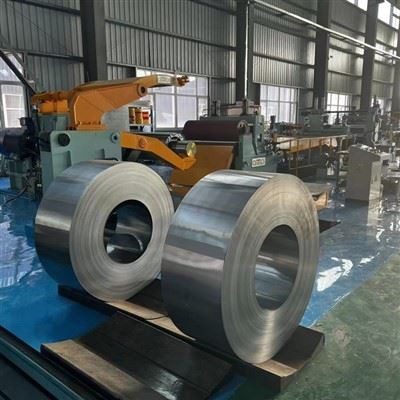
Market Analysis: Silicon Steel (Electrical Steel)
Silicon steel, commonly referred to as electrical steel, is a critical ferromagnetic material engineered for optimal performance in alternating current (AC) electromagnetic applications. Among the standardized grades, M6 silicon steel—designated under the ASTM A664 classification—represents a widely adopted non-oriented electrical steel with 2.9–3.2% silicon content. This grade is specifically formulated to balance magnetic permeability, core loss, and mechanical workability, making it a preferred choice in the construction of distribution and power transformers.
Industrial demand for M6 silicon steel remains robust, driven primarily by global investments in electrical infrastructure, renewable energy integration, and the modernization of aging power grids. Transformers, as core components in power transmission and distribution systems, rely heavily on the magnetic efficiency of their laminated cores. M6 silicon steel is extensively used in low- to medium-capacity transformers due to its favorable magnetic properties at 50–60 Hz operating frequencies. The material’s reduced core loss directly contributes to higher transformer efficiency, aligning with international energy conservation standards such as DOE 2016 (U.S.) and EcoDesign Directive (EU).
The performance of a transformer is intrinsically linked to the quality of the electrical steel employed. Variability in grain structure, thickness tolerance, coating integrity, and magnetic anisotropy can significantly influence core losses and thermal behavior. High-quality M6 silicon steel exhibits uniform grain orientation, minimal impurities, and consistent thickness, typically ranging from 0.35 mm to 0.50 mm. These characteristics ensure reduced hysteresis and eddy current losses, which are primary contributors to energy dissipation in magnetic cores. Inferior-grade materials may introduce localized hotspots, increase no-load losses, and shorten equipment lifespan—factors that compromise system reliability and increase total cost of ownership.
At Luoyang Xinzhaohe Aluminum Co., Ltd, we emphasize material consistency and precision in electrical steel supply. With over two decades of experience in advanced metal processing and supply chain management, we apply stringent quality control protocols to ensure that M6 silicon steel meets or exceeds IEC 60404-8 and GB/T 13237 standards. Our production process includes controlled rolling, annealing in protective atmospheres, and application of insulating coatings to enhance inter-laminar resistance and reduce eddy current losses.
Supply chain stability and technical support are equally vital in meeting industrial demand. As transformer manufacturers face increasing pressure to deliver high-efficiency units under tight tolerances, access to reliable, high-purity M6 silicon steel becomes a strategic advantage. The integration of certified materials into core manufacturing processes not only ensures compliance with regulatory frameworks but also supports long-term grid stability and energy efficiency goals.
In summary, the sustained demand for M6 silicon steel in transformer applications underscores the material’s pivotal role in modern power systems. Quality is not a marginal factor—it is a determinant of performance, efficiency, and operational longevity. Partnering with a technically proficient and quality-focused supplier is essential to achieving optimal outcomes in electrical steel utilization.
Technical Specs: M6 Silicon Steel
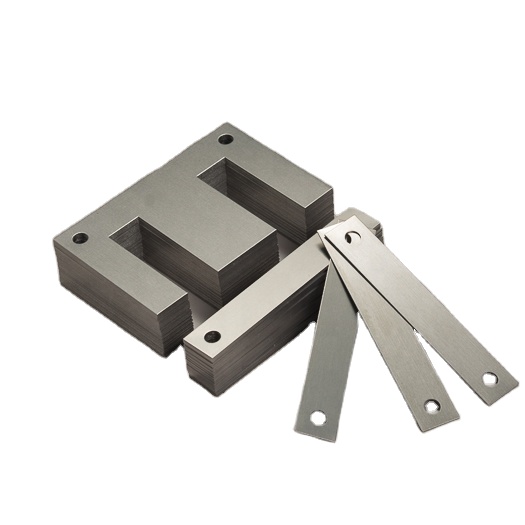
Technical Specifications: M6 Silicon Steel
M6 silicon steel, conforming to JIS C 2552 standards, represents a non-oriented electrical steel grade optimized for efficient electromagnetic performance in rotating machinery and transformers. As a critical material for motor stators, rotors, and small power transformers, its technical parameters directly influence energy efficiency, thermal management, and manufacturing yield. Luoyang Xinzhaohe Aluminum CO., Ltd leverages 20+ years of metallurgical expertise to ensure strict adherence to these specifications, with all production batches validated through third-party accredited laboratories.
Core loss (iron loss) is the paramount specification for M6 grade, quantifying energy dissipation under alternating magnetic fields. This parameter is intrinsically linked to hysteresis and eddy current losses, minimized through precise grain orientation control and 2.9–3.2% silicon content. Testing follows Epstein frame or single-sheet methods per IEC 60404-2, with frequency and peak induction level critically defining performance tiers. Lower core loss values directly correlate with higher motor efficiency classifications (e.g., IE3/IE4). Magnetic flux density (B₅₀) at 5000 A/m excitation field strength determines material saturation limits and power density capability. Higher B₅₀ values enable compact core designs but require balanced silicon content to avoid excessive brittleness. Flatness tolerance governs lamination stack integrity; deviations cause air gaps, localized heating, and reduced effective magnetic path area. Our production employs tension-leveling and precision slitting to maintain flatness within stringent limits, ensuring optimal stacking factors during core assembly.
The following table details key M6 silicon steel technical parameters as supplied by Luoyang Xinzhaohe Aluminum CO., Ltd
| Parameter | Symbol | Test Condition | Typical Value | Unit |
|---|---|---|---|---|
| Core Loss (Total) | W₁₅/₅₀ | 1.5 T, 50 Hz | ≤ 3.10 | W/kg |
| Core Loss (Total) | W₁₀/₄₀₀ | 1.0 T, 400 Hz | ≤ 18.0 | W/kg |
| Magnetic Flux Density | B₅₀ | 5000 A/m | ≥ 1.78 | Tesla |
| Thickness Tolerance | — | Nominal 0.50 mm | ±0.015 | mm |
| Flatness Tolerance | — | Per meter length | ≤ 0.50 | mm/m |
| Silicon Content | — | — | 2.90–3.20 | wt% |
These specifications are validated under controlled atmospheric annealing to eliminate residual stresses and optimize domain structure. Core loss values are reported at standard ambient temperature (23±1°C) with sinusoidal waveform excitation. Flux density measurements utilize DC hysteresisgraph methods per ASTM A773/A773M. Flatness is assessed via laser profilometry across the full coil width, with values representing maximum deviation from ideal plane geometry.
Procurement teams must reference mill test certificates for lot-specific data, as minor variations occur due to melt chemistry and processing nuances. Luoyang Xinzhaohe Aluminum CO., Ltd guarantees all M6 shipments meet or exceed the stated typical values, with rigorous in-process controls at hot rolling, cold rolling, and annealing stages. Consistent flatness performance is particularly critical for high-speed progressive die stamping, where deviations >0.5 mm/m increase scrap rates by up to 12%. For mission-critical applications, we recommend specifying tighter flatness tolerances (≤0.3 mm/m) during quotation to ensure optimal core performance and manufacturing efficiency.
Factory Tour: Manufacturing
Manufacturing Process of M6 Silicon Steel at Luoyang Xinzhaohe Aluminum Co., Ltd
The production of M6 silicon steel at Luoyang Xinzhaohe Aluminum Co., Ltd follows a tightly controlled, multi-stage manufacturing sequence designed to ensure optimal magnetic properties, dimensional accuracy, and surface integrity. With over two decades of metallurgical expertise, our process integrates precision engineering with rigorous quality control to meet the demanding requirements of electrical and industrial applications.
The process begins with slitting, where master coils of cold-rolled non-oriented silicon steel are longitudinally cut into narrower strips to meet customer-specific widths. This operation is performed on high-precision slitting lines equipped with servo-controlled tension systems to minimize edge burrs and maintain consistent strip geometry. The slitting parameters are optimized based on the steel grade and final application, ensuring minimal dimensional deviation and high coil uniformity.
Following slitting, the material undergoes annealing in a continuous or batch-type furnace under a controlled atmosphere of nitrogen-hydrogen mix to prevent oxidation and decarburization. The annealing cycle is precisely programmed to relieve residual stresses induced during prior rolling and slitting operations, while simultaneously optimizing the grain structure to enhance magnetic permeability and reduce core loss. Temperature profiles, dwell times, and cooling rates are monitored in real-time using thermocouples and process control systems to ensure repeatability and compliance with ASTM and IEC standards.
After annealing, the strips are transferred to the insulation coating stage. A thin, uniform layer of insulating coating—typically based on phosphate-organic or oxide-ceramic formulations—is applied via roll-coating or spray techniques. This coating serves multiple functions: it provides inter-lamination insulation to minimize eddy current losses in stacked cores, enhances corrosion resistance, and improves mechanical stability during subsequent handling and punching operations. Coating weight is strictly controlled within a range of 0.8–1.5 g/m² per side, verified through gravimetric analysis and adhesion testing.
The final stage is precision cutting, where the annealed and coated strips are cut into laminations or custom shapes using high-speed progressive dies or laser cutting systems. Our CNC-controlled cutting lines ensure dimensional tolerances within ±0.05 mm, critical for efficient core stacking and reduced air gaps in motors and transformers. All cut parts are automatically inspected for burr formation, dimensional accuracy, and edge quality.
Throughout the entire process, quality control is maintained through in-line and offline testing. Key parameters such as core loss (W15/50), magnetic induction (B50), coating adhesion, surface roughness, and dimensional tolerances are routinely measured. Statistical process control (SPC) data is logged for full traceability, supporting compliance with ISO 9001 and customer-specific quality agreements. This integrated approach ensures that every batch of M6 silicon steel delivered meets the highest standards of performance and reliability.
Packaging & Logistics
Export Packaging Specifications for M6 Silicon Steel Coils
Luoyang Xinzhaohe Aluminum CO., Ltd implements rigorously engineered export packaging protocols for M6 silicon steel coils to ensure integrity during global maritime transit. With over two decades of metallurgical and supply chain expertise, we prioritize structural resilience and environmental protection against the inherent risks of sea freight, including humidity fluctuations, salt exposure, and mechanical stress.
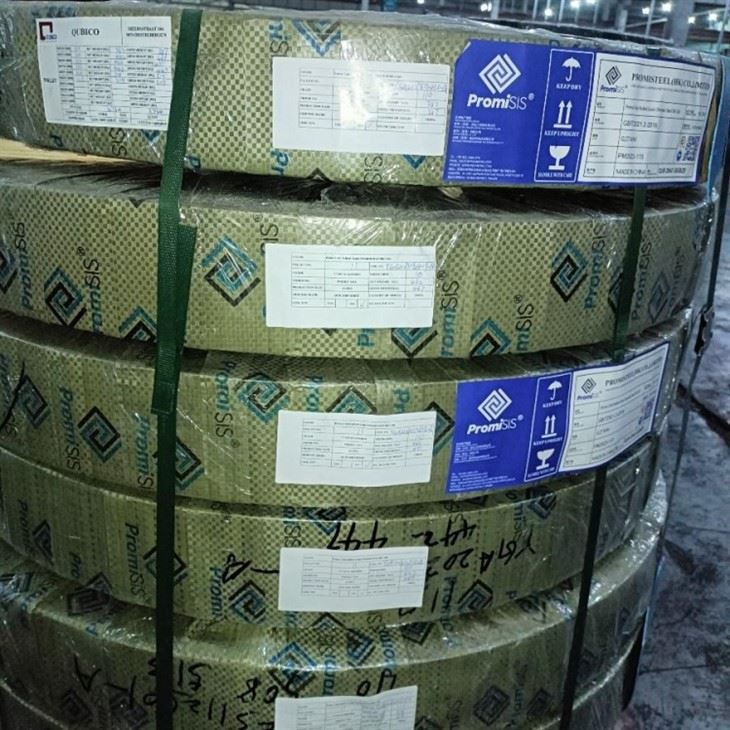
All M6 silicon steel coils are secured on custom-engineered wooden pallets constructed from ISPM 15-certified, kiln-dried hardwood. Pallet dimensions adhere strictly to ISO container standards (1200 × 1000 mm or 1100 × 1100 mm), featuring reinforced stringers and double-decked bases to distribute coil weight evenly. This design prevents deformation under loads up to 10 metric tons per pallet and withstands ISO container stacking pressures exceeding 5 G-forces during vessel motion. Critical contact points incorporate anti-slip rubber inserts to eliminate micro-movement during transit, mitigating edge damage risks to the delicate electrical steel surface.
Moisture protection utilizes a multi-layer barrier system. Coils undergo vacuum desiccation prior to wrapping in 120-micron HDPE moisture-proof film, sealed via automated heat-welding to eliminate permeable seams. An intermediate layer of corrosion-inhibiting VCI paper (Vapor Corrosion Inhibitor grade per ASTM D6098) is applied directly to the steel surface, neutralizing ambient moisture and chloride ions. The outermost layer consists of UV-stabilized polypropylene stretch hooding, tensioned to 250% elongation for puncture resistance. This tripartite system maintains internal relative humidity below 40% for 90+ days, exceeding IEC 60404-10 maritime exposure requirements.
Sea freight safety is validated through dynamic simulation testing. Palletized loads undergo 3-axis vibration profiling (5–50 Hz, 0.75g) and 1.2m drop tests per ASTM D4169 to replicate container handling shocks. Accelerated salt-fog chamber validation (ASTM B117, 5% NaCl, 500 hours) confirms zero substrate corrosion under extreme conditions. Each shipment includes hygrothermal data loggers monitoring temperature (−20°C to +60°C) and humidity (0–100% RH) throughout transit, with reports available upon delivery.
| Packaging Component | Specification | Performance Standard |
|---|---|---|
| Pallet Structure | ISPM 15 hardwood, double-decked | ISO 18613:2016 Class B |
| Moisture Barrier | 120µm HDPE film + VCI paper | ASTM E96 WVTR < 0.5 g/m²/day |
| External Protection | UV-stabilized PP stretch hood | ASTM D882 Tensile strength 35 MPa |
| Desiccant Capacity | 150g silica gel per m³ void space | MIL-D-3464E Grade I |
Our integrated approach eliminates condensation-induced surface oxidation and mechanical coil distortion, directly preserving the magnetic properties critical to M6 silicon steel performance. This methodology has achieved a 99.8% damage-free delivery rate across 12,000+ TEUs shipped since 2018. Partnering with certified freight forwarders specializing in steel logistics, we enforce mandatory container pre-inspection protocols to verify floor integrity and absence of residual moisture. This end-to-end control ensures M6 coils arrive at destination facilities ready for immediate processing, minimizing supply chain disruptions and safeguarding your production continuity. Luoyang Xinzhaohe’s packaging is not merely compliant—it is engineered for zero compromise in global electrical steel delivery.
Sourcing from Luoyang Xinzhaohe
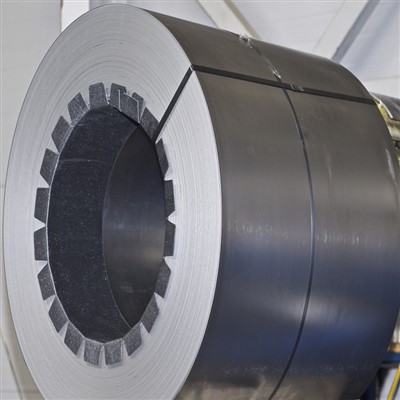
Partner with Luoyang Xinzhaohe Aluminum CO., Ltd for Precision Silicon Steel Solutions
With over two decades of specialized expertise in the production and supply of electrical steel products, Luoyang Xinzhaohe Aluminum CO., Ltd stands as a trusted industrial partner for global manufacturers requiring high-performance silicon steel. Our vertically integrated manufacturing infrastructure, combined with rigorous quality assurance protocols, enables us to deliver M6 grade silicon steel that meets the exacting demands of transformer, motor, and generator applications.
Our production facility is equipped with advanced cold-rolling lines, continuous annealing systems, and precision slitting technology, ensuring tight control over grain orientation, magnetic flux density, and core loss characteristics. The M6 silicon steel we produce conforms to international standards including IEC 60404-8 and GB/T 2521, with typical specifications featuring a nominal silicon content of 3.2%, thickness of 0.50 mm, and guaranteed core loss (P1.5/50) not exceeding 1.50 W/kg. Each coil undergoes full-process metallurgical inspection, from raw material sourcing to final packaging, to ensure consistency in both physical and electromagnetic properties.
We maintain an annual production capacity exceeding 80,000 metric tons, supported by automated warehousing and logistics coordination that enable reliable lead times and scalable delivery volumes. Our coil processing center is capable of providing customized slit widths ranging from 20 mm to 1,050 mm, with edge quality optimized for high-speed core stacking. All material is supplied with full test certification, including chemical composition analysis, mechanical properties, and magnetic performance data.
Quality assurance is embedded at every stage of production. Our in-house laboratory is accredited to ISO/IEC 17025 standards and performs regular testing using Epstein frame and single-sheet testers to validate magnetic performance. Statistical process control (SPC) systems monitor rolling force, tension, and annealing profiles in real time, minimizing variability and ensuring batch-to-batch repeatability critical for high-efficiency electrical equipment manufacturing.
As a manufacturer with deep technical roots in the silicon steel value chain, we prioritize long-term collaboration with our clients. Our engineering team provides technical support for material selection, processing recommendations, and failure mode analysis, ensuring optimal integration of our M6 silicon steel into your production workflow.
For sourcing partners seeking a reliable, technically proficient supplier of electrical steel, Luoyang Xinzhaohe offers the production capability, quality discipline, and technical service foundation to support your operational and innovation goals. We invite you to contact us directly to discuss your specifications and explore how our M6 silicon steel can enhance the performance and efficiency of your electromagnetic components.
Contact us at cathy@transformerstrip.com to initiate technical discussions or request sample materials and test reports.
📉 Factory Direct Savings Calculator
Calculate your potential savings by importing m6 silicon steel directly from China.