


Table of Contents
Market Insight: Silicon Steel Stamping
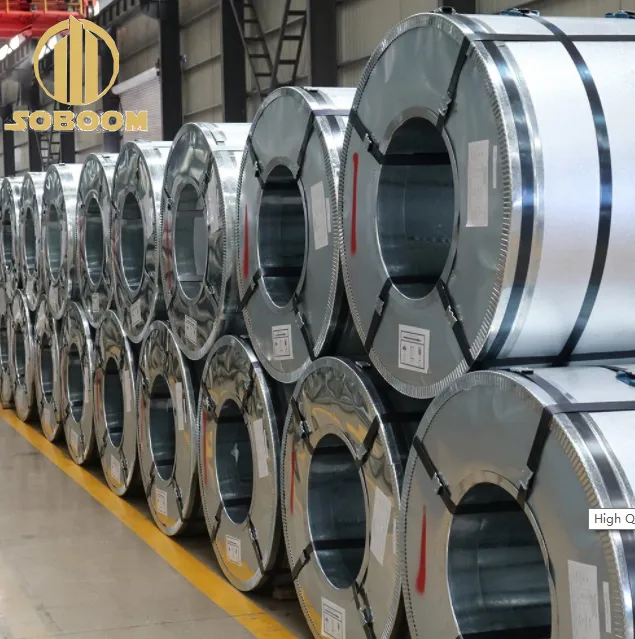
Market Analysis: Silicon Steel Demand in Transformer Manufacturing
Global transformer production drives sustained demand for high-grade silicon steel, with electrical steel consumption exceeding 10 million metric tons annually for power and distribution units. Renewable energy integration and grid modernization initiatives—particularly in Asia-Pacific and Europe—are accelerating this trend. Transformers account for approximately 65% of electrical steel usage, where core efficiency directly impacts operational lifetime costs. Energy regulations like IEC 60076-20 and DOE 2016 standards mandate reduced no-load losses, compelling manufacturers to prioritize grain-oriented silicon steel (GOES) with precise magnetic properties. This regulatory pressure, coupled with rising electricity costs, makes material selection a strategic procurement decision rather than a commodity purchase.
Silicon steel stamping quality is non-negotiable for transformer performance. During lamination stamping, microstructural integrity must be preserved to maintain magnetic domain alignment. Substandard stamping induces mechanical stress, increasing hysteresis and eddy current losses by 15–25% in worst-case scenarios. Even minor burrs at lamination edges create interlaminar shorts, elevating core temperatures and accelerating insulation degradation. Industry data correlates 0.1mm burr height with a 12% rise in no-load losses—translating to 3–5% higher lifetime energy costs per transformer. Coating integrity during stamping is equally critical; damaged C3 or C5 insulative coatings compromise interlaminar resistance, directly violating IEC 60404-3 standards for core loss measurement.
Material consistency across production batches affects yield and scalability. Variable thickness tolerance (±0.025mm) or uneven silicon distribution causes stacking mismatches, increasing air gaps in the magnetic circuit. This elevates magnetizing current by up to 20%, reducing transformer efficiency below Tier 1 regulatory thresholds. For utilities and industrial users, a 0.5% efficiency drop in a 100 MVA transformer incurs over $120,000 in additional annual energy costs at $0.10/kWh. Consequently, top-tier transformer OEMs enforce strict supplier qualification protocols, including third-party magnetic property validation and in-process stamping audits.
Supply chain resilience further elevates quality requirements. Silicon steel’s 8–12 week lead times and energy-intensive production make material rework or project delays financially catastrophic. A single defective lamination batch can halt assembly lines, costing $50,000+ per hour in lost productivity. Luoyang Xinzhaohe Aluminum’s two decades in precision stamping address these risks through proprietary stress-relief annealing and laser-guided blanking systems, ensuring dimensional stability within ±0.01mm. Our process controls maintain core loss values at P1.7/50 ≤ 0.85 W/kg for 0.23mm M4 steel—exceeding IEC 60404-2 minimums by 18%. In transformer manufacturing, silicon steel is not merely a component but the operational backbone; its metallurgical precision dictates energy efficiency, regulatory compliance, and total cost of ownership at grid scale.
Technical Specs: Silicon Steel Stamping
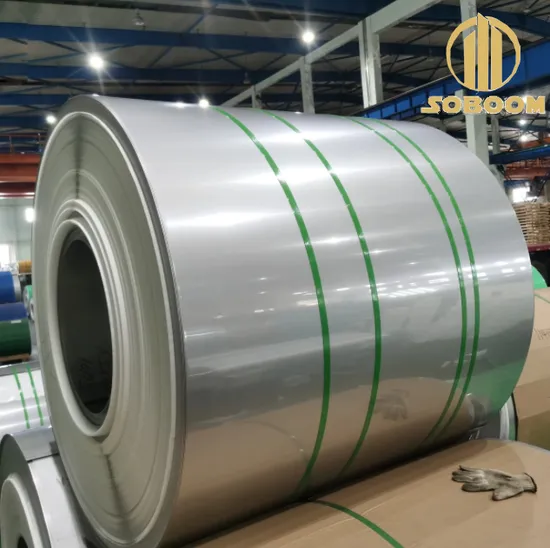
Technical Specifications for Silicon Steel Stamping
Silicon steel, commonly referred to as electrical steel, is a critical material in the fabrication of magnetic cores for transformers, motors, and generators. At Luoyang Xinzhaohe Aluminum Co., Ltd, with over two decades of experience in advanced metal processing, we emphasize precision in material selection and stamping parameters to ensure optimal electromagnetic performance and mechanical integrity. The technical specifications for silicon steel stamping must address core loss, magnetic flux density, and flatness, as these factors directly influence efficiency, thermal behavior, and assembly compatibility in end-use applications.
Core loss, or iron loss, is a fundamental parameter that quantifies the energy dissipated as heat under alternating magnetic fields. It is typically measured in watts per kilogram (W/kg) at a frequency of 50 Hz or 60 Hz and a specified magnetic flux density, commonly 1.5 T or 1.7 T. Lower core loss values indicate higher material efficiency and are essential for energy-saving applications. Grain-oriented silicon steel (GOES) generally exhibits lower core loss compared to non-oriented (NOES), particularly in the rolling direction, due to its optimized crystallographic alignment.
Magnetic flux density, expressed in Tesla (T), reflects the material’s ability to support magnetic flux under excitation. Higher flux density allows for compact core designs and improved power density in electrical machines. For non-oriented silicon steel, typical saturation flux density ranges from 1.8 T to 2.0 T, while grain-oriented grades can achieve up to 2.03 T in the preferred direction. During stamping, mechanical stress can degrade magnetic properties; therefore, controlled blanking processes and minimal plastic deformation are critical to preserving intrinsic flux capacity.
Flatness is a dimensional specification that ensures uniform stacking and reduces air gaps in laminated cores. Poor flatness leads to increased reluctance, localized eddy currents, and higher effective core loss. Industrial flatness tolerance for stamped silicon steel laminations is typically within 0.15 mm over a 300 mm span. Achieving tight flatness control requires precision tooling, stress-relief annealing post-stamping, and careful handling to prevent warpage during processing.
The following table summarizes key technical parameters for silicon steel stamping, based on standard industrial grades and typical application requirements:
| Parameter | Typical Range (NOES) | Typical Range (GOES) | Test Standard | Notes |
|---|---|---|---|---|
| Core Loss (P1.5/50) | 2.0 – 4.0 W/kg | 0.8 – 1.2 W/kg | IEC 60404-2 | Measured at 1.5 T, 50 Hz |
| Core Loss (P1.7/50) | 3.0 – 6.0 W/kg | 1.0 – 1.5 W/kg | IEC 60404-2 | Measured at 1.7 T, 50 Hz |
| Magnetic Flux Density (B50) | 1.6 – 1.8 T | 1.8 – 2.03 T | IEC 60404-4 | At 50 A/m magnetizing force |
| Saturation Flux Density (Bmax) | 1.8 – 2.0 T | 1.9 – 2.03 T | IEC 60404-4 | At high field strength |
| Thickness Tolerance | ±0.02 mm to ±0.05 mm | ±0.02 mm | IEC 60404-1 | Depends on grade and thickness |
| Flatness | ≤ 0.15 mm / 300 mm | ≤ 0.10 mm / 300 mm | Internal QC Protocol | Post-stamping, post-annealing |
These specifications must be validated through certified testing procedures and maintained through strict process control during stamping operations. At Luoyang Xinzhaohe, we integrate material traceability, in-process inspection, and final quality verification to ensure compliance with international standards and customer-specific requirements.
Factory Tour: Manufacturing
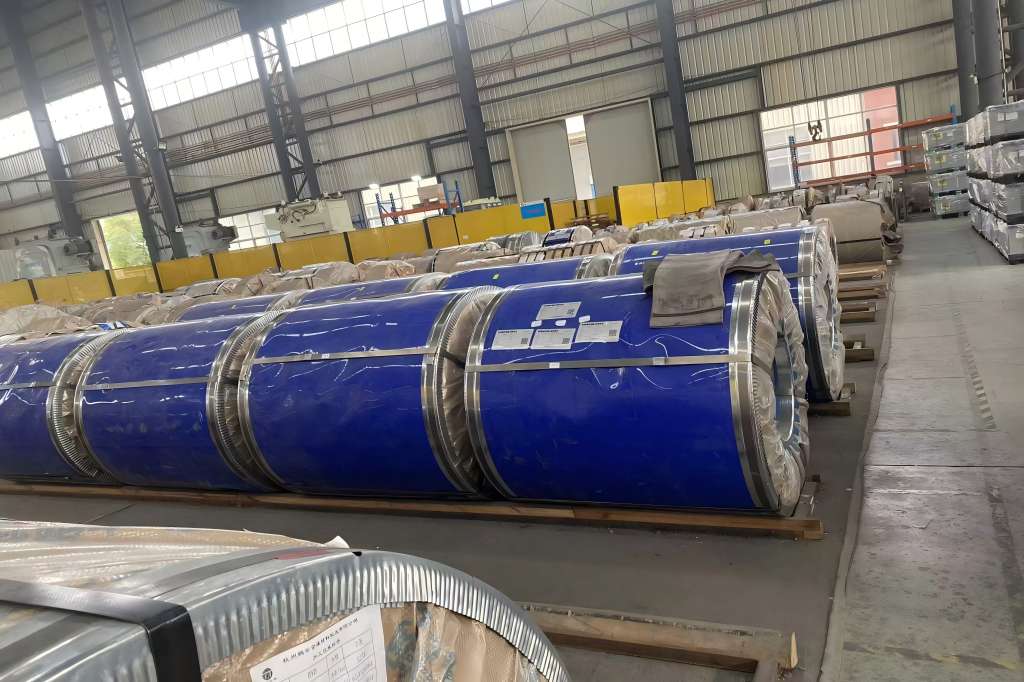
Silicon Steel Stamping Production Process Overview
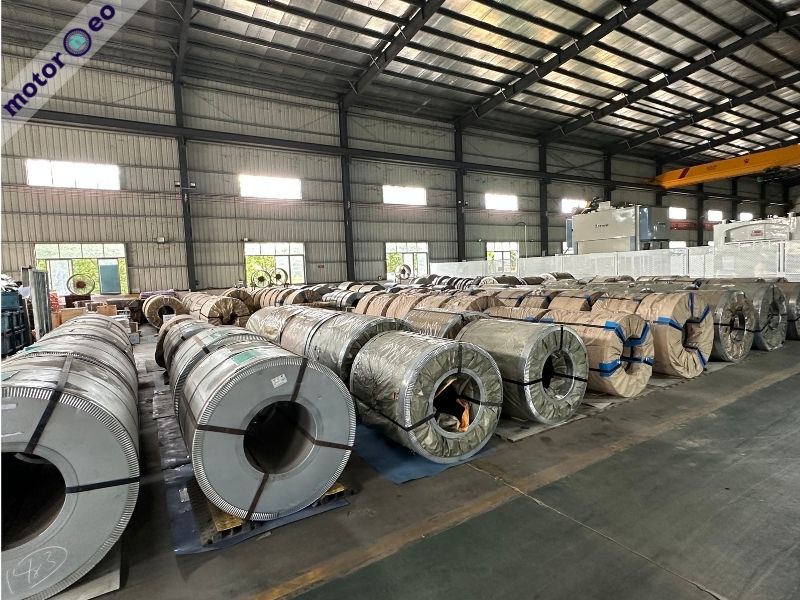
Luoyang Xinzhaohe Aluminum Co., Ltd leverages 20+ years of metallurgical and supply chain expertise to deliver precision silicon steel stampings. Our process ensures optimal magnetic properties and dimensional accuracy for critical applications in transformers, motors, and generators. The manufacturing sequence begins with high-grade non-oriented or grain-oriented electrical steel coils meeting IEC 60404-8/9 or ASTM A664 standards. Rigorous incoming inspection verifies chemical composition, core loss (W/kg), and lamination factor against client specifications.
Slitting initiates the workflow, where master coils are longitudinally cut into narrower strips using precision-guided rotary shear lines. Tension control systems maintain ±0.05% strip flatness while minimizing edge burr formation to ≤5% of material thickness. Each slit coil undergoes edge quality validation via optical profilometry before proceeding. Subsequent annealing occurs in continuous hydrogen-nitrogen atmosphere furnaces at 750–850°C. This critical step relieves residual stresses from prior rolling and slitting, directly enhancing magnetic permeability and reducing core loss. Temperature uniformity is maintained within ±5°C across the furnace zone, with dwell times calibrated to material grade and thickness.
Typical Annealing Parameters
| Parameter | Range | Control Tolerance |
|——————–|———————-|——————-|
| Temperature | 750–850°C | ±5°C |
| Atmosphere H₂ | 15–25% | ±1% |
| Dwell Time | 90–180 seconds | ±5 seconds |
Insulation coating follows annealing, applying a thin inorganic or semi-organic layer (e.g., C5, D6 per EN 10263) to electrically isolate laminations and suppress eddy currents. Coating weight is precisely metered at 0.5–1.2 g/m² per side using roll-coating technology, with thickness controlled to 5–8μm. Adhesion is validated via cross-hatch testing (ASTM D3359), while electrical resistance is measured at ≥50 Ω·cm². Uncured coatings undergo final curing at 450–550°C in dedicated ovens.
Precision stamping employs servo-driven progressive dies with sub-micron tooling alignment. Blank dimensions achieve ±0.02mm tolerances, with burr height held to ≤3% of material thickness. In-process QC includes real-time vision inspection for dimensional conformity and surface defects, supplemented by hourly core loss sampling (Epstein frame testing per IEC 60404-2). Final inspection encompasses lamination stacking factor verification (≥96%), interlaminar resistance mapping, and 100% visual validation for coating integrity. All test data is traceable to batch numbers via our integrated ERP system, ensuring full supply chain transparency.
This disciplined sequence—slitting, stress-relief annealing, insulation coating, and precision cutting—delivers silicon steel components with consistent magnetic performance and mechanical reliability. Luoyang Xinzhaohe’s process controls mitigate common failure modes like magnetic aging and interlaminar short circuits, directly supporting our clients’ efficiency and longevity requirements in electrical machinery.
Packaging & Logistics
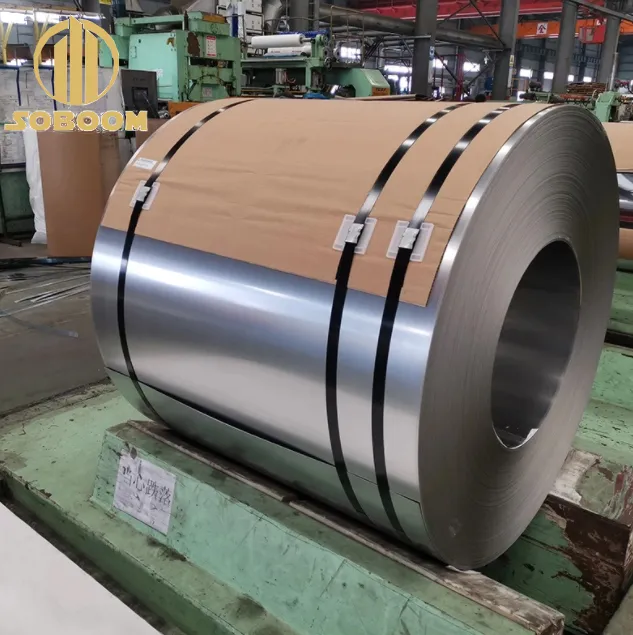
Export Packaging for Silicon Steel Stamping – Luoyang Xinzhaohe Aluminum CO., Ltd
At Luoyang Xinzhaohe Aluminum CO., Ltd, with over two decades of experience in the processing and international distribution of silicon steel (electrical steel), we recognize that proper export packaging is critical to maintaining material integrity during global transit. Silicon steel stampings, due to their electromagnetic performance and surface sensitivity, require a packaging solution that ensures protection against mechanical damage, environmental exposure, and corrosion—particularly during sea freight, which remains the dominant mode of transport for bulk industrial shipments.
Our standard export packaging system is engineered specifically for the rigors of maritime logistics. Silicon steel stampings are systematically arranged and secured on high-strength wooden pallets constructed from kiln-dried, ISPM-15 compliant timber. This certification ensures that all wooden materials have undergone thermal treatment to eliminate pests and pathogens, meeting international phytosanitary standards for cross-border shipments. The structural design of the pallets supports uniform load distribution, minimizing the risk of deformation or edge damage during handling and stacking.
Each loaded pallet is wrapped with multi-layer moisture-proof film, typically comprising a co-extruded laminate with aluminum foil or metallized polyester interlayers. This vapor barrier significantly reduces moisture ingress, a critical factor in preventing surface oxidation and rust formation during prolonged sea voyages where humidity levels can exceed 80%. The film is applied using automated stretch wrapping systems to ensure consistent tension and full encapsulation, including the base and top surfaces of the load.
In addition to moisture protection, we incorporate desiccants within the packaging envelope when required, particularly for destinations with tropical climates or extended transit times. These silica gel packs are strategically placed to absorb residual humidity and maintain a stable microclimate within the sealed pallet.
All packaged units are further reinforced with corner boards and, where necessary, steel strapping to enhance structural stability. This is essential during containerized shipping, where vibrations, container sway, and multi-stage handling can induce load shift. Our packaging protocols comply with ISO 11607 and ISTA 3A standards for transit integrity, ensuring compatibility with global logistics networks.
Labeling is executed with durable, weather-resistant tags affixed to each pallet, containing key shipment data including batch number, material grade, dimensions, net weight, and handling instructions. This facilitates traceability and proper handling at ports and receiving facilities.
Luoyang Xinzhaohe Aluminum CO., Ltd prioritizes the seamless delivery of high-performance silicon steel stampings to OEMs and Tier-1 suppliers worldwide. Our export packaging is not merely a logistical step—it is an integral component of product quality assurance, designed to deliver materials in optimal condition, ready for precision assembly in motors, transformers, and other critical electromagnetic applications.
Sourcing from Luoyang Xinzhaohe
Partner with Luoyang Xinzhaohe: Your Precision Silicon Steel Stamping Expert
Luoyang Xinzhaohe Aluminum Co., Ltd leverages over two decades of specialized metallurgical engineering and industrial manufacturing expertise to deliver superior silicon steel stamping solutions for critical electrical applications. Our vertically integrated facility in Luoyang, China, is purpose-built for the stringent demands of electrical steel processing, ensuring partners receive components that meet exacting international performance standards for motors, transformers, and power electronics. We transcend basic material supply by embedding deep process knowledge from raw coil to finished lamination.
Our core strength lies in advanced metallurgical control throughout the stamping workflow. We maintain rigorous process parameters for decarburization annealing and final stress relief, directly optimizing magnetic properties such as core loss (W15/50, W17/50) and permeability in non-oriented (NO) and grain-oriented (GO) electrical steel grades. Our proprietary surface insulation coating application—applied pre- or post-stamping—ensures minimal interlamination eddy currents and long-term dielectric integrity under thermal cycling. This technical mastery, honed over 20+ years, translates to stamped laminations exhibiting consistent magnetic performance and reduced energy losses in your final assemblies.
Precision stamping capability is engineered into our production floor. We operate a fleet of high-tonnage, servo-driven mechanical presses (ranging from 63T to 600T) equipped with multi-station progressive dies and compound blanking tools. This infrastructure supports complex geometries with tight dimensional tolerances down to ±0.02mm and burr heights consistently controlled below 3% of material thickness. Our technical team collaborates directly with client engineering to optimize blank layouts, minimize scrap rates through nesting algorithms, and validate tooling designs via FEA simulation before production launch. Material handling utilizes automated coil feeding and stacker systems, ensuring process stability for high-volume runs.
Quality assurance is non-negotiable. Every production batch undergoes comprehensive in-line and final inspection per IEC 60404-3, ASTM A976, and client-specific requirements. Key metrics monitored include dimensional conformance, coating weight (mg/m²), adhesion strength, surface roughness (Ra), and magnetic properties via Epstein frame testing. Our ISO 9001-certified quality management system integrates statistical process control (SPC) at critical stages, providing full traceability from coil heat number to finished part.
Production Capabilities Overview
| Parameter | Capability Range | Key Technology |
|——————–|————————————–|————————————|
| Material Thickness | 0.10mm – 0.65mm | Precision leveling lines |
| Tolerances | ±0.02mm (critical dimensions) | Laser micrometers, CMM validation |
| Burr Height | < 3% of material thickness | Progressive die engineering |
| Coating Types | C-5, C-6, organic/inorganic hybrids | Automated dip/spray systems |
| Max. Stamping Speed| 200-800 SPM (depending on complexity)| Servo press technology |
Our supply chain excellence ensures reliable delivery. Strategic partnerships with leading steel mills guarantee priority access to high-purity electrical steel coils (including HiB grades). Dedicated JIT logistics channels, supported by real-time inventory tracking, minimize lead times while maintaining buffer stocks for critical programs. We manage global shipments with FCL/LCL consolidation expertise, adhering strictly to Incoterms 2020.
Partner with Luoyang Xinzhaohe to convert metallurgical precision into competitive advantage. Contact our Technical Sourcing Team today to discuss your silicon steel stamping specifications and receive a detailed capability assessment. Reach Cathy directly at cathy@transformerstrip.com to initiate engineering collaboration and secure production capacity for your next-generation electromagnetic components.
📉 Factory Direct Savings Calculator
Calculate your potential savings by importing silicon steel stamping directly from China.