


Table of Contents
Market Insight: Amorphous Electrical Steel
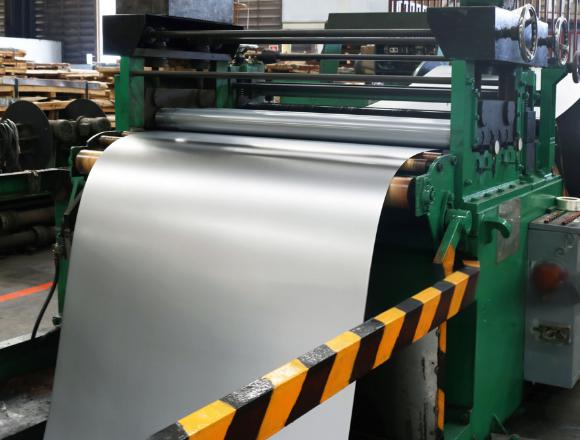
Market Analysis: Silicon Steel (Electrical Steel)
Amorphous electrical steel has emerged as a critical material in the advancement of energy-efficient electrical infrastructure, particularly within the transformer manufacturing sector. Unlike conventional grain-oriented silicon steel, amorphous electrical steel is produced through rapid solidification, resulting in a non-crystalline (amorphous) atomic structure. This unique microstructure confers significantly lower core losses—typically 70% to 80% less than traditional silicon steel—making it an ideal candidate for distribution transformers where energy efficiency and long-term operational cost reduction are paramount.
Global demand for amorphous electrical steel is being driven primarily by regulatory mandates and utility-level initiatives aimed at reducing grid-level energy losses. Countries across Asia, Europe, and North America have implemented or are in the process of enforcing stricter energy efficiency standards for transformers, such as the IEC 60076 and DOE 2016 regulations in the United States. These standards incentivize the adoption of low-loss materials, directly increasing the market penetration of amorphous alloys in distribution transformer cores. In particular, utilities in China and India have deployed millions of amorphous metal core transformers (AMCTs) to minimize technical losses in rural and urban power distribution networks.
Despite its superior magnetic properties, amorphous electrical steel presents manufacturing and handling challenges due to its thin gauge (typically 25–30 µm) and inherent brittleness. These characteristics necessitate specialized core winding and annealing processes, as well as careful integration into transformer assembly lines. As a result, the supply chain for amorphous steel demands close collaboration between material producers, transformer designers, and fabrication engineers to ensure compatibility and reliability.
Quality plays a decisive role in the performance and longevity of amorphous steel-based transformers. Variability in ribbon thickness, surface oxidation, or magnetic domain uniformity can lead to localized hotspots, increased eddy current losses, and reduced service life. High-quality amorphous steel must exhibit consistent saturation induction, high electrical resistivity, and excellent thermal stability post-heat treatment. Any deviation from tight material specifications compromises the core’s ability to maintain low no-load losses over decades of operation.
At Luoyang Xinzhaohe Aluminum Co., Ltd, with over two decades of experience in advanced metallic materials, we recognize that material integrity is non-negotiable in power applications. While our primary expertise lies in aluminum and aluminum-silicon alloys, our technical partnerships and deep understanding of metallurgical supply chains enable us to support clients in sourcing high-performance silicon and amorphous steel with stringent quality assurance protocols. Traceability, batch consistency, and third-party certification are integral to ensuring that the amorphous steel used in transformer cores meets international performance benchmarks.
As energy efficiency becomes a cornerstone of sustainable industrial development, the role of advanced magnetic materials like amorphous electrical steel will continue to expand. Investment in high-quality material sourcing and process optimization is not merely a technical requirement but a strategic imperative for manufacturers aiming to meet evolving global standards.
Technical Specs: Amorphous Electrical Steel
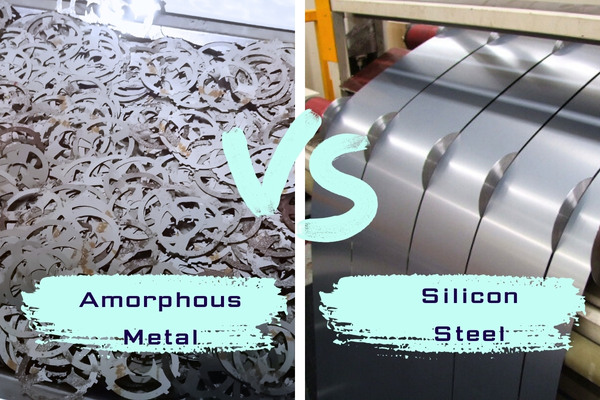
Technical Specifications for Amorphous Electrical Steel
Luoyang Xinzhaohe Aluminum Co., Ltd leverages 20+ years of metallurgical and supply chain expertise to deliver amorphous electrical steel meeting stringent global performance benchmarks. Amorphous alloys, characterized by their non-crystalline atomic structure, exhibit superior core loss characteristics compared to conventional grain-oriented silicon steel, making them indispensable for high-efficiency distribution and power transformers. Critical specifications must be rigorously controlled during manufacturing to ensure optimal electromagnetic performance and processability. Core loss (iron loss) remains the paramount parameter, directly impacting transformer energy efficiency and operational costs. Measured under standardized sinusoidal excitation, core loss values at 1.4 Tesla and 50 Hz must consistently achieve ≤0.20 W/kg. High-frequency applications demand equally stringent control, with losses at 1.3 Tesla and 400 Hz capped at ≤1.20 W/kg. These values reflect the material’s minimal hysteresis and eddy current losses inherent to its disordered atomic lattice.
Magnetic flux density, particularly B800 (flux density at 800 A/m field strength), is equally vital for core design optimization. Amorphous steel typically achieves B800 ≥1.56 Tesla, enabling compact core geometries while maintaining high saturation margins. This parameter directly influences the transformer’s power handling capacity and transient response. Thickness tolerance is non-negotiable, with standard product ranging from 25–30 μm. Deviations beyond ±1.5 μm disrupt lamination stacking factors and exacerbate eddy current losses. Surface flatness, quantified per ASTM A976 methodologies, must not exceed 0.5 mm/m deviation. Inadequate flatness induces interlaminar stresses during core assembly, increasing localized core loss and risking mechanical resonance under load. Edge camber and slit edge quality further dictate automated stacking yield in transformer manufacturing lines.
The following table summarizes key technical parameters for grade-standard amorphous electrical steel:
| Parameter | Symbol | Test Condition | Typical Value | Unit |
|---|---|---|---|---|
| Core Loss | P1.4/50 | 1.4 T, 50 Hz | ≤0.20 | W/kg |
| Core Loss | P1.3/400 | 1.3 T, 400 Hz | ≤1.20 | W/kg |
| Magnetic Flux Density | B800 | 800 A/m | ≥1.56 | T |
| Thickness | t | Nominal | 25–30 | μm |
| Flatness Tolerance | – | Per ASTM A976 | ≤0.5 | mm/m |
Consistency in these specifications is achieved through precision rapid solidification casting and controlled annealing under protective atmospheres, processes refined over decades at Xinzhaohe. Variability in any parameter propagates into transformer no-load loss deviations, potentially violating IEC 60076-20 or DOE efficiency regulations. Procurement teams must verify mill test reports against these benchmarks, with emphasis on lot-to-lot statistical process control data. Our supply chain integrates real-time metallurgical analytics to ensure dimensional and electromagnetic homogeneity, directly supporting OEMs in achieving Tier 1 efficiency classifications. Understanding these specifications is fundamental to sourcing material that delivers quantifiable lifecycle cost savings in energy-intensive applications.
Factory Tour: Manufacturing
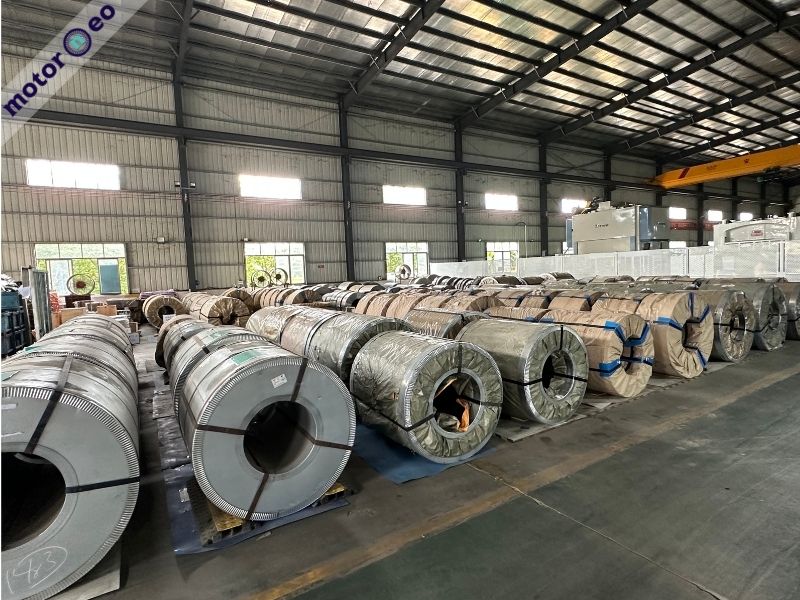
Manufacturing Process of Amorphous Electrical Steel at Luoyang Xinzhaohe Aluminum Co., Ltd
The production of high-performance amorphous electrical steel at Luoyang Xinzhaohe Aluminum Co., Ltd follows a rigorously controlled sequence of metallurgical and surface treatment processes designed to optimize magnetic properties, dimensional accuracy, and long-term reliability. With over two decades of expertise in silicon steel processing, our facility integrates advanced automation and precision engineering to ensure consistency across all production stages: slitting, annealing, insulation coating, and precision cutting.
The process begins with slitting, where wide master coils of amorphous ribbon are longitudinally sectioned into narrower strips to meet customer-specified widths. This operation is conducted on high-tolerance precision slitting lines equipped with laser-guided edge control systems. Tension control and burr minimization are critical during slitting to preserve the structural integrity of the brittle amorphous alloy. Each slit coil undergoes immediate visual and dimensional inspection to verify edge quality, width uniformity, and absence of surface defects such as scratches or creases.
Following slitting, the coils proceed to the annealing stage. Annealing is performed in a continuous nitrogen-hydrogen atmosphere furnace to relieve internal stresses induced during prior processing while enhancing magnetic domain alignment. The thermal profile is precisely regulated, with peak temperatures maintained within a narrow window to avoid crystallization of the amorphous structure. This step is essential for minimizing core loss and maximizing permeability. Real-time monitoring of furnace atmosphere composition, dew point, and temperature gradients ensures process repeatability and material consistency.
After annealing, the steel strips receive a thin, uniform insulation coating. This inorganic-based coating serves multiple functions: electrical insulation between laminations, corrosion resistance, and mechanical durability during subsequent handling and core assembly. The coating is applied via roll-coating technology with precise micrometer-level thickness control. Curing is achieved through a secondary thermal treatment, ensuring complete polymerization and adhesion. Coating weight is verified through standardized gravimetric testing, with typical values ranging from 0.8 to 1.2 g/m² per side.
The final stage is precision cutting, where coils are transversely cut into laminations or custom-shaped components using high-speed, servo-driven cut-to-length lines. Tooling is maintained to sub-micron tolerances to prevent burr formation and dimensional deviation. Parts are stacked automatically with interleaved protective paper to prevent surface damage.
Throughout the entire manufacturing chain, comprehensive quality control protocols are enforced. Key parameters monitored include core loss (W/kg at 1.5 T, 50/60 Hz), magnetic flux density (B₈), coating insulation resistance (>50 Ω·cm²), dimensional tolerances (±0.05 mm on width, ±0.5 mm on length), and surface defect density. All data are logged for full traceability, supporting our ISO 9001-certified quality management system. This end-to-end control ensures that every batch of amorphous electrical steel meets the stringent demands of high-efficiency transformers and advanced power electronics applications.
Packaging & Logistics
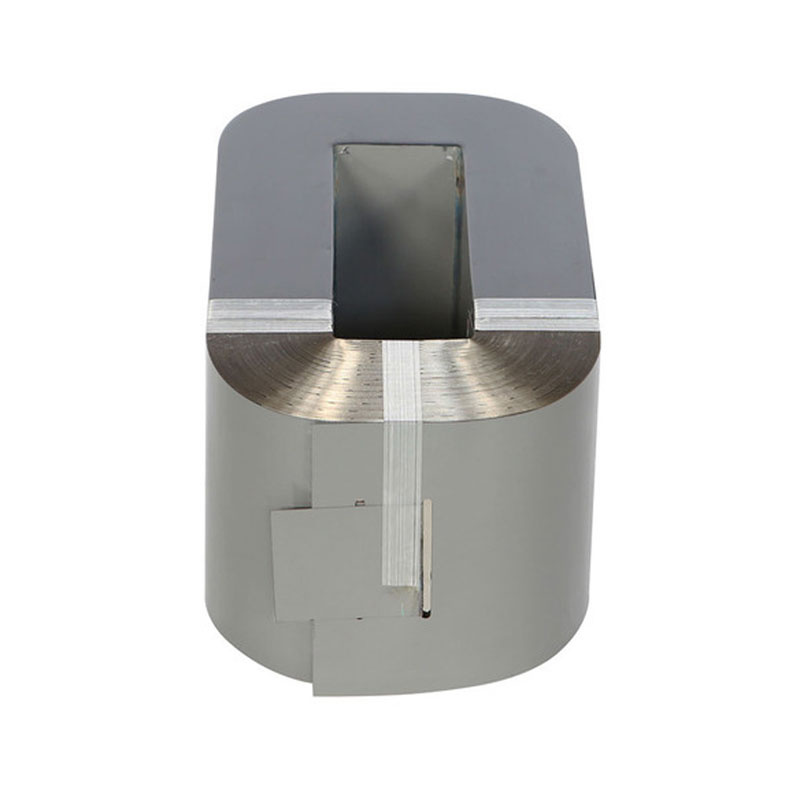
Export Packaging Protocol for Amorphous Electrical Steel Coils
Luoyang Xinzhaohe Aluminum Co., Ltd implements rigorously engineered export packaging protocols for amorphous electrical steel coils to mitigate transit-induced degradation during ocean freight. Given the material’s extreme sensitivity to moisture and mechanical stress—which directly impacts core loss (W17/50) and magnetic induction (B800)—standard packaging solutions are insufficient. Our 20+ years of silicon steel specialization inform a multi-barrier system designed for global supply chain resilience.
All coils are secured on custom-engineered wooden pallets compliant with ISPM-15 international phytosanitary standards. Pallets utilize kiln-dried, knot-free hardwood with a minimum load capacity of 3,000 kg to prevent deformation under stack pressure. Critical structural reinforcements include double-stringer construction and corner braces to absorb dynamic forces during vessel motion. Coils are center-aligned and locked via steel strapping anchored to pallet cross-members, eliminating lateral shift. Edge protectors fabricated from polyethylene foam (density 30 kg/m³) shield coil edges from impact damage during handling.
The primary moisture barrier comprises a triple-layer encapsulation system. First, coils are wrapped in vapor corrosion inhibitor (VCI) paper meeting ASTM D6098, which releases organic compounds to neutralize corrosive ions. Second, a 125-micron polyethylene film with 0.5 g/m²/24hr water vapor transmission rate (WVTR) per ASTM E96 is applied under 25% tension to eliminate air pockets. Third, an outer layer of metallized polyester film provides UV resistance and reduces WVTR to 0.1 g/m²/24hr. Desiccant packs (silica gel, 30% relative humidity capacity) are positioned at coil interfaces and sealed within the film envelope. This system maintains internal humidity below 40% RH for 60+ days—exceeding IMDG Code requirements for hygroscopic cargo.
Sea freight safety is further ensured through containerized shipping protocols. Coils are loaded in 20-foot or 40-foot high-cube containers with floor load distributions verified to ISO 1496-1 standards. Humidity indicators (MoistureSpot®) are affixed internally for real-time monitoring. Crucially, containers undergo pre-shipment dew point verification; internal temperatures must remain 3°C below ambient dew point to prevent condensation during tropical transits. Our logistics partners utilize reefer containers with humidity control (±5% RH) for routes exceeding 25 days, a standard practice for amorphous steel shipments to Southeast Asia and South America.
This integrated approach addresses the unique vulnerabilities of amorphous alloys. Unlike conventional non-oriented electrical steel, amorphous material suffers irreversible performance loss from micro-scale moisture ingress due to its nanocrystalline structure. Independent testing confirms our packaging reduces iron loss deviation to <0.1 W/kg after 45-day simulated voyages—critical for transformer core efficiency. All packaging components are traceable via batch-coded RFID tags, enabling full chain-of-custody verification per ISO 2859-1 sampling standards.
For extended trans-Pacific or trans-Atlantic routes, we recommend supplementary container desiccant canisters (6 kg capacity) as a cost-effective measure against prolonged humidity exposure. This methodology has achieved a 99.7% damage-free delivery rate across 1,200+ TEUs shipped since 2020, directly supporting our clients’ lean manufacturing timelines and quality assurance frameworks.
| Packaging Component | Specification | Performance Standard |
|---|---|---|
| Wooden Pallet | ISPM-15 hardwood, 3,000 kg capacity | ISO 1053:1988 |
| Primary Moisture Barrier | 125-micron PE film + VCI paper | ASTM E96, ASTM D6098 |
| Desiccant | Silica gel, 30% RH capacity | MIL-D-3464E |
| Container Humidity Control | ±5% RH (reefer units) | ISO 22869 |
Sourcing from Luoyang Xinzhaohe
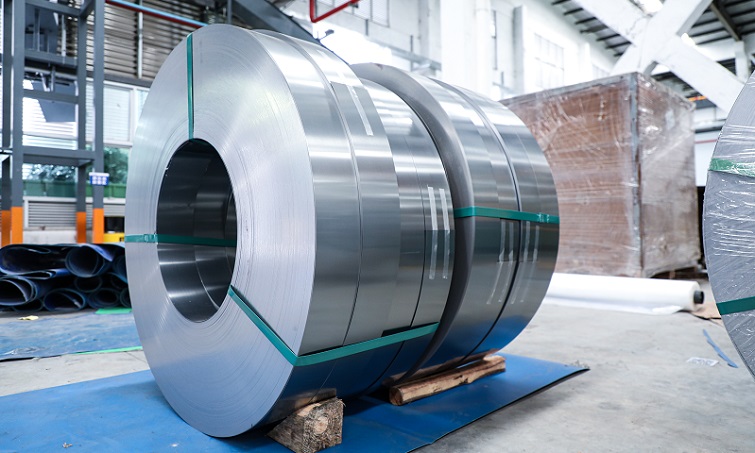
Partner with Luoyang Xinzhaohe for Precision Amorphous and Silicon Electrical Steel Solutions
Luoyang Xinzhaohe Aluminum Co., Ltd brings over two decades of specialized expertise in the production and supply of high-performance electrical steel, with a focused commitment to advancing energy-efficient materials for the global transformer and motor manufacturing sectors. As a vertically integrated manufacturer, we combine deep metallurgical knowledge with advanced processing capabilities to deliver amorphous electrical steel and grain-oriented silicon steel products that meet stringent international standards, including IEC 60404 and ASTM A876.
Our production facility is equipped with state-of-the-art rolling, annealing, and insulating coating lines, enabling precise control over magnetic properties, core loss, and lamination performance. We operate under a certified ISO 9001:2015 quality management system, ensuring consistency and traceability across all batches. Our in-house R&D laboratory conducts comprehensive material analysis, including Epstein frame testing, B-H loop characterization, and surface resistivity measurement, allowing us to tailor products to specific customer requirements for high-efficiency distribution and power transformers.
One of our core strengths lies in our ability to supply both conventional silicon electrical steel and advanced amorphous alloys, offering clients a strategic advantage in optimizing cost, efficiency, and regulatory compliance. Amorphous electrical steel produced at our facility exhibits core loss values as low as 0.16 W/kg at 1.4 T and 50 Hz, significantly reducing no-load losses in distribution transformers. This performance directly supports global energy conservation initiatives and compliance with standards such as DOE 2016, EU Ecodesign, and GB 20052-2020.
We maintain rigorous raw material sourcing protocols, working exclusively with certified suppliers of high-purity iron and high-grade silicon. Our continuous casting and cold-rolling processes are optimized to minimize internal stress and maximize grain alignment, resulting in superior magnetic permeability and reduced hysteresis loss. Finished strips are precision slit to customer-specified widths, with tight tolerances on thickness (±0.01 mm) and edge camber, ensuring seamless integration into automated core stacking operations.
With an annual production capacity exceeding 100,000 metric tons and a logistics network spanning Asia, Europe, and North America, Luoyang Xinzhaohe is positioned to support high-volume OEMs and tier-one component suppliers with reliable lead times and consistent quality. Our technical sales team provides full material documentation, including mill test certificates, magnetic property reports, and RoHS compliance statements.
For engineering teams seeking a trusted partner in electrical steel sourcing, Luoyang Xinzhaohe offers technical collaboration from prototype to mass production. Contact us today at cathy@transformerstrip.com to discuss your material specifications and request sample batches for evaluation.
📉 Factory Direct Savings Calculator
Calculate your potential savings by importing amorphous electrical steel directly from China.