


Table of Contents
Market Insight: Hot Rolled Silicon Steel
Market Analysis: Silicon Steel Demand in Transformer Manufacturing
The global transformer industry represents the dominant consumer segment for silicon steel, specifically electrical steel, with hot rolled variants serving distinct niche applications despite the market shift toward cold rolled grain-oriented (CRGO) material. While CRGO dominates new high-efficiency power transformer production due to superior magnetic properties, hot rolled silicon steel maintains critical relevance in specific industrial contexts. Primary demand drivers include legacy transformer repair and replacement programs, particularly within aging utility infrastructure in emerging economies, and certain specialized distribution transformers where ultra-high efficiency targets are less stringent. Regulatory pressures globally, such as the EU Ecodesign Directive 2019/1781 and evolving DOE standards in the US, continuously push core loss (W15/50) and magnetization curve (B50, Hc) requirements lower. This intensifies scrutiny on material quality even for hot rolled grades used in less demanding applications, as inefficient cores contribute significantly to grid-level energy waste over decades of operation.
Quality in hot rolled silicon steel is non-negotiable for transformer performance and lifecycle cost. The fundamental purpose of the core is to efficiently channel magnetic flux with minimal energy dissipation as heat (core loss). Impurities, inconsistent grain structure, residual stresses from rolling, and deviations in silicon content directly degrade magnetic properties. Even minor variations in key parameters have outsized impacts:
| Critical Parameter | Impact of Poor Quality Control | Consequence for Transformer |
|---|---|---|
| Core Loss (W15/50) | Elevated hysteresis & eddy current losses | Increased operating temperature, reduced efficiency, higher lifetime energy costs, potential derating |
| Magnetic Induction (B800) | Lower flux density capability | Requires larger core cross-section for same power rating, increasing material use and footprint |
| Lamination Thickness Consistency | Variable eddy current losses across core | Localized hot spots, reduced reliability, unpredictable performance |
| Surface Insulation Integrity | Interlaminar short circuits | Dramatically increased eddy current losses, core overheating |
Hot rolled silicon steel, by its manufacturing process, inherently exhibits higher core loss and lower magnetic induction compared to CRGO. Consequently, rigorous quality control becomes even more critical to ensure the material meets the specific, often relaxed but still defined, performance thresholds required for its intended application. Inconsistent thickness, poor surface insulation, or excessive carbon/sulfur content can push a batch of hot rolled steel beyond acceptable limits for even distribution transformer use. Transformer manufacturers require absolute consistency in magnetic properties batch-to-batch to maintain predictable design margins and avoid costly field failures. Substandard material leads to cores operating at higher flux densities than designed, accelerating aging and increasing total cost of ownership through wasted energy. For sourcing professionals, verifying supplier adherence to standardized test methods (IEC 60404 series) and demanding comprehensive mill test certificates detailing actual measured core loss, induction, and thickness is paramount. The initial material cost saving from a low-quality hot rolled silicon steel supplier is invariably eclipsed by the operational inefficiencies and reliability risks imposed on the final transformer asset.
Technical Specs: Hot Rolled Silicon Steel
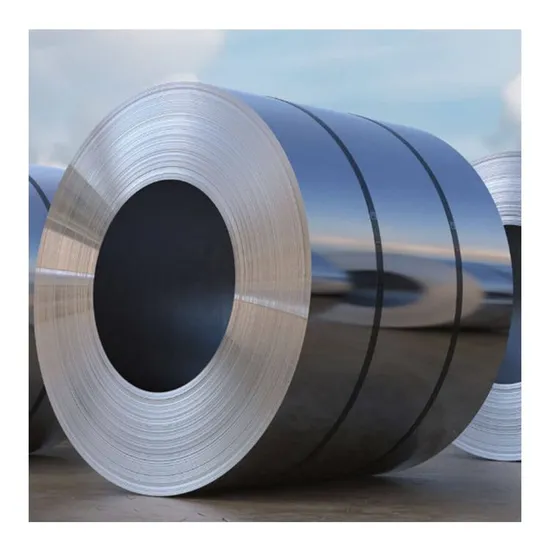
Hot rolled silicon steel, commonly referred to as non-oriented electrical steel, is a critical material in the manufacturing of electromagnetic cores for motors, transformers, and generators. At Luoyang Xinzhaohe Aluminum Co., Ltd, with over two decades of metallurgical and industrial supply chain expertise, we emphasize precise technical specifications to ensure optimal performance in electromagnetic applications. The performance of hot rolled silicon steel is primarily evaluated through core loss (iron loss), magnetic flux density, and dimensional consistency, particularly flatness. These parameters directly influence energy efficiency, thermal behavior, and ease of processing during lamination and stacking.
Core loss, measured in watts per kilogram (W/kg), represents the energy dissipated as heat under alternating magnetic fields. It is typically evaluated at standard frequencies (50 Hz or 60 Hz) and specific magnetic flux densities (1.5 T or 1.7 T). Lower core loss values indicate higher energy efficiency, which is essential for meeting international energy conservation standards. Core loss is influenced by grain structure, silicon content (typically 0.5% to 3.5%), and rolling uniformity. Our hot rolled silicon steel is engineered to minimize hysteresis and eddy current losses through controlled hot rolling and annealing processes.
Magnetic flux density (B), expressed in Tesla (T), indicates the material’s capacity to carry magnetic flux. Higher flux density allows for more compact and powerful electromagnetic devices. For hot rolled grades, typical flux density ranges from 1.60 T to 1.85 T at a magnetizing force of 5000 A/m. This property is closely tied to the steel’s chemical composition and crystallographic texture developed during rolling and heat treatment. Consistent magnetic performance across the coil width and length is ensured through rigorous process control.
Flatness is a critical dimensional parameter affecting downstream processing. Poor flatness leads to lamination misalignment, air gaps in stacked cores, and increased reluctance, which degrades magnetic performance. Flatness is quantified in I-units, where lower values indicate better flatness. Our production process includes tension leveling and precision thickness control to maintain flatness within tight tolerances, ensuring compatibility with high-speed progressive die stamping operations.
The following table outlines the typical technical parameters for hot rolled silicon steel supplied by Luoyang Xinzhaohe Aluminum Co., Ltd:
| Parameter | Symbol | Test Condition | Typical Value Range | Standard Test Method |
|---|---|---|---|---|
| Core Loss (Total Iron Loss) | Pv | 50 Hz, 1.5 T | 6.0 – 8.5 W/kg | IEC 60404-2 / GB/T 3655 |
| Core Loss | Pv | 50 Hz, 1.7 T | 9.0 – 12.0 W/kg | IEC 60404-2 / GB/T 3655 |
| Magnetic Flux Density | B50 | 5000 A/m | 1.60 – 1.85 T | IEC 60404-4 / GB/T 3655 |
| Thickness Tolerance | ±Δt | Nominal 0.50 – 0.65 mm | ±0.03 mm | GB/T 709 |
| Flatness | — | Measured in I-units | ≤ 15 I-units | GB/T 3524 |
| Silicon Content | Si | By mass | 0.5% – 3.2% | GB/T 4336 |
| Surface Insulation Coating | — | Phosphate or oxide-based | Optional, uniform | Custom / Customer Spec |
All material is subject to 100% inline inspection and batch certification. Customization in thickness, width, and coating is available to meet application-specific requirements.
Factory Tour: Manufacturing
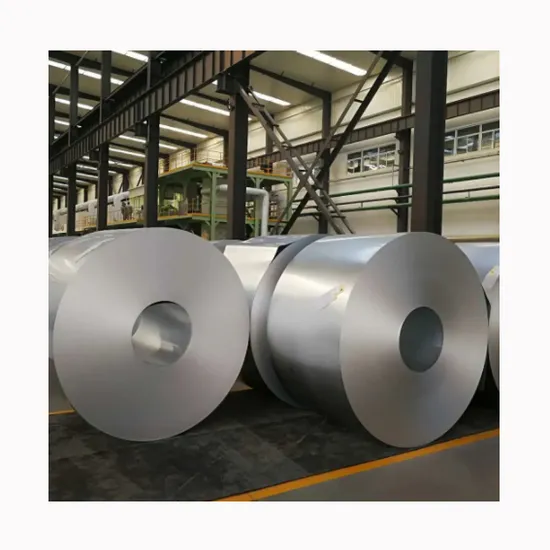
Manufacturing Process for Hot Rolled Silicon Steel at Luoyang Xinzhaohe Aluminum CO., Ltd
Luoyang Xinzhaohe Aluminum CO., Ltd leverages over two decades of specialized metallurgical expertise in electrical steel production to deliver high-performance hot rolled silicon steel. Our rigorous manufacturing sequence transforms raw hot rolled coil into precision-engineered material meeting stringent magnetic and mechanical specifications for demanding electromagnetic applications. The core process flow integrates critical stages with embedded quality control to ensure consistent product integrity.
The process initiates with precision slitting of the master hot rolled coil. Utilizing servo-controlled rotary shear lines, we achieve exact width tolerances down to ±0.1 mm while maintaining critical edge quality. Tension leveling during slitting eliminates coil set and minor flatness defects inherent in hot rolled product. Immediate post-slit verification employs laser micrometers for width consistency and high-resolution edge inspection systems to detect burrs or irregularities exceeding 0.05 mm, rejecting non-conforming sections before progression.
Subsequent continuous annealing is fundamental for developing optimal magnetic properties. Coils undergo a precisely controlled decarburization anneal within a protective nitrogen-hydrogen atmosphere at 800-850°C. This critical phase reduces carbon content below 30 ppm while facilitating primary grain growth. Temperature uniformity across the coil width is maintained within ±5°C, and dwell time is calibrated based on specific grade requirements. In-line oxygen probes and dew point monitors continuously validate atmosphere composition, ensuring complete decarburization and preventing surface oxidation. Core loss validation via statistical sampling per ASTM A343 occurs post-anneal.
Application of the insulation coating follows annealing, utilizing a chromate-free, organic-inorganic hybrid formulation applied via reverse roll coater. Coating weight is meticulously controlled between 0.8-1.5 g/m² per side through real-time gravimetric measurement and viscosity adjustment. The coating cures in a multi-zone infrared oven, with peak metal temperature held at 480±10°C to ensure polymer cross-linking without degrading the steel substrate. Adhesion testing (cross-hatch ASTM D3359) and electrical resistance measurement (targeting 40-100 Ω/sq per ASTM A976) are performed hourly on production samples.
Final precision cutting employs high-speed blanking lines with servo-driven feed systems. Parts are cut to customer-specific geometries with linear tolerances held to ±0.05 mm and angular precision of ±0.1°. Burr height is monitored continuously via optical profilometry, with maximum allowable burr strictly controlled at ≤3% of material thickness. Each production batch undergoes comprehensive final quality certification.
Critical Quality Control Parameters Throughout Production
| Process Stage | Key Parameter | Measurement Standard | Target Tolerance | Verification Frequency |
|---|---|---|---|---|
| Slitting | Edge Burr Height | ISO 6930-1 | ≤ 0.05 mm | Continuous Monitoring |
| Annealing | Core Loss (P1.5/50) | ASTM A343 | Grade Dependent | Per Coil + Statistical |
| Insulation Coating | Coating Weight | ASTM A976 | ±0.1 g/m² | Hourly |
| Precision Cutting | Dimensional Tolerance | ISO 2768-mK | ±0.05 mm | Per Batch + SPC |
This integrated approach, combining advanced process control with multi-stage metrology, ensures our hot rolled silicon steel consistently achieves superior magnetic performance, dimensional accuracy, and coating reliability required for efficient transformer and motor cores. Luoyang Xinzhaohe Aluminum CO., Ltd’s adherence to these disciplined manufacturing protocols underpins our reputation for technical excellence in the electrical steel supply chain.
Packaging & Logistics
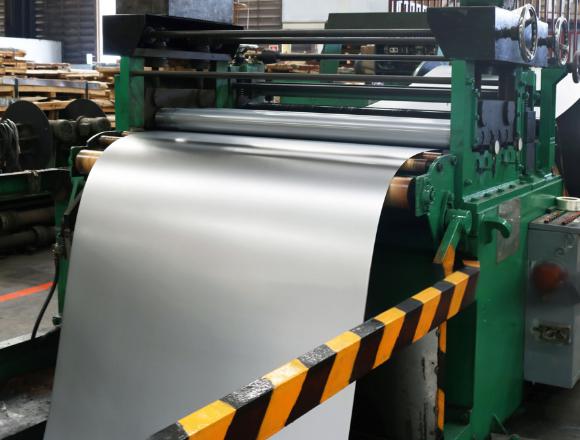
Export Packaging for Hot Rolled Silicon Steel – Ensuring Integrity in International Shipments
At Luoyang Xinzhaohe Aluminum Co., Ltd, with over two decades of specialized experience in the production and global supply of silicon steel, we recognize that proper export packaging is a critical component in maintaining material integrity throughout the logistics chain. For hot rolled silicon steel—commonly used in transformer cores, electric motors, and other electromagnetic applications—preservation of surface quality, dimensional stability, and protection against environmental degradation during sea freight are paramount. Our export packaging methodology is engineered to meet these demands under the most rigorous international shipping conditions.
All hot rolled silicon steel coils and sheets are secured on high-strength wooden pallets constructed from kiln-dried, ISPM-15 compliant hardwood. These pallets are designed to support the substantial unit weight of silicon steel products while ensuring compatibility with global containerization standards. The structural integrity of the pallets prevents deformation during lifting, stacking, and transshipment, minimizing the risk of coil collapse or sheet warping. Reinforced edge protectors fabricated from corrugated steel or laminated fiberboard are applied to coil edges to prevent mechanical damage during handling and ocean transit.
Each load is wrapped in multilayer moisture-proof film, specifically formulated for high-humidity marine environments. This vapor barrier film features a metallized polyethylene composite structure with low water vapor transmission rate (WVTR), effectively shielding the silicon steel from salt-laden air, condensation, and ambient moisture encountered during prolonged sea voyages. The wrapping process includes overlapping seams sealed with heat-shrink technology and industrial-grade adhesive tapes to ensure a hermetic enclosure. Desiccant packs are strategically placed within the sealed package to absorb residual moisture and mitigate the risk of interlayer corrosion.
To further enhance protection, we apply an anti-rust oil coating to the surface of the silicon steel prior to packaging, compatible with downstream processing requirements. This temporary corrosion inhibitor is uniformly applied and meets international standards for electrical steel preservation. All packaged units are labeled with UV-resistant, tamper-evident markers indicating product specifications, batch numbers, handling instructions, and orientation indicators to guide proper storage and unloading.
Our packaging protocol is validated through accelerated climatic testing and real-world logistics monitoring across key trade lanes, including trans-Pacific and Asia-Europe routes. This ensures compliance with ISO 1496 and IEC 60404-13 standards for the transport of electrical steel products. By integrating robust mechanical support with advanced moisture mitigation, Luoyang Xinzhaohe Aluminum Co., Ltd guarantees that hot rolled silicon steel arrives at destination facilities in optimal condition, ready for immediate processing and integration into high-efficiency electrical systems.
Sourcing from Luoyang Xinzhaohe
Partner with Luoyang Xinzhaohe: Technical Excellence in Silicon Steel Production
Despite ‘Aluminum’ in our legal name, Luoyang Xinzhaohe Aluminum Co., Ltd has specialized exclusively in high-performance silicon steel (electrical steel) for over 20 years. Our metallurgical expertise is rooted in precise control of iron-silicon alloy systems, not aluminum production. We operate dedicated production lines engineered for hot rolled non-oriented and grain-oriented silicon steel, serving global transformer and motor manufacturers requiring strict adherence to IEC 60404-8-7 and GB/T 3655 standards. Our facility integrates melt shop refinement through to final annealing, ensuring atomic-level consistency in magnetic properties critical for energy-efficient cores.
Metallurgical precision defines our process. We maintain rigorous control over silicon content (2.9–3.3 wt%), carbon residuals (<30 ppm), and aluminum deoxidation to optimize magnetic induction (B₅₀ ≥ 1.78 T) while minimizing core loss (P₁.₅/₅₀ ≤ 1.20 W/kg). Our hot rolling mills achieve ±0.02 mm thickness tolerance across widths up to 1,250 mm, with strict flatness control (<5 I-Units) to prevent lamination burrs during stamping. Key parameters are continuously monitored via in-line XRF and laser micrometry, as summarized below.
| Critical Parameter | Luoyang Xinzhaohe Control Range | Typical Industry Baseline |
|---|---|---|
| Silicon Content | 2.9–3.3 wt% | 2.8–3.5 wt% |
| Core Loss (P1.5/50) | ≤1.20 W/kg | ≤1.35 W/kg |
| Thickness Tolerance | ±0.02 mm | ±0.05 mm |
| Magnetic Induction (B₅₀) | ≥1.78 T | ≥1.72 T |
Quality assurance is non-negotiable. Our ISO 9001 and IATF 16949-certified laboratory conducts 100% batch validation using Epstein frame testers and single-sheet testers per ASTM A343/A343M. Every coil undergoes rigorous surface inspection for scale defects and edge cracks via automated vision systems, with full traceability from slab to shipment. This eliminates field failures linked to inconsistent permeability or hysteresis losses in high-frequency applications.
Supply chain resilience is engineered into our operations. We maintain 15,000 MT of dedicated coil inventory across common grades (50WW350 to 50WW1300), enabling 30-day lead times for 50 MT+ orders. Our logistics hub in Henan Province leverages direct rail access to Qingdao Port, with FCL consolidation reducing demurrage risks. We accommodate just-in-time scheduling for automotive Tier 1s and offer tailored slitting services to 25–500 mm widths, minimizing your secondary processing costs.
Partnering with us means accessing deep application engineering support. Our metallurgists collaborate on grade selection for specific flux densities (1.5–1.7 T) and frequency ranges (50–400 Hz), providing material datasheets with B-H curves and lamination loss models. We resolve edge burr issues through proprietary tension leveling protocols and offer failure analysis for core assembly defects.
Optimize your transformer core performance with silicon steel engineered for magnetic efficiency and supply chain certainty. Contact Cathy Zhang, Technical Sourcing Manager, to discuss your specifications and receive a grade compatibility assessment. Email cathy@transformerstrip.com with your target core loss values and volume requirements for a tailored production schedule. Luoyang Xinzhaohe delivers certified material where metallurgical science meets on-time execution.
📉 Factory Direct Savings Calculator
Calculate your potential savings by importing hot rolled silicon steel directly from China.