


Table of Contents
Market Insight: Enameled Copper Clad Aluminum Wire
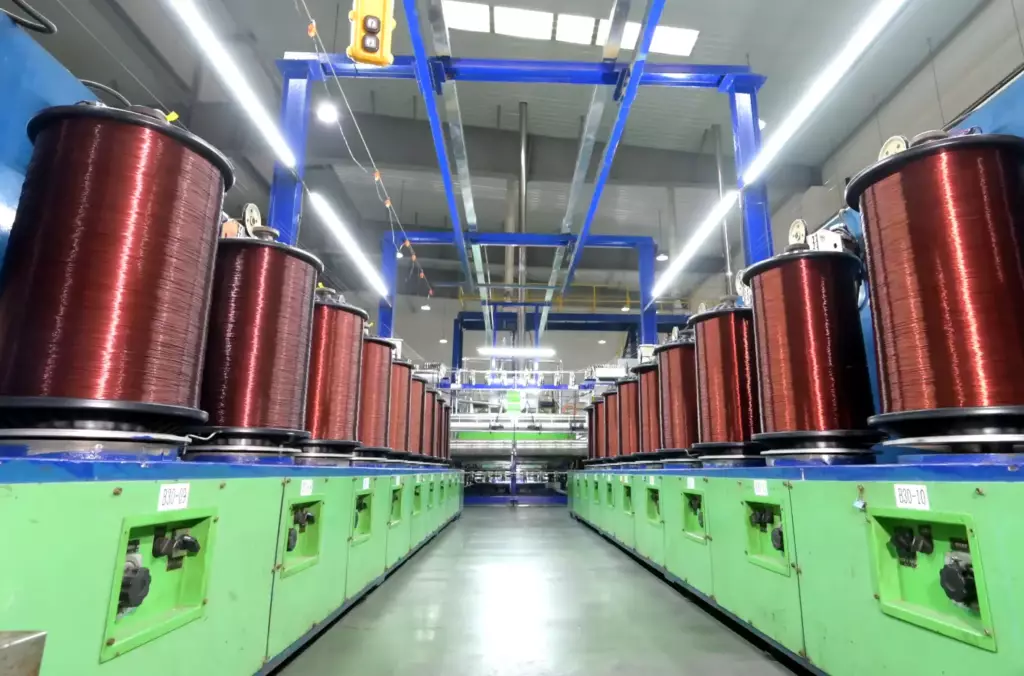
Market Analysis: Winding Wire – Demand for Enamel-Coated Copper Clad Aluminum Wire in Transformers
The global demand for enameled copper clad aluminum (ECCCA) wire in transformer applications has grown steadily over the past decade, driven by the need for lightweight, cost-effective, and energy-efficient electrical components. As a specialized winding wire, ECCCA wire combines the high conductivity of copper with the low density of aluminum, offering a compelling alternative to traditional copper magnet wire in specific transformer designs. This material is particularly favored in distribution transformers, instrument transformers, and small power transformers where weight reduction and material cost optimization are critical without compromising baseline electrical performance.
Industrial adoption of ECCCA wire is most prominent in emerging markets and in applications where transportation, installation, and raw material costs significantly influence total system economics. The aluminum core reduces conductor weight by approximately 50% compared to pure copper, which directly lowers the mechanical load on supporting structures and simplifies handling during manufacturing and field deployment. Additionally, with copper prices historically volatile and trending upward, manufacturers are increasingly evaluating copper-clad alternatives to maintain competitive pricing while preserving acceptable conductivity—typically 63% to 65% IACS (International Annealed Copper Standard) for standard-grade ECCCA wire.
However, the performance of ECCCA wire in transformer applications is highly dependent on material quality and manufacturing precision. Poor interfacial bonding between the copper cladding and aluminum core can lead to delamination under thermal cycling or mechanical stress, resulting in increased resistance, localized heating, and eventual failure. Furthermore, the oxide layer on aluminum is inherently less conductive, making surface preparation and cladding integrity critical during drawing and annealing processes. Inadequate enamel insulation coating—applied via precision winding and curing—can also compromise dielectric strength and thermal class performance, especially in high-humidity or elevated-temperature environments.
At Luoyang Xinzhaohe Aluminum Co., Ltd, with over two decades of experience in aluminum-based conductor technology, we emphasize metallurgical bonding control and enamel adhesion consistency across our ECCCA wire production. Our wire undergoes rigorous quality assurance protocols, including peel strength testing, elongation verification, and high-potential (hi-pot) insulation testing, ensuring compliance with IEC 60317 and GB/T 23312 standards. This commitment to quality mitigates field failure risks and supports long-term reliability in transformer operation.
In summary, while ECCCA wire presents clear economic and logistical advantages in transformer manufacturing, its successful implementation hinges on stringent quality control throughout the production chain. As industry standards evolve and energy efficiency regulations tighten, only high-fidelity ECCCA wire—produced with advanced metallurgical techniques and consistent coating application—will meet the durability and performance expectations of modern power systems.
Technical Specs: Enameled Copper Clad Aluminum Wire
Technical Specifications for Enameled Copper Clad Aluminum Wire (ECCAW)
Luoyang Xinzhaohe Aluminum Co., Ltd leverages over two decades of metallurgical and wire manufacturing expertise to produce enameled copper clad aluminum wire (ECCAW) meeting stringent global winding wire demands. ECCAW combines the conductivity and solderability of a copper surface layer with the lightweight and cost efficiency of an aluminum core, encapsulated by a thermosetting polymer enamel insulation. Precise control over critical parameters ensures reliability in demanding electrical applications such as transformers, motors, and inductors. Key technical specifications are rigorously defined and tested per international standards, with particular emphasis on dielectric integrity, mechanical formability, and thermal endurance.
The insulation system’s dielectric strength is paramount for operational safety and longevity. Breakdown voltage, measured per IEC 60317-0-5 using a specified voltage ramp rate on wound samples, directly correlates with insulation thickness and homogeneity. Xinzhaohe ECCAW consistently achieves breakdown voltages significantly exceeding minimum industry thresholds across all thermal classes. Elongation, determined per ASTM B356 on a 25mm gauge length, is critical for assessing the wire’s ability to withstand the mechanical stresses of high-speed winding without conductor fracture or insulation damage. Our proprietary drawing and annealing processes ensure optimal ductility in the copper-clad aluminum core. Thermal classification, defined by IEC 60317 and UL 1446, specifies the maximum continuous operating temperature the insulation system can endure while maintaining electrical and mechanical properties for a 20,000-hour service life. Xinzhaohe offers ECCAW across the full spectrum of thermal classes required for modern compact and efficient electromagnetic devices.
The following table details the core technical parameters for Luoyang Xinzhaohe Aluminum Co., Ltd’s standard ECCAW product line:
| Parameter | Test Standard | Typical Value Range | Technical Significance |
|---|---|---|---|
| Conductor Diameter | IEC 60122 | 0.05 mm – 3.00 mm | Defines current carrying capacity and winding geometry compatibility. |
| Conductor Resistivity | ASTM B356 | ≤ 0.0215 Ω·mm²/m (20°C) | Measures core electrical efficiency; lower values indicate superior conductivity. |
| Insulation Breakdown Voltage | IEC 60317-0-5 | 130°C Class: ≥ 2500 V 180°C Class: ≥ 3000 V 200°C Class: ≥ 3500 V 220°C Class: ≥ 4000 V |
Critical indicator of dielectric integrity under electrical stress; ensures safety margin. |
| Elongation | ASTM B356 | 15% – 35% | Essential for winding processability; higher values reduce breakage during coiling. |
| Thermal Class | IEC 60317 / UL 1446 | 130°C (Class B) 155°C (Class F) 180°C (Class H) 200°C (Class 200) 220°C (Class C) |
Defines maximum continuous operating temperature for insulation system longevity. |
| Adhesion | IEC 60317-0-3 | Pass (No flaking/delamination) | Ensures insulation remains bonded during thermal cycling and mechanical handling. |
| Flexibility (Pin Test) | IEC 60317-0-3 | Pass (No cracks visible at 10x magnification) | Verifies insulation resilience to bending stresses encountered during winding. |
All Xinzhaohe ECCAW products undergo 100%在线 testing for diameter consistency and insulation continuity, supplemented by rigorous batch-level validation of thermal index, thermal shock resistance, and chemical resistance per relevant IEC and ASTM protocols. Our vertically integrated production process, controlling aluminum core purity, copper cladding metallurgical bonding, and enamel polymerization, guarantees the repeatability of these specifications essential for high-yield manufacturing in our customers’ operations. This commitment to precision engineering underpins the reliability of electromagnetic components utilizing Xinzhaohe ECCAW globally.
Factory Tour: Manufacturing
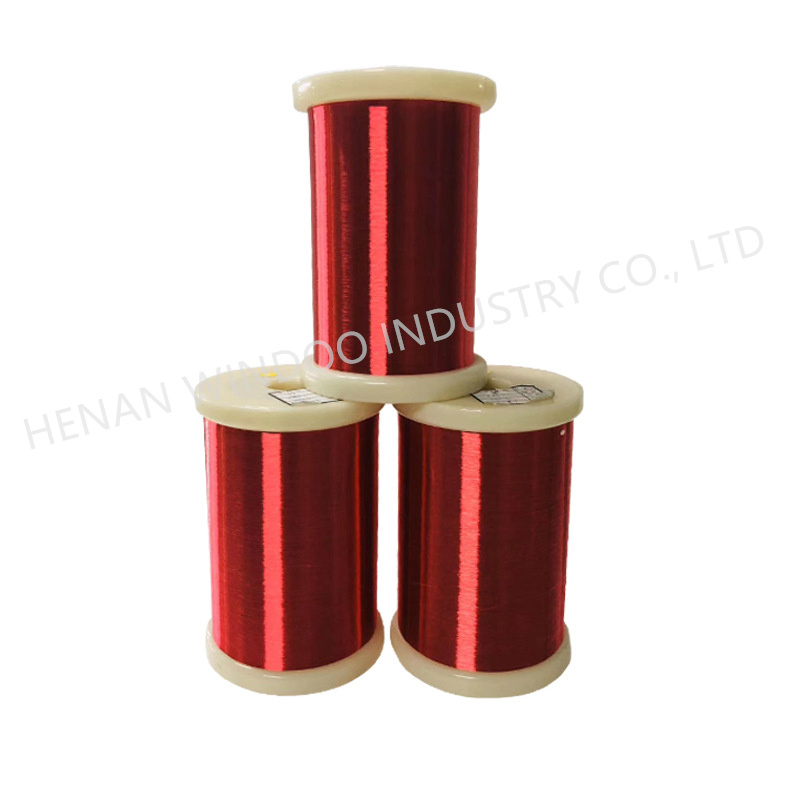
Manufacturing Process of Enamelled Copper Clad Aluminum Wire at Luoyang Xinzhaohe Aluminum Co., Ltd
The production of enameled copper clad aluminum (ECCA) wire at Luoyang Xinzhaohe Aluminum Co., Ltd follows a tightly controlled, multi-stage manufacturing process designed to ensure high electrical performance, mechanical integrity, and long-term reliability in demanding winding applications. With over two decades of metallurgical and process engineering expertise, our facility integrates precision equipment and rigorous quality control to deliver consistent product performance across all batches.
The process begins with rod drawing, where high-purity copper-clad aluminum rods are reduced in diameter through a series of precision dies. These rods consist of an aluminum core (typically 85–90% conductivity) metallurgically bonded with a concentric copper cladding (≥99.99% Cu), providing an optimal balance of conductivity, weight reduction, and cost efficiency. The drawing operation is performed under controlled tension and lubrication conditions to maintain uniform cross-sectional geometry and surface finish, critical for subsequent coating adhesion.
Following drawing, the wire undergoes a continuous annealing process in a controlled atmosphere furnace. This step restores ductility lost during cold working and ensures uniform metallurgical structure across the entire length. The annealing temperature and residence time are precisely calibrated based on wire gauge and alloy composition to prevent oxidation and intermetallic phase formation at the Cu/Al interface. Temperature profiling is monitored in real time using thermocouples and infrared sensors to maintain ±5°C accuracy.
The annealed wire then proceeds to the enameling stage, where one or more layers of polymer insulation are applied via precision die coating. Common insulation systems include polyurethane (PU), polyester (PE), polyamide-imide (PAI), or hybrid formulations, selected based on end-use requirements such as thermal class (130°C to 220°C), solderability, and chemical resistance. The coated wire passes through a multi-zone curing oven, where solvent removal and cross-linking occur under precisely regulated temperature gradients. Film build is continuously monitored using laser micrometers to ensure dimensional consistency within ±2 µm.
Inline testing is integrated throughout the production line to verify electrical, mechanical, and insulation properties. Key parameters include breakdown voltage (tested at 3 kV–10 kV depending on gauge), elongation (typically 15–30%), springiness, thermal shock resistance, and scrape abrasion endurance. Each spool is subjected to 100% continuity and high-potential (hi-pot) testing to detect pinholes or insulation defects. Final quality verification includes batch sampling for adhesion testing, thermal aging, and interfacial resistance measurement between copper and aluminum layers.
All process data is logged and traceable to ensure compliance with IEC 60317, GB/T 23312, and customer-specific standards. This systematic approach to manufacturing enables Luoyang Xinzhaohe to deliver ECCA wire with superior performance in motors, transformers, and electronic components where weight savings and conductivity are critical.
Packaging & Logistics
Export Packaging Specifications for Enameled Copper Clad Aluminum Wire
Luoyang Xinzhaohe Aluminum Co., Ltd leverages 20+ years of metallurgical and supply chain expertise to engineer export packaging systems that mitigate the unique vulnerabilities of enameled copper clad aluminum wire (ECCAW) during global ocean transit. ECCAW’s aluminum core and thin enamel insulation are critically susceptible to moisture-induced corrosion and mechanical abrasion, necessitating rigorously validated packaging protocols for sea freight integrity.
All ECCAW coils are secured on ISPM-15 certified wooden pallets constructed from kiln-dried, debarked hardwood. Pallet dimensions strictly adhere to ISO standard 1200 mm × 1000 mm, with a minimum load capacity of 1,500 kg to accommodate coil weights up to 500 kg per layer. Each pallet undergoes moisture content verification (≤ 22% per ISPM-15) and features chamfered edges to prevent film punctures during strapping. Coils are vertically stacked with interlayer cardboard spacers to distribute weight evenly and eliminate lateral movement. Edge protectors fabricated from 3 mm corrugated fiberboard shield coil rims from forklift impact during handling.
The primary moisture barrier comprises a triple-layer composite film system:
Outer layer: 120 μm UV-stabilized polyethylene for abrasion resistance
Core layer: 9 μm aluminum foil laminate (MVTR ≤ 0.1 g/m²/day at 38°C, 90% RH)
Inner layer: 50 μm static-dissipative polyethylene to prevent enamel damage
This film is hermetically sealed using industrial heat-welding equipment at 180°C, achieving seam integrity validated through vacuum decay testing (≤ 0.5% pressure loss over 24 hours). Desiccant placement follows ASTM D6868 standards: 500 g of silica gel per cubic meter of void space, positioned within non-woven pouches at coil core and periphery. Relative humidity within the sealed enclosure is maintained below 30% RH for 90 days under simulated tropical conditions (40°C, 85% RH).
Sea freight safety is further ensured through containerized shipment protocols. Palletized loads are arranged with 100 mm clearance from container walls to facilitate air circulation, reducing condensation risks during temperature fluctuations. We mandate container pre-inspection for floor integrity and residual moisture, with mandatory use of hygroscopic container desiccants (minimum 1.2 kg per 20ft container). All shipments include temperature and humidity data loggers to monitor conditions against the critical threshold of 65% RH, where aluminum corrosion kinetics accelerate exponentially.
Our packaging validation process includes accelerated salt spray testing (ASTM B117) and real-world voyage simulations, confirming zero enamel delamination or conductivity degradation after 45-day transoceanic exposure. This systematic approach eliminates moisture ingress pathways and mechanical stress points, ensuring ECCAW arrives with maintained electrical properties and surface integrity. Partnering with Xinzhaohe guarantees that packaging is not merely a container but an engineered extension of the wire’s performance specification.
Packaging Performance Validation Summary
| Parameter | Test Standard | Requirement | Xinzhaohe Result |
|—————————-|——————|—————————–|————————|
| Moisture Vapor Transmission | ASTM E96 | ≤ 0.5 g/m²/day | 0.08 g/m²/day |
| Desiccant Capacity | ASTM D6868 | 90 days @ 40°C/85% RH | 112 days |
| Salt Spray Resistance | ASTM B117 | Zero corrosion at 48 hrs | Zero corrosion at 72 hrs |
| Drop Test (Height) | ISTA 1A | 800 mm | Passed at 1,200 mm |
Sourcing from Luoyang Xinzhaohe
Partner with Luoyang Xinzhaohe Aluminum Co., Ltd for Premium Enamel-Coated Copper Clad Aluminum Wire
With over two decades of specialized expertise in the production of advanced winding materials, Luoyang Xinzhaohe Aluminum Co., Ltd stands as a trusted leader in the development and manufacturing of enameled copper clad aluminum (ECCA) wire. Our facility integrates precision engineering, stringent quality control, and deep metallurgical knowledge to deliver wire products that meet the exacting demands of modern electrical and electronic applications. As a vertically integrated manufacturer, we maintain full control over the production chain—from aluminum rod processing and cladding to drawing, annealing, and enamel coating—ensuring consistency, traceability, and performance.
Our factory is equipped with state-of-the-art wire drawing lines and high-speed enamel coating systems capable of applying multiple insulation layers with precise thickness control. This enables us to produce ECCA wire in a broad range of diameters, from 0.08 mm to 3.00 mm, with customizable insulation types including polyurethane (PU), polyester (PE), and polyamide-imide (PAI). Each batch undergoes rigorous electrical, mechanical, and thermal testing in our on-site laboratory, including dielectric strength verification, elongation analysis, and thermal aging assessments per IEC 60317 and GB/T 23312 standards. Our quality management system is ISO 9001 certified, reflecting our commitment to continuous improvement and product reliability.
A key differentiator of our manufacturing capability lies in the proprietary cladding process used to bond high-purity aluminum (≥99.7%) with oxygen-free copper (≥99.99%). This metallurgical bond ensures excellent interfacial integrity, minimizing resistance at the core and enhancing overall conductivity. The resulting ECCA wire achieves up to 60% weight reduction compared to traditional copper magnet wire, while maintaining superior conductivity-to-weight ratios and thermal stability—making it ideal for applications in transformers, motors, inductors, and high-efficiency power supplies.
Our production capacity exceeds 5,000 tons annually, supported by automated warehousing and a dedicated logistics team that ensures on-time delivery to global markets. We serve tier-1 suppliers in the automotive, renewable energy, and home appliance sectors, where material performance and supply chain stability are critical. All technical specifications and test reports are available upon request, and we offer custom spooling, packaging, and labeling to meet OEM requirements.
For sourcing managers and design engineers seeking a reliable, technically proficient partner in ECCA wire production, Luoyang Xinzhaohe offers unmatched process control, material science expertise, and scalable manufacturing.
Contact us today to discuss your technical requirements and receive sample reels for evaluation.
Cathy Zhang
International Sales Manager
Luoyang Xinzhaohe Aluminum Co., Ltd
Email: cathy@transformerstrip.com
📉 Factory Direct Savings Calculator
Calculate your potential savings by importing enameled copper clad aluminum wire directly from China.