

Table of Contents
Market Insight: Non Oriented Electrical Steel
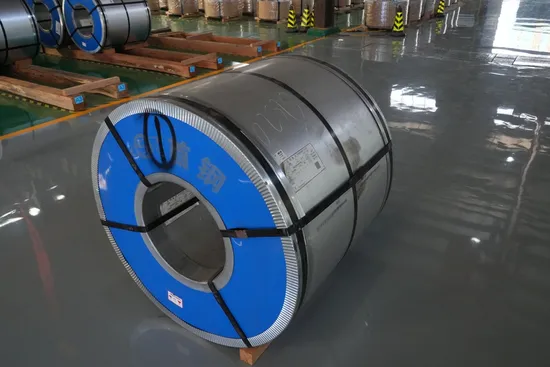
Market Analysis: Non-Oriented Electrical Steel Demand and Quality Imperatives
Global industrial demand for non-oriented electrical steel (NOES) continues robust expansion, driven primarily by electrification trends and regulatory mandates for energy efficiency. While grain-oriented electrical steel (GOES) dominates large power transformers, NOES is indispensable in rotating electrical machinery—specifically motors and generators within industrial automation, HVAC systems, electric vehicles (EVs), and renewable energy infrastructure. The International Energy Agency projects a 30% increase in global electric motor electricity consumption by 2030, directly correlating to NOES demand growth. Crucially, transformer applications requiring NOES remain limited to small distribution transformers and specialized auxiliary units, where cost sensitivity outweighs peak efficiency needs. The primary growth vector for NOES lies in EV traction motors and industrial servo systems, where high-frequency operation demands superior magnetic properties at 400–1000 Hz.
Quality differentiation in NOES is non-negotiable for operational viability and lifecycle economics. Core loss (W/kg) at standard induction levels (1.0–1.5 T) and frequencies (50/60 Hz to 400 Hz) directly dictates system efficiency. Inferior steel with inconsistent grain structure or impurity segregation elevates hysteresis and eddy current losses, increasing operational energy costs by 8–15% over a motor’s lifespan. For a 100 kW industrial motor operating 6,000 hours annually, a 0.5 W/kg core loss variance translates to ~3,000 kWh excess consumption—equating to $360–$600 in wasted energy costs yearly at industrial rates. Magnetic flux density (B50/B800) must also meet stringent tolerances; deviations >0.05 T reduce power density, forcing larger, heavier motor designs that compromise space-constrained applications like EVs.
Material consistency is equally critical. Variability in silicon content (typically 0.5–3.5 wt.%) or lamination thickness tolerance (>±0.02 mm) disrupts stack factor and interlaminar insulation integrity, accelerating thermal aging. Luoyang Xinzhaohe Aluminum’s two decades of metallurgical refinement focus on tight control of these parameters through vacuum degassing and precision cold rolling. Our NOES consistently achieves core losses of ≤2.20 W/kg at 1.5 T/50 Hz (grade 50W470 equivalent) with B50 ≥1.68 T, validated per IEC 60404-2 and GB/T 2521 standards. This precision prevents premature magnetic saturation in high-duty-cycle applications, extending equipment service life by 20–30% versus substandard alternatives.
Strategic sourcing demands rigorous quality verification. Buyers must prioritize suppliers with certified in-line process control for decarburization annealing and laser-scribed domain refinement—proven methods to suppress anomalous eddy currents. Third-party test reports under actual operating frequencies (not just 50 Hz) are essential, as harmonic distortion in inverter-driven systems exacerbates losses in low-grade steel. The total cost of ownership analysis must factor in energy waste and downtime risks, where premium NOES delivers ROI within 18–24 months despite marginally higher upfront costs. In an era of IE4/IE5 efficiency mandates, material quality is not a cost center but a strategic enabler of compliance and competitive advantage.
Technical Specs: Non Oriented Electrical Steel
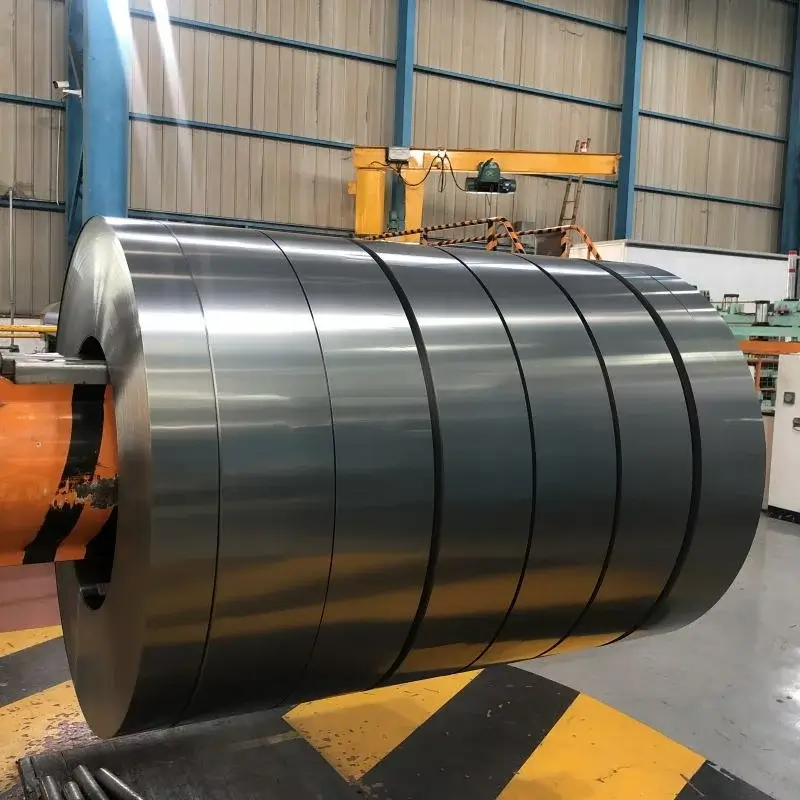
Technical Specifications for Non Oriented Electrical Steel
Non oriented electrical steel (NOES) is a critical ferromagnetic material widely used in the cores of motors, generators, transformers, and other electromagnetic devices where efficient energy conversion and minimal power loss are paramount. As a silicon-iron alloy typically containing 1.0% to 3.5% silicon, non oriented electrical steel exhibits balanced magnetic properties in all directions, making it ideal for rotating machinery and applications involving complex or rotating magnetic fields. At Luoyang Xinzhaohe Aluminum Co., Ltd, with over two decades of experience in advanced metallurgical materials, we emphasize precise control over chemical composition, grain structure, and mechanical processing to ensure optimal performance in our NOES products.
The primary performance indicators for non oriented electrical steel are core loss (also known as iron loss), magnetic flux density, and flatness. Core loss, measured in watts per kilogram (W/kg), represents the energy dissipated as heat under alternating magnetic fields. It is typically evaluated under standardized conditions of magnetic polarization (e.g., 1.0 T or 1.5 T) and frequency (50 Hz or 60 Hz). Lower core loss values directly correlate with higher energy efficiency, which is essential for meeting global efficiency standards in electric motors and appliances. Core loss is influenced by silicon content, grain size, thickness, and internal stress levels. Thinner gauges (e.g., 0.30 mm to 0.50 mm) generally exhibit reduced eddy current losses, thereby lowering total core loss.
Magnetic flux density (B), expressed in Tesla (T), indicates the material’s ability to carry magnetic flux. Higher B values allow for more compact and powerful electromagnetic devices. The typical saturation flux density for non oriented electrical steel ranges between 1.9 T and 2.1 T, with common measurement points at B50 (flux density at 5000 A/m field strength). High flux density is achieved through optimized annealing processes and controlled impurity levels, particularly sulfur and carbon.
Flatness is a critical dimensional quality parameter, especially for high-speed stamping and lamination stacking. Poor flatness can lead to misalignment, increased air gaps, and localized flux concentration, all of which degrade magnetic performance and increase losses. Flatness is commonly evaluated in terms of wave height and wave length over a specified measurement length (e.g., mm per 1000 mm). Tight flatness tolerances are maintained through precision rolling and stress-relief annealing.
The following table summarizes typical technical parameters for non oriented electrical steel grades supplied by Luoyang Xinzhaohe Aluminum Co., Ltd:
| Parameter | Symbol | Test Condition | Typical Range (Grade Example: 50W470) |
|---|---|---|---|
| Thickness | t | mm | 0.30 – 0.50 |
| Core Loss (Total) | Pv | 1.5 T, 50 Hz | ≤ 4.70 W/kg |
| Core Loss (Total) | Pv | 1.0 T, 400 Hz | ≤ 30.0 W/kg |
| Magnetic Flux Density | B50 | 5000 A/m | ≥ 1.68 T |
| Specific Total Loss (High Freq) | Pv | 1.0 T, 400 Hz | ≤ 30.0 W/kg |
| Flatness | — | Wave height / 1000 mm | ≤ 3 mm |
| Insulation Coating Weight | — | mg/m² (single side) | 0.3 – 0.8 |
These specifications are achieved through rigorous process control, including hot rolling, cold rolling, decarburization annealing, and final stress-relief coating. Consistency across coils and batches is ensured through in-line quality monitoring and final product testing per IEC 60404-4 and GB/T 13789 standards.
Factory Tour: Manufacturing
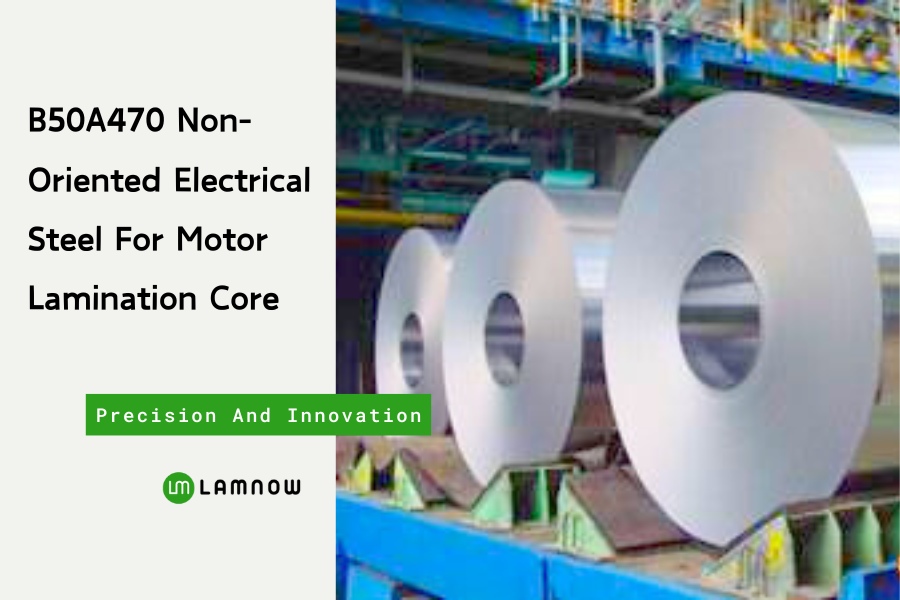
Manufacturing Process for Non Oriented Electrical Steel
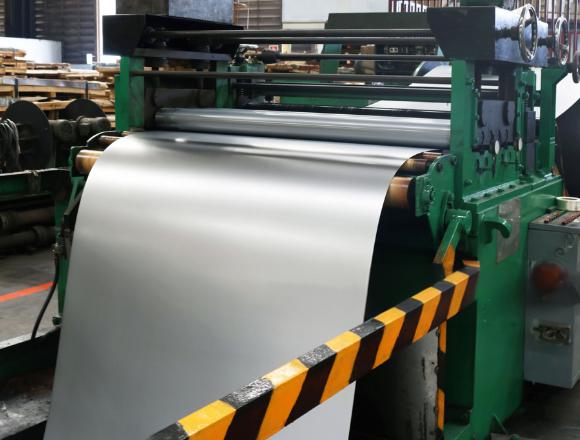
Luoyang Xinzhaohe Aluminum CO., Ltd leverages over two decades of specialized metallurgical expertise to produce high-performance non-oriented electrical steel (NOES) through a rigorously controlled sequence. This process ensures optimal magnetic properties, dimensional accuracy, and surface integrity critical for motor and generator core applications. Production commences with precision slitting of master coils. High-tension slitting lines equipped with laser-guided edge control systems divide wide coils into customer-specified widths. Critical parameters include maintaining edge straightness within ±0.15mm per meter and controlling burr height to less than 0.02mm. In-process quality control employs automated edge inspection systems and periodic profilometer measurements to verify dimensional compliance before annealing.
Subsequent annealing is fundamental for magnetic property development and stress relief. Coils undergo continuous annealing in controlled atmosphere furnaces operating between 750°C and 850°C under precise nitrogen-hydrogen mixtures. This thermal treatment facilitates grain growth and magnetic domain refinement while preventing surface oxidation. Strict atmosphere dew point control (below -40°C) and temperature uniformity (±5°C across the strip width) are enforced. Quality verification includes Epstein frame testing per IEC 60404-2 to confirm core loss (W10/400) and magnetic polarization (J5000) values against customer specifications, alongside surface inspection for scale or decarburization defects.
Insulation coating application follows annealing to minimize interlamination eddy current losses. A thin, uniform inorganic or semi-organic coating (typically C3 or C5 classification per EN 10107) is applied via roll-coating or spraying. Coating weight is meticulously controlled within 0.8-1.2 g/m² per side using在线 thickness gauges. Adhesion is validated through cross-hatch tape tests meeting ISO 2409 Class 0 requirements, while electrical resistance is measured at 1.0-3.0 kΩ/sq per IEC 60404-11. Surface resistivity and coating continuity are non-negotiable quality checkpoints.
Final precision cutting transforms coated coils into laminations via high-speed blanking or progressive dies. Our servo-driven press lines achieve dimensional tolerances of ±0.05mm on critical features, with angularity held to ≤0.1°. Stacking factor optimization is achieved through controlled burr management (<5% of material thickness). Comprehensive lamination QC includes 100% automated vision inspection for dimensional accuracy, burr detection, and coating integrity, supplemented by periodic stacking factor measurements per ASTM A343.
Throughout this integrated sequence, Luoyang Xinzhaohe enforces multi-stage quality control protocols. Key verification points are summarized below:
| Process Stage | Primary QC Parameter | Test Standard | Acceptance Criterion |
|---|---|---|---|
| Slitting | Edge Burr Height | Internal SOP | < 0.02 mm |
| Annealing | Core Loss (W10/400) | IEC 60404-2 | Per grade spec |
| Coating | Coating Adhesion | ISO 2409 | Class 0 |
| Precision Cutting | Dimensional Tolerance | Customer Drawings | ±0.05 mm |
This end-to-end process control, underpinned by 20+ years of operational discipline, guarantees consistent delivery of NOES meeting stringent global standards for efficiency-critical electromagnetic applications. Final shipment approval requires full traceability documentation and certification against all agreed technical parameters.
Packaging & Logistics
Export Packaging for Non-Oriented Electrical Steel: Ensuring Integrity During Sea Freight
At Luoyang Xinzhaoang Aluminum Co., Ltd, with over two decades of specialized experience in the production and international distribution of silicon steel, we maintain rigorous standards in export packaging to ensure product integrity throughout the global supply chain. Non-oriented electrical steel, due to its sensitivity to mechanical stress, moisture, and atmospheric corrosion, demands a packaging solution engineered for the challenges of maritime transport. Our export packaging system is designed to meet these demands, combining structural protection with environmental shielding to deliver material in optimal condition.
All export-grade non-oriented electrical steel coils are secured on robust wooden pallets constructed from high-strength, kiln-dried hardwood. These pallets are engineered to ISO 14955-1 standards for load-bearing capacity and dimensional stability, ensuring compatibility with automated handling systems at ports and distribution centers. Each pallet features reinforced stringers and deck boards to uniformly distribute the coil weight, minimizing deformation risks during stacking and transit. The wood is treated in compliance with ISPM 15 regulations, preventing the spread of pests and ensuring customs clearance in all major markets, including North America, the European Union, and Southeast Asia.
Coils are mounted centrally on the pallet and locked in place using galvanized steel strapping, applied under calibrated tension to prevent lateral movement without inducing core distortion. Following mechanical stabilization, the entire assembly undergoes full enclosure in multi-layer moisture-proof packaging film. This film consists of a co-extruded laminate with a core barrier layer of aluminum foil or metallized polyester, achieving a water vapor transmission rate (WVTR) of less than 0.1 g/m²·day at 38°C and 90% relative humidity. The film is heat-sealed at all seams to form a hermetic envelope, effectively isolating the steel from ambient humidity, salt spray, and condensation—common hazards during prolonged sea voyages.
Additionally, desiccant packs are strategically placed within the sealed environment to absorb residual moisture and buffer against internal condensation caused by temperature fluctuations in containerized shipping. Each packaged unit is labeled with tamper-evident indicators and orientation markers to ensure proper handling and storage protocols are maintained downstream.
This integrated packaging approach has been validated through accelerated climate chamber testing and real-world shipping data across routes from China to South America, the Mediterranean, and the Pacific Rim. It consistently prevents edge rust, surface oxidation, and coil deformation—key failure modes in electrical steel logistics. By aligning material protection with international freight standards, Luoyang Xinzhaohe Aluminum Co., Ltd ensures that our non-oriented electrical steel arrives with the dimensional accuracy and electromagnetic performance required for downstream processing in motor, transformer, and appliance manufacturing.
Sourcing from Luoyang Xinzhaohe
Partner with Luoyang Xinzhaohe: Your Strategic Source for Precision Non-Oriented Electrical Steel
Luoyang Xinzhaohe Aluminum Co., Ltd. leverages over two decades of specialized metallurgical expertise and integrated manufacturing to deliver superior non-oriented electrical steel (NOES) for demanding global applications. Our core strength lies in the precise control of material science fundamentals, directly translating to enhanced magnetic performance and manufacturability for transformer and motor core producers. We possess deep process mastery in silicon content optimization within the critical 2.0% to 3.5% range, enabling tailored magnetic flux density (B50 ≥ 1.65 T) and core loss (W15/50 ≤ 3.20 W/kg) characteristics per IEC 60404-3 specifications. This is achieved through rigorous melt shop practices, controlled hot rolling schedules, and proprietary cold rolling reduction ratios ensuring optimal grain structure development.
Our vertically integrated production facility in Luoyang, China, provides significant supply chain resilience and quality consistency. We operate state-of-the-art continuous annealing lines featuring precise atmosphere control (N2-H2 mix) and temperature uniformity within ±5°C across the 1200°C annealing cycle, essential for stress relief and domain refinement. Advanced laser scribing technology is deployed to minimize eddy current losses in wound cores, while stringent surface treatment protocols ensure optimal interlaminar insulation adhesion. This integrated approach, from slab casting through final slitting, guarantees dimensional stability with thickness tolerances held to ±0.02 mm and surface roughness (Ra) consistently below 0.8 μm.
Quality assurance is embedded at every process stage, governed by ISO 9001:2015 and IATF 16949 standards. Our accredited metallurgical laboratory conducts comprehensive testing, including Epstein frame measurements per IEC 60404-2, chemical composition verification via OES, and mechanical property validation (yield strength 280-420 MPa). Batch traceability from raw material to finished coil is fully implemented, providing transparency critical for regulatory compliance and root cause analysis. With an annual production capacity exceeding 50,000 metric tons and a flexible just-in-time delivery system, we reliably support global OEM volume requirements while minimizing customer inventory burden.
Partnering with Luoyang Xinzhaohe means securing a supplier committed to metallurgical consistency, technical collaboration, and responsive supply chain execution. We understand the critical impact of electrical steel quality on your end-product efficiency and longevity. For detailed technical specifications, custom grade development, or to discuss your specific volume requirements, contact Cathy Wang, International Sales Manager, directly at cathy@transformerstrip.com. Initiate a technical dialogue to optimize your NOES sourcing strategy and achieve measurable performance gains in your electromagnetic components.
📉 Factory Direct Savings Calculator
Calculate your potential savings by importing non oriented electrical steel directly from China.