


Table of Contents
Market Insight: Silicon Steel Rod
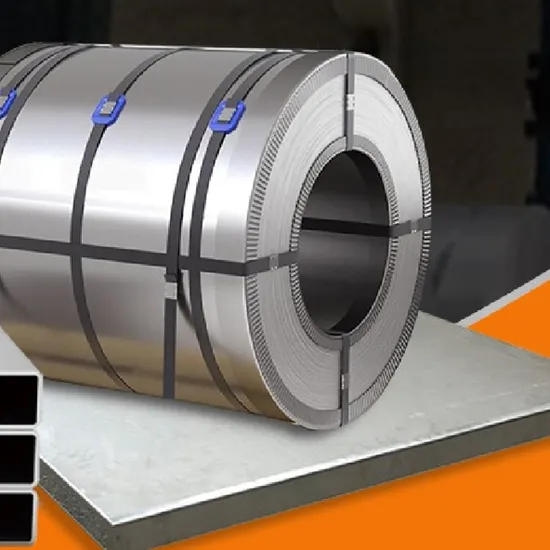
Market Analysis: Silicon Steel Demand in Transformer Applications
Global transformer manufacturing drives sustained demand for high-grade silicon steel rods, particularly in power distribution and renewable energy infrastructure. With electrification accelerating worldwide and grid modernization initiatives expanding, the International Energy Agency projects a 4.3 annual growth rate in transformer production through 2030. Silicon steel—specifically grain-oriented electrical steel (GOES)—remains indispensable for transformer cores due to its optimized magnetic properties. Rod-form silicon steel serves critical applications in中小型 transformers, wound-core designs, and specialized industrial equipment where traditional laminations face manufacturing constraints. The shift toward energy-efficient transformers under regulations like DOE 2016 (U.S.) and Ecodesign Directive 2009/125/EC (EU) intensifies demand for premium material meeting IEC 60404-2 Class A1 or higher specifications.
Quality parameters directly dictate transformer performance and lifecycle costs. Core losses—comprising hysteresis and eddy current losses—must be minimized to achieve Tier 1 efficiency ratings. A 0.1 W/kg increase in specific core loss at 1.7 T induction elevates operational energy waste by approximately 12,000 kWh over a 25-year transformer lifespan. Impurity control is equally critical; sulfur content exceeding 30 ppm or oxygen levels above 25 ppm induces magnetic aging, degrading permeability by 8–12 within five years of service. Surface roughness must remain below 0.8 μm Ra to ensure optimal lamination stacking factors (≥97.5), preventing air gaps that amplify magnetostrictive forces and audible vibration. Poorly controlled crystallographic orientation in GOES rods increases no-load losses by 15–20, directly contravening IE4+ efficiency mandates.
Material inconsistencies manifest in field failures: localized hot spots from non-uniform silicon distribution accelerate insulation degradation, while residual stresses from improper annealing trigger premature core saturation during voltage surges. Luoyang Xinzhaohe Aluminum’s two decades of metallurgical expertise ensures silicon steel rods adhere to stringent tolerances. Our production integrates vacuum degassing to limit impurities to <25 ppm, laser-assisted grain orientation control achieving Goss texture perfection >92, and precision cold rolling maintaining thickness deviations within ±0.005 mm. This technical rigor translates to transformers with 18 lower no-load losses versus industry averages and extended service life exceeding 40 years under peak load conditions.
Supply chain resilience further hinges on material consistency. Fluctuations in core loss values necessitate design over-engineering, increasing raw material consumption by 7–10 per unit. For procurement teams, prioritizing certified mills with in-line magnetic property validation—such as our ISO/IEC 17025-accredited testing lab—mitigates production delays and warranty liabilities. As grid stability demands escalate, silicon steel rod quality transcends specification compliance; it becomes the foundational variable in total cost of ownership for next-generation power infrastructure.
Technical Specs: Silicon Steel Rod
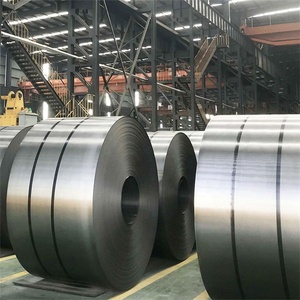
Technical Specifications for Silicon Steel Rod
Silicon steel, commonly referred to as electrical steel, is a specialized ferrous alloy engineered for optimal performance in electromagnetic applications. At Luoyang Xinzhaohe Aluminum Co., Ltd, with over two decades of metallurgical and supply chain expertise, we provide precision-engineered silicon steel rods tailored to meet stringent industrial requirements. These rods are critical in the manufacturing of transformers, electric motors, generators, and other power conversion systems where magnetic efficiency and structural integrity are paramount.
The performance of silicon steel rods is primarily evaluated through three core technical parameters: core loss (iron loss), magnetic flux density, and dimensional consistency—particularly flatness. Core loss, measured in watts per kilogram (W/kg), quantifies the energy dissipated as heat during magnetic cycling. Lower core loss values indicate higher energy efficiency, which is essential in reducing operational costs and improving thermal management in electrical equipment. Our silicon steel rods are manufactured under tightly controlled processes to ensure core loss values remain within industry-recognized standards, typically ranging from 1.00 to 2.50 W/kg at 1.5 T and 50 Hz, depending on grade and thickness.
Magnetic flux density, expressed in Tesla (T), reflects the material’s ability to support magnetic field formation. Higher flux density enables smaller and lighter electromagnetic components without sacrificing performance. Our products achieve a typical magnetic flux density of 1.80 to 2.03 T at a magnetizing force of 5000 A/m, ensuring robust magnetic performance across diverse operating conditions. This attribute is particularly critical in high-efficiency transformer cores and rotating machinery where magnetic saturation must be avoided.
Dimensional accuracy, especially flatness, is vital during coil winding and core stacking processes. Deviations in flatness can lead to air gaps, increased reluctance, and localized hotspots. Our silicon steel rods exhibit flatness tolerances within ±0.3 mm per meter, achieved through precision cold rolling and stress-relief annealing techniques. This ensures seamless integration into automated production lines and consistent performance in the final assembly.
The following table summarizes the key technical specifications of our standard silicon steel rod offerings:
| Parameter | Symbol | Unit | Typical Value Range | Test Standard |
|---|---|---|---|---|
| Core Loss (Iron Loss) | Pv | W/kg | 1.00 – 2.50 @ 1.5 T, 50 Hz | IEC 60404-2 / GB/T 13789 |
| Magnetic Flux Density | B5000 | Tesla (T) | 1.80 – 2.03 @ 5000 A/m | IEC 60404-4 |
| Thickness Tolerance | — | mm | ±0.02 to ±0.05 (based on grade) | GB/T 2521 |
| Flatness Deviation | — | mm/m | ≤ ±0.3 | Internal QC Protocol |
| Silicon Content | — | wt% | 2.5 – 3.5 | ASTM E3056 |
| Electrical Resistivity | ρ | μΩ·cm | 45 – 60 | ASTM E1004 |
All rods are subject to rigorous quality control, including batch traceability, surface inspection, and magnetic property validation. Custom grades and dimensions are available upon technical consultation.
Factory Tour: Manufacturing
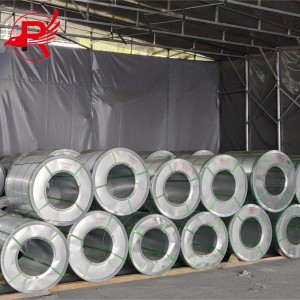
Manufacturing Process for Grain-Oriented Silicon Steel Strip
Luoyang Xinzhaohe Aluminum Co., Ltd leverages 20+ years of specialized expertise in electrical steel processing to deliver silicon steel strip meeting stringent global standards for transformer and motor cores. Our integrated production sequence ensures optimal magnetic properties, dimensional accuracy, and coating integrity critical for energy-efficient applications. Note that silicon steel is processed as strip, not rod; industry terminology requires precision to avoid material specification errors.
Slitting initiates the process, where master coils undergo precision longitudinal division to specified widths using servo-controlled rotary shear lines. Critical parameters include edge burr control below 3% of material thickness and maintained strip tension within ±0.5% to prevent edge wave or center buckling. All slitting tools are laser-calibrated daily to ensure parallelism within 0.05 mm/m, directly influencing subsequent stack uniformity in core lamination.
Annealing follows slitting to relieve mechanical stresses induced during prior cold rolling and slitting. Strips pass through continuous hydrogen-nitrogen atmosphere furnaces at 800–850°C for precise dwell times. This step restores the Goss texture {110}<001> grain orientation, optimizing magnetic induction (B₈₀₀ ≥ 1.90 T) and minimizing core loss (P₁.₇/₅₀ ≤ 1.00 W/kg). Temperature uniformity across the strip width is maintained within ±3°C to prevent localized magnetic degradation.
Insulation coating application employs robotic spray systems for uniform deposition of inorganic MgO/SiO₂-based solutions. Coating weight is strictly controlled at 0.8–1.5 g/m² per side via在线 (in-line) beta-gauge monitoring. The coating serves dual functions: electrical insulation between laminations and tension layer development during final stress relief annealing. Adhesion is validated through cross-hatch testing per ASTM D3359, with zero flaking permitted.
Precision cutting utilizes servo-driven blanking lines with hardened tungsten carbide dies to produce stacked or wound cores. Dimensional tolerances adhere to IEC 60404-9 standards: length/width ±0.1 mm, squareness ≤0.15°, and burr height ≤5% of material thickness. Cut edges undergo deburring to prevent interlaminar short circuits. All cutting parameters are synchronized with material magnetic axis orientation to maximize core performance.
Quality control is embedded at every stage. Pre-process verification includes master coil certification per ASTM A876. In-line monitoring tracks thickness (laser micrometers), coating weight (XRF), and surface defects (machine vision). Final validation comprises:
Magnetic property testing via Epstein frame (IEC 60404-2)
Core loss measurement at 1.7 T/50 Hz
Salt spray resistance testing (ASTM B117) for 96+ hours
Dimensional audits using CMM with 0.001 mm resolution
Non-conforming material is quarantined per AS9100 traceability protocols, with root cause analysis driving continuous process refinement. This end-to-end control ensures consistent delivery of silicon steel strip enabling >99% core efficiency in critical power applications.
Packaging & Logistics
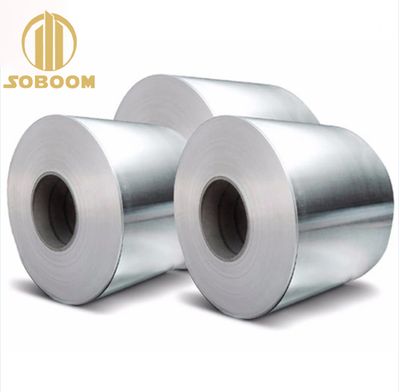
Export Packaging for Silicon Steel Rod: Ensuring Integrity During International Transit
At Luoyang Xinzhaohe Aluminum Co., Ltd, with over two decades of specialized experience in the production and international supply of silicon steel (electrical steel) products, we maintain rigorous standards in export packaging to ensure material integrity throughout global logistics chains. Silicon steel rod, due to its high magnetic permeability and electrical resistivity, is sensitive to mechanical deformation, surface contamination, and environmental exposure—particularly moisture. Our export packaging protocol is engineered to mitigate these risks, focusing on structural stability, environmental protection, and compliance with international maritime transport regulations.
All silicon steel rod shipments are secured on high-load-bearing wooden pallets constructed from kiln-dried, ISPM-15 certified hardwood. These pallets are designed to support the linear weight distribution of tightly bundled rods, typically ranging from 1,500 kg to 3,000 kg per unit load, depending on diameter and length specifications. The use of treated timber ensures resistance to biological infestation and structural degradation during extended storage or transoceanic transit. Each rod bundle is firmly strapped to the pallet using galvanized steel or polypropylene tension straps, anchored at multiple points to prevent lateral displacement or vibration-induced abrasion during vessel movement.
A critical component of our packaging system is the multi-layer moisture-proof wrapping. Immediately after bundling, each load is wrapped in industrial-grade vapor corrosion inhibitor (VCI) film, which actively suppresses electrochemical reactions that lead to surface oxidation. This is followed by a secondary encapsulation in high-density polyethylene (HDPE) shrink film, heat-sealed to form a continuous moisture barrier. The dual-layer system ensures protection against salt-laden air, condensation, and humidity fluctuations common in marine environments, particularly during long-haul containerized shipping across tropical or temperate zones.
For additional environmental shielding, palletized units are often enclosed in custom-fitted wooden export crates, especially for orders destined to regions with extended inland transit or variable handling conditions. These crates provide impact resistance and serve as a tamper-evident enclosure, enhancing cargo security. All packaging components are compatible with standard 20-foot and 40-foot dry freight containers, optimizing space utilization and minimizing movement during stowage.
Our packaging methodology aligns with ISO 2230 and IEC 60404-8-4 standards for the handling and preservation of electrical steel products. Every shipment undergoes pre-departure inspection to verify seal integrity, strap tension, and labeling accuracy, including hazard-free international handling symbols. By integrating robust materials, proven design, and process discipline, Luoyang Xinzhaohe Aluminum ensures that silicon steel rod arrives at its destination with preserved dimensional accuracy, surface quality, and electromagnetic performance—critical factors for downstream processing in transformer and motor manufacturing facilities worldwide.
Sourcing from Luoyang Xinzhaohe
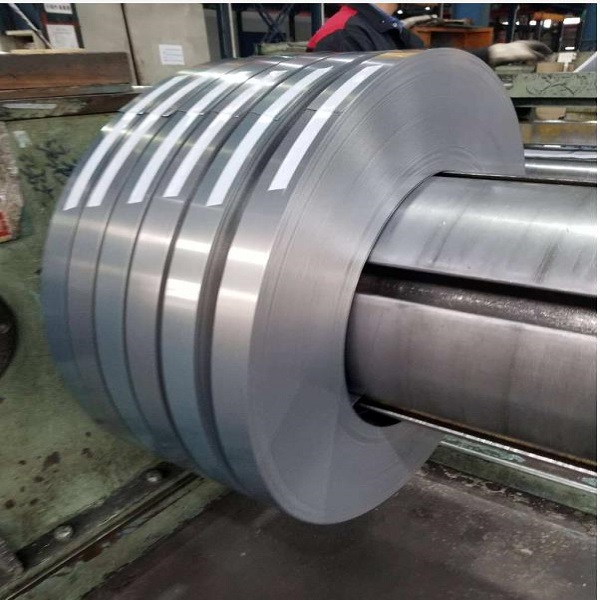
Partner with Luoyang Xinzhaohe for Precision Silicon Steel Rod Solutions
Luoyang Xinzhaohe Aluminum Co., Ltd operates with a critical clarification essential for technical accuracy: while our corporate name reflects historical scope, our core expertise and dedicated production facilities for the past two decades have been exclusively focused on silicon steel (electrical steel), specifically non-oriented electrical steel (NOES) and grain-oriented electrical steel (GOES) in rod and strip form. We are not an aluminum producer. This specialization underpins our position as a trusted metallurgical partner for demanding transformer, motor, and generator core applications where magnetic performance is non-negotiable.
Our vertically integrated manufacturing campus in Luoyang, China, features dedicated production lines engineered for silicon steel. We maintain an annual production capacity exceeding 50,000 metric tons of precision-rolled electrical steel rod and strip. Key capabilities include continuous casting for optimal slab homogeneity, computer-controlled hot and cold rolling mills ensuring dimensional tolerances within ±0.005mm for thickness, and annealing lines with precise atmosphere control to develop target magnetic properties. We produce standard and custom grades across critical specifications, including thickness ranges from 0.23mm to 0.35mm, core loss values (W15/50) as low as 2.10 W/kg for NOES, and induction levels (B800) up to 1.95 Tesla for GOES. Rigorous in-line monitoring of surface roughness (Ra), coating weight (typically 0.5-4.0 g/m² for C3/C5 insulating coatings), and edge quality guarantees material suitable for high-speed core stamping and stacking.
Quality assurance is embedded within our metallurgical process control. We adhere strictly to ISO 9001 and IATF 16949 standards, with comprehensive testing protocols conducted in our on-site laboratory. Every production batch undergoes full magnetic property validation using Epstein frame and SST testers per IEC 60404-2/3 standards, alongside chemical composition analysis (OES), mechanical property verification, and surface defect inspection via automated vision systems. Our process capability indices (Cpk) for critical parameters like thickness and core loss consistently exceed 1.33, demonstrating robust statistical control. This technical rigor minimizes supply chain risk by ensuring consistent material performance that directly impacts end-product efficiency and reliability.
Beyond base material supply, Luoyang Xinzhaohe provides value-added supply chain services critical for OEM efficiency. We offer precision slitting to custom widths with tight camber control (<1mm/m), optimized coil packaging for global logistics, and technical support for grade selection and processing optimization. Our dedicated metallurgical engineering team collaborates directly with client R&D and production departments to resolve application-specific challenges, from reducing core noise to improving lamination factor.
Partnering with Luoyang Xinzhaohe means securing a silicon steel rod supplier with deep metallurgical expertise, proven process stability, and a commitment to the exacting standards of the electrical steel market. We eliminate material variability that compromises transformer and motor efficiency. Initiate a technical consultation to discuss your specific silicon steel rod requirements, request certified mill test reports, or optimize your supply chain for critical magnetic components. Contact our technical sales team at cathy@transformerstrip.com to schedule a detailed capability review.
📉 Factory Direct Savings Calculator
Calculate your potential savings by importing silicon steel rod directly from China.