


Table of Contents
Market Insight: Laminated Silicon Steel Sheet
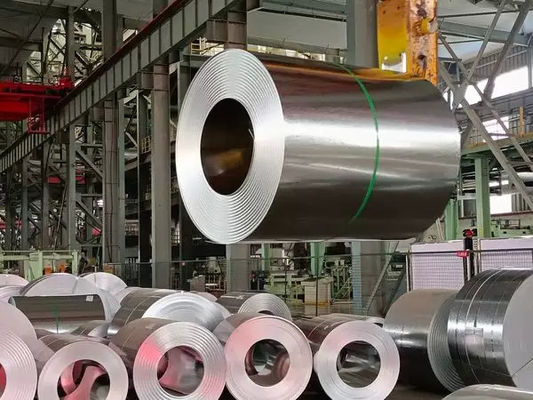
Market Analysis: Silicon Steel Demand in Transformer Applications
Global transformer manufacturing drives sustained industrial demand for high-grade laminated silicon steel sheets, primarily non-oriented (NO) and grain-oriented (GO) electrical steel. This demand is intrinsically linked to energy infrastructure expansion, renewable integration, and regulatory efficiency mandates. Transformers constitute 30–40% of grid energy losses globally, with core losses directly attributable to silicon steel quality. As utilities modernize grids to accommodate variable renewable sources and meet carbon targets, transformer efficiency standards—such as IEC 60076-20, DOE 2016 rules, and EU EcoDesign Directive 2014/98/EU—have intensified. These regulations enforce tiered efficiency classes (e.g., IE3 to IE5), compelling manufacturers to prioritize ultra-low-loss silicon steel. Annual global consumption exceeds 12 million metric tons, with GO steel dominating power transformer cores due to its superior magnetic anisotropy along the rolling direction. Critical growth vectors include ultra-high-voltage (UHV) transmission projects in Asia, offshore wind grid connections requiring marine-grade transformers, and aging infrastructure replacement cycles in North America and Europe.
Quality consistency in laminated silicon steel sheets is non-negotiable for transformer performance and lifecycle economics. Core losses—comprising hysteresis and eddy current losses—must be minimized to reduce operational energy waste. A deviation of 0.1 W/kg in specific total loss (Pt) at 1.7 T/50 Hz translates to 1,200 kWh of excess annual energy loss per ton of core material. High-permeability GO steel with sharp Goss texture {110}<001> orientation achieves Pt values below 0.85 W/kg, while substandard material may exceed 1.2 W/kg, incurring significant total cost of ownership (TCO) penalties. Key quality determinants include: precise thickness tolerance (±0.005 mm for 0.23–0.30 mm gauges) to optimize stacking factor; uniform insulation coating (e.g., C5 or C6 class per IEC 60404-2) preventing interlamination shorts; and controlled edge burr (<5% of thickness) to avoid localized flux distortion. Variability in magnetic properties due to inconsistent annealing or chemical composition (e.g., Si content 2.9–3.3 wt.%) induces hotspots, accelerating insulation degradation and reducing transformer lifespan below the standard 30–40 years.
Supplier metallurgical expertise directly impacts core reliability. Luoyang Xinzhaohe Aluminum leverages 20+ years of process refinement in decarburization annealing and tension coating to ensure batch-to-batch reproducibility of magnetic properties. The table below summarizes critical loss grades for transformer applications:
| Grade Designation | Core Loss (W/kg) @ 1.7T/50Hz | Typical Application |
|---|---|---|
| M0H230 | ≤ 0.23 | Ultra-high-efficiency power transformers |
| M2H270 | ≤ 0.27 | High-voltage distribution transformers |
| M3H300 | ≤ 0.30 | Standard power transformers |
Inadequate silicon steel quality manifests as elevated no-load losses, audible noise, and thermal instability—failing compliance testing and incurring costly field failures. As grid operators prioritize asset longevity and efficiency, sourcing from suppliers with rigorous process control and material traceability becomes imperative to mitigate systemic risks in critical power infrastructure.
Technical Specs: Laminated Silicon Steel Sheet
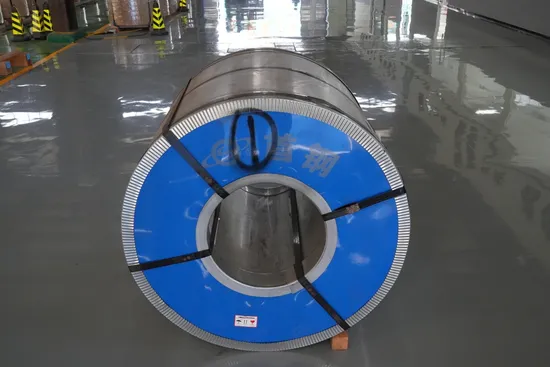
Laminated silicon steel sheet, also known as electrical steel or electrical lamination steel, is a critical material in the construction of efficient electromagnetic cores used in transformers, motors, generators, and inductors. At Luoyang Xinzhaohe Aluminum Co., Ltd, with over two decades of metallurgical and industrial supply chain expertise, we emphasize precision in material specifications to ensure optimal performance in end-use applications. The technical parameters of laminated silicon steel sheets directly influence energy efficiency, thermal management, and operational reliability. Key performance indicators include core loss (iron loss), magnetic flux density, and flatness, all of which are rigorously controlled during production.
Core loss, or iron loss, refers to the energy dissipated in the form of heat when the material is subjected to alternating magnetic fields. It is composed of hysteresis loss, eddy current loss, and anomalous loss. Lower core loss values indicate higher energy efficiency, which is essential for meeting international efficiency standards such as IEC 60404-2 and GB/T 2521. Core loss is typically measured at specific frequencies (50 Hz or 60 Hz) and peak magnetic inductions (1.0 T, 1.5 T, or 1.7 T). Advanced grain-oriented (GO) and non-oriented (NGO) silicon steel grades are engineered to minimize these losses through controlled silicon content (typically 2.5–3.5%), grain structure refinement, and insulating coating application.
Magnetic flux density, expressed in Tesla (T), quantifies the material’s ability to support magnetic field formation. Higher flux density enables smaller core sizes and improved power density in electromagnetic devices. For non-oriented electrical steel, typical saturation flux density ranges from 1.9 T to 2.05 T, while grain-oriented variants can achieve up to 2.03 T in the rolling direction. The directional magnetic performance of grain-oriented steel makes it ideal for transformer cores, whereas non-oriented steel is preferred for rotating machinery due to isotropic magnetic properties.
Flatness is a dimensional and geometric specification critical for stack integrity and uniform magnetic performance. Poor flatness leads to air gaps in laminated stacks, increasing reluctance and localized heating. We define flatness as the maximum deviation from a reference plane over a specified length, typically measured in mm/m. High-precision leveling and tension leveling processes ensure flatness within tight tolerances, especially for thin gauges used in high-frequency applications.
The following table summarizes key technical parameters for standard laminated silicon steel sheet grades supplied by Luoyang Xinzhaohe Aluminum Co., Ltd:
| Parameter | Test Condition | Typical Range (NGO) | Typical Range (GO) | Standard Reference |
|---|---|---|---|---|
| Core Loss (P1.5/50) | 1.5 T, 50 Hz | 2.50 – 6.00 W/kg | 0.70 – 1.20 W/kg | IEC 60404-2 |
| Core Loss (P1.0/400) | 1.0 T, 400 Hz | 12 – 35 W/kg | N/A | GB/T 13789 |
| Magnetic Flux Density (B50) | 50 A/m, transverse direction | 1.60 – 1.75 T | 1.85 – 1.92 T (rolling dir) | IEC 60404-3 |
| Saturation Flux Density (Bs) | Maximum induction | 1.90 – 2.05 T | 2.00 – 2.03 T | ASTM A801 |
| Flatness Tolerance | Over 1000 mm length | ≤ 3 mm/m | ≤ 2 mm/m | Internal QC Standard |
| Thickness Range | Cold-rolled | 0.20 – 0.65 mm | 0.23 – 0.35 mm | GB/T 2521 |
These specifications are validated through certified testing laboratories using Epstein frame or single sheet testers, ensuring compliance with global quality benchmarks. Custom coatings, including C3, C4, or laser-scribed variants, are available to further reduce eddy current losses and enhance interlaminar resistance. Luoyang Xinzhaohe Aluminum Co., Ltd maintains strict process control from raw material selection to final inspection, ensuring consistent product performance for demanding industrial applications.
Factory Tour: Manufacturing
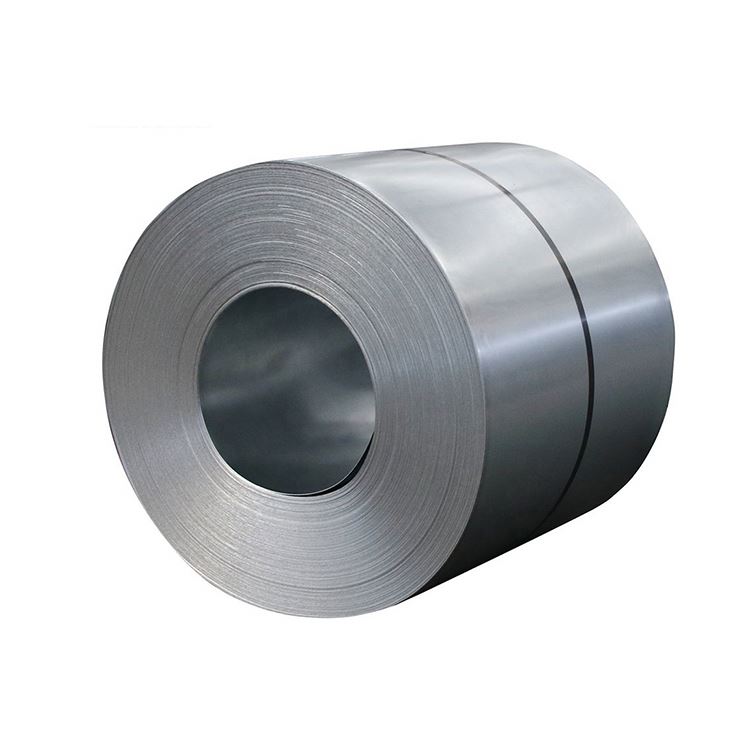
Manufacturing Process for Laminated Silicon Steel Sheets
The production of high-performance laminated silicon steel sheets demands a rigorously controlled sequence to achieve optimal magnetic properties, dimensional accuracy, and insulation integrity. At Luoyang Xinzhaohe Aluminum CO., Ltd., our 20+ years of metallurgical expertise ensure each stage adheres to international standards, directly impacting core loss, permeability, and lamination stack stability in end applications like transformers and motors.
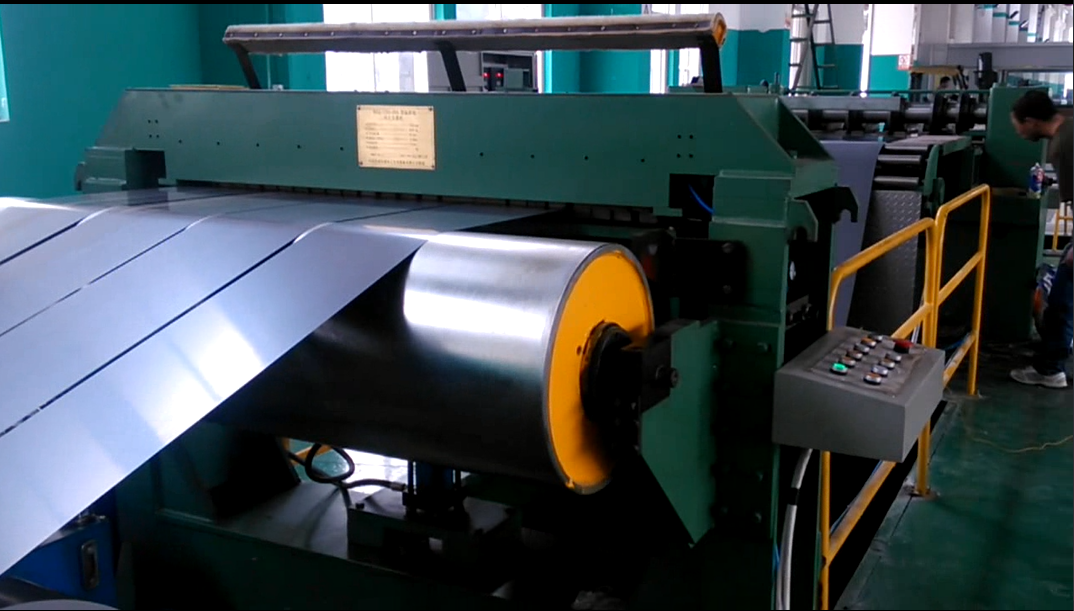
Slitting initiates the process, where master coils undergo precision longitudinal cutting to specified widths. Tension control and刀具 geometry are critical to minimize edge burrs and maintain strip flatness. Real-time edge quality inspection via laser micrometers ensures deviations remain within ±0.1 mm tolerance, preventing interlamination shorts. Any strip exhibiting edge waviness or dimensional drift is automatically quarantined for rework.
Subsequent annealing occurs in a continuous hydrogen-nitrogen atmosphere furnace, typically at 750–850°C. This decarburization and grain growth phase is meticulously monitored via inline oxygen probes and pyrometry to achieve target core loss values (e.g., ≤1.0 W/kg at 1.5 T, 50 Hz). Precise dew point control (<−40°C) prevents surface oxidation, while strict thermal profiling ensures uniform magnetic domain alignment. Post-annealing, statistical sampling validates magnetic properties per IEC 60404-2, with full-spectrum B-H loop analysis for critical orders.
Insulation coating follows, applying a thin (0.5–5.0 μm), adherent layer via roll-coating or immersion. We utilize either inorganic phosphate-based coatings for high-temperature stability or organic-resin hybrids for enhanced interlamination resistance. Coating weight is controlled to ±0.1 g/m² per side through gravimetric testing, while adhesion is verified via tape peel tests (ASTM D3359). Electrical resistance measurements confirm >50 kΩ/cm² surface insulation, mitigating eddy current losses in stacked cores.
Final precision cutting transforms coated strips into custom laminations using progressive dies or laser systems. Burr formation is suppressed via optimized clearance (4–6% of material thickness) and tool wear monitoring, with post-cut inspection ensuring burr height ≤0.02 mm. Dimensional accuracy is maintained to ±0.05 mm through automated vision systems, while stacked lamination testing validates flatness and rotational loss characteristics.
Throughout this sequence, our integrated QC protocol includes:
100% inline edge/profile monitoring during slitting
Batch magnetic property validation post-annealing
Coating thickness and adhesion spot checks per ISO 2178
Final lamination dimensional and burr audits via CMM
This end-to-end process control, certified under ISO 9001:2015, guarantees laminated sheets meeting IEC 60404-1 specifications. Partnering with Xinzhaohe ensures not only material compliance but also supply chain transparency, with full traceability from coil to lamination via our digital MES platform.
| Process Stage | Key Parameter | Control Tolerance | Verification Method |
|---|---|---|---|
| Slitting | Edge deviation | ±0.1 mm | Laser micrometer |
| Annealing | Core loss (1.5T/50Hz) | ≤1.0 W/kg | Epstein frame test |
| Coating | Coating weight | ±0.1 g/m²/side | Gravimetric analysis |
| Precision Cutting | Burr height | ≤0.02 mm | Optical profilometry |
Packaging & Logistics
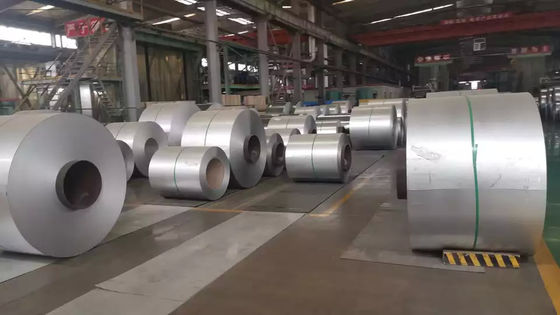
Export Packaging for Laminated Silicon Steel Sheets – Ensuring Integrity During Sea Freight
At Luoyang Xinzhaohe Aluminum Co., Ltd, with over two decades of specialized experience in the production and international distribution of electrical steel products, we maintain rigorous standards in the export packaging of laminated silicon steel sheets. Given the material’s sensitivity to moisture, mechanical deformation, and atmospheric corrosion during extended transit—particularly in sea freight conditions—our packaging methodology is engineered to preserve product integrity from factory to final destination.
All export-grade laminated silicon steel sheets are systematically secured on high-strength wooden pallets constructed from kiln-dried, ISPM-15 certified timber. These pallets are designed to meet international phytosanitary regulations, ensuring unrestricted customs clearance across global ports. The structural integrity of the pallets supports uniform load distribution, minimizing the risk of edge damage or coil deformation during handling, stacking, and long-haul container transport.
Immediately following palletization, each coil or stack is wrapped with multi-layer moisture-proof composite film. This film consists of an aluminum-polyethylene laminate that provides a complete vapor barrier, effectively preventing the ingress of humidity and salt-laden air—common hazards in maritime environments. The sealing process employs heat-shrink and hermetic sealing techniques at all seams, ensuring a fully enclosed protective envelope. This is critical for maintaining the electrical and surface properties of the silicon steel, especially for grades used in precision applications such as transformer cores and motor laminations.
Additional protection is applied in the form of corner protectors made from galvanized steel or reinforced cardboard, which safeguard vulnerable coil edges from impact during loading/unloading operations. Outer strapping, using high-tensile steel or PET bands, ensures the load remains immobile throughout the journey, reducing vibration-induced slippage or deformation.
All packaged units are labeled with durable, weather-resistant tags indicating product specifications, batch numbers, weight, handling instructions, and orientation markers. This traceability supports efficient inventory management at the receiving end and aligns with ISO 9001 quality tracking protocols.
Our packaging standards are validated through accelerated environmental testing, including simulated sea voyage conditions involving 95% relative humidity and temperature cycling between 5°C and 40°C. These tests confirm the long-term efficacy of our moisture barrier systems over typical transit durations of 20–45 days.
By integrating robust materials, regulatory compliance, and climate-resilient design, Luoyang Xinzhaohe Aluminum Co., Ltd ensures that every shipment of laminated silicon steel arrives in the same condition as it left our facility. This commitment to packaging excellence underpins our reliability as a global supplier of high-performance electrical steel.
Sourcing from Luoyang Xinzhaohe
Partner with Luoyang Xinzhaohe Aluminum Co., Ltd for Precision Laminated Silicon Steel Solutions
Luoyang Xinzhaohe Aluminum Co., Ltd leverages over two decades of specialized metallurgical engineering and industrial-scale production to deliver high-performance laminated silicon steel sheets meeting the stringent demands of global transformer and motor core manufacturers. Our integrated facility in Luoyang, China, represents a cornerstone of technical capability and supply chain reliability within the electrical steel sector. We focus exclusively on optimizing the magnetic properties and physical integrity of non-oriented and grain-oriented silicon steel, ensuring consistent performance in critical electromagnetic applications.
Our core strength resides in advanced process metallurgy. We employ precision cold rolling mills capable of achieving tight dimensional tolerances down to ±0.005mm across thickness ranges from 0.23mm to 0.65mm. Critical to magnetic performance, our continuous annealing lines utilize precisely controlled N2-H2 atmospheres and proprietary temperature profiles to minimize core loss (Guaranteed W10/400 ≤ 1.00 W/kg for 0.35mm GOES) and maximize permeability. All laminations undergo automated laser trimming and rigorous edge conditioning to eliminate burrs, directly enhancing stack factor and reducing eddy current losses in the final core assembly. Surface insulation coatings, applied via roll-coating systems, provide optimal interlaminar resistance while maintaining mechanical stability during stamping and stacking operations.
Quality assurance is embedded at every process stage through our ISO 9001 and IATF 16949 certified management system. Real-time monitoring of chemical composition (verified via OES spectrometry), thickness, flatness, and magnetic properties occurs inline. Every production lot is accompanied by comprehensive mill test reports detailing core loss, permeability, coating weight, and mechanical properties against international standards including IEC 60404-3, EN 10107, and JIS C 2550. This granular traceability ensures batch consistency essential for high-efficiency core manufacturing.
Supply chain resilience is engineered into our operations. We maintain strategic partnerships with major domestic steel producers for high-purity low-carbon steel base material, coupled with dedicated annealing and slitting capacity exceeding 80,000 metric tons annually. Our optimized logistics network, featuring direct rail access to the Luoyang port and flexible containerized shipping solutions, guarantees on-time delivery to global destinations. We manage inventory proactively to mitigate raw material volatility, offering customers stable lead times and volume flexibility for both standard and custom specifications.
Partnering with Luoyang Xinzhaohe means accessing deep technical collaboration. Our metallurgical engineers work directly with your design and procurement teams to refine material specifications, troubleshoot production challenges, and ensure seamless integration of our laminated steel into your core manufacturing process. We provide full technical documentation and support for qualification testing, reducing your time-to-market for high-efficiency electrical equipment.
Optimize your core manufacturing with laminated silicon steel sheets engineered for performance and delivered with industrial precision. Contact our Technical Sales Manager Cathy directly to discuss your specific requirements and receive a detailed capability portfolio. Reach out today at cathy@transformerstrip.com to initiate a technical consultation and secure a reliable supply chain partnership.
📉 Factory Direct Savings Calculator
Calculate your potential savings by importing laminated silicon steel sheet directly from China.