


Table of Contents
Market Insight: Transformer Wire Connection
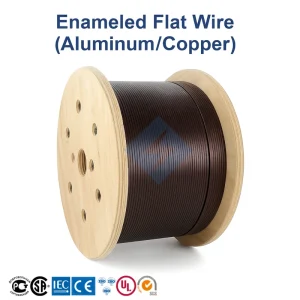
Market Analysis: Winding Wire for Transformer Connections
Global demand for aluminum winding wire in transformer connections is experiencing sustained growth, driven by fundamental infrastructure imperatives. Power grid modernization initiatives worldwide, particularly in emerging economies, necessitate large-scale deployment of distribution and power transformers. Concurrently, the integration of renewable energy sources like solar and wind farms requires extensive substation upgrades and new transformer installations to manage variable input and grid stability. Industrial electrification trends further amplify demand, as manufacturing facilities and data centers require robust power distribution systems. Market analysis indicates a compound annual growth rate (CAGR) of approximately 6.5% for the global transformer market through 2030, directly correlating to increased procurement volumes for high-performance winding conductors. This expansion underscores the critical role of reliable, high-volume aluminum wire supply chains in supporting energy infrastructure development.
The operational integrity of transformers hinges significantly on the metallurgical and electrical properties of the connection wire. Aluminum alloy conductors, predominantly AA-1350 and AA-8030 series, must exhibit precise conductivity (typically 61.0-62.5% IACS), exceptional tensile strength (140-180 MPa for hard-drawn), and superior elongation characteristics to withstand winding stresses and thermal cycling. Deviations in these parameters directly compromise transformer reliability. Substandard conductivity increases I²R losses, elevating operating temperatures and accelerating insulation degradation. Inadequate tensile strength or poor creep resistance leads to mechanical deformation under electromagnetic forces during fault conditions, potentially causing short circuits. Impurities or inconsistent grain structure foster localized hot spots, initiating thermal runaway and catastrophic failure. Compliance with stringent international standards such as IEC 60138 and ASTM B354 is non-negotiable; these specifications govern dimensional tolerances, surface quality, and electrical performance to ensure electro-thermal stability over decades of service.
Critical quality parameters directly influence transformer longevity and safety:
| Critical Parameter | Consequence of Deviation |
|---|---|
| Electrical Conductivity | Increased load losses, reduced efficiency, overheating |
| Tensile Strength & Elongation | Mechanical deformation, winding collapse during faults |
| Surface Smoothness | Insulation damage, partial discharge initiation |
| Dimensional Consistency | Impaired winding density, reduced cooling efficiency |
| Metallurgical Purity | Accelerated corrosion, hot spot formation |
For procurement professionals, sourcing winding wire represents a strategic decision impacting total cost of ownership far beyond initial material cost. Consistent quality minimizes field failures, warranty claims, and unplanned downtime—costs that dwarf raw material expenses. Supply chain resilience is equally vital; transformer manufacturers require just-in-time delivery of precisely specified wire to maintain production schedules. Disruptions or quality inconsistencies cascade into assembly line stoppages and project delays. Luoyang Xinzhaohe Aluminum, with over two decades of specialized production, integrates rigorous in-line metallurgical testing and ISO 9001-certified processes to guarantee batch-to-batch uniformity. Our vertically integrated supply chain, from billet casting to precision drawing, ensures adherence to the tightest tolerances demanded by modern transformer design, directly supporting the reliability and efficiency goals of global power infrastructure projects. Quality in winding wire is not an incremental cost factor—it is the foundational element of transformer safety and operational lifespan.
Technical Specs: Transformer Wire Connection
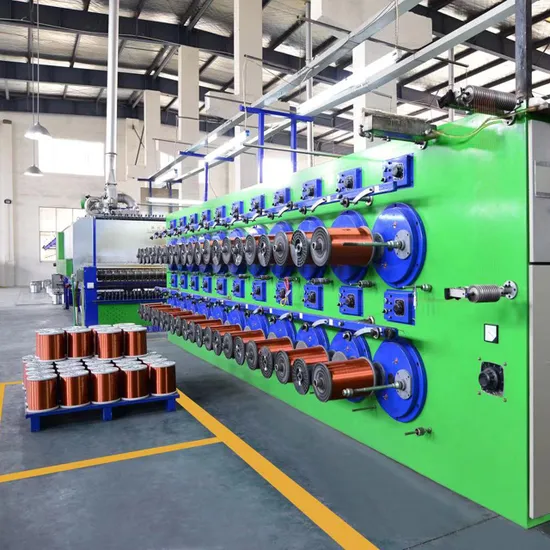
Transformer wire connection is a critical component in the design and performance of electrical transformers, where reliability, thermal stability, and dielectric integrity are paramount. At Luoyang Xinzhaohe Aluminum CO., Ltd, with over two decades of specialized experience in aluminum winding wire manufacturing, we provide high-performance conductor solutions engineered to meet stringent international standards for transformer applications. Our aluminum winding wires are optimized for use in power and distribution transformers, ensuring long-term operational safety and efficiency under dynamic electrical and thermal loads.
A key parameter in transformer wire connection is insulation breakdown voltage, which determines the wire’s ability to withstand high-voltage stress without electrical failure. Our enamel-insulated aluminum winding wires are designed to sustain breakdown voltages of no less than 4,500 Vrms at a standard film thickness of 0.05 mm, complying with IEC 60317 and GB/T 23311 standards. This robust dielectric strength ensures reliable insulation integrity even under transient overvoltage conditions, minimizing the risk of short circuits and dielectric aging in service.
Elongation is another critical mechanical property, directly influencing the wire’s formability and resistance to cracking during winding and coil assembly. Our aluminum alloy conductors achieve a minimum elongation of 18% in the soft temper (O-temper), as measured over a 250 mm gauge length. This high ductility enables tight winding configurations without compromising conductor integrity, particularly in complex coil geometries typical of modern transformer designs. Furthermore, consistent elongation across production batches ensures uniform processing behavior on automated winding equipment.
Thermal performance is governed by the Thermal Class rating, which defines the maximum continuous operating temperature the insulation system can endure without significant degradation. Our product portfolio covers Thermal Classes from 130°C to 220°C, utilizing advanced enamel formulations such as polyurethane (PU), polyester (PE), polyamide-imide (PAI), and polyimide (PI). Each insulation system is rigorously tested for thermal endurance via the thermal aging method per IEC 60172, ensuring a service life of over 20,000 hours at rated temperature. Higher thermal classes, such as 180 (R) and 220 (S), are recommended for high-efficiency or high-overload transformers where elevated operating temperatures are expected.
The following table summarizes the key technical specifications of our aluminum winding wires for transformer wire connection:
| Parameter | Test Standard | Typical Value / Range | Units |
|---|---|---|---|
| Insulation Breakdown Voltage | IEC 60317-00 | ≥ 4,500 | Vrms |
| Elongation (min) | GB/T 4909.3 | 18 | % |
| Conductor Resistivity | GB/T 3955 | 0.028264 | Ω·mm²/m |
| Thermal Class Range | IEC 60085 | 130 to 220 | °C |
| Temperature Index (TI) | IEC 60172 | 155 to 240 | °C |
| Adhesion (Solvent Rub Test) | IEC 60851-4 | Pass (5 rubs, no flaking) | – |
| Flexibility (Pin Test) | IEC 60851-4 | Pass (no cracking at 1.5× dia) | – |
All products undergo 100%在线 testing for dielectric strength and diameter consistency, ensuring batch-to-batch reliability. Our technical team supports custom formulations for specialized applications, including enhanced thermal conductivity or partial discharge resistance.
Factory Tour: Manufacturing
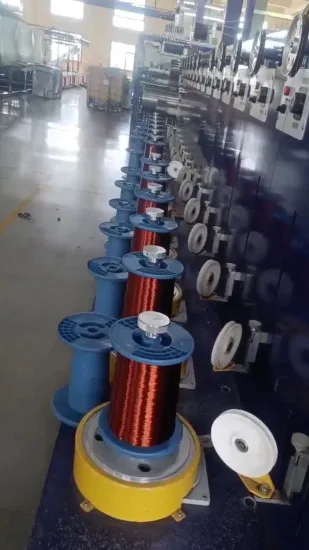
Manufacturing Process for Aluminum Transformer Winding Wire
At Luoyang Xinzhaohe Aluminum Co., Ltd., our production of high-reliability aluminum winding wire for transformer connections adheres to a meticulously controlled sequence, refined over 20+ years of metallurgical and process engineering expertise. This sequence ensures optimal electrical conductivity, mechanical formability, and dielectric integrity essential for critical power applications.
Rod Drawing
The process initiates with high-purity (99.99% min) aluminum rod conforming to IACS conductivity standards. Rods undergo multi-pass drawing through precision tungsten carbide dies within a continuous, tension-controlled line. Critical parameters including reduction ratio per pass (typically 15-25%), drawing speed, and lubricant viscosity are dynamically monitored to achieve the target wire diameter within stringent tolerances (±0.005 mm for diameters < 2.0 mm). Inline laser micrometers provide real-time diameter feedback, triggering automatic die adjustments. Surface quality is concurrently verified via high-resolution optical inspection to eliminate scratches or pits that could compromise subsequent enamel adhesion.
Annealing
Immediately post-drawing, the cold-worked wire enters a continuous inert atmosphere annealing furnace. Precise temperature profiling (350-400°C) and residence time control (15-30 seconds) are maintained to recrystallize the aluminum microstructure, restoring ductility and achieving the target soft temper (O-temper) while maximizing conductivity (≥61% IACS). Oxygen levels within the furnace are held below 50 ppm to prevent surface oxidation. Conductivity is validated at line-out using a non-contact eddy current tester, with automatic rejection of out-of-spec material.
Enameling
The annealed wire proceeds to the multi-zone enameling oven. A proprietary polyurethane-imide or polyester-imide resin formulation, rigorously filtered to <5 µm particle size, is applied via precision die coating. Film build is controlled to ±1.5 µm across the wire circumference through real-time adjustment of coating die pressure and wire speed. Curing occurs in precisely staged temperature zones (280-450°C), ensuring complete solvent evaporation and polymer cross-linking without thermal degradation. Film thickness and continuity are monitored continuously via capacitance gauges.
Inline Testing and Final QC
Comprehensive electrical and mechanical validation occurs inline prior to spooling. Every meter undergoes high-potential (hi-pot) testing at 3 kV AC for 1 second to detect pinholes, with automatic flaw marking. Additional 100% checks include elongation (≥25%), springback angle, and visual inspection for color consistency. Batch-level quality control严格执行 IEC 60317 standards, including thermal endurance (class 180/200), thermal shock (220°C), and solderability tests. All critical process parameters and test results are logged in our traceability system, providing full lot history from rod to finished coil. This integrated manufacturing and QC framework guarantees the dimensional stability, electrical performance, and long-term reliability demanded in transformer winding connections.
Packaging & Logistics

Export Packaging for Aluminum Winding Wire – Ensuring Integrity During Sea Freight
At Luoyang Xinzhaohe Aluminum Co., Ltd, with over two decades of experience in the production and international supply of high-performance aluminum winding wire, we recognize that packaging is not merely a logistical necessity but a critical component in preserving product integrity. Our export packaging system is engineered specifically to address the challenges associated with long-distance sea freight, where exposure to moisture, mechanical stress, and variable climatic conditions can compromise wire quality.
All aluminum winding wire shipments are secured on robust wooden pallets constructed from high-grade, kiln-dried timber. These pallets are designed to meet international phytosanitary standards (ISPM 15), ensuring compliance with global import regulations. The structural integrity of the pallets supports heavy coil loads, prevents deformation during stacking, and facilitates safe handling via forklift or crane at ports and warehouses. Each coil is axially aligned and firmly fixed to the pallet using steel strapping, minimizing movement during transit and reducing the risk of mechanical damage.
A primary concern in marine transport is humidity, which can lead to surface oxidation of aluminum conductors and degrade insulation performance in enameled or polymer-coated variants. To mitigate this, we apply a multi-layer moisture-proof barrier system. Each palletized load is wrapped in high-density polyethylene film with a low water vapor transmission rate. This film is heat-sealed to form a continuous envelope, effectively isolating the coils from ambient humidity. Additionally, desiccant packs are strategically placed within the wrapping to absorb any residual moisture and maintain a controlled microclimate during extended voyages.
For enhanced protection, particularly in tropical or high-humidity shipping routes, optional vapor corrosion inhibitors (VCI) can be integrated into the packaging matrix. These materials release corrosion-inhibiting molecules that form a protective molecular layer on the aluminum surface, further safeguarding against electrochemical degradation.
All packaging operations are conducted in a controlled indoor environment to prevent pre-shipment contamination. Prior to dispatch, each packaged unit undergoes visual and dimensional inspection to verify compliance with our internal quality protocols. Documentation, including packing lists and handling instructions, is enclosed in waterproof pouches affixed to the pallet.
Our packaging methodology has been validated through years of successful deliveries across Southeast Asia, the Middle East, Europe, and the Americas. It reflects our commitment to delivering aluminum winding wire in optimal condition, regardless of the logistical complexity. By combining structural resilience with advanced moisture management, Luoyang Xinzhaohe ensures that our customers receive product consistency and reliability—cornerstones of effective transformer wire connection systems in demanding industrial applications.
Sourcing from Luoyang Xinzhaohe

Partner with Luoyang Xinzhaohe: Your Engineered Solution for Precision Transformer Wire
Luoyang Xinzhaohe Aluminum CO., Ltd leverages over two decades of specialized metallurgical expertise and industrial-scale manufacturing to deliver transformer connection wire meeting the most stringent global performance and reliability demands. Our core strength resides in the precise control of aluminum wire metallurgy, essential for minimizing resistive losses and ensuring long-term thermal stability within critical transformer windings. We utilize high-purity (99.99% min) EC grade aluminum ingot, processed through optimized continuous casting and rolling lines to achieve exceptional metallurgical homogeneity. This foundational control is critical before the wire drawing stage, where our proprietary multi-stage annealing protocols ensure consistent temper (O-soft or H14 as specified), precise dimensional tolerances (±0.01mm diameter), and superior surface finish – directly impacting winding integrity and inter-turn insulation performance.
Our integrated production facility, certified to ISO 9001:2015, operates with a dedicated annual capacity exceeding 20,000 metric tons specifically for electrical conductor applications. This scale is matched by precision engineering capabilities, including state-of-the-art wire drawing blocks with laser-guided diameter monitoring, automated tension control systems during spooling, and in-line eddy current testing for continuous defect detection. Every coil undergoes rigorous final inspection against IEC 60138, ASTM B230, or custom client specifications, verifying key parameters: DC resistance, elongation, bend test performance, and surface quality. Our process control systems capture full traceability from ingot batch to finished coil, providing essential data for your quality assurance and failure analysis protocols.
Supply chain resilience is engineered into our operational model. We maintain strategic partnerships with primary aluminum producers for consistent raw material quality and dual-sourcing options, mitigating market volatility risks. Our lean logistics network, featuring dedicated warehousing near major ports and established carrier relationships, ensures reliable delivery schedules. Historical data demonstrates a 99.2% on-time delivery rate for standard orders, with expedited processing capabilities for urgent requirements within 72 hours. We offer flexible supply chain solutions including Vendor Managed Inventory (VMI) programs and just-in-sequence delivery tailored to your transformer production line rhythm, reducing your working capital burden while guaranteeing uninterrupted production flow.
Partnering with Luoyang Xinzhaohe means securing a supplier deeply embedded in the technical realities of transformer manufacturing. We do not merely supply wire; we provide a validated, process-controlled material solution designed to enhance your product’s efficiency, longevity, and compliance. Our engineering team collaborates directly with client R&D and procurement departments to resolve complex material challenges and optimize specifications for cost-performance balance. For transformer manufacturers demanding unwavering quality, technical partnership, and supply chain certainty in aluminum winding wire, we invite you to initiate a technical consultation.
Contact Cathy Wang, International Sales Manager, directly at cathy@transformerstrip.com to discuss your specific transformer wire connection requirements and receive a detailed capability portfolio. Let us demonstrate how our metallurgical precision and supply chain execution become your competitive advantage.
📉 Factory Direct Savings Calculator
Calculate your potential savings by importing transformer wire connection directly from China.