


Table of Contents
Market Insight: Mcb Steel
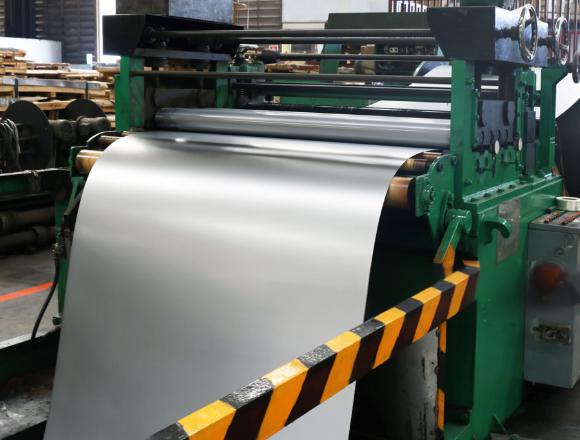
Market Analysis: Silicon Steel Demand in Transformer Manufacturing
Global transformer manufacturing drives sustained demand for high-grade silicon steel, with annual consumption exceeding 10 million metric tons worldwide. This demand is amplified by renewable energy integration, electric vehicle charging infrastructure expansion, and grid modernization initiatives across Asia, Europe, and North America. Transformers constitute 60% of silicon steel end-use, where material performance directly impacts energy efficiency regulations. For instance, the EU’s Ecodesign Directive mandates Tier 2 efficiency levels (IE4), requiring core losses below 0.70 W/kg at 1.7 T for distribution transformers. Failure to meet these standards excludes suppliers from 75% of the European market.
Quality in silicon steel is non-negotiable due to its role in minimizing core losses—comprising hysteresis and eddy current losses—which account for 65% of a transformer’s total lifecycle energy consumption. Grain-oriented electrical steel (GOES) must achieve precise magnetic properties: a maximum specific total loss (P1.7/50) of 0.85 W/kg and minimum magnetic flux density (B800) of 1.89 T. Deviations as small as 0.05 mm in thickness tolerance induce localized flux distortion, increasing core losses by 8–12%. Surface insulation coatings must also withstand 500 MPa punching stresses without delamination; inadequate coatings elevate interlaminar eddy currents by 15–20%, accelerating thermal degradation.
Substandard silicon steel incurs severe operational penalties. A 5% increase in core loss translates to 120,000 kWh/year wasted energy in a 1 MVA transformer, costing $14,400 annually at $0.12/kWh. More critically, inconsistent lamination stacking factors below 97% cause hotspots exceeding 140°C, triggering premature insulation failure and 40% higher forced-outage rates per IEEE C57.12.00 standards. Recent field data shows transformers with non-compliant steel exhibit 3.2× more failures within the first decade versus those using certified material.
Luoyang Xinzhaohe Aluminum CO., Ltd leverages 20+ years of metallurgical precision to mitigate these risks. Our ISO 9001-certified production employs laser-guided thickness control (±0.003 mm) and proprietary MgO-Al2O3 annealing atmospheres, ensuring P1.7/50 values consistently below 0.78 W/kg. Every coil undergoes Epstein frame testing per IEC 60404-2, with traceable certification for B50, core loss, and stacking factor. This rigor prevents supply chain disruptions from rejected batches—a critical advantage given the 14-week lead times for specialty electrical steel.
In essence, silicon steel quality dictates transformer efficiency, reliability, and regulatory compliance. Procurement strategies must prioritize suppliers with verifiable process control, not merely cost metrics, to avoid lifecycle cost escalations exceeding 200% of initial material expenditure.
Technical Specs: Mcb Steel

Technical Specifications for MCB Steel: Core Performance Parameters
Luoyang Xinzhaohe Aluminum Co., Ltd. provides high-performance silicon steel, commonly referred to in industrial applications as MCB (Medium Carbon Bar) steel, tailored for demanding electromagnetic environments. Our material engineering expertise ensures compliance with international standards while optimizing for efficiency, reliability, and manufacturability. The technical specifications detailed below focus on three critical performance indicators: Core Loss (Iron Loss), Magnetic Flux Density, and Flatness—parameters that directly influence the operational efficiency and structural integrity of electrical components such as transformers, motors, and generators.
Core Loss, also known as Iron Loss, is a fundamental metric in evaluating the energy efficiency of electrical steel under alternating magnetic fields. It comprises hysteresis loss and eddy current loss, both of which contribute to thermal generation and reduced system efficiency. Our MCB steel is engineered to minimize total core loss through precise grain orientation, controlled silicon content (typically 2.5%–3.5%), and advanced annealing processes. Low core loss translates into reduced heat generation and improved energy conversion efficiency, essential for high-duty-cycle applications.
Magnetic Flux Density, measured in Tesla (T), indicates the magnetic saturation capacity of the material. Higher flux density allows for compact core designs with superior magnetic performance. Our MCB steel achieves a typical magnetic flux density of 1.80–2.03 T at a magnetic field strength of 8000 A/m, depending on grade and processing route. This high permeability ensures optimal magnetic circuit performance, reducing the required core volume and enabling lighter, more efficient electromagnetic devices.
Flatness is a dimensional and geometric specification critical for lamination stacking and core assembly. Poor flatness leads to air gaps, increased reluctance, and localized hotspots. Our production process incorporates tension leveling and precision rolling to achieve flatness deviations within ±2 mm over a 1-meter length, meeting or exceeding IEC 60404-9 standards. This ensures uniform lamination alignment, minimizes magnetic flux disturbance, and enhances mechanical stability in stacked cores.
The following table summarizes key technical parameters for our standard MCB silicon steel grades:
| Parameter | Test Condition | Typical Value Range | Standard Compliance |
|---|---|---|---|
| Core Loss (P1.5/50) | 1.5 T, 50 Hz | 2.10 – 3.80 W/kg | IEC 60404-2 |
| Core Loss (P1.7/50) | 1.7 T, 50 Hz | 3.20 – 5.00 W/kg | IEC 60404-2 |
| Magnetic Flux Density (B8000) | H = 8000 A/m | 1.80 – 2.03 T | ASTM A343/A343M |
| Silicon Content | By weight | 2.5% – 3.5% | GB/T 2521-2019 |
| Thickness Tolerance | Nominal 0.30 mm – 0.50 mm | ±0.004 mm | IEC 60404-9 |
| Flatness | Over 1-meter length | ±2 mm | IEC 60404-9 |
| Insulation Coating Weight | C4 (Semi-organic) | 0.3 – 0.8 g/m² (each side) | IEC 60404-10 |
All products undergo rigorous in-line quality control, including Epstein frame testing for core loss and permeability, laser profilometry for flatness verification, and spectral analysis for compositional accuracy. Luoyang Xinzhaohe Aluminum Co., Ltd. ensures traceability and consistency across production batches, supporting long-term reliability in critical power and industrial applications.
Factory Tour: Manufacturing
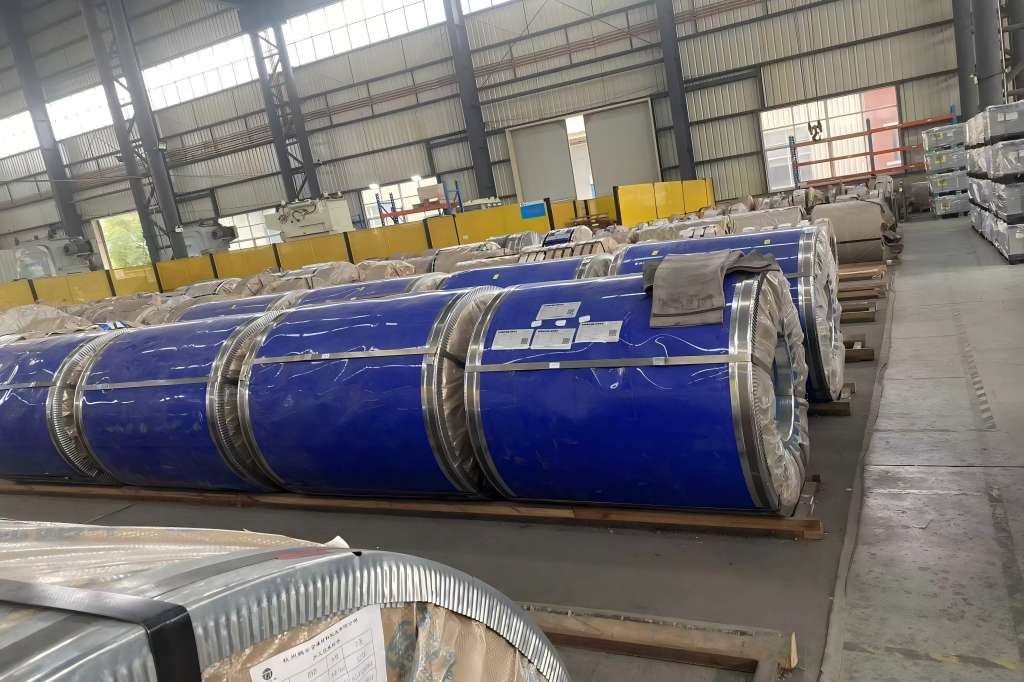
Manufacturing Process for Grain-Oriented Silicon Steel
Luoyang Xinzhaohe Aluminum Co., Ltd employs a rigorously controlled sequence to transform incoming grain-oriented silicon steel (GOES) coils into precision-engineered laminations. This process ensures optimal magnetic properties, dimensional accuracy, and insulation integrity for high-efficiency electrical cores.
Incoming coils undergo stringent dimensional and surface quality verification per IEC 60404-2 standards. Slitting initiates the process using servo-driven rotary shear lines with automatic width adjustment. Width tolerances are maintained within ±0.1 mm across the coil width, critical for minimizing air gaps in stacked cores. Edge burr formation is actively suppressed via precision blade clearance control (typically 3–5% of material thickness) and real-time monitoring of strip tension to prevent edge wave defects.
Annealing follows slitting to relieve residual stresses induced during prior cold rolling and slitting. Coils are processed in continuous annealing lines under a purified dry hydrogen-nitrogen atmosphere (dew point < -40°C) at temperatures between 800–850°C. This step recrystallizes the steel microstructure, optimizing the Goss texture (110)[001] orientation and reducing core loss (W17/50) to ≤0.85 W/kg. Precise thermal profile control—ramping rates, soak time, and cooling gradients—is validated via in-line pyrometry and post-process Epstein frame testing per ASTM A912.
Insulation coating applies a thin, uniform inorganic layer (typically magnesium oxide-based) to suppress eddy currents. The coating is deposited via roll-coating at 0.8–1.2 g/m² dry weight, followed by rapid infrared curing. Adhesion strength exceeds 1.5 N/mm², verified through cross-hatch tests. This layer ensures electrical resistivity >70 Ω·mm²/m while maintaining thermal stability up to 750°C during subsequent core annealing by end-users.
Precision cutting utilizes high-speed progressive dies or laser systems for lamination stamping. Tooling is maintained to ±0.02 mm positional accuracy, with blanking clearances calibrated to 4–6% of material thickness (0.23–0.30 mm gauges). Laser cutting achieves kerf widths of 0.15–0.25 mm with edge roughness Ra ≤ 3.2 μm. All cut parts undergo 100% dimensional inspection via optical comparators against customer-specific geometries.
Quality control is integrated at each stage. Key checkpoints include:
Slitting: Width tolerance verification via laser micrometers; edge quality assessment under 10x magnification
Annealing: Core loss and permeability validation per IEC 60404-2; surface oxide measurement via ellipsometry
Coating: Thickness uniformity via X-ray fluorescence; insulation resistance testing at 500 VDC
Cutting: Burr height measurement (max 5% of material thickness); angularity checks to ±0.1°
Final laminations undergo batch-level certification, including magnetic property reports and coating adhesion logs. This end-to-end control ensures compliance with EN 10107 and customer-specific specifications, directly impacting transformer efficiency and noise performance in end applications. Luoyang Xinzhaohe’s 20-year process refinement guarantees <0.5% defect rates in delivered laminations.
Packaging & Logistics
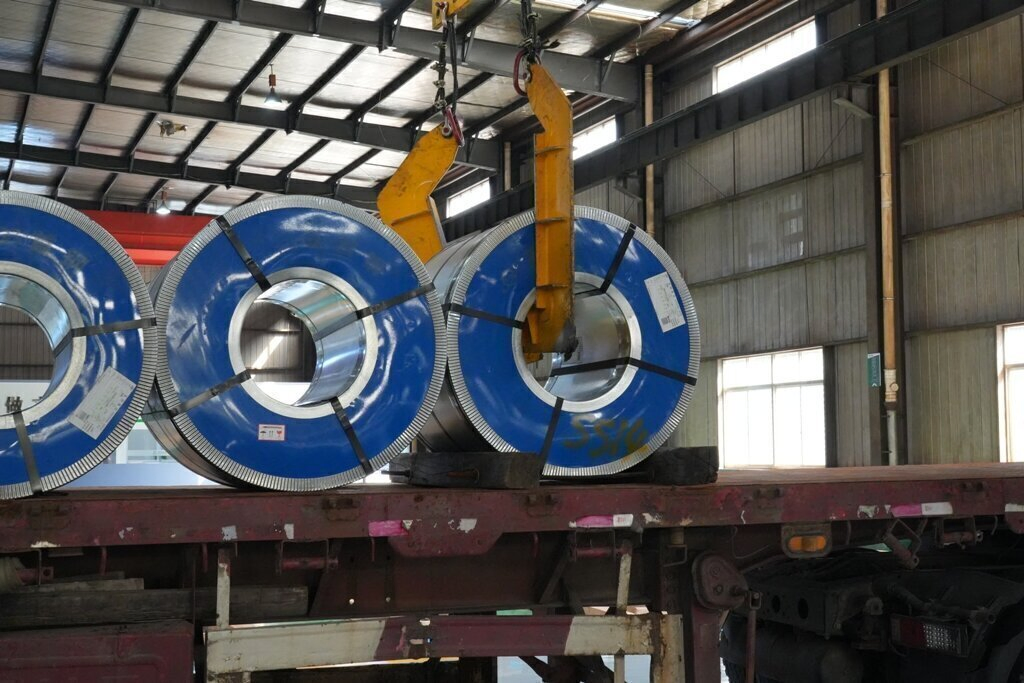
Export Packaging for Silicon Steel Coils – Luoyang Xinzhaohe Aluminum CO., Ltd
At Luoyang Xinzhaohe Aluminum CO., Ltd, with over two decades of experience in the production and international distribution of high-grade silicon steel, we maintain rigorous standards in export packaging to ensure product integrity during global transit. Our packaging methodology is specifically engineered to protect silicon steel coils—highly sensitive to mechanical stress, moisture, and corrosion—during extended sea freight operations.
All silicon steel coils are secured on robust, ISPM-15 certified wooden pallets, constructed from kiln-dried hardwood to meet international phytosanitary regulations. These pallets are designed to support the full weight of the coil while providing structural stability during lifting, stacking, and container handling. The use of treated timber prevents pest infestation and ensures compliance with customs requirements across major import markets, including the European Union, North America, and Southeast Asia.
Each coil is first wrapped with industrial-grade moisture-proof film, consisting of multi-layer laminated polymer barriers with high tensile strength and low water vapor transmission rates. This wrapping forms a hermetic seal around the coil, preventing exposure to ambient humidity, salt air, and condensation—common risks during maritime transport. The film is applied using automated tension-controlled systems to eliminate gaps, wrinkles, or weak points in coverage.
In addition to primary moisture protection, we incorporate desiccant packs and vapor corrosion inhibitors (VCI) within the sealed wrapping to actively suppress internal moisture accumulation and electrochemical corrosion. These measures are critical for silicon steel, which is particularly susceptible to surface oxidation that can degrade magnetic performance and compromise downstream processing.
Coils are further protected with edge protectors made from galvanized steel or reinforced cardboard, installed along the outer and inner diameters to prevent mechanical damage during handling. The entire packaged unit is then strapped with high-tensile steel or polyester bands, affixed diagonally and circumferentially to the pallet, ensuring load consolidation under dynamic shipping conditions.
All packages are labeled with durable, weather-resistant tags indicating product specifications, batch numbers, weight, handling instructions, and orientation markings (e.g., “This Side Up”) to guide proper handling. Barcode and QR code traceability systems are implemented to support inventory tracking from dispatch to final delivery.
Our packaging protocol aligns with international shipping standards, including ISO 1496 for freight containers and IEC 60404-8-2 for electrical steel performance preservation. By integrating material science, logistics engineering, and regulatory compliance, Luoyang Xinzhaohe Aluminum ensures that every shipment of silicon steel arrives at its destination in optimal condition, ready for immediate processing in transformer, motor, or generator manufacturing applications.
Sourcing from Luoyang Xinzhaohe
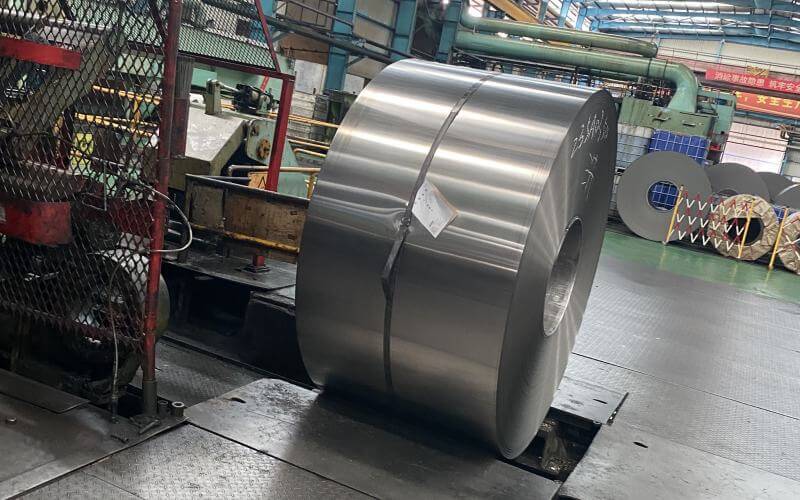
Partner with Luoyang Xinzhaohe for Precision Silicon Steel Solutions
Luoyang Xinzhaohe Aluminum Co., Ltd leverages over two decades of specialized metallurgical expertise to deliver silicon steel products engineered for demanding electrical applications. Our vertically integrated facility in Henan Province operates under stringent ISO 9001 quality management protocols, ensuring consistent material performance critical for transformer and motor core manufacturing. As a dedicated supplier of non-oriented electrical steel (NOES), we prioritize technical precision across all production stages—from slab casting to final slitting—minimizing core loss and optimizing magnetic flux density for end-user efficiency.
Integrated Production Capabilities
Our 500,000-ton annual capacity encompasses full-process control, including vacuum degassing, hot rolling, cold rolling, continuous annealing, and insulating coating application. We produce silicon steel grades ranging from 50JN230 to 50JN400 (IEC 60404-8-7) with thicknesses of 0.18 mm to 0.65 mm, achieving tight tolerances of ±0.005 mm on thickness and ±1.5° on grain orientation. Advanced tension-leveling lines ensure flatness deviations below 3 mm/m, while proprietary phosphate-based coatings (Type C per ASTM A976) provide superior interlaminar resistance and weldability. All coils undergo 100% eddy current testing to eliminate surface defects, with magnetic properties validated via Epstein frame testing per IEC 60404-2.
Quality Assurance and Supply Chain Reliability
Material traceability is maintained through laser-etched batch codes linked to real-time production data, including chemical composition (verified via OES spectrometry), core loss (W10/400), and permeability metrics. Our ERP system synchronizes order fulfillment with JIT delivery schedules, supporting global logistics partners for FOB Qingdao shipments. Minimum order quantities start at 5 metric tons, with standard lead times of 15–20 days for coated coils. We maintain strategic inventory buffers of high-demand grades (e.g., 50JN350) to mitigate supply chain volatility, backed by a 99.2% on-time delivery rate over the past three years.
Technical Collaboration Framework
Beyond supply, we provide engineered support for lamination optimization. Our metallurgical team collaborates on stamping die design adjustments to reduce burr formation, shares B-H curve analysis for core loss modeling, and conducts failure mode reviews for edge degradation. Clients receive certified mill test reports including full elemental analysis (Si: 0.5–3.5%, Al ≤0.5%, C ≤0.003%) and magnetic property datasets. This technical partnership approach has reduced scrap rates by 18–22% for tier-1 transformer manufacturers in Europe and Southeast Asia.
Partnering with Luoyang Xinzhaohe means securing silicon steel with quantifiable performance metrics, not just material specifications. Our facility’s process control depth—from molten metal chemistry to slit edge quality—directly translates to your production yield and energy efficiency targets. For immediate technical consultation or grade-specific datasheets, contact Cathy Zhang, International Sales Manager, at cathy@transformerstrip.com. Specify your required thickness, coating type, and core loss targets to receive a tailored production capability analysis within 24 hours.
📉 Factory Direct Savings Calculator
Calculate your potential savings by importing mcb steel directly from China.