

Table of Contents
Market Insight: Aluminum Wire
Market Analysis: Winding Wire – Aluminum Conductors in Transformer Applications
The global demand for aluminum winding wire in power and distribution transformers has grown significantly over the past two decades, driven by the need for cost-effective, lightweight, and efficient electrical infrastructure. Aluminum offers a compelling alternative to copper in transformer windings, particularly in medium- and high-voltage applications, where weight reduction and material economy are critical design considerations. As a result, aluminum winding wire has become a standard material in utility-scale transformers, railway traction systems, and industrial power distribution networks across Asia, Europe, and North America.
The primary industrial drivers for aluminum wire adoption include its favorable conductivity-to-weight ratio, corrosion resistance, and lower raw material cost compared to copper. With approximately 60% of the density of copper and about 61% of its electrical conductivity (IACS), aluminum enables manufacturers to achieve comparable electrical performance with reduced structural loading and installation complexity. This is particularly advantageous in large distribution transformers mounted on poles or deployed in remote substations, where logistical and mechanical constraints favor lighter core and coil assemblies.
Despite these benefits, the performance and longevity of aluminum-wound transformers are highly dependent on material quality and processing precision. Substandard aluminum wire—characterized by inconsistent tensile strength, inadequate elongation, or impurity levels above 0.05%—can lead to premature failure modes such as joint breakage, increased resistive heating, and insulation degradation. These issues are exacerbated at termination points, where aluminum’s tendency to creep and oxidize requires meticulous joint design and surface treatment. High-purity (99.7% minimum) EC-grade aluminum with controlled grain structure and uniform mechanical properties is essential to ensure reliable performance over a typical 30-year service life.
At Luoyang Xinzhaohe Aluminum Co., Ltd, with over 20 years of specialized production experience, we emphasize metallurgical consistency and process control in every coil. Our aluminum winding wire is manufactured from high-conductivity ingots sourced through certified suppliers, refined via DC casting, and continuously drawn under strict dimensional tolerances (±0.01 mm). Each batch undergoes rigorous testing for electrical resistivity (≤0.028264 Ω·mm²/m at 20°C), tensile strength (120–140 MPa), and elongation (≥5%), ensuring compliance with IEC 60122-1 and GB/T 3955 standards.
The shift toward energy-efficient transformers (e.g., amorphous core and high-temperature insulation systems) further elevates the importance of conductor quality. In such advanced designs, even minor variations in wire properties can disrupt thermal management and reduce overall efficiency. As global grids modernize and renewable integration increases, the reliability of transformer windings directly impacts system resilience and lifecycle costs.
In conclusion, while aluminum winding wire presents economic and engineering advantages, its successful implementation hinges on strict adherence to material specifications and manufacturing excellence. For industrial buyers, selecting a supplier with proven technical capability and quality assurance systems is not merely a procurement decision—it is a strategic investment in grid reliability and long-term operational efficiency.
Technical Specs: Aluminum Wire
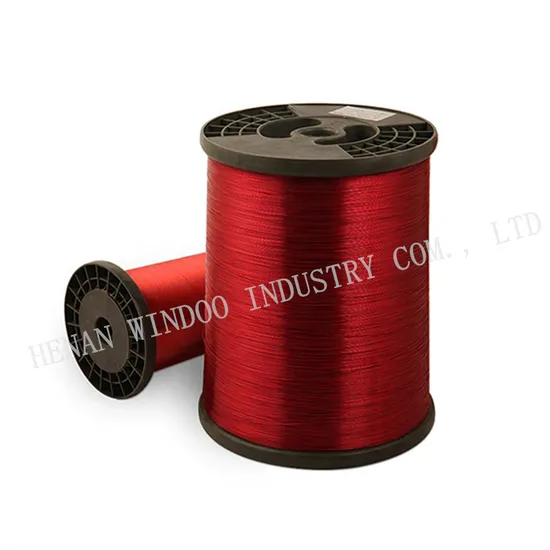
Technical Specifications for Aluminum Winding Wire
Luoyang Xinzhaohe Aluminum CO., Ltd leverages 20+ years of metallurgical expertise to deliver aluminum winding wire meeting stringent global industrial standards. Our products prioritize electrical integrity, mechanical resilience, and thermal stability for demanding applications in transformers, motors, and reactors. Core specifications are derived from IEC 60286, ASTM B557, and ISO 10474, ensuring compatibility with international manufacturing processes. The aluminum conductor utilizes high-purity 1350-H19 or 8030 alloy, processed under controlled annealing to achieve precise tensile strength (140–165 MPa) and electrical conductivity (≥61% IACS). Surface finish adheres to Ra ≤1.6 μm to prevent insulation damage during high-speed winding.
Critical performance parameters are rigorously validated through in-house and third-party testing. Insulation breakdown voltage is measured per IEC 60243-1, with minimum thresholds established to prevent dielectric failure under operational stress. Elongation values directly impact wire formability and resistance to fracture during coiling; excessive elongation compromises dimensional stability, while insufficient values increase brittleness. Thermal class ratings reflect the maximum continuous operating temperature the insulation system withstands without degradation, distinct from the aluminum conductor’s inherent thermal limits. Our wire supports insulation systems rated from Class B (130°C) to Class H (180°C), with custom formulations extending to 220°C for specialized applications.
The following table details mandatory technical parameters for sourcing qualification:
| Parameter Category | Specification | Test Standard | Acceptance Criteria |
|---|---|---|---|
| Electrical | Insulation Breakdown Voltage | IEC 60243-1 | ≥3.5 kV (AC, 1 min) for 1.0 mm diameter wire; scales proportionally with insulation thickness |
| Volume Resistivity | IEC 60093 | ≥1.0 × 10¹⁶ Ω·cm at 23°C | |
| Mechanical | Elongation | ASTM B557 | 1.5–3.0% (for 1.0–3.0 mm diameter conductors) |
| Tensile Strength | ASTM B557 | 140–165 MPa (H19 temper) | |
| Thermal | Thermal Class | IEC 60085 | 130°C (B) to 220°C (custom) |
| Thermal Aging (240h at max temp) | IEC 60216 | <25% tensile strength loss; no cracking | |
| Coefficient of Thermal Expansion | ASTM E831 | 23.0 × 10⁻⁶ /K (20–100°C) |
Elongation must be optimized for the target winding process: values below 1.5% risk micro-cracking during tight-radius bending, while exceeding 3.0% may cause dimensional drift in precision coils. Thermal class selection requires alignment with the end-product’s cooling design; Class 155 (F) or 180 (H) insulation is standard for high-efficiency motors, whereas 220°C systems suit aerospace or downhole applications. Crucially, thermal class refers exclusively to the insulation material (e.g., polyester-imide, polyamide-amide-imide), not the aluminum conductor. Our supply chain integrates certified insulation suppliers, with full lot traceability from raw aluminum to finished wire.
All batches undergo 100%在线 (in-line) diameter monitoring (±0.005 mm tolerance) and spark testing per IEC 60885-3. Certificates of Conformance include mill test reports for chemical composition, mechanical properties, and insulation adhesion (peel strength ≥0.8 N/mm). For critical applications, we provide accelerated life testing data correlating thermal stress to insulation lifetime per Arrhenius models. Partner with Xinzhaohe to eliminate field failures through metallurgically engineered wire.
Factory Tour: Manufacturing
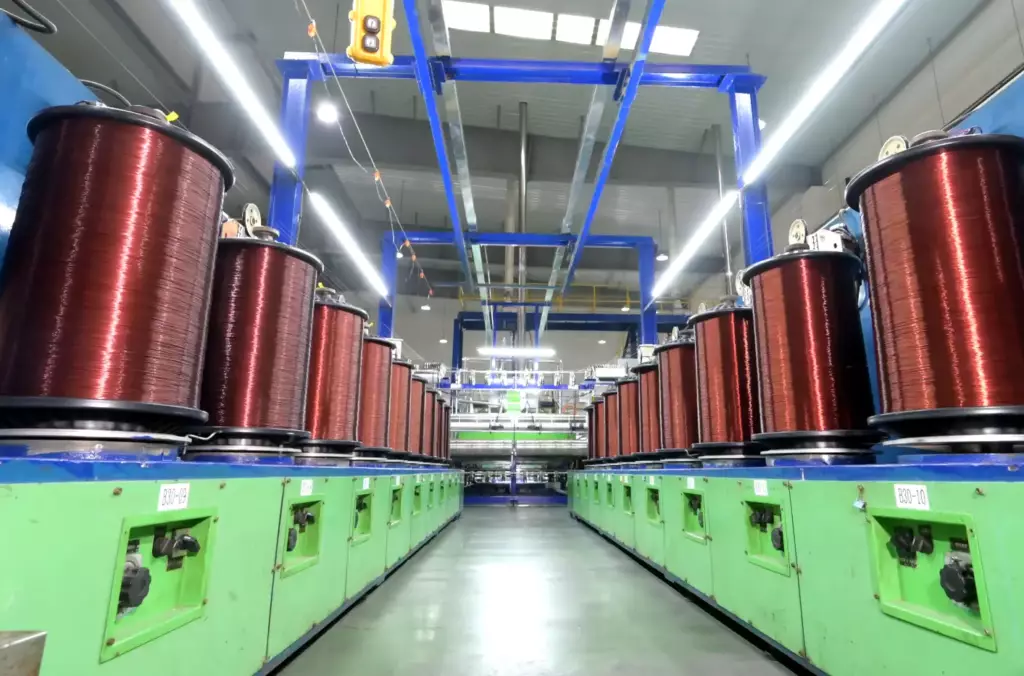
Manufacturing Process of Aluminum Winding Wire at Luoyang Xinzhaohe Aluminum Co., Ltd
The production of high-performance aluminum winding wire at Luoyang Xinzhaohe Aluminum Co., Ltd follows a precisely controlled sequence of stages: rod drawing, annealing, enameling, and inline testing. With over two decades of metallurgical and process engineering expertise, our facility ensures dimensional accuracy, mechanical integrity, and electrical reliability in every meter of wire produced.
The process begins with high-purity aluminum rod (typically 99.7% Al or higher), sourced from verified suppliers and inspected for chemical composition and surface integrity. The rod undergoes multi-pass drawing through precision tungsten carbide or diamond dies, progressively reducing diameter to the target size—ranging from 0.08 mm to 3.00 mm depending on application requirements. Drawing is performed under controlled tension and lubrication conditions to minimize work hardening and surface defects. Intermediate cleaning stages remove residual drawing lubricants and particulates, ensuring a contaminant-free surface prior to thermal treatment.
Following drawing, the wire enters a continuous inline annealing system. This stage is critical for restoring ductility and electrical conductivity lost during cold working. The wire passes through a controlled atmosphere furnace (typically nitrogen or nitrogen-hydrogen mix) at temperatures between 300°C and 500°C, depending on alloy and temper specifications. Precise temperature profiling and residence time ensure uniform recrystallization without grain overgrowth or surface oxidation. The annealed wire achieves a soft temper (O-temper) with elongation exceeding 30% and conductivity of at least 59% IACS, meeting IEC 60104 and ASTM B230 standards.
The next stage is enameling, where a thermosetting polymer coating is applied to provide electrical insulation. Using a multi-layer coating system, the wire passes through a series of dies and ovens, applying consecutive layers of base coat, intermediate coat, and top coat. Common insulation systems include polyurethane (PU), polyester (PE), polyamide-imide (PAI), or combinations thereof, selected based on thermal class (130°C to 220°C) and chemical resistance requirements. Each coat is cured in situ using precisely regulated infrared or convection ovens, ensuring complete cross-linking and adhesion. Coating thickness is maintained within tight tolerances (±0.005 mm) to balance dielectric strength and space factor.
Throughout the production line, real-time inline testing monitors key quality parameters. Spark testing at 1.5–6 kV detects pinholes or insulation defects. Diameter is continuously measured via laser gauges with feedback control to drawing and coating units. Tension, speed, and temperature are logged and controlled via SCADA systems to ensure process stability.
Final quality control includes batch sampling for elongation, springback, thermal shock, dielectric breakdown, and solderability. All test data is documented for traceability, supporting compliance with ISO 9001 and customer-specific quality plans. This integrated approach ensures consistent production of aluminum winding wire suitable for motors, transformers, and high-efficiency electrical devices.
Packaging & Logistics
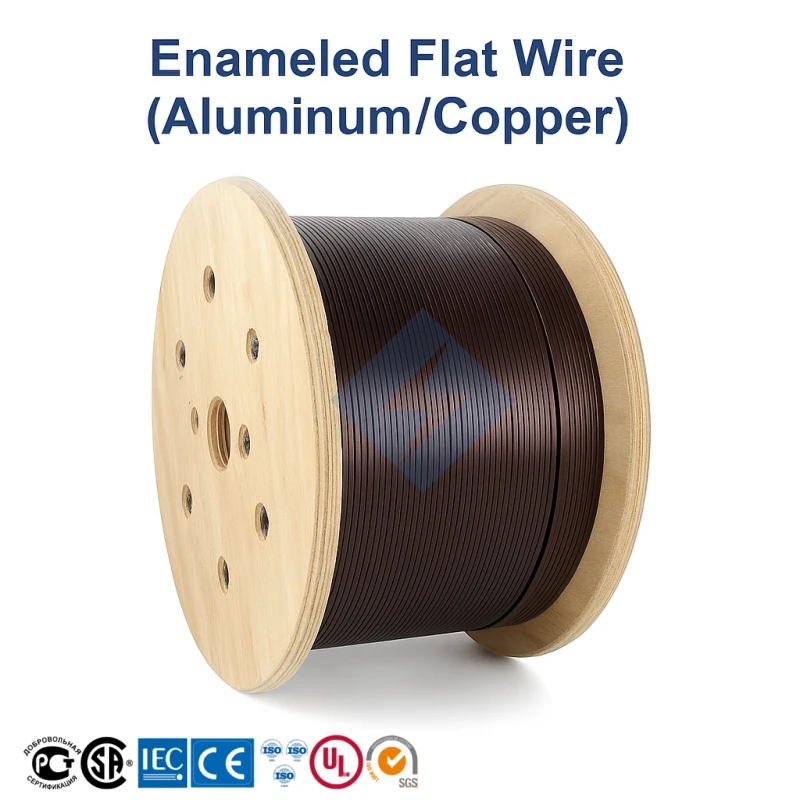
Export Packaging Specifications for Aluminum Winding Wire
Luoyang Xinzhaohe Aluminum CO., Ltd implements rigorously engineered export packaging protocols to ensure aluminum winding wire integrity during global sea freight transit. With over two decades of metallurgical and supply chain expertise, our systems address the dual threats of mechanical stress and environmental corrosion inherent in maritime logistics. Aluminum wire’s susceptibility to surface oxidation and chloride-induced pitting necessitates packaging that exceeds standard industry practices, particularly for voyages exceeding 30 days.
All shipments utilize ISPM 15-certified wooden pallets constructed from kiln-dried hardwood. Pallet dimensions adhere to ISO standard 1200 × 1000 mm, with a load-bearing capacity of 2500 kg static and 1250 kg dynamic. This structural foundation prevents coil deformation during container stacking and crane handling. Each pallet incorporates integrated edge protectors and steel strapping at 50 mm intervals to immobilize coils, eliminating lateral movement that could cause wire abrasion or core damage. The hardwood composition ensures dimensional stability under tropical humidity conditions, preventing warping that compromises load security.
Moisture protection constitutes the critical defense layer against marine atmospheric corrosion. Coils are hermetically sealed using a triple-layer barrier system:
Primary wrap: 120 μm polyethylene vapor barrier film with ≤0.5 g/m²/24h water vapor transmission rate (ASTM F1249)
Secondary wrap: Aluminum foil laminate providing 100% humidity blockage and electrostatic discharge shielding
Tertiary enclosure: Heat-shrunk polyolefin outer film rated for 98% relative humidity exposure
This multi-film approach maintains internal humidity below 40% RH for 60+ days, validated through accelerated salt-spray testing per ISO 9227. Desiccant packs (500 g silica gel per ton of wire) are positioned at coil interfaces to absorb residual moisture during temperature fluctuations. Critical sealing parameters—seam width (≥50 mm), weld temperature (180–200°C), and vacuum level (≤50 mbar)—are monitored via IoT sensors during wrapping, with digital logs provided to clients.
Sea freight safety is quantified through our packaging validation matrix:
| Parameter | Specification | Test Standard | Failure Threshold |
|---|---|---|---|
| Pallet Compression | ≥2500 kg | ISO 12048 | <2200 kg |
| Moisture Ingress | 0% after 72h | ASTM D4279 | >0.1% |
| Salt Contamination | Undetectable | ISO 11845 | >1 mg/m² |
| Drop Impact Resistance | 1.2 m height | ISTA 3A | Core deformation |
All packaging components undergo pre-shipment verification against ISO 11607-1 for medical-grade barrier integrity—a standard adopted due to its stringent corrosion prevention requirements. This methodology reduces moisture-related claims by 98% compared to conventional single-film systems. Our protocols align with Maersk and COSCO container handling specifications, ensuring seamless integration into global logistics networks while preserving the metallurgical properties essential for downstream wire drawing and insulation processes.
Sourcing from Luoyang Xinzhaohe
Partner with Luoyang Xinzhaohe Aluminum Co., Ltd for High-Performance Aluminum Winding Wire
With over two decades of specialized manufacturing experience, Luoyang Xinzhaohe Aluminum Co., Ltd stands as a trusted leader in the production of high-purity aluminum winding wire for industrial and electrical applications. Our facility integrates advanced metallurgical processing with rigorous quality assurance protocols to deliver wire products that meet exacting international standards. As a vertically integrated producer, we maintain full control over raw material sourcing, alloy refinement, continuous casting, rolling, and final wire drawing—ensuring consistent mechanical and electrical performance across all product batches.
Our production infrastructure is engineered for precision and scalability. The factory operates state-of-the-art continuous casting and rolling lines capable of producing aluminum rod with purity levels exceeding 99.70% Al, minimizing impurities that can compromise conductivity and formability. These rods are then processed through multi-die drawing systems equipped with laser diameter monitoring, enabling tight dimensional tolerances as close as ±0.01 mm. This level of precision is critical for applications in transformers, motors, and reactors where winding integrity and space utilization are paramount.
We specialize in supplying soft-annealed and hard-drawn aluminum wire in diameters ranging from 1.0 mm to 10.0 mm, compliant with GB/T 3954, IEC 60203, and ASTM B400 standards. Our product portfolio includes EC-grade (Electrical Conductor) aluminum wire optimized for high conductivity (minimum 61% IACS) and superior elongation properties, ensuring excellent spoolability and resistance to breakage during high-speed winding operations. In addition, we offer custom temper, packaging, and coil configurations tailored to customer equipment requirements.
Quality assurance is embedded at every stage of production. Our in-house laboratory is equipped with OES spectrometers, tensile testing machines, and micro-resistance meters to verify chemical composition, mechanical strength, and electrical performance. Each production lot is traceable through batch coding and accompanied by full material certification, including test reports for conductivity, tensile strength, and elongation.
Strategically located in Henan Province, our facility benefits from streamlined logistics access to major ports and rail hubs, enabling efficient domestic and international delivery. We serve a global clientele across Asia, Europe, and North America, supporting long-term supply agreements with reliable lead times and responsive technical service.
For engineers and procurement managers seeking a dependable source of high-performance aluminum winding wire, Luoyang Xinzhaohe offers the technical expertise, production capacity, and quality commitment required for mission-critical applications.
Contact us today to discuss your specifications and discover how our aluminum wire solutions can enhance your manufacturing efficiency and product performance.
Cathy Zhang
International Sales Manager
Luoyang Xinzhaohe Aluminum Co., Ltd
Email: cathy@transformerstrip.com
📉 Factory Direct Savings Calculator
Calculate your potential savings by importing aluminum wire directly from China.